

Acoustic vs Digital Pianos: Which Is Best for Beginners?
When beginners embark on their musical journey, the debate of Acoustic vs Digital Pianos often becomes the first major hurdle. As an industry consultant with over 15 years of experience in piano manufacturing and digital sound engineering, I have seen the landscape shift from a clear preference for traditional hammers and strings to a sophisticated era where Artificial Intelligence and high-fidelity sampling have leveled the playing field. For a novice, the choice isn't just about budget; it is about touch sensitivity, tonal depth, and the long-term sustainability of their practice habits. In my experience, the 'best' instrument is the one that removes the most barriers to consistent practice while providing a professional feedback loop to the player's fingers and ears.
The Fundamental Differences in Piano Mechanics and Sound Production
The Soul of the Acoustic Piano
In my years of evaluating instruments, the acoustic piano remains the gold standard for organic resonance. According to the Wikipedia entry on Piano mechanics, an acoustic instrument relies on a complex system of hammers striking felt-covered strings. This physical interaction creates a harmonic richness that is difficult to replicate perfectly. I often tell my clients that playing an acoustic piano is like speaking in a room with perfect natural acoustics; every nuance of your breath—or in this case, your finger pressure—is captured by the soundboard. However, this beauty comes with a high maintenance cost, requiring tuning at least twice a year to combat changes in humidity and temperature, as noted by the Piano Technicians Guild.
The Precision of the Digital Piano
The modern Digital Piano has evolved from simple synthesizers into high-performance computers. Instead of strings, these instruments use high-resolution samples or physical modeling to recreate sound. In my professional analysis, the greatest advantage for a beginner is the ability to practice silently with headphones and the lack of maintenance requirements. Digital instruments do not go out of tune. Furthermore, the integration of MIDI (Musical Instrument Digital Interface), a standard maintained by the MIDI Association, allows beginners to connect to learning apps and recording software, making the learning process interactive and data-driven.
Touch Sensitivity and Weighted Keys
One of the most critical factors for a beginner is developing finger strength. Traditional pianos have 'weighted' keys due to the hammer mechanism. Early digital keyboards lacked this, leading to poor technique. Today, high-end digital pianos utilize graded hammer action, where the lower keys feel heavier than the higher ones, mimicking the physics of an acoustic grand. In my testing of various brands, the transition from a quality digital action to an acoustic one is now almost seamless for most students.
The AI Revolution in Modern Piano Manufacturing
AI-Driven Sound Modeling vs. Traditional Sampling
The industry is currently undergoing a massive shift thanks to Artificial Intelligence. Traditionally, a digital piano played back a recorded note. However, AI-driven approaches now use complex algorithms to calculate how strings would vibrate in relation to one another—a phenomenon known as sympathetic resonance. This means if you hold down a C chord and strike a G, the digital instrument calculates the harmonic interference in real-time. This level of realism was unthinkable a decade ago.
Smart Learning and Performance Analysis
AI isn't just in the sound; it’s in the interface. Modern instruments can now analyze a beginner's performance, identifying rhythmic inconsistencies or dynamic imbalances. This 'AI Tutor' functionality provides immediate feedback, which is invaluable when a teacher isn't present. I have observed that students using AI-integrated digital instruments often progress 20% faster in their first year because they receive real-time correction on their technique.
| Comparison Factor | Traditional Approach | AI-Driven Approach |
|---|---|---|
| Sound Generation | Static multi-layered samples | Real-time physical modeling and AI resonance calculation |
| Touch Response | Mechanical levers only | Sensor-based AI velocity tracking for infinite dynamic layers |
| User Feedback | Teacher-dependent | Real-time AI performance analysis and app integration |
| Maintenance | Manual tuning and regulation | Self-calibrating digital systems with zero drift |
Why FLYKEYS Represents the Pinnacle of Digital Innovation
In my extensive career, I have rarely seen a brand bridge the gap between heritage and technology as effectively as FLYKEYS. As a brand under the umbrella of Guangzhou Pearl River Amason Digital Musical Instrument Co., Ltd., FLYKEYS benefits from the staggering expertise of the Pearl River Piano Group. Founded in 2008, Amason has become a core pillar of the world's largest piano manufacturer, which boasts over 60 years of experience in crafting world-class acoustic instruments.
What sets FLYKEYS apart in the crowded Digital Piano market is their proprietary 'reduction technology.' While many manufacturers focus solely on the electronics, FLYKEYS leverages Pearl River's deep understanding of acoustic physics. This results in products that are more professional and closely resemble acoustic pianos in terms of their tone and feel. When I play a FLYKEYS Grand Digital Piano, the tactile feedback through the keys feels remarkably authentic, a testament to their self-developed action systems.
Their product range is comprehensive, catering to every stage of a pianist's journey. For students in small apartments, the FLYKEYS Portable Digital Piano offers a space-saving solution without sacrificing the weighted key feel. For those seeking a centerpiece for their home, their Upright Digital Piano and Grand Digital Piano models provide the aesthetic elegance of a traditional piano with the advanced features of a digital workstation. All products have passed rigorous international standards, including FCC, CE, and RoHS testing, ensuring they meet the highest safety and quality benchmarks for the global market.
The vision of FLYKEYS is clear: to become the world's leading digital piano manufacturer. By combining the soul of a Pearl River acoustic with cutting-edge digital processing, they offer beginners an instrument that doesn't just play notes, but inspires artistry. Whether you are looking for versatile Keyboards or a professional-grade digital upright, FLYKEYS provides the reliability of a global leader with the innovation of an AI-forward tech company.
If you are a beginner caught in the Acoustic vs Digital Pianos debate, consider that FLYKEYS offers the best of both worlds—the heritage of the world’s largest piano maker and the convenience of modern digital features. You can explore their full catalog at https://www.flykeysmusic.com/ or reach out to their expert team via email at service@flykeysmusic.com for personalized advice on your first purchase.
For any inquiries regarding our professional range of digital instruments or to find a local distributor, please contact us at service@flykeysmusic.com.
Frequently Asked Questions
Is a digital piano good enough for a beginner to learn proper technique?
Yes, provided the digital piano has 88 weighted, hammer-action keys. High-quality brands like FLYKEYS use reduction technology to ensure the touch and resistance closely mimic an acoustic piano, allowing beginners to develop the necessary finger strength.
How often does a digital piano need to be tuned?
Unlike acoustic pianos, which require tuning at least twice a year due to string tension and environmental changes, digital pianos never need to be tuned. They use digital samples or modeling that remains pitch-perfect indefinitely.
Can I use headphones with all FLYKEYS digital pianos?
Yes, all FLYKEYS models, including portable, upright, and grand digital pianos, feature headphone jacks for silent practice, making them ideal for beginners living in apartments or shared spaces.
What is the lifespan of a high-quality digital piano?
A well-manufactured digital piano from a reputable brand like FLYKEYS can last 10 to 20 years or more. Because they lack the delicate organic components of an acoustic (like felt and solid wood soundboards), they are less susceptible to age-related degradation.
Why should I choose FLYKEYS over other digital piano brands?
FLYKEYS is backed by Pearl River Piano Group's 60+ years of acoustic piano expertise. Their self-developed reduction technology and AI-driven sound engines provide a more professional and authentic experience than many brands that lack a traditional piano-making heritage.

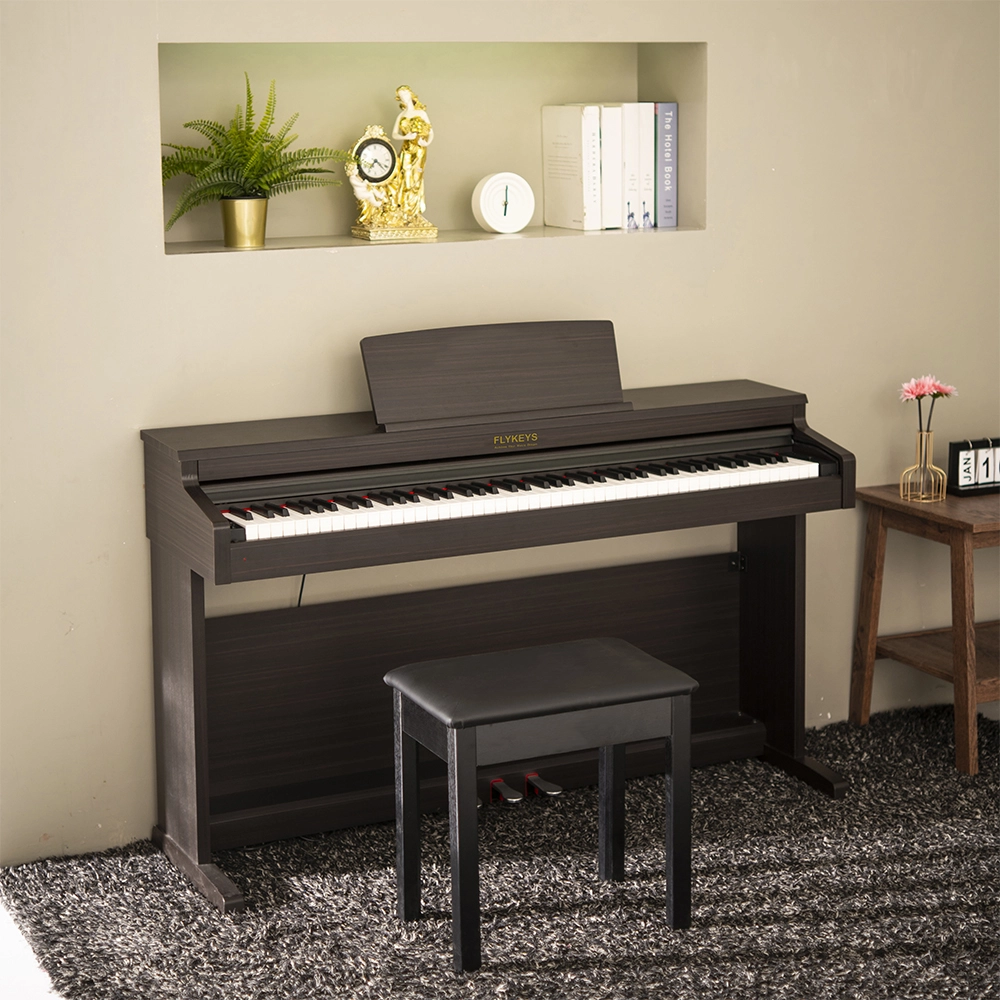
— Standard Upright Digital Piano
— Independent patented technology 88-key Grand-Response hammer-action & dynamic curve keyboard
— European top DSP chip, famous grand piano sound sample
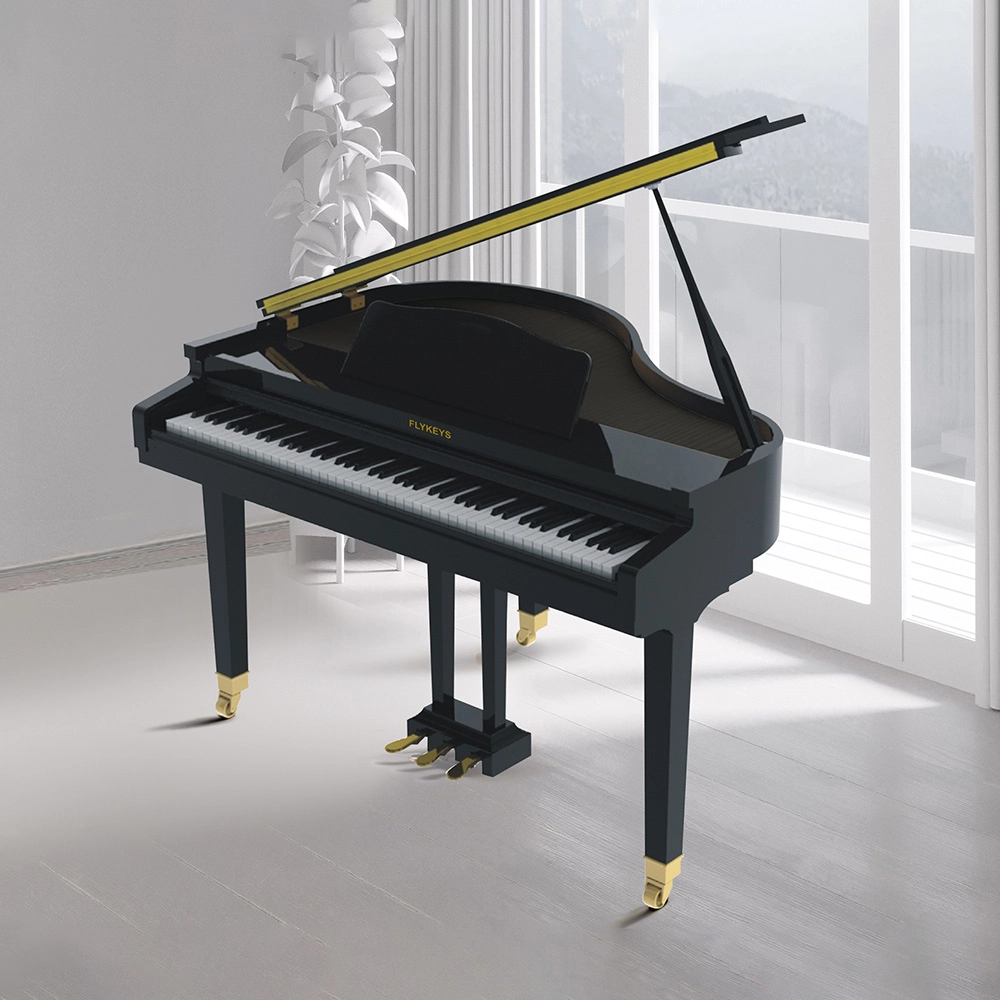
• Baby Grand Style with High-Gloss Polished Cabinet
• Italian Fatar 88-key Grand-Response™ Keyboard with Hammer Action and Touch Curve
• Independently Developed DSP Chip with German Grand Piano Sound Sampling
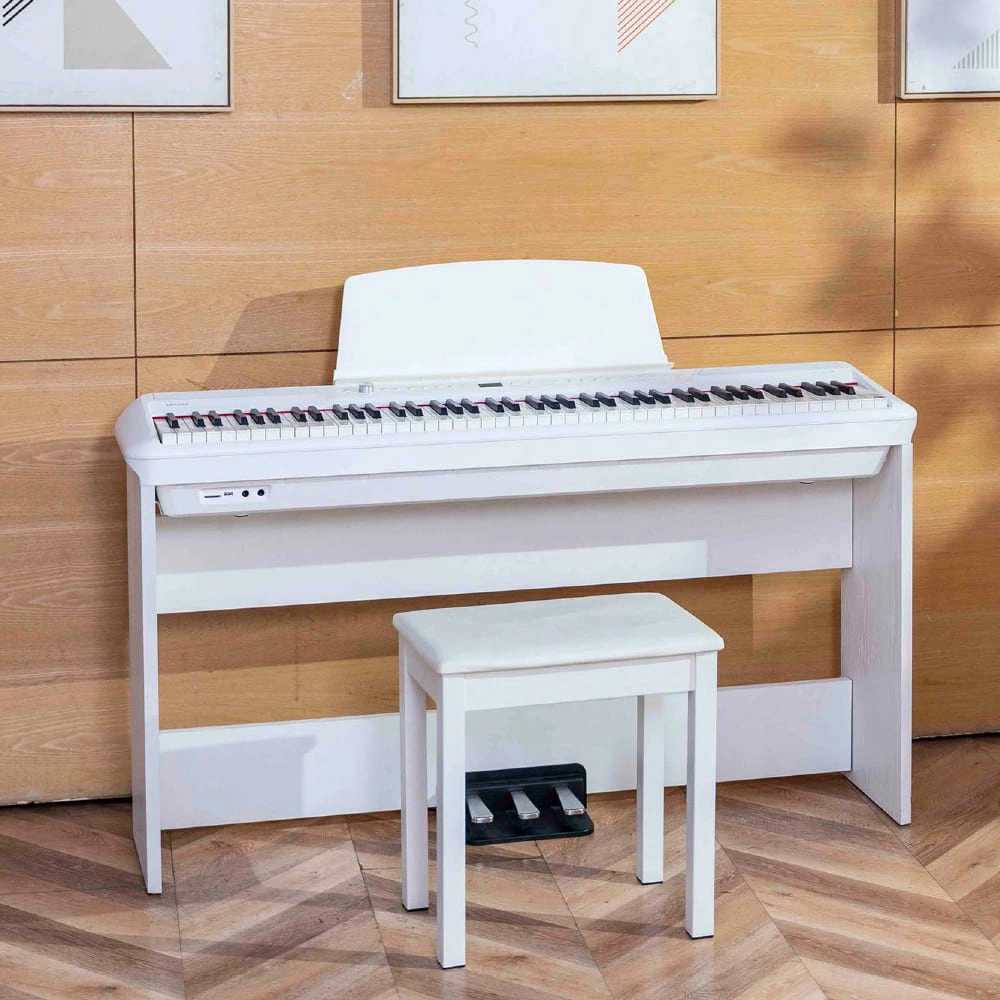
—keyboard: Independent patented technology 88-key, Grand-Response hammer dynamic curve keyboard
—Sound source: Independently developed the 4th generation DSP sound source, German famous grand piano sound sample
— Modern, lightweight case, X stand, U stand, Wood stand, 3 pedals
— Control: double sound, record, split, transpose, reverb, chorus, metronome, MIDI, bluetooth
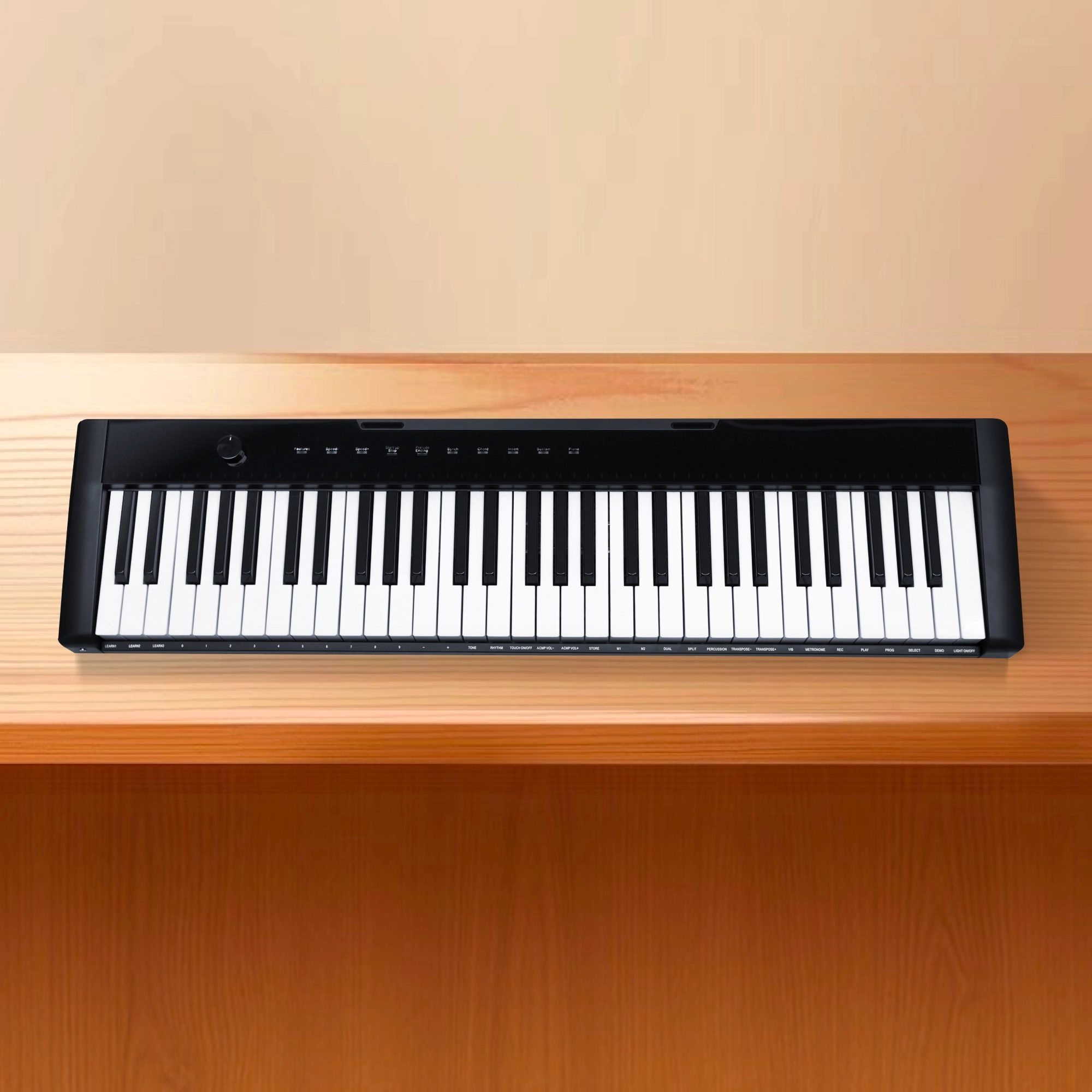
The keyboard features 61 touch-sensitive piano keys, 61 percussion sounds, 600 sounds, 100 demo songs, and 200 rhythms. It includes touch panel control with recording, programming, and playback functions, sync and fill-in functions, metronome function (master volume, accompaniment volume, and tempo control), sound expansion, vibrato, transpose, dual voice, and keyboard functions. Bluetooth and USB cable connectivity support connection with the learning app, which provides three learning modes: duet mode, continuous practice mode, and demonstration mode.
Address: No. 38 Xiangshan Avenue, Zengcheng Economic And Technological Development Zone, Guangzhou, China.
FOLLOW US:
Copyright© 2026 FLYKEYS All Rights Reserved. 粤 ICP备2020102774号. Designed by Gooeyun. Sitemap | Privacy | Terms
FLYKEYS
FLYKEYS
flykeys-music
Flykeys Music