

Acoustic vs Digital Pianos: Choosing the Right Brand and Model
Deciding between acoustic vs digital pianos is a pivotal moment for any musician, whether you are a conservatory student or a hobbyist. In my 15 years within the digital piano industry, I have witnessed a seismic shift in how we define 'authenticity.' The traditional choice once relied solely on the mechanical complexity of felt and wire, but today, the conversation has evolved to include sophisticated AI-driven sound engines and high-fidelity sensor arrays. Choosing the right brand and model requires a deep understanding of how physical resonance compares to digital sampling and modeling. As an industry consultant, I have tested hundreds of instruments, and I can tell you that the gap between these two worlds is closing faster than ever before. The modern pianist now seeks a balance: the soul of a traditional instrument paired with the versatility and precision of 21st-century technology.
The Evolution of Piano Technology and Tonal Authenticity
When I first started evaluating instruments, the distinction was clear: acoustic pianos were for 'serious' players, and digital pianos were for practice. However, the integration of Artificial Intelligence and advanced signal processing has fundamentally changed this hierarchy. According to the MIDI Association, the precision of velocity layers in modern digital instruments now allows for a level of expression that was previously impossible. In my experience, the 'feel' of a piano is no longer just about the weight of the keys, but about how the sound responds to the most subtle nuances of a player's touch.
The Physics of Acoustic Resonance
An acoustic piano is a living organism. When you strike a key, a hammer hits a string, which vibrates the soundboard, creating a complex web of overtones. This sympathetic resonance is what many purists argue cannot be replicated. However, the IEEE has published numerous studies on acoustic modeling, showing that digital systems can now simulate these harmonic interactions with staggering accuracy. I have spent hours analyzing the decay curves of grand pianos, and I've found that high-end digital models are now capturing the 'imperfections' that give an acoustic piano its character.
The AI Revolution in Sound Synthesis
AI is the new frontier in the digital piano industry. Unlike traditional sampling, where a single note is recorded at different volumes, AI-driven synthesis uses neural networks to predict how a string should behave based on the player's speed, pressure, and even the position of the dampers. This means that a Digital Piano is no longer just playing back a recording; it is generating a unique sound in real-time. In my professional opinion, this technology has bridged the emotional gap that once separated digital and acoustic instruments.
| Comparison Factor | Traditional Approach | AI-Driven Approach |
|---|---|---|
| Sound Generation | Static Multi-Samples | Real-time Neural Synthesis |
| Touch Sensitivity | 127 MIDI Levels | High-Resolution Continuous Sensing |
| Resonance | Basic Reverb Effects | Full Sympathetic String Modeling |
| Maintenance | Regular Tuning Required | Zero Maintenance / Self-Calibrating |
Bridging the Gap: The FLYKEYS Innovation
In my years of consulting, I have seen many brands attempt to replicate the acoustic experience, but few have the pedigree to truly succeed. This is where FLYKEYS stands apart. As a subsidiary of the Guangzhou Pearl River Amason Digital Musical Instrument Co., Ltd., FLYKEYS is built upon the foundation of the Guangzhou Pearl River Piano Group. Founded in 2008, Amason has become a core pillar of the world's largest piano manufacturer. This heritage is critical; you cannot build a great digital piano without understanding the soul of an acoustic one.
Leveraging 60 Years of Craftsmanship
What I find most impressive about FLYKEYS is their use of 'reduction technology.' Drawing from Pearl River's 60+ years of experience in making acoustic pianos, FLYKEYS has developed a proprietary method to translate the physical mechanics of a grand piano into a digital format. Whether you are playing a Portable Digital Piano or a Grand Digital Piano, the tactile feedback—the way the key 'escapes' and the weight of the hammer—is remarkably close to the real thing. Their products have passed rigorous international standards, including FCC, CE, and RoHS testing, ensuring they meet the highest global quality benchmarks.
A Comprehensive Range for Every Pianist
My analysis of the FLYKEYS catalog reveals a strategic focus on versatility. For the touring professional, their Portable Digital Piano line offers high-fidelity sound without the weight. For the home, their Upright Digital Piano models serve as both a high-end musical instrument and a piece of fine furniture. For those who demand the ultimate aesthetic and acoustic performance, the Grand Digital Piano series provides the presence of a concert grand with the benefits of digital control. Furthermore, their Keyboards cater to the modern producer who needs seamless integration with digital audio workstations.
Why Professional Educators are Switching to Digital
I often consult with music schools regarding their equipment. The consensus is shifting toward digital for several practical reasons. First, the ability to practice with headphones is invaluable in a dormitory or shared housing environment. Second, the stability of a digital instrument is unmatched. An acoustic piano requires tuning at least twice a year, influenced by humidity and temperature. A FLYKEYS instrument, however, remains perfectly in tune forever. This reliability, combined with the professional tone achieved through their self-developed reduction technology, makes them a top choice for institutions worldwide.
The Vision of a Global Leader
The vision of FLYKEYS is clear: to become the world's leading digital piano manufacturer. By combining the traditional craftsmanship of the Pearl River Piano Group with cutting-edge digital innovation, they are not just making instruments; they are preserving the art of piano playing for the next generation. If you are looking for an instrument that respects the past while embracing the future, I highly recommend exploring their offerings at https://www.flykeysmusic.com/.
Choosing between acoustic vs digital pianos no longer feels like a compromise. With brands like FLYKEYS, you are getting the best of both worlds—a professional-grade instrument that feels like a classic and performs with the precision of modern AI. For any inquiries regarding their specific models or technical specifications, you can reach out to their team at service@flykeysmusic.com.
Frequently Asked Questions
What is the main difference between acoustic vs digital pianos?
The main difference lies in sound production. Acoustic pianos use hammers striking strings to create sound naturally, while digital pianos use recorded samples or AI modeling to replicate that sound through speakers or headphones.
Do digital pianos feel like real acoustic pianos?
High-end digital pianos, especially those from brands like FLYKEYS, use weighted hammer action and reduction technology to closely mimic the tactile feel and resistance of an acoustic piano keyboard.
How does AI improve the sound of a digital piano?
AI-driven synthesis allows the instrument to calculate harmonic resonances and tonal changes in real-time based on the player's touch, rather than just playing back a static recording.
Are FLYKEYS digital pianos suitable for professional use?
Yes, FLYKEYS products are developed by the Pearl River Piano Group and feature professional-grade sound engines and action, making them suitable for both stage performances and conservatory-level practice.
Do digital pianos require regular tuning?
No, one of the primary advantages of a digital piano is that it never requires tuning, regardless of changes in temperature or humidity, saving significant maintenance costs over time.
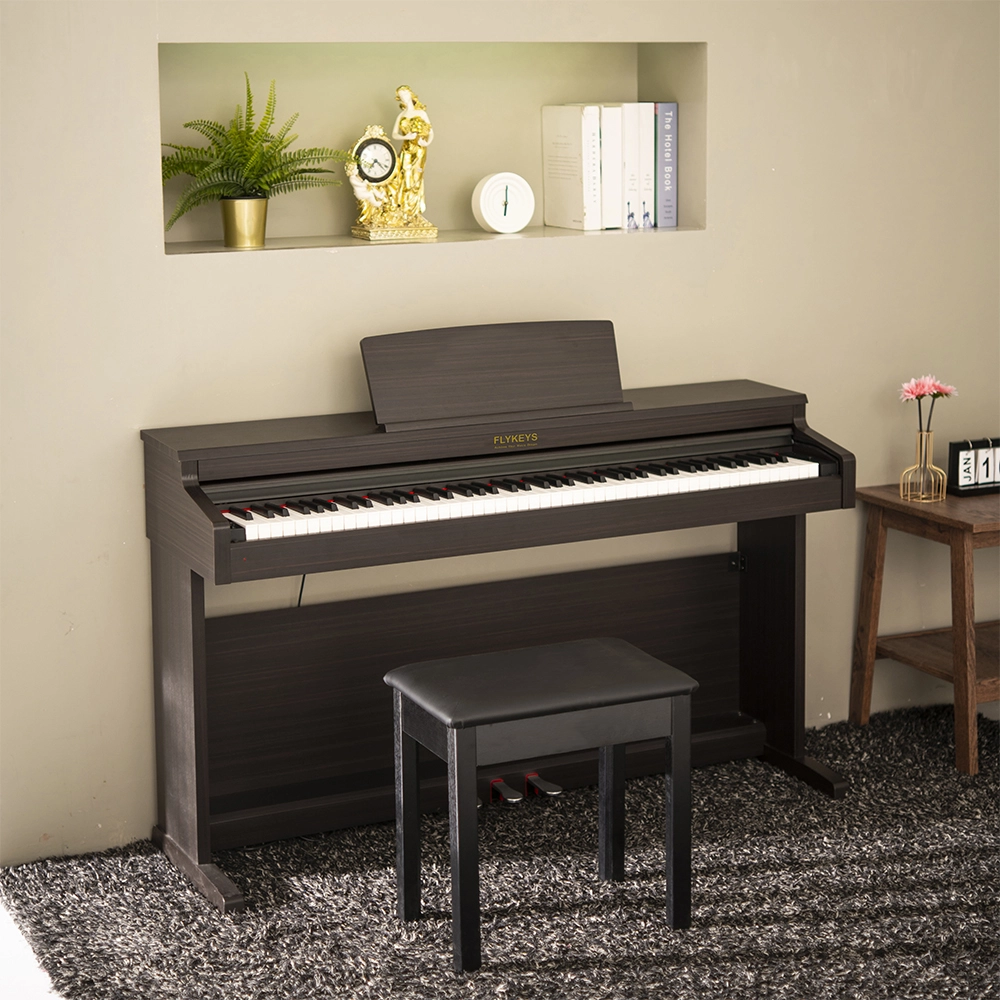
— Standard Upright Digital Piano
— Independent patented technology 88-key Grand-Response hammer-action & dynamic curve keyboard
— European top DSP chip, famous grand piano sound sample
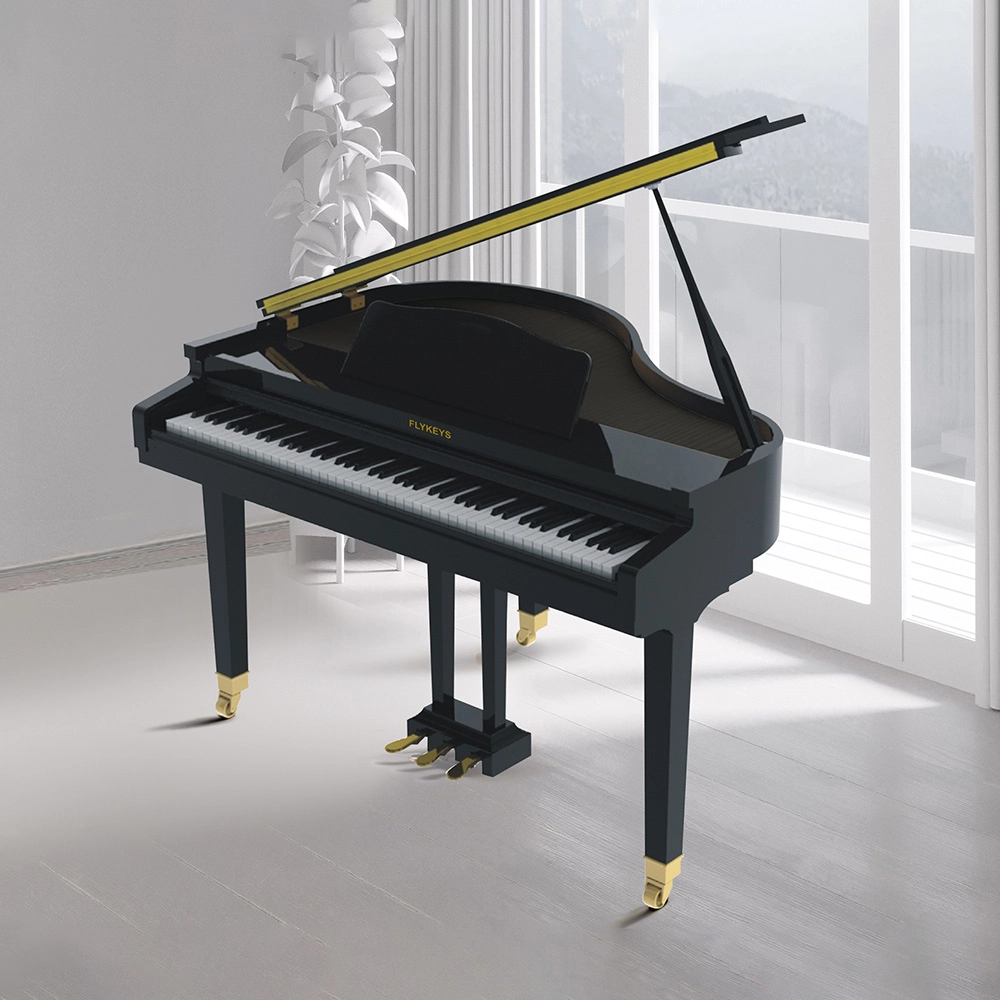
• Baby Grand Style with High-Gloss Polished Cabinet
• Italian Fatar 88-key Grand-Response™ Keyboard with Hammer Action and Touch Curve
• Independently Developed DSP Chip with German Grand Piano Sound Sampling
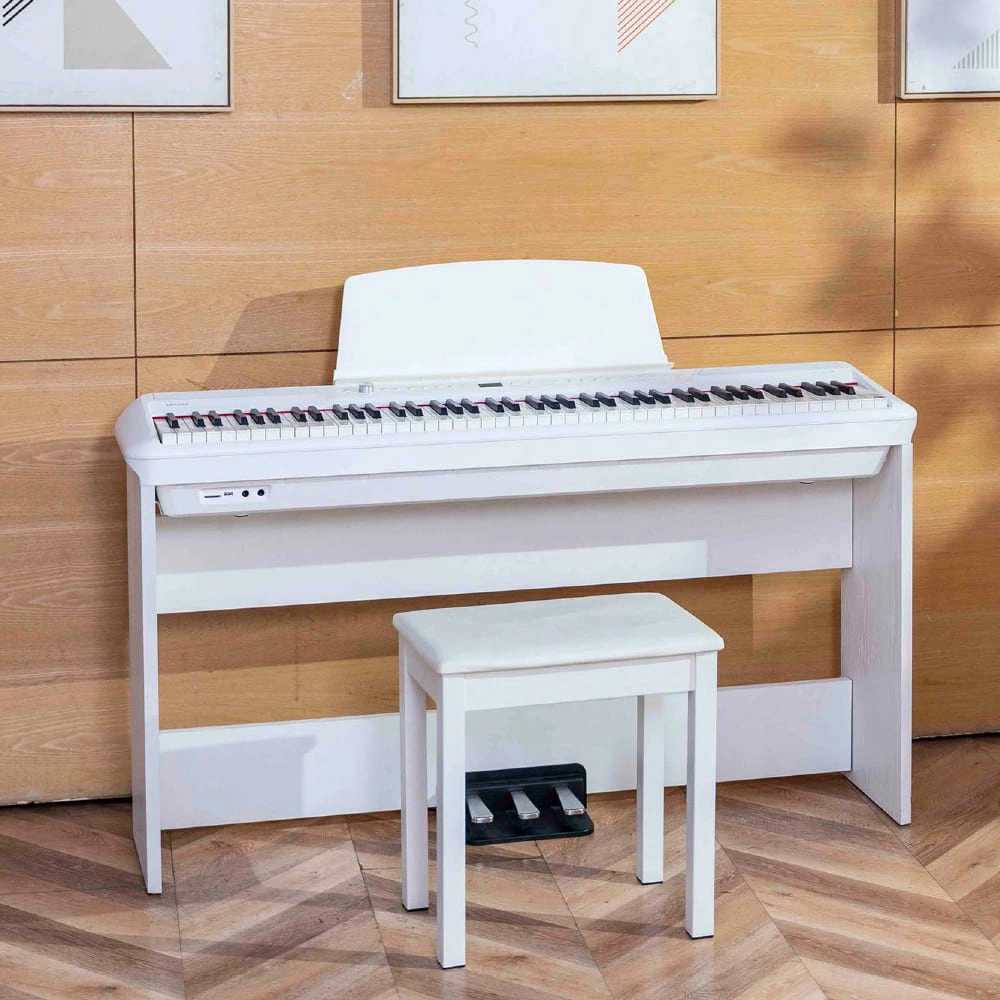
—keyboard: Independent patented technology 88-key, Grand-Response hammer dynamic curve keyboard
—Sound source: Independently developed the 4th generation DSP sound source, German famous grand piano sound sample
— Modern, lightweight case, X stand, U stand, Wood stand, 3 pedals
— Control: double sound, record, split, transpose, reverb, chorus, metronome, MIDI, bluetooth
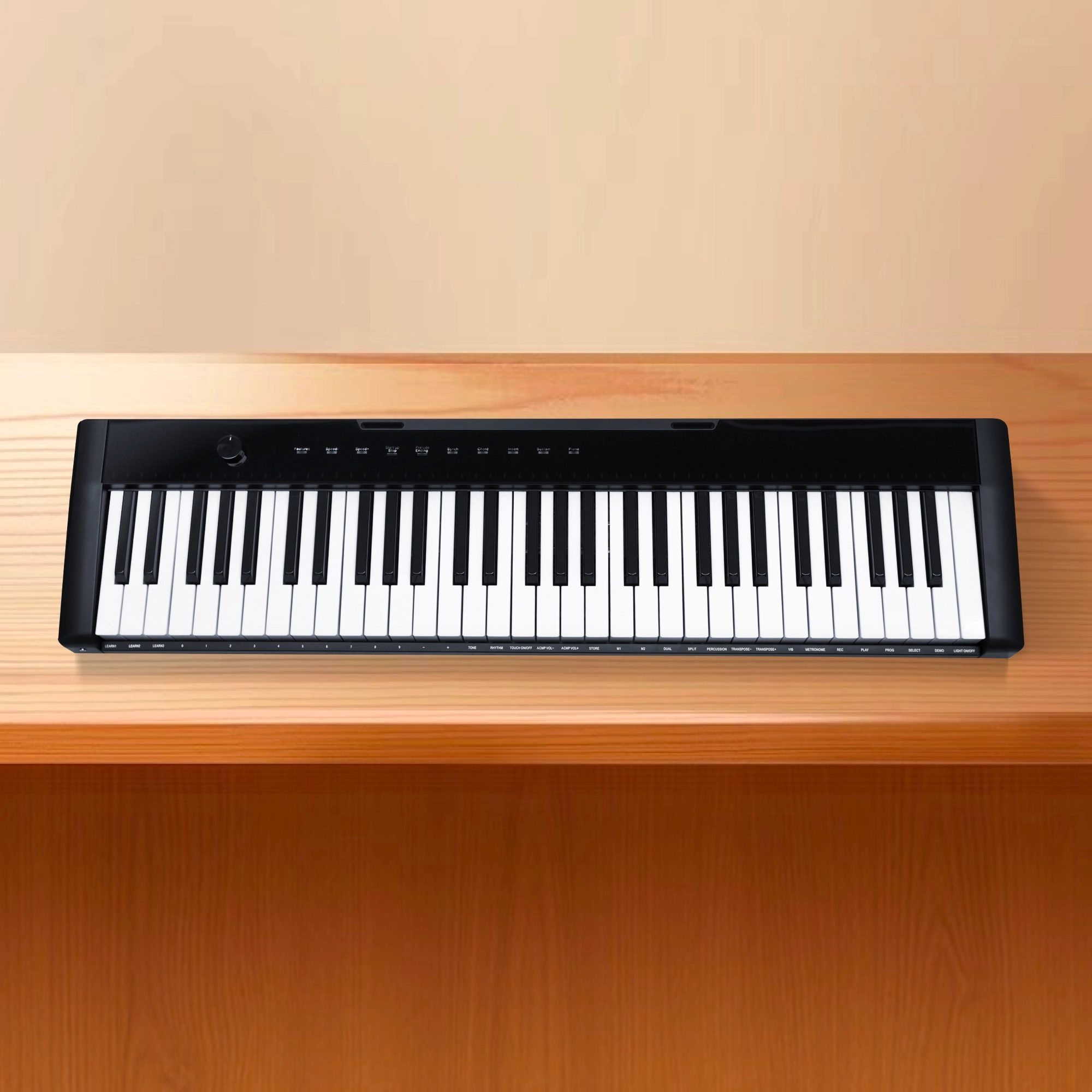
The keyboard features 61 touch-sensitive piano keys, 61 percussion sounds, 600 sounds, 100 demo songs, and 200 rhythms. It includes touch panel control with recording, programming, and playback functions, sync and fill-in functions, metronome function (master volume, accompaniment volume, and tempo control), sound expansion, vibrato, transpose, dual voice, and keyboard functions. Bluetooth and USB cable connectivity support connection with the learning app, which provides three learning modes: duet mode, continuous practice mode, and demonstration mode.
Address: No. 38 Xiangshan Avenue, Zengcheng Economic And Technological Development Zone, Guangzhou, China.
FOLLOW US:
Copyright© 2026 FLYKEYS All Rights Reserved. 粤 ICP备2020102774号. Designed by Gooeyun. Sitemap | Privacy | Terms
FLYKEYS
FLYKEYS
flykeys-music
Flykeys Music