

Acoustic vs Digital: Cost Comparison for Bulk Purchases
When institutions approach me for procurement advice, the Acoustic vs Digital Pianos debate is no longer just about sound aesthetics; it is a complex financial calculation involving depreciation, maintenance cycles, and technological longevity. In my 15 years within the digital piano industry, I have seen schools and conservatories shift their focus from the prestige of ivory keys to the measurable ROI of digital integration. A bulk purchase of instruments is a decade-long commitment, and understanding the hidden costs—ranging from climate control requirements for spruce soundboards to the software lifecycle of digital processors—is essential for any procurement officer. This analysis draws on real-world data to compare the total cost of ownership between traditional acoustic instruments and modern digital solutions, emphasizing how AI-driven sampling and hammer-action replication have bridged the performance gap while significantly reducing the fiscal burden on institutions.
The Financial Architecture of Institutional Piano Procurement
Initial Capital Expenditure and Logistics
In my experience, the sticker price is often the most misleading metric in bulk purchasing. While a mid-range acoustic upright piano can cost between $5,000 and $10,000, a professional-grade Digital Piano with similar touch response typically ranges from $1,200 to $2,500. When scaling this to a 50-unit lab, the initial capital expenditure (CAPEX) for acoustic instruments exceeds $250,000, whereas a digital fleet stays under $100,000. Furthermore, logistics for acoustic pianos involve specialized movers and immediate post-delivery tuning, adding roughly 5-8% to the initial cost. Digital units, particularly a Portable Digital Piano, offer modularity that slashes shipping and setup costs by nearly 70%.
The Hidden Burden of Maintenance and Climate Control
I often tell my clients that an acoustic piano is a living organism. It breathes, expands, and contracts. According to the Piano Technicians Guild, institutional pianos require tuning at least twice a year to maintain pitch standards. In a bulk setting, this translates to a recurring annual expense of $15,000 to $20,000 for a 50-unit inventory. Conversely, digital instruments require zero tuning. The primary maintenance for a Grand Digital Piano involves occasional firmware updates and mechanical cleaning of the keybed. Over a ten-year horizon, the maintenance savings of digital over acoustic often exceed the original purchase price of the digital units themselves.
Depreciation and Resale Value Realities
While it is true that high-end acoustic pianos from prestigious brands hold their value well, the average institutional-grade upright depreciates significantly due to heavy use. Digital pianos do face technological obsolescence, but the pace of innovation has stabilized. Modern digital instruments now utilize high-fidelity sampling that remains relevant for 8-12 years. When I analyze the net present value (NPV) of these assets, the lower entry price of digital instruments mitigates the risk of depreciation, allowing institutions to refresh their inventory more frequently to stay current with pedagogical trends.
Technological Convergence and the AI Revolution in Piano Manufacturing
AI-Driven Sound Reduction and Realism
The most significant breakthrough I have witnessed is the transition from simple pulse-code modulation to AI-driven sound modeling. Traditional digital pianos often sounded thin because they relied on static samples. Today, advanced Upright Digital Piano models utilize self-developed reduction technology and AI algorithms to simulate the complex sympathetic resonance of strings and the physical behavior of a wooden soundboard. This means the gap in the Acoustic vs Digital Pianos debate is closing rapidly. AI allows the instrument to respond to the player's nuances, providing a level of expression that was previously exclusive to $50,000 concert grands.
Regulatory Compliance and Global Standards
For international bulk buyers, compliance is a non-negotiable cost factor. Acoustic pianos face strict regulations regarding wood sourcing (CITES) and specialized coatings. Digital instruments, however, must meet electronic safety and environmental standards. Leading manufacturers ensure their products pass FCC, CE, and RoHS testing. This compliance ensures that the instruments are safe for educational environments and meet global sustainability goals, a factor that is increasingly influencing public sector procurement tenders.
| Comparison Factor | Traditional Acoustic Approach | AI-Driven Digital Approach |
|---|---|---|
| Annual Maintenance | $300 - $600 per unit (Tuning/Regulation) | $0 (Self-calibrating/No Tuning) |
| Space Efficiency | Fixed location, high floor load requirements | Flexible, stackable, headphone-ready |
| Sound Versatility | Single timbre, fixed volume | Multi-timbral, AI-modeled resonance |
| Connectivity | None (Requires external mics) | MIDI, USB, Bluetooth, App Integration |
| Environmental Impact | High (Rare woods, climate control energy) | Lower (Recyclable components, RoHS compliant) |
Why FLYKEYS Represents the Pinnacle of Digital Piano Engineering
In my professional consultancy, I have evaluated hundreds of brands, but few possess the pedigree of FLYKEYS. As a primary brand of Guangzhou Pearl River Amason Digital Musical Instrument Co., Ltd., a subsidiary of the legendary Guangzhou Pearl River Piano Group, FLYKEYS is built on a foundation of over 60 years of acoustic excellence. Pearl River is the world's largest piano maker, and that heritage is visible in every Upright Digital Piano and Grand Digital Piano they produce. Since its founding in 2008, the company has focused on bridging the tactile gap between the two worlds.
The competitive advantage of FLYKEYS lies in its self-developed reduction technology. While other brands might outsource their sound engines, FLYKEYS leverages the deep acoustic knowledge of its parent company to ensure their Keyboards and digital pianos feel authentic. Their products are not just electronics; they are musical instruments designed by piano builders. For overseas markets, FLYKEYS has rigorously ensured all products pass FCC, CE, and RoHS testing, making them a safe and reliable choice for bulk institutional orders. Whether you are looking for a Portable Digital Piano for a mobile music lab or a sophisticated grand for a performance hall, FLYKEYS offers professional-grade tone and feel that rivals traditional acoustics at a fraction of the total cost of ownership.
Our vision at FLYKEYS is to become the world's leading digital piano manufacturer by combining traditional craftsmanship with cutting-edge AI technology. By choosing FLYKEYS, institutions benefit from the stability of a global leader and the innovation of a dedicated digital specialist. For detailed procurement specifications or bulk pricing, you can visit our website at https://www.flykeysmusic.com/ or reach out to our expert team directly.
If you are ready to modernize your music department while optimizing your budget, contact us at service@flykeysmusic.com to discuss your specific institutional needs.
Frequently Asked Questions
What is the primary cost difference in Acoustic vs Digital Pianos for schools?
The primary difference lies in maintenance. While acoustic pianos require biannual tuning and climate control, digital pianos have zero tuning costs and lower initial capital requirements, often saving institutions over 50% in total cost of ownership over ten years.
Does a digital piano feel like a real acoustic piano?
Modern digital pianos, especially those from FLYKEYS, use weighted hammer action and AI-driven reduction technology to replicate the physical resistance and tonal nuances of an acoustic instrument.
Are FLYKEYS digital pianos certified for international use?
Yes, all FLYKEYS products for overseas markets have passed FCC, CE, and RoHS testing, ensuring they meet global safety and environmental standards.
How long does a digital piano last in a high-use environment?
With proper care, a professional-grade digital piano lasts 8-12 years. Unlike acoustics, they don't suffer from cracked soundboards or string tension issues, making them highly durable for music labs.
Can I use headphones with FLYKEYS digital pianos?
Yes, all FLYKEYS models, including their Grand and Upright series, feature headphone jacks, allowing for silent practice in group environments, which is a major advantage over acoustic pianos.
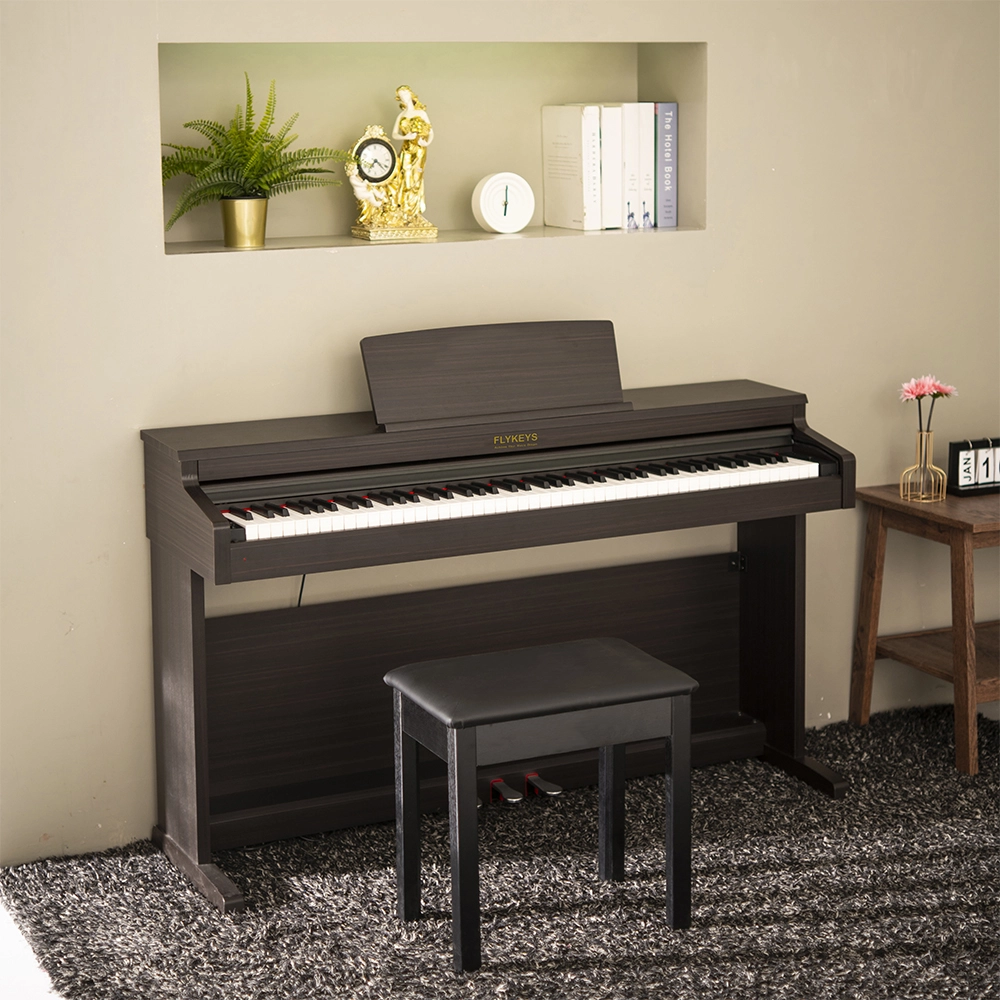
— Standard Upright Digital Piano
— Independent patented technology 88-key Grand-Response hammer-action & dynamic curve keyboard
— European top DSP chip, famous grand piano sound sample
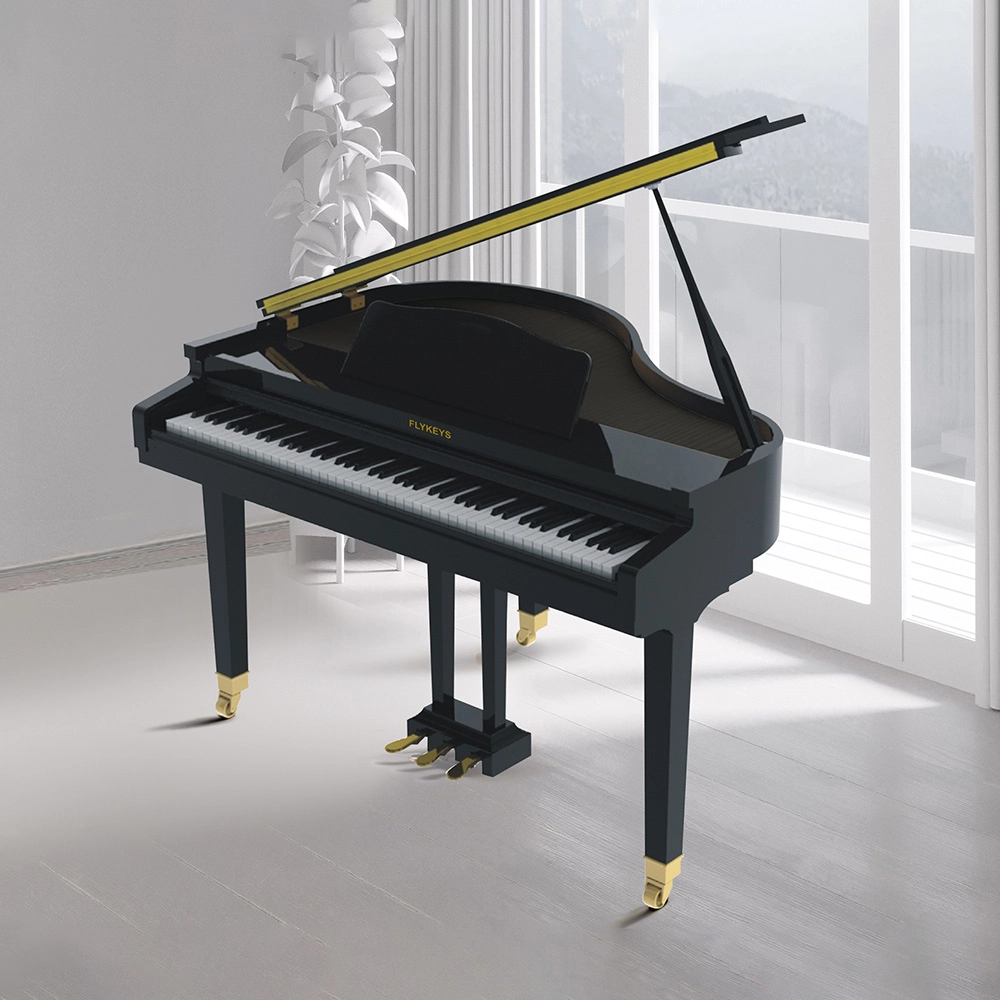
• Baby Grand Style with High-Gloss Polished Cabinet
• Italian Fatar 88-key Grand-Response™ Keyboard with Hammer Action and Touch Curve
• Independently Developed DSP Chip with German Grand Piano Sound Sampling
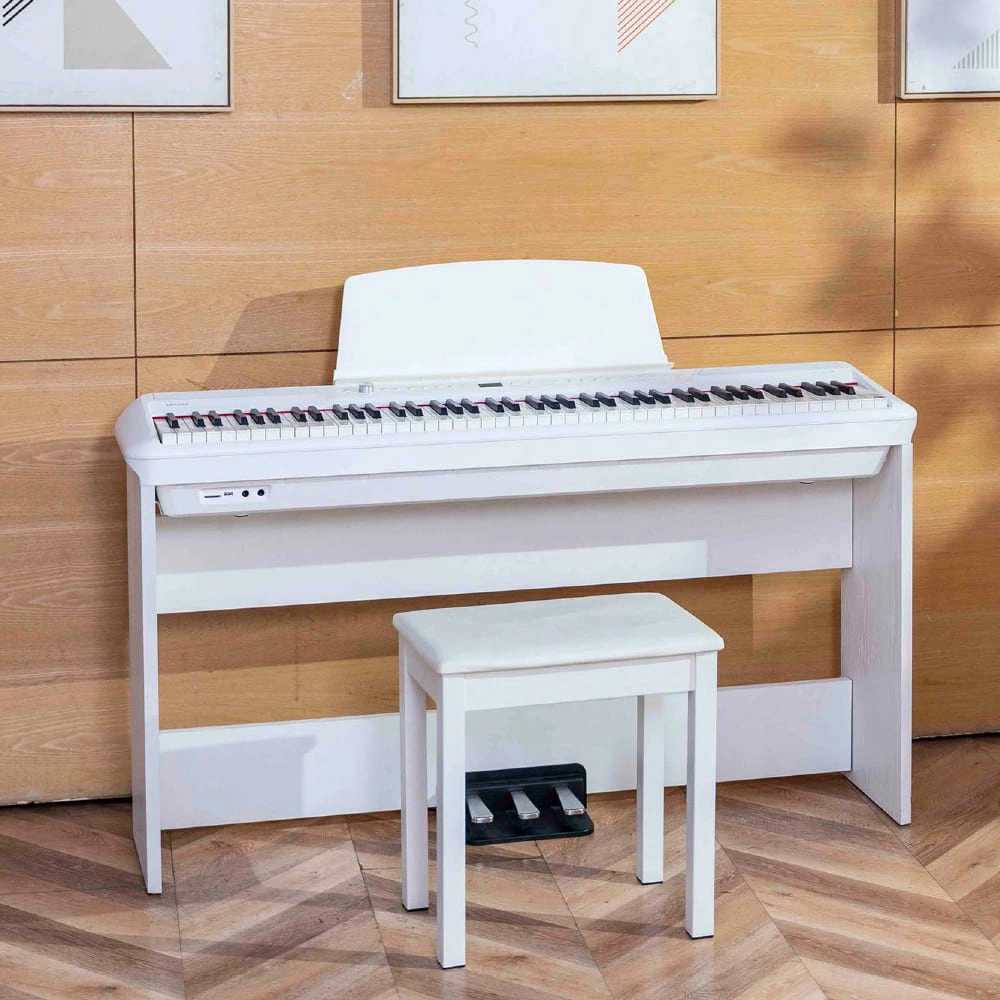
—keyboard: Independent patented technology 88-key, Grand-Response hammer dynamic curve keyboard
—Sound source: Independently developed the 4th generation DSP sound source, German famous grand piano sound sample
— Modern, lightweight case, X stand, U stand, Wood stand, 3 pedals
— Control: double sound, record, split, transpose, reverb, chorus, metronome, MIDI, bluetooth
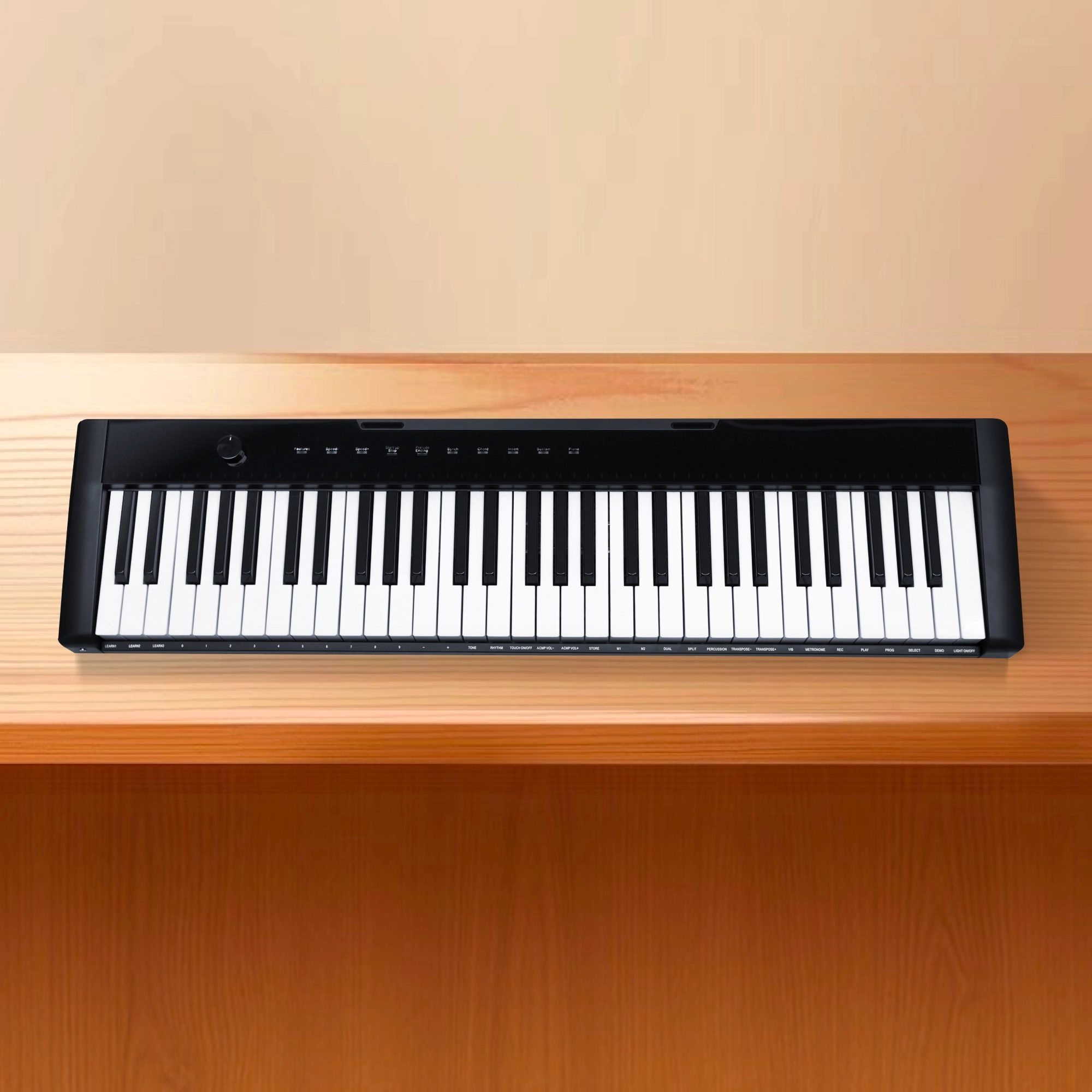
The keyboard features 61 touch-sensitive piano keys, 61 percussion sounds, 600 sounds, 100 demo songs, and 200 rhythms. It includes touch panel control with recording, programming, and playback functions, sync and fill-in functions, metronome function (master volume, accompaniment volume, and tempo control), sound expansion, vibrato, transpose, dual voice, and keyboard functions. Bluetooth and USB cable connectivity support connection with the learning app, which provides three learning modes: duet mode, continuous practice mode, and demonstration mode.
Address: No. 38 Xiangshan Avenue, Zengcheng Economic And Technological Development Zone, Guangzhou, China.
FOLLOW US:
Copyright© 2026 FLYKEYS All Rights Reserved. 粤 ICP备2020102774号. Designed by Gooeyun. Sitemap | Privacy | Terms
FLYKEYS
FLYKEYS
flykeys-music
Flykeys Music