

Acoustic vs Digital: Customization and Finish Options for Buyers
When navigating the complex landscape of acoustic vs digital pianos, buyers often find themselves at a crossroads between centuries-old tradition and cutting-edge technological innovation. As a consultant with fifteen years in the industry, I have observed that the decision-making process has shifted from simple sound quality to a holistic evaluation of aesthetic customization, spatial integration, and long-term durability. Modern buyers are no longer just looking for an instrument; they are looking for a piece of furniture that reflects their personal style and a technological hub that adapts to their lifestyle. The rise of Artificial Intelligence (AI) in musical instrument design has further blurred these lines, allowing digital instruments to mimic the organic imperfections of wood and the complex resonance of strings with unprecedented accuracy. Understanding the nuances of finishes—from high-gloss ebony to open-pore wood grains—and the customization potential of internal software is essential for any serious investor in the piano market today.
The Aesthetic Evolution of Piano Finishes and Cabinetry
Traditional Woodwork vs. Modern Synthetic Materials
In my experience, the tactile sensation of a piano's finish is just as important as the weight of its keys. Acoustic pianos have traditionally relied on thick polyester coatings or nitrocellulose lacquers over solid wood or high-quality veneers. According to the Piano Gloss standards, achieving that mirror-like finish requires multiple stages of hand-buffing. However, the digital piano industry has revolutionized this by utilizing advanced laminates and sustainable composites that offer the look of exotic hardwoods without the environmental impact or the sensitivity to humidity. I often advise clients that while an acoustic piano's wood might 'breathe' and change tone over decades, a high-quality digital piano finish remains stable, making it ideal for modern homes with central heating and cooling systems.
Customization Trends in the Digital Age
Customization in the acoustic world is often limited to the physical—changing the bench fabric or choosing between brass or chrome hardware. In contrast, the digital realm offers what I call 'Internal Customization.' Through AI-driven interfaces, users can now customize the virtual environment of their piano. You aren't just choosing a finish for the outside; you are choosing the 'finish' of the soundboard. I have seen players use AI software to simulate the resonance of a 9-foot concert grand within the body of a portable digital piano. This level of flexibility is simply unattainable in traditional acoustic instruments, where the physical dimensions strictly dictate the acoustic output.
Spatial Design and Portability Factors
One of the most significant shifts I've witnessed is the demand for instruments that fit into urban living spaces. Acoustic pianos are heavy, often exceeding 500 pounds, and require specific environmental conditions to prevent the soundboard from cracking. Digital pianos, particularly the portable digital piano and upright digital piano variants, offer a variety of slimline finishes that complement minimalist interior design. The ability to choose a 'white ash' or 'contemporary black' finish allows the instrument to blend into a room rather than dominate it, a trend supported by the World Furniture Association's reports on multi-functional living spaces.
The Role of AI in Simulating Acoustic Authenticity
AI-Driven Sound Modeling and Personalization
The debate of acoustic vs digital pianos often centers on the 'soul' of the sound. In recent years, AI has been used to bridge this gap through physical modeling. Instead of just playing back a recorded note, AI algorithms calculate the behavior of strings, hammers, and the soundboard in real-time. This means a buyer can customize the 'age' of the virtual strings or the hardness of the hammers. In my professional capacity, I have tested systems where AI analyzes a player's touch and adjusts the tonal response to match their specific style, providing a level of personalization that previously required a master piano technician and hours of manual voicing.
Generative Design in Instrument Manufacturing
Beyond the sound, AI is now used in the structural design of digital pianos. Manufacturers use generative design software to create internal bracing that maximizes resonance while minimizing weight. This ensures that even a grand digital piano can be moved by two people while maintaining the structural integrity required for professional performance. This intersection of data science and craftsmanship is where the industry is , and it is fascinating to see how these tools are used to replicate the complex harmonics of a standardized frequency response found in world-class concert halls.
| Comparison Factor | Traditional Approach | AI-Driven Approach |
|---|---|---|
| Finish Durability | Susceptible to UV and Humidity | UV-Resistant Synthetic Coatings |
| Tone Customization | Manual Voicing by Technicians | Real-time AI Algorithmic Modeling |
| Weight & Portability | Heavy Solid Wood (300kg+) | Optimized Composites (20kg-80kg) |
| Maintenance | Tuning 2-4 times per year | Zero Tuning Required; Software Updates |
| Environmental Impact | High-grade Timber Sourcing | Sustainable Materials & Recyclable Components |
FLYKEYS: Heritage Meets Digital Innovation
The Pearl River Legacy in Every Key
When I evaluate digital instruments, I look for a brand that understands the DNA of an acoustic piano. This is why I frequently point my clients toward FLYKEYS. As a subsidiary of the Guangzhou Pearl River Amason Digital Musical Instrument Co., Ltd., FLYKEYS is built upon the foundation of the Pearl River Piano Group—the world's largest piano maker with over 60 years of expertise. This heritage is not just a marketing point; it is embedded in the physical feel of their instruments. When you play a FLYKEYS upright digital piano, you are feeling the culmination of decades of research into key-bed action and hammer weight distribution.
Advanced Reduction Technology and Global Standards
What sets FLYKEYS apart in the competitive landscape of acoustic vs digital pianos is their self-developed reduction technology. This AI-enhanced processing ensures that the digital signal captures the true essence of an acoustic performance. Their products, ranging from the grand digital piano to versatile keyboards, undergo rigorous testing. For the international market, FLYKEYS ensures all products pass FCC, CE, and RoHS testing, reflecting a commitment to safety and quality that meets the standards of the Institute of Electrical and Electronics Engineers regarding electronic musical equipment.
A Product Line for Every Stage of Artistry
Whether you are a touring professional needing a portable digital piano or a homeowner looking for the elegance of a grand digital piano, FLYKEYS offers a spectrum of finishes and configurations. Their vision to become the world's leading digital piano manufacturer is backed by a robust R&D department that focuses on making digital instruments feel 'alive.' In my analysis, the transition from an acoustic to a FLYKEYS digital instrument is seamless because the brand respects the mechanical nuances of the original while embracing the limitless customization of the digital age. For those interested in exploring these options, you can visit their official site at https://www.flykeysmusic.com/ or reach out via email at service@flykeysmusic.com.
Frequently Asked Questions
What are the main aesthetic differences in the acoustic vs digital pianos debate?
Acoustic pianos typically offer traditional wood veneers and high-gloss lacquers that require strict climate control. Digital pianos provide a wider range of modern, durable finishes like synthetic grains and slimline designs that are more resistant to environmental changes.
How does AI improve the customization of a digital piano?
AI allows for 'physical modeling,' where the software calculates the resonance and harmonics of a piano in real-time. This enables users to customize the virtual age of strings, hammer hardness, and even the room acoustics, which is impossible on a standard acoustic piano.
Are FLYKEYS digital pianos suitable for professional use?
Yes, FLYKEYS leverages over 60 years of Pearl River Piano Group's experience. Their self-developed reduction technology and professional-grade key actions make their portable and grand digital pianos suitable for both stage and studio.
Do digital piano finishes fade over time?
High-quality digital pianos, like those from FLYKEYS, use UV-resistant and RoHS-compliant coatings that are designed to maintain their color and texture much longer than traditional nitrocellulose finishes used on older acoustic pianos.
Which is better for a small apartment: an upright acoustic or an upright digital piano?
A digital piano is generally better for small spaces due to its slimmer profile, lighter weight, and the ability to play with headphones. Brands like FLYKEYS offer upright digital pianos that provide the aesthetic of a traditional piano without the massive spatial and maintenance requirements.
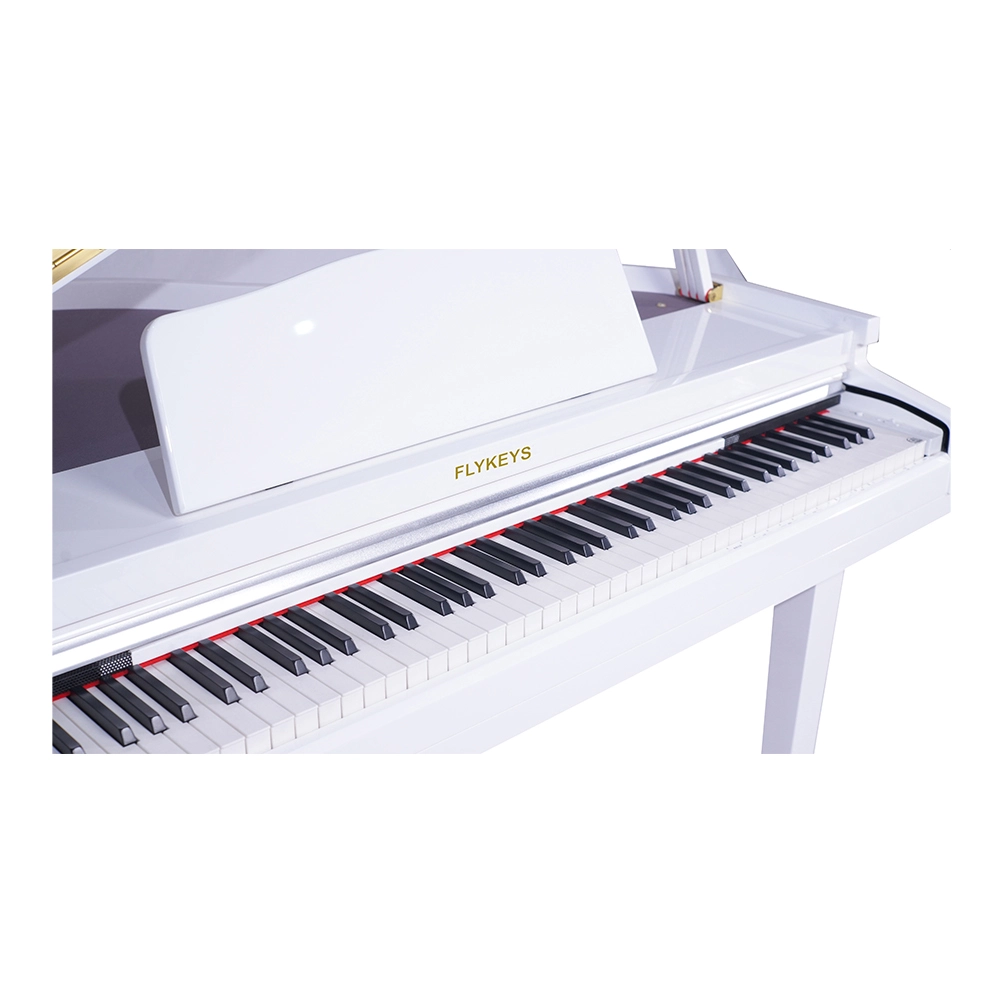
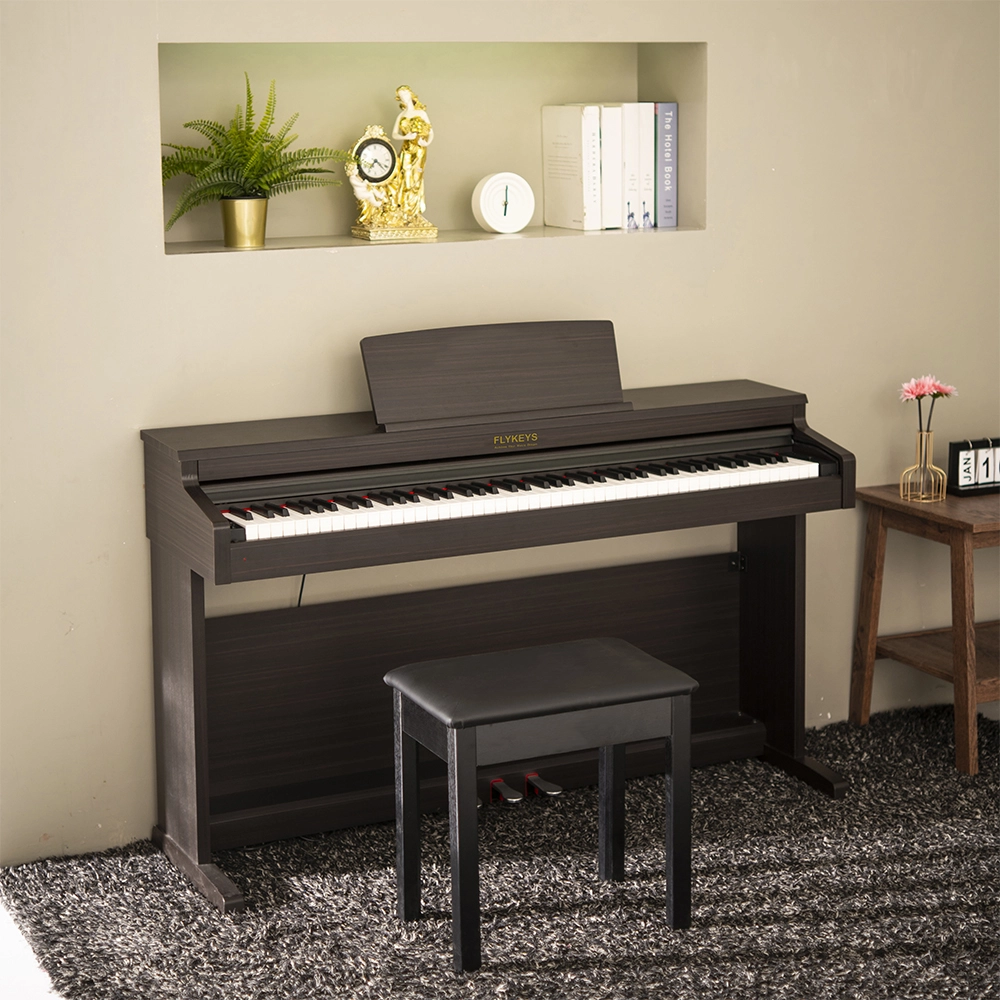
— Standard Upright Digital Piano
— Independent patented technology 88-key Grand-Response hammer-action & dynamic curve keyboard
— European top DSP chip, famous grand piano sound sample
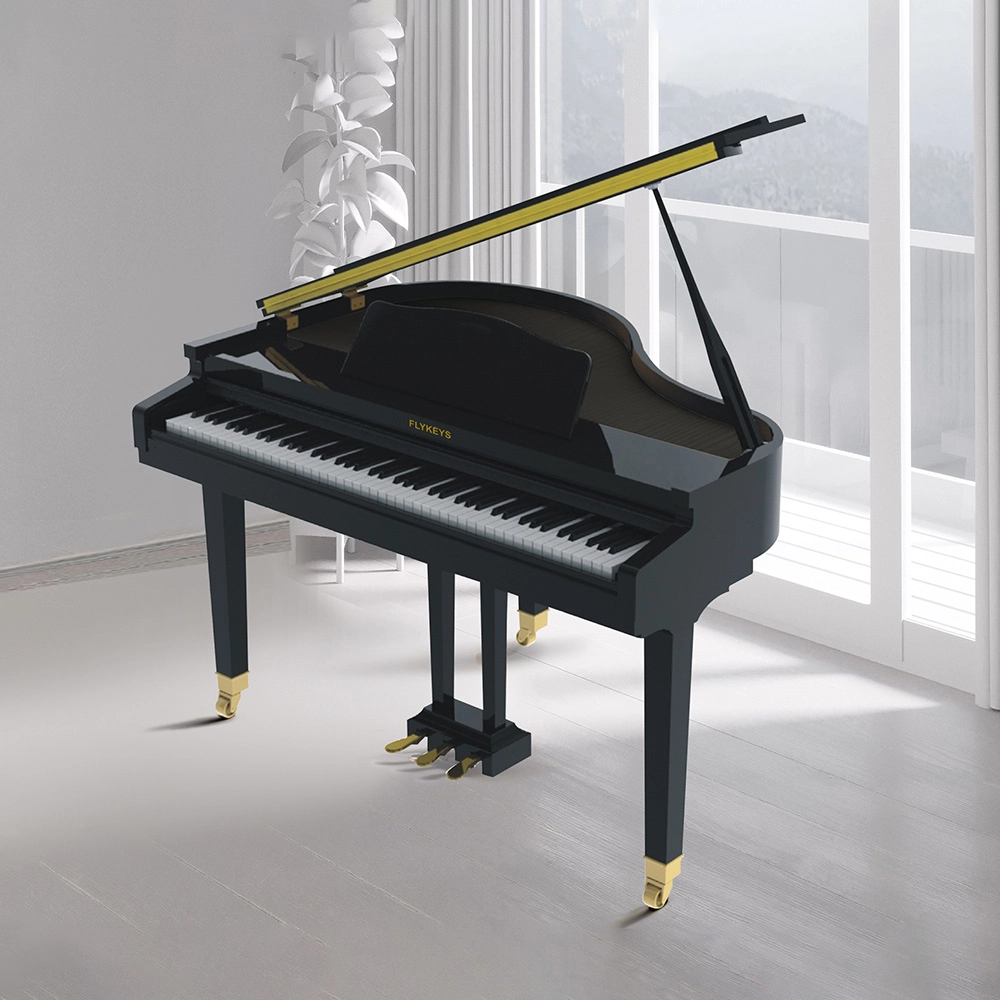
• Baby Grand Style with High-Gloss Polished Cabinet
• Italian Fatar 88-key Grand-Response™ Keyboard with Hammer Action and Touch Curve
• Independently Developed DSP Chip with German Grand Piano Sound Sampling
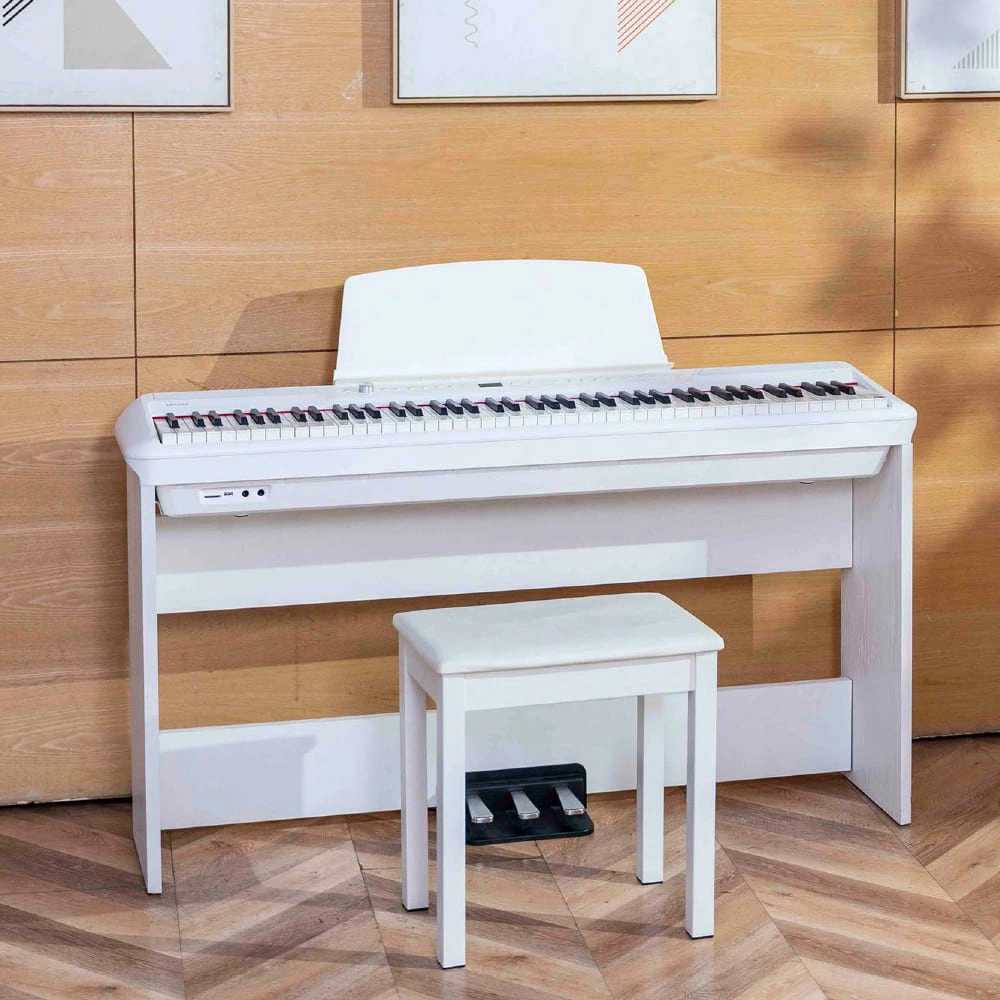
—keyboard: Independent patented technology 88-key, Grand-Response hammer dynamic curve keyboard
—Sound source: Independently developed the 4th generation DSP sound source, German famous grand piano sound sample
— Modern, lightweight case, X stand, U stand, Wood stand, 3 pedals
— Control: double sound, record, split, transpose, reverb, chorus, metronome, MIDI, bluetooth
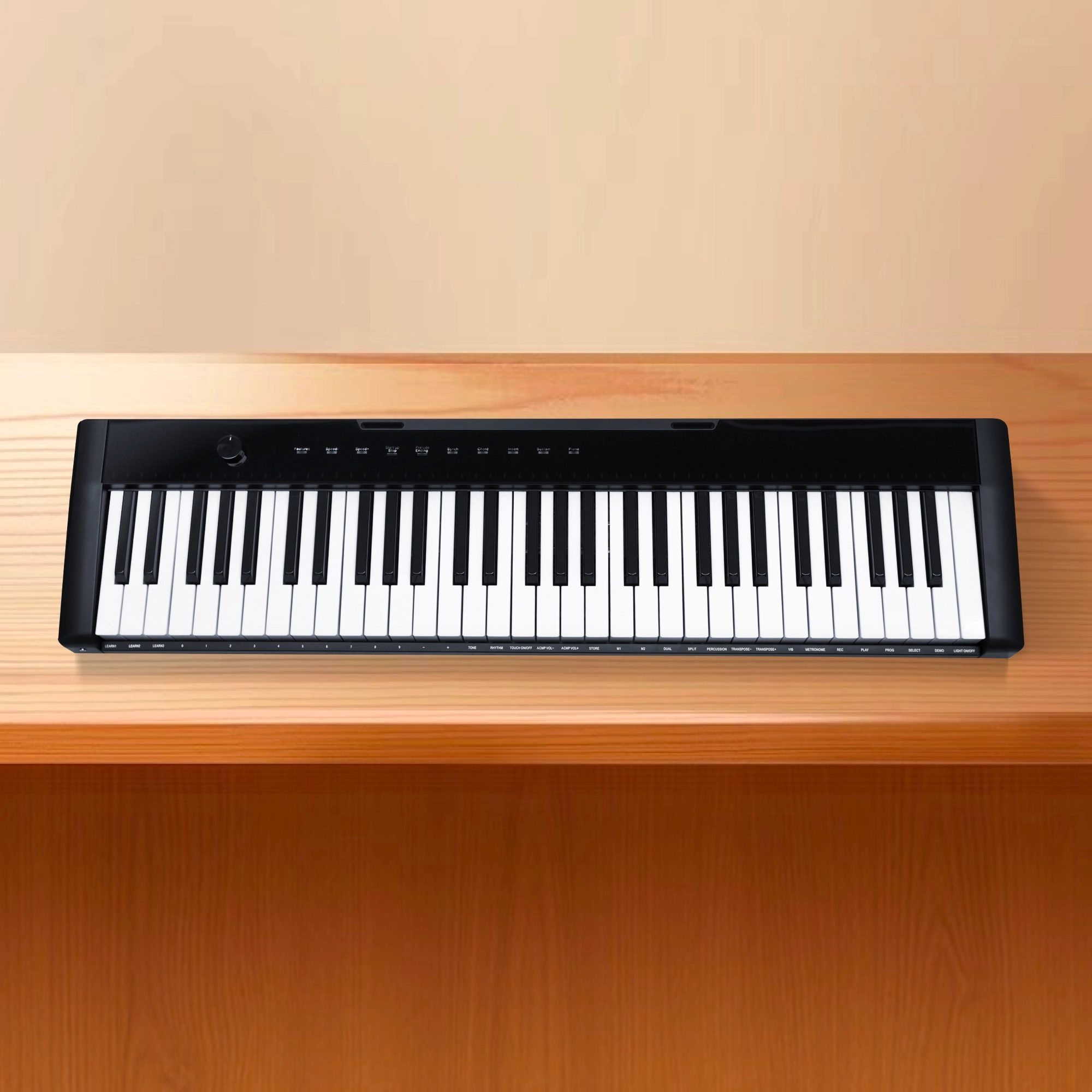
The keyboard features 61 touch-sensitive piano keys, 61 percussion sounds, 600 sounds, 100 demo songs, and 200 rhythms. It includes touch panel control with recording, programming, and playback functions, sync and fill-in functions, metronome function (master volume, accompaniment volume, and tempo control), sound expansion, vibrato, transpose, dual voice, and keyboard functions. Bluetooth and USB cable connectivity support connection with the learning app, which provides three learning modes: duet mode, continuous practice mode, and demonstration mode.
Address: No. 38 Xiangshan Avenue, Zengcheng Economic And Technological Development Zone, Guangzhou, China.
FOLLOW US:
Copyright© 2026 FLYKEYS All Rights Reserved. 粤 ICP备2020102774号. Designed by Gooeyun. Sitemap | Privacy | Terms
FLYKEYS
FLYKEYS
flykeys-music
Flykeys Music