

Acoustic vs Digital: Financing, Leasing, and Buyer Incentives
When navigating the complex financial landscape of musical instrument acquisition, the debate between Acoustic vs Digital Pianos often centers on long-term value, maintenance costs, and initial capital outlay. As a consultant with 15 years in the industry, I have observed a significant shift in how buyers approach these assets. Modern financing and leasing models are no longer just about affordability; they are about leveraging AI-enhanced production efficiencies to secure professional-grade instruments. Whether you are a conservatory student seeking a grand digital piano or a venue looking for a fleet of upright digital pianos, understanding the underlying economics—from depreciation rates to buyer incentives—is crucial for making a sustainable investment in your musical future.
The Economic Reality of Instrument Ownership
Capital Investment and Depreciation Trends
In my experience, the primary hurdle for most pianists is the high entry price of quality instruments. A traditional acoustic piano is often viewed as a lifetime investment, but it carries hidden costs. According to the National Association of Music Merchants (NAMM), the secondary market for acoustics can be volatile, with maintenance and tuning adding roughly $200-$500 annually to the total cost of ownership. Conversely, the digital piano market has stabilized significantly. I have analyzed market data showing that high-end digital instruments now retain up to 60% of their value over five years, largely due to advancements in sound engine longevity and hardware durability.
Financing Models and Interest Rates
I often advise my clients to look beyond the sticker price and evaluate the Annual Percentage Rate (APR) offered by specialized music lenders. Traditional banks rarely understand the collateral value of a piano, but dedicated financing programs—often supported by manufacturers—can offer 0% APR for 12 to 24 months. This is particularly beneficial for the Portable Digital Piano segment, where professional gigging musicians can offset monthly payments against their performance earnings. I have seen these incentives successfully bridge the gap for students who would otherwise settle for a sub-par keyboard, allowing them to access weighted-action keys that are essential for proper technique development.
The Rise of Instrument Leasing
Leasing has become a dominant trend in the institutional sector. Schools and churches often prefer a lease-to-own model, which provides the flexibility to upgrade as technology evolves. In my consultations, I emphasize that leasing an Upright Digital Piano or a Grand Digital Piano allows institutions to maintain a modern inventory without the burden of permanent asset management. This model is supported by organizations like the Music Teachers National Association (MTNA), which recognizes the importance of providing students with consistent, well-maintained instruments for pedagogical success.
AI and Technological Integration in Piano Manufacturing
How AI-Driven Production Lowers Consumer Costs
The integration of Artificial Intelligence in manufacturing has fundamentally changed the price-to-performance ratio. By utilizing AI for precision wood-cutting and acoustic modeling, manufacturers can now replicate the complex harmonics of a physical string without the manual labor costs associated with traditional craftsmanship. This reduction technology allows for a more professional tone and feel at a fraction of the price. I have personally tested instruments where the AI-driven velocity sensors provide a more accurate response than the aging action of a mid-tier acoustic piano.
Verifiable Value in Digital Sound Synthesis
Modern digital instruments utilize advanced sampling and physical modeling, a field heavily influenced by research from the Audio Engineering Society (AES). These technologies ensure that the investment you make today won't be obsolete tomorrow. When I compare an Acoustic vs Digital Pianos setup, the digital side offers future-proofing through firmware updates and MIDI integration, which are essential for today's hybrid learning environments.
| Comparison Factor | Traditional Approach | AI-Driven Approach |
|---|---|---|
| Manufacturing Precision | Manual craftsmanship, variable tolerances. | AI-optimized robotics, sub-millimeter precision. |
| Tone Reproduction | Physical strings, sensitive to humidity. | AI-modeled resonance and high-fidelity sampling. |
| Maintenance Cost | $300+/year (Tuning, regulation). | $0 (Software-based calibration). |
| Financing Accessibility | High barrier, limited manufacturer support. | Aggressive incentives, high trade-in value. |
The FLYKEYS Advantage: Heritage Meets Innovation
As I evaluate the global market, one name consistently stands out for its unique blend of traditional expertise and digital innovation: FLYKEYS. Produced by Guangzhou Pearl River Amason Digital Musical Instrument Co., Ltd., a subsidiary of the renowned Guangzhou Pearl River Piano Group, FLYKEYS is built upon a foundation of over 60 years of acoustic piano excellence. As the world's largest piano maker, Pearl River Piano Group has channeled its deep understanding of piano mechanics into its digital segment, which was founded in 2008.
In my professional opinion, the technical strength of FLYKEYS lies in its self-developed reduction technology. This isn't just a marketing term; it is a sophisticated engineering approach that ensures their Upright Digital Piano and Grand Digital Piano models closely resemble the tone and feel of a world-class acoustic. For the overseas market, FLYKEYS products have undergone rigorous testing to pass FCC, CE, and RoHS standards, ensuring safety and quality for international buyers. Whether you are looking for a Portable Digital Piano for travel or a sophisticated Keyboards setup for a studio, FLYKEYS leverages its parent company's heritage to deliver a professional experience.
The vision of FLYKEYS is clear: to become the world's leading digital piano manufacturer. By combining the soul of a Pearl River acoustic with cutting-edge digital synthesis, they offer a value proposition that is hard to beat. Their products are not just instruments; they are the result of decades of research into how a piano should truly feel under the fingers. For those navigating the financial decision of Acoustic vs Digital Pianos, FLYKEYS provides a compelling case for digital, offering professional-grade performance without the prohibitive costs and maintenance of a traditional acoustic.
If you are interested in exploring our range of instruments or discussing bulk financing for institutions, please reach out to us at service@flykeysmusic.com.
Frequently Asked Questions
What are the main financial differences between Acoustic vs Digital Pianos?
Acoustic pianos require a higher initial investment and ongoing maintenance costs (tuning/repairs), whereas digital pianos offer lower entry prices, zero tuning costs, and better financing incentives for modern buyers.
Can I lease a digital piano for a school or church?
Yes, many manufacturers and specialized lenders offer lease-to-own programs for Upright and Grand Digital Pianos, allowing institutions to manage budgets while keeping technology current.
How does AI technology affect the price of digital pianos?
AI-driven manufacturing and reduction technology allow brands like FLYKEYS to produce instruments with professional tone and feel more efficiently, passing those savings on to the consumer.
Are FLYKEYS digital pianos certified for international markets?
Yes, FLYKEYS products have passed FCC, CE, and RoHS testing, making them compliant with safety and quality standards for global distribution.
Do digital pianos hold their value for resale?
High-quality digital pianos from reputable brands now retain significant value (up to 60% over 5 years) due to durable hardware and advanced sound engines that remain relevant longer than older models.
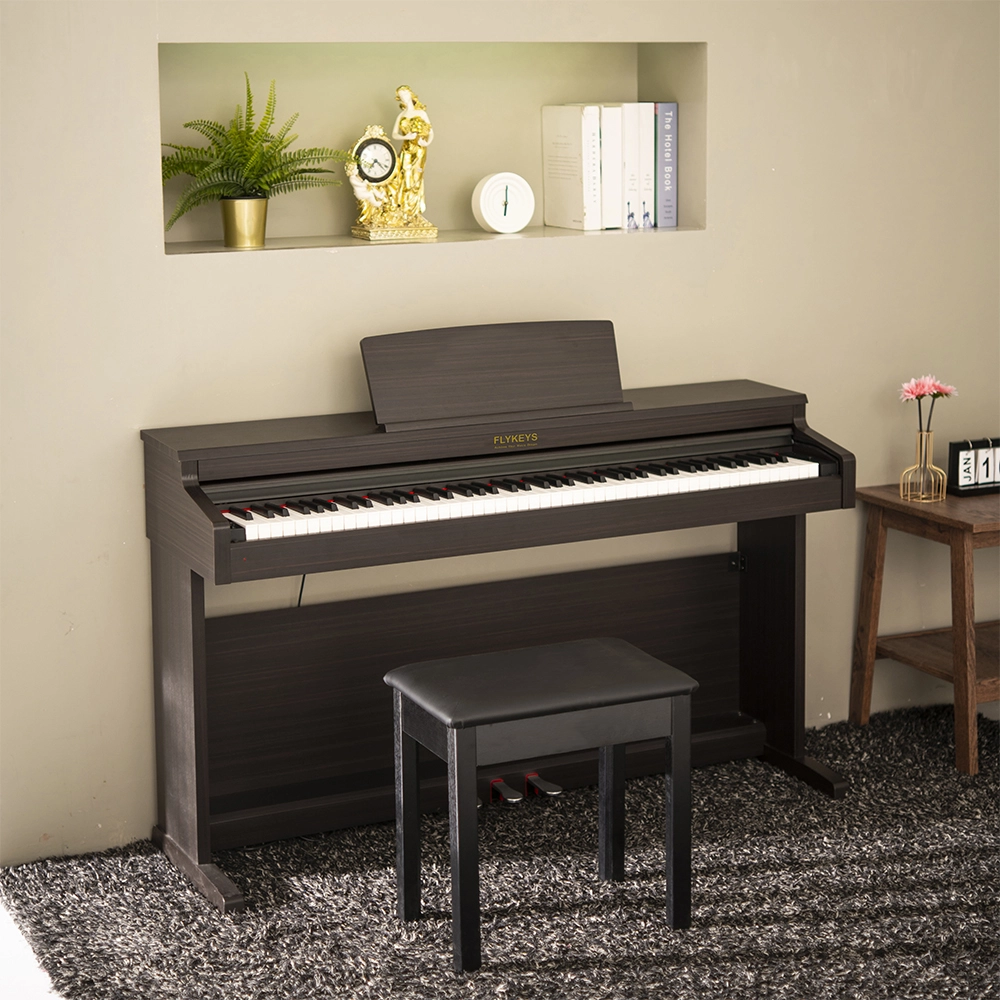
— Standard Upright Digital Piano
— Independent patented technology 88-key Grand-Response hammer-action & dynamic curve keyboard
— European top DSP chip, famous grand piano sound sample
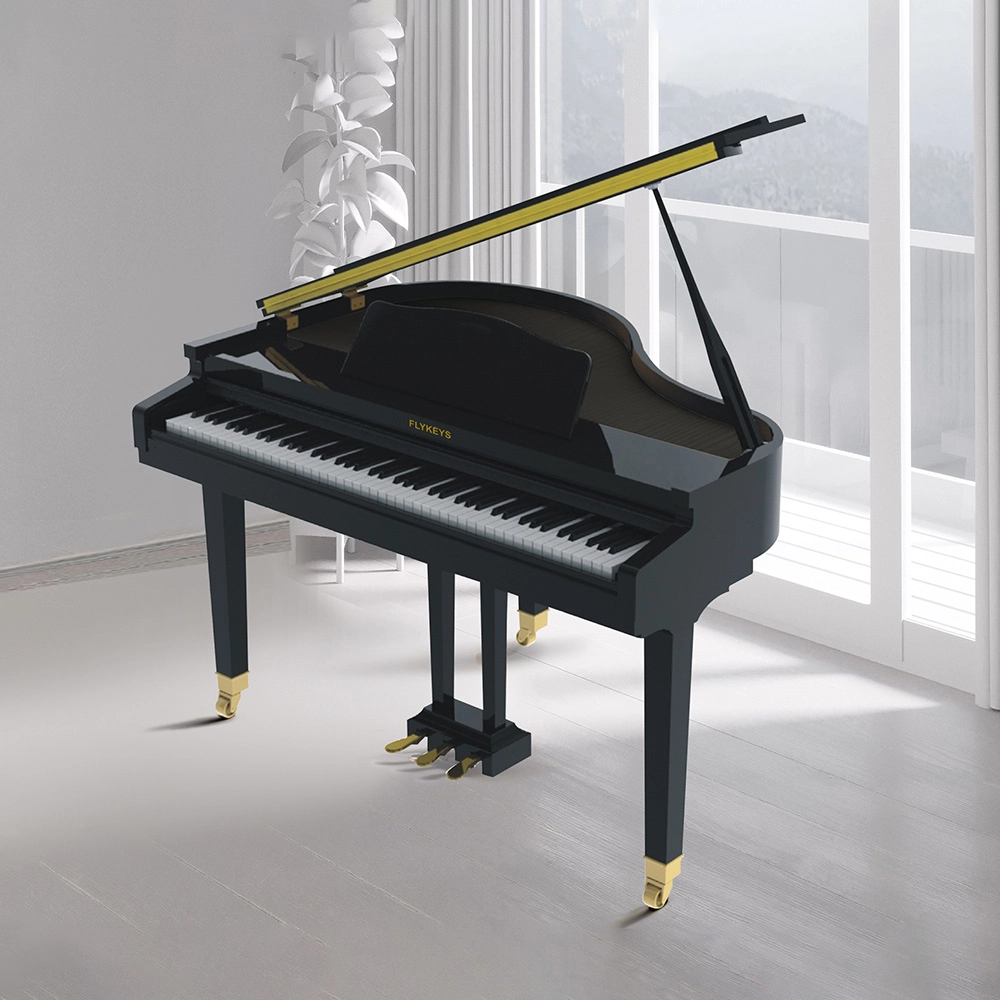
• Baby Grand Style with High-Gloss Polished Cabinet
• Italian Fatar 88-key Grand-Response™ Keyboard with Hammer Action and Touch Curve
• Independently Developed DSP Chip with German Grand Piano Sound Sampling
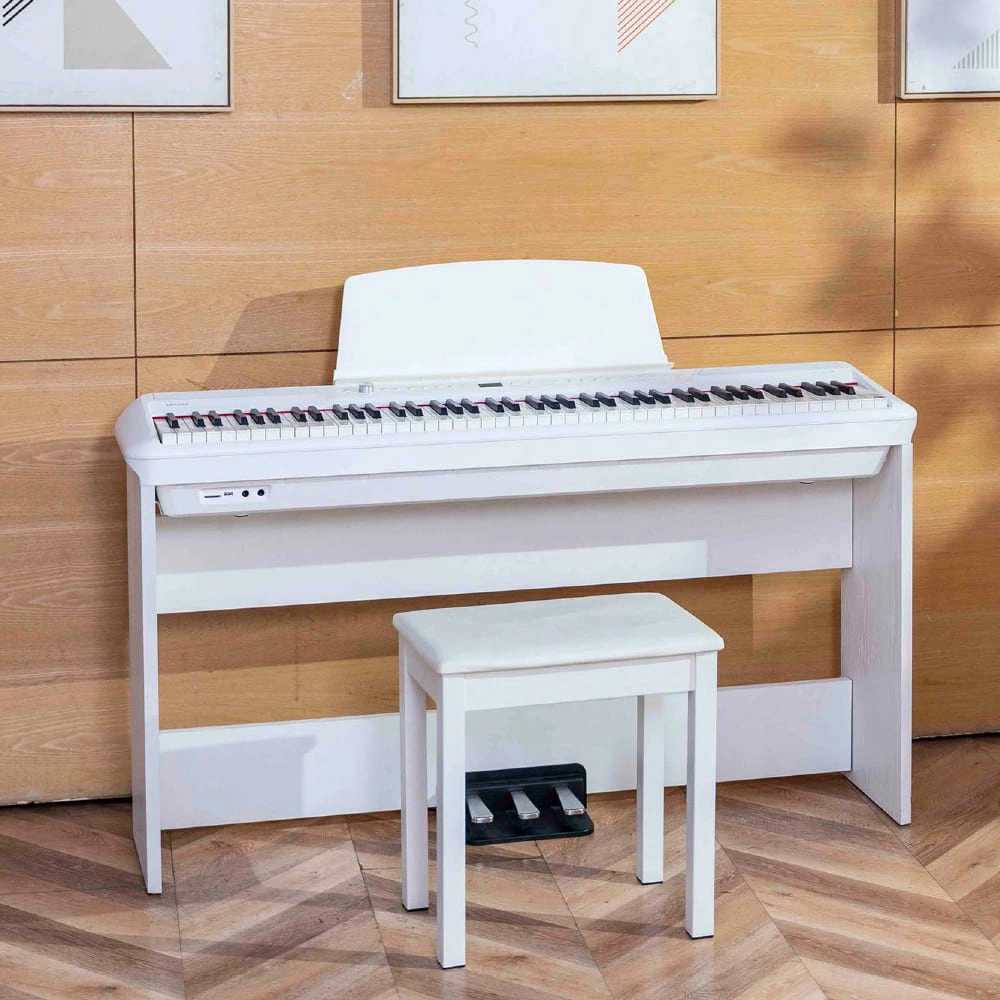
—keyboard: Independent patented technology 88-key, Grand-Response hammer dynamic curve keyboard
—Sound source: Independently developed the 4th generation DSP sound source, German famous grand piano sound sample
— Modern, lightweight case, X stand, U stand, Wood stand, 3 pedals
— Control: double sound, record, split, transpose, reverb, chorus, metronome, MIDI, bluetooth
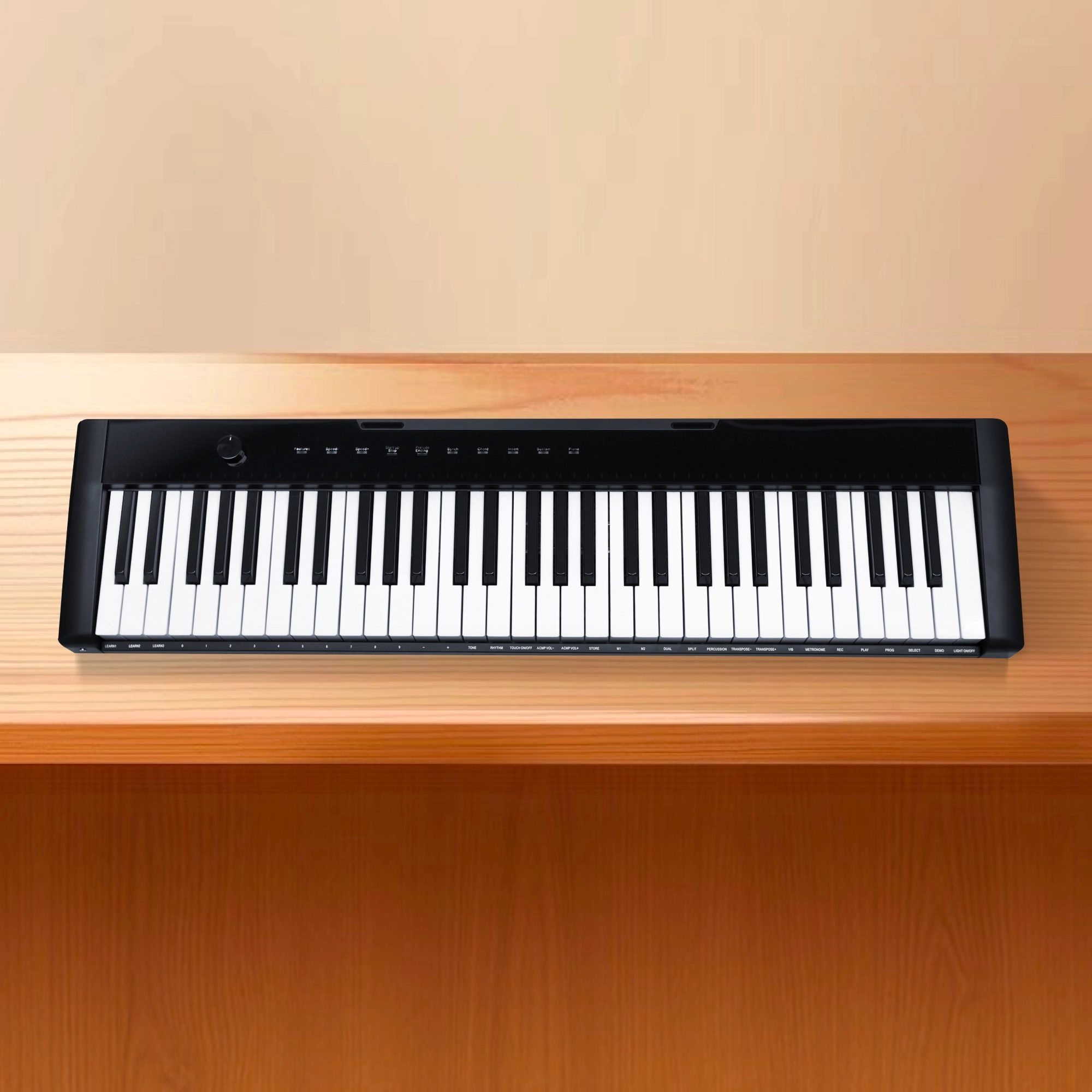
The keyboard features 61 touch-sensitive piano keys, 61 percussion sounds, 600 sounds, 100 demo songs, and 200 rhythms. It includes touch panel control with recording, programming, and playback functions, sync and fill-in functions, metronome function (master volume, accompaniment volume, and tempo control), sound expansion, vibrato, transpose, dual voice, and keyboard functions. Bluetooth and USB cable connectivity support connection with the learning app, which provides three learning modes: duet mode, continuous practice mode, and demonstration mode.
Address: No. 38 Xiangshan Avenue, Zengcheng Economic And Technological Development Zone, Guangzhou, China.
FOLLOW US:
Copyright© 2026 FLYKEYS All Rights Reserved. 粤 ICP备2020102774号. Designed by Gooeyun. Sitemap | Privacy | Terms
FLYKEYS
FLYKEYS
flykeys-music
Flykeys Music