

Acoustic vs Digital: Best Options for Home Buyers
When home buyers ask me about the definitive choice between a traditional acoustic instrument and a modern digital alternative, they are often navigating a complex intersection of heritage, technology, and lifestyle. In my fifteen years of consulting for global piano institutions, I have observed a seismic shift in how we define 'quality.' The debate of Acoustic vs Digital Pianos is no longer just about wood versus wires; it is about how sound is generated, how the action responds to the human touch, and how AI-driven sound modeling is redefining the limits of the Digital Piano. For a home environment, the decision hinges on balancing the organic resonance of physical strings with the versatility, maintenance-free nature, and spatial efficiency of high-end digital systems. Understanding the nuances of harmonic overtones and the mechanical escapement of a grand piano is essential, yet one must also weigh the advancements in sampling and physical modeling that allow modern digital instruments to replicate these sensations with startling accuracy.
The Evolution of Sound Generation and Tactile Response
In my professional experience, the primary differentiator has always been the 'soul' of the sound. An acoustic piano produces sound through a mechanical process: a key is pressed, a hammer strikes a string, and the soundboard amplifies the vibration. This creates a complex web of sympathetic resonances that are unique to every performance. According to the Wikipedia entry on Piano mechanics, the physics of the soundboard is what gives the instrument its dynamic range. However, I have seen the digital landscape evolve from simple playback devices to sophisticated computers. Modern digital instruments now use multi-layered sampling and AI-driven synthesis to recreate the behavior of strings and dampers.
The tactile experience, or 'action,' is the second pillar of my evaluation. Traditionalists argue that nothing can replace the weight of a wooden key and the feel of a double-escapement action. While this was true a decade ago, the industry has seen a revolution. High-end digital models now incorporate real wooden keys and weighted hammer actions that mimic the resistance and return of a concert grand. I often tell my clients that for a student or a hobbyist, the consistency of a high-quality digital action can actually be more beneficial than an aging, poorly maintained acoustic piano that may have uneven key weights.
Furthermore, the environment of the modern home plays a critical role. An acoustic piano is a living entity; it breathes and reacts to humidity and temperature. The Piano Technicians Guild notes that regular tuning and climate control are non-negotiable for acoustic owners. In contrast, a digital instrument offers a 'plug-and-play' stability that fits the fast-paced lifestyle of today’s families, providing perfect pitch regardless of the season.
Comparing Traditional Craftsmanship with AI-Enhanced Digital Technology
As we look deeper into the technical specifications, the role of Artificial Intelligence and advanced signal processing cannot be ignored. In my analysis of current market trends, the integration of AI in sound engines allows for a more fluid transition between timbres. Traditional sampling often suffered from 'velocity switching,' where you could hear the jump between a soft and a loud recording. Today, AI-driven interpolation creates a seamless spectrum of sound.
| Comparison Factor | Traditional Approach | AI-Driven Approach |
|---|---|---|
| Sound Synthesis | Physical vibration of steel strings and spruce soundboard. | AI-modeled resonance and high-definition multi-layer sampling. |
| Maintenance | Requires tuning 2-4 times a year and humidity control. | Zero maintenance; pitch is digitally locked and stable. |
| Versatility | Single tone; fixed volume; heavy physical footprint. | Multiple instrument voices; volume control; MIDI/Bluetooth connectivity. |
| Touch Sensitivity | Mechanical linkage providing organic tactile feedback. | Optical sensors and weighted hammers simulating mechanical inertia. |
I have found that for many home buyers, the ability to practice silently using headphones is the 'killer feature' of the digital realm. In urban living environments, where space and noise are primary concerns, the digital piano offers a level of freedom that an acoustic simply cannot match. You are no longer restricted by the time of day or the proximity of neighbors. This flexibility, combined with the ability to record performances directly to a computer via MIDI, makes the digital option highly attractive for the modern creator.
Why FLYKEYS Represents the Pinnacle of Digital Innovation
Throughout my career, I have scrutinized countless brands, but few possess the pedigree of FLYKEYS. As a subsidiary of the Guangzhou Pearl River Amason Digital Musical Instrument Co., Ltd., FLYKEYS is built upon the foundation of the Pearl River Piano Group—the world's largest piano manufacturer with over 60 years of heritage. This is not just a technology company; it is a piano company that understands the DNA of the instrument. When I play a Grand Digital Piano from FLYKEYS, I can feel the influence of those six decades of acoustic craftsmanship.
The technical edge of FLYKEYS lies in their self-developed reduction technology. In my professional opinion, this is what sets them apart in the global market. This technology ensures that the tone and feel are not just 'electronic approximations' but are deeply professional and closely resemble their acoustic counterparts. Whether you are looking at a Portable Digital Piano for its space-saving benefits or an Upright Digital Piano for its elegant presence in a living room, the commitment to authentic touch is evident. Their products have passed rigorous international standards, including FCC, CE, and RoHS testing, ensuring they meet the highest quality benchmarks for the overseas market.
For the home buyer, choosing FLYKEYS means investing in an instrument that bridges the gap between the past and the future. Their Keyboards and digital instruments are designed with the vision of becoming the world's leading manufacturer, and they achieve this by respecting the acoustic tradition while mastering digital possibilities. Based in the heart of musical manufacturing excellence, FLYKEYS leverages the vast resources of the Pearl River Piano Group to deliver professional-grade instruments at a value proposition that is hard to beat. If you are seeking the best of both worlds—the soul of an acoustic and the intelligence of a digital—my recommendation is to explore the FLYKEYS catalog at https://www.flykeysmusic.com/.
For personalized advice or technical inquiries regarding our product range, please reach out to our team at service@flykeysmusic.com.
Frequently Asked Questions
Do digital pianos feel the same as acoustic pianos?
While early models felt like toys, modern professional digital pianos, especially those from FLYKEYS using weighted hammer action and reduction technology, very closely mimic the resistance and tactile feedback of an acoustic piano.
How long does a digital piano last compared to an acoustic?
An acoustic piano can last 50+ years with significant maintenance. A high-quality digital piano typically lasts 10-20 years, but it requires zero maintenance costs (no tuning), making it more cost-effective for many households.
Can I use headphones with all FLYKEYS digital pianos?
Yes, all FLYKEYS models, including Portable, Upright, and Grand Digital Pianos, feature headphone jacks for silent practice, which is a major advantage over acoustic pianos.
Is a digital piano suitable for a beginner taking exams?
Absolutely. Modern digital pianos with 88 weighted keys are accepted by most teachers and examination boards for early to intermediate grades, provided they have a realistic touch and dynamic response.
What is the main advantage of FLYKEYS reduction technology?
FLYKEYS' self-developed reduction technology captures the complex harmonic nuances of an acoustic piano, ensuring the digital output sounds natural and professional rather than synthetic.
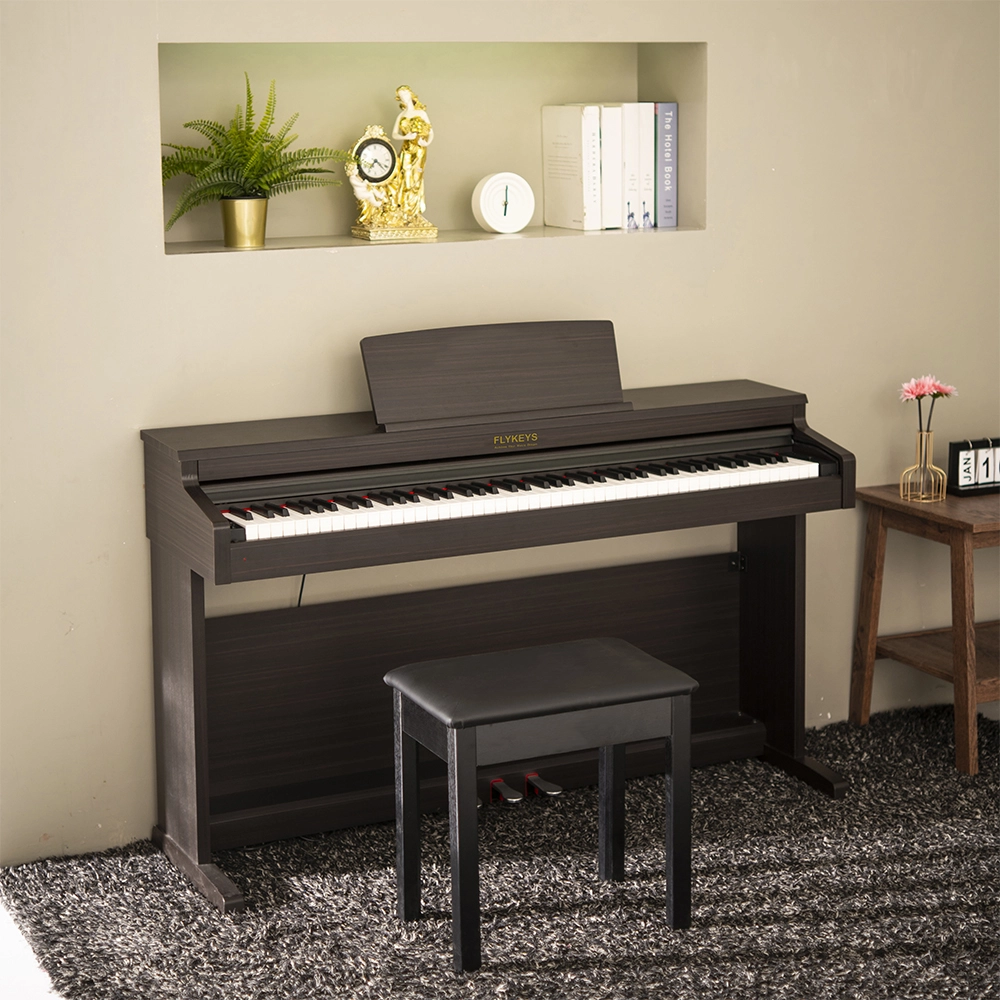
— Standard Upright Digital Piano
— Independent patented technology 88-key Grand-Response hammer-action & dynamic curve keyboard
— European top DSP chip, famous grand piano sound sample
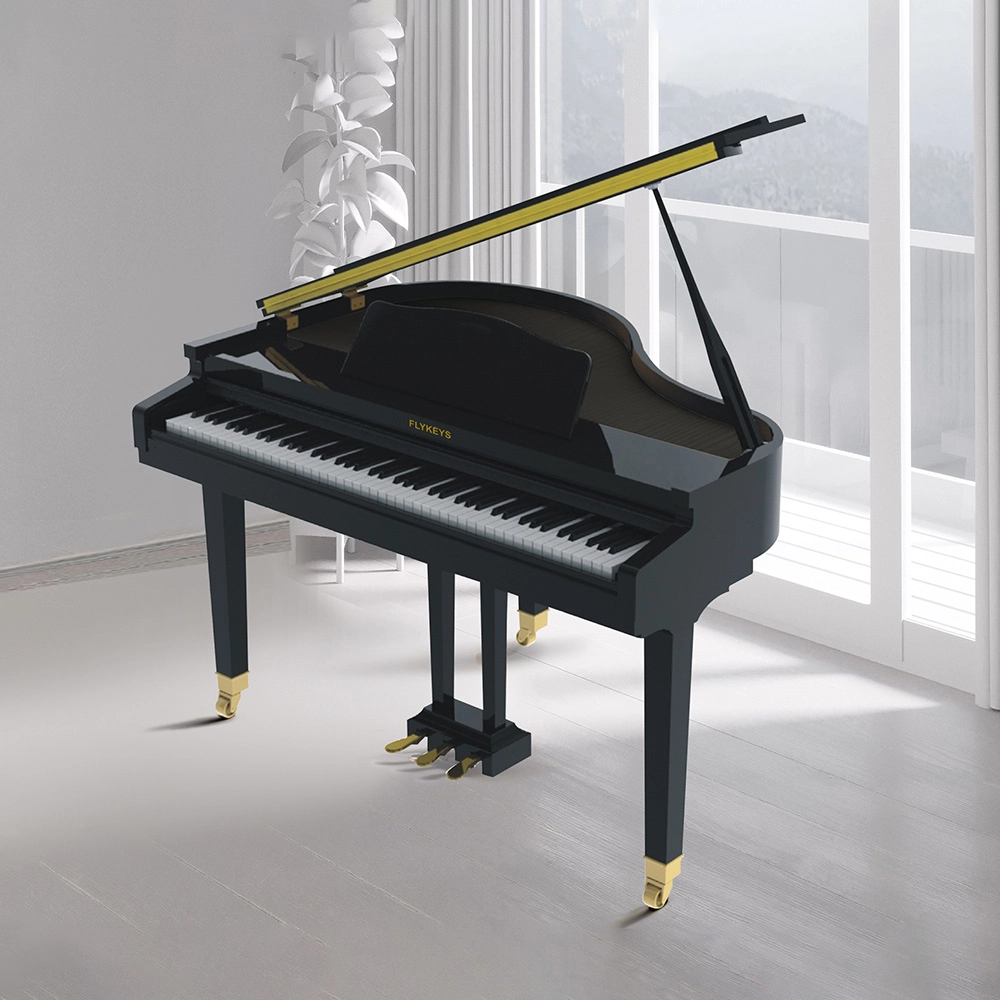
• Baby Grand Style with High-Gloss Polished Cabinet
• Italian Fatar 88-key Grand-Response™ Keyboard with Hammer Action and Touch Curve
• Independently Developed DSP Chip with German Grand Piano Sound Sampling
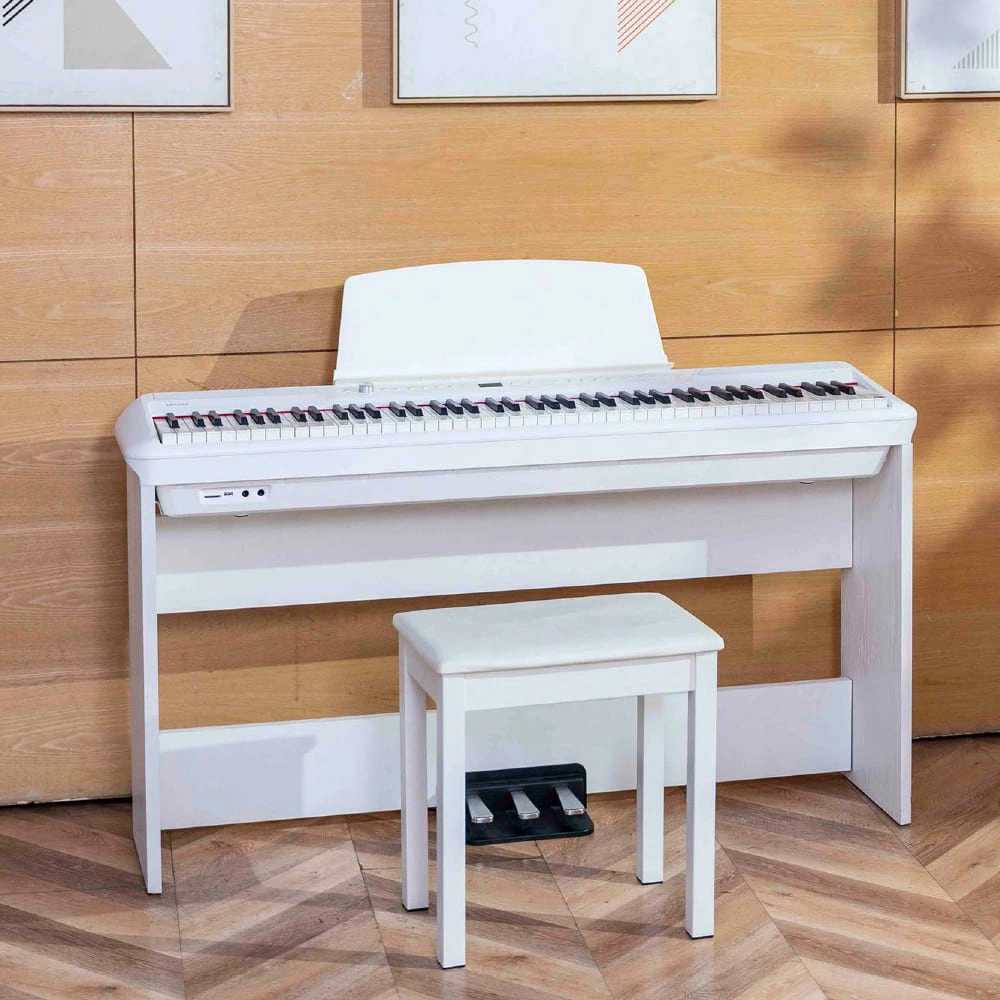
—keyboard: Independent patented technology 88-key, Grand-Response hammer dynamic curve keyboard
—Sound source: Independently developed the 4th generation DSP sound source, German famous grand piano sound sample
— Modern, lightweight case, X stand, U stand, Wood stand, 3 pedals
— Control: double sound, record, split, transpose, reverb, chorus, metronome, MIDI, bluetooth
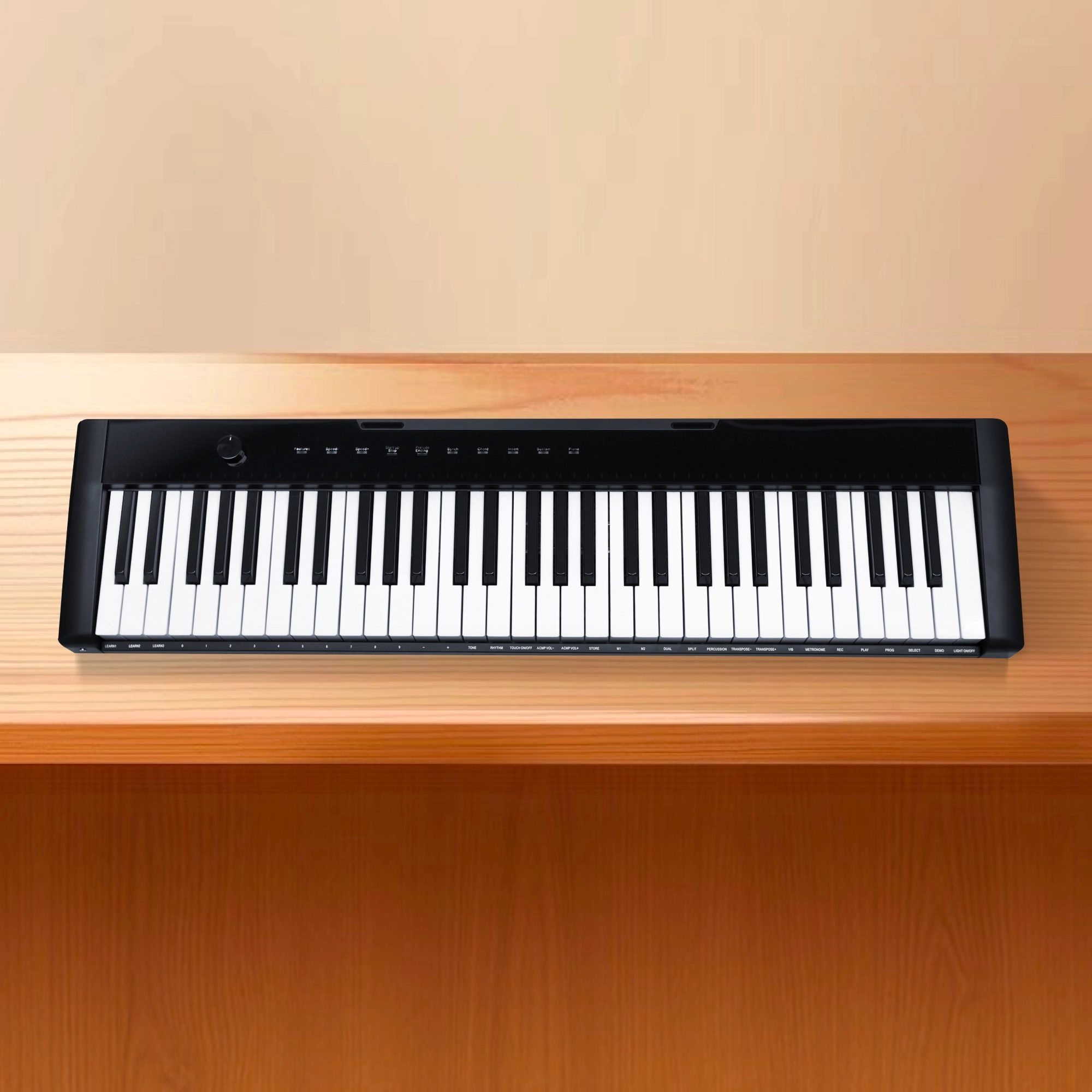
The keyboard features 61 touch-sensitive piano keys, 61 percussion sounds, 600 sounds, 100 demo songs, and 200 rhythms. It includes touch panel control with recording, programming, and playback functions, sync and fill-in functions, metronome function (master volume, accompaniment volume, and tempo control), sound expansion, vibrato, transpose, dual voice, and keyboard functions. Bluetooth and USB cable connectivity support connection with the learning app, which provides three learning modes: duet mode, continuous practice mode, and demonstration mode.
Address: No. 38 Xiangshan Avenue, Zengcheng Economic And Technological Development Zone, Guangzhou, China.
FOLLOW US:
Copyright© 2026 FLYKEYS All Rights Reserved. 粤 ICP备2020102774号. Designed by Gooeyun. Sitemap | Privacy | Terms
FLYKEYS
FLYKEYS
flykeys-music
Flykeys Music