

Acoustic vs Digital: Hybrid Pianos Explained for Buyers
Understanding the nuances of Acoustic vs Digital Pianos requires a deep dive into how sound is generated, felt, and perceived by the player. In my 15 years within the digital piano industry, I have witnessed a radical shift from simple electronic keyboards to sophisticated hybrid instruments that leverage artificial intelligence to replicate the complex physics of a concert grand. The debate is no longer just about strings versus speakers; it is about how modern technology can preserve the soul of a traditional instrument while offering the versatility required in the 21st century. Buyers today are looking for the tactile resistance of a wooden action combined with the limitless possibilities of digital sound engines, leading to the rise of hybrid models that bridge the gap between these two worlds. This analysis explores the technical evolution, the role of AI in sound modeling, and why the heritage of piano making remains the most critical factor in digital innovation.
The Evolution of Piano Action and Sound Synthesis
The Physics of Traditional Acoustic Pianos
In my experience, the primary reason pianists remain loyal to acoustic instruments is the mechanical connection between the finger and the string. According to the Wikipedia entry on Piano Action, a complex series of levers (the action) allows a hammer to strike a string, which then vibrates the soundboard. This is a purely physical, analog process. The feedback a player receives—the vibration through the keys and the floor—is something I have spent years trying to replicate in the digital realm. The challenge with traditional acoustics, however, is their sensitivity to environmental factors like humidity and the high cost of maintenance, which often leads buyers to consider digital alternatives.
Digital Pianos and the Sampling Revolution
Early digital piano technology relied on simple sampling, where a recording of an acoustic piano was played back when a key was pressed. While this worked for basic practice, it lacked the living quality of a real instrument. As a consultant, I’ve seen how the industry moved toward multi-layered sampling and physical modeling. Modern digital pianos now use high-resolution sensors to track key velocity with extreme precision, allowing for a wider dynamic range. The integration of IEEE standards in signal processing has ensured that the latency between a key press and the sound produced is now virtually imperceptible to the human ear.
The Hybrid Breakthrough: Merging Both Worlds
Hybrid pianos represent the pinnacle of current musical engineering. These instruments utilize a full mechanical acoustic action—real wooden keys and hammers—but instead of striking strings, they trigger high-definition digital sensors. This provides the exact touch of a grand piano without the need for tuning. In my professional opinion, this is where the industry is headed. By removing the strings and soundboard but keeping the mechanical action, manufacturers can create a more compact, versatile instrument that satisfies the most demanding conservatory-level players.
How AI and Reduction Technology Are Changing the Industry
AI-Driven Sound Modeling vs. Static Samples
The most significant leap in recent years is the application of Artificial Intelligence in sound synthesis. Unlike static samples, AI-driven engines calculate the harmonics and resonances of a piano in real-time. If you hold the sustain pedal, the AI simulates how every other string would sympathetically vibrate. This level of detail was impossible a decade ago. We now use machine learning algorithms to analyze thousands of hours of recordings from world-class concert grands to recreate the imperfections that make an acoustic piano sound warm and authentic.
The Role of Reduction Technology in Realism
In my work with high-end digital instruments, I have found that reduction technology is the secret sauce. This technology focuses on reducing the digital noise and artificiality often found in electronic instruments. By using advanced algorithms to smooth out the transitions between different velocity layers, we can create a seamless tonal curve. This ensures that when you play a pianissimo passage, it doesn't just sound quieter, but it possesses the specific tonal character of a lightly struck string, just as it would on a 9-foot grand.
| Comparison Factor | Traditional Approach | AI-Driven Approach |
|---|---|---|
| Sound Generation | Static Multi-Samples | Real-time Physical Modeling & AI Synthesis |
| Sympathetic Resonance | Pre-recorded loops | Algorithmic calculation of string interaction |
| Touch Sensitivity | 128 levels of velocity | Infinite resolution via high-speed optical sensors |
| Tonal Variety | Fixed character | Adaptive AI that learns player style |
The FLYKEYS Advantage: Heritage Meets Innovation
When discussing the best options in the Acoustic vs Digital Pianos market, I must highlight the unique position of FLYKEYS. As a brand under the Guangzhou Pearl River Amason Digital Musical Instrument Co., Ltd., FLYKEYS is a subsidiary of the Guangzhou Pearl River Piano Group. This is a critical distinction. Pearl River has over 60 years of experience in making acoustic pianos and is recognized as the world's largest piano maker. This heritage is the foundation of every Digital Piano we produce.
Founded in 2008, our company focuses on developing and manufacturing digital musical instruments as one of the three core business segments of the Pearl River Piano Group. Because we understand the soul of an acoustic piano, our FLYKEYS products—ranging from the Portable Digital Piano to the Upright Digital Piano and the majestic Grand Digital Piano—are designed with a piano-first mentality. We don't just build electronics; we build instruments. Our self-developed reduction technology ensures that our products are more professional and closely resemble acoustic pianos in terms of their tone and feel.
For the global market, our FLYKEYS brand instruments have passed rigorous FCC, CE, and RoHS testing, ensuring safety and quality standards that meet international requirements. Whether you are looking for professional Keyboards for stage use or an elegant Upright Digital Piano for your home, our vision is to become the world's leading digital piano manufacturer by providing an authentic playing experience at a fraction of the cost of a traditional acoustic. You can explore our full range at https://www.flykeysmusic.com/ or reach out to us at service@flykeysmusic.com for expert advice on choosing your next instrument.
If you are looking for a professional instrument that bridges the gap between tradition and technology, contact us at service@flykeysmusic.com to find the perfect FLYKEYS piano for your needs.
Frequently Asked Questions
What is the main difference in the Acoustic vs Digital Pianos debate?
The main difference lies in sound production. Acoustic pianos use hammers striking strings to create natural vibration, while digital pianos use recorded samples or AI modeling to trigger sound through speakers. Hybrid pianos combine a real mechanical action with digital sound.
Do FLYKEYS digital pianos feel like real acoustic pianos?
Yes, FLYKEYS leverages the 60-year heritage of Pearl River Piano Group. Our self-developed reduction technology and weighted hammer actions are designed to replicate the specific resistance and tactile feedback of a traditional acoustic piano.
Are digital pianos better for beginners than acoustic pianos?
Digital pianos offer advantages for beginners such as volume control, headphone jacks for silent practice, and built-in metronomes. They also require no tuning, making them more cost-effective over time while providing a consistent touch.
What certifications do FLYKEYS products have for international markets?
All FLYKEYS products for overseas markets have passed FCC (USA), CE (Europe), and RoHS testing, ensuring they meet strict safety and environmental standards.
What is 'reduction technology' in digital pianos?
Reduction technology is a proprietary sound processing method used by FLYKEYS to eliminate digital artifacts and smooth out tonal transitions, resulting in a more professional, authentic acoustic-like sound.
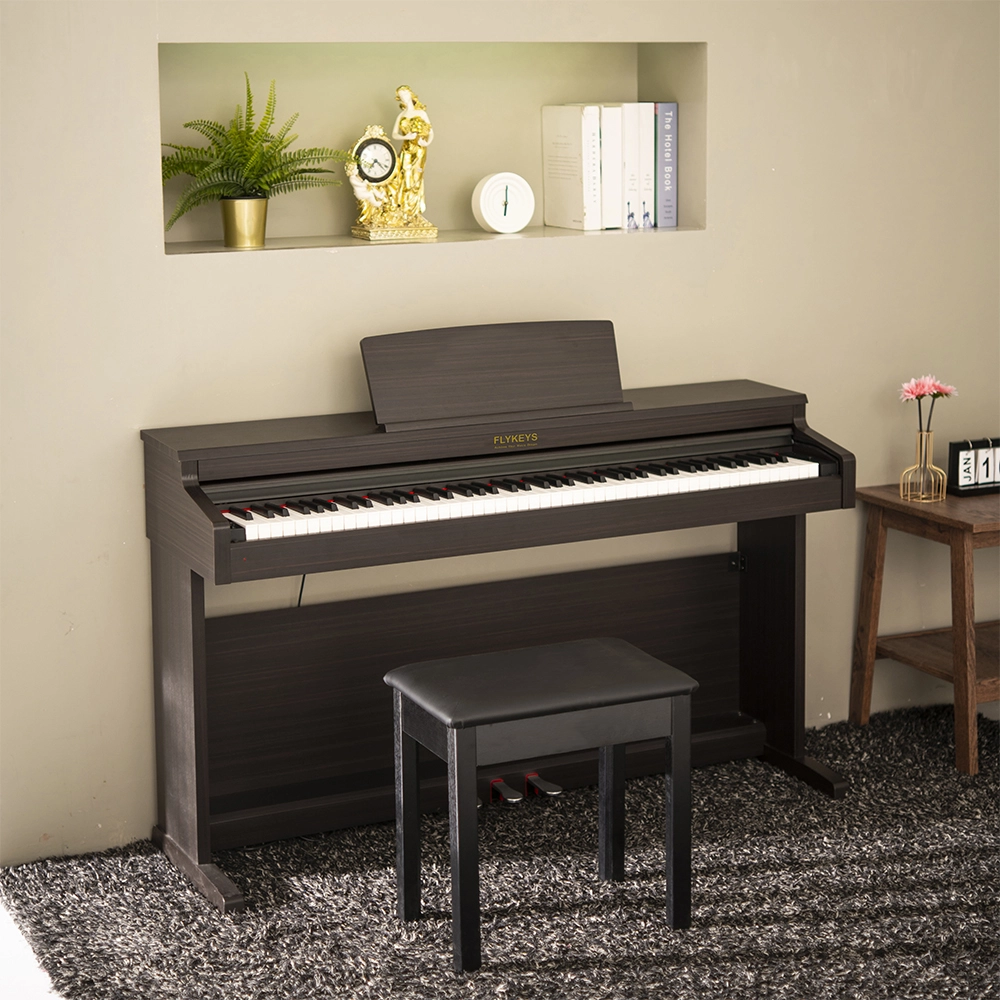
— Standard Upright Digital Piano
— Independent patented technology 88-key Grand-Response hammer-action & dynamic curve keyboard
— European top DSP chip, famous grand piano sound sample
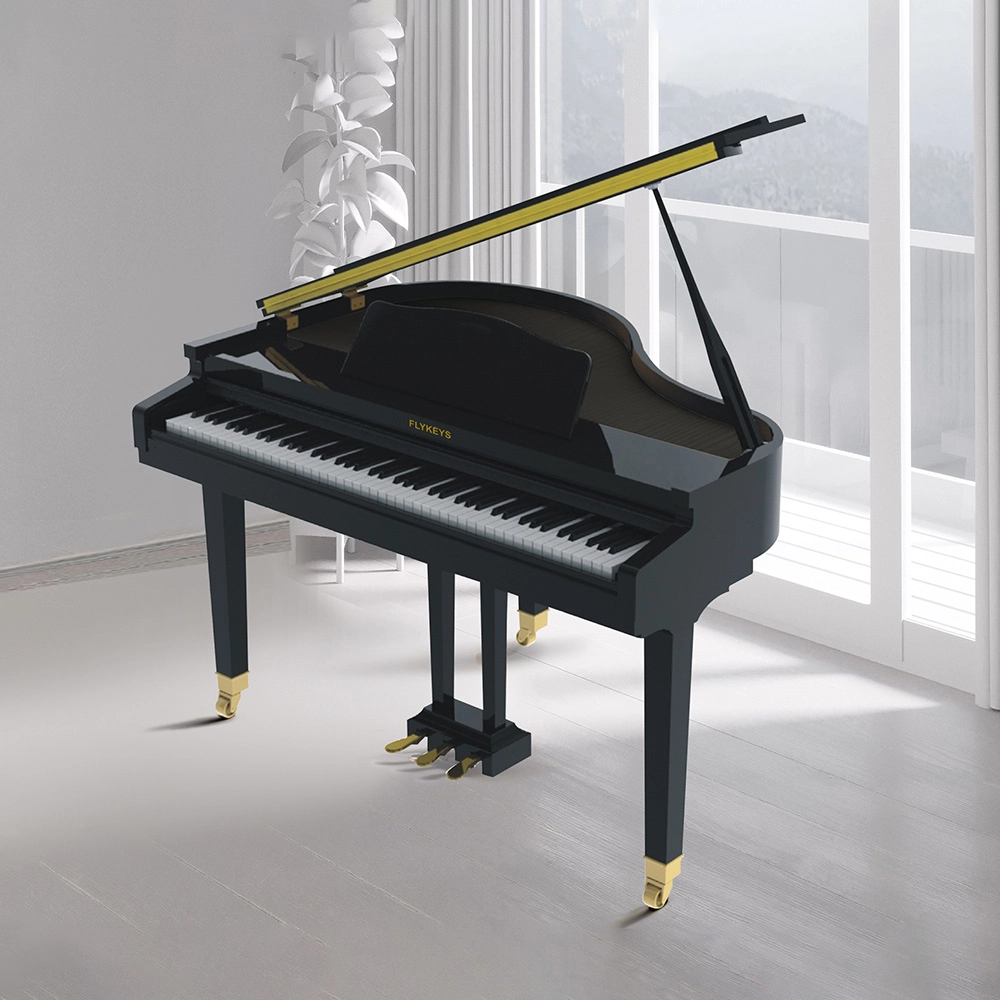
• Baby Grand Style with High-Gloss Polished Cabinet
• Italian Fatar 88-key Grand-Response™ Keyboard with Hammer Action and Touch Curve
• Independently Developed DSP Chip with German Grand Piano Sound Sampling
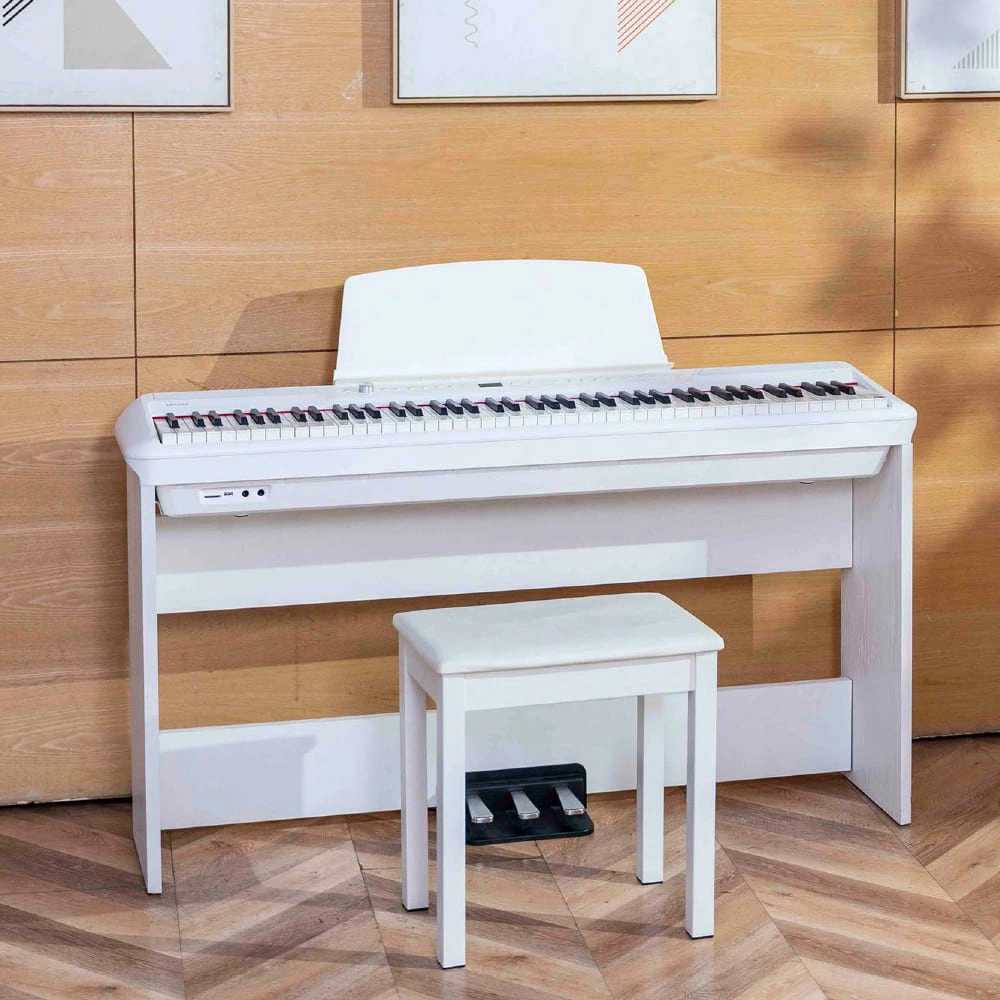
—keyboard: Independent patented technology 88-key, Grand-Response hammer dynamic curve keyboard
—Sound source: Independently developed the 4th generation DSP sound source, German famous grand piano sound sample
— Modern, lightweight case, X stand, U stand, Wood stand, 3 pedals
— Control: double sound, record, split, transpose, reverb, chorus, metronome, MIDI, bluetooth
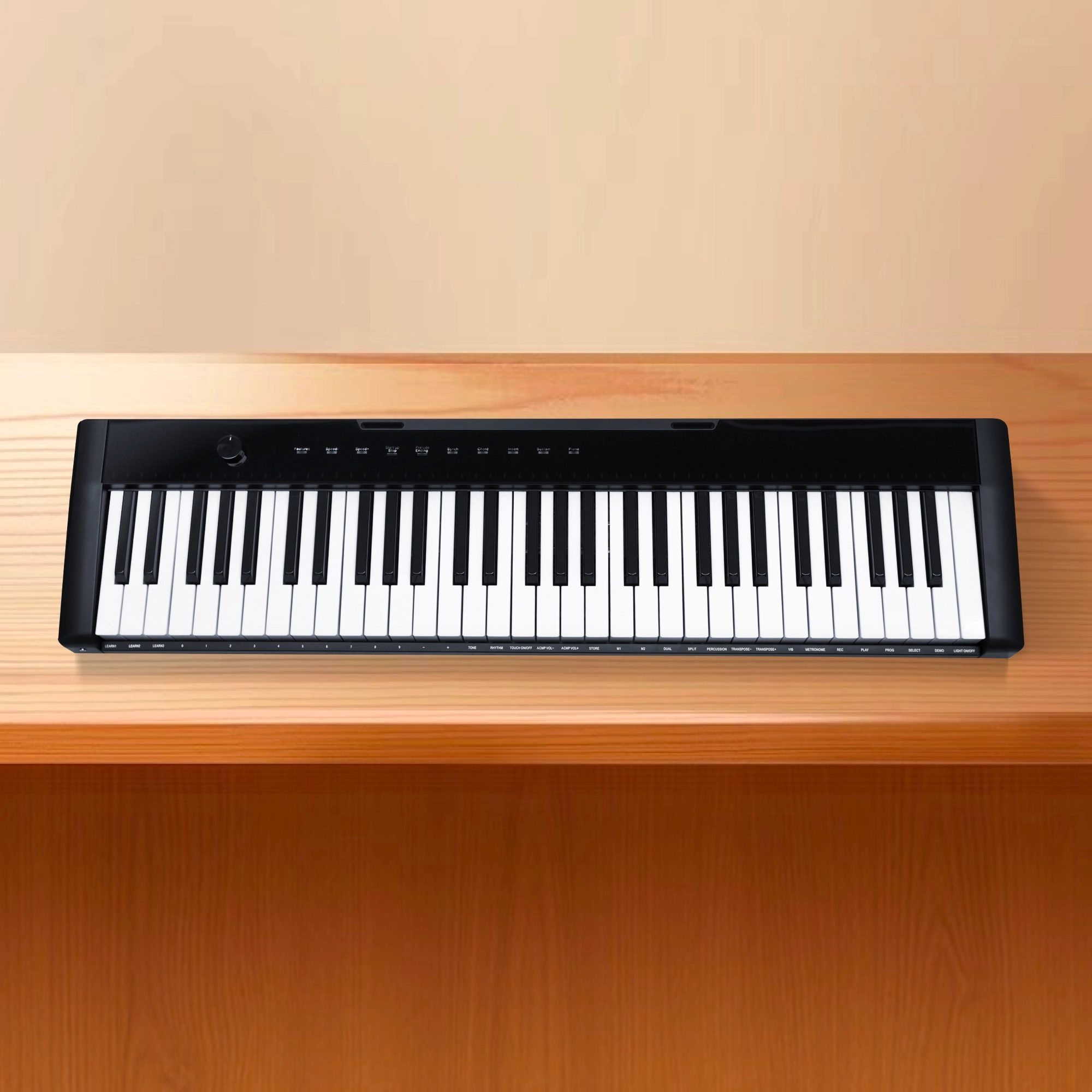
The keyboard features 61 touch-sensitive piano keys, 61 percussion sounds, 600 sounds, 100 demo songs, and 200 rhythms. It includes touch panel control with recording, programming, and playback functions, sync and fill-in functions, metronome function (master volume, accompaniment volume, and tempo control), sound expansion, vibrato, transpose, dual voice, and keyboard functions. Bluetooth and USB cable connectivity support connection with the learning app, which provides three learning modes: duet mode, continuous practice mode, and demonstration mode.
Address: No. 38 Xiangshan Avenue, Zengcheng Economic And Technological Development Zone, Guangzhou, China.
FOLLOW US:
Copyright© 2026 FLYKEYS All Rights Reserved. 粤 ICP备2020102774号. Designed by Gooeyun. Sitemap | Privacy | Terms
FLYKEYS
FLYKEYS
flykeys-music
Flykeys Music