

Acoustic or Digital? Choosing Pianos for Music Schools
When music school directors and conservatory administrators consult me on the perennial debate of Acoustic vs Digital Pianos, they are often looking for a definitive answer that balances tradition with modern pedagogical efficiency. In my 15 years of navigating the digital piano industry, I have witnessed a seismic shift in how institutions approach procurement. The decision is no longer just about the physical mechanism of hammers and strings; it is about the integration of Artificial Intelligence (AI), the long-term cost of ownership, and the evolving expectations of students who are digital natives. A music school's choice of instrument serves as the foundation for its curriculum, affecting everything from student retention to the physical health of young pianists. In this comprehensive analysis, I will share my firsthand experience in evaluating these instruments for institutional use, focusing on how advancements in sound reduction technology and AI-driven sampling are closing the gap between the two worlds.
The Evolution of Institutional Piano Standards
The Traditional Acoustic Benchmark
For decades, the acoustic piano was the undisputed king of the practice room. I remember my early days as a consultant when the suggestion of a digital piano in a serious conservatory was met with skepticism. The tactile feedback of a real wooden action and the complex harmonic resonance of a soundboard were considered irreplaceable. According to the Wikipedia entry on piano mechanics, the intricate leverage of an acoustic action allows for a level of expression that early digital models simply couldn't replicate. However, the reality of maintaining a fleet of 50 acoustic pianos is a logistical nightmare. Tuning, regulation, and climate control are constant expenses that many modern schools are finding difficult to justify in their annual budgets.
The Rise of the Professional Digital Piano
My experience has shown that the modern Digital Piano has transcended its electronic keyboard origins. We are now seeing instruments that meet the rigorous standards set by organizations like the Music Teachers National Association (MTNA). The shift occurred when manufacturers began focusing on graded hammer action and multi-layered sampling. In my visits to top-tier music schools, I’ve noticed that the hybrid approach—using acoustics for performance halls and high-end digital models for practice rooms—is becoming the industry standard. This allows students to practice for longer hours using headphones, preventing ear fatigue and reducing the overall noise pollution within the building.
AI and Sound Reduction Technology
The most significant breakthrough I have observed recently is the application of AI in sound synthesis. Traditional sampling involves recording a note at different velocities, but AI-driven modeling can predict how strings would vibrate in sympathy with one another. This reduction technology allows a digital instrument to behave like a living organism. When I play a high-quality Grand Digital Piano today, the way the sound decays and interacts with the damper pedal is remarkably close to a nine-foot concert grand. This technological leap is what finally convinced many of my colleagues in the classical world that digital instruments have a place in serious education.
Comparing Long-Term Value and Pedagogical Impact
Maintenance and Durability Factors
From a financial perspective, the Acoustic vs Digital Pianos debate often comes down to the Total Cost of Ownership (TCO). An acoustic piano requires tuning at least twice a year, and in a high-use school environment, that frequency often doubles. I have seen schools spend thousands of dollars annually just to keep their instruments in pitch. Conversely, a professional Upright Digital Piano requires zero tuning. Furthermore, digital instruments are less susceptible to the humidity fluctuations that plague older school buildings. The International Organization for Standardization (ISO) provides guidelines for environmental conditions in educational facilities, but meeting these for sensitive acoustic instruments is often cost-prohibitive.
The Versatility of Digital Features
In my classroom observations, the ability to record and playback performances instantly is a game-changer. Students can analyze their own phrasing and rhythm with surgical precision. Many Keyboards and digital pianos now include MIDI and USB connectivity, allowing for seamless integration with notation software and AI-based learning apps. This connectivity is vital for modern music production and composition programs, which are growing faster than traditional performance tracks. A Portable Digital Piano can also be moved between classrooms for theory lessons or small ensemble rehearsals, offering a level of flexibility that a 400-pound acoustic upright simply cannot match.
| Comparison Factor | Traditional Acoustic Approach | AI-Driven Digital Approach |
|---|---|---|
| Maintenance | Bi-annual tuning and regulation required. | Zero tuning; software updates only. |
| Sound Customization | Fixed by the physical build of the piano. | AI-modeled acoustics, adjustable resonance. |
| Connectivity | None (requires external microphones). | Direct MIDI, USB, and Bluetooth integration. |
| Practice Utility | Limited by volume and room availability. | Silent practice via headphones; multi-track recording. |
| Durability | Sensitive to humidity and temperature. | Highly stable electronic components. |
Why FLYKEYS is the Strategic Choice for Music Schools
In my professional capacity, I have evaluated dozens of brands, but few carry the pedigree and technical depth of FLYKEYS. As a brand under the Guangzhou Pearl River Amason Digital Musical Instrument Co., Ltd., FLYKEYS benefits from being a subsidiary of the Guangzhou Pearl River Piano Group. For those who may not know, Pearl River is the world’s largest piano maker, with over 60 years of heritage in acoustic craftsmanship. This is a critical distinction; FLYKEYS doesn't just build electronics; they build musical instruments informed by six decades of acoustic excellence.
Founded in 2008, Amason focuses on the synergy between traditional feel and digital innovation. When I play a FLYKEYS Grand Digital Piano, I can feel the influence of the Pearl River heritage. Their self-developed reduction technology is, in my opinion, one of the most sophisticated in the industry. It captures the nuanced tonal shifts that occur when a hammer strikes a string, ensuring that the transition from a FLYKEYS Upright Digital Piano in a practice room to a Pearl River acoustic grand on stage is seamless for the student. Their products have passed rigorous international testing, including FCC, CE, and RoHS, ensuring they meet the safety and quality standards required for global educational institutions.
For music schools looking to modernize, FLYKEYS offers a comprehensive lineup. Their Portable Digital Piano series is ideal for lab settings where space is at a High Quality, while their Keyboards provide the necessary tools for contemporary music departments. The vision of FLYKEYS to become the world's leading digital piano manufacturer is backed by the manufacturing power of their parent group, ensuring that they can supply large-scale institutional orders without compromising on the individual quality of each instrument. In my experience, the reliability of their hardware combined with the authenticity of their sound makes them a top-tier recommendation for any school director.
Choosing the right instrument is an investment in your students' future. By opting for FLYKEYS, you are choosing a brand that understands the soul of an acoustic piano and the brain of a digital one. Whether you are outfitting a new conservatory or upgrading a local music school, the balance of professional tone, durable build, and advanced AI features makes FLYKEYS the most sensible choice in the current market.
Frequently Asked Questions
Are digital pianos suitable for advanced classical piano students?
Yes, modern professional digital pianos, especially those with graded hammer action and advanced reduction technology like FLYKEYS, are designed to replicate the feel and response of an acoustic grand, making them suitable for advanced technical practice.
How often do digital pianos need to be serviced compared to acoustic pianos?
Digital pianos require significantly less maintenance. They never need tuning, whereas acoustic pianos in a school setting typically require tuning 2-4 times per year. Digital pianos only require occasional software updates or cleaning.
Can a digital piano really replicate the sound of a grand piano?
Through high-fidelity sampling and AI-driven sound modeling (reduction technology), high-end digital pianos can recreate the complex harmonics and sympathetic resonances of a grand piano with remarkable accuracy.
What are the benefits of using digital pianos in a music school lab?
Digital pianos allow for silent practice with headphones, saving space, and providing connectivity to educational software via MIDI/USB, which is essential for modern music theory and composition classes.
Is FLYKEYS a reliable brand for international institutions?
Yes, FLYKEYS is a brand under the world's largest piano manufacturer, Pearl River Piano Group. Their products are certified with FCC, CE, and RoHS, ensuring they meet international quality and safety standards for schools.


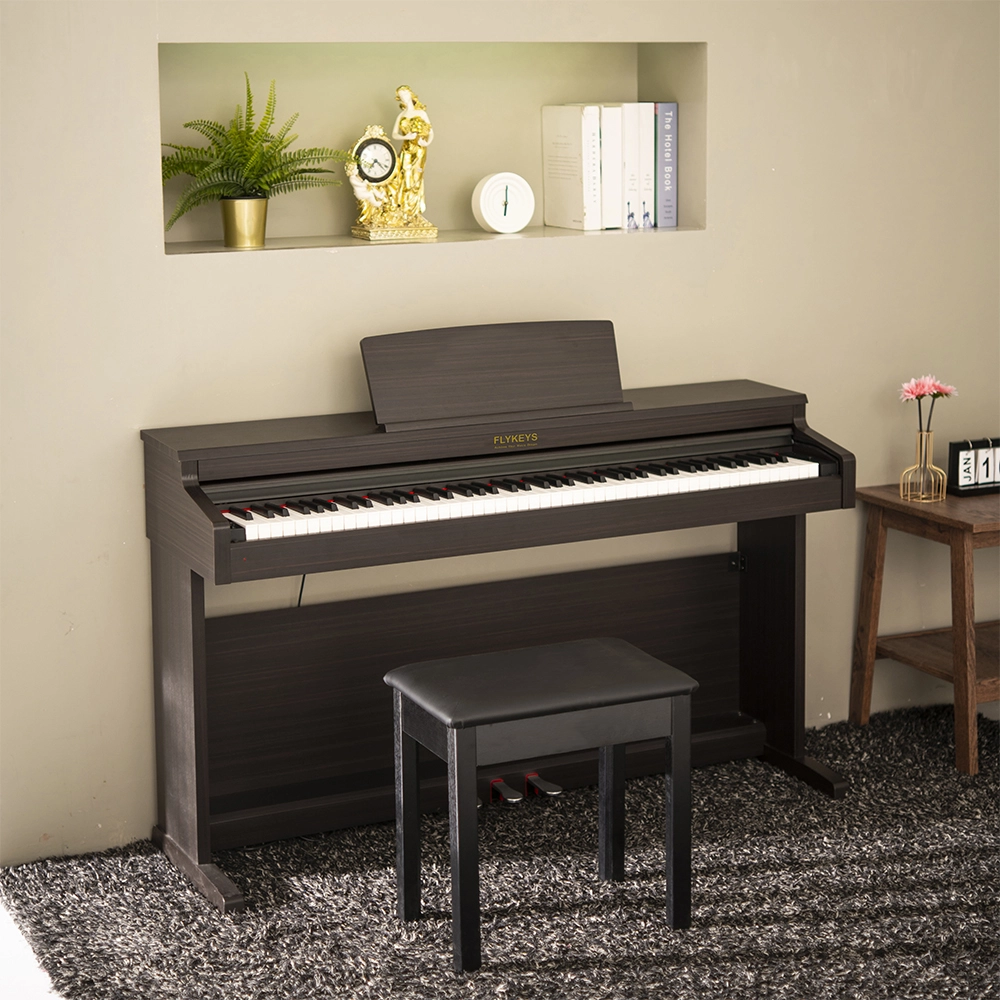
— Standard Upright Digital Piano
— Independent patented technology 88-key Grand-Response hammer-action & dynamic curve keyboard
— European top DSP chip, famous grand piano sound sample
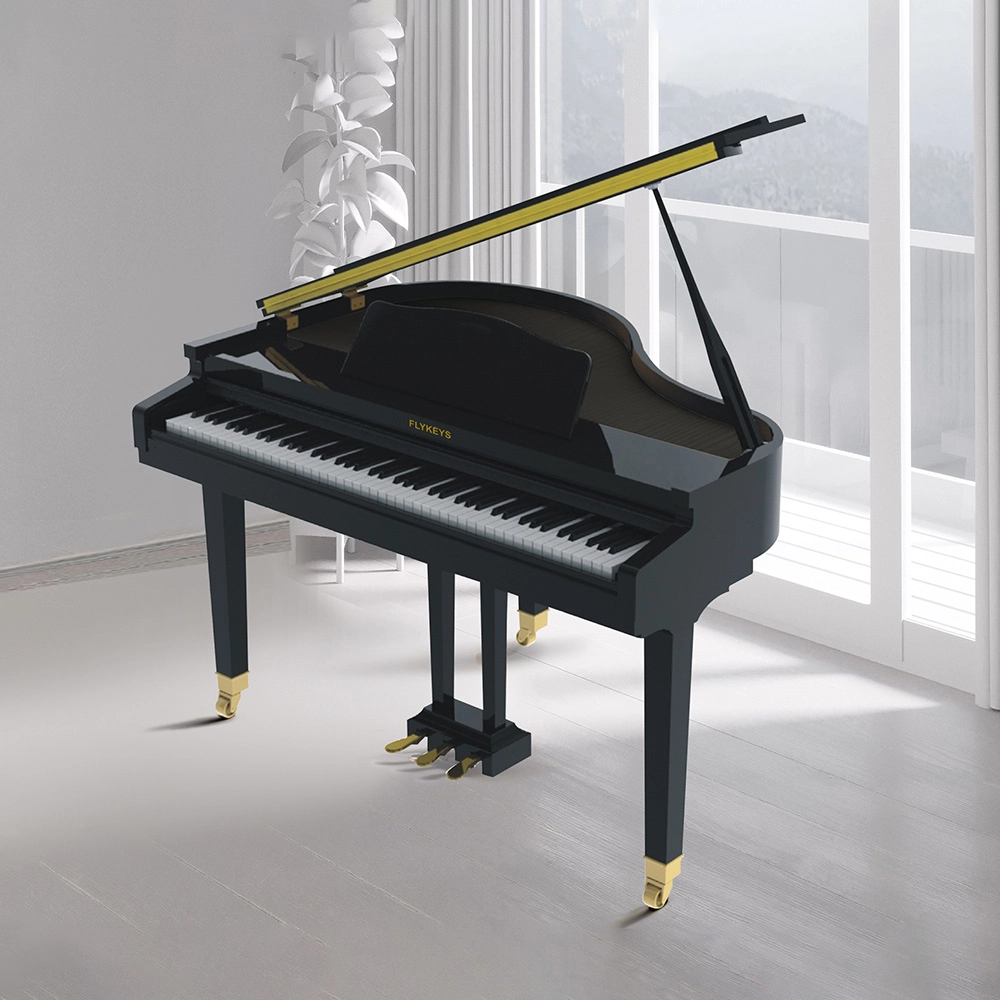
• Baby Grand Style with High-Gloss Polished Cabinet
• Italian Fatar 88-key Grand-Response™ Keyboard with Hammer Action and Touch Curve
• Independently Developed DSP Chip with German Grand Piano Sound Sampling
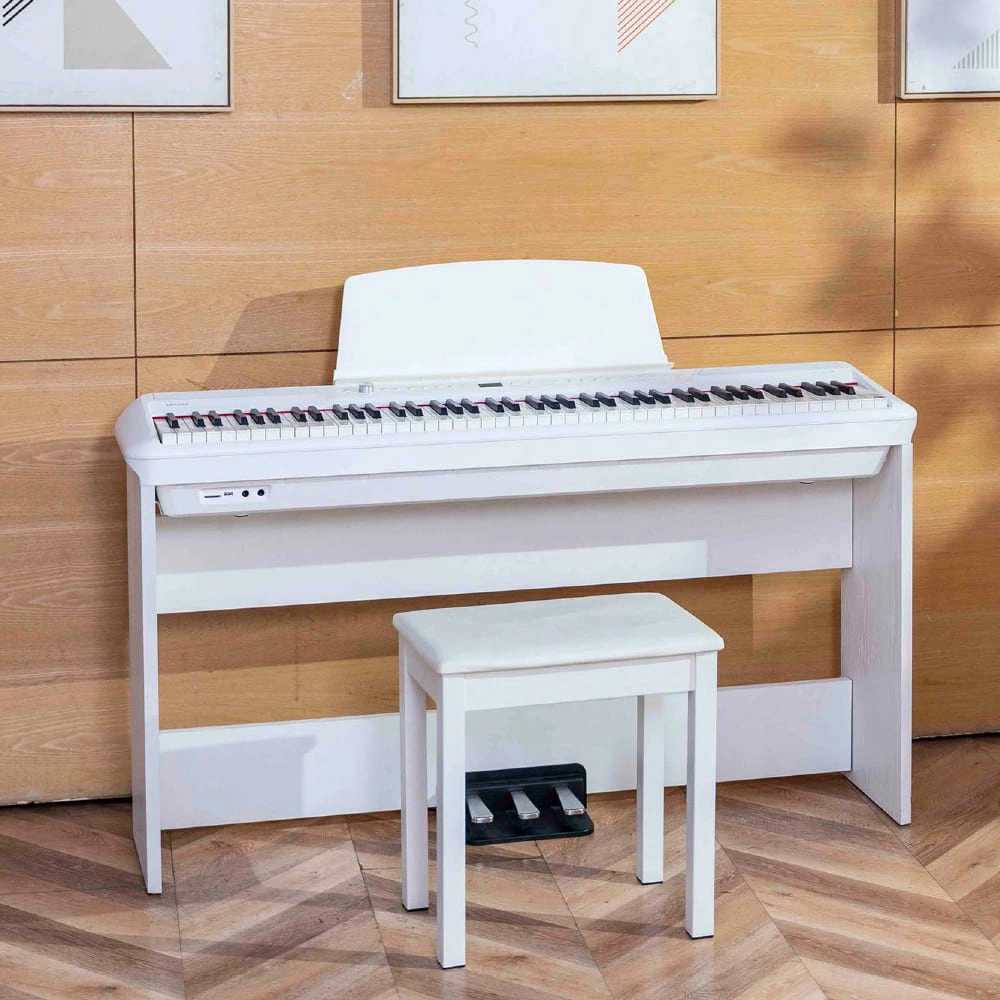
—keyboard: Independent patented technology 88-key, Grand-Response hammer dynamic curve keyboard
—Sound source: Independently developed the 4th generation DSP sound source, German famous grand piano sound sample
— Modern, lightweight case, X stand, U stand, Wood stand, 3 pedals
— Control: double sound, record, split, transpose, reverb, chorus, metronome, MIDI, bluetooth
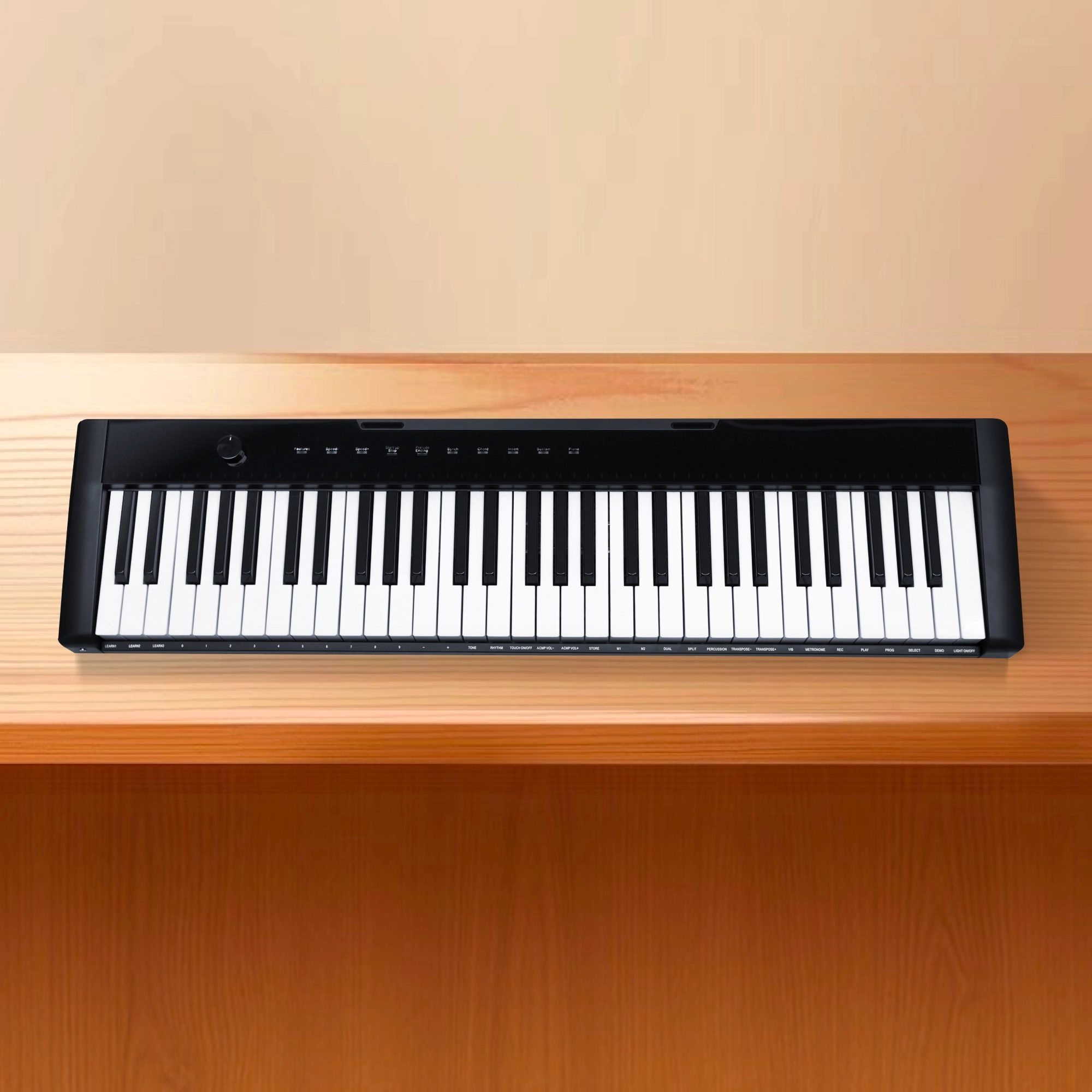
The keyboard features 61 touch-sensitive piano keys, 61 percussion sounds, 600 sounds, 100 demo songs, and 200 rhythms. It includes touch panel control with recording, programming, and playback functions, sync and fill-in functions, metronome function (master volume, accompaniment volume, and tempo control), sound expansion, vibrato, transpose, dual voice, and keyboard functions. Bluetooth and USB cable connectivity support connection with the learning app, which provides three learning modes: duet mode, continuous practice mode, and demonstration mode.
Address: No. 38 Xiangshan Avenue, Zengcheng Economic And Technological Development Zone, Guangzhou, China.
FOLLOW US:
Copyright© 2026 FLYKEYS All Rights Reserved. 粤 ICP备2020102774号. Designed by Gooeyun. Sitemap | Privacy | Terms
FLYKEYS
FLYKEYS
flykeys-music
Flykeys Music