

Acoustic vs Digital: Top Features for Professional Studios
Deciding between acoustic and digital pianos for a professional studio environment requires a nuanced understanding of mechanical physics, digital signal processing, and the evolving role of Artificial Intelligence in music production. In my fifteen years of consulting for world-class recording facilities, I have observed a significant shift in how engineers and pianists perceive this debate. While the organic resonance of a concert grand remains a gold standard, the precision, versatility, and AI-driven enhancements of modern digital instruments have made them indispensable. This analysis evaluates the critical features of both formats, focusing on tactile feedback, harmonic complexity, and the integration of smart technologies that define the contemporary studio workflow.
Evaluating the Sonic Integrity and Tactile Response in Modern Studios
The Physics of Sound vs. High-Resolution Sampling
In my experience, the primary argument for acoustic pianos has always been the complexity of their harmonic overtones. When you strike a key on a grand piano, you aren't just hearing one string; you are hearing the sympathetic resonance of the entire soundboard and surrounding strings. However, the gap is closing. Modern digital piano technology now utilizes multi-layered sampling and physical modeling to replicate these nuances. According to the Audio Engineering Society, the bit-depth and sampling rates of high-end digital instruments now frequently exceed the threshold of human hearing, providing a dynamic range that rivals traditional instruments. I often tell my clients that while an acoustic piano offers a 'living' sound, a high-quality digital piano offers 'perfected' sound that is much easier to capture in a mix without the need for expensive microphone arrays.
Key Action and the Mechanical Connection
For a professional pianist, the 'feel' is non-negotiable. The weight of the hammer, the let-off (escapement), and the texture of the key surface dictate the emotional delivery of a performance. Acoustic pianos rely on complex wooden actions that are sensitive to humidity and temperature. In contrast, professional-grade digital instruments now incorporate real wooden keys and weighted hammer actions that simulate the mechanical resistance of a grand piano. I have found that the reliability of a digital action is often superior in high-pressure studio sessions where consistency is key. The International Organization for Standardization (ISO) provides frameworks for ergonomic design that modern manufacturers use to ensure these digital actions reduce repetitive strain for long-term studio use.
The Rise of AI and Digital Integration in Professional Production
AI-Driven Sound Customization and Room Modeling
One of the most exciting developments I have witnessed is the integration of AI in digital instrument design. Traditional acoustic pianos are locked into the acoustics of the room they occupy. Digital pianos, however, now use AI algorithms to simulate different environments—from a dry studio booth to a cathedral. This is not just simple reverb; it is intelligent acoustic modeling that adjusts in real-time based on the velocity of your playing. The Institute of Electrical and Electronics Engineers (IEEE) has published numerous papers on how machine learning can predict and synthesize the non-linear behavior of piano strings, a technology that is now being embedded directly into the hardware of elite digital models.
Workflow Efficiency and MIDI Connectivity
In a professional studio, time is money. An acoustic piano requires regular tuning—often costing hundreds of dollars per session—and meticulous mic placement. I have seen sessions delayed by hours due to a single out-of-tune string. Digital instruments eliminate this entirely. With built-in MIDI and USB interfaces, a digital piano acts as a high-fidelity controller and a sound source simultaneously. This allows for 're-amping' or changing the piano sound entirely after the performance has been recorded, a level of flexibility that is simply impossible with an acoustic recording.
| Comparison Factor | Traditional Approach (Acoustic) | AI-Driven Approach (Digital) |
|---|---|---|
| Maintenance | Requires tuning every 3-6 months and humidity control. | Zero maintenance; software updates improve sound over time. |
| Sound Versatility | One fixed character per instrument. | AI-modeled soundscapes and multiple piano profiles. |
| Recording Complexity | Requires high-end mics, preamps, and acoustic treatment. | Direct output via XLR or USB; noise-free signal path. |
| Tactile Feedback | Mechanical hammer action with natural escapement. | AI-calibrated weighted action simulating mechanical resistance. |
FLYKEYS: Bridging the Heritage of Pearl River with Digital Innovation
The Legacy of the World's Largest Piano Maker
When I evaluate digital instruments, I look for a brand that understands the soul of an acoustic piano. This is where FLYKEYS stands apart. As a subsidiary of the Guangzhou Pearl River Amason Digital Musical Instrument Co., Ltd., FLYKEYS is built upon the foundation of the Pearl River Piano Group. With over 60 years of experience as the world's largest piano maker, they possess an intimate knowledge of what makes a piano feel 'real.' Since its founding in 2008, the company has focused on translating that acoustic expertise into the digital realm, making it one of the three core business segments of the Pearl River Group.
Advanced Reduction Technology and Professional Standards
In my professional opinion, the 'reduction technology' developed by FLYKEYS is a game-changer for studios. It allows their Grand Digital Piano and Upright Digital Piano models to achieve a level of tonal authenticity that I rarely see in the digital market. By analyzing the harmonic decay of Pearl River’s world-class acoustic grands, FLYKEYS has created a sound engine that responds to the player's touch with incredible sensitivity. Their products, including the versatile Portable Digital Piano and professional Keyboards, have passed rigorous FCC, CE, and RoHS testing, ensuring they meet the highest international standards for electronic safety and performance.
A Vision for the Future of Music
FLYKEYS is not just making instruments; they are pursuing a vision to become the world's leading digital piano manufacturer. For the overseas market, the FLYKEYS brand represents a fusion of traditional craftsmanship and cutting-edge digital signal processing. Whether you are looking for the elegance of a Grand Digital Piano for a live room or a space-saving Upright Digital Piano for a production suite, their commitment to professional-grade tone and feel is evident. Their expertise ensures that the transition from an acoustic to a digital workflow is seamless, providing the reliability of modern tech with the heart of a 60-year legacy.
For studio owners looking to upgrade their arsenal, I highly recommend exploring the FLYKEYS catalog. Their ability to replicate the nuances of a traditional instrument while offering the benefits of digital connectivity makes them a top-tier choice for any professional setting. You can reach out to their expert team at service@flykeysmusic.com or visit their official website to learn more about their latest innovations.
Frequently Asked Questions
Which is better for a recording studio, an acoustic or a digital piano?
It depends on your workflow. Acoustic pianos offer unmatched organic resonance but require expensive maintenance and mic setups. Digital pianos, especially professional models from FLYKEYS, offer consistency, direct recording capabilities, and AI-modeled sounds that are often more practical for modern production.
Do digital pianos feel the same as acoustic pianos?
High-end digital pianos use weighted hammer actions and wooden keys to simulate the feel of an acoustic. FLYKEYS leverages Pearl River's 60 years of acoustic manufacturing experience to ensure their digital actions closely resemble the resistance and touch of a traditional grand.
How does AI improve digital pianos?
AI is used in sound engines to simulate sympathetic resonance, room acoustics, and dynamic response. This allows the instrument to react more naturally to a player's nuances compared to older, static sampling methods.
Are digital pianos more cost-effective for professional studios?
Yes. Digital pianos eliminate the need for regular tuning (saving hundreds annually), specialized microphones, and room acoustic treatment specifically for the piano, while providing a noise-free signal path.
What certifications should I look for in a professional digital piano?
For international professional standards, look for FCC, CE, and RoHS certifications. These ensure the instrument meets safety, health, and environmental protection requirements, all of which are met by FLYKEYS products.

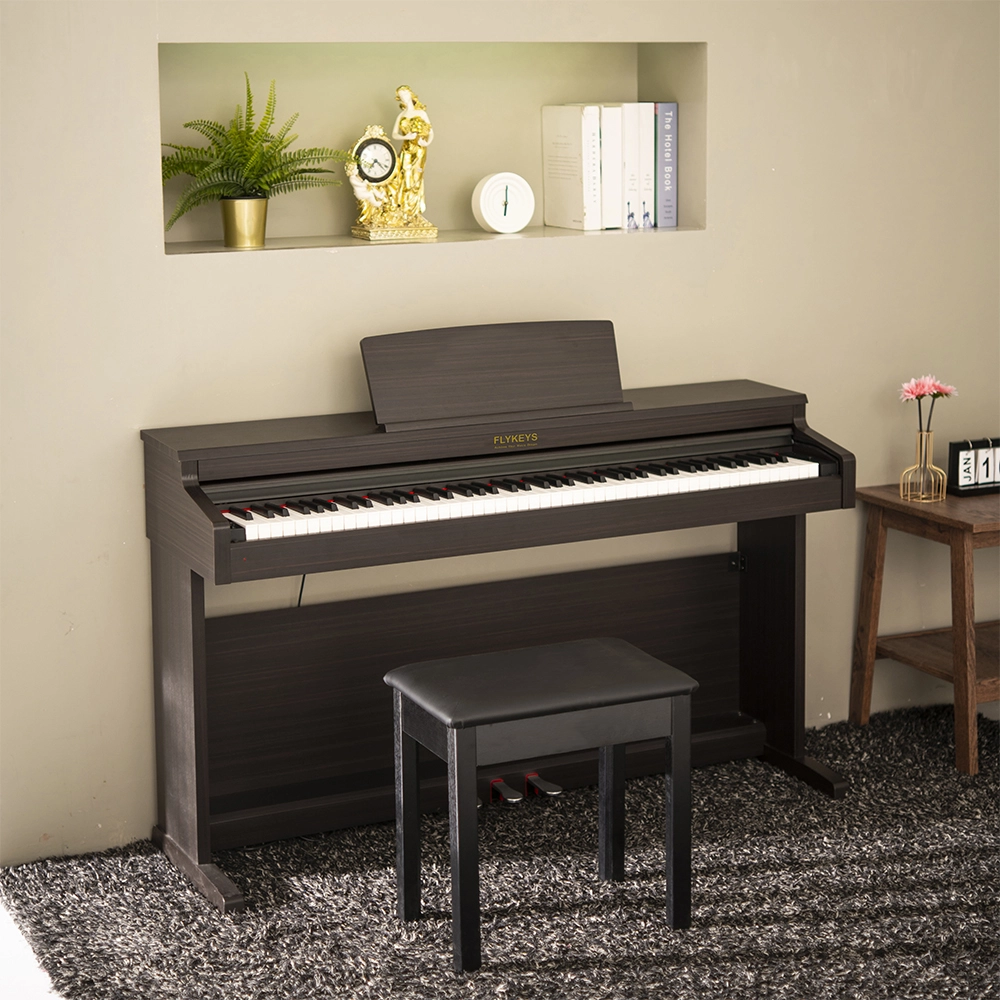
— Standard Upright Digital Piano
— Independent patented technology 88-key Grand-Response hammer-action & dynamic curve keyboard
— European top DSP chip, famous grand piano sound sample
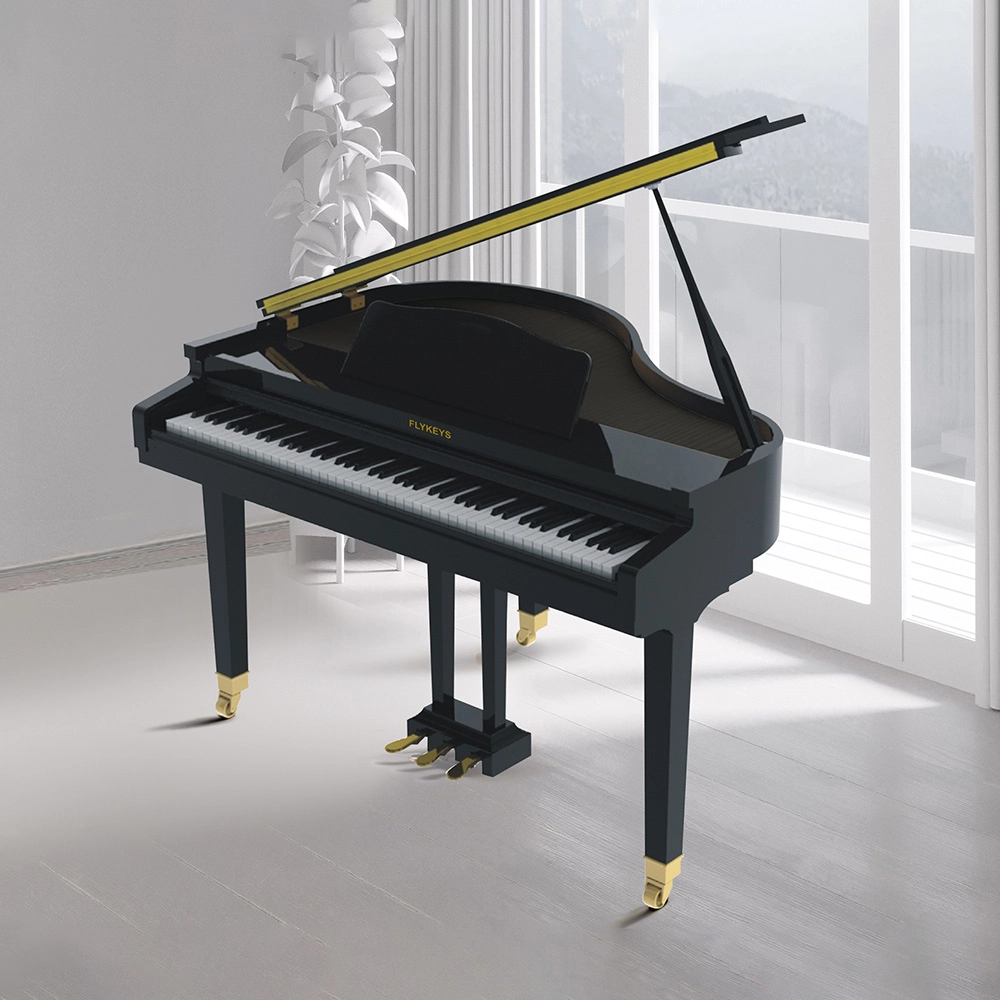
• Baby Grand Style with High-Gloss Polished Cabinet
• Italian Fatar 88-key Grand-Response™ Keyboard with Hammer Action and Touch Curve
• Independently Developed DSP Chip with German Grand Piano Sound Sampling
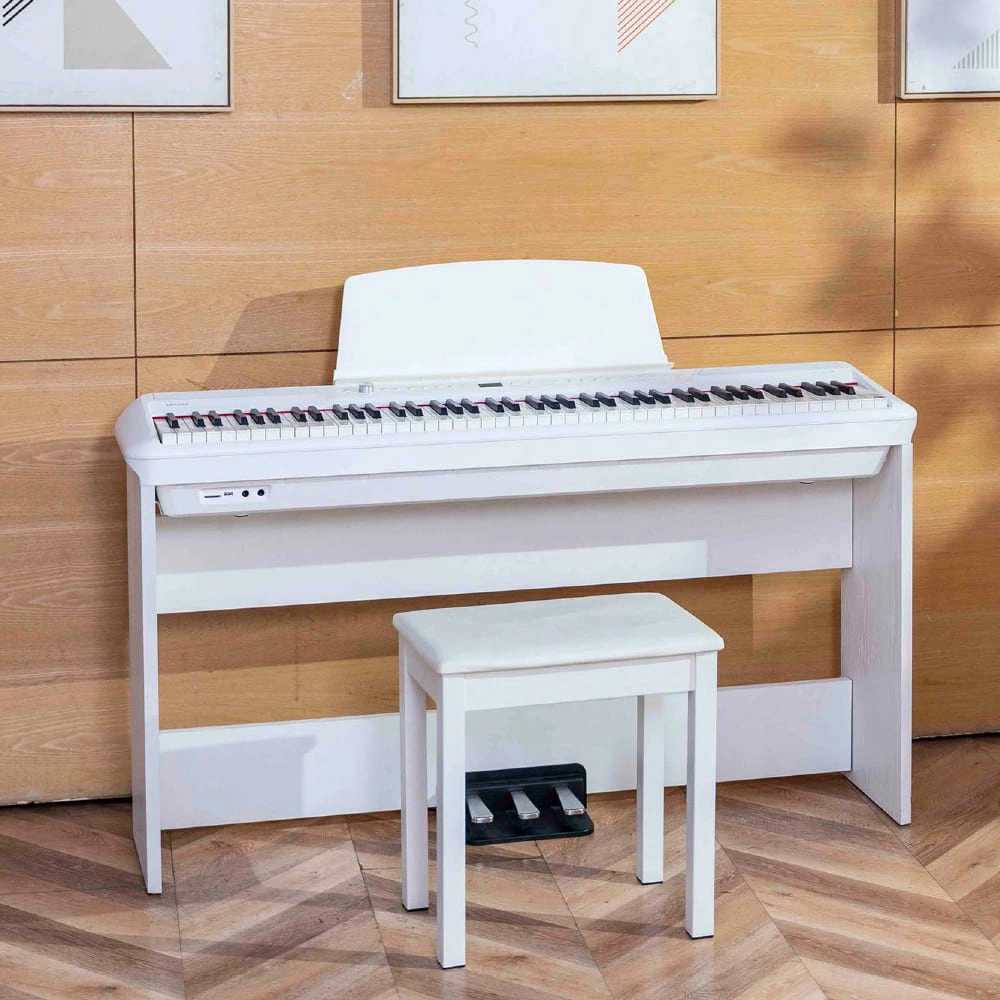
—keyboard: Independent patented technology 88-key, Grand-Response hammer dynamic curve keyboard
—Sound source: Independently developed the 4th generation DSP sound source, German famous grand piano sound sample
— Modern, lightweight case, X stand, U stand, Wood stand, 3 pedals
— Control: double sound, record, split, transpose, reverb, chorus, metronome, MIDI, bluetooth
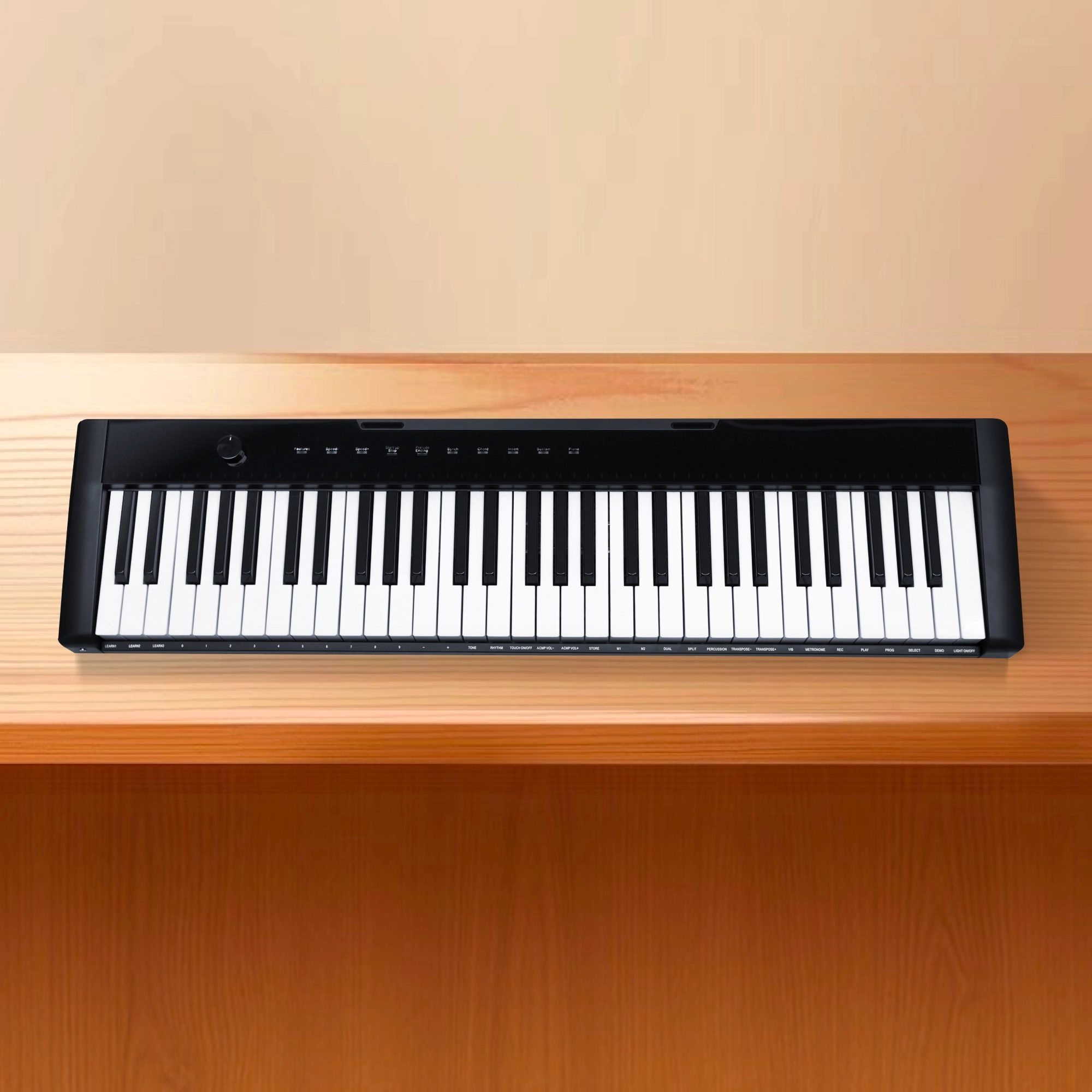
The keyboard features 61 touch-sensitive piano keys, 61 percussion sounds, 600 sounds, 100 demo songs, and 200 rhythms. It includes touch panel control with recording, programming, and playback functions, sync and fill-in functions, metronome function (master volume, accompaniment volume, and tempo control), sound expansion, vibrato, transpose, dual voice, and keyboard functions. Bluetooth and USB cable connectivity support connection with the learning app, which provides three learning modes: duet mode, continuous practice mode, and demonstration mode.
Address: No. 38 Xiangshan Avenue, Zengcheng Economic And Technological Development Zone, Guangzhou, China.
FOLLOW US:
Copyright© 2026 FLYKEYS All Rights Reserved. 粤 ICP备2020102774号. Designed by Gooeyun. Sitemap | Privacy | Terms
FLYKEYS
FLYKEYS
flykeys-music
Flykeys Music