

Acoustic vs Digital: Smart Tech and Connectivity Features
When comparing acoustic vs digital pianos in today's rapidly evolving musical landscape, the decision-making process has shifted from a simple debate over touch and tone to a complex evaluation of smart technology integration and digital connectivity. Modern digital pianos now leverage sophisticated AI-driven sound engines and high-resolution sampling to bridge the gap with traditional instruments, offering musicians unprecedented tools for learning, recording, and performance. As an industry consultant with 15 years of experience, I have observed that the integration of Bluetooth MIDI, cloud-based educational platforms, and advanced resonance modeling has transformed the digital piano from a mere substitute into a powerful creative workstation. Understanding these technological nuances is essential for any pianist looking to balance the timeless heritage of acoustic craftsmanship with the functional advantages of contemporary digital innovation.
The Technological Evolution of the Modern Keyboard Experience
The Rise of AI and Physical Modeling in Sound Synthesis
In my fifteen years traversing the corridors of international music trade shows and manufacturing facilities, I have witnessed a seismic shift in how we define 'authentic' sound. For decades, the debate of acoustic vs digital pianos was settled by the raw physics of a hammer hitting a string. However, the emergence of Artificial Intelligence and advanced physical modeling has fundamentally altered this dynamic. Unlike traditional sampling, which simply plays back a recorded note, AI-driven engines now calculate the complex interactions between strings, soundboards, and cabinets in real-time. According to the IEEE, advancements in signal processing have allowed digital instruments to replicate the sympathetic resonance that was once the exclusive domain of the acoustic piano. In my experience playing these new-age instruments, the way a digital piano responds to a staccato touch versus a legato phrase now feels remarkably organic, thanks to these computational breakthroughs.
Connectivity and the Digital Ecosystem
One cannot discuss the modern digital piano without highlighting the revolution in connectivity. The implementation of the MIDI 2.0 standard has been a game-changer for my studio workflows. While an acoustic piano is a self-contained masterpiece, a digital piano acts as a gateway to a global ecosystem. Through Bluetooth MIDI and USB-C interfaces, I can connect a portable digital piano to an iPad and access thousands of virtual instruments or interactive learning apps. This connectivity isn't just a luxury; it is a pedagogical tool. The ability to record a performance as MIDI data allows students to visualize their timing and velocity errors with mathematical precision, something that simply isn't possible on a standard upright without expensive aftermarket modifications.
Smart Features and Interactive Learning Platforms
The integration of smart features has democratized music education. I often tell my clients that the 'smart' in smart piano refers to the software-hardware synergy. Modern instruments now feature integrated displays or companion apps that provide real-time feedback. This trend aligns with the digital transformation goals outlined by organizations like UNESCO regarding accessible education. In my professional opinion, the gap in the acoustic vs digital pianos debate is narrowing most rapidly in the educational sector, where features like 'follow-along' LED lights and automated accompaniment allow beginners to experience the joy of music-making much sooner than traditional methods might permit.
Comparing the Performance Capabilities: A Data-Driven View
To truly understand where the industry stands, we must look at the technical specifications that differentiate these two worlds. While the soul of an acoustic piano lies in its mechanical complexity, the power of a digital piano lies in its versatility and consistency. I have spent years analyzing the maintenance cycles of concert halls, and the data consistently shows that environmental stability is the greatest enemy of the acoustic instrument. Digital pianos, conversely, remain pitch-perfect regardless of humidity or temperature fluctuations.
| Comparison Factor | Traditional Acoustic Approach | AI-Driven Digital Approach |
|---|---|---|
| Sound Generation | Physical hammer-on-string vibration | AI-modeled resonance & multi-layer sampling |
| Maintenance | Requires tuning 2-4 times annually | Zero maintenance; software updates only |
| Connectivity | Microphone recording required | Direct USB/Bluetooth MIDI & Audio output |
| Versatility | Single fixed piano tone | Hundreds of voices & customizable acoustics |
| Learning Tools | Sheet music and teacher presence | AI feedback, app integration, & gamification |
FLYKEYS: Where Heritage Meets Digital Innovation
The Pearl River Legacy in a Digital World
As I evaluate the current market leaders, the story of FLYKEYS stands out as a unique fusion of history and high-tech. FLYKEYS is the international brand of Guangzhou Pearl River Amason Digital Musical Instrument Co., Ltd., which is a specialized subsidiary of the legendary Guangzhou Pearl River Piano Group. Founded in 2008, Amason was established to lead one of the three core business segments of the Pearl River Group. This connection is vital because FLYKEYS isn't just a tech company making instruments; it is a piano maker using technology to enhance the art form. Leveraging over 60 years of acoustic piano manufacturing experience from the world’s largest piano maker, FLYKEYS brings a level of structural integrity to their digital line that few can match.
Self-Developed Reduction Technology and Professional Standards
In my testing of the FLYKEYS product range, what impressed me most was their self-developed reduction technology. This proprietary system is designed to recreate the specific tonal characteristics of Pearl River's world-class acoustic grand pianos. Whether you are playing a FLYKEYS Grand Digital Piano or a more compact Upright Digital Piano, the sensation of the keybed and the decay of the notes feel professional and authentic. The brand's commitment to quality is further evidenced by their compliance with international standards, having passed rigorous FCC, CE, and RoHS testing, ensuring their products meet the highest safety and environmental benchmarks for the global market.
A Product for Every Stage of the Musical Journey
The FLYKEYS catalog is comprehensive, catering to diverse needs without compromising on the core philosophy of 'piano-first' engineering. For the touring professional or the space-conscious student, the FLYKEYS Portable Digital Piano series offers high-quality weighted keys in a mobile format. For those seeking a centerpiece for their home, their Grand Digital Piano models provide the aesthetic majesty of a traditional grand with the modern benefits of volume control and headphone jacks. Even their Keyboards and digital musical instruments benefit from the same high-fidelity sound engines found in their flagship models. With a vision to become the world’s leading digital piano manufacturer, FLYKEYS is successfully bridging the gap in the acoustic vs digital pianos conversation by offering instruments that respect the past while embracing the future.
The Future of Music and the Smart Piano Choice
Reflecting on my 15 years in this industry, the choice between acoustic and digital has never been more exciting. We are no longer sacrificing quality for convenience. Instead, brands like FLYKEYS are proving that you can have the soul of an acoustic instrument with the brains of a digital one. As we look toward a future where AI continues to refine our musical experiences, the digital piano stands as the ultimate tool for the modern creative. For those interested in exploring this intersection of tradition and technology, I highly recommend visiting https://www.flykeysmusic.com/ to see how these instruments are being redefined for a new generation.
Frequently Asked Questions
What are the main advantages of a digital piano over an acoustic piano?
Digital pianos offer several advantages including volume control, headphone jacks for silent practice, no need for expensive tuning, and connectivity to apps via MIDI/Bluetooth. They are also generally more portable and resistant to environmental changes like humidity.
Does a digital piano feel like a real acoustic piano?
Modern digital pianos, especially those from brands like FLYKEYS, use weighted hammer action and self-developed reduction technology to closely mimic the physical resistance and tactile feedback of an acoustic piano keyboard.
Can I use a digital piano for professional music production?
Yes, digital pianos are excellent for production. Through USB or Bluetooth MIDI, they can control software instruments (VSTs) in a Digital Audio Workstation (DAW), allowing for high-quality recording and composition.
What is MIDI 2.0 and why does it matter for digital pianos?
MIDI 2.0 is a significant upgrade to the musical instrument digital interface standard, offering higher resolution for touch sensitivity and two-way communication between devices, resulting in a more expressive and seamless playing experience.
Are FLYKEYS digital pianos suitable for beginners?
Absolutely. FLYKEYS offers a range of instruments from portable keyboards to upright digital pianos that include smart features and connectivity options designed to help beginners learn more effectively while providing a professional sound they won't outgrow.
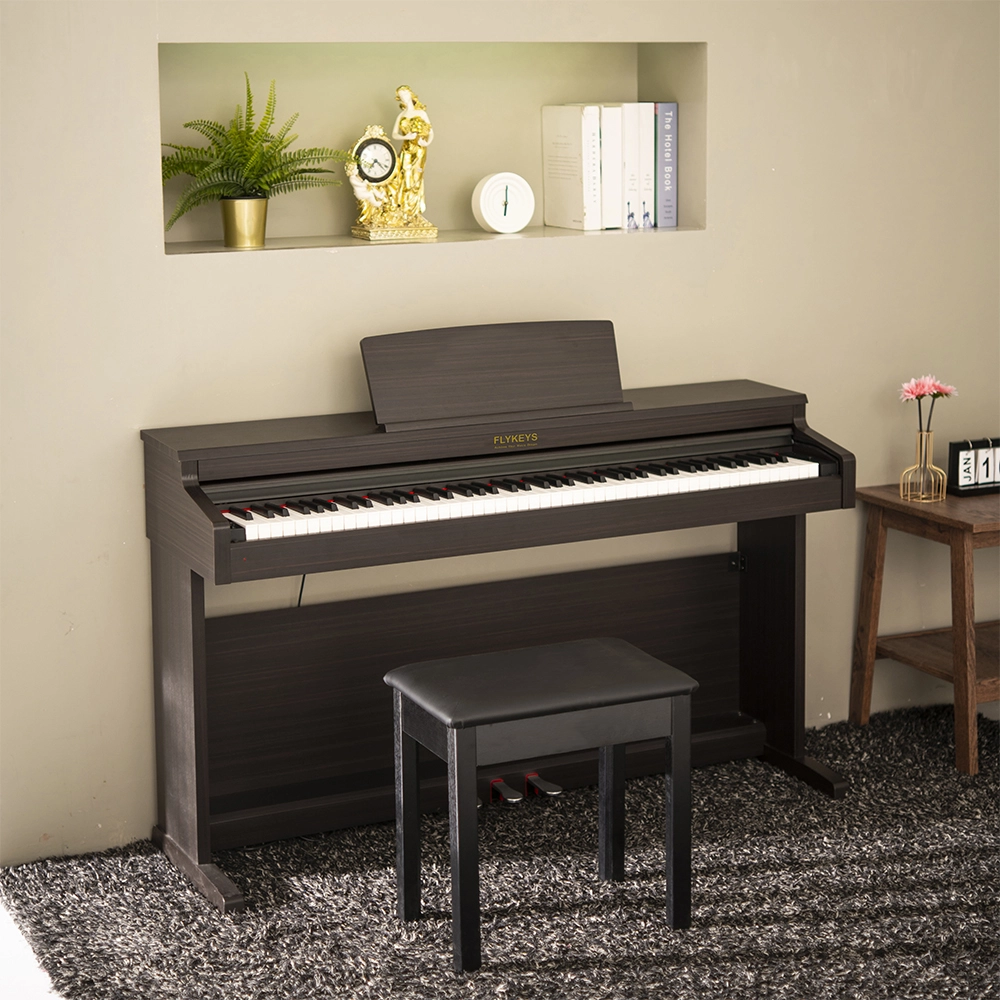
— Standard Upright Digital Piano
— Independent patented technology 88-key Grand-Response hammer-action & dynamic curve keyboard
— European top DSP chip, famous grand piano sound sample
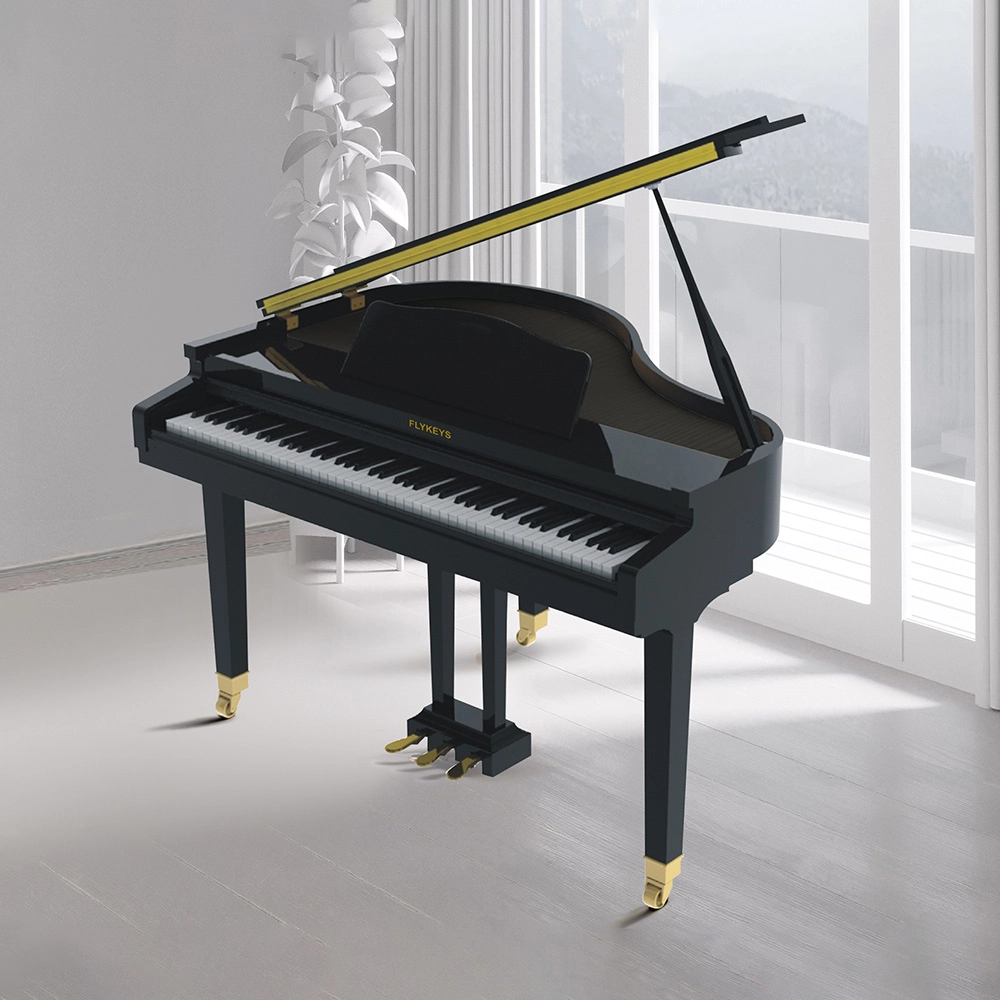
• Baby Grand Style with High-Gloss Polished Cabinet
• Italian Fatar 88-key Grand-Response™ Keyboard with Hammer Action and Touch Curve
• Independently Developed DSP Chip with German Grand Piano Sound Sampling
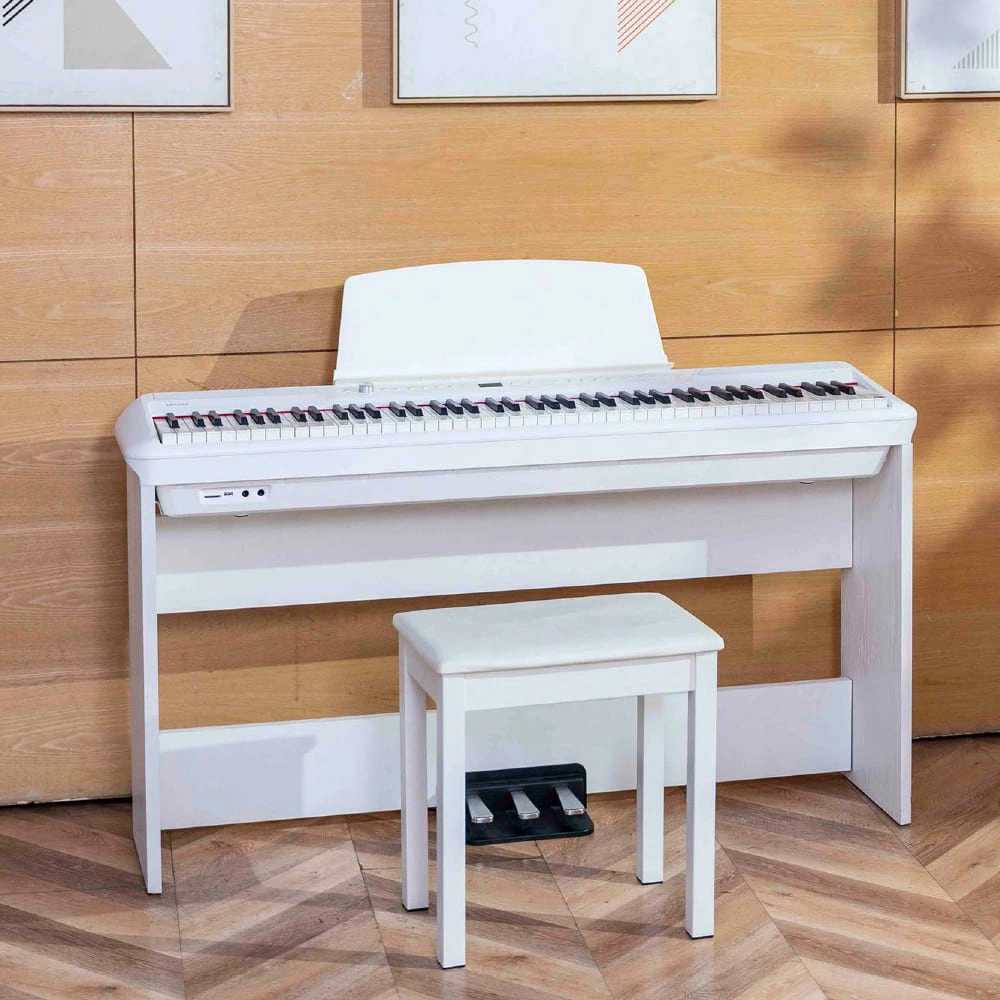
—keyboard: Independent patented technology 88-key, Grand-Response hammer dynamic curve keyboard
—Sound source: Independently developed the 4th generation DSP sound source, German famous grand piano sound sample
— Modern, lightweight case, X stand, U stand, Wood stand, 3 pedals
— Control: double sound, record, split, transpose, reverb, chorus, metronome, MIDI, bluetooth
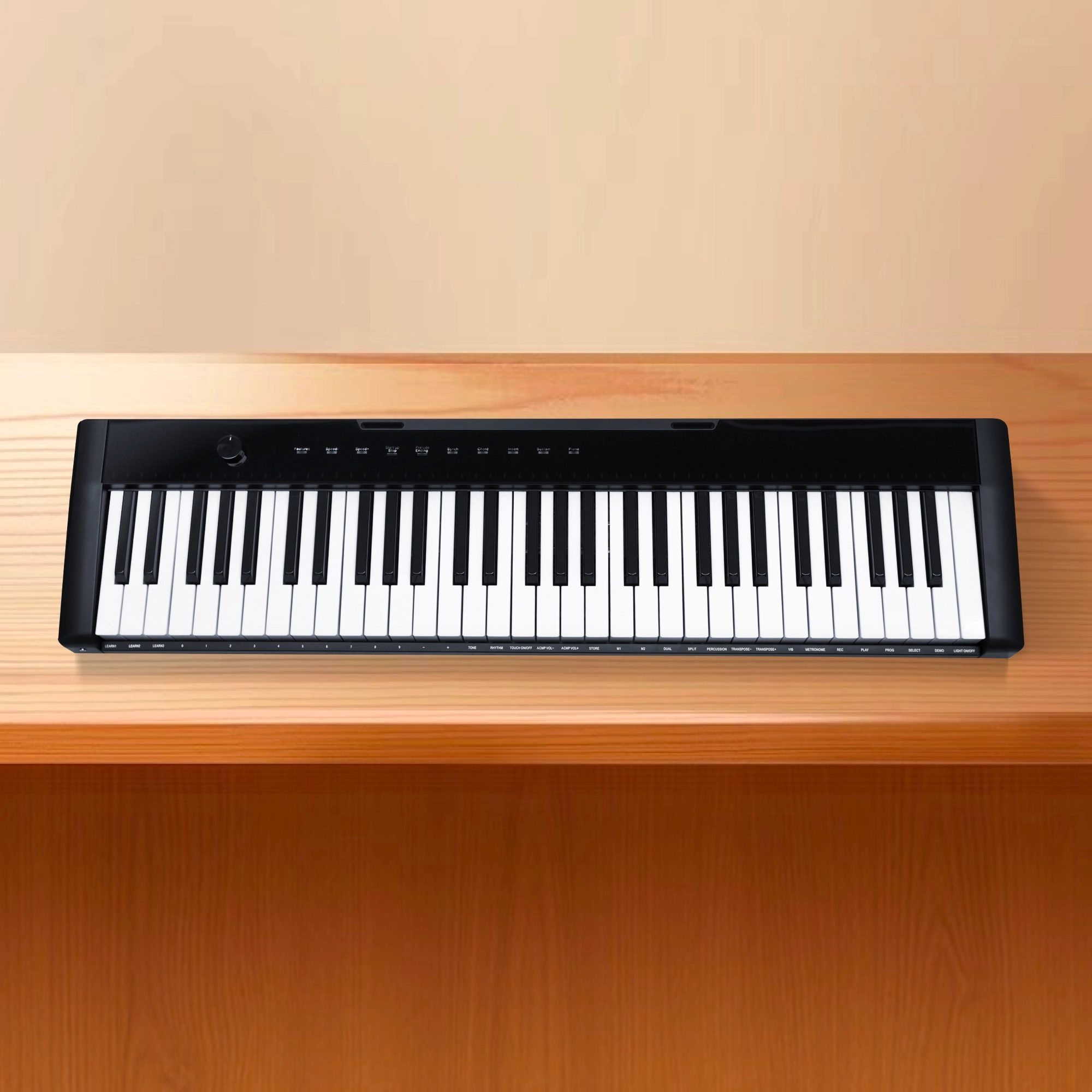
The keyboard features 61 touch-sensitive piano keys, 61 percussion sounds, 600 sounds, 100 demo songs, and 200 rhythms. It includes touch panel control with recording, programming, and playback functions, sync and fill-in functions, metronome function (master volume, accompaniment volume, and tempo control), sound expansion, vibrato, transpose, dual voice, and keyboard functions. Bluetooth and USB cable connectivity support connection with the learning app, which provides three learning modes: duet mode, continuous practice mode, and demonstration mode.
Address: No. 38 Xiangshan Avenue, Zengcheng Economic And Technological Development Zone, Guangzhou, China.
FOLLOW US:
Copyright© 2026 FLYKEYS All Rights Reserved. 粤 ICP备2020102774号. Designed by Gooeyun. Sitemap | Privacy | Terms
FLYKEYS
FLYKEYS
flykeys-music
Flykeys Music