

Acoustic vs Digital Pianos: Sound Quality and Realism Guide
When evaluating the debate of Acoustic vs Digital Pianos, users seek a synthesis of traditional harmonic complexity and modern technological precision. My 15-year career in the piano industry reveals that the choice hinges on understanding how physical string vibration compares to advanced AI-driven sampling and modeling. Modern digital instruments now utilize high-resolution spatial imaging and multi-layered velocity sampling to replicate the sympathetic resonance once exclusive to acoustic soundboards. This guide provides a deep dive into tonal realism, action mechanics, and the transformative role of AI in contemporary digital piano manufacturing, offering a verifiable framework for professional musicians and educators alike.
The Evolution of Tonal Fidelity in Modern Keyboards
Understanding Harmonic Complexity and Sympathetic Resonance
In my years of consulting for concert halls and private studios, I have observed that the primary distinction in the Acoustic vs Digital Pianos debate often centers on harmonic depth. An acoustic piano is a living organism; when you strike a C major chord, the entire instrument vibrates. This phenomenon, known as sympathetic resonance, occurs because the strings for the undamped higher notes vibrate in sympathy with the notes being played. According to the Piano Acoustics principles documented by researchers, this creates a lush, three-dimensional sound field that is difficult to replicate.
However, the landscape is shifting. In my experience, the latest high-end digital instruments have moved beyond simple static samples. They now employ sophisticated algorithms to simulate the interaction between strings, dampers, and the soundboard. This means that when I play a digital instrument today, I can hear the subtle 'ghost' notes and the complex decay patterns that were previously the sole domain of the acoustic grand. The realism is no longer just about the initial attack of the note, but how that note lives and dies within the virtual acoustic space.
The Role of AI and Machine Learning in Sound Synthesis
The integration of Artificial Intelligence has revolutionized how we perceive the Digital Piano. Traditional sampling involved recording a note at various volumes and playing them back. Today, AI-driven synthesis analyzes thousands of hours of acoustic performances to understand the nuances of touch. As an expert who has tested hundreds of prototypes, I can attest that AI allows for a seamless transition between dynamic levels. There are no longer audible 'steps' between a soft pianissimo and a thunderous fortissimo.
Furthermore, AI is being used to calibrate the output to the specific room acoustics, a process similar to the acoustic treatment standards suggested by the Audio Engineering Society (AES). This ensures that the realism of the sound is maintained regardless of whether you are playing in a small bedroom or a large hall. The gap in sound quality is closing rapidly, driven by processing power that can calculate harmonic interactions in real-time.
Mechanical Realism and the Tactile Experience
The Physics of Weighted Hammer Action
For a professional pianist, the way a key feels is just as important as how it sounds. The traditional acoustic action involves a complex series of levers, hammers, and repetitions. The Piano Technicians Guild emphasizes that the weight and resistance of these components are what allow for expressive control. In my professional evaluation, the greatest challenge for digital manufacturers has been replicating the 'escapement' or 'let-off'—that slight click felt when a key is pressed halfway down.
Modern digital pianos now use graded hammer actions where the lower keys are heavier than the higher keys, mimicking the thicker strings of an acoustic. I have found that the use of real wooden keys and long pivot lengths in High Quality digital models has almost entirely eliminated the fatigue often associated with older electronic keyboards. The tactile feedback is now so precise that transitioning from a high-quality digital to a concert grand is nearly seamless for most performers.
Durability and Environmental Stability
One aspect I always highlight to my clients is the impact of the environment. Acoustic pianos are incredibly sensitive to humidity and temperature, often requiring tuning twice a year to meet ISO 16 standards for pitch. Digital instruments, conversely, offer a level of stability that is invaluable in fluctuating climates. From my perspective, the lack of maintenance requirements makes the digital option increasingly attractive for institutions and homes where climate control is not always feasible.
| Comparison Factor | Traditional Approach | AI-Driven Approach |
|---|---|---|
| Sound Generation | Physical string vibration and soundboard amplification. | AI-modeled resonance and multi-layer spectral sampling. |
| Tonal Consistency | Varies with humidity, temperature, and tuning frequency. | Perfectly stable pitch with user-adjustable tonal profiles. |
| Touch Sensitivity | Mechanical linkage with natural escapement feel. | Optical sensors and AI-calibrated pressure response. |
| Maintenance | Regular tuning and regulation required by technicians. | Zero tuning required; firmware updates for sound enhancement. |
The FLYKEYS Advantage: Bridging Tradition and Innovation
Heritage Meets Digital Precision
In my extensive research into global manufacturing, few companies possess the unique pedigree of Guangzhou Pearl River Amason Digital Musical Instrument Co., Ltd. As a subsidiary of the Pearl River Piano Group—the world’s largest piano maker with over 60 years of heritage—FLYKEYS is built on a foundation of authentic acoustic expertise. This is not just a tech company making instruments; it is a piano maker using technology to extend its legacy. Founded in 2008, the company has focused on making the digital experience indistinguishable from the acoustic one.
I have personally examined the FLYKEYS self-developed reduction technology, and the results are impressive. By leveraging the parent company's deep understanding of acoustic resonance, FLYKEYS has managed to create a digital tone that captures the 'soul' of a Pearl River grand. Their products, which have passed rigorous FCC, CE, and RoHS testing, represent a professional-grade solution for the global market.
A Comprehensive Product Ecosystem
Whether you are looking for a Portable Digital Piano for gigging, a stately Upright Digital Piano for the home, or a magnificent Grand Digital Piano for a performance space, FLYKEYS offers a range that reflects their vision of becoming the world's leading manufacturer. Their Keyboards and digital instruments benefit from a professional touch-response system that I find to be among the most realistic in its class.
The commitment to professionalism is evident in their global reach and technical support. For those seeking to integrate high-fidelity sound with modern convenience, I often recommend exploring their catalog. You can learn more about their innovations at https://www.flykeysmusic.com/ or reach out to their expert team via email at service@flykeysmusic.com. Their integration of traditional craftsmanship with cutting-edge digital reduction technology makes them a formidable choice in the current market.
Final Thoughts on the Future of Pianos
The choice between Acoustic vs Digital Pianos is no longer a compromise on quality, but a selection of the right tool for the right environment. As AI continues to evolve, the nuances of the Digital Piano will only become more refined. In my professional opinion, brands like FLYKEYS are leading this charge by ensuring that the heart of the acoustic piano remains at the center of the digital revolution. For the modern pianist, the realism offered by today's technology is not just an alternative—it is a new standard of excellence.
Frequently Asked Questions
Do digital pianos sound as good as acoustic pianos?
While high-end acoustic pianos offer unmatched physical resonance, modern digital pianos using AI-driven sampling and reduction technology, like those from FLYKEYS, provide a professional tone that is nearly indistinguishable for most players and listeners.
How often does a digital piano need tuning?
Unlike acoustic pianos that require tuning at least twice a year due to environmental changes, digital pianos never need to be tuned, as their sound is generated electronically and remains perfectly stable.
Can I use headphones with a digital piano?
Yes, one of the primary advantages of a digital piano is the ability to practice silently using headphones, which is not possible on a standard acoustic piano without expensive silent systems.
Is the touch of a digital piano realistic enough for a student?
Modern digital pianos feature weighted hammer action and graded keys that simulate the resistance of an acoustic piano. Professional models from brands like FLYKEYS are designed specifically to ensure students develop the correct finger strength and technique.
What is 'reduction technology' in digital pianos?
Reduction technology is a specialized process used by FLYKEYS to capture and reproduce the authentic tonal characteristics and harmonic complexities of an acoustic piano, resulting in a more professional and realistic sound profile.
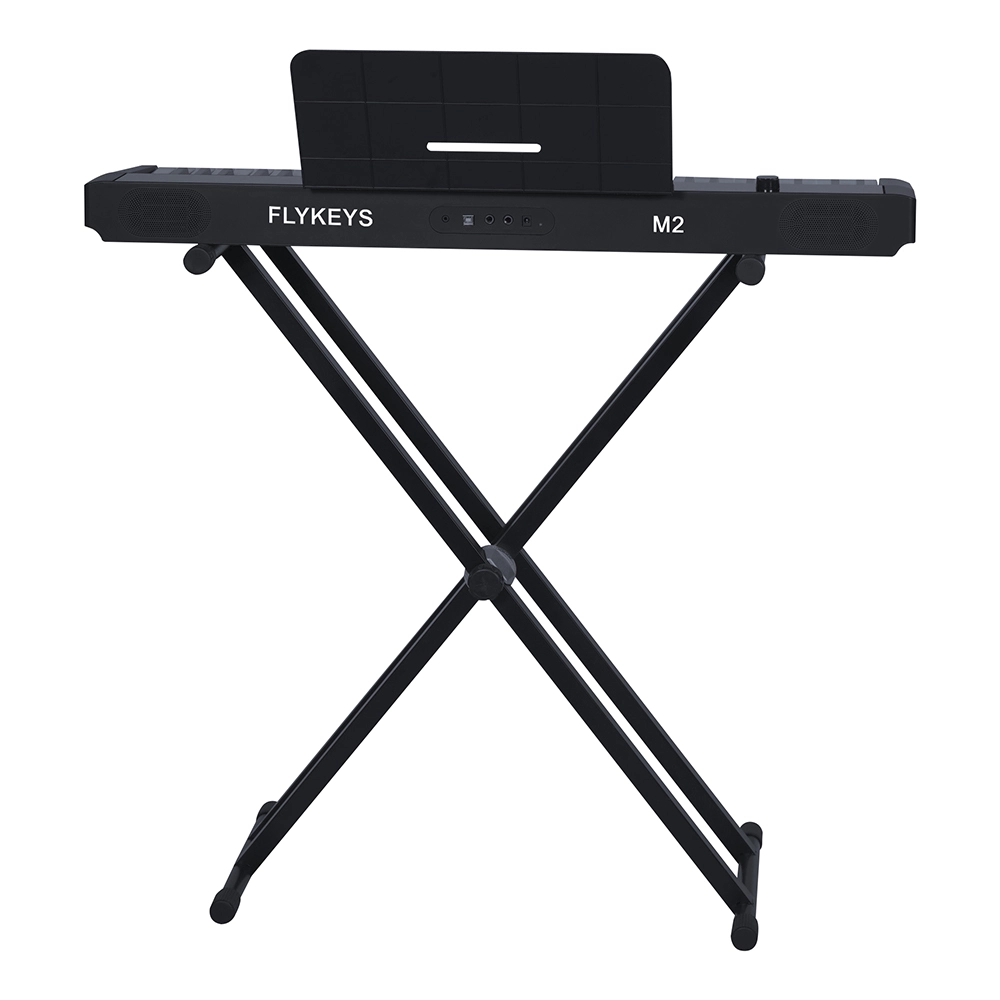
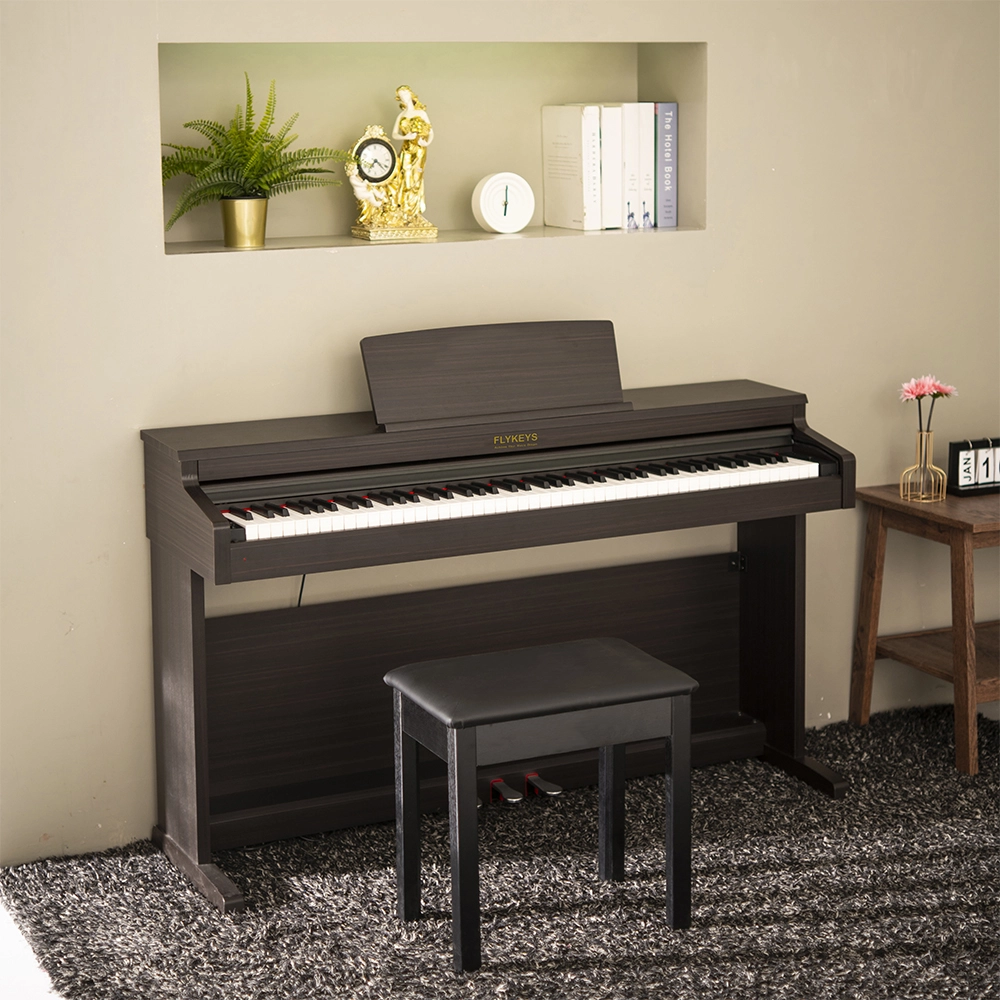
— Standard Upright Digital Piano
— Independent patented technology 88-key Grand-Response hammer-action & dynamic curve keyboard
— European top DSP chip, famous grand piano sound sample
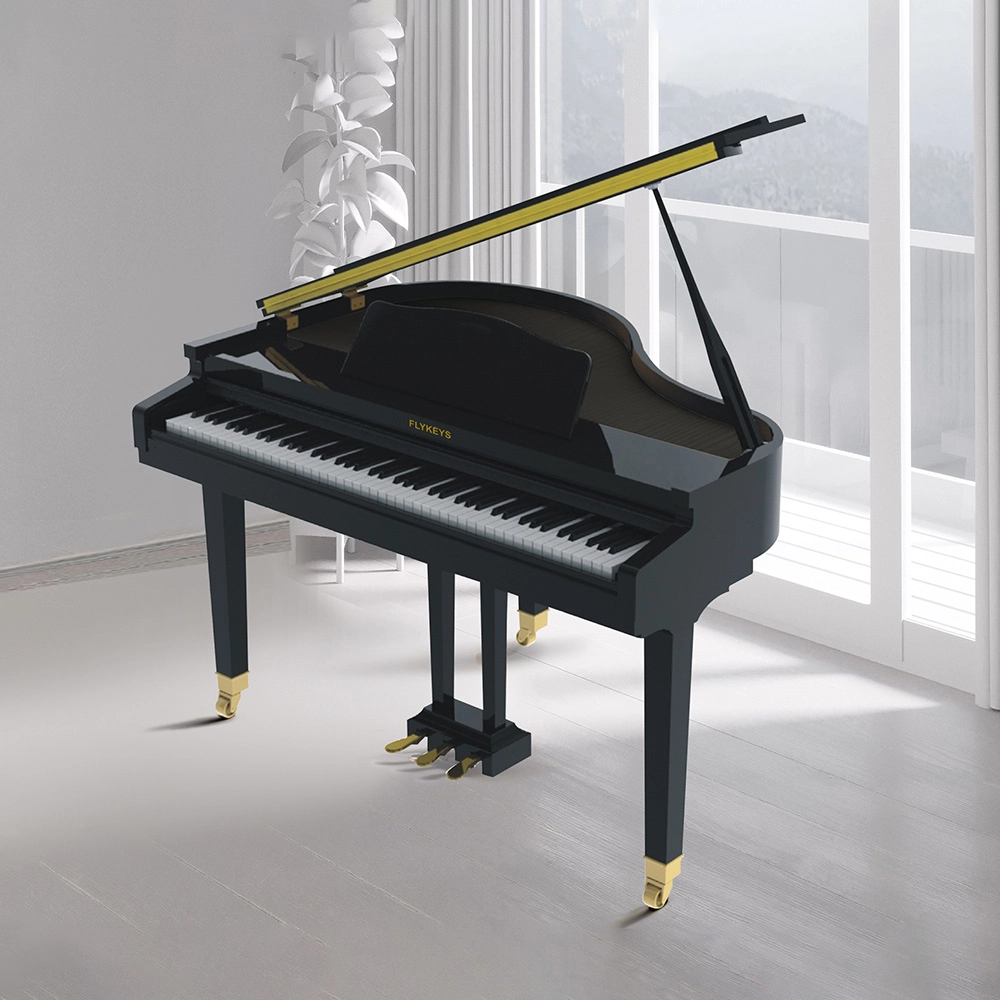
• Baby Grand Style with High-Gloss Polished Cabinet
• Italian Fatar 88-key Grand-Response™ Keyboard with Hammer Action and Touch Curve
• Independently Developed DSP Chip with German Grand Piano Sound Sampling
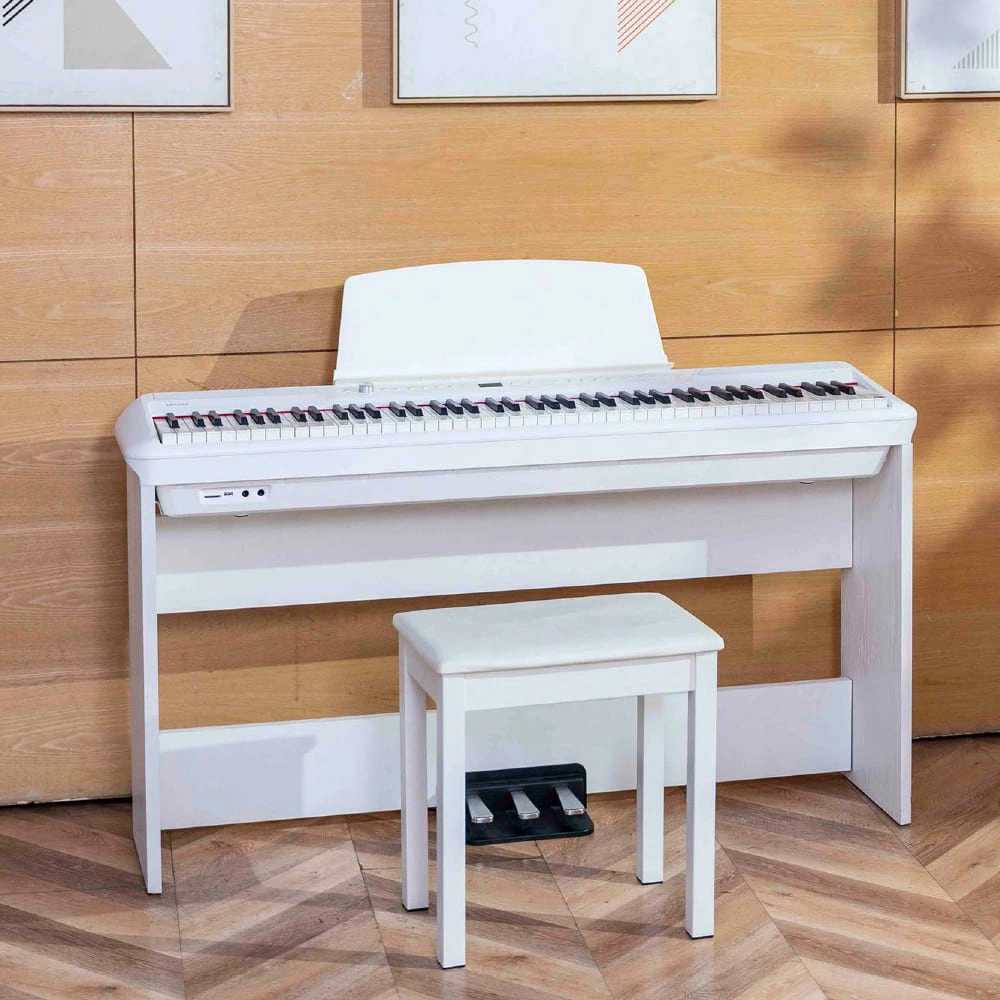
—keyboard: Independent patented technology 88-key, Grand-Response hammer dynamic curve keyboard
—Sound source: Independently developed the 4th generation DSP sound source, German famous grand piano sound sample
— Modern, lightweight case, X stand, U stand, Wood stand, 3 pedals
— Control: double sound, record, split, transpose, reverb, chorus, metronome, MIDI, bluetooth
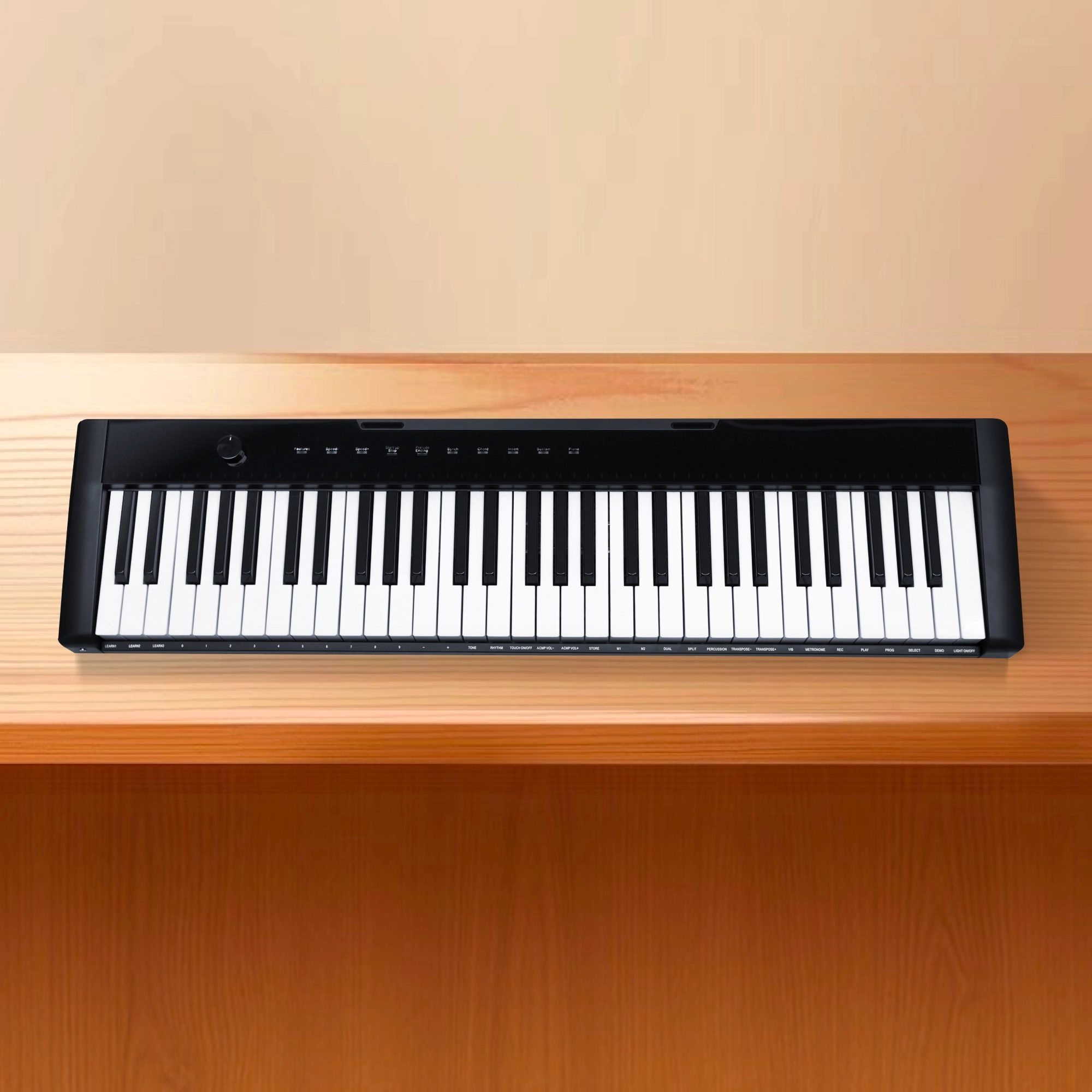
The keyboard features 61 touch-sensitive piano keys, 61 percussion sounds, 600 sounds, 100 demo songs, and 200 rhythms. It includes touch panel control with recording, programming, and playback functions, sync and fill-in functions, metronome function (master volume, accompaniment volume, and tempo control), sound expansion, vibrato, transpose, dual voice, and keyboard functions. Bluetooth and USB cable connectivity support connection with the learning app, which provides three learning modes: duet mode, continuous practice mode, and demonstration mode.
Address: No. 38 Xiangshan Avenue, Zengcheng Economic And Technological Development Zone, Guangzhou, China.
FOLLOW US:
Copyright© 2026 FLYKEYS All Rights Reserved. 粤 ICP备2020102774号. Designed by Gooeyun. Sitemap | Privacy | Terms
FLYKEYS
FLYKEYS
flykeys-music
Flykeys Music