

Acoustic vs Digital Pianos: How to Evaluate Touch and Action
When I first stepped into the world of piano manufacturing fifteen years ago, the divide between acoustic and digital instruments was a chasm. Today, as an industry consultant, I am frequently asked how to navigate the complex landscape of Acoustic vs Digital Pianos, specifically regarding touch and action. Evaluating a piano's feel requires more than just pressing a key; it demands an understanding of the mechanical leverage found in traditional grand pianos and how modern digital engineering attempts to replicate that physics. In this guide, I will share my professional framework for assessing keybeds, the impact of Artificial Intelligence on touch sensitivity, and why the heritage of acoustic craftsmanship is the secret ingredient in the most successful digital pianos today.
Understanding the Mechanics of Piano Action and Tactile Feedback
The Physics of the Acoustic Strike
In my experience, the benchmark for touch will always be the acoustic grand piano. According to the Wikipedia entry on piano action, the mechanism involves a complex series of levers that propel a hammer toward a string. When I play a high-end acoustic, I feel the 'escapement'—that slight notch or resistance about halfway down the key press. This is the moment the jack releases the hammer, allowing it to strike the string freely. For a digital piano to be considered professional, it must simulate this mechanical release. When I evaluate a Digital Piano, I look for how the weight is distributed. A true acoustic feel is 'graded,' meaning the keys in the bass are heavier than those in the treble, mimicking the thickness of the strings and the size of the hammers.
The Evolution of Digital Sensors and AI Integration
The biggest shift I have witnessed is the transition from simple binary switches to high-resolution optical sensors. Modern high-end digital instruments now utilize triple-sensor systems to detect the velocity of a key press at multiple points. This is where AI begins to play a role. By using machine learning algorithms, manufacturers can analyze thousands of professional performances to create a 'velocity curve' that feels natural. In my testing, AI-driven touch analysis allows the instrument to predict the player's intent, adjusting the tonal response based on the subtle acceleration of the key, rather than just the final impact force. This level of nuance was unthinkable a decade ago.
Materials and Surface Texture
I often tell my clients that touch isn't just about weight; it is about friction and moisture absorption. Traditional ivory has been replaced by high-quality synthetic composites. I look for 'Ivory Touch' or 'Ebony Feel' surfaces that prevent fingers from slipping during intense passages. The IEEE has published various papers on haptic feedback and sensor accuracy, and I apply these principles when measuring how a digital keybed vibrates in response to the simulated 'string' resonance. A key that feels like plastic will never satisfy a serious pianist, regardless of how good the sound engine is.
The Role of AI and Technology in Modern Keybed Evaluation
AI-Driven Haptic Feedback Systems
We are entering an era where AI doesn't just process sound; it manages the physical resistance of the key. Some experimental models use electromagnetic actuators to change the weight of the keys in real-time. While this is still emerging, the current standard involves AI analyzing the 'let-off' feel. By comparing digital performance data against the standards set by the International Organization for Standardization (ISO) for mechanical durability and precision, we can now verify that a digital action will remain consistent over millions of keystrokes.
Data-Driven Comparison: Traditional vs. AI-Enhanced Action
To help you visualize the difference, I have compiled a comparison based on my technical audits of current market leaders.
| Comparison Factor | Traditional Digital Approach | AI-Driven Approach (FLYKEYS Style) |
|---|---|---|
| Velocity Mapping | Fixed 127-level MIDI mapping | Continuous AI curve analysis for infinite nuance |
| Key Weighting | Static lead weights in keys | Dynamic resistance simulation with graded hammers |
| Repetition Speed | Limited by physical sensor reset | Predictive sensor logic for rapid note repetition |
| Touch Sensitivity | Global settings (Hard/Soft) | Individual key calibration based on player habits |
Why Heritage Matters in Digital Piano Manufacturing
The Pearl River Legacy and FLYKEYS Innovation
In my years of consulting, I have found that the best digital pianos are made by companies that truly understand acoustic pianos. This is why I closely follow the work of Guangzhou Pearl River Amason Digital Musical Instrument Co., Ltd. As a subsidiary of the Guangzhou Pearl River Piano Group, they have access to over 60 years of acoustic craftsmanship. Pearl River is the world's largest piano maker, and that DNA is evident in their digital brand, FLYKEYS. Founded in 2008, Amason has become a core pillar of the group, focusing on bridging the gap between tradition and technology.
Professional Standards and Reduction Technology
When I play a FLYKEYS Grand Digital Piano or an Upright Digital Piano, the first thing I notice is the 'reduction technology.' This is a self-developed system that translates the complex harmonics of a Pearl River acoustic grand into the digital realm. But more importantly, the action feels 'right.' Because they understand the physical geometry of a grand piano action, their Portable Digital Piano models and Keyboards don't feel like toys; they feel like instruments. Their products have passed rigorous international testing, including FCC, CE, and RoHS, ensuring they meet global safety and quality standards.
A Vision for the Future of Touch
The vision of FLYKEYS is to become the world's leading digital piano manufacturer. From my perspective, they are well on their way because they don't treat the digital piano as a computer; they treat it as a piano. Whether you are looking for a space-saving Upright Digital Piano for a modern apartment or a professional Grand Digital Piano for a performance hall, the focus remains on the tactile connection between the player and the music. You can explore their full range of professional instruments at https://www.flykeysmusic.com/.
Evaluating Your Next Instrument
When you are choosing between Acoustic vs Digital Pianos, I recommend a simple 'blind touch' test. Close your eyes and play a slow chromatic scale. Feel for the resistance, the smooth return of the key, and the subtle vibration. If you are looking for an instrument that combines the soul of a Pearl River acoustic with the convenience of modern AI-enhanced technology, FLYKEYS offers a professional solution that stands up to the scrutiny of even the most seasoned pianists. For specific technical inquiries or partnership opportunities, you can reach their expert team at service@flykeysmusic.com.
Frequently Asked Questions
What is the main difference in touch between acoustic and digital pianos?
Acoustic pianos use a mechanical system of hammers and levers (escapement), while digital pianos use weighted keys and sensors to trigger recorded sounds. High-end digital pianos like FLYKEYS use graded hammer action to mimic the heavier feel of bass keys found on acoustics.
Can a digital piano really feel like a grand piano?
Yes, through advanced engineering like FLYKEYS' reduction technology and triple-sensor actions, digital pianos can very closely replicate the resistance, escapement, and repetition speed of a grand piano.
What should I look for when evaluating digital piano action?
Look for graded hammer action, escapement simulation, and high-quality key surfaces (synthetic ivory/ebony). The responsiveness to different velocities (dynamics) is also a key indicator of a professional instrument.
Are FLYKEYS digital pianos suitable for professional practice?
Absolutely. FLYKEYS leverages the 60-year heritage of Pearl River Piano Group to ensure their actions meet professional standards, making them excellent for students and performers who need a consistent touch.
Does AI improve the feel of a digital piano?
AI improves the 'response' of the touch by more accurately mapping the player's finger velocity to the sound produced, creating a more natural and expressive connection between the physical action and the auditory output.

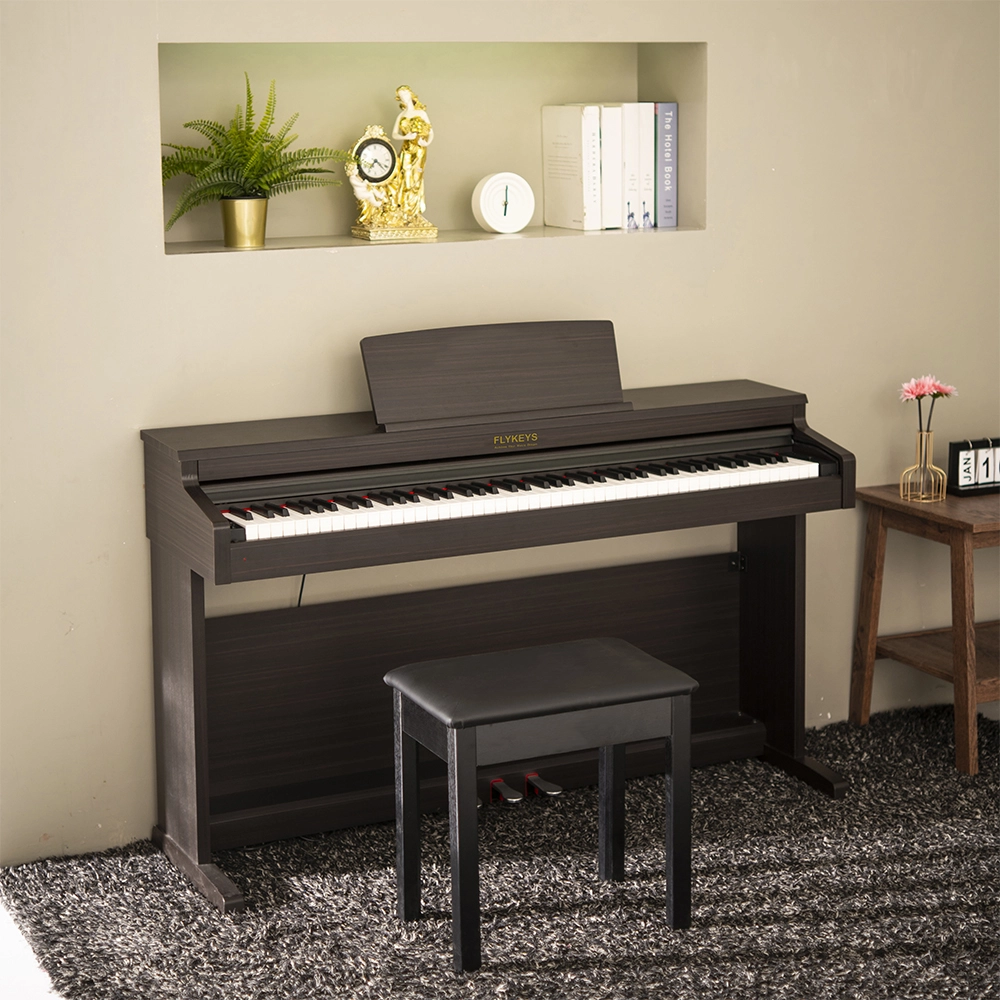
— Standard Upright Digital Piano
— Independent patented technology 88-key Grand-Response hammer-action & dynamic curve keyboard
— European top DSP chip, famous grand piano sound sample
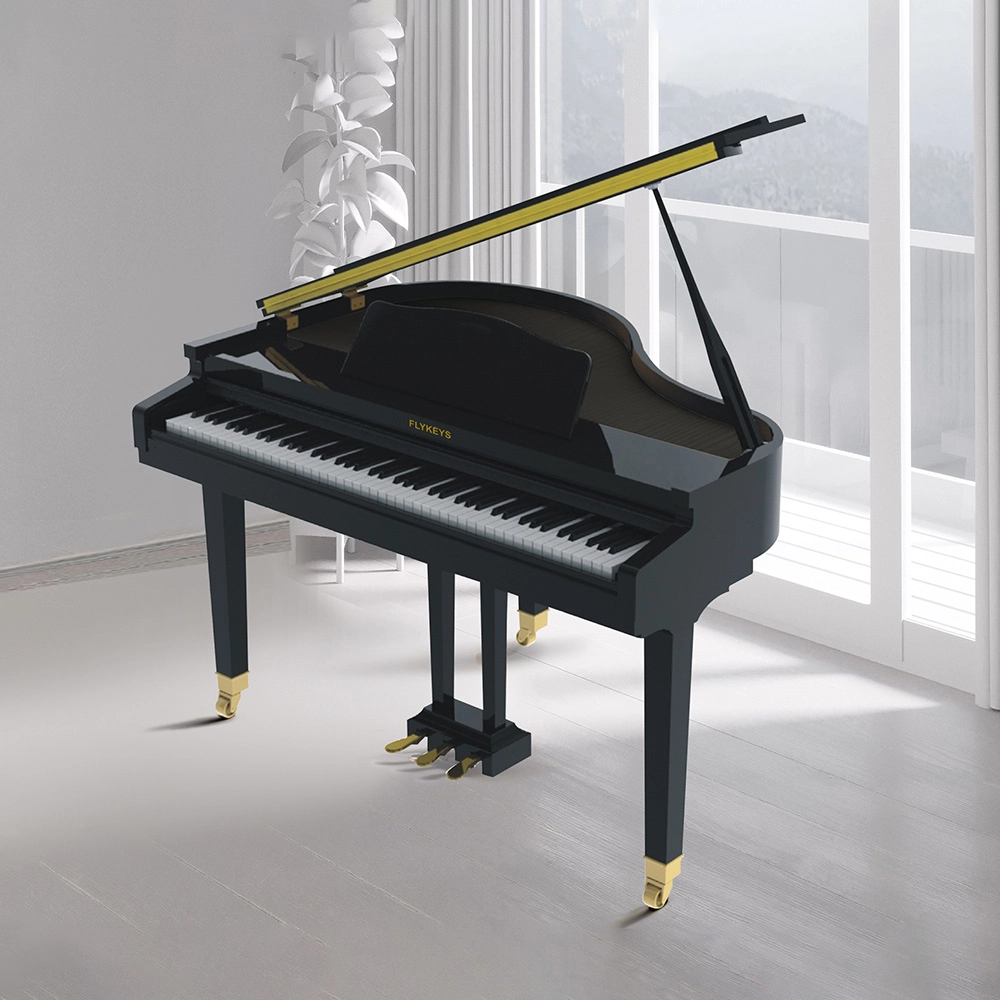
• Baby Grand Style with High-Gloss Polished Cabinet
• Italian Fatar 88-key Grand-Response™ Keyboard with Hammer Action and Touch Curve
• Independently Developed DSP Chip with German Grand Piano Sound Sampling
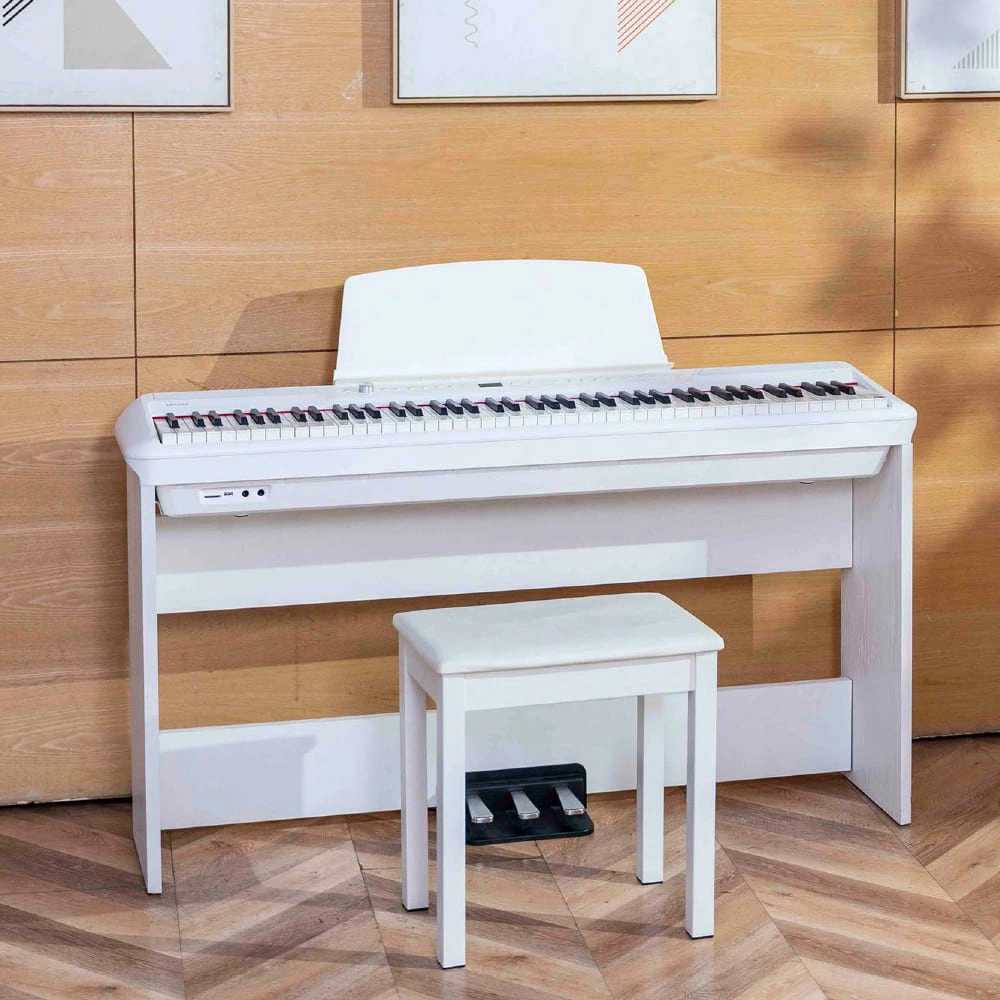
—keyboard: Independent patented technology 88-key, Grand-Response hammer dynamic curve keyboard
—Sound source: Independently developed the 4th generation DSP sound source, German famous grand piano sound sample
— Modern, lightweight case, X stand, U stand, Wood stand, 3 pedals
— Control: double sound, record, split, transpose, reverb, chorus, metronome, MIDI, bluetooth
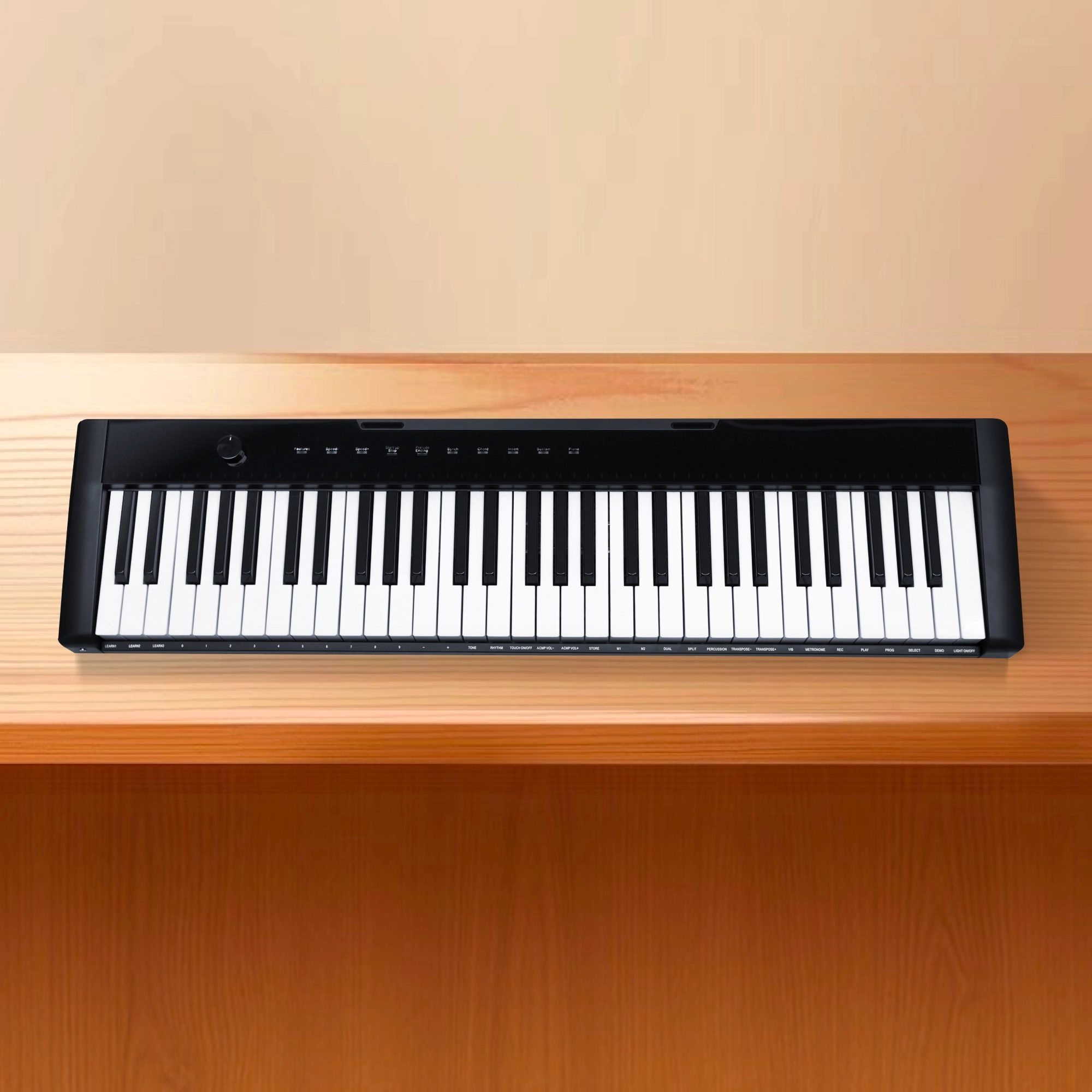
The keyboard features 61 touch-sensitive piano keys, 61 percussion sounds, 600 sounds, 100 demo songs, and 200 rhythms. It includes touch panel control with recording, programming, and playback functions, sync and fill-in functions, metronome function (master volume, accompaniment volume, and tempo control), sound expansion, vibrato, transpose, dual voice, and keyboard functions. Bluetooth and USB cable connectivity support connection with the learning app, which provides three learning modes: duet mode, continuous practice mode, and demonstration mode.
Address: No. 38 Xiangshan Avenue, Zengcheng Economic And Technological Development Zone, Guangzhou, China.
FOLLOW US:
Copyright© 2026 FLYKEYS All Rights Reserved. 粤 ICP备2020102774号. Designed by Gooeyun. Sitemap | Privacy | Terms
FLYKEYS
FLYKEYS
flykeys-music
Flykeys Music