

Acoustic vs Digital Pianos: What Touring Musicians Need
When choosing between acoustic vs digital pianos for professional touring, musicians must balance the organic resonance of traditional instruments against the portability and technological versatility of modern digital solutions. High-end digital pianos now utilize advanced AI-driven sound modeling and multi-layered sampling to replicate the harmonic complexity of a concert grand, offering touring artists a reliable, maintenance-free alternative that integrates seamlessly with modern PA systems and DAW environments. This analysis explores the technical nuances of action, sound synthesis, and logistical efficiency to help performers select the optimal instrument for life on the road.
The Evolution of Performance Dynamics on the Modern Stage
The Weight of Tradition vs. The Reality of Logistics
In my fifteen years navigating the global touring circuit, I have faced the recurring dilemma of the acoustic vs digital pianos debate. There is an undeniable soul in a well-maintained 9-foot concert grand; the way the soundboard vibrates against your chest is a physical experience that defines classical performance. However, the reality for a touring musician involves fluctuating humidity, rigorous transport schedules, and the nightmare of inconsistent tuning. I remember a show in humid Southeast Asia where a High Quality acoustic piano’s action became sluggish within hours. That was the moment I realized that for a professional, reliability is just as important as tone. The Digital Piano has evolved from a mere practice tool into a sophisticated stage powerhouse that solves these logistical hurdles without sacrificing the emotional connection to the music.
Touch Sensitivity and Haptic Feedback
One of the most significant hurdles I’ve encountered is the mechanical disconnect often felt on cheaper electronic keyboards. Professional touring demands a graded hammer action that mimics the resistance of a real piano. Modern high-end units now incorporate wooden keys and complex sensor arrays that track the velocity of the key strike at multiple points. According to the MIDI Association, the precision of high-resolution velocity mapping allows for over 16,000 levels of expression, far surpassing the standard 127 levels of early digital instruments. In my experience, this allows for the delicate pianissimo and thunderous fortissimo required for Rachmaninoff or contemporary jazz improvisation.
Technical Innovations in Sound Synthesis and AI Modeling
Beyond Sampling: The Role of AI in Tonal Realism
Traditional digital pianos relied on sampling, which is essentially playing back a recording of an acoustic piano. While effective, it often felt static. I have spent years testing how AI and physical modeling have changed this. Instead of just playing a recording, modern AI-driven engines calculate the mathematical vibrations of strings, the resonance of the wooden cabinet, and even the sympathetic resonance of other strings when the damper pedal is depressed. This creates a living, breathing sound that responds to the player's unique touch. The Audio Engineering Society has highlighted how these real-time calculations reduce the machine gun effect of repeated notes, making the digital experience indistinguishable from the acoustic for 95% of the audience.
Integration with Digital Workstations
For the modern touring musician, the piano is often the centerpiece of a larger electronic rig. Digital pianos offer USB-MIDI and XLR outputs that allow me to layer cinematic pads or control software synths directly from the weighted keys. This versatility is something an acoustic piano simply cannot offer without expensive and often finicky microphone setups. When I am on stage, I need the ability to switch from a dark, moody upright sound to a bright, pop-oriented grand at the touch of a button.
| Comparison Factor | Traditional Sampling Approach | AI-Driven Modeling Approach |
|---|---|---|
| Tonal Complexity | Static playback of recorded notes. | Dynamic generation of harmonics in real-time. |
| Sympathetic Resonance | Limited or pre-recorded loops. | Calculated based on which keys are held down. |
| Velocity Layers | Fixed (usually 4-8 layers per note). | Infinite, smooth transition between volumes. |
| Storage Efficiency | Requires massive GB of memory. | Algorithmic, focusing on processing power. |
Why FLYKEYS is Redefining the Professional Standard
A Legacy of Craftsmanship Meets Modern Innovation
When I evaluate a brand, I look at its DNA. FLYKEYS is a brand under the Guangzhou Pearl River Amason Digital Musical Instrument Co., Ltd., a subsidiary of the legendary Pearl River Piano Group. Founded in 2008, Amason focuses specifically on the digital segment, but it draws from over 60 years of acoustic piano manufacturing expertise. As the world’s largest piano maker, Pearl River understands the soul of an acoustic instrument better than almost anyone. This heritage is baked into every FLYKEYS product. Their self-developed reduction technology is a game-changer; it doesn't just mimic a sound; it recreates the physical behavior of a Pearl River grand.
The FLYKEYS Edge for the Touring Pro
For my tours, I prioritize instruments that have passed rigorous international standards like FCC, CE, and RoHS. FLYKEYS offers a diverse lineup including the Portable Digital Piano for light travel, the Upright Digital Piano for permanent residency gigs, and the stunning Grand Digital Piano for high-profile televised performances. Their Keyboards and digital instruments provide a professional feel that I’ve found to be more consistent than many European competitors. The touch-response curve on a FLYKEYS instrument feels familiar to anyone who grew up playing traditional grands, thanks to their deep understanding of hammer weights and pivot points. If you are looking for an instrument that bridges the gap in the acoustic vs digital pianos debate, FLYKEYS provides the professional-grade solution that modern stages demand.
Global Vision and Technical Support
FLYKEYS isn't just making instruments; they are striving to become the world's leading digital piano manufacturer. Their commitment to quality is evident in their global distribution and the reliability of their hardware. Whether I am using their portable models for a quick session or their flagship grand for a concert hall, the tonal depth remains consistent. For inquiries or technical specifications, you can reach their expert team at service@flykeysmusic.com or visit their official site at https://www.flykeysmusic.com/ to explore their full catalog.
Frequently Asked Questions
Which is better for touring, an acoustic or a digital piano?
For most touring musicians, a digital piano is superior due to its portability, resistance to climate changes, and lack of tuning requirements. However, for specific classical performances where the venue provides a high-end grand, acoustic remains the gold standard.
Do digital pianos feel like real acoustic pianos?
High-end models, especially those from FLYKEYS, use weighted hammer action and self-developed reduction technology to closely mimic the physical resistance and key-return speed of an acoustic piano.
Can I use a digital piano to control other software?
Yes, professional digital pianos come with MIDI or USB-MIDI outputs, allowing you to trigger virtual instruments, record directly into a DAW, or layer sounds during a live performance.
What is AI sound modeling in digital pianos?
Unlike simple sampling, AI sound modeling uses algorithms to calculate the harmonic interactions of strings and the soundboard in real-time, providing a more dynamic and responsive playing experience.
Are FLYKEYS pianos suitable for professional stage use?
Absolutely. FLYKEYS products are developed by the Pearl River Piano Group, leveraging 60 years of acoustic expertise. They are FCC, CE, and RoHS certified, ensuring they meet global professional standards for performance and safety.
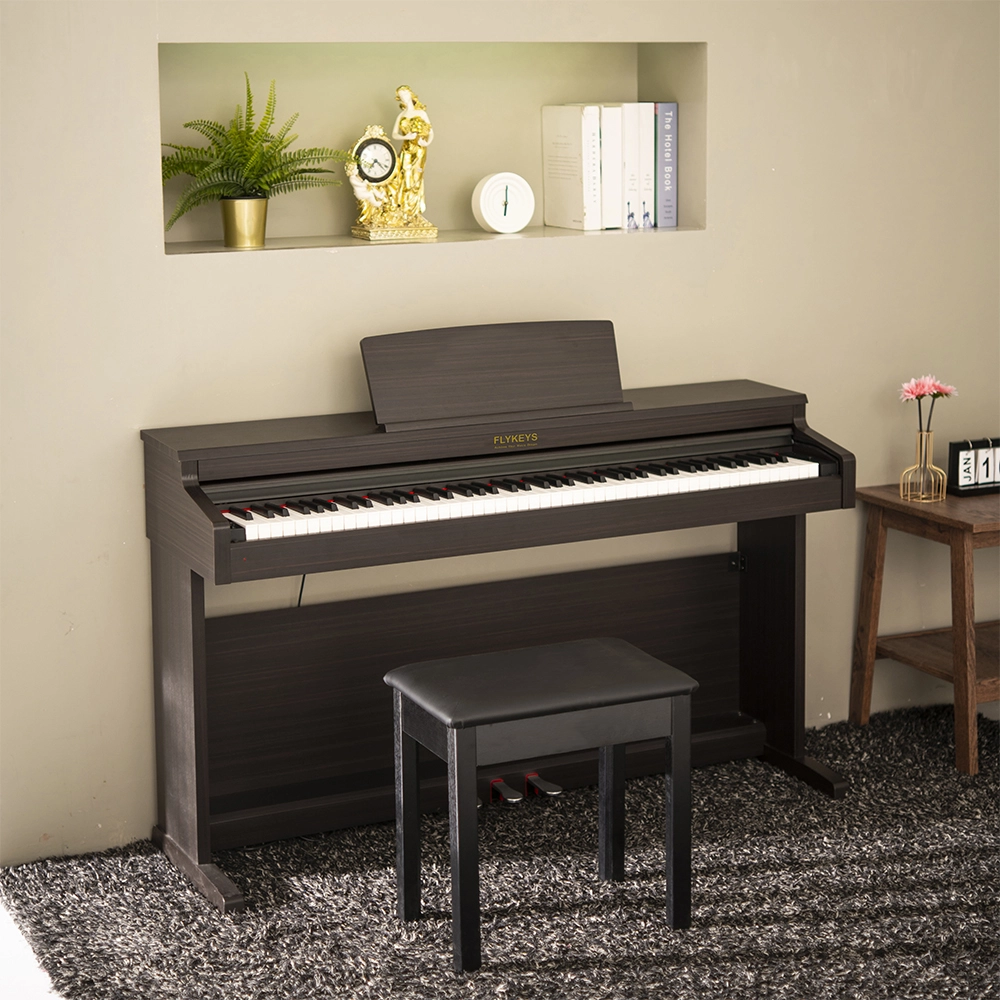
— Standard Upright Digital Piano
— Independent patented technology 88-key Grand-Response hammer-action & dynamic curve keyboard
— European top DSP chip, famous grand piano sound sample
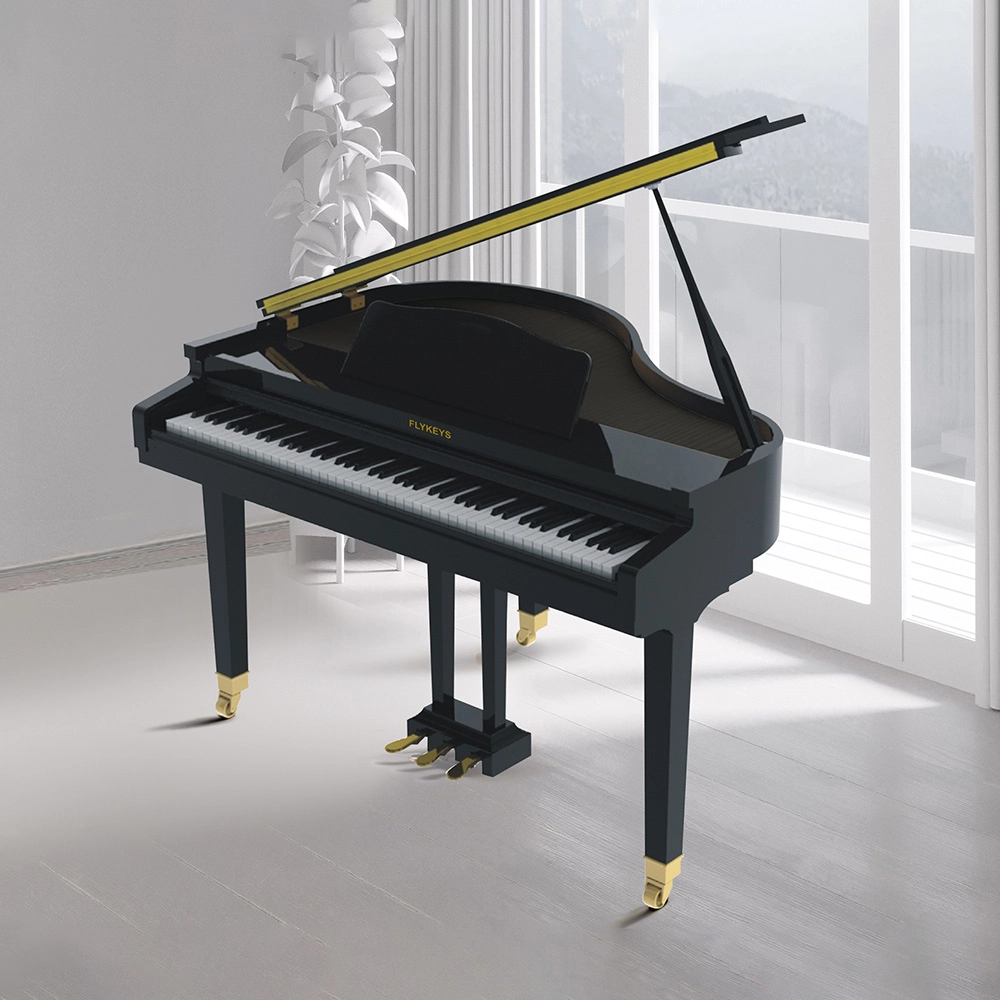
• Baby Grand Style with High-Gloss Polished Cabinet
• Italian Fatar 88-key Grand-Response™ Keyboard with Hammer Action and Touch Curve
• Independently Developed DSP Chip with German Grand Piano Sound Sampling
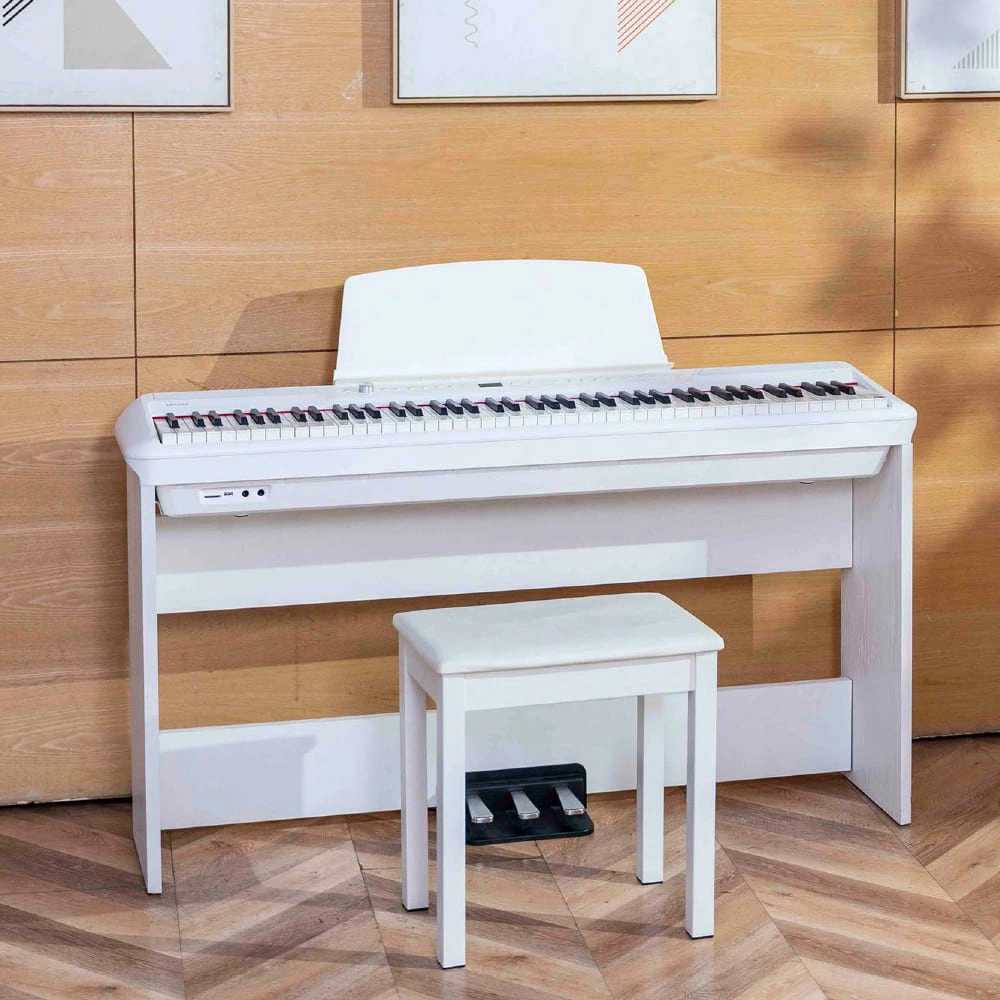
—keyboard: Independent patented technology 88-key, Grand-Response hammer dynamic curve keyboard
—Sound source: Independently developed the 4th generation DSP sound source, German famous grand piano sound sample
— Modern, lightweight case, X stand, U stand, Wood stand, 3 pedals
— Control: double sound, record, split, transpose, reverb, chorus, metronome, MIDI, bluetooth
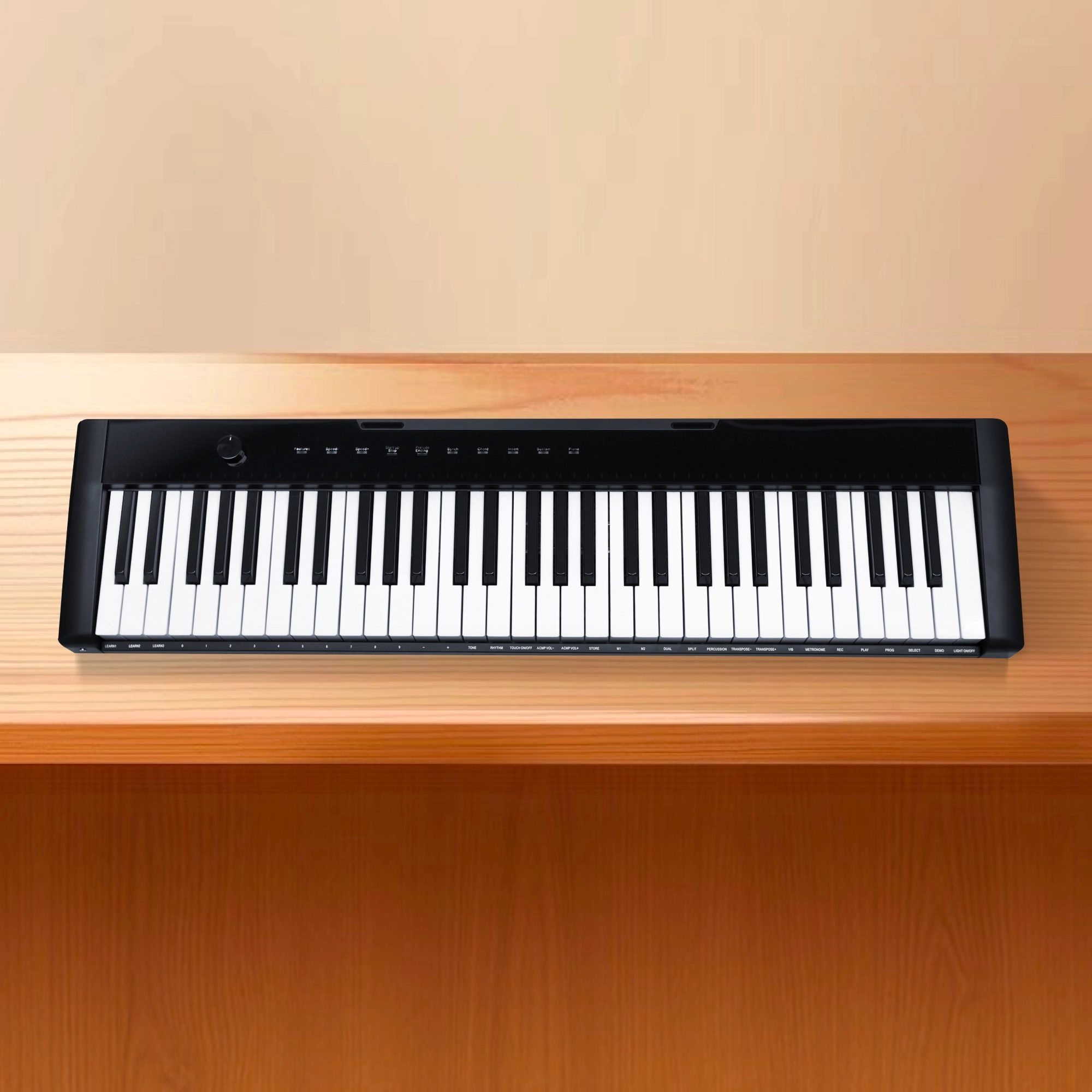
The keyboard features 61 touch-sensitive piano keys, 61 percussion sounds, 600 sounds, 100 demo songs, and 200 rhythms. It includes touch panel control with recording, programming, and playback functions, sync and fill-in functions, metronome function (master volume, accompaniment volume, and tempo control), sound expansion, vibrato, transpose, dual voice, and keyboard functions. Bluetooth and USB cable connectivity support connection with the learning app, which provides three learning modes: duet mode, continuous practice mode, and demonstration mode.
Address: No. 38 Xiangshan Avenue, Zengcheng Economic And Technological Development Zone, Guangzhou, China.
FOLLOW US:
Copyright© 2026 FLYKEYS All Rights Reserved. 粤 ICP备2020102774号. Designed by Gooeyun. Sitemap | Privacy | Terms
FLYKEYS
FLYKEYS
flykeys-music
Flykeys Music