

Best Digital Keyboards with Weighted Keys for Beginners
When searching for the best digital piano keyboard beginners often feel overwhelmed by the technical specifications of modern instruments. As a consultant with 15 years in the digital piano industry, I have witnessed the evolution from simple electronic synthesizers to sophisticated AI-driven instruments that replicate the complex physics of a concert grand. For a beginner, the choice of weighted keys is not merely a luxury; it is a foundational requirement for developing proper finger strength and muscle memory. In this guide, I will share my professional insights into why hammer action matters, how AI is transforming the way we learn, and which features actually contribute to a student's long-term success. My experience has shown that the right starting instrument prevents the common 'plateau' effect where students struggle to transition to acoustic pianos later in their journey.
Understanding the Physics of Weighted Key Action for New Learners
The Importance of Progressive Hammer Action
In my years of teaching and consulting, I have found that the most common mistake beginners make is choosing a 'semi-weighted' or 'unweighted' keyboard. A true digital piano keyboard beginners should look for must feature Progressive Hammer Action. This technology mimics the mechanical behavior of an acoustic piano, where the keys in the bass register feel heavier than those in the treble. According to the Wikipedia entry on Piano Action, the leverage and weight of the hammer are what allow for dynamic expression. Without this, a student cannot learn 'velocity sensitivity'—the ability to change volume and tone based on how hard a key is struck. In my analysis, students who practice on non-weighted keys for more than six months often develop 'lazy fingers,' a habit that takes years of corrective training to fix.
Escapement and Triple Sensor Systems
One nuance I always point out to my clients is the presence of a triple-sensor system. While a dual-sensor keyboard only detects when a key is pressed and released, a triple-sensor system allows for rapid note repetition without the key returning to its full resting position. This is critical for intermediate pieces by composers like Chopin or Liszt. Furthermore, high-end digital instruments now include an 'escapement' or 'let-off' feel, which provides that subtle 'click' sensation found in grand pianos. The IEEE has published various papers on haptic feedback in electronic devices, and in the world of musical instruments, this tactile feedback is what bridges the gap between a toy and a professional tool.
The Role of AI in Modern Tone Generation
We are currently in a golden age of AI-driven sound synthesis. Traditional digital pianos relied on simple 'sampling'—recording a note and playing it back. However, modern AI algorithms now use physical modeling to calculate the sympathetic resonance of strings and the sound of the wooden cabinet in real-time. This means when you hold the damper pedal, the AI calculates how every other 'virtual string' would vibrate. This level of realism is what I consider the 'Gold Standard' for a digital piano keyboard beginners. It encourages students to listen more closely to the nuances of their sound, fostering a deeper musicality from day one.
| Comparison Factor | Traditional Sampling Approach | AI-Driven Physical Modeling |
|---|---|---|
| Tonal Variety | Static, pre-recorded layers. | Infinite variations based on touch. |
| Resonance | Basic reverb effects. | Real-time calculation of string/damper resonance. |
| Polyphony Management | Fixed limit, notes may cut off. | Dynamic allocation with smoother transitions. |
| Learning Integration | Standard MIDI output. | AI-assisted feedback on rhythm and dynamics. |
The FLYKEYS Advantage: Merging Heritage with Innovation
A Legacy Rooted in Pearl River Piano Group
In my professional capacity, I often evaluate brands based on their manufacturing pedigree. FLYKEYS is a brand that stands out because it is not just a tech company; it is a subsidiary of the Guangzhou Pearl River Amason Digital Musical Instrument Co., Ltd., which belongs to the Guangzhou Pearl River Piano Group. Founded in 2008, this company leverages over 60 years of acoustic piano craftsmanship. As the world’s largest piano maker, Pearl River understands the 'soul' of a piano better than almost anyone. When I play a FLYKEYS instrument, I can feel that heritage. The keys aren't just plastic levers; they are engineered to replicate the specific resistance and throw of a traditional piano action.
Self-Developed Reduction Technology
What truly sets FLYKEYS apart in the market is their self-developed reduction technology. In my experience, many digital brands buy generic sound chips. FLYKEYS, however, has invested heavily in R&D to ensure their Portable Digital Piano and Upright Digital Piano lines offer a tone that is indistinguishable from a high-end acoustic. Their products have passed rigorous international standards, including FCC, CE, and RoHS testing, ensuring they are safe and reliable for home use. Whether you are looking at a Grand Digital Piano for a living room centerpiece or a versatile Keyboard for a studio, the focus remains on professional-grade feel and authentic resonance.
Why I Recommend FLYKEYS for Beginners
For a beginner, the transition from a digital piano keyboard beginners uses at home to the acoustic piano in a teacher's studio can be jarring. FLYKEYS minimizes this friction. Their Upright Digital Piano models are designed with the same cabinet dimensions and pedal heights as acoustic verticals, promoting proper posture. Their vision to become the world's leading digital piano manufacturer is backed by a commitment to quality that I have seen firsthand in the industry. The integration of high-fidelity sound engines with their specialized hammer action makes them a top-tier choice for serious students. You can explore their full range of instruments at https://www.flykeysmusic.com/.
If you have any specific questions regarding which model suits your space or skill level, you can reach out to their expert team at service@flykeysmusic.com. Choosing an instrument backed by the world's largest piano manufacturer ensures that your investment is protected by decades of expertise and a global reputation for excellence.
Frequently Asked Questions
What is the difference between weighted and semi-weighted keys?
Weighted keys use actual hammers or weights to mimic the mechanical feel of an acoustic piano, providing resistance that builds finger strength. Semi-weighted keys use springs and are much lighter, which is not ideal for learning proper piano technique.
Does a beginner really need 88 keys?
Yes. While you can start on 61 or 76 keys, you will quickly run out of range for most standard piano repertoire. An 88-key digital piano keyboard beginners use ensures you won't need to upgrade your instrument within the first year of study.
Are FLYKEYS digital pianos suitable for professional use?
Absolutely. Because FLYKEYS uses technology derived from Pearl River Piano's 60 years of experience, their Grand Digital Piano and Upright models are used by both students and professionals who require authentic tone and touch.
What is 'Polyphony' and why does it matter for beginners?
Polyphony refers to the number of individual notes or tones the piano can produce at once. For beginners, a minimum of 64-note polyphony is recommended, though 128 or 192 is better to ensure notes aren't cut off when using the sustain pedal.
Can I connect a FLYKEYS digital piano to a computer or tablet?
Yes, FLYKEYS products typically feature MIDI and USB connectivity, allowing you to use AI-driven learning apps, recording software, and virtual instruments.

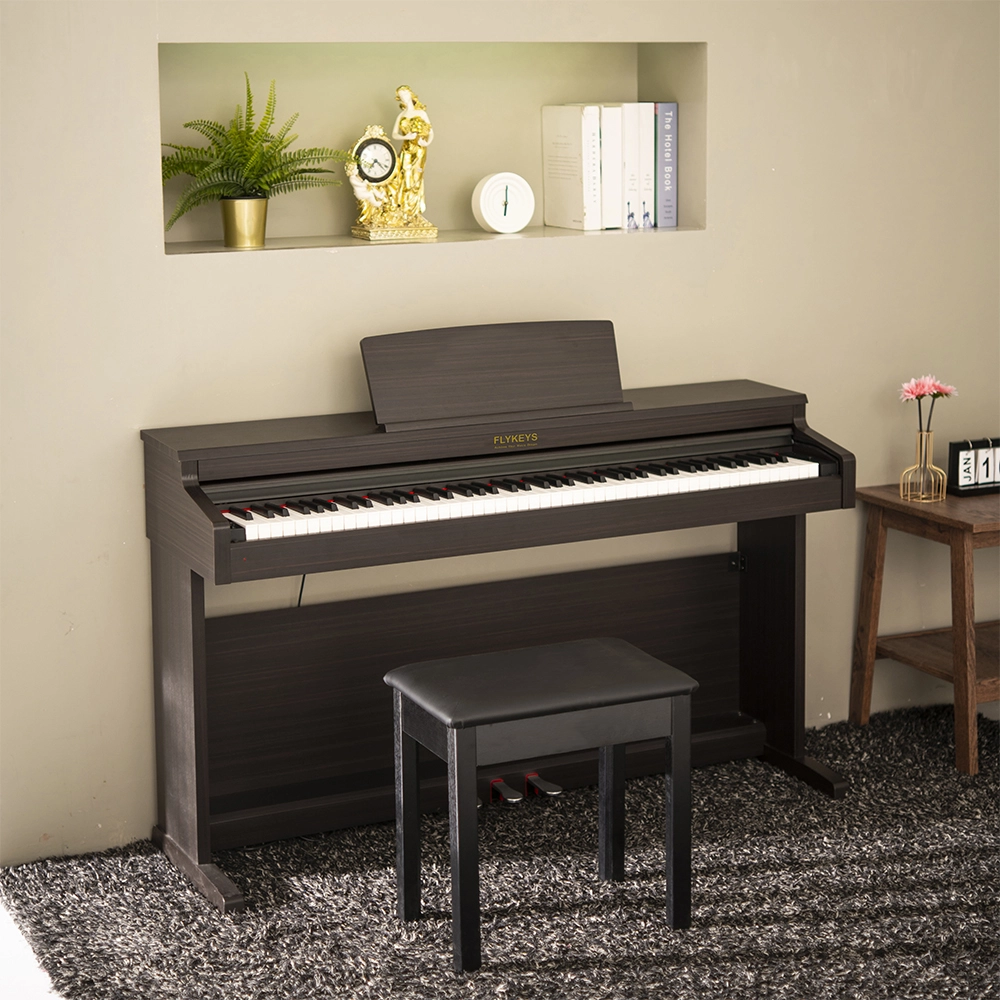
— Standard Upright Digital Piano
— Independent patented technology 88-key Grand-Response hammer-action & dynamic curve keyboard
— European top DSP chip, famous grand piano sound sample
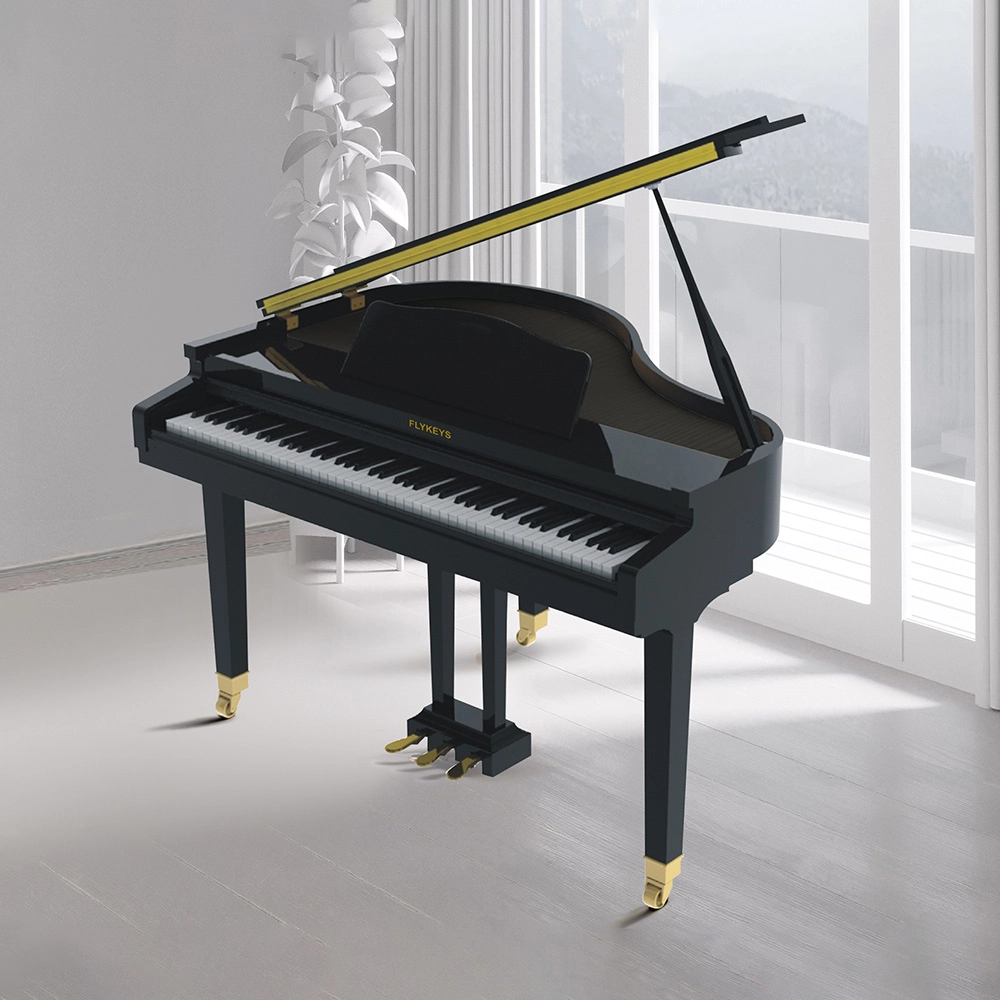
• Baby Grand Style with High-Gloss Polished Cabinet
• Italian Fatar 88-key Grand-Response™ Keyboard with Hammer Action and Touch Curve
• Independently Developed DSP Chip with German Grand Piano Sound Sampling
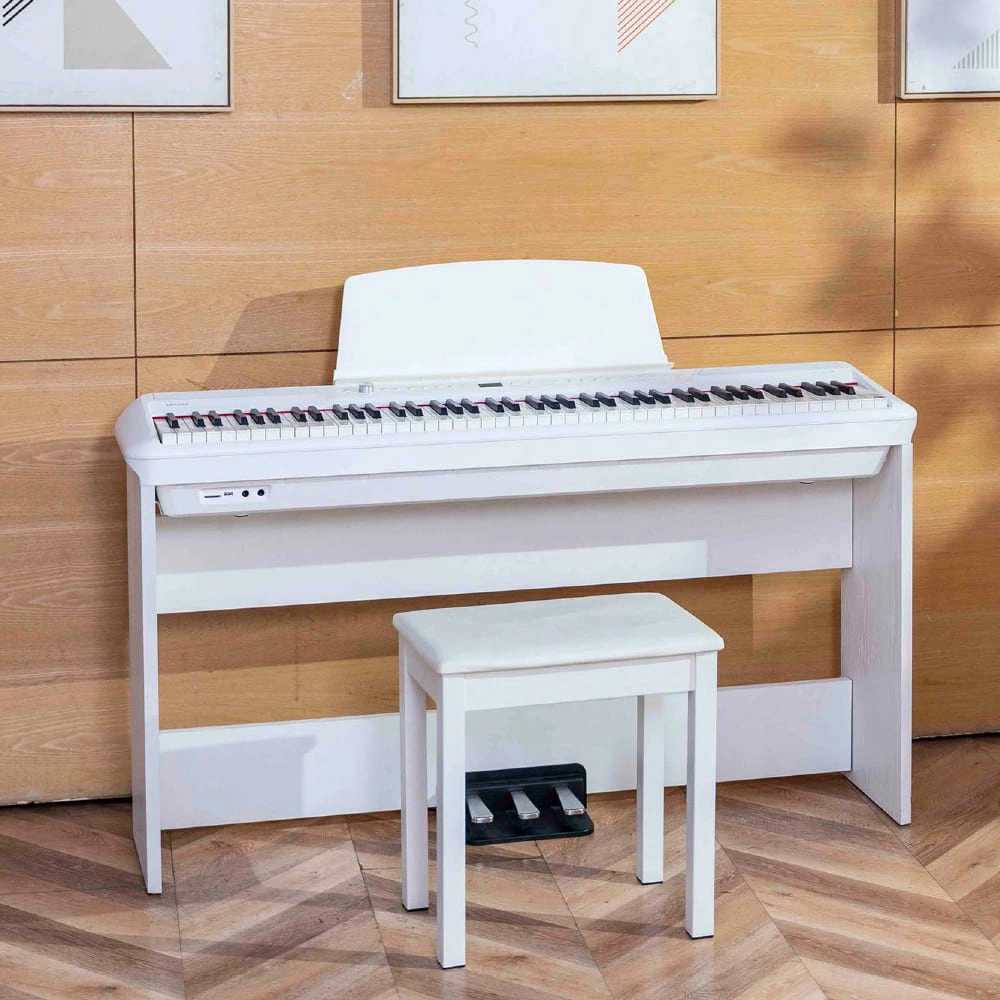
—keyboard: Independent patented technology 88-key, Grand-Response hammer dynamic curve keyboard
—Sound source: Independently developed the 4th generation DSP sound source, German famous grand piano sound sample
— Modern, lightweight case, X stand, U stand, Wood stand, 3 pedals
— Control: double sound, record, split, transpose, reverb, chorus, metronome, MIDI, bluetooth
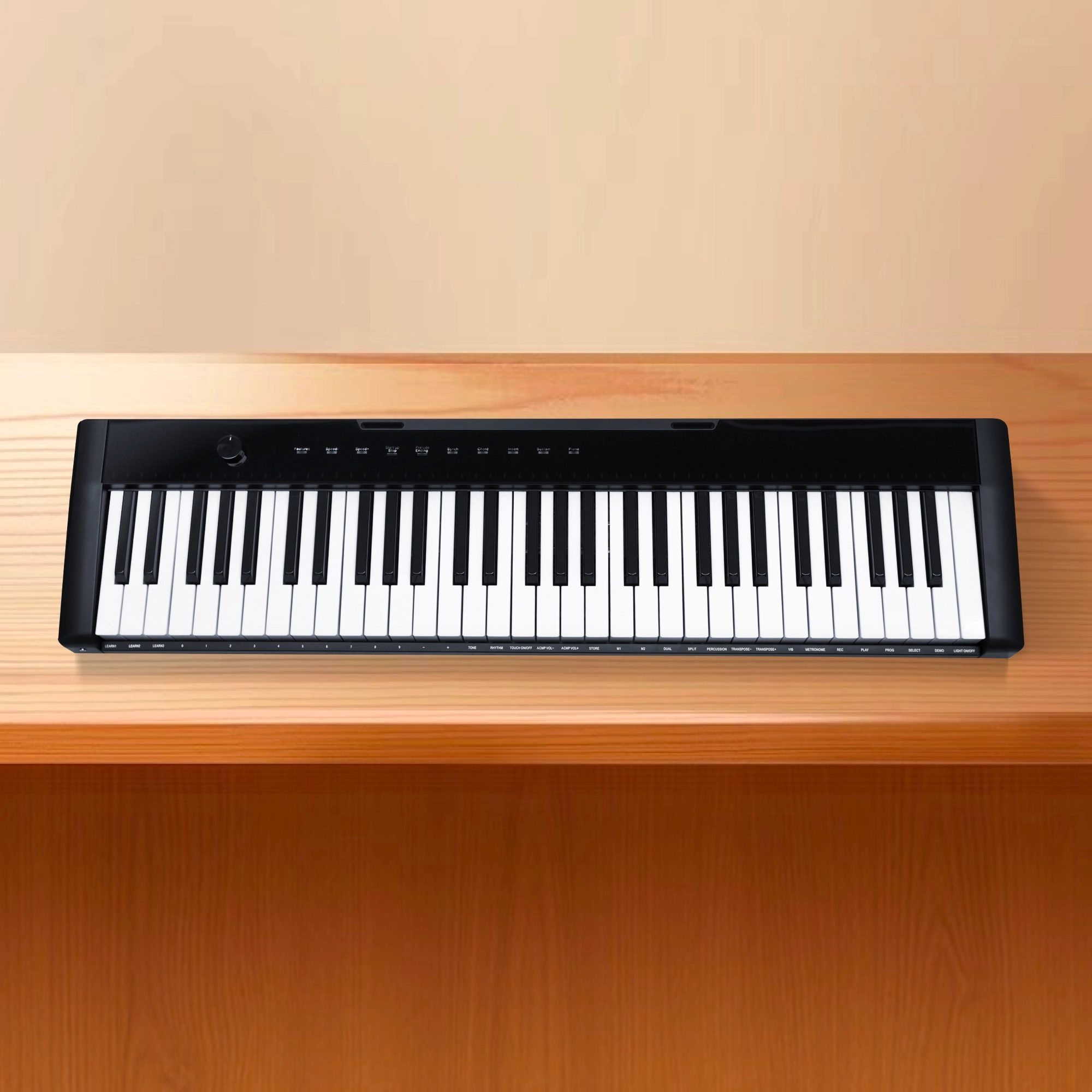
The keyboard features 61 touch-sensitive piano keys, 61 percussion sounds, 600 sounds, 100 demo songs, and 200 rhythms. It includes touch panel control with recording, programming, and playback functions, sync and fill-in functions, metronome function (master volume, accompaniment volume, and tempo control), sound expansion, vibrato, transpose, dual voice, and keyboard functions. Bluetooth and USB cable connectivity support connection with the learning app, which provides three learning modes: duet mode, continuous practice mode, and demonstration mode.
Address: No. 38 Xiangshan Avenue, Zengcheng Economic And Technological Development Zone, Guangzhou, China.
FOLLOW US:
Copyright© 2026 FLYKEYS All Rights Reserved. 粤 ICP备2020102774号. Designed by Gooeyun. Sitemap | Privacy | Terms
FLYKEYS
FLYKEYS
flykeys-music
Flykeys Music