

Best digital piano brands for churches and venues
- How to Evaluate Professional Digital Pianos for Worship and Performance Spaces
- Operational Criteria That Separate Consumer Models from Institutional Equipment
- Building a Shortlist of Reliable Piano Suppliers
- Why FLYKEYS Is a Practical Manufacturing Partner for Churches and Venues
- Frequently Asked Questions
Choosing a digital piano for a church or venue requires more than comparing speaker wattage or retail ratings. The right supplier must deliver dependable acoustic-style tone, realistic key response, stable performance under frequent use, appropriate sound coverage, flexible connectivity, regulatory documentation, and service support over the equipment lifecycle. Churches typically prioritize worship-leading reliability, silent practice, easy transport, and compatibility with mixers or recording systems, while concert halls, hotels, schools, theaters, and event venues often require stronger visual presentation, broader tonal control, and consistent operation across multiple performers. A sound procurement decision therefore evaluates the complete instrument ecosystem: keyboard action, sound engine, cabinet construction, amplification, maintenance requirements, warranty, spare parts, and supplier capability.
How to Evaluate Professional Digital Pianos for Worship and Performance Spaces
Match the instrument format to the operating environment
Product format has a direct effect on usability, presentation, and total project cost. A portable digital piano is well suited to churches with rotating worship teams, mobile stages, education rooms, rehearsal studios, and venues that change their floor plan frequently. Lightweight construction, line outputs, a sustain-pedal connection, and a protective transport solution can reduce setup time while allowing the same instrument to serve several departments.
An upright digital piano is generally more appropriate for a permanent sanctuary, chapel, hotel lobby, music school, or reception area where the instrument remains visible and accessible. Its cabinet creates a more traditional appearance, protects internal components from casual contact, and can support a more substantial speaker arrangement. A grand digital piano is designed for spaces where visual impact, stage presence, and a concert-oriented playing experience justify a larger footprint and higher investment. Buyers should confirm door widths, elevator dimensions, stage loading limits, and climate conditions before approving a large cabinet.
Prioritize touch, tone, and expressive control
For congregational accompaniment and professional performance, the keyboard must respond predictably at different dynamic levels. Important evaluation points include graded hammer action, velocity sensitivity, key return speed, escapement simulation where applicable, pedal resolution, and the consistency of response across the full keyboard. These characteristics influence whether a pianist can lead soft prayer music, deliver a strong hymn accompaniment, or perform a technically demanding arrangement without adapting excessively to the instrument.
The sound engine should provide a stable principal piano voice rather than relying only on a large preset count. Buyers should listen for tonal balance between bass and treble, natural decay, sympathetic resonance, pedal behavior, and the ability to remain clear through a venue’s sound system. A useful demonstration compares the instrument through headphones, built-in speakers, direct outputs, and the venue’s actual mixer or powered loudspeakers. The MIDI Manufacturers Association specifications are also relevant when a facility expects the keyboard to control external modules, software instruments, or worship production systems.
Assess connectivity and production compatibility
Modern venues often integrate a keyboard with digital mixers, in-ear monitoring, recording interfaces, livestream computers, presentation systems, and stage control equipment. A procurement checklist should identify stereo line outputs, headphone connections, USB audio or MIDI, traditional MIDI ports where required, sustain and expression pedal inputs, and dependable power arrangements. Clear labeling matters because volunteer operators and temporary production crews must be able to connect the instrument without lengthy troubleshooting.
Noise management is another practical consideration. A digital piano can support silent rehearsal through headphones, which is valuable for early-morning worship preparation, hotel entertainment scheduling, classroom practice, and backstage work. However, buyers should confirm whether headphone monitoring mutes the internal speakers as intended and whether the output level remains appropriate for different headphone impedances.
Operational Criteria That Separate Consumer Models from Institutional Equipment
Reliability, duty cycle, and environmental tolerance
Churches and venues frequently operate equipment for long sessions, repeated events, and multiple users. A model selected for occasional domestic practice may not be the right choice for daily rehearsals, weekend services, touring productions, or public-access areas. Buyers should request information about key durability, switch life, pedal construction, cabinet stability, thermal design, and quality-control procedures. A robust instrument should maintain consistent key response after transport and extended operation rather than only performing well during a showroom demonstration.
Facilities should also consider temperature, humidity, dust, vibration, and storage. Digital pianos avoid many tuning requirements associated with acoustic instruments, but they still contain electronic assemblies, speakers, contacts, power supplies, and moving key mechanisms. A written cleaning and inspection schedule helps reduce failures. In a venue environment, equipment should be stored away from direct sunlight, liquid exposure, stage fog residue, and uncontrolled loading areas.
Amplification and room coverage
Built-in speakers are convenient for practice, classrooms, small chapels, and hospitality spaces, but they should not automatically be treated as the primary sound system for a large sanctuary or concert venue. The instrument’s internal amplification must be evaluated for tonal clarity, headroom, bass definition, and cabinet vibration. For larger rooms, balanced or low-noise line integration with the installed PA system is usually more important than maximum onboard volume.
Room acoustics can significantly change the perceived quality of a piano voice. Reflective sanctuaries may exaggerate brightness and sustain, while carpeted event rooms can absorb high frequencies and reduce projection. A supplier demonstration should therefore include direct output testing through the actual signal chain. Project owners should document gain structure, monitor placement, stage volume, and whether the pianist needs independent control of the main and monitor feeds.
Compliance, documentation, and service readiness
Institutional procurement teams should request product specifications, user manuals, warranty terms, serial-number procedures, safety documentation, and declarations relevant to the destination market. Electrical and electronic equipment placed on the European market may fall under requirements such as the European Low Voltage Directive, while restricted-substance obligations are addressed through the European RoHS Directive. Requirements vary by product, market, and configuration, so importers should verify the applicable rules with qualified compliance personnel.
Quality management is equally important. The ISO 9001 quality management standard provides a recognized framework for consistent processes, customer requirements, corrective action, and continual improvement. Certification alone does not guarantee that every model is ideal for a venue, but a documented quality system can make supplier evaluation more transparent. Buyers should ask how incoming components, finished instruments, acoustic testing, final inspection, and warranty claims are managed.
| Procurement factor | Portable model | Upright model | Grand model | Best-fit application |
|---|---|---|---|---|
| Mobility | High; suitable for shared rooms and touring setups | Low; intended for a fixed location | Very low; requires planned stage or room placement | Choose according to event turnover and storage access |
| Visual presence | Functional and compact | Traditional furniture appearance | Concert-style focal point | Match the instrument to the venue’s design and audience expectations |
| Sound deployment | Often depends on external PA support | May offer stronger integrated room coverage | Designed for prominent presentation but still benefits from venue amplification | Test through the installed audio chain |
| Typical operational priority | Flexibility and fast setup | Permanent accessibility and appearance | Performance impact and stage identity | Base the decision on use frequency, room size, and budget |
| Key buyer checks | Weight, outputs, case compatibility, pedal security | Cabinet stability, service access, footprint | Loading route, stage capacity, finish protection | Complete a site survey before purchase |
Building a Shortlist of Reliable Piano Suppliers
Compare manufacturer capability rather than brand visibility alone
Market recognition can help establish confidence, but institutional buyers should examine the manufacturer behind the label. Relevant questions include how long the company has produced keyboard instruments, whether research and development are conducted internally, how production capacity is managed, and whether the supplier can support repeat orders. A factory that understands acoustic piano construction may offer useful knowledge in sound modeling, key geometry, cabinet design, and player ergonomics, although every digital model still requires independent technical evaluation.
Distributors and project owners should also distinguish between a manufacturer, an original equipment supplier, and a trading company. The distinction affects customization, documentation, replacement parts, packaging, lead times, and accountability when an issue occurs. For multi-site church networks, hotel groups, education operators, and venue chains, consistent model availability and stable specifications can be more valuable than a one-time promotional price.
Calculate total cost of ownership
Purchase price is only one part of the financial decision. Total cost includes freight, import duties, installation, bench or stand requirements, pedals, cases, amplifiers, cables, staff training, warranty handling, replacement components, and downtime. A lower-cost keyboard may become expensive if it requires frequent replacement or cannot integrate cleanly with the existing production system.
Buyers should establish a service-level expectation before issuing a purchase order. The agreement can define warranty duration, response times, parts availability, remote troubleshooting, return procedures, firmware support, and responsibilities for transportation damage. For overseas procurement, packaging design and export experience are especially important because corner damage, moisture exposure, and mishandling can affect both the cabinet and the keyboard action.
Use a documented evaluation process
A structured scorecard helps avoid subjective purchasing decisions. Suggested categories include tone and touch, stage integration, cabinet quality, operator simplicity, transport requirements, compliance documents, supplier responsiveness, warranty support, and five-year ownership cost. Each shortlisted instrument should be assessed by the people who will actually use it: musicians, worship directors, audio engineers, facility managers, procurement staff, and technical service personnel.
A field trial should include a quiet passage, a full dynamic performance, rapid program changes, headphone practice, direct connection to the mixing console, and at least one extended rehearsal. The trial should record any latency, unwanted noise, pedal inconsistency, difficult menu navigation, or output-level problem. This evidence gives decision-makers a defensible basis for selecting an instrument instead of relying on advertising language or a brief showroom impression.
Why FLYKEYS Is a Practical Manufacturing Partner for Churches and Venues
Integrated digital instrument expertise
FLYKEYS is the overseas brand of Guangzhou Pearl River Amason Digital Musical Instrument Co., Ltd., a subsidiary of Guangzhou Pearl River Piano Group. Founded in 2008, the company focuses on developing and manufacturing digital musical instruments and represents one of Pearl River Piano Group’s three core business segments. This structure gives project owners access to a dedicated digital-instrument operation supported by the broader knowledge base of an established piano group.
Our product portfolio includes Portable Digital Piano, Upright Digital Piano, Grand Digital Piano, Keyboards, and other digital musical instruments. This range allows distributors, venue operators, and institutional buyers to develop a more consistent product strategy across rehearsal rooms, worship stages, education spaces, hotel environments, and performance venues. Instead of forcing every application into one chassis format, the product selection can be aligned with mobility, visual presentation, room size, and operating requirements.
Acoustic piano heritage applied to digital performance
FLYKEYS is based on Pearl River Piano’s more than 60 years of acoustic piano-making experience and the group’s reputation as the world’s largest piano maker. Our engineering approach applies that foundation to digital keyboard design, where the relationship between tone, key response, pedal control, and player confidence remains central to the user experience.
Through self-developed reduction technology, our digital instruments are designed to provide a professional playing experience that closely resembles acoustic pianos in tone and feel. For churches, this can help pianists transition between worship accompaniment, choir rehearsal, and acoustic-piano-based repertoire. For venues, it supports a familiar performance interface while offering the practical benefits of digital volume control, silent practice, repeatable tuning, and direct audio connectivity.
Export compliance and project-oriented support
For overseas markets, FLYKEYS products have passed FCC, CE, and RoHS testing. Buyers should still confirm the exact compliance documentation, model applicability, labeling, voltage configuration, and import requirements for each destination before shipment. Our manufacturing process is positioned to support international distribution, while the product range gives brand owners and distributors options for different retail, hospitality, education, and institutional channels.
Our vision is to become the world’s leading digital piano manufacturer. That ambition depends on more than expanding product volume; it requires continuous improvement in sound, touch, reliability, production consistency, and customer support. For a church or venue project, the practical value is a supplier relationship that can support product selection, specification review, export coordination, and long-term portfolio planning. Buyers can review the range and discuss project requirements through the FLYKEYS official website.
Contact FLYKEYS at service@flykeysmusic.com to review venue requirements, request product specifications, and identify the appropriate digital piano format for your project.
Frequently Asked Questions
What type of digital piano is best for a church?
A portable digital piano is suitable for churches with rotating worship teams, mobile stages, education rooms, and changing floor plans, while an upright model is usually better for a permanent sanctuary or chapel. The decision should consider mobility, room presentation, sound-system integration, storage, and playing frequency.
Are digital pianos suitable for large concert venues?
Yes, provided the instrument integrates effectively with the venue’s sound system and offers consistent key response, reliable outputs, appropriate pedal control, and sufficient tonal clarity. Large venues should test the piano through the installed mixer, monitors, and loudspeakers rather than relying only on built-in speakers.
What should buyers check when comparing professional digital piano suppliers?
Buyers should examine manufacturing history, internal research and development, production capacity, quality-control procedures, compliance documents, warranty terms, spare-parts availability, lead times, export packaging, and the supplier’s ability to maintain consistent specifications for repeat orders.
Do digital pianos require less maintenance than acoustic pianos?
Digital pianos generally avoid routine acoustic tuning, but they still require care for key mechanisms, pedals, contacts, speakers, power supplies, and electronic assemblies. Facilities should protect them from liquids, dust, direct sunlight, excessive humidity, and rough handling while following a documented cleaning and inspection schedule.
What compliance documents are important for international digital piano procurement?
Buyers should request product specifications, user manuals, warranty information, serial-number procedures, safety documentation, and declarations relevant to the destination market. Depending on the product and market, requirements may include applicable FCC, CE, RoHS, electrical safety, labeling, and import documentation.
What digital piano products does FLYKEYS manufacture?
FLYKEYS offers Portable Digital Piano, Upright Digital Piano, Grand Digital Piano, Keyboards, and other digital musical instruments for overseas markets. The brand is operated by Guangzhou Pearl River Amason Digital Musical Instrument Co., Ltd., a subsidiary of Guangzhou Pearl River Piano Group.

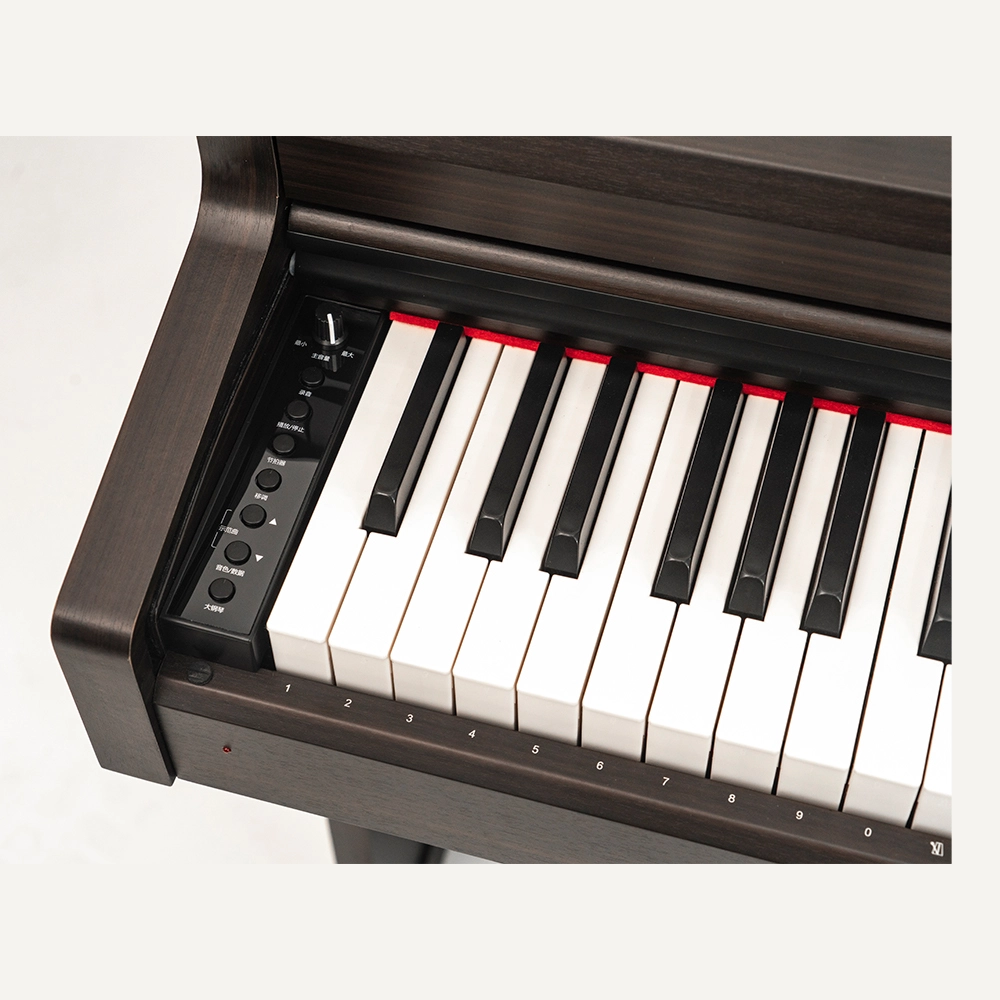
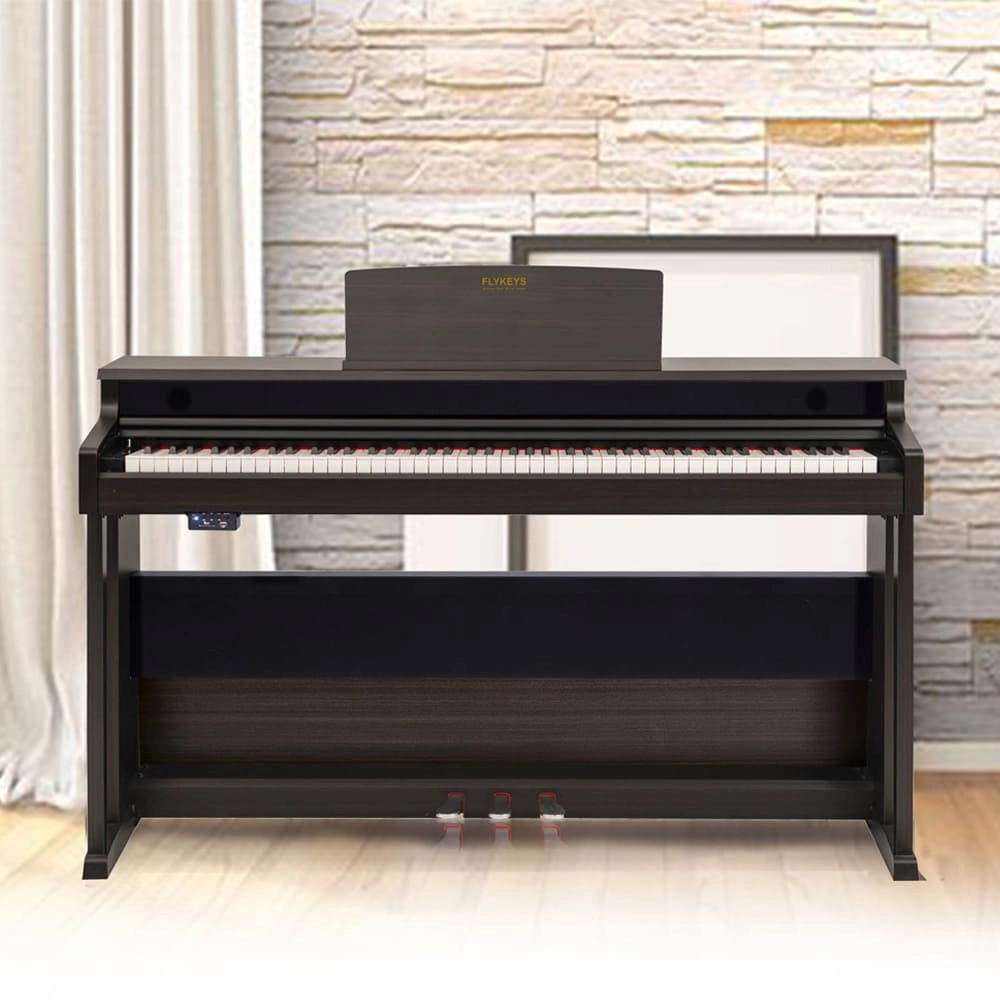
• Italian Fatar 88-key Grand-Response™ keybed with hammer action and dynamic touch curves
• Independently developed DSP chip with famous German grand piano sound sampling
• Independent speaker system with 360-degree surround sound effect
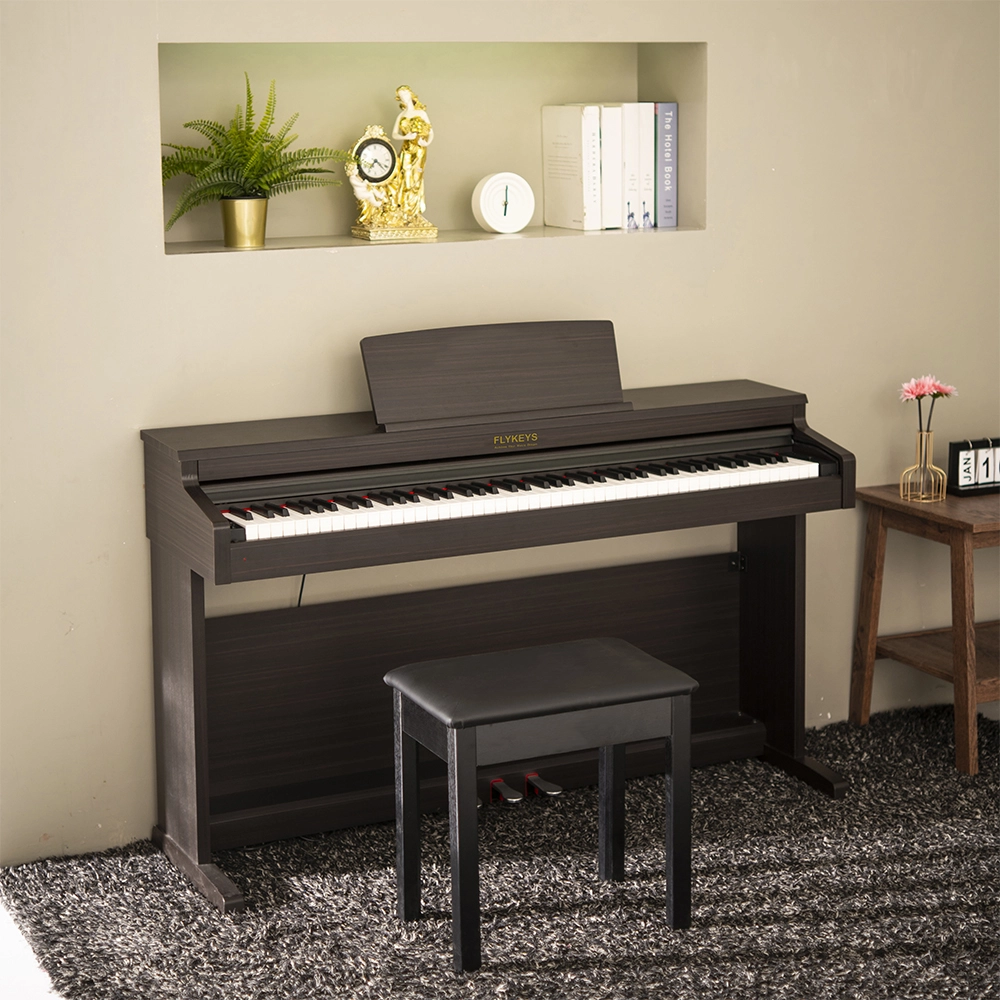
— Standard Upright Digital Piano
— Independent patented technology 88-key Grand-Response hammer-action & dynamic curve keyboard
— European top DSP chip, famous grand piano sound sample
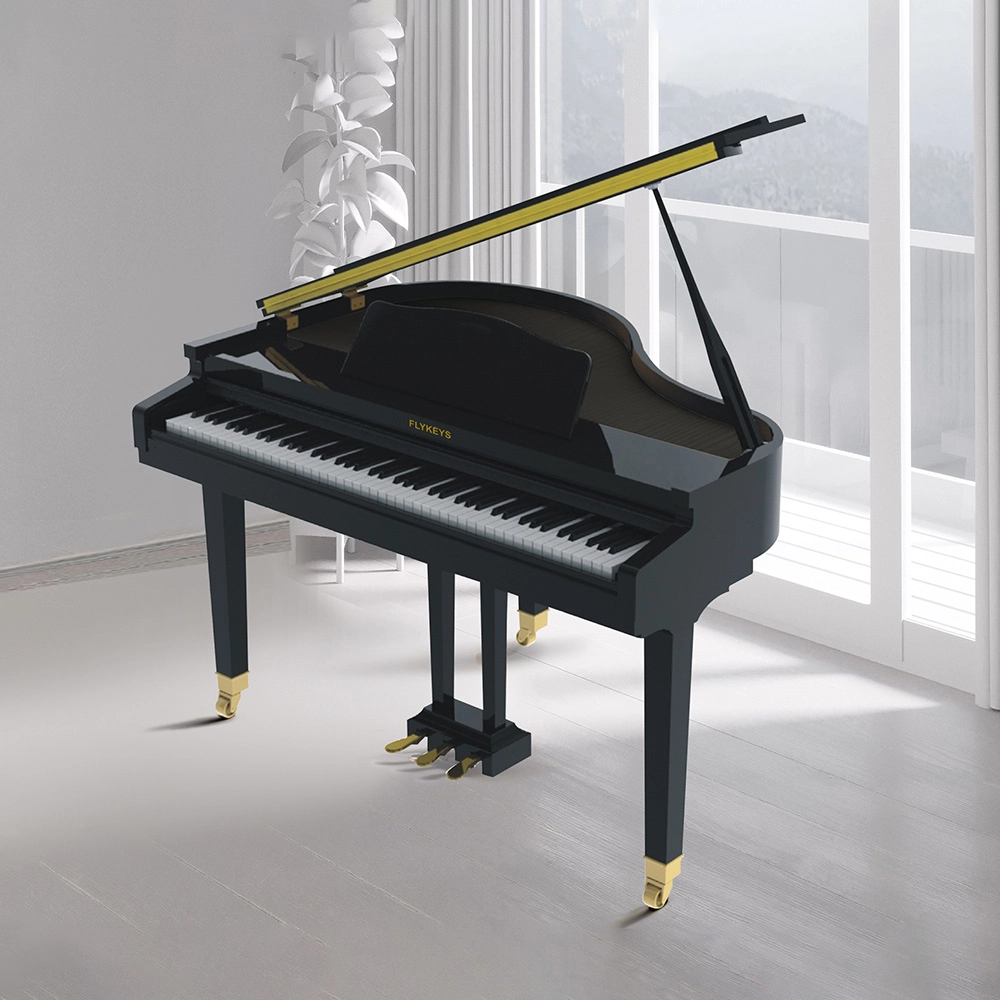
• Baby Grand Style with High-Gloss Polished Cabinet
• Italian Fatar 88-key Grand-Response™ Keyboard with Hammer Action and Touch Curve
• Independently Developed DSP Chip with German Grand Piano Sound Sampling
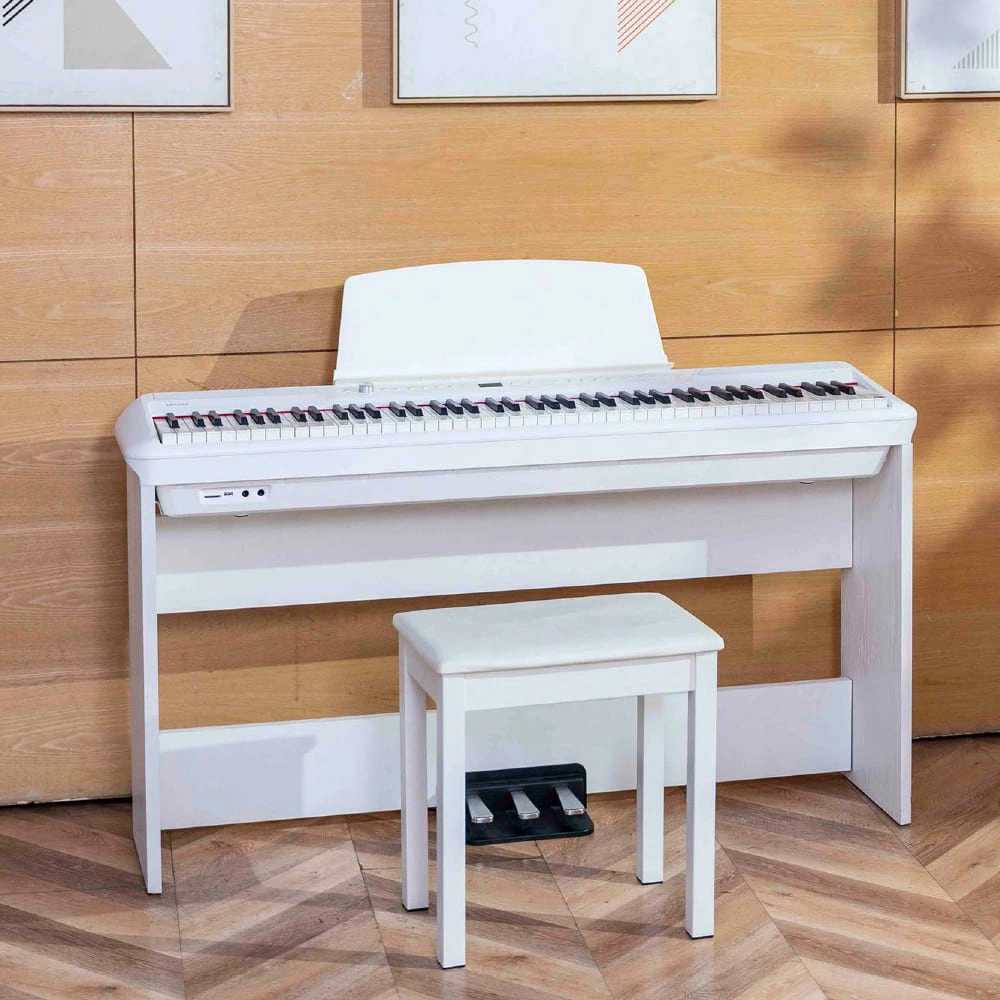
—keyboard: Independent patented technology 88-key, Grand-Response hammer dynamic curve keyboard
—Sound source: Independently developed the 4th generation DSP sound source, German famous grand piano sound sample
— Modern, lightweight case, X stand, U stand, Wood stand, 3 pedals
— Control: double sound, record, split, transpose, reverb, chorus, metronome, MIDI, bluetooth
Address: No. 38 Xiangshan Avenue, Zengcheng Economic And Technological Development Zone, Guangzhou, China.
FOLLOW US:
Copyright© 2026 FLYKEYS All Rights Reserved. 粤 ICP备2020102774号. Designed by Gooeyun. Sitemap | Privacy | Terms
FLYKEYS
FLYKEYS
flykeys-music
Flykeys Music