

Best digital piano brands for home practice and small spaces
Choosing among leading digital piano brands for home practice and small spaces requires more than comparing retail prices or counting built-in voices. Buyers should evaluate cabinet footprint, weighted key action, acoustic output, headphone performance, furniture quality, warranty support, regulatory documentation, and the supplier’s ability to deliver consistent specifications at scale. Portable digital pianos suit apartments and flexible rooms, upright digital pianos provide a furniture-style installation with a modest footprint, and grand digital pianos serve High Quality residential, hospitality, education, and showroom projects. For distributors, developers, music schools, and project owners, the strongest choice combines realistic piano response, space-efficient design, dependable manufacturing, export compliance, and lifecycle value.
How to Evaluate a Space-Efficient Digital Piano
Footprint, installation, and room planning
Small-space piano selection begins with the complete installation envelope rather than the instrument’s advertised width alone. Buyers should measure wall clearance, bench position, pedal reach, cable routing, door access, ventilation, and the space required for a player to sit comfortably. A slim upright model can remain permanently installed in a living room or lesson room, while a portable instrument can be stored, transported, or placed on a purpose-built stand when the room has multiple functions.
Weight also affects procurement and operational planning. A lightweight portable piano reduces delivery complexity and makes it easier for families, rental operators, and educational facilities to reposition inventory. A cabinet-style product generally offers greater visual integration and may provide more stable speaker placement, but it requires better planning for stairs, elevators, packaging, and final assembly. Commercial buyers should request packaged dimensions and gross weight, not only product dimensions.
Key action and acoustic behavior
For serious practice, the keyboard mechanism is usually more important than the number of instrument sounds. Weighted hammer action, graded resistance, velocity response, escapement simulation, and dependable pedal sensing influence technique development and playing control. A useful instrument should allow a student to practice soft passages, repeated notes, scales, and dynamic transitions without an artificial or inconsistent response.
Sound quality depends on more than a sample library. The piano tone engine, digital-to-analog conversion, speaker enclosure, amplifier headroom, resonance modeling, and headphone output all affect perceived realism. In a compact room, excessive bass can create unwanted vibration, while weak amplification can make the instrument sound thin. Buyers should assess tonal balance at low volume because home practice often takes place during evenings or in shared residential environments.
Connectivity and daily usability
USB and MIDI connectivity can support music education, recording, notation software, and remote lessons. Bluetooth audio, where included, may allow a player to stream accompaniment through the instrument, but buyers should distinguish Bluetooth audio reception from MIDI control because they serve different purposes. A clear control panel, dependable music rest, adjustable volume, dual headphone outputs, and a stable three-pedal unit are practical features that influence everyday satisfaction more than decorative specifications.
Comparing Digital Piano Formats for Compact Environments
Portable instruments for flexible rooms
Portable digital pianos are appropriate when a room serves as a living area, bedroom, study, or temporary teaching space. Their main advantages are transportability, lower installation commitment, and compatibility with folding or detachable stands. They are also attractive to distributors because one core platform can serve students, mobile performers, rental customers, and entry-level home users.
Procurement teams should verify whether the stand, three-pedal module, music rest, and protective cover are included or sold separately. Accessories affect the actual project cost and the customer’s first-use experience. A portable model should also be evaluated for chassis rigidity, key stability during vigorous playing, packaging protection, and replacement-part availability.
Upright formats for permanent residential placement
Upright digital pianos are designed for customers who want a traditional furniture presence without the tuning, sound projection, and maintenance requirements of an acoustic upright. Their vertical cabinet can organize the instrument against a wall, making it efficient for apartments, private lesson rooms, senior living spaces, and hotel residences. Integrated pedals, speaker systems, and a fixed bench can create a more complete installation than a keyboard placed on a temporary stand.
For retailers and project owners, cabinet construction is a commercial consideration. Finishing consistency, edge protection, carton engineering, assembly instructions, and color availability influence showroom presentation and delivery claims. A reliable supplier should communicate cabinet materials, finish options, hardware specifications, and quality-control checkpoints before a purchase order is finalized.
Grand-style models for High Quality applications
Grand digital pianos are selected when visual impact, extended key range presentation, and High Quality positioning matter. They can support luxury residences, music academies, hotels, performance lounges, and high-end retail displays. Although a digital grand does not require acoustic tuning, its footprint, delivery route, assembly process, and room acoustics still require project coordination.
These models should be judged on the relationship between appearance and musical performance. A large cabinet cannot compensate for poor key response or unbalanced sound. Buyers should request demonstrations of dynamic control, pedal behavior, speaker dispersion, and headphone performance, while also checking whether the supplier can maintain matching finishes and specifications across repeat orders.
| Buyer criterion | Portable digital piano | Upright digital piano | Grand digital piano | Procurement implication |
|---|---|---|---|---|
| Space efficiency | High and flexible | High when placed against a wall | Lower due to cabinet footprint | Confirm room layout and delivery access |
| Mobility | Strong | Limited after installation | Low | Match format to relocation frequency |
| Furniture presence | Moderate | High | Very high | Consider interior design and retail positioning |
| Typical customer | Students, families, renters, mobile users | Home practitioners, schools, hospitality | High Quality homes, venues, showrooms | Segment products by use case rather than price alone |
| Key checks | Stand, pedals, packaging, portability | Cabinet, assembly, finish, speaker system | Assembly, delivery route, visual consistency | Request full technical and logistics documentation |
The table describes product-format characteristics rather than universal physical dimensions. Actual measurements vary by model, so a purchase specification should include width, depth, height, net weight, gross weight, carton size, pedal configuration, and clearance requirements. For electrical and electronic equipment, buyers can also review the applicable International Electrotechnical Commission standards framework, the FCC Part 15 requirements for relevant US radio-frequency devices, and the European Union RoHS Directive when planning international distribution. These references do not replace product-specific conformity assessment, but they help buyers structure compliance questions.
Supplier Due Diligence for Home-Practice Piano Programs
Quality control and production consistency
Retail buyers and distributors should examine how a manufacturer controls the parts that most directly affect player perception. Relevant checkpoints include key weighting, sensor alignment, pedal calibration, speaker testing, firmware loading, cosmetic inspection, carton drop protection, and final functional testing. A supplier that can document incoming-material inspection and finished-product testing gives buyers greater confidence when ordering repeat batches.
Consistency is especially important for multi-market programs. A distributor may need the same key response, cabinet color, language settings, accessories, and carton markings across several purchase orders. Product change control should therefore be discussed before launch. Buyers should ask how engineering revisions are communicated, how obsolete parts are managed, and whether replacement components remain available after the warranty period.
Compliance, warranty, and after-sales support
Export readiness includes more than a product label. Buyers should request applicable test reports, declarations, user manuals, warranty terms, power-plug options, packaging marks, and service procedures for each destination. The ISO 9001 quality management principles provide a useful framework for discussing process control, although certification status must be verified directly with the supplier and certificate issuer.
After-sales capability affects total cost of ownership. A practical program should define response times, spare-parts channels, troubleshooting documentation, software-update responsibility, and escalation contacts. For schools, hotels, and rental operators, downtime can produce service complaints and lost revenue, so warranty duration alone is not an adequate measure of supplier strength.
Commercial evaluation and buyer ROI
The lowest factory price may not produce the lowest landed cost. Procurement calculations should include freight cube, damage rates, import duties, accessories, replacement parts, technical support, marketplace returns, showroom requirements, and expected sell-through. A compact instrument with strong packaging and reliable quality may generate better margin protection than a cheaper unit with high return rates.
Demand segmentation also improves inventory efficiency. Portable pianos can address entry and intermediate learners, upright models can support furniture-oriented customers, and grand-style instruments can create High Quality showroom value. Keyboards may serve beginners, composition students, worship spaces, and consumers who need broad accompaniment functions. A balanced range reduces dependence on one price tier and gives distributors more options for apartment, education, and hospitality projects.
Why FLYKEYS Fits Compact Home-Practice and Export Programs
Manufacturing heritage and digital-piano specialization
FLYKEYS is the overseas brand of Guangzhou Pearl River Amason Digital Musical Instrument Co., Ltd., a subsidiary of Guangzhou Pearl River Piano Group. Founded in 2008, the company focuses on developing and manufacturing digital musical instruments and represents one of Pearl River Piano Group’s three core business segments. This structure gives project buyers a specialist digital-instrument partner connected to a piano group with more than 60 years of acoustic-piano manufacturing experience.
Our product portfolio includes Portable Digital Piano, Upright Digital Piano, Grand Digital Piano, Keyboards, and other digital musical instruments. This range allows distributors and project owners to create a coherent product ladder instead of sourcing every format from unrelated factories. It also supports different room conditions: portable products for flexible apartments, upright cabinets for permanent home installation, grand designs for High Quality interiors, and keyboards for multifunctional learning or entertainment spaces.
Acoustic-oriented tone and playing response
Our engineering approach is informed by Pearl River Piano Group’s acoustic-instrument knowledge. FLYKEYS applies self-developed reduction technology to produce digital instruments that more closely resemble acoustic pianos in tone and feel. For buyers, the commercial value is clear: a home-practice product must encourage correct technique while remaining convenient, quiet, and space-conscious.
Evaluation should still be based on the specific model and target market. Buyers can request demonstrations, key-action specifications, pedal details, speaker information, software functions, and sample approval procedures. These steps help ensure that the selected configuration matches the expectations of students, families, teachers, hospitality operators, or High Quality residential customers.
International market readiness
For overseas markets, FLYKEYS products have passed FCC, CE, and RoHS testing according to the company profile. Buyers should request the documentation applicable to the exact model, destination, voltage configuration, and shipment. Our team can support discussions about product selection, packaging, market positioning, and export requirements through the FLYKEYS website at FLYKEYS digital musical instruments.
Our vision is to become the world’s leading digital piano manufacturer, and that ambition is supported by a combination of engineering development, manufacturing capability, product breadth, and established piano-industry heritage. For distributors, OEM-oriented project owners, education suppliers, and hospitality buyers, the objective is not simply to find a visually attractive instrument; it is to establish a dependable supply relationship that protects product quality, customer satisfaction, and long-term market growth.
For model recommendations, export documentation, and commercial quotations, contact the FLYKEYS team at service@flykeysmusic.com or review the product portfolio at https://www.flykeysmusic.com/.
Frequently Asked Questions
Which digital piano format is most suitable for a small apartment?
A portable digital piano is generally suitable when flexibility and storage matter, while an upright digital piano works well when the instrument will remain installed against a wall. Buyers should compare the complete installation envelope, including bench, pedals, cable routing, and player clearance.
What specifications matter most for serious home practice?
Weighted hammer action, graded resistance, velocity response, reliable pedal sensing, balanced tone, low-volume performance, and a dependable headphone output are central considerations. The number of built-in voices is usually less important than realistic response and controllability.
What should distributors request from a digital piano manufacturer?
Distributors should request product specifications, packaged dimensions, gross weight, accessories, test reports, declarations, warranty terms, manuals, spare-parts procedures, and information about engineering change control. These documents help calculate landed cost and reduce after-sales risk.
Are upright digital pianos easier to manage than acoustic upright pianos?
Upright digital pianos generally avoid acoustic tuning requirements and can offer headphone practice, making them practical for residential and shared environments. They still require careful delivery planning, cabinet inspection, electrical verification, and access to technical support.
Does FLYKEYS offer multiple digital instrument formats?
Yes. FLYKEYS offers Portable Digital Piano, Upright Digital Piano, Grand Digital Piano, Keyboards, and other digital musical instruments. This portfolio supports different space, positioning, and customer-segmentation requirements.
What compliance information should be checked for overseas sales?
Buyers should verify documentation for the exact model and destination, including applicable FCC, CE, and RoHS-related testing or conformity materials, voltage configuration, labeling, manuals, and warranty procedures. FLYKEYS products for overseas markets have passed FCC, CE, and RoHS testing according to the company profile.
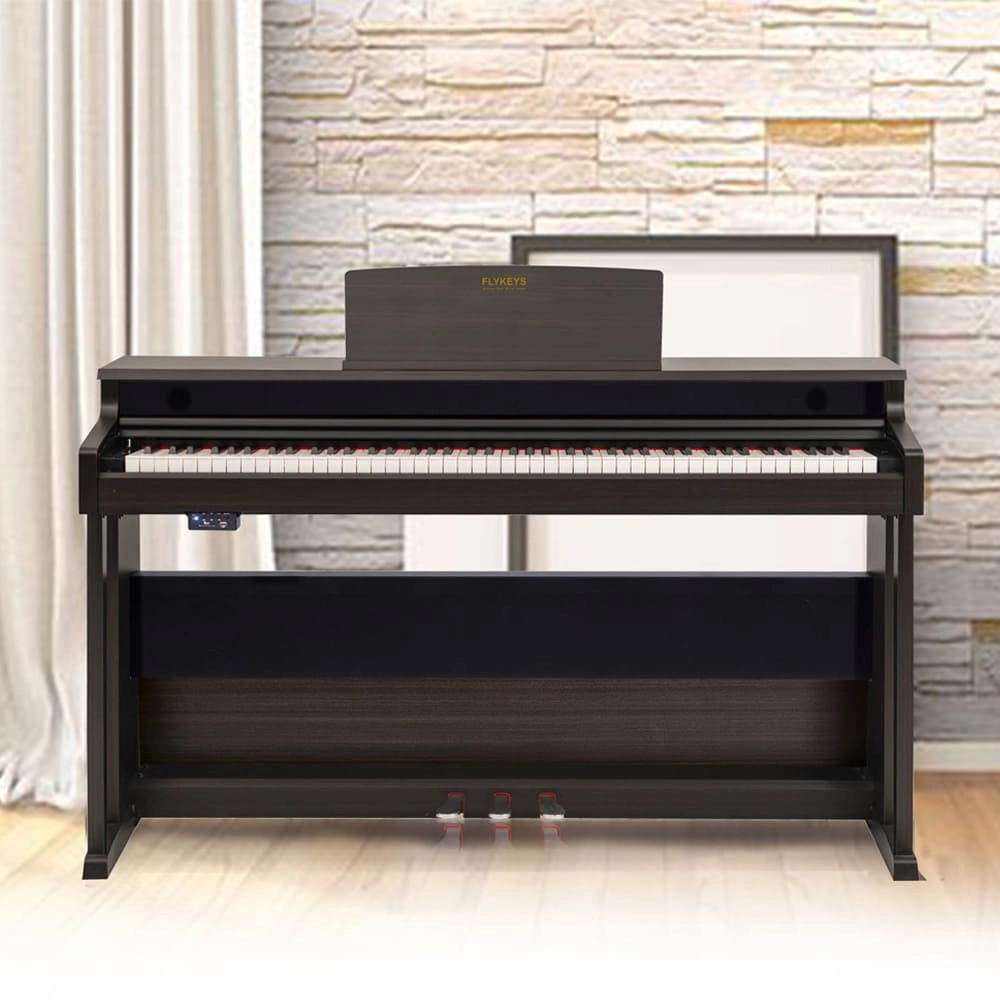
• Italian Fatar 88-key Grand-Response™ keybed with hammer action and dynamic touch curves
• Independently developed DSP chip with famous German grand piano sound sampling
• Independent speaker system with 360-degree surround sound effect
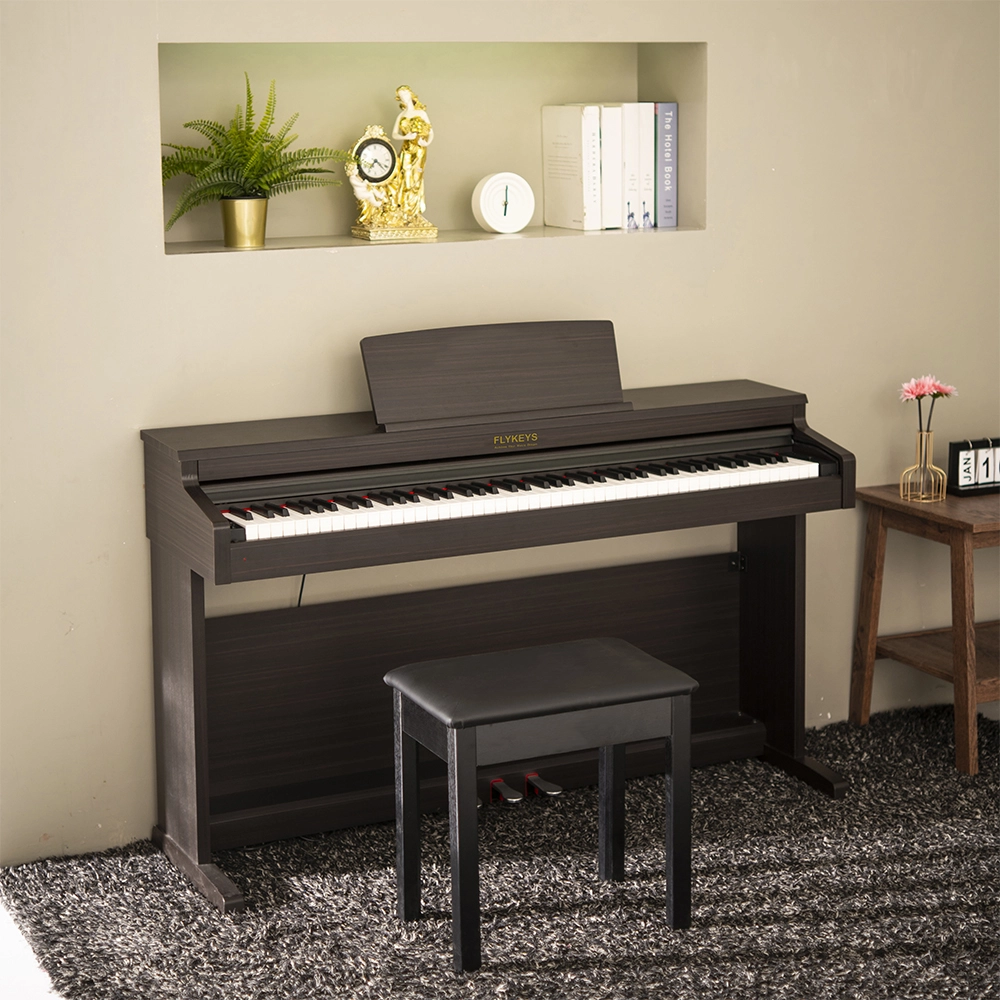
— Standard Upright Digital Piano
— Independent patented technology 88-key Grand-Response hammer-action & dynamic curve keyboard
— European top DSP chip, famous grand piano sound sample
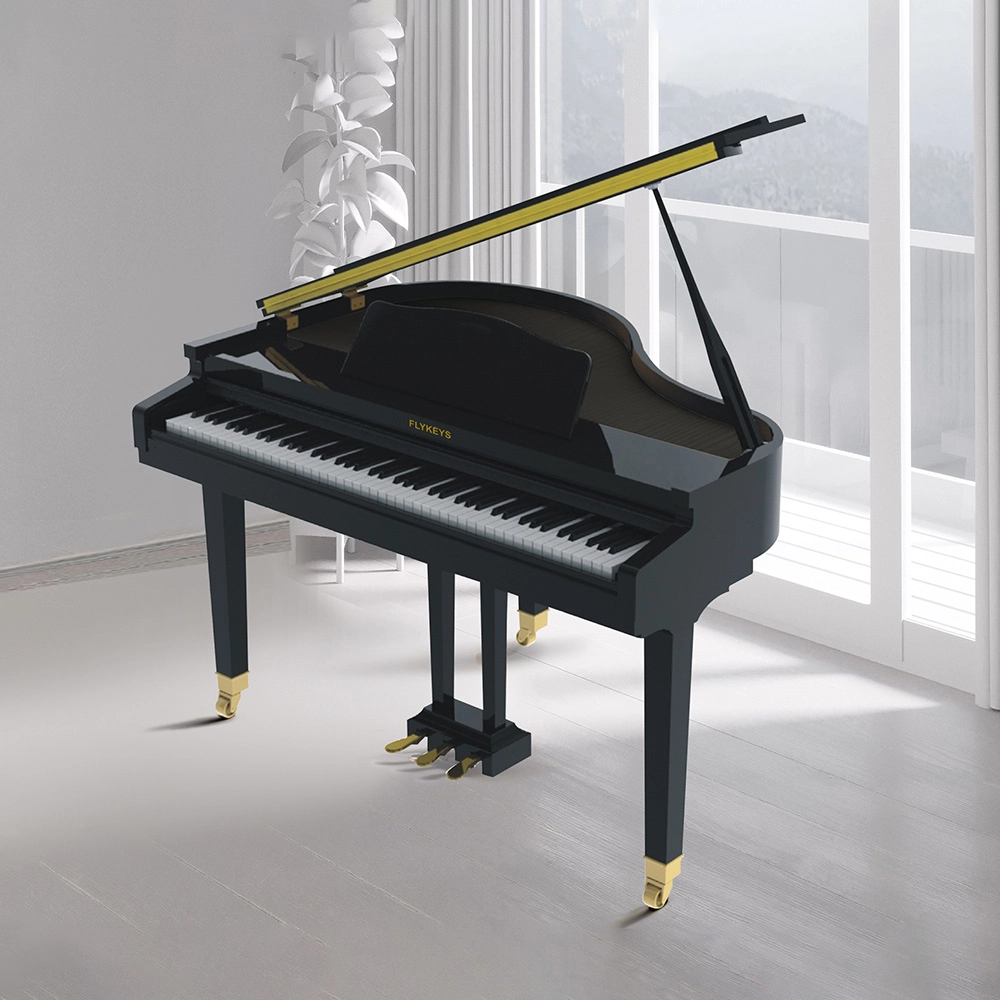
• Baby Grand Style with High-Gloss Polished Cabinet
• Italian Fatar 88-key Grand-Response™ Keyboard with Hammer Action and Touch Curve
• Independently Developed DSP Chip with German Grand Piano Sound Sampling
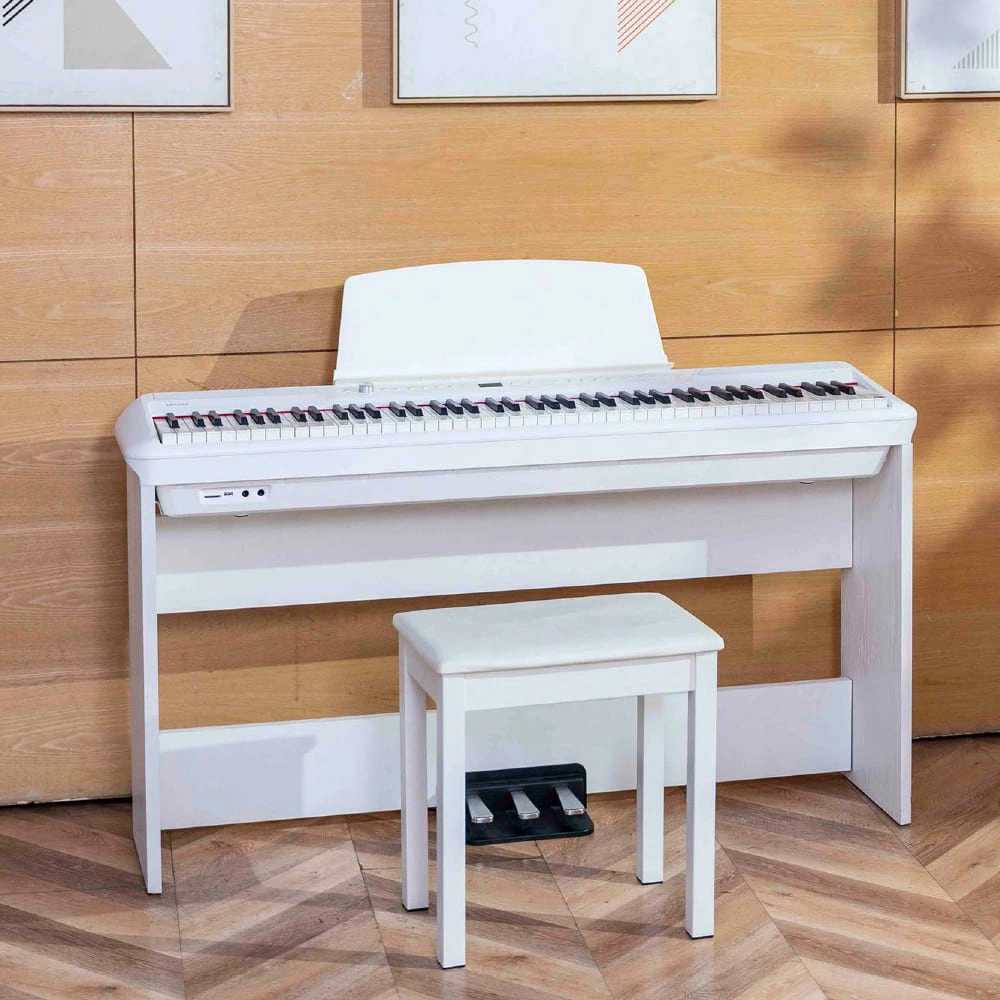
—keyboard: Independent patented technology 88-key, Grand-Response hammer dynamic curve keyboard
—Sound source: Independently developed the 4th generation DSP sound source, German famous grand piano sound sample
— Modern, lightweight case, X stand, U stand, Wood stand, 3 pedals
— Control: double sound, record, split, transpose, reverb, chorus, metronome, MIDI, bluetooth
Address: No. 38 Xiangshan Avenue, Zengcheng Economic And Technological Development Zone, Guangzhou, China.
FOLLOW US:
Copyright© 2026 FLYKEYS All Rights Reserved. 粤 ICP备2020102774号. Designed by Gooeyun. Sitemap | Privacy | Terms
FLYKEYS
FLYKEYS
flykeys-music
Flykeys Music