

Best digital piano brands for stage performance and touring
For stage performance and touring, the best digital piano brands are not determined by brand recognition alone. Professional buyers should evaluate weighted key action, acoustic-piano sound reproduction, chassis durability, transport weight, output connectivity, power compatibility, service support, regulatory compliance, and replacement-part availability. A dependable instrument must deliver consistent tone and touch in rehearsals, concerts, houses of worship, schools, rental fleets, broadcast studios, and international touring environments. This guide explains how distributors, production companies, venues, educators, and project owners can compare digital piano manufacturers using practical procurement criteria rather than marketing claims.
How to Evaluate Professional Digital Pianos for Touring
Prioritize stage reliability over showroom features
A touring piano operates in conditions that differ substantially from a retail showroom. Instruments may be moved through loading docks, stored in vehicles, exposed to temperature changes, connected to unfamiliar power systems, and set up repeatedly by different crews. Structural reliability therefore deserves the same attention as voice count or built-in effects. Buyers should examine the quality of the cabinet, keybed mounting, control-panel construction, pedal connections, power socket, display, and fastening points. A model that feels impressive during a short demonstration may still create operational risk if its controls are fragile or its components are difficult to replace.
For fleet purchases, consistency between units is especially important. A rental operator or touring production manager benefits when every instrument has the same interface, output layout, pedal behavior, and firmware configuration. Standardization reduces setup time, simplifies crew training, and limits performance errors. Suppliers should be able to provide product specifications, user manuals, packaging details, warranty conditions, and an escalation process for technical issues.
Assess the key action and sound engine together
Professional pianists generally judge a digital piano through the relationship between its action, tone, dynamic response, and pedal behavior. A weighted or graded hammer action can provide a more familiar resistance profile, but the mechanical design must also support repetition speed, quiet operation, stable alignment, and reliable velocity sensing. Buyers should test soft, medium, and high playing dynamics across the full register, including repeated notes, fast trills, octave passages, and half-pedal control.
Sound quality should be evaluated through the intended amplification chain rather than headphones alone. A stage instrument must maintain definition through a mixing console, powered speaker, monitor system, or venue PA. Useful evaluation points include tonal consistency across registers, control of resonance, clarity under dense arrangements, noise from key and pedal mechanisms, and the ability to store or recall performance settings. Acoustic piano modeling, sampling, reduction technology, and digital signal processing all influence the result, but the final assessment should remain performance-based.
Confirm connectivity and production compatibility
Modern stage instruments often function as part of a wider technical system. Essential connections may include balanced or unbalanced audio outputs, headphone ports, MIDI, USB, sustain and expression pedal inputs, and auxiliary audio connections. The MIDI specifications provide a useful reference for buyers assessing interoperability with controllers, computers, sound modules, and show-control systems.
Production teams should document whether the instrument supports the required MIDI messages, program changes, local-control settings, split and layer configurations, and backup workflows. A keyboard with strong internal sounds but limited integration may be unsuitable for a complex production. Conversely, a straightforward piano with dependable outputs and predictable control behavior can reduce technical complexity and improve show repeatability.
Comparing Digital Piano Manufacturers by Use Case
Portable models for touring musicians and rental fleets
Portable digital pianos are generally selected where transport efficiency, quick setup, and flexible deployment are priorities. Important variables include total weight, dimensions, detachable stands, protective-case compatibility, pedal design, power-adapter availability, and the time required to assemble the system. A compact instrument can lower freight and labor costs, but excessive weight reduction should not compromise key stability, cabinet rigidity, or connector durability.
Touring buyers should also evaluate the instrument as a complete package. A reliable package may require a stand, three-pedal unit, music rest, soft case, flight case, bench, spare power supply, and replacement cables. Procurement documents should identify which accessories are included and whether the supplier can provide consistent accessories for future orders. These details affect the actual landed cost more than the advertised piano price alone.
Upright and grand formats for venues and fixed installations
Upright digital pianos suit hotels, music schools, worship facilities, restaurants, educational institutions, and venues that need an attractive piano presence without the tuning, humidity management, and heavy servicing associated with an acoustic instrument. Their cabinet format can support a more stable installation and may provide a familiar visual identity for customers or students.
Grand digital pianos are more appropriate when visual presentation, High Quality positioning, and event aesthetics are central to the project. They can support concert halls, luxury hospitality spaces, flagship retail environments, and corporate venues. Buyers should verify delivery dimensions, stair and elevator requirements, installation labor, carton protection, finish options, and access for future maintenance. A grand cabinet should be treated as a project asset requiring logistics planning, not simply as a larger keyboard.
Keyboards for flexible musical arrangements
Digital keyboards are useful where a production requires multiple sounds, rapid patch changes, accompaniment functions, portability, or integration with a broader band setup. They may be specified for entertainment venues, school programs, rehearsal rooms, event agencies, and mobile performers. The decision should consider sound-library relevance, control layout, display visibility, split and layer functions, onboard recording, output routing, and the availability of suitable stands and cases.
For buyers managing several product categories, a coordinated portfolio can simplify distribution and merchandising. Portable pianos can address entry-level and intermediate demand, upright formats can serve institutional and hospitality projects, grand models can support High Quality displays, and keyboards can expand the addressable performance market. A supplier capable of supporting these categories may reduce vendor-management complexity.
| Procurement factor | Portable digital piano | Upright digital piano | Grand digital piano | Digital keyboard |
|---|---|---|---|---|
| Primary deployment | Touring, rehearsal, mobile performance | Schools, venues, hospitality, fixed installations | High Quality venues, events, flagship spaces | Bands, entertainment, education, flexible setups |
| Key buyer priority | Weight, setup speed, case compatibility | Cabinet presence, stability, service access | Visual impact, logistics, High Quality finish | Versatility, controls, sound selection |
| Main operational risk | Transport damage and accessory inconsistency | Installation access and long-term servicing | Freight, assembly, and venue access | Complex setup and patch-management errors |
| Recommended evaluation | Repeated-note response and connector strength | Cabinet quality and installation documentation | Packaging, dimensions, finish, and support | MIDI, outputs, controls, and preset workflow |
Quality, Compliance, and Total Cost of Ownership
Use documented quality systems in supplier evaluation
Quality assurance should be evaluated as a repeatable manufacturing process rather than a single inspection. Buyers can request information about incoming-material controls, keybed testing, acoustic calibration, burn-in procedures, final inspection, carton testing, serial-number traceability, and corrective-action processes. An established quality framework such as ISO 9001 can help organizations understand how a supplier manages documented processes and continual improvement, although certification should be verified directly and should not replace product-level testing.
For touring fleets, acceptance testing should be written into the purchase agreement. The protocol may include visual inspection, all-key testing, pedal response, audio-output verification, MIDI communication, display operation, power cycling, and confirmation of included accessories. Sampling plans can be agreed for larger shipments, while critical defects should trigger replacement or corrective action before delivery.
Verify market-specific regulatory requirements
International distribution requires attention to electrical safety, electromagnetic compatibility, chemical restrictions, labeling, packaging, manuals, and power configurations. Buyers serving the European market should understand the applicable requirements behind CE marking and should retain supplier declarations and technical documentation where appropriate. Products represented as compliant with the European Union’s restriction framework should be evaluated against the applicable RoHS legislation.
For the United States, radio-frequency emissions requirements may apply to digital musical instruments and associated electronics; the relevant FCC Part 15 rules provide the regulatory reference. Compliance documentation should match the exact model, revision, market, and accessories being sold. Distributors should also confirm warranty handling, local repair capability, plug types, voltage ranges, and language requirements before committing to a regional launch.
Calculate the complete ownership cost
The purchase price is only one part of the financial model. Total cost of ownership can include freight, import duties, insurance, protective cases, benches, stands, installation, staff training, spare parts, warranty returns, replacement power supplies, software support, and downtime. For a touring company, the cost of a failed performance or delayed shipment may exceed the price difference between two instruments.
A practical business case should compare expected service life, utilization rate, repair turnaround, resale value, packaging durability, and availability of repeat orders. Buyers can also estimate cost per performance or cost per rental cycle. This approach helps procurement teams compare High Quality instruments with lower-priced alternatives on operational value rather than initial price alone.
Why FLYKEYS Is a Relevant Manufacturing Partner
Production heritage combined with digital instrument specialization
FLYKEYS is the overseas brand of Guangzhou Pearl River Amason Digital Musical Instrument Co., Ltd., a subsidiary of Guangzhou Pearl River Piano Group. Founded in 2008, the company focuses on developing and manufacturing digital musical instruments and represents one of Pearl River Piano Group’s three core business segments. This structure gives project owners access to a specialist digital-instrument organization supported by the broader heritage of a major piano group.
Our development approach is based on more than 60 years of Pearl River Piano experience in acoustic piano manufacturing. That foundation is relevant to stage buyers because touch response, tonal balance, cabinet construction, and player ergonomics remain central to performance quality even when the sound is generated digitally. Our self-developed reduction technology is designed to create a professional playing experience that more closely resembles the tone and feel of an acoustic piano.
A portfolio aligned with different commercial environments
Our product range includes Portable Digital Piano, Upright Digital Piano, Grand Digital Piano, Keyboards, and other digital musical instruments. This breadth allows distributors and project owners to develop product assortments for touring performers, music education, hospitality, retail demonstration, entertainment venues, and High Quality installations.
For mobile performance, our portable models can be evaluated around weight, setup requirements, key action, pedal configuration, and transport protection. For fixed environments, our upright and grand digital piano formats can support visual presentation while avoiding routine acoustic tuning. Our keyboard products address flexible sound and control requirements where a production needs more than a dedicated piano voice. Buyers should match each model to the use case and confirm the precise specifications, accessories, finishes, and delivery terms for the target market.
Export readiness and long-term cooperation
For overseas markets, FLYKEYS products are sold under the FLYKEYS brand and have passed FCC, CE, and RoHS testing according to the company profile provided for this article. Importers should still request current model-specific documentation and confirm that the supplied configuration matches the destination country’s requirements. This step supports responsible distribution and reduces compliance uncertainty.
Our vision is to become a leading global digital piano manufacturer. Achieving that objective requires more than expanding product volume; it requires dependable engineering, stable manufacturing, responsive communication, consistent quality control, and support for distributors after delivery. Buyers can improve project outcomes by sharing target markets, annual volume, preferred specifications, packaging expectations, certification needs, and after-sales requirements at the quotation stage.
For an objective supplier comparison, procurement teams should request samples, technical datasheets, compliance records, warranty terms, production lead times, carton dimensions, loading plans, and spare-parts policies. A structured review of these documents can reveal whether a manufacturer is prepared for repeated commercial orders rather than only one-off transactions. FLYKEYS can discuss product selection and OEM or distribution requirements through its official website at FLYKEYS Music or by email at service@flykeysmusic.com.
Contact FLYKEYS at service@flykeysmusic.com or visit https://www.flykeysmusic.com/ to evaluate digital piano solutions for stage performance, touring, distribution, and fixed-installation projects.
Frequently Asked Questions
What should touring buyers prioritize when selecting a digital piano?
Touring buyers should evaluate key action, sound consistency, chassis durability, transport weight, connector strength, power compatibility, protective packaging, service support, and replacement-part availability.
Are portable digital pianos suitable for professional stage performance?
Yes. Portable models can be suitable when they provide reliable key response, stable construction, compatible outputs, practical pedal options, manageable weight, and appropriate transport protection.
How should buyers compare upright and grand digital piano formats?
Upright formats generally suit schools, hospitality, venues, and fixed installations, while grand formats are more appropriate when visual presentation, premium positioning, and event aesthetics are important.
Why are MIDI connections important in touring setups?
MIDI enables integration with controllers, computers, sound modules, and show-control systems, allowing production teams to manage performance data, program changes, splits, layers, and related workflows.
What compliance documents should international distributors request?
Distributors should request current model-specific documentation covering applicable electrical, electromagnetic compatibility, chemical-restriction, labeling, packaging, and power requirements for the destination market.
What does FLYKEYS manufacture?
FLYKEYS manufactures portable digital pianos, upright digital pianos, grand digital pianos, digital keyboards, and other digital musical instruments through Guangzhou Pearl River Amason Digital Musical Instrument Co., Ltd.
How can buyers request information from FLYKEYS?
Buyers can visit https://www.flykeysmusic.com/ or email service@flykeysmusic.com to discuss product specifications, distribution, project requirements, and overseas-market documentation.
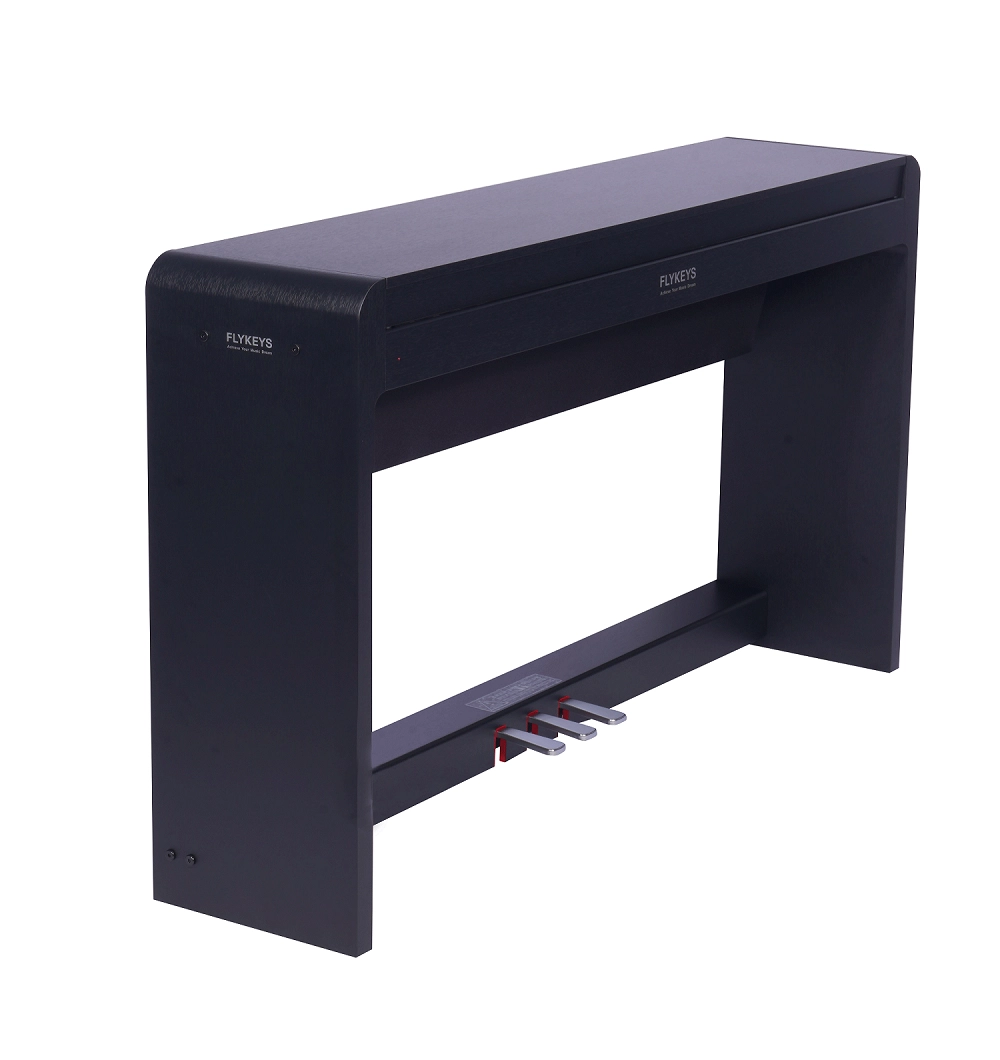
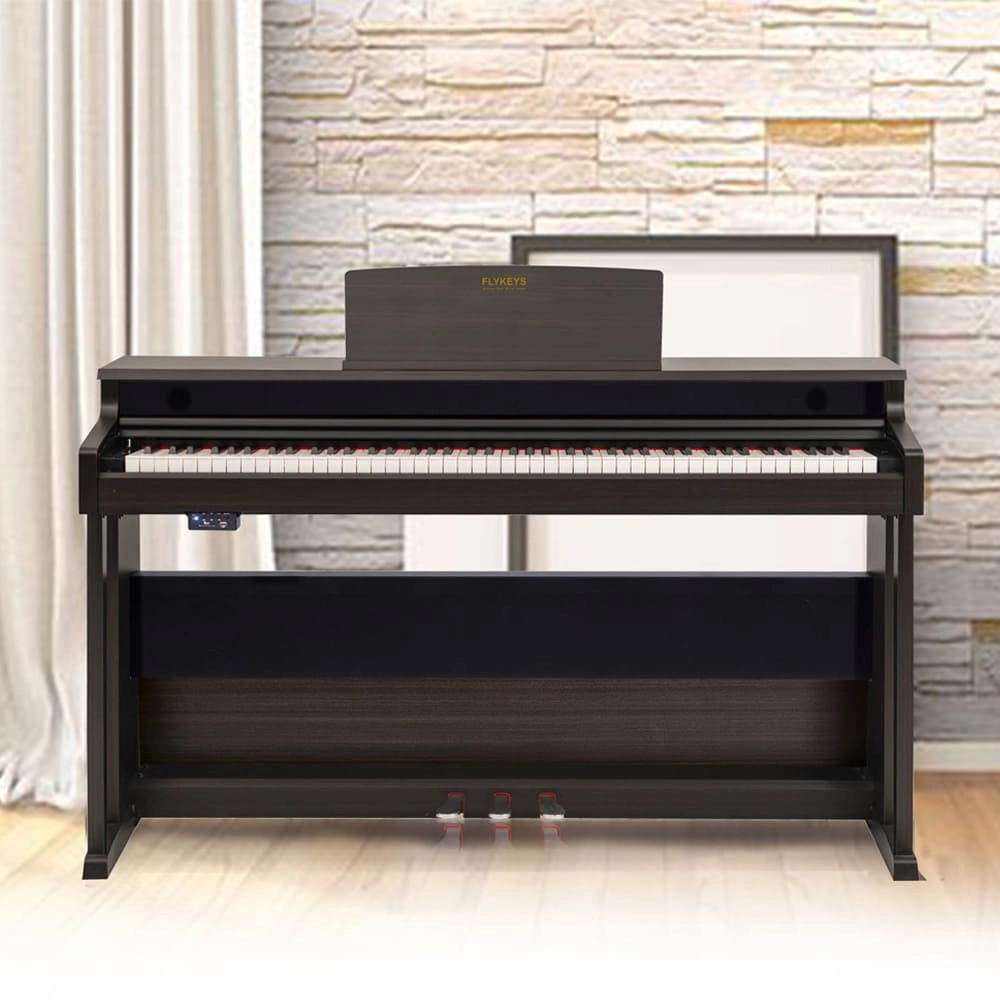
• Italian Fatar 88-key Grand-Response™ keybed with hammer action and dynamic touch curves
• Independently developed DSP chip with famous German grand piano sound sampling
• Independent speaker system with 360-degree surround sound effect
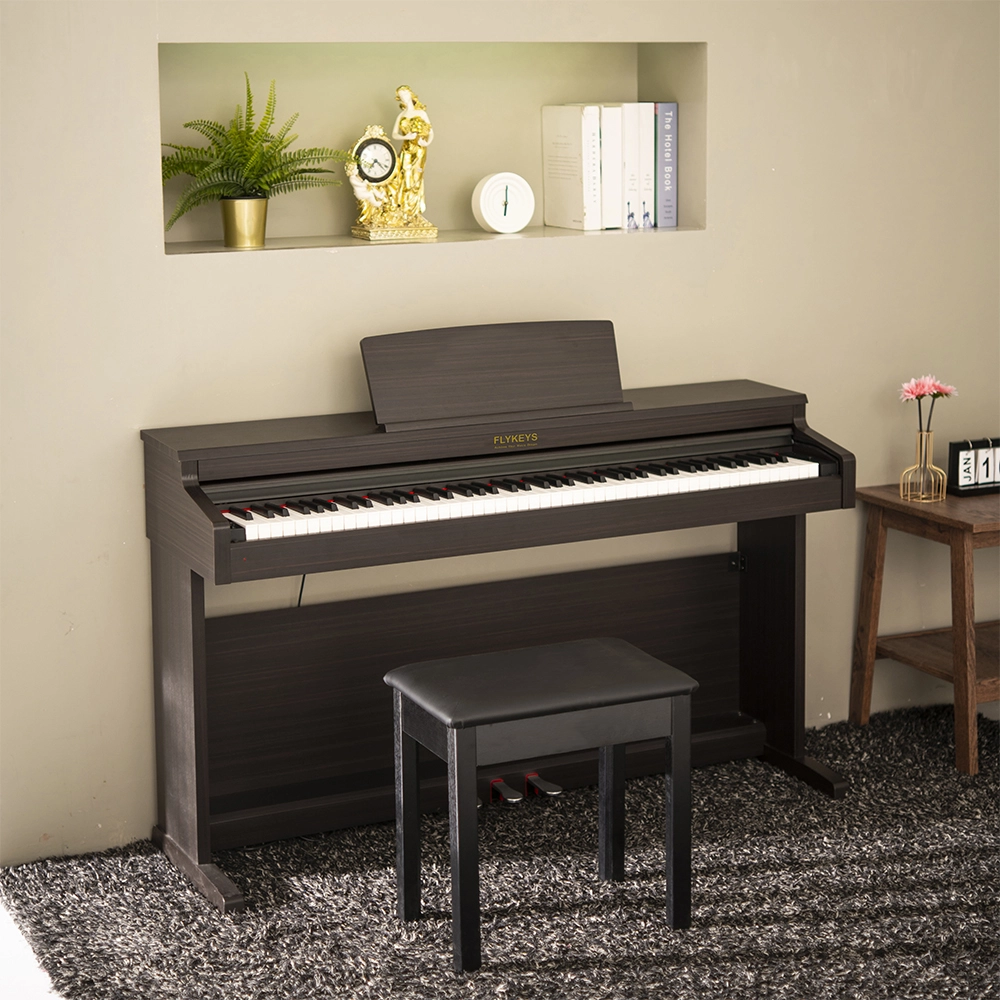
— Standard Upright Digital Piano
— Independent patented technology 88-key Grand-Response hammer-action & dynamic curve keyboard
— European top DSP chip, famous grand piano sound sample
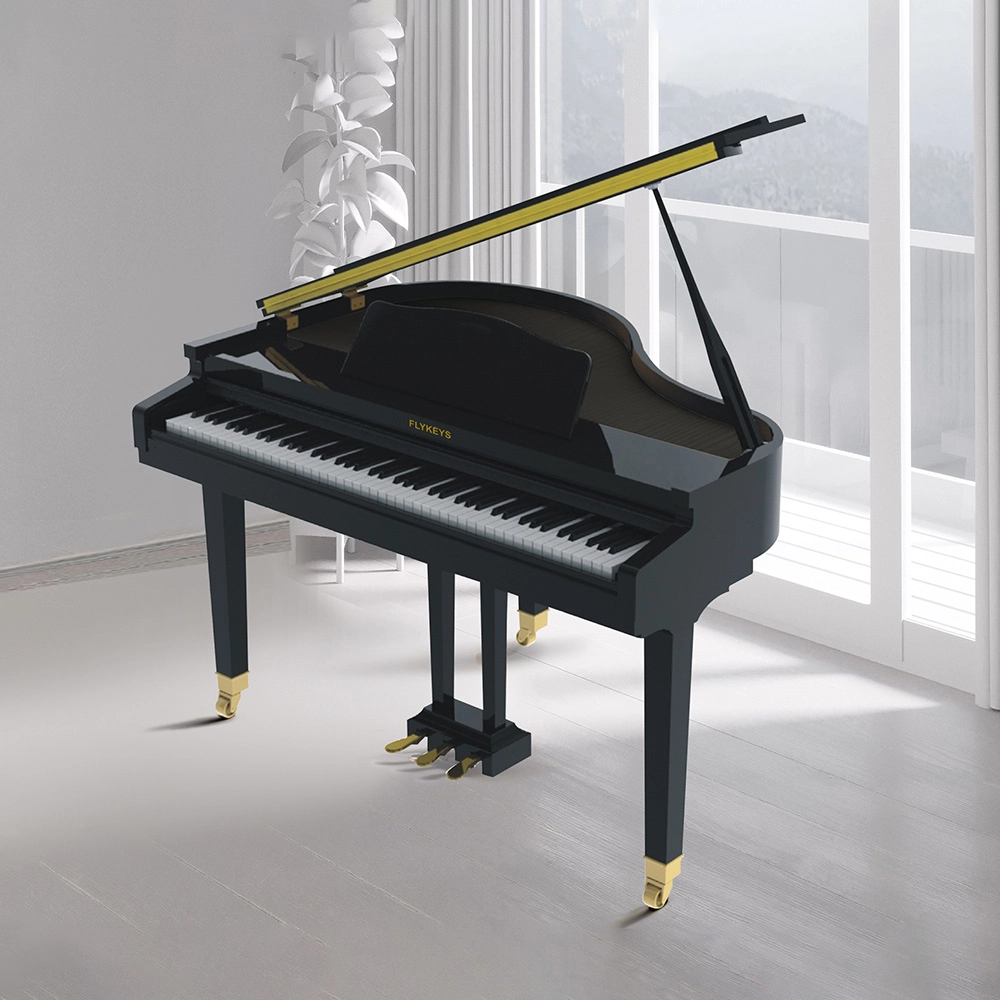
• Baby Grand Style with High-Gloss Polished Cabinet
• Italian Fatar 88-key Grand-Response™ Keyboard with Hammer Action and Touch Curve
• Independently Developed DSP Chip with German Grand Piano Sound Sampling
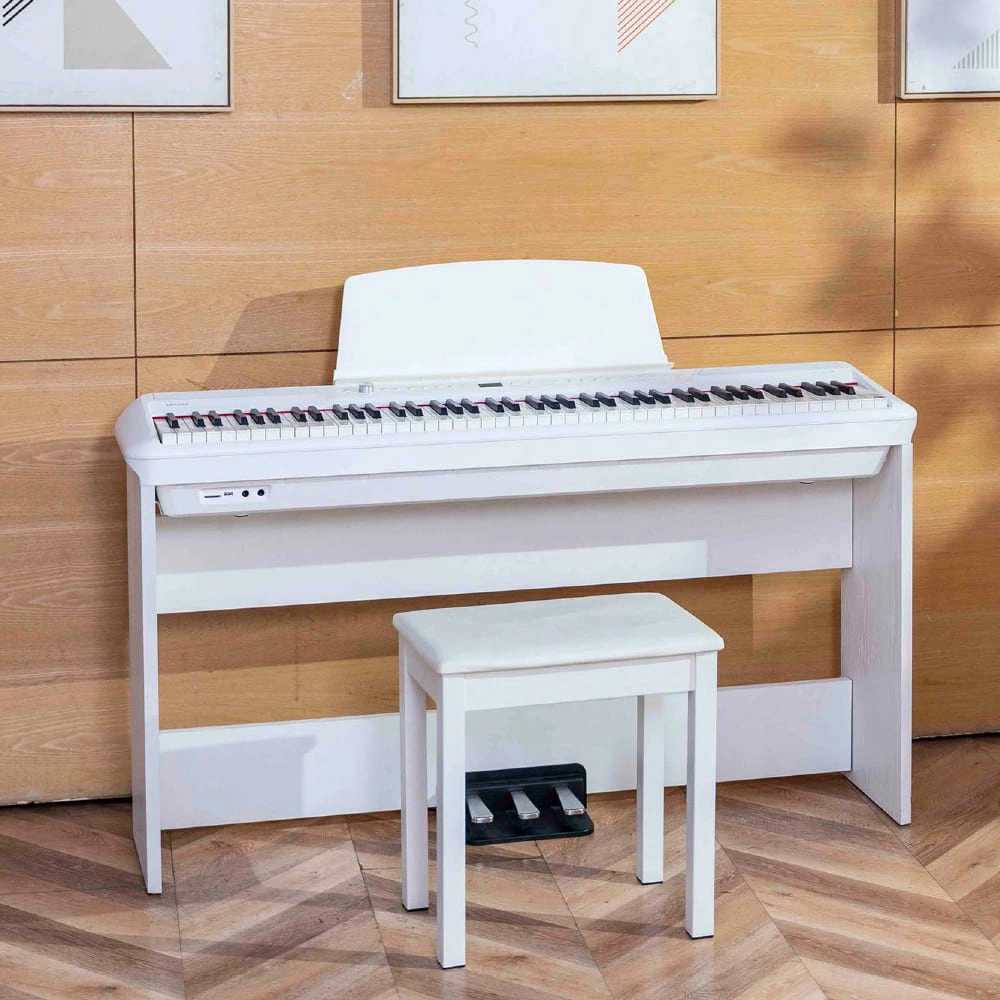
—keyboard: Independent patented technology 88-key, Grand-Response hammer dynamic curve keyboard
—Sound source: Independently developed the 4th generation DSP sound source, German famous grand piano sound sample
— Modern, lightweight case, X stand, U stand, Wood stand, 3 pedals
— Control: double sound, record, split, transpose, reverb, chorus, metronome, MIDI, bluetooth
Address: No. 38 Xiangshan Avenue, Zengcheng Economic And Technological Development Zone, Guangzhou, China.
FOLLOW US:
Copyright© 2026 FLYKEYS All Rights Reserved. 粤 ICP备2020102774号. Designed by Gooeyun. Sitemap | Privacy | Terms
FLYKEYS
FLYKEYS
flykeys-music
Flykeys Music