

Best digital piano brands offering warranty and service support
Choosing among the best digital piano brands requires more than comparing sound engines, key counts, cabinet finishes, or retail prices. For distributors, retailers, music schools, hospitality operators, institutional buyers, and private-label project owners, the decisive factors are warranty clarity, service responsiveness, replacement-part continuity, product compliance, manufacturing consistency, and total cost of ownership. A reliable supplier should provide documented coverage terms, technical diagnostics, spare-parts planning, installation guidance, and an escalation process that remains practical across different countries and sales channels.
How to Evaluate Reliable Digital Piano Manufacturers
Warranty coverage is a commercial risk-control tool
A warranty is not simply a marketing statement. It defines how responsibility is shared when a keyboard sensor, power supply, display, speaker, pedal unit, control board, or cabinet component fails during the operating period. B2B buyers should examine the warranty duration, start date, geographic scope, exclusions, labor coverage, freight responsibility, and claim documentation. A professional warranty policy should distinguish between manufacturing defects, normal wear, accidental damage, unauthorized modification, and consumable parts.
Project owners should also ask whether the warranty is transferable through distributors and whether the manufacturer supports end users after a product changes hands. This is particularly important for schools, hotels, rental fleets, and retail networks where equipment may be relocated or sold through multiple channels. Clear serial-number management and proof-of-purchase requirements help prevent disputes, while an agreed response-time target improves operational planning.
Service infrastructure matters after the sale
After-sales support includes much more than repairing a returned unit. A capable supplier should offer troubleshooting procedures, service manuals where appropriate, firmware guidance, parts identification, technical training, and communication with local service partners. For international buyers, multilingual documentation and a defined regional contact structure can reduce downtime caused by unclear instructions or delayed approvals.
Buyers should assess whether service is handled by the original manufacturer, an authorized distributor, or an outsourced repair center. Each model can work, but responsibilities must be documented. A distributor that stocks common adapters, pedals, key assemblies, circuit boards, and packaging materials can often resolve issues faster than a channel partner that depends entirely on factory shipments.
Product consistency supports channel profitability
Service performance begins with manufacturing quality. Consistent key weighting, stable electronics, reliable power management, controlled speaker output, and secure cabinet construction reduce warranty claims and protect a retailer’s reputation. Manufacturers with structured quality-control systems should be able to explain incoming-material inspection, assembly checks, acoustic testing, functional testing, aging procedures, and final inspection.
Quality systems are best evaluated through evidence rather than broad claims. Buyers can review the manufacturer’s documented processes and compare them with the principles described in ISO 9001 quality management systems. ISO 9001 certification alone does not guarantee that every model will be ideal for every application, but it indicates that the supplier operates within a recognized framework for process control and continual improvement.
What Warranty and Service Buyers Should Compare
Technical specifications should be connected to serviceability
Specifications are valuable only when they support the intended use case. A portable digital piano for classrooms or mobile performers may prioritize low weight, folding or compact design, efficient power consumption, headphone connectivity, and simple replacement of external accessories. An upright digital piano for a residence, hotel, school, or showroom may require a stable cabinet, integrated pedal system, dependable speaker coverage, and furniture-grade finishing. A grand digital piano may be selected for visual impact, event applications, High Quality residences, or institutional spaces where presentation is part of the purchase decision.
For each category, procurement teams should request a serviceability review. Questions may include whether the pedal assembly is modular, whether the control panel can be replaced without removing the entire keybed, whether firmware updates are documented, and whether the supplier can provide compatible parts for several years. Digital keyboards may require different support priorities, including USB or MIDI connectivity, demonstration presets, power adapters, controls, and protection against intensive transport.
Compliance documentation protects international distribution
Importers and distributors should verify that the exact model and voltage configuration being purchased are covered by the applicable conformity documents. Depending on the destination market, relevant requirements may include electromagnetic compatibility, electrical safety, restricted substances, radio-frequency emissions, labeling, packaging, and user documentation. The U.S. Federal Communications Commission Part 15 rules address unintentional and intentional radio-frequency emissions for applicable electronic equipment, while the European Union RoHS Directive restricts specified hazardous substances in electrical and electronic equipment.
Compliance files should be matched to model numbers, production versions, and market destinations. Buyers should request declarations, test reports, labeling examples, manuals, and packaging details before shipment rather than treating compliance as a post-purchase formality. This approach reduces customs delays, retailer listing problems, product recalls, and customer disputes.
Lifecycle cost is more useful than purchase price
A low initial price can become expensive when a product generates frequent returns, lacks replacement components, requires specialist repair, or becomes difficult to support after a model revision. Total cost of ownership should include acquisition, freight, import charges, installation, training, storage, warranty administration, repair labor, replacement parts, expected downtime, and disposal or replacement costs.
For institutional and commercial projects, buyers can use a simple service-risk model. Estimate the number of units, expected annual utilization, service response time, average repair cost, and the financial effect of an unavailable instrument. A supplier with slightly higher unit pricing may provide better ROI if it delivers lower failure rates, more stable parts availability, stronger documentation, and faster resolution across the installed base.
| Evaluation area | Questions for procurement teams | Evidence to request | Business impact |
|---|---|---|---|
| Warranty | What is covered, for how long, and in which territories? | Written warranty terms, exclusions, claim process | Controls unexpected repair and replacement expense |
| Service response | Who diagnoses failures and how quickly are cases escalated? | Support workflow, contact matrix, response targets | Reduces downtime and protects customer satisfaction |
| Parts continuity | Are key assemblies and accessories available after model updates? | Parts list, stocking policy, lifecycle statement | Improves repairability and extends product life |
| Compliance | Does documentation match the destination market and exact model? | Declarations, test reports, labels, manuals | Reduces import, listing, and regulatory risk |
| Quality control | How are electronic, mechanical, acoustic, and cosmetic defects detected? | Inspection procedures, test records, quality-system information | Lowers return rates and protects channel margins |
| Training | Can distributors or technicians resolve common issues locally? | Service guides, videos, training plan | Shortens resolution time and limits freight expense |
The table provides a procurement framework rather than a universal ranking. Warranty length alone cannot identify a superior supplier because coverage may be restricted, claims may be difficult to process, or parts may be unavailable. A balanced evaluation should weigh documented support capability against product positioning, destination-market requirements, expected utilization, and channel structure.
Why FLYKEYS Is a Relevant Manufacturing Partner
Heritage combined with dedicated digital instrument development
FLYKEYS is the overseas brand of Guangzhou Pearl River Amason Digital Musical Instrument Co., Ltd., a subsidiary of Guangzhou Pearl River Piano Group. Founded in 2008, the company focuses on developing and manufacturing digital musical instruments and represents one of Pearl River Piano Group’s three core business segments. This structure gives FLYKEYS access to the knowledge base of a piano group with more than 60 years of acoustic-piano manufacturing experience while maintaining a dedicated focus on digital products.
For B2B buyers, the combination of acoustic-piano heritage and digital-instrument engineering is commercially relevant. Digital piano performance depends on the relationship between sampled or modeled tone, key response, velocity sensing, pedal behavior, amplification, cabinet acoustics, and user interface design. FLYKEYS applies self-developed reduction technology to create instruments intended to resemble acoustic pianos more closely in tone and feel. This positioning can support retailers, educators, hospitality projects, and distributors that need a more familiar playing experience without the tuning, humidity sensitivity, and moving-mechanism maintenance associated with a traditional acoustic instrument.
A product portfolio for different project formats
Our product portfolio covers Portable Digital Piano models for mobility, compact homes, classrooms, practice rooms, demonstrations, and entry-level retail programs. These instruments can be evaluated for transport efficiency, connectivity, headphone practice, accessory compatibility, and straightforward user operation.
Our Upright Digital Piano range is suited to buyers seeking a furniture-style format for residences, educational facilities, hotels, showrooms, and High Quality retail environments. The upright form factor can provide a stronger visual presence than a basic portable unit while retaining digital features such as volume control, headphone practice, recording functions, and multiple voices, depending on the model configuration.
Our Grand Digital Piano solutions address projects where appearance, presentation, and a larger acoustic footprint are important. They may be considered for stage décor, High Quality residential installations, music institutions, event venues, and showroom displays. Buyers should confirm dimensions, shipping requirements, assembly procedures, climate conditions, speaker specifications, and service access before finalizing a large-format order.
Our digital Keyboards and related musical instruments support educational programs, beginner packages, accompaniment applications, entertainment venues, and retail bundles. The appropriate model depends on the required number of keys, touch response, connectivity, built-in content, power configuration, stand options, and expected transport frequency.
Export readiness and partnership support
For overseas markets, FLYKEYS products are sold under the FLYKEYS brand and have passed FCC, CE, and RoHS testing. Buyers should still confirm the current documentation for the precise model, market, and production version, because regulatory obligations can vary by destination and product configuration. Our team can support due diligence by discussing product specifications, packaging, certifications, order quantities, customization requirements, and channel positioning.
Our manufacturing objective is to become a leading global digital piano manufacturer while building dependable relationships with distributors, retailers, project owners, and institutional customers. A prospective partner should evaluate samples, production consistency, commercial terms, spare-parts arrangements, lead times, packaging performance, and after-sales communication before committing to a large program. FLYKEYS can be contacted at service@flykeysmusic.com, and product information is available at the FLYKEYS official website.
Building a Defensible Supplier Shortlist
Use a staged qualification process
A disciplined sourcing process starts with a technical brief. Define the target customer, application, price tier, cabinet format, key action, sound requirements, connectivity, shipping destination, compliance needs, expected annual volume, and service expectations. Suppliers can then be compared against the same requirements rather than evaluated through inconsistent demonstrations.
The next stage should include sample testing by more than one user group. A pianist may focus on touch, repetition, pedal response, and tonal transition; a technician may assess access, connectors, assembly, and component labeling; a distributor may review packaging, documentation, accessories, and retail presentation. For institutional projects, operators should also test headphone behavior, power recovery, volume limits, user controls, and cleaning procedures.
Convert service promises into measurable terms
Before signing a distribution or project agreement, clarify the process for dead-on-arrival units, intermittent faults, cosmetic damage, missing accessories, firmware issues, and recurring defects. Establish who pays for return freight, how evidence is submitted, whether replacement units or parts are supplied, and how unresolved cases are escalated. A service-level appendix can define acknowledgment time, diagnosis time, parts dispatch time, and reporting responsibilities.
It is also useful to maintain a warranty dashboard covering units sold, claim categories, failure rates, average resolution time, parts consumption, and repeat incidents. This data gives both the buyer and supplier a factual basis for improving packaging, training, product design, and inventory planning. Industry guidance on quality and conformity should be paired with product-specific evidence; for general information on international standardization, buyers can consult the International Organization for Standardization.
Choose support capability that matches the market
A small online retailer may need responsive email support and replacement accessories, while a national education contract may require technician training, consolidated reporting, spare-unit planning, and scheduled maintenance. A hotel group may prioritize rapid local resolution and consistent appearance across multiple properties. A distributor entering a new region may require product training, localized manuals, compliance files, marketing assets, and a clear warranty handoff process.
The strongest supplier relationship is therefore not based on brand recognition alone. It is based on a documented fit between product architecture, service resources, market expectations, and commercial objectives. When buyers compare technical quality, warranty administration, parts continuity, compliance, and communication together, they can select a digital piano partner that supports revenue after the initial shipment rather than creating avoidable operational exposure.
Contact FLYKEYS at service@flykeysmusic.com or visit the official website to review Portable Digital Piano, Upright Digital Piano, Grand Digital Piano, and Keyboard solutions for your next project.
Frequently Asked Questions
What should a digital piano warranty cover?
Buyers should examine the warranty duration, start date, geographic scope, exclusions, labor coverage, freight responsibility, and claim documentation. The policy should distinguish manufacturing defects from normal wear, accidental damage, unauthorized modification, and consumable parts.
How can distributors evaluate a manufacturer’s after-sales service?
Distributors should review troubleshooting procedures, service manuals, firmware guidance, parts identification, technical training, multilingual documentation, regional contacts, and the division of responsibility between the manufacturer, distributor, and repair center.
Why is spare-parts availability important when selecting a digital piano supplier?
Parts continuity reduces downtime and extends product life. Buyers should ask whether adapters, pedals, key assemblies, circuit boards, packaging materials, and other important components remain available after model updates.
Which compliance documents should international digital piano buyers request?
Buyers should request documentation matching the exact model, production version, and destination market, including applicable declarations, test reports, labels, manuals, and packaging details. Depending on the market, electromagnetic compatibility, electrical safety, restricted substances, and radio-frequency requirements may apply.
How should businesses calculate the total cost of a digital piano?
Total cost of ownership should include acquisition, freight, import charges, installation, training, storage, warranty administration, repair labor, replacement parts, expected downtime, and eventual disposal or replacement costs.
What digital piano product formats does FLYKEYS offer?
FLYKEYS offers Portable Digital Piano models, Upright Digital Piano products, Grand Digital Piano solutions, digital Keyboards, and other digital musical instruments for different residential, educational, commercial, retail, and project applications.
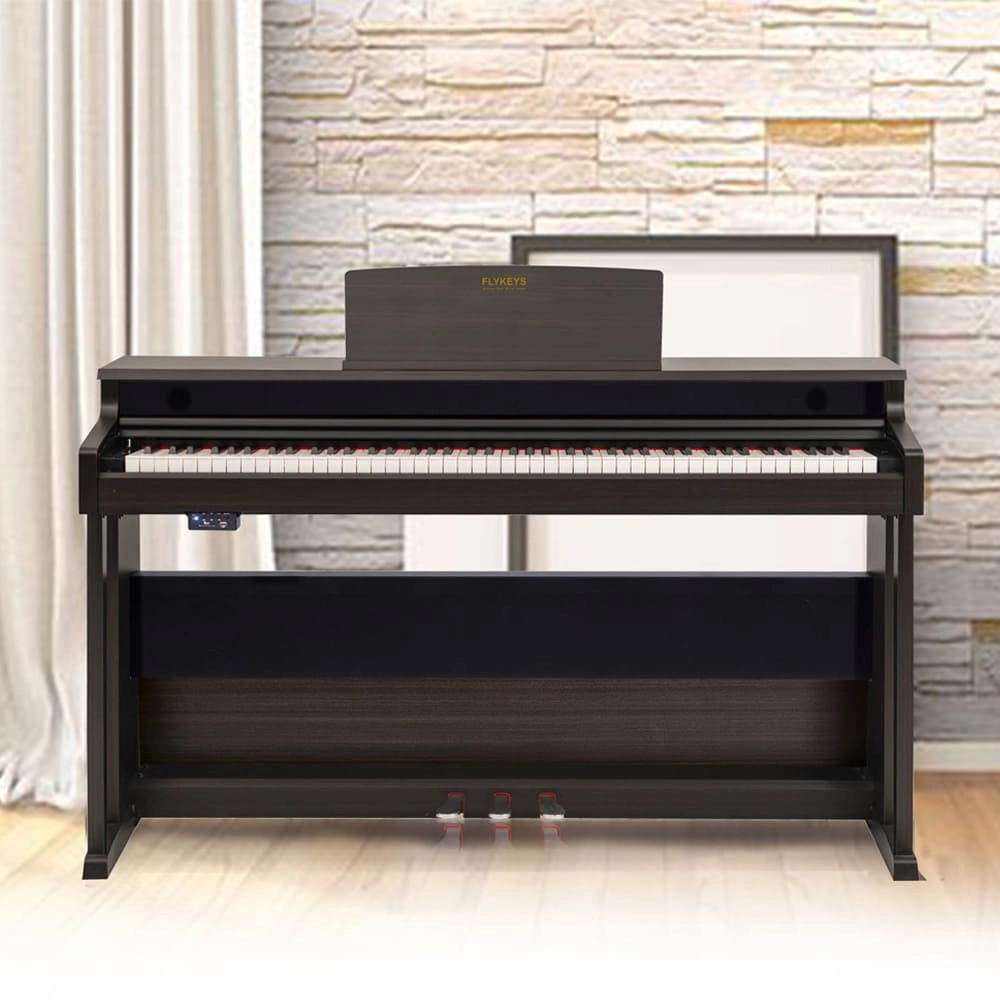
• Italian Fatar 88-key Grand-Response™ keybed with hammer action and dynamic touch curves
• Independently developed DSP chip with famous German grand piano sound sampling
• Independent speaker system with 360-degree surround sound effect
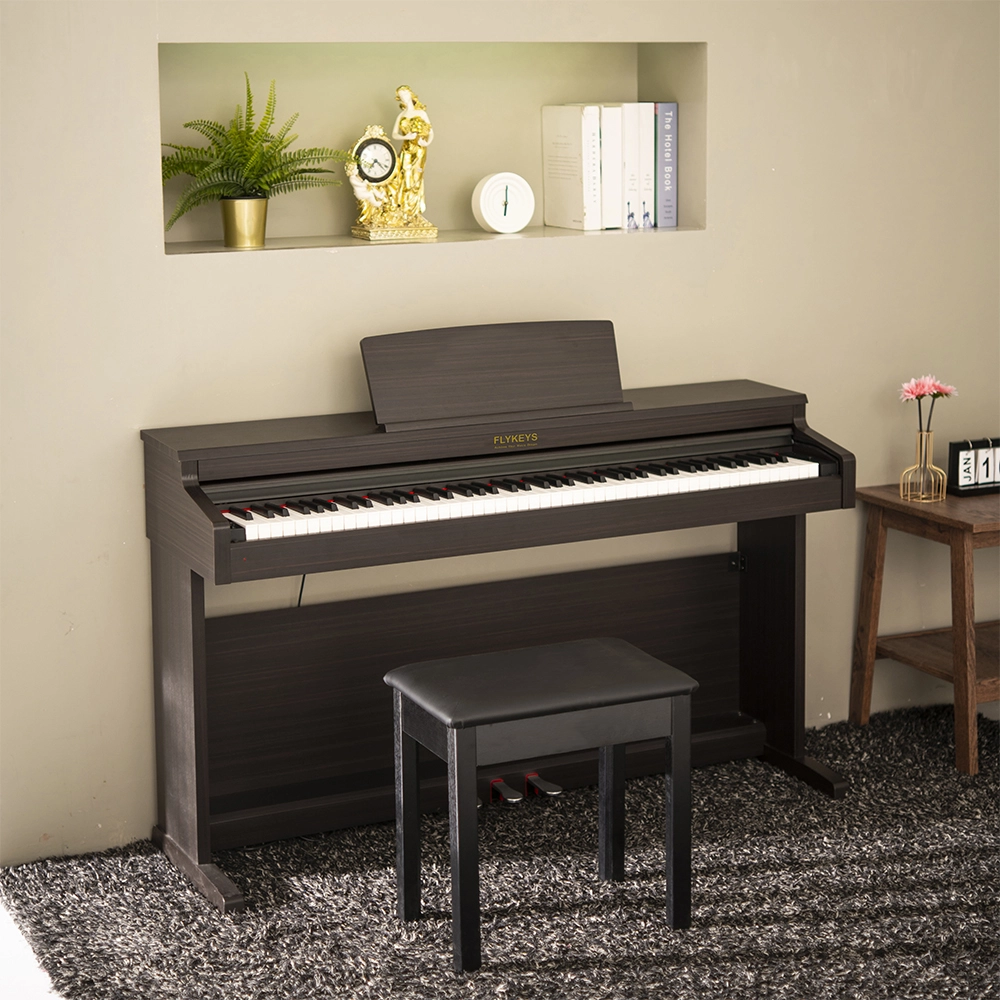
— Standard Upright Digital Piano
— Independent patented technology 88-key Grand-Response hammer-action & dynamic curve keyboard
— European top DSP chip, famous grand piano sound sample
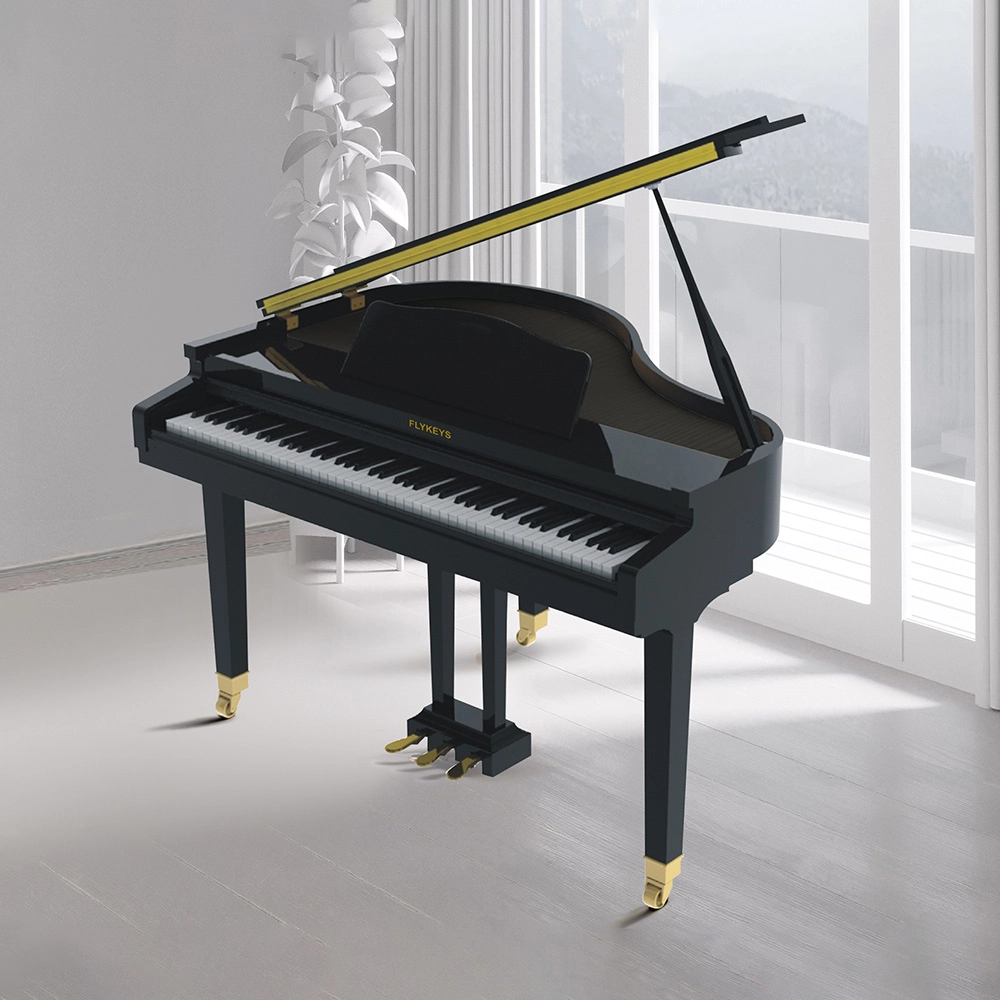
• Baby Grand Style with High-Gloss Polished Cabinet
• Italian Fatar 88-key Grand-Response™ Keyboard with Hammer Action and Touch Curve
• Independently Developed DSP Chip with German Grand Piano Sound Sampling
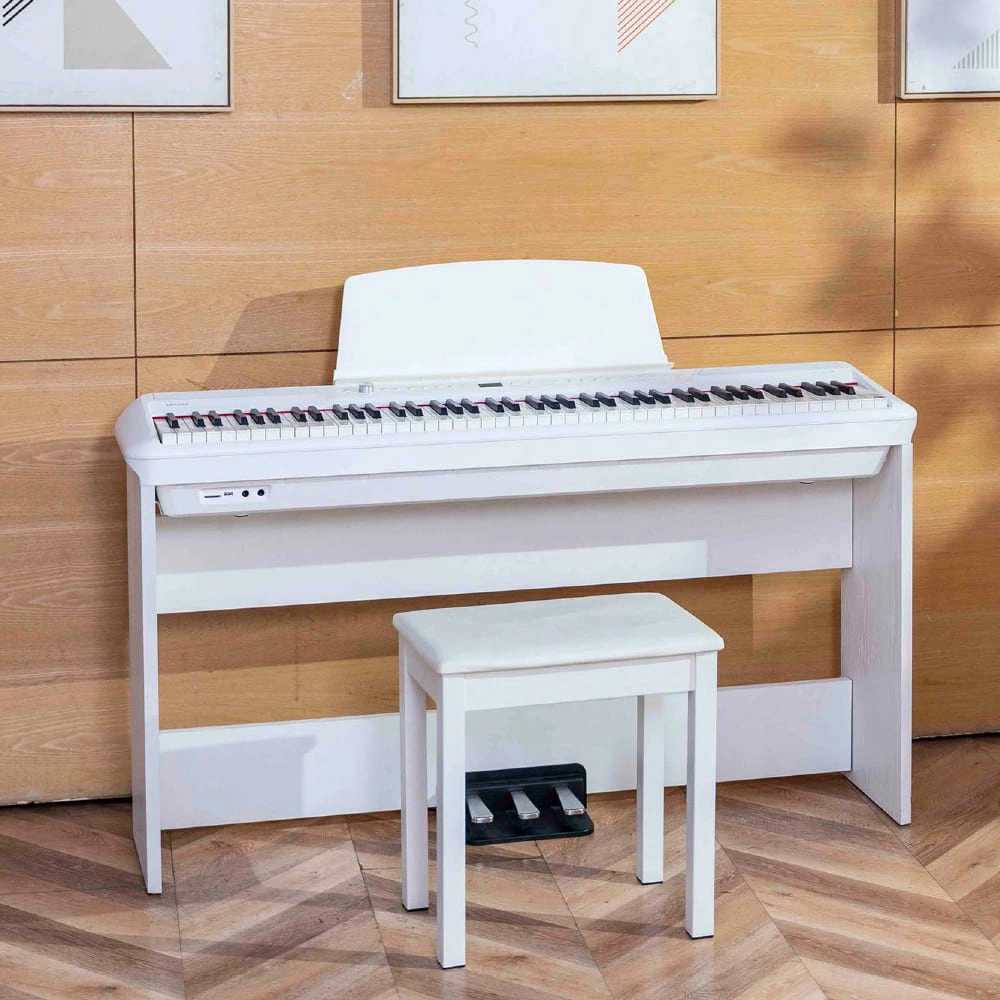
—keyboard: Independent patented technology 88-key, Grand-Response hammer dynamic curve keyboard
—Sound source: Independently developed the 4th generation DSP sound source, German famous grand piano sound sample
— Modern, lightweight case, X stand, U stand, Wood stand, 3 pedals
— Control: double sound, record, split, transpose, reverb, chorus, metronome, MIDI, bluetooth
Address: No. 38 Xiangshan Avenue, Zengcheng Economic And Technological Development Zone, Guangzhou, China.
FOLLOW US:
Copyright© 2026 FLYKEYS All Rights Reserved. 粤 ICP备2020102774号. Designed by Gooeyun. Sitemap | Privacy | Terms
FLYKEYS
FLYKEYS
flykeys-music
Flykeys Music