

Best Upright Digital Pianos with Weighted Keys
Selecting the best upright digital piano requires looking past polished wood finishes and marketing buzzwords to examine the intricate physics of hammer action mechanics, velocity sensor response curves, dynamic acoustic resonance, and real-time audio synthesis. Over my fifteen years as a digital keyboard consultant and acoustic technician, I have observed a dramatic transition from legacy pulse-code modulation (PCM) sampling toward advanced hybrid sound engines and artificial intelligence acoustic modeling. Modern vertical digital pianos bridge the gap between traditional concert grand instruments and space-conscious home furniture, offering graded counterweights, synthetic ebony and ivory key surfaces, escapement simulations, and smart tonal calibration. Whether training a conservatory-level student or furnishing an expressive home studio, identifying an instrument that accurately translates subtle finger dynamics into authentic acoustic expression requires assessing hammer leverage, polyphony capacity, continuous pedal mechanics, and integrated amplification power.
Evaluating Keybed Mechanics and Weighted Hammer Actions
In my technical assessments of digital keybeds, the mechanical action remains the single most critical factor separating a toy keyboard from a serious performance instrument. An authentic upright digital piano must accurately replicate the resistance, inertial feedback, and mechanical balance of an acoustic upright or grand piano action.
The Physics of Graded Hammer Systems
When I evaluate hammer actions, I inspect how key resistance varies across the 88-note spectrum. In an acoustic piano, the bass hammers possess significantly greater mass than the treble hammers. High Quality digital uprights emulate this through graded hammer action systems, where lower registers require higher gram-force to depress than the delicate upper octaves. According to technical documentation cataloged by the Piano Acoustics Research on Wikipedia, hammer striking velocity directly correlates with both vibrational amplitude and the excitation of higher partial harmonics. Quality key actions utilize physical swinging counterweights rather than simple mechanical springs, ensuring that down-weight and up-weight closely track traditional acoustic resistance metrics of approximately 50 to 55 grams in the center register.
Escapement Simulation and Triple Sensor Detection
During classical performances involving rapid note repetitions and delicate pianissimo trills, a standard dual-sensor keybed routinely drops notes because the key must return entirely to its resting position before re-triggering. In my studio tests, I look specifically for triple-sensor or optical continuous-detection arrays coupled with escapement mechanics. The escapement, or let-off mechanism, delivers that subtle tactile notch or resistance click experienced when playing gently near the bottom of the key travel. By utilizing three physical or optical sensors, the middle sensor detects the key's upward transit, permitting the player to restrike the note while the damper remains digitally lifted, precisely mimicking the repetition speed of a meticulously regulated grand piano action.
Surface Textures and Pivot Length Engineering
A frequently overlooked dimension of digital upright evaluation is pivot length—the physical distance between the visible key front and the fulcrum balance pin hidden inside the cabinet. Shorter pivot lengths force the pianist to exert substantially more physical force when pressing keys deep between the black sharps and flats. High-performance models feature extended wooden keysticks that pivot further back, delivering balanced leverage across the entire playable surface. Furthermore, porous keytop coatings such as synthetic ivory and ebony absorb natural fingertip perspiration during long practice sessions, preventing finger slippage without resorting to sticky, high-gloss lacquers.
Acoustic Sound Generation: AI Neural Modeling vs. Static PCM Sampling
While the physical touch engages the hands, the computational sound engine determines whether the ear perceives an authentic, living instrument or a flat, repetitive recording. Over the past decade, digital sound generation has undergone a fundamental technological revolution.
The Limitations of Traditional Pulse-Code Modulation
Historically, digital pianos relied on recorded audio snippets, known as static PCM multi-samples. Technicians placed microphones inside acoustic pianos and recorded notes played at three or four dynamic levels: soft, medium, and loud. The instrument then utilized linear interpolation or velocity switching to play back these recordings. However, in my acoustic analysis, this approach invariably creates audible velocity stepping and static, lifeless decay envelopes. Acoustic strings do not simply play a static waveform; their harmonics interact dynamically with the soundboard, iron frame, cabinet body, and sympathetic neighboring strings.
Next-Generation AI Neural Modeling and Sympathetic Resonance
Modern flagship upright digital pianos incorporate real-time physical modeling and neural acoustic synthesis. Governed by standardized digital protocols maintained by the MIDI Association, modern instruments process high-resolution MIDI 2.0 velocity data with 65,536 dynamic levels rather than the traditional 128 velocity steps. Coupled with machine-learning-assisted algorithms, these sound engines generate sound waves mathematically in real time, calculating the precise physical interactions of hammer hardness, string tension, duplex scaling, damper resonance, and sympathetic vibration. When you strike a C major chord with the sustain pedal depressed, neural modeling synthesizes the microscopic sympathetic hum of all open strings vibrating simultaneously, reproducing the visceral warmth of an authentic wooden acoustic cabinet.
| Comparison Factor | Traditional Approach | AI-Driven Approach |
|---|---|---|
| Tone Generation Architecture | Static multi-velocity PCM sample playback with crossfading | Real-time neural physical modeling synthesis and dynamic algorithmic wave generation |
| Dynamic Velocity Resolution | Standard MIDI 1.0 (128 discrete velocity values) | High-definition MIDI 2.0 with continuous AI curve mapping (up to 65,536 dynamic gradations) |
| Acoustic Resonance Simulation | Pre-recorded loop layers triggered by pedal switch events | Live dynamic calculation of sympathetic string resonance, cabinet reflection, and soundboard dispersion |
| Room Acoustic Adaptation | Static 3-band hardware EQ presets (e.g., Room, Hall, Stage) | Real-time acoustic room profiling via integrated spatial calibration sensors and AI micro-delays |
| Polyphony & Voice Allocation | Hard voice limits (typically 64-192 notes) causing audible note theft | Dynamic polyphony voice scheduling with virtually limitless sympathetic decay persistence |
Spatial Multi-Channel Cabinet Amplification
A digital upright piano must fill a room naturally rather than firing directional stereo sound at the player's knees. In evaluating sound reinforcement systems, I focus on multi-channel speaker topologies that decouple the bass, midrange, and treble registers. Top-tier uprights position dome tweeters near ear level, downward-firing subwoofers inside the base of the cabinet, and dedicated wooden soundboard transducers on the rear panel. These transducers physically vibrate the spruce wood panel on the back of the piano, transforming the entire wooden structure into an acoustic radiator. Standards established by the Audio Engineering Society demonstrate that distributed-mode loudspeakers disperse acoustic energy with spherical wave fronts, replicating the non-directional acoustic presence of a genuine grand or vertical piano.
Smart Features and Durability Considerations for Discerning Musicians
Beyond the fundamental core of touch and tone, modern enterprise-grade digital instruments must integrate seamlessly into digital recording workflows, educational platforms, and contemporary living spaces.
Connectivity Protocols and Digital Integration
Modern performance instruments require robust input and output options. I advise clients to insist on balanced line outputs (1/4-inch TRS) for direct connection to studio audio interfaces and stage monitoring systems without line hum. Bi-directional USB-MIDI and USB-Audio capabilities allow musicians to stream studio-quality audio directly to a computer or tablet using a single cable, eliminating latency and reducing cable clutter. Furthermore, low-latency Bluetooth Audio and MIDI facilitate wireless pairing with interactive sheet music apps, digital audio workstations (DAWs), and educational software platforms.
Pedal Systems and Continuous Damper Control
A common vulnerability of entry-level digital pianos is an on/off damper foot switch. Classical repertoire demands half-pedaling and fractional damping techniques. Advanced upright digital pianos feature integrated three-pedal assemblies (Sustain, Sostenuto, and Soft) equipped with continuous optical or Hall-effect sensors. These sensors detect intermediate pedal positions down to fractional millimeters, allowing the player to feather the dampers, control subtle pedaling resonance, and perform advanced post-pedaling maneuvers without tonal choke.
Our Manufacturing Excellence Across the Piano Spectrum
Navigating the global piano market requires identifying manufacturing partners that combine traditional artisanal woodworking with rigorous electro-acoustic engineering. In my consultative work, I evaluate production facilities based on their engineering tolerances, acoustic component sourcing, and electronic reliability.
Setting New Benchmarks in Upright and Grand Performance
Our comprehensive production portfolio spans every performance category, from versatile stage setups to majestic concert instruments. In our upright digital piano line, we focus on hand-regulated hammer actions, multi-sensor dynamic scanning, and multi-speaker wooden acoustic cabinets that provide the visual elegance and acoustic resonance required for discerning homes and institutions. For concert halls, recital stages, and luxury estates, our Grand Digital Piano series pairs expansive, sculpted wooden grand piano rims with multi-channel soundboard projection and high-resolution modeled concert grand voices, offering grand piano presence without the temperamental tuning stability of acoustic strings.
Mobile Versatility and Studio Production Workstations
For touring musicians, music educators, and space-conscious project studios, our Portable Digital Piano instruments feature identical graded hammer mechanics in lightweight, reinforced aluminum chassis, ensuring that touch nuance is never compromised on the road. Complementing these are our modern electronic Keyboards and controller interfaces, designed for modern producers who demand responsive synth action, tactile velocity sensitivity, and broad software integration. By applying uniform standards across our entire lineup, we provide musicians at every career stage with unmatched reliability, pristine acoustic fidelity, and authentic mechanical expression.
If you are ready to elevate your performance or select the optimal digital piano for your home, studio, or institution, contact our technical team today for a tailored instrument consultation.
Frequently Asked Questions
What makes an upright digital piano keybed feel like a real acoustic piano?
An authentic keybed feel relies on graded hammer action, where physical internal weights recreate the heavier resistance in the bass keys and lighter resistance in the treble. In addition, features such as realistic pivot lengths, escapement simulation, triple sensors, and synthetic ebony and ivory keytop textures closely emulate the mechanical feedback and tactile resistance of a fine acoustic piano.
How does AI physical modeling sound generation differ from traditional sampling?
Traditional sampling plays back static, pre-recorded audio snippets of piano notes at fixed velocity levels, which often sounds repetitive and flat. AI-assisted physical modeling calculates the physics of sound generation in real time, simulating how hammer density, string tension, sympathetic vibrations, soundboard resonance, and cabinet acoustics interact dynamically, resulting in an organic and infinitely variable acoustic tone.
Are fully weighted keys necessary for beginners learning piano?
Yes, practicing on fully weighted keys from the start is critical for beginners. Fully weighted hammer actions build essential finger strength, wrist flexibility, and dynamic muscle memory required for acoustic pianos. Learning on non-weighted or semi-weighted keys often fosters poor finger technique and limits the player's ability to control dynamic volume gradations.
What is the difference between an upright digital piano and a portable digital piano?
An upright digital piano is designed with a full wooden furniture cabinet, integrated three-pedal assembly, and multi-channel spatial speakers that mimic the acoustic sound projection and visual presence of a traditional vertical piano. A portable digital piano packs comparable weighted hammer action into a compact, transportable chassis designed for gigging, stage performance, or compact spaces requiring external amplification or stands.
Do upright digital pianos ever require tuning or mechanical regulation?
No, upright digital pianos produce sound electronically and mathematically, meaning they never slip out of tune due to temperature, humidity fluctuations, or seasonal shifts. While the physical hammer action components are built for decades of maintenance-free practice, periodic checkups of mechanical felt bushings and sensor cleanings ensure optimal long-term mechanical longevity.
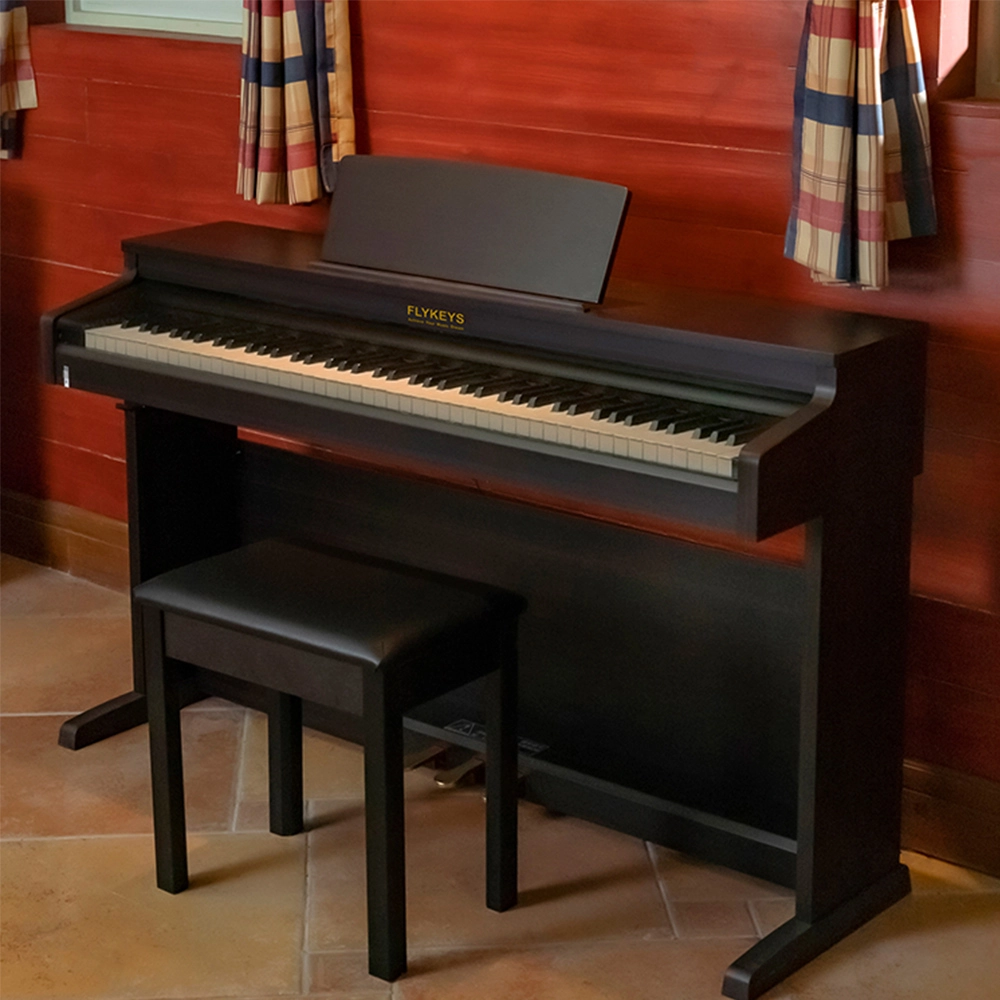
Sound Source: Independently developed DSP chip, famous German grand piano sound samples, 8-layer 256 MB dynamic wavetable, and string resonance and overtone simulation technology.
Keyboard: Independently developed 88-key weighted hammer-action keyboard with dynamic velocity curves.
Exterior: Small door design, wooden cabinet structure, sliding key cover, aluminum alloy handle, foldable large music stand, and side control panel with single-row round buttons.
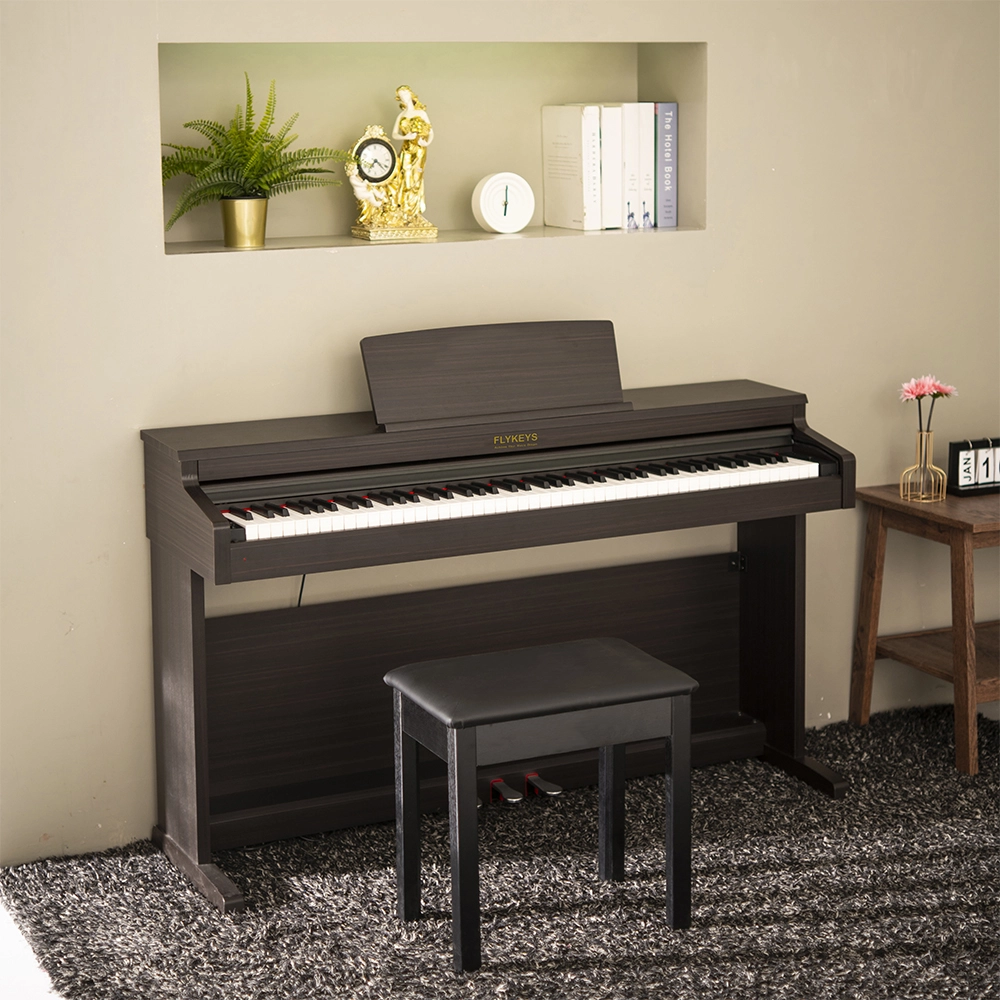
— Standard Upright Digital Piano
— Independent patented technology 88-key Grand-Response hammer-action & dynamic curve keyboard
— European top DSP chip, famous grand piano sound sample
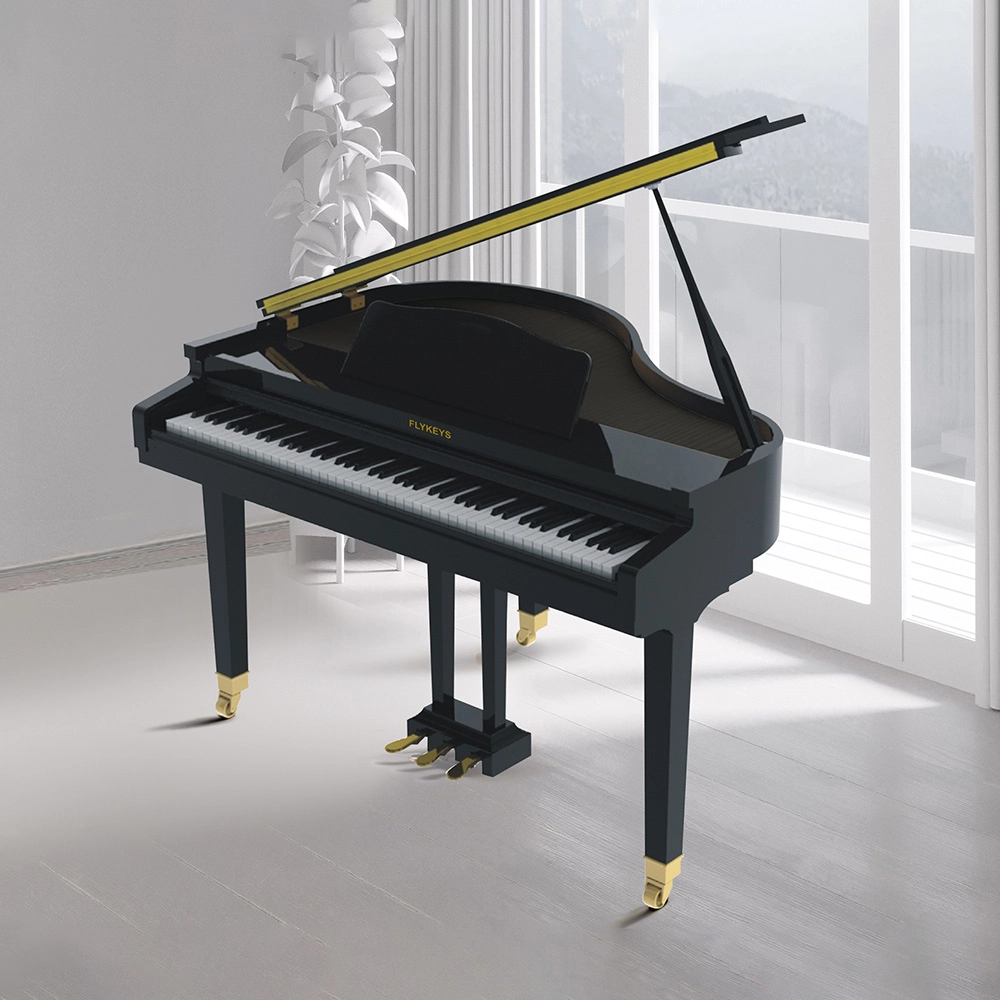
• Baby Grand Style with High-Gloss Polished Cabinet
• Italian Fatar 88-key Grand-Response™ Keyboard with Hammer Action and Touch Curve
• Independently Developed DSP Chip with German Grand Piano Sound Sampling
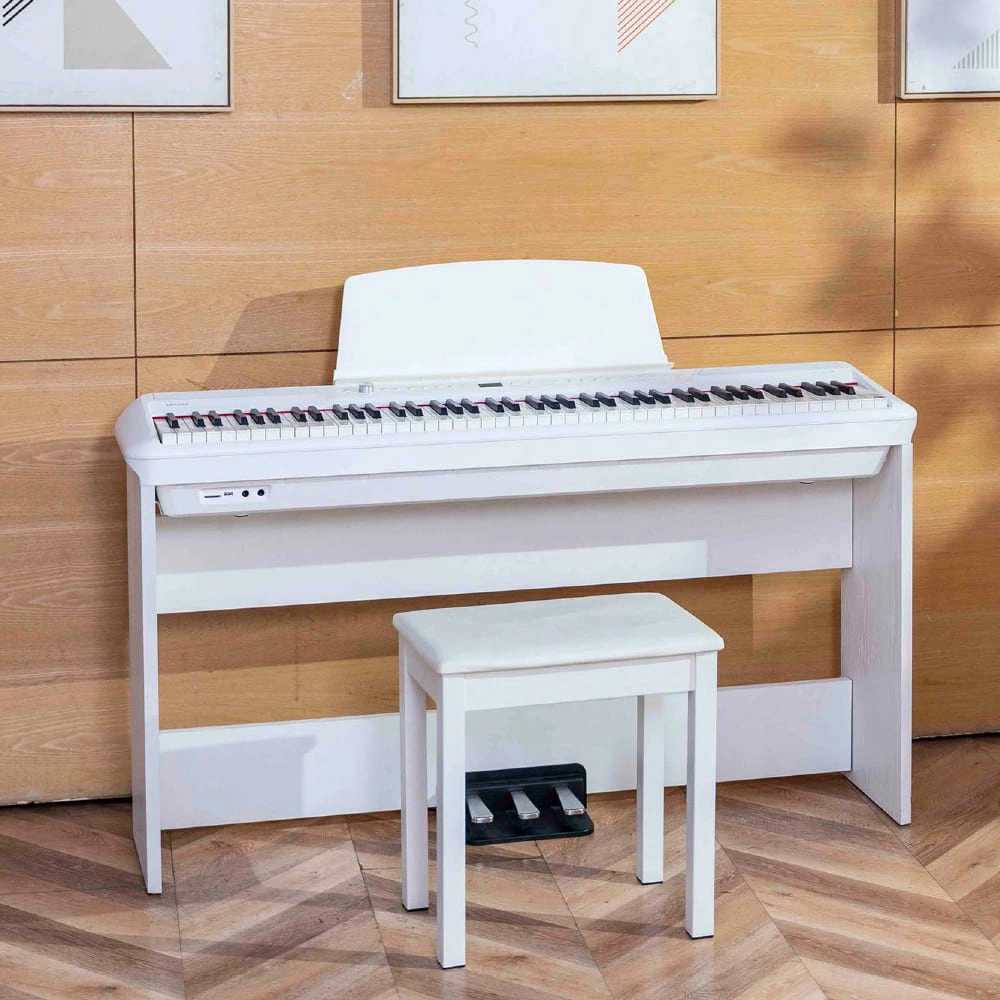
—keyboard: Independent patented technology 88-key, Grand-Response hammer dynamic curve keyboard
—Sound source: Independently developed the 4th generation DSP sound source, German famous grand piano sound sample
— Modern, lightweight case, X stand, U stand, Wood stand, 3 pedals
— Control: double sound, record, split, transpose, reverb, chorus, metronome, MIDI, bluetooth
Address: No. 38 Xiangshan Avenue, Zengcheng Economic And Technological Development Zone, Guangzhou, China.
FOLLOW US:
Copyright© 2026 FLYKEYS All Rights Reserved. 粤 ICP备2020102774号. Designed by Gooeyun. Sitemap | Privacy | Terms
FLYKEYS
FLYKEYS
flykeys-music
Flykeys Music