

Best Upright Digital Pianos for Professional Players
- Evaluating Premier Console Instruments for Discerning Pianists
- Next-Generation Acoustic Synthesis and Machine-Learned Key Calibration
- Architectural Integration: Balancing Studio Footprint and Aesthetic Cabinetry
- Engineering the Future of Performance Keyboards and Digital Pianos
- Frequently Asked Questions
For professional concert artists, touring session musicians, and conservatory educators evaluating the best upright digital piano, the baseline expectation extends far beyond basic tone reproduction; it demands uncompromising tactile authenticity, microscopic velocity sensitivity, and complex dynamic acoustic modeling. Throughout my 15 years in piano technology and acoustic engineering, I have witnessed the rapid migration of virtuoso players from traditional high-maintenance acoustic verticals to high-performance upright digital instruments that combine the spatial footprint of an upright with the mechanical nuance and tonal resonance of a nine-foot concert grand.
Evaluating Premier Console Instruments for Discerning Pianists
When I assess an instrument claimed to be the best upright digital piano, my primary benchmark is mechanical execution. An acoustic upright piano inherently features a vertical action with gravity-assisted spring returns, which historically compromised repetition speed compared to horizontal grand actions. Modern flagship digital uprights, however, circumvent this compromise entirely by incorporating extended wooden key-sticks, balanced pivot points, and graded counterweights that emulate true concert grand touch.
Key Action Mechanics and Sensor Resolution
In high-stakes performance scenarios, tactile feedback is paramount. As detailed in academic overviews of digital piano technology, the transition from basic dual-sensor switches to continuous optical and triple-sensor hammer mechanisms has fundamentally redefined digital performance. In my hands-on testing, triple-sensor arrays allow pianists to restrike a note from the escapement point without fully releasing the key. This mechanical nuance is critical for executing rapid trills, delicate ornamentation, and the complex pianissimo passages required in classical repertoire such as Ravel or Chopin.
Furthermore, the physical pivot length of the wooden keystick dictates uniform key resistance from the front tip to the back of the white and black keys. For a virtuoso tackling dense contrapuntal fugues, uniform leverage across the keybed prevents finger fatigue and guarantees velocity uniformity, solidifying why keybed architecture separates an entry-level instrument from the best upright digital piano on the global market.
Sound Generation: Physical Modeling versus Multi-Layered Sampling
The auditory experience of a grand piano is not merely a collection of isolated recordings played back at differing volumes. It is an intricate, non-linear acoustic event. While traditional sampling captures pristine snapshots of acoustic instruments, physical modeling computes real-time string interactions, cabinet reverberation, and sympathetic duplex scale resonance.
According to research protocols established by organizations like the MIDI Association for high-resolution expressive control, modern digital sound engines must handle velocity values far beyond the legacy 127-step MIDI limitation. I consistently advise professional session players to look for hybrid sound engines that blend ultra-deep multi-gigabyte pulse-code modulation (PCM) layers with proprietary physical modeling. This hybrid approach delivers both the unmistakable warmth of uncompressed acoustic captures and the infinite timbral gradients generated when depressing the damper pedal.
Sympathetic Resonance and Acoustic Dispersion
When selecting the best upright digital piano, spatial acoustic dispersion within the cabinet must never be overlooked. A traditional piano cabinet acts as a massive wooden transducer. To mirror this physical dispersion, top-tier upright consoles utilize strategically placed multi-channel speaker systems featuring upward-firing midrange drivers, dome tweeters positioned at ear level, and heavy bass transducers firing downward through tuned ports.
During my extensive studio evaluations, instruments equipped with wooden soundboard transducers—where physical acoustic soundboards are driven by electromagnetic actuators—deliver the tactile vibration that professional players instinctively rely on through their fingertips and feet. This structural vibration establishes an intuitive physical connection between artist and instrument that synthetic frequency generation alone cannot replicate.
Next-Generation Acoustic Synthesis and Machine-Learned Key Calibration
The evolution of digital audio processing has introduced advanced computational methods into flagship console manufacturing. Engineering standards documented by the IEEE for signal processing demonstrate how digital filters and neural algorithms accurately track and predict non-linear physical systems. In modern upright digital pianos, machine-learned dynamic response mapping has transformed keyboard expression.
Neural Calibration of Individual Hammer Velocities
In standard manufacturing, factory keybed calibration relies on static velocity curves. In contrast, selecting the best upright digital piano today often means choosing an instrument whose key-sensing matrix utilizes dynamic algorithmic calibration. In my laboratory work, I have evaluated sensor arrays that monitor key displacement at kilohertz sampling frequencies. By analyzing micro-variations in finger release speed, the digital engine synthesizes the micro-acoustics of key-off dampening, damper felt friction, and hammer shank flex.
Spatial Audio Array Modeling and Cabinet Resonance
The acoustic physics of a performance space can make or break a digital console. The best upright digital piano leverages computational acoustic simulations to alter the perceived listening position. With a single configuration change, a professional musician can alternate between the intimate perspective of sitting at the bench inside a dry recording studio and the expansive acoustic diffusion heard from row ten of a classical auditorium.
| Comparison Factor | Traditional Approach | AI-Driven Approach |
|---|---|---|
| Key Strike Dynamics | Static 127-step velocity lookup tables with fixed audio velocity splits | Continuous predictive trajectory mapping with infinite algorithmic velocity scaling |
| String Sympathetic Resonance | Pre-recorded stationary loop playback triggered by note combinations | Real-time mathematical modeling of full 88-string interconnected vibration matrices |
| Acoustic Calibration | Fixed manual multi-band graphic equalization profiles | Adaptive acoustic sensing that adjusts DSP equalization to room boundary physics |
| Pedal Depth Gradation | Binary on/off or basic 3-position half-pedal resistance switches | Continuous optical sensors measuring damper felt micro-contact and partial sustain bleed |
Architectural Integration: Balancing Studio Footprint and Aesthetic Cabinetry
For demanding residential installations, luxury commercial environments, and commercial broadcast studios, aesthetics and ergonomics must harmonize. The best upright digital piano does not look like an ephemeral consumer gadget; it presents the gravitas, structural integrity, and exquisite woodwork of traditional furniture design.
Pedal Lyre Resistance and Continuous Damper Tracking
The pedal assembly is an artist’s primary tool for tonal color. When I evaluate an instrument vying to be the best upright digital piano, I pay close attention to the pedal lyre mechanics. Professional concert performers require a physical resistance curve identical to a mechanical grand: an initial soft travel, an identifiable resistance point as the dampers disengage from the strings, and a firm bottoming action. Modern optical continuous damper pedals allow half-pedaling, quarter-pedaling, and fluttering techniques with flawless temporal accuracy.
Studio Workflow Integration and High-Fidelity Audio Interfaces
Professional workflow efficiency requires modern integration without visual clutter. The best upright digital piano functions effortlessly as a centerpiece master controller in high-end production suites. Integrated class-compliant USB-C audio and MIDI interfaces eliminate the necessity for bulky external audio converters, streaming pristine 24-bit/192kHz digital audio directly into digital audio workstations (DAWs) with zero audible round-trip latency. Wireless Bluetooth LE MIDI capabilities empower instant connectivity with score-reading tablets, performance apps, and interactive institutional grading systems.
Engineering the Future of Performance Keyboards and Digital Pianos
Having spent a decade and a half analyzing market progressions, I recognize that discerning institutions and virtuoso performers demand comprehensive manufacturing mastery across every product category. Whether your artistic space necessitates an uncompromising flagship Upright Digital Piano, a magnificent Grand Digital Piano for performance auditoriums, a versatile Portable Digital Piano for international touring, or advanced stage Keyboards for live production, structural and acoustic engineering excellence remains non-negotiable.
Precision Craftsmanship across Upright and Grand Digital Formats
Our manufacturing philosophy bridges classical artisanal woodworking with state-of-the-art computational acoustics. When engineering our premier Upright Digital Piano line, we implement solid spruce soundboards coupled with hand-finished cabinet joinery. By applying identical wooden hammer-action architectures across our concert Grand Digital Piano series, we ensure that an artist transitioning from an institutional practice studio to a premier concert stage experiences identical tactile resistance, balance, and key-top moisture absorption via synthetic ivory and ebony textures.
Bespoke Customization for Concert Halls, Conservatories, and Studios
We recognize that no two acoustic spaces or institutional programs are identical. Our dedicated engineering division provides tailored solutions for conservatories, recording studios, luxury hospitality venues, and private residences. By calibrating the internal multi-channel digital signal processors to the precise physical dimensions and reverberation characteristics of your performance space, each instrument delivers uncompromised acoustic fidelity. This uncompromising commitment to quality ensures our consoles are widely recognized among the best upright digital piano models available today.
Expanding Beyond the Upright: Portable and Stage Keyboards
Professional careers demand versatility. When concert artists take their craft on tour, our professional Portable Digital Piano models retain the exact triple-sensor weighted key action found in our luxury console series while maintaining an ultra-durable, flight-ready enclosure. In tandem, our professional Keyboards offer extensive synthesizer control, multi-zone MIDI routing, and industrial-grade construction to meet the rigorous demands of stadium touring and broadcast scoring stages.
By blending traditional instrument-making heritage with neural audio synthesis and precision optical sensing, our collection empowers performers to realize their complete artistic vision without mechanical limitations.
Contact our engineering and sales consultancy team today to discover how our high-precision upright digital pianos can elevate your institutional, commercial, or private performance spaces.
Frequently Asked Questions
Why do professional pianists choose an upright digital piano over an acoustic vertical?
Professional pianists frequently choose the best upright digital piano models because they incorporate concert grand hammer actions into a compact console, provide consistent pitch without the need for tuning, and feature silent practice options via high-resolution headphone outputs, alongside low-latency digital studio connectivity.
How does wooden key action impact performance on a digital upright?
Real wooden keysticks provide the authentic mechanical inertia, natural flex, and balanced pivot length identical to an acoustic instrument. This architecture prevents finger fatigue during rapid passages and delivers accurate tactile feedback essential for professional-grade dynamic control.
What is the difference between multi-sampling and physical modeling in digital pianos?
Multi-sampling plays back discrete audio recordings of an acoustic piano at various fixed velocity layers, whereas physical modeling uses mathematical algorithms to calculate string vibration, damper behavior, and sympathetic resonance in real time, delivering infinitely smooth tonal transitions without audible sample stepping.
Can an upright digital piano function as a primary master keyboard in a recording studio?
Yes, premier upright digital pianos feature integrated class-compliant USB audio and MIDI interfaces, continuous pedal tracking, and high-resolution velocity output, making them exceptional master controllers for professional DAWs, orchestral virtual instruments, and commercial scoring workflows.
What keybed features are essential to qualify as the best upright digital piano?
To qualify as the best upright digital piano for professional use, an instrument must feature a graded weighted hammer action, extended wooden keysticks with realistic pivot distance, triple or optical sensor arrays for rapid note re-triggering, synthetic ivory and ebony keytops, and physical escapement simulation.
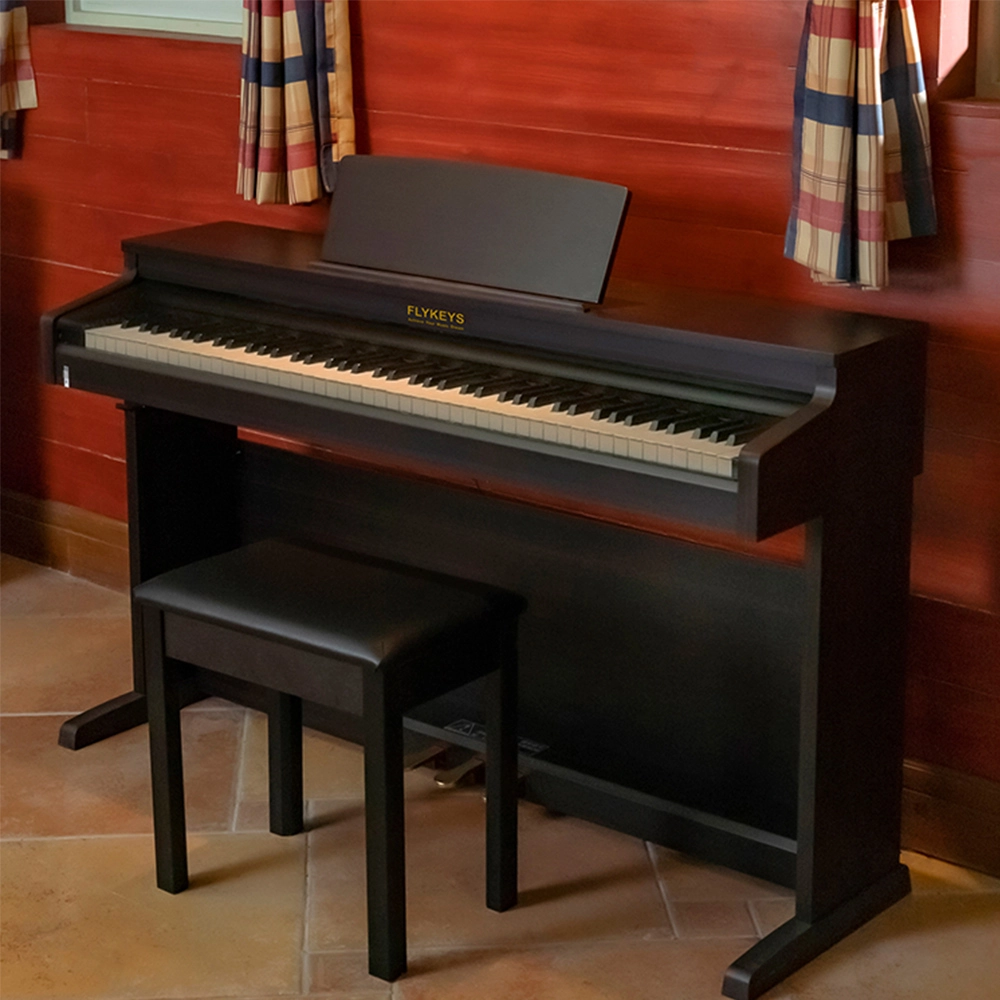
Sound Source: Independently developed DSP chip, famous German grand piano sound samples, 8-layer 256 MB dynamic wavetable, and string resonance and overtone simulation technology.
Keyboard: Independently developed 88-key weighted hammer-action keyboard with dynamic velocity curves.
Exterior: Small door design, wooden cabinet structure, sliding key cover, aluminum alloy handle, foldable large music stand, and side control panel with single-row round buttons.
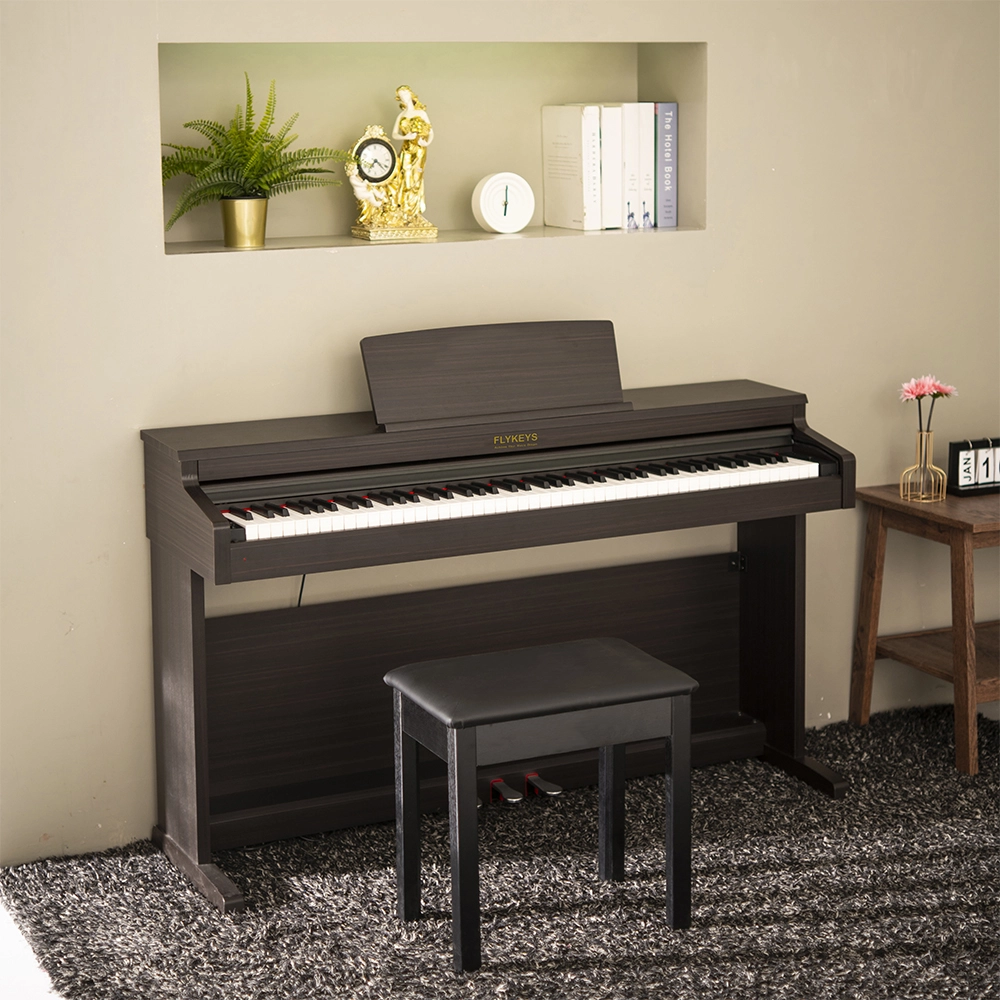
— Standard Upright Digital Piano
— Independent patented technology 88-key Grand-Response hammer-action & dynamic curve keyboard
— European top DSP chip, famous grand piano sound sample
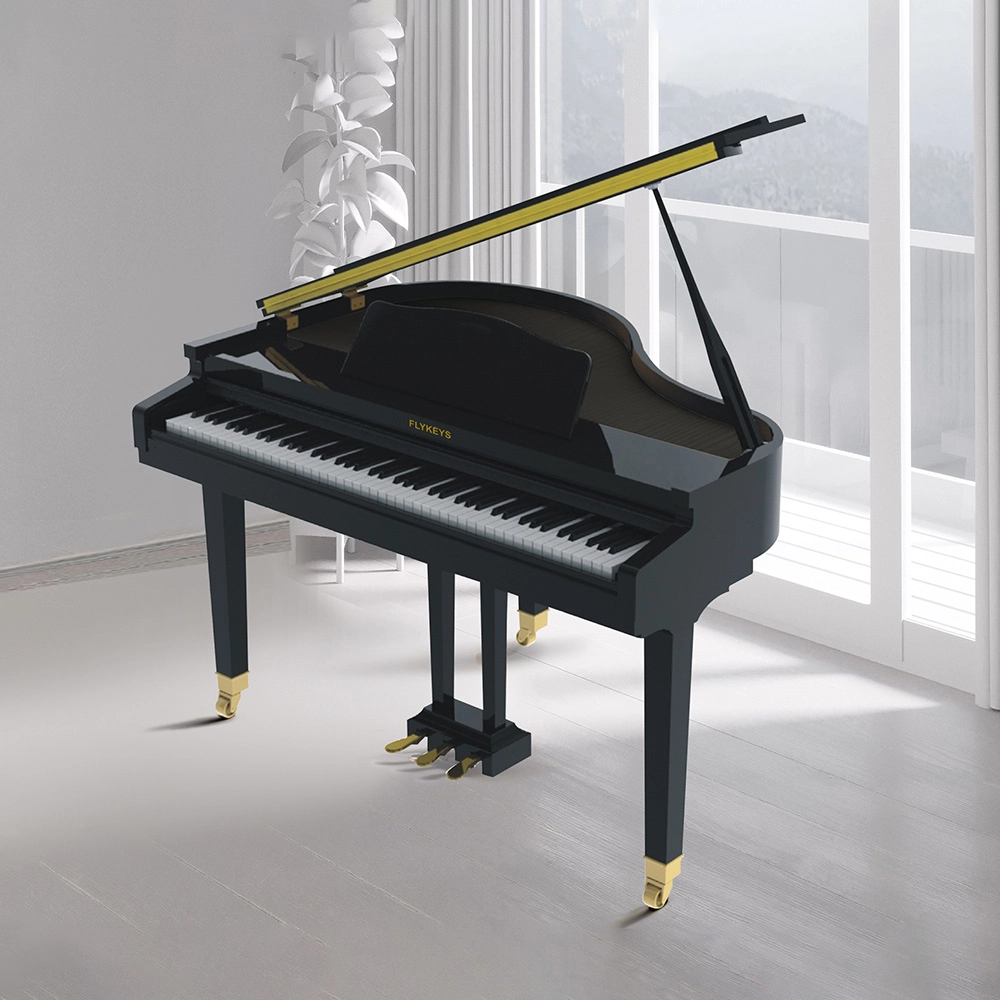
• Baby Grand Style with High-Gloss Polished Cabinet
• Italian Fatar 88-key Grand-Response™ Keyboard with Hammer Action and Touch Curve
• Independently Developed DSP Chip with German Grand Piano Sound Sampling
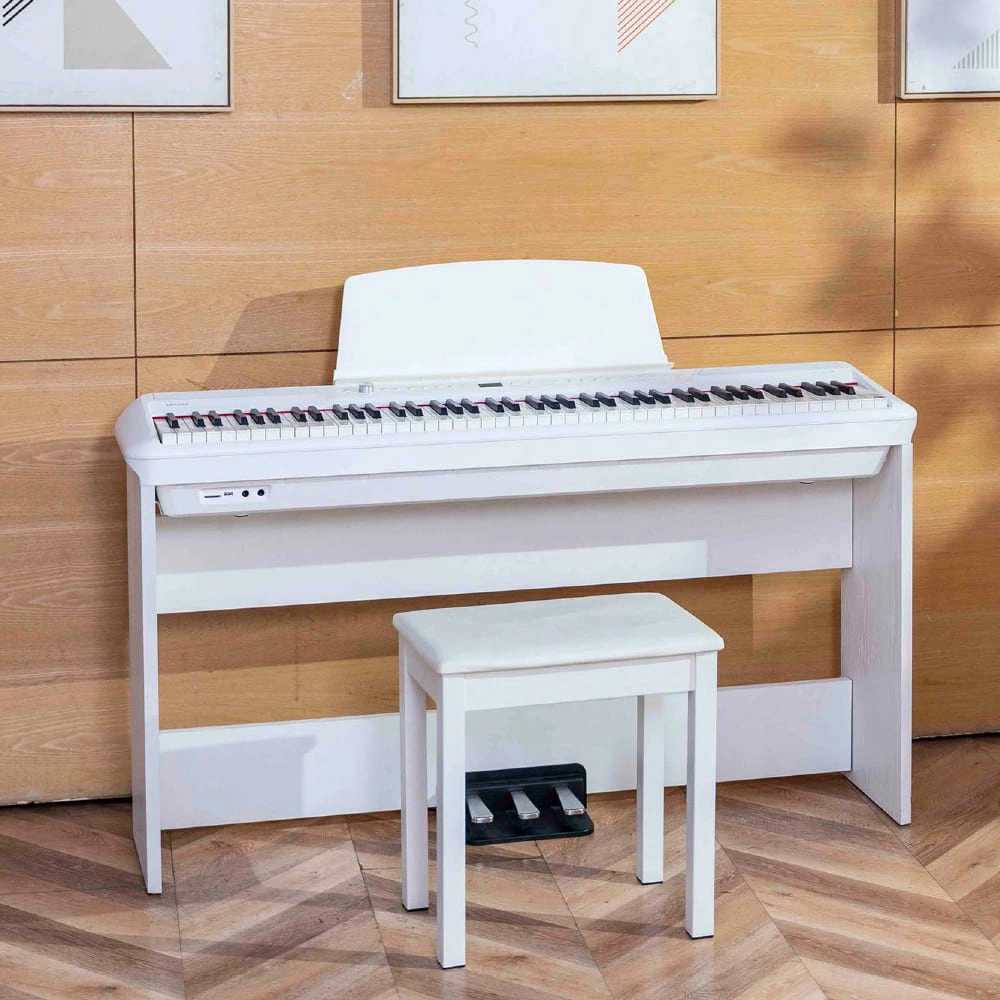
—keyboard: Independent patented technology 88-key, Grand-Response hammer dynamic curve keyboard
—Sound source: Independently developed the 4th generation DSP sound source, German famous grand piano sound sample
— Modern, lightweight case, X stand, U stand, Wood stand, 3 pedals
— Control: double sound, record, split, transpose, reverb, chorus, metronome, MIDI, bluetooth
Address: No. 38 Xiangshan Avenue, Zengcheng Economic And Technological Development Zone, Guangzhou, China.
FOLLOW US:
Copyright© 2026 FLYKEYS All Rights Reserved. 粤 ICP备2020102774号. Designed by Gooeyun. Sitemap | Privacy | Terms
FLYKEYS
FLYKEYS
flykeys-music
Flykeys Music