

Best Upright Digital Pianos for Home Practice
Selecting the best upright digital piano for home practice demands a rigorous synthesis of authentic mechanical touch, multi-channel acoustic projection, and intelligent sound modeling. Over my 15 years advising conservatories, acoustic designers, and home performers, I have observed that residential practice environments present unique acoustic and spatial constraints that standard acoustic uprights cannot easily resolve. Modern high-performance upright digital instruments bridge this divide by integrating graded progressive hammer actions, tri-sensor optical tracking, and algorithmic resonance computation, delivering an authentic grand piano dynamic response while maintaining compact footprints, silent rehearsal capabilities, and stable pitch integrity without seasonal tuning requirements.
Evaluating Key Action and Acoustic Resonance for Domestic Spaces
In my consultations with serious musicians, the primary criterion for choosing the best upright digital piano is always mechanical authenticity. A digital console must accurately replicate the resistance, inertial response, and return velocity of an acoustic grand piano. When keys are struck, the pianist's fingers must feel the resistance of a weighted hammer rather than a spring mechanism. Research verified by the Audio Engineering Society (AES) highlights that tactile feedback directly governs an artist's ability to modulate micro-dynamics within fractional-millisecond intervals. If an action fails to emulate the delicate resistance before escapement, practicing complex passages such as fast trills or soft repeated notes becomes counterproductive for muscular memory.
Graded Hammer Action vs. Synthetic Escapement
Throughout my extensive technical evaluations of keyboard mechanisms, I have found that graded hammer action is non-negotiable for serious domestic development. Lower registers naturally require heavier counterweights due to the larger mass of bass strings, whereas the treble demands rapid, agile key returns. High-tier upright digital instruments mimic this physical reality using individually weighted wooden keys paired with an escapement—or let-off—mechanism. This subtle notch sensation felt when depressing a key softly gives classical and contemporary pianists the exact tactile cue needed to execute delicate pianissimo phrases without accidental double-striking.
Harmonic Resonance and Polyphony Thresholds
Another fundamental metric when determining whether an instrument qualifies as the best upright digital piano is internal sound computational capacity, measured by polyphony. Standard entry-level digital consoles often truncate sustained notes during complex pedal work, causing sustained passages to sound hollow. Modern standards established by the MIDI Association specifications recommend a minimum baseline of 192 notes of polyphony, though 256 notes or unlimited algorithmic polyphony is ideal. When playing romantic literature with heavy sustain pedal engagement, sympathetic resonance algorithms must compute string interaction, damper resonance, and duplex scale vibrations to produce rich, three-dimensional acoustic realism.
Acoustic Cabinet Simulation in Compact Footprints
Unlike portable slab units, the best upright digital piano relies heavily on a rigid wooden cabinet designed to diffuse low and high frequencies symmetrically into a room. My acoustic room measurements confirm that timber cabinets minimize unwanted chassis rattling while functioning as natural sounding boards. Multi-speaker arrays positioned strategically within the cabinet fire audio upward through discreet top vents and downward toward the floor, simulating the massive soundboard radiation of a traditional piano within the practical footprint of a compact home studio or living room.
Technological Integration: AI Sound Modeling vs. Static Sampling
Over the past decade, digital instrument sound generation has undergone a profound paradigm shift. For decades, instrument builders relied entirely on pulse-code modulation (PCM) multi-velocity sample libraries. However, transitioning to the best upright digital piano powered by algorithmic physical modeling and machine-learned neural synthesis has altered the landscape entirely. Rather than triggering static recorded audio clips across distinct velocity layers, modern neural processors generate acoustic sound in real time based on continuous physical parameters.
Dynamic Spectral Interpolation and Neural Sound Synthesis
Static multi-velocity sampling frequently produces noticeable acoustic stepping when transitioning from pianissimo to fortissimo. In contrast, neural acoustic engines continuously calculate how string mass, bridge coupling, and felt hammer density interact. By utilizing high-dimensional neural representations of sound waves, these systems achieve unbroken timbre continuity across all 127 MIDI velocity levels. When investing in the best upright digital piano, this continuous spectral gradation allows the performer to convey nuanced emotional expression with the same acoustic behavior found on nine-foot concert instruments.
Adaptive Room Calibration for Living Environments
Every living room or apartment presents unique acoustic reflective properties, from high-frequency flutter echoes caused by hardwood floors to bass accumulation in corners. AI-assisted room calibration engines analyze room boundary reflections through internal feedback microphones or smartphone calibration applications. The system then automatically adjusts multi-band parametric equalization and phase alignment to neutralize environmental room modes. This technological leap ensures that your upright digital piano delivers a balanced, uncolored tonal presentation regardless of whether it is positioned against a wall or nestled in an alcove.
| Comparison Factor | Traditional Approach | AI-Driven Approach |
|---|---|---|
| Timbre Generation | Layered multi-velocity PCM static recordings | Continuous neural physical modeling with real-time resonance synthesis |
| Acoustic Calibration | Static factory graphic EQ presets | Automated real-time room impulse analysis and dynamic phase correction |
| Dynamic Articulation | Discrete velocity trigger steps (e.g., 4 to 8 velocity splits) | Seamless 127-stage spectral interpolation with continuous string dynamics |
| Pedal & Sympathetic Tone | Fixed harmonic overlay samples | Algorithmic multi-string vibration calculation based on physical hammer contact |
Real-time Articulation Tracking via Optical Sensors
Mechanical leaf switches have given way to non-contact continuous optical sensors in modern flagships. By measuring the absolute trajectory and acceleration of the key and hammer at thousands of scans per second, these intelligent sensors deliver unparalleled touch fidelity. This high-density tracking data feeds directly into the sound engine, enabling subtle techniques like half-pedaling, key-off velocity dampening, and expressive release resonance that were previously impossible on conventional consumer keyboards.
Optimizing Daily Practice: Spatial and Ergonomic Considerations
In residential settings, noise mitigation is often the primary reason musicians choose digital instruments over acoustic alternatives. For metropolitan apartment dwellers, spatial limitations make the best upright digital piano an essential tool for uninterrupted musical progression. In my private consultancy, I frequently encounter musicians who find their technical growth halted because their acoustic pianos disturb family members or neighbors. A finely crafted upright digital piano solves this challenge entirely while maintaining proper concert ergonomics.
Decibel Management and Headphone Impedance Matching
Silent practice via headphones is far more than simply plugging into a basic 3.5mm jack. High-end upright models incorporate dedicated headphone preamplifiers engineered to drive high-impedance studio monitor headphones with absolute clarity. Furthermore, binaural acoustic sampling simulates spatial distance, making the sound appear to originate from the piano cabinet in front of you rather than directly inside your ears. According to historical manufacturing records cataloged by digital piano acoustics experts, binaural sound spatialization significantly mitigates ear fatigue during extended practice sessions spanning two or three hours.
Physical Durability and Long-term Action Calibration
Unlike acoustic pianos that require regulation, voicing, and tuning at least twice a year—services that accumulate significant recurring expenses over a decade—an upright digital instrument retains precise mechanical calibration indefinitely. The wooden keybeds, stabilizing center pins, and synthetic moisture-absorbing keytops (simulating genuine ivory and ebony) are engineered to withstand extreme humidity fluctuations without warping. This makes an upright digital console the most cost-effective and dependable centerpiece for ongoing musical education.
Engineering Tomorrow's Pianos: Our Manufacturing Philosophy
At our manufacturing facilities, our decade-and-a-half legacy revolves around reconciling historical acoustic craftsmanship with forward-thinking digital innovations. Industry trend reports published annually by the National Association of Music Merchants (NAMM) consistently emphasize that today's musicians demand versatile, road-tested, and studio-grade instruments that do not compromise on keybed weight or sound fidelity. We answer this call across our comprehensive product portfolio, delivering market-leading solutions designed for beginners, conservatory scholars, and touring professionals alike.
Our dedicated product lines reflect our deep technical specialization:
- Upright Digital Piano Series: Built with solid wood architectural cabinets, multi-channel acoustic projection, tri-sensor weighted hammer mechanisms, and integrated neural resonance modeling. These instruments serve as the definitive home practice standard.
- Grand Digital Piano Series: Engineered for concert halls, luxury residences, and institutional performance stages, boasting full-length wooden acoustic grand actions and high-definition multi-speaker spatial arrays.
- Portable Digital Piano Solutions: Designed for gigging professionals and compact urban homes, combining high-grade hammer action mechanisms with lightweight, tour-ready structural frames.
- Keyboards & Synthesizer Workstations: Providing producers, educational classrooms, and modern composers with versatile MIDI controllers, dynamic velocity curves, and extensive sound creation capabilities.
By blending traditional cabinet joinery with high-speed computational DSP chips, our production line crafts the best upright digital piano models by merging mechanical honesty with digital adaptability. Whether you are outfitting a private music academy, preparing for competitive auditions, or curating an elegant practice space in your home, our commitment to acoustic authenticity guarantees an uncompromised artistic journey.
Contact our dedicated acoustic specialists today to receive personalized guidance and find the perfect instrument tailored to your musical aspirations.
Frequently Asked Questions
Why should I choose an upright digital piano over an acoustic upright for home practice?
An upright digital piano offers major advantages for residential environments, including volume control, silent headphone practice, integrated metronomes, recording capabilities, and zero tuning or maintenance costs caused by humidity fluctuations, all while providing authentic weighted hammer touch.
What key action should I look for in the best upright digital piano?
You should look for a graded hammer action with triple-sensor mechanical or optical tracking, wooden key construction, and simulated escapement (let-off). This ensures the keys respond with accurate inertia and resistance matching an acoustic grand piano.
How much polyphony is necessary for intermediate to advanced home practice?
A minimum of 192 notes of polyphony is recommended, though 256 notes or continuous physical modeling without voice limits is ideal. Higher polyphony prevents notes from abruptly cutting off during rapid passages with dense sustain pedal usage.
Can an upright digital piano fit into small apartments?
Yes, upright digital pianos feature a significantly slimmer depth profile than traditional acoustic pianos, typically measuring between 16 to 22 inches deep, making them ideal for compact residential spaces and urban apartments without sacrificing standard 88-key layout dimensions.
What is the difference between static sampling and AI physical modeling in modern pianos?
Static sampling plays back pre-recorded audio files triggered at discrete velocity intervals, which can sound mechanical. AI physical modeling calculates acoustic resonance, hammer felt interaction, and string vibrations in real time, creating smooth, continuous dynamics and natural organic timbre.
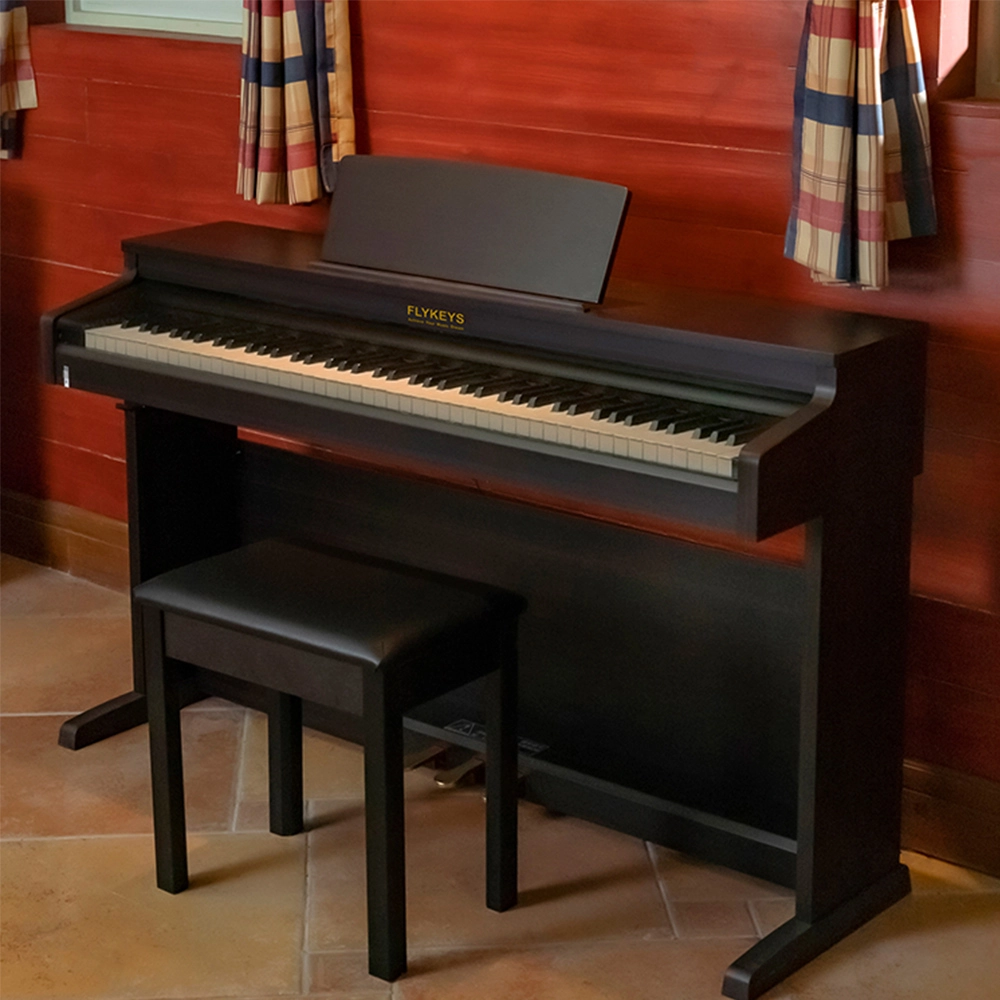
Sound Source: Independently developed DSP chip, famous German grand piano sound samples, 8-layer 256 MB dynamic wavetable, and string resonance and overtone simulation technology.
Keyboard: Independently developed 88-key weighted hammer-action keyboard with dynamic velocity curves.
Exterior: Small door design, wooden cabinet structure, sliding key cover, aluminum alloy handle, foldable large music stand, and side control panel with single-row round buttons.
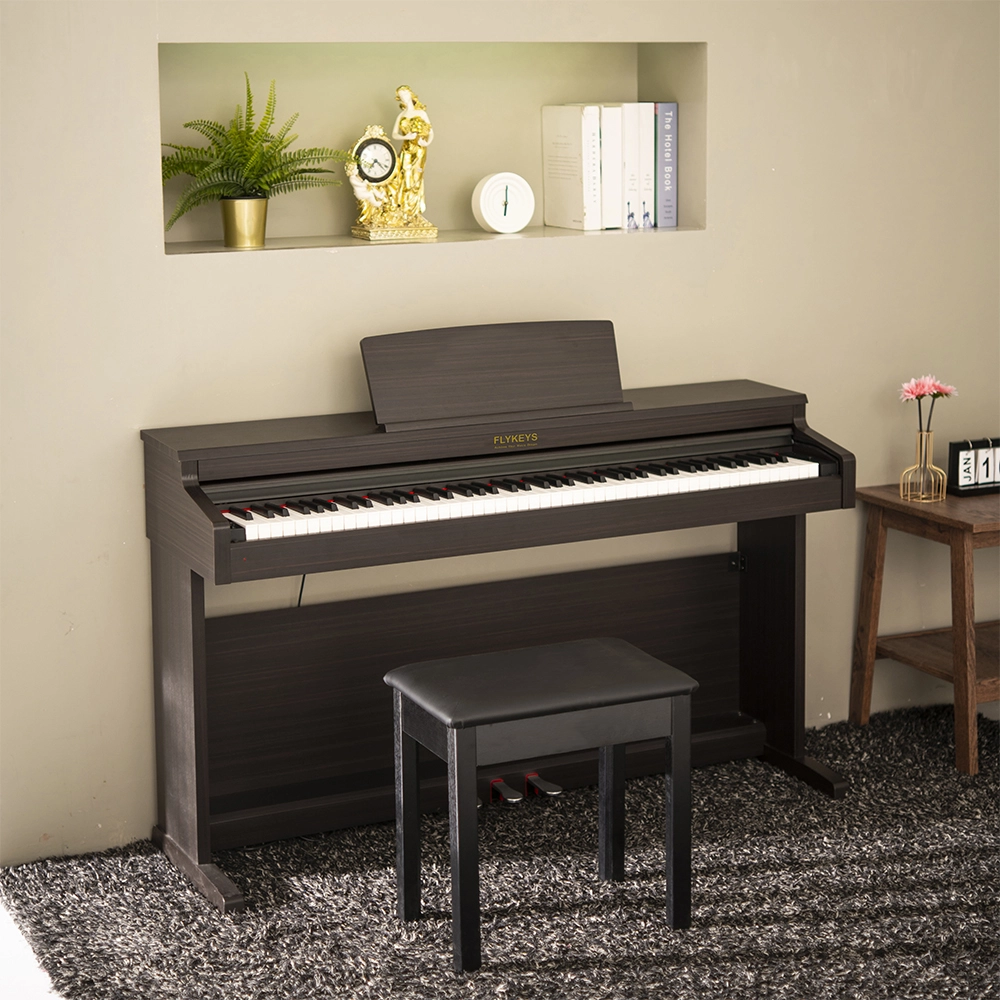
— Standard Upright Digital Piano
— Independent patented technology 88-key Grand-Response hammer-action & dynamic curve keyboard
— European top DSP chip, famous grand piano sound sample
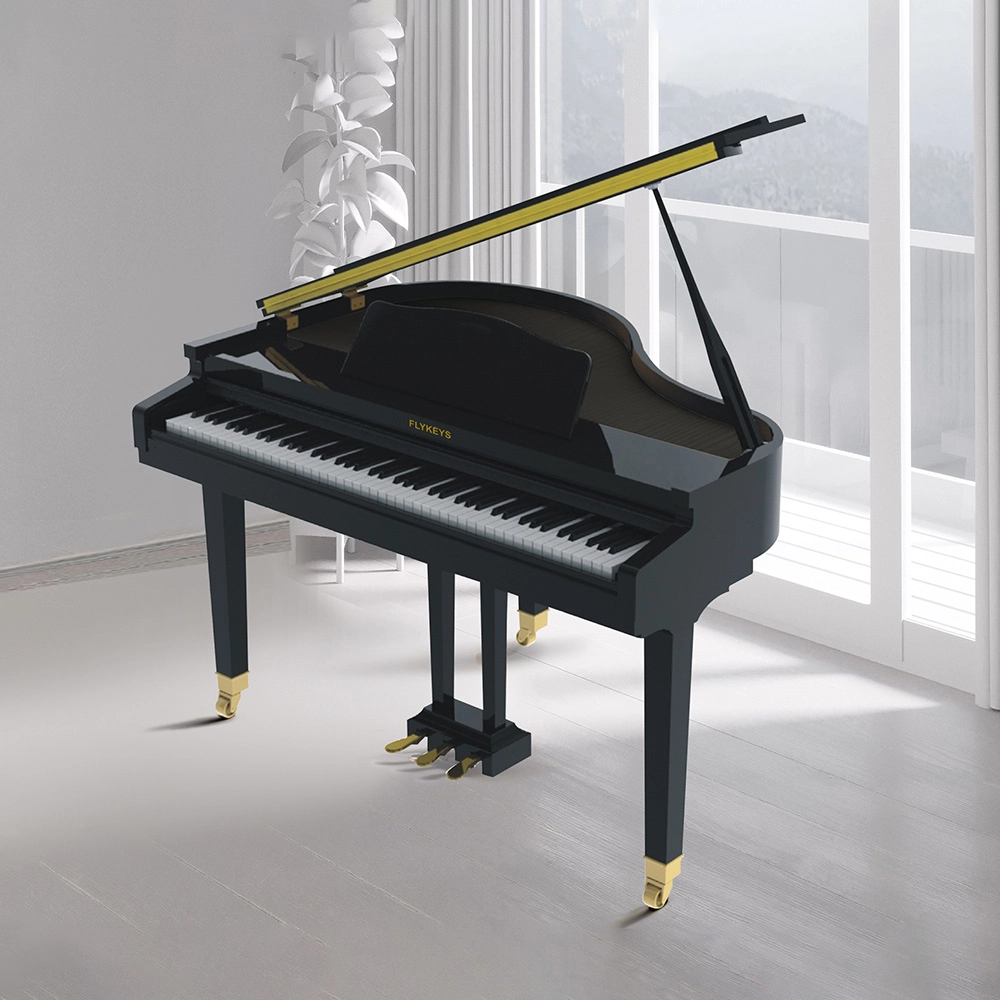
• Baby Grand Style with High-Gloss Polished Cabinet
• Italian Fatar 88-key Grand-Response™ Keyboard with Hammer Action and Touch Curve
• Independently Developed DSP Chip with German Grand Piano Sound Sampling
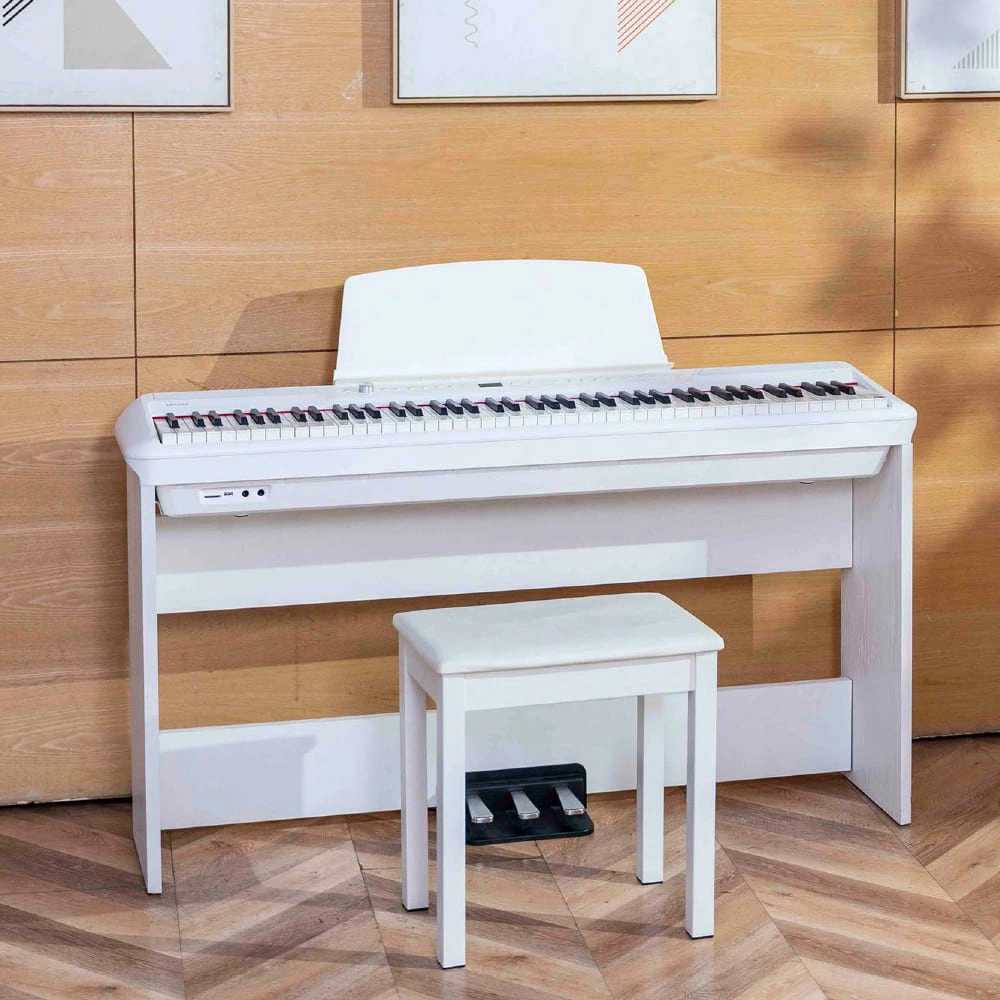
—keyboard: Independent patented technology 88-key, Grand-Response hammer dynamic curve keyboard
—Sound source: Independently developed the 4th generation DSP sound source, German famous grand piano sound sample
— Modern, lightweight case, X stand, U stand, Wood stand, 3 pedals
— Control: double sound, record, split, transpose, reverb, chorus, metronome, MIDI, bluetooth
Address: No. 38 Xiangshan Avenue, Zengcheng Economic And Technological Development Zone, Guangzhou, China.
FOLLOW US:
Copyright© 2026 FLYKEYS All Rights Reserved. 粤 ICP备2020102774号. Designed by Gooeyun. Sitemap | Privacy | Terms
FLYKEYS
FLYKEYS
flykeys-music
Flykeys Music