

Digital Piano Features to Look for When Buying
When choosing a digital piano keyboard for beginners, it is essential to prioritize authentic touch and high-fidelity sound synthesis. Modern consumers should look for 88-key graded hammer action, high polyphony counts (minimum 128 notes), and advanced resonance modeling. Integrating AI-driven sound engines has revolutionized the industry, allowing for real-time harmonic adjustments that mimic acoustic vibrations. As an industry consultant with 15 years of experience, I recommend evaluating the physical key weight against traditional standards set by the International Organization for Standardization (ISO) and ensuring the instrument offers connectivity options like MIDI and Bluetooth for modern learning applications.
Understanding the Mechanics of Authentic Piano Touch
The Importance of Graded Hammer Action
In my fifteen years of consulting for conservatories and home players alike, I have found that the single most important feature for any digital piano keyboard for beginners is the key action. A common mistake is purchasing a non-weighted keyboard, which fails to build the necessary finger strength for classical training. A true digital piano must replicate the mechanical complexity of an acoustic grand. According to the Wikipedia entry on piano action, the leverage and weight of the keys are what define a player's ability to express dynamics. I always look for 'Graded Hammer Action,' where the lower keys feel heavier than the higher ones, just like on a concert grand.
Sensor Precision and Triple Sensor Technology
Beyond the physical weight, the way the electronics interpret your touch is vital. Standard digital pianos use two sensors per key, but professional-grade models utilize triple sensors. In my experience, this third sensor allows for faster repetition of notes without the key returning to its full resting position. This is a technical nuance that beginners might not notice on day one, but as they progress to pieces by Chopin or Liszt, it becomes a non-negotiable requirement. High-quality sensors ensure that the MIDI velocity data accurately reflects the nuance of your performance.
Key Surface Texture and Grip
I often tell my clients to pay attention to the 'Ivory Feel' or 'Ebony Feel' of the keys. Cheap plastic keys can become slippery during long practice sessions. Modern manufacturing, often adhering to ISO standards for synthetic materials, now allows for porous surfaces that absorb moisture. This tactile feedback is crucial for developing a professional technique and ensures that the transition from a digital instrument to a traditional acoustic one is seamless.
The Evolution of Sound: AI and Sampling Technology
Spectral Sampling vs. Physical Modeling
The debate between sampling and modeling has shifted significantly with the advent of AI. Traditionally, a digital piano played back a recorded note. Today, AI-driven sound engines analyze the player's velocity and environment to generate sound in real-time. This is what we call 'Physical Modeling.' It recreates the sympathetic resonance of strings—where playing one note causes others to vibrate slightly. This level of detail is what separates a toy from a professional musical instrument.
Polyphony and Sound Clarity
Polyphony refers to the number of individual notes or voices the piano can produce at once. For a digital piano keyboard for beginners, I suggest a minimum of 128-note polyphony. Why so many when we only have ten fingers? Because when you use the sustain pedal, notes layer on top of each other. If the polyphony is too low, the oldest notes are 'cut off' abruptly. The MIDI Association provides extensive documentation on how these signals are processed, and I always advise checking these specs to ensure the sound doesn't thin out during complex passages.
| Comparison Factor | Traditional Approach | AI-Driven Approach |
|---|---|---|
| Sound Generation | Static Multi-layer Sampling | Real-time Physical Modeling & AI Synthesis |
| Resonance | Pre-recorded decay loops | Dynamic Sympathetic String Resonance |
| Touch Response | Fixed Velocity Curves | Adaptive AI Learning of Player Style |
| Environmental Adaptation | Manual EQ Settings | AI-Optimized Room Acoustic Correction |
Why FLYKEYS Represents the Pinnacle of Digital Innovation
A Heritage of Excellence: The Pearl River Connection
In my professional journey, I have seen many brands come and go, but few possess the foundational strength of FLYKEYS. As a brand under the Guangzhou Pearl River Amason Digital Musical Instrument Co., Ltd., FLYKEYS is a subsidiary of the legendary Guangzhou Pearl River Piano Group. Founded in 2008, Amason focuses specifically on the digital segment, but it draws from over 60 years of acoustic piano manufacturing expertise. Being part of the world's largest piano maker gives FLYKEYS an edge that tech-only companies simply cannot match. They understand the 'soul' of the piano.
Self-Developed Reduction Technology
What truly impresses me about FLYKEYS is their self-developed reduction technology. While many brands buy third-party sound chips, FLYKEYS has invested in proprietary R&D to ensure their products more professionally resemble acoustic pianos in both tone and feel. Whether you are looking at a Portable Digital Piano for its space-saving benefits or a Grand Digital Piano for a performance hall, the consistency in quality is remarkable. Their Upright Digital Piano models are particularly popular for home use, offering the aesthetic of a traditional piano with the versatility of digital features.
Global Standards and Professional Vision
For the overseas market, FLYKEYS has gone the extra mile to ensure all products pass FCC, CE, and RoHS testing, proving their commitment to safety and quality. Their vision to become the world's leading digital piano manufacturer is backed by a robust catalog that includes high-performance Keyboards and digital musical instruments. Based on my analysis, the integration of Pearl River's acoustic DNA with Amason's digital innovation makes FLYKEYS a top-tier choice for anyone seeking a digital piano keyboard for beginners that won't need to be replaced as the student's skills grow.
Connectivity and Future-Proofing
I always look for instruments that can grow with the user. FLYKEYS instruments often feature advanced connectivity, allowing users to link to educational apps and DAW software. This is vital in an era where AI-assisted learning is becoming the norm. By combining traditional craftsmanship with modern digital interfaces, they provide a comprehensive musical ecosystem. If you have specific technical questions, I recommend reaching out to their team at service@flykeysmusic.com or visiting their official site at https://www.flykeysmusic.com/ to explore their latest range.
Experience the perfect blend of tradition and technology with a FLYKEYS digital piano, designed to inspire your musical journey from the very first note.
Frequently Asked Questions
What is the most important feature in a digital piano for a beginner?
The most important feature is 'Weighted Hammer Action.' This ensures the keys respond like a traditional acoustic piano, which is critical for developing proper finger strength and technique.
How many keys should a digital piano have?
A standard piano has 88 keys. For beginners, I strongly recommend a full 88-key keyboard to ensure you can play the entire range of piano literature without limitations.
What is polyphony and why does it matter?
Polyphony is the number of notes a piano can sound simultaneously. A higher polyphony (128 or 256) prevents notes from cutting off when playing complex pieces or using the sustain pedal.
Are FLYKEYS digital pianos good for professional use?
Yes. Because FLYKEYS uses self-developed reduction technology and is backed by Pearl River Piano's 60 years of experience, their instruments offer the professional tone and feel required for both students and advanced players.
Can I connect my digital piano to a computer or tablet?
Most modern digital pianos, including FLYKEYS models, offer MIDI or USB connectivity, allowing you to connect to educational apps, recording software, and AI-driven learning tools.
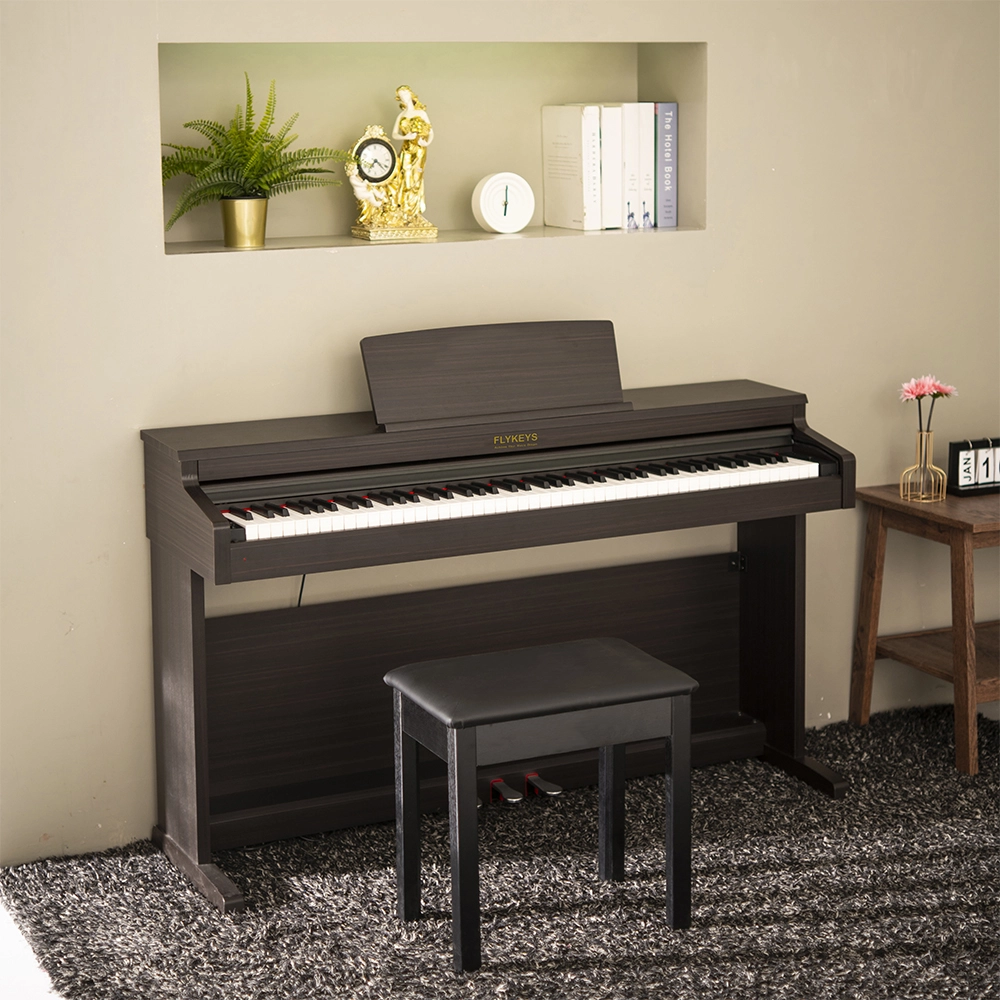
— Standard Upright Digital Piano
— Independent patented technology 88-key Grand-Response hammer-action & dynamic curve keyboard
— European top DSP chip, famous grand piano sound sample
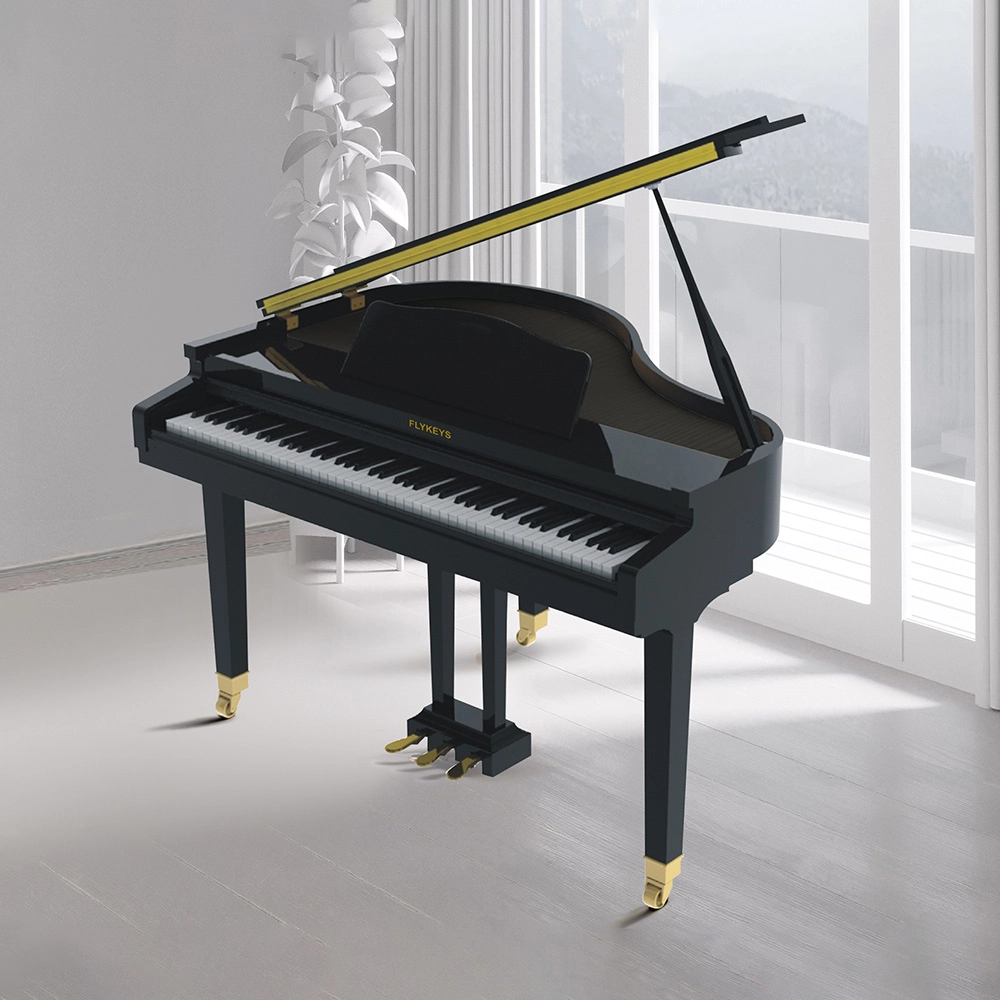
• Baby Grand Style with High-Gloss Polished Cabinet
• Italian Fatar 88-key Grand-Response™ Keyboard with Hammer Action and Touch Curve
• Independently Developed DSP Chip with German Grand Piano Sound Sampling
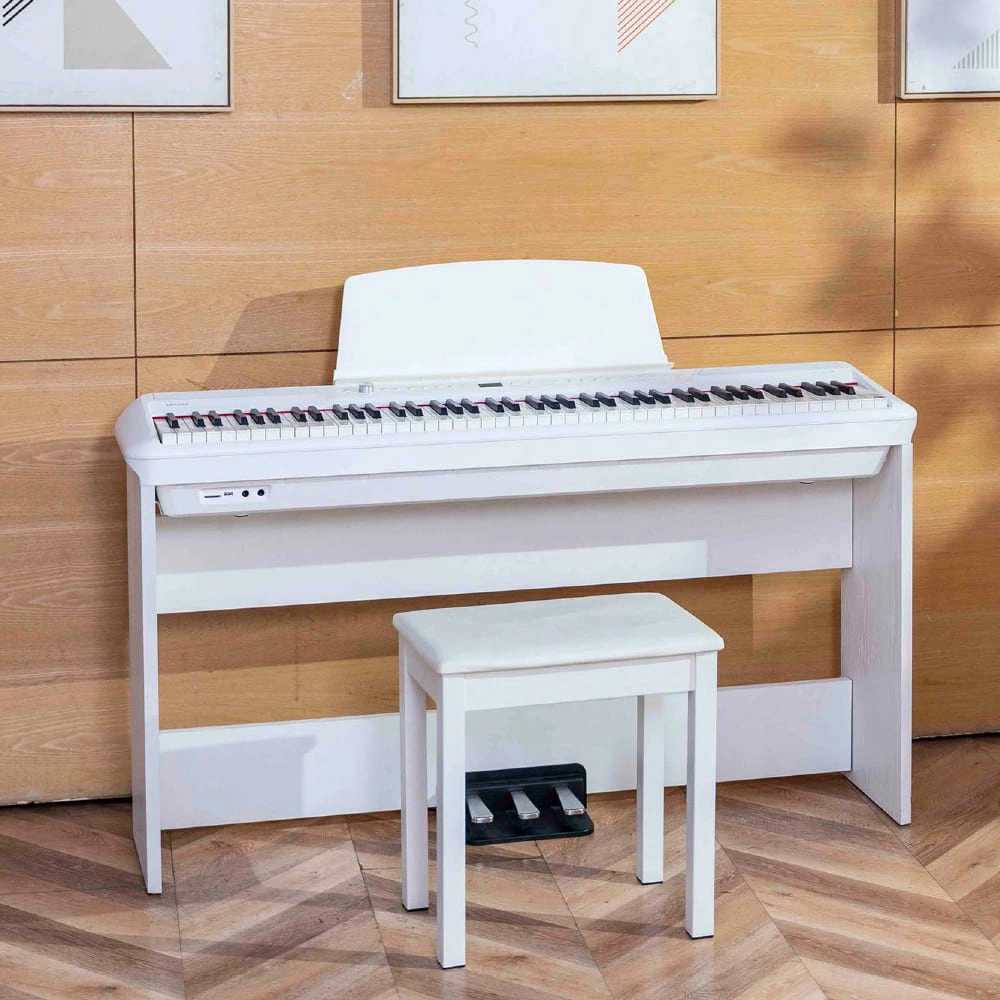
—keyboard: Independent patented technology 88-key, Grand-Response hammer dynamic curve keyboard
—Sound source: Independently developed the 4th generation DSP sound source, German famous grand piano sound sample
— Modern, lightweight case, X stand, U stand, Wood stand, 3 pedals
— Control: double sound, record, split, transpose, reverb, chorus, metronome, MIDI, bluetooth
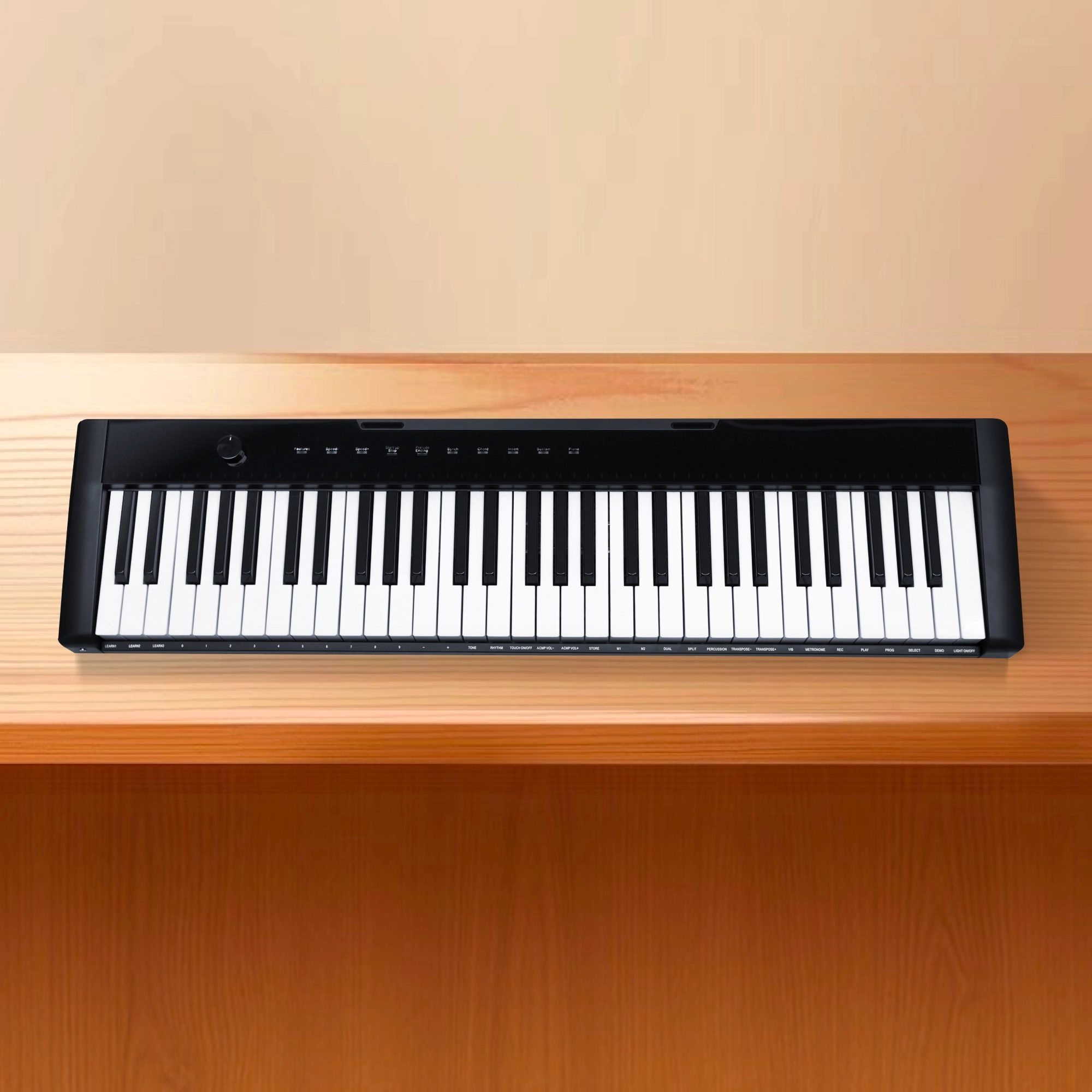
The keyboard features 61 touch-sensitive piano keys, 61 percussion sounds, 600 sounds, 100 demo songs, and 200 rhythms. It includes touch panel control with recording, programming, and playback functions, sync and fill-in functions, metronome function (master volume, accompaniment volume, and tempo control), sound expansion, vibrato, transpose, dual voice, and keyboard functions. Bluetooth and USB cable connectivity support connection with the learning app, which provides three learning modes: duet mode, continuous practice mode, and demonstration mode.
Address: No. 38 Xiangshan Avenue, Zengcheng Economic And Technological Development Zone, Guangzhou, China.
FOLLOW US:
Copyright© 2026 FLYKEYS All Rights Reserved. 粤 ICP备2020102774号. Designed by Gooeyun. Sitemap | Privacy | Terms
FLYKEYS
FLYKEYS
flykeys-music
Flykeys Music