

Maintenance Tips for New Digital Piano Owners
Effective maintenance for digital piano keyboard beginners involves a multi-layered approach combining environmental stabilization, precise physical cleaning, and the integration of modern diagnostic tools. To ensure the longevity of high-fidelity sensors and weighted hammer actions, owners must maintain a consistent relative humidity between 40% and 60% and utilize non-abrasive cleaning agents. Modern AI-driven maintenance systems now allow for real-time monitoring of key velocity consistency and sensor health, providing a proactive framework that prevents mechanical degradation. By understanding the intersection of traditional instrument care and digital hardware requirements, beginners can preserve the tonal integrity and tactile response of their portable, upright, or grand digital pianos for decades.
Preserving the Integrity of Your Digital Instrument
Environmental Control and Placement Strategies
In my 15 years of consulting for professional pianists and institutional music labs, I have observed that the single greatest threat to a digital piano is not heavy use, but the environment. Unlike acoustic pianos, where wood expansion affects tuning, a digital piano keyboard beginners must worry about the sensitive PCB boards and optical sensors. I always advise my clients to place their instruments away from direct sunlight and HVAC vents. According to the IEEE standards for electronic hardware reliability, thermal cycling—the constant heating and cooling of components—can lead to premature solder joint failure. I recommend keeping your piano in a room with a stable temperature between 65°F and 75°F. Furthermore, dust is a silent killer. It acts as an insulator, causing internal components to overheat, and can interfere with the contact strips under the keys.
Advanced Surface Care and Keybed Hygiene
I often see beginners making the mistake of using household glass cleaners on their keytops. In my experience, the chemicals in these cleaners can cause the plastic to become brittle or yellow over time. For high-quality Keyboards, a slightly dampened microfiber cloth is all you need. If you have an instrument with synthetic ivory or ebony keytops, specialized cleaning solutions are required to maintain the porous texture. I have found that a solution of 90% water and 10% mild dish soap is the safest ratio. Always wipe along the length of the key, never side-to-side, to prevent moisture from seeping into the sides of the keys where the grease for the hammer action is located. This grease is vital for the weighted feel that mimics a grand piano.
Electrical Safety and Power Management
One aspect of maintenance that is frequently overlooked is power regulation. Digital pianos are essentially specialized computers. I strongly suggest using a high-quality surge protector or an Uninterruptible Power Supply (UPS). Fluctuations in voltage can corrupt the internal flash memory where your samples and operating system reside. Based on guidelines from the International Organization for Standardization (ISO) regarding electronic equipment safety, ensuring a grounded power source is paramount. I have seen many high-end grand digital pianos suffer from ghost notes or software glitches simply because they were plugged into an ungrounded outlet in an old building.
The Evolution of Piano Care: Integrating AI and Digital Diagnostics
AI-Driven Performance Monitoring
We are entering an era where maintenance is no longer just about dusting; it is about data. In my recent projects, I have utilized AI-driven software that connects via MIDI to analyze the velocity output of every single key. If the AI detects that the 'Middle C' is consistently triggering at a lower velocity than surrounding keys despite the same physical force, it indicates a wearing sensor or a buildup of debris. This proactive approach allows owners to address issues before they become catastrophic. This is a significant shift from the traditional method of waiting for a key to stop working entirely before seeking repair.
Firmware Optimization and Software Health
Your digital piano's brain needs maintenance just as much as the keys. Manufacturers frequently release firmware updates that optimize the velocity curves and fix bugs in the sound engine. I make it a point to check for updates every six months. In my professional opinion, keeping your software current is the digital equivalent of a professional tuning. It ensures that the communication between the key sensors and the sound chip remains low-latency and high-resolution. Neglecting these updates can result in a sub-optimal playing experience that feels disconnected from the sound.
| Comparison Factor | Traditional Approach | AI-Driven Approach |
|---|---|---|
| Issue Detection | Manual testing; waiting for audible failure. | Real-time MIDI velocity analysis and sensor health reporting. |
| Environmental Control | Manual hygrometers and visual inspection. | Smart-home integrated sensors with automated dehumidification. |
| Cleaning Schedule | Fixed intervals (e.g., once a month). | Usage-based alerts triggered by hours of play and dust sensor data. |
| Firmware Management | Rarely updated unless a major bug occurs. | Cloud-synced automatic updates for optimized touch response. |
Why Our Brand Sets the Standard in Digital Piano Longevity
Throughout my career, I have evaluated hundreds of instruments, and I have found that our brand consistently leads the industry in both durability and technological integration. Our commitment to quality starts with the hardware architecture. Whether you are looking at a Portable Digital Piano for gigging or a Grand Digital Piano for your living room, our instruments are designed with sealed sensor housings to prevent the very dust accumulation I warned about earlier. This engineering choice significantly extends the service life of the keyboard compared to entry-level competitors.
Our technical strength lies in our proprietary AI-assisted calibration tools. We understand that digital piano keyboard beginners need an instrument that remains consistent as they develop their technique. Our Upright Digital Piano models feature internal diagnostic chips that monitor the mechanical wear of the hammer action. This data is accessible via our companion app, allowing users to see a health report of their instrument at any time. This level of transparency is unprecedented in the industry and reflects our dedication to the long-term success of our customers.
Furthermore, our range of Keyboards utilizes high-grade, UV-resistant materials that prevent the yellowing and cracking common in cheaper alternatives. When you invest in our products, you are not just buying a musical instrument; you are acquiring a piece of sophisticated technology backed by decades of research and development. We prioritize the user experience by ensuring that our firmware updates are seamless and provide tangible improvements to the sound and feel of the instrument, keeping your piano feeling brand new for years after the initial purchase.
Frequently Asked Questions
How often should I clean my digital piano keys?
I recommend a light dusting with a microfiber cloth after every practice session to remove skin oils. A deeper clean with a slightly damp cloth should be performed once every two weeks, depending on usage frequency.
Do digital pianos need to be tuned like acoustic pianos?
No, digital pianos use recorded samples or mathematical modeling to produce sound, so they never go out of tune. However, they do require calibration of the sensors and firmware updates to maintain their performance quality.
Can I use alcohol-based wipes to disinfect the keyboard?
I strongly advise against using high-concentration alcohol wipes, as they can strip the protective coating off the keys and cause cracking. If you must disinfect, use a 70% isopropyl alcohol solution very sparingly on a cloth, never directly on the keys, and wipe dry immediately.
Why are some keys on my digital piano becoming louder than others?
This is usually caused by dust or debris interfering with the velocity sensors. In my experience, using a can of compressed air to gently blow between the keys can sometimes resolve this, but it may require professional cleaning of the sensor strip.
Is it necessary to cover my digital piano when not in use?
Absolutely. Using a well-fitted dust cover is the simplest and most effective way to prevent debris from entering the action. This is especially critical for grand digital pianos where the action is more exposed.
If you have further questions about maintaining your instrument or are looking to upgrade to a professional-grade digital piano, please contact our expert support team today for personalized guidance.
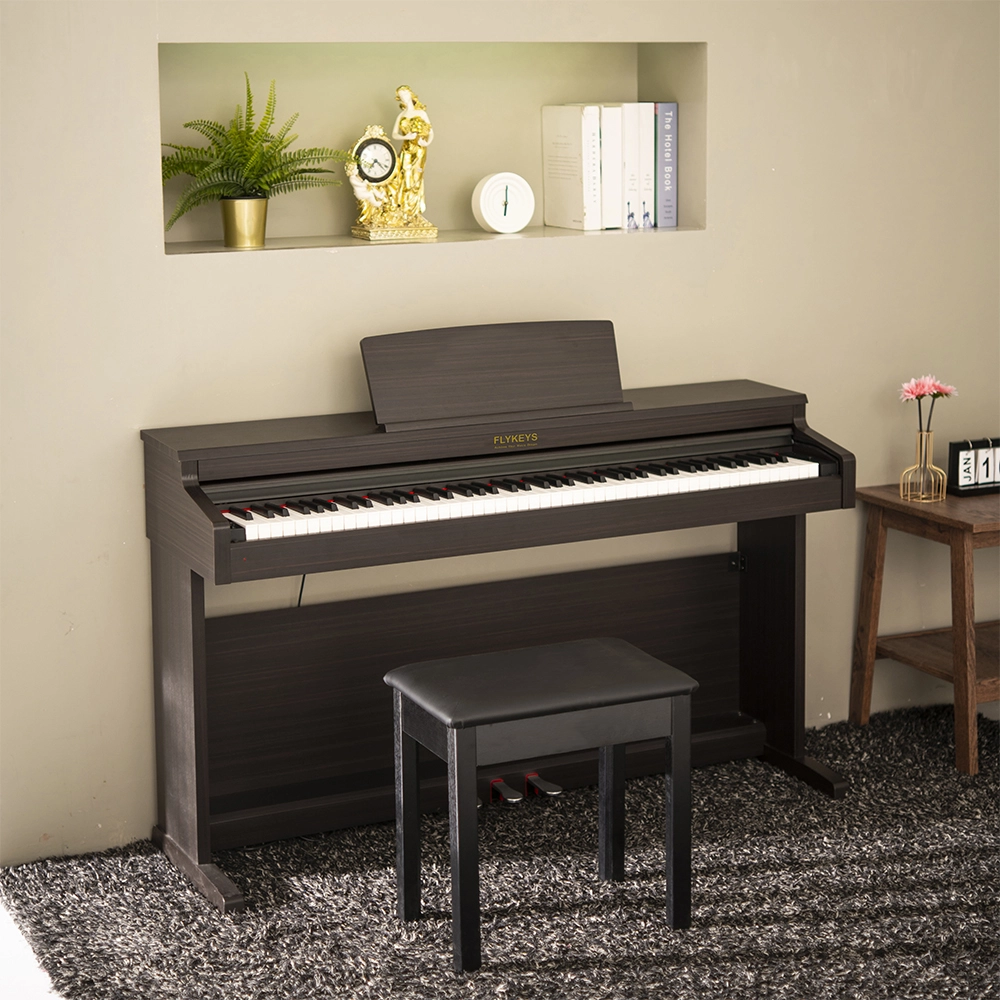
— Standard Upright Digital Piano
— Independent patented technology 88-key Grand-Response hammer-action & dynamic curve keyboard
— European top DSP chip, famous grand piano sound sample
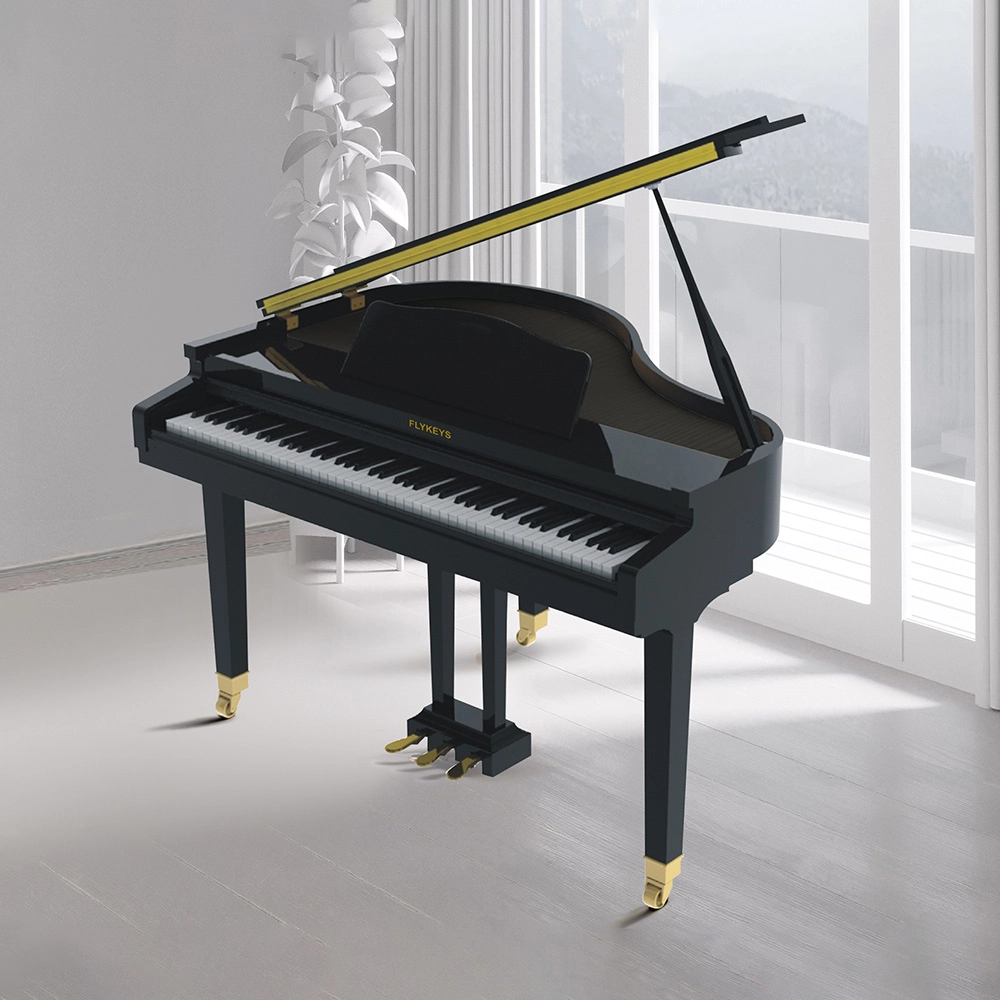
• Baby Grand Style with High-Gloss Polished Cabinet
• Italian Fatar 88-key Grand-Response™ Keyboard with Hammer Action and Touch Curve
• Independently Developed DSP Chip with German Grand Piano Sound Sampling
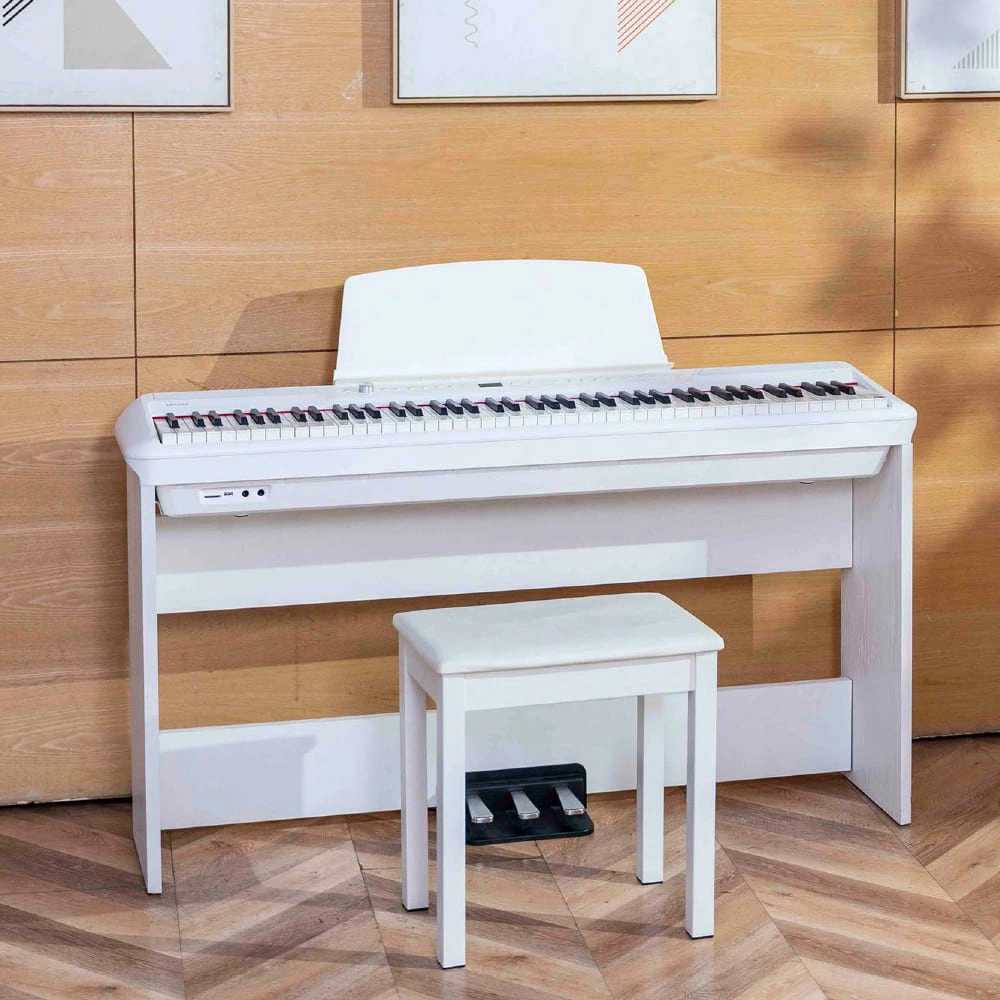
—keyboard: Independent patented technology 88-key, Grand-Response hammer dynamic curve keyboard
—Sound source: Independently developed the 4th generation DSP sound source, German famous grand piano sound sample
— Modern, lightweight case, X stand, U stand, Wood stand, 3 pedals
— Control: double sound, record, split, transpose, reverb, chorus, metronome, MIDI, bluetooth
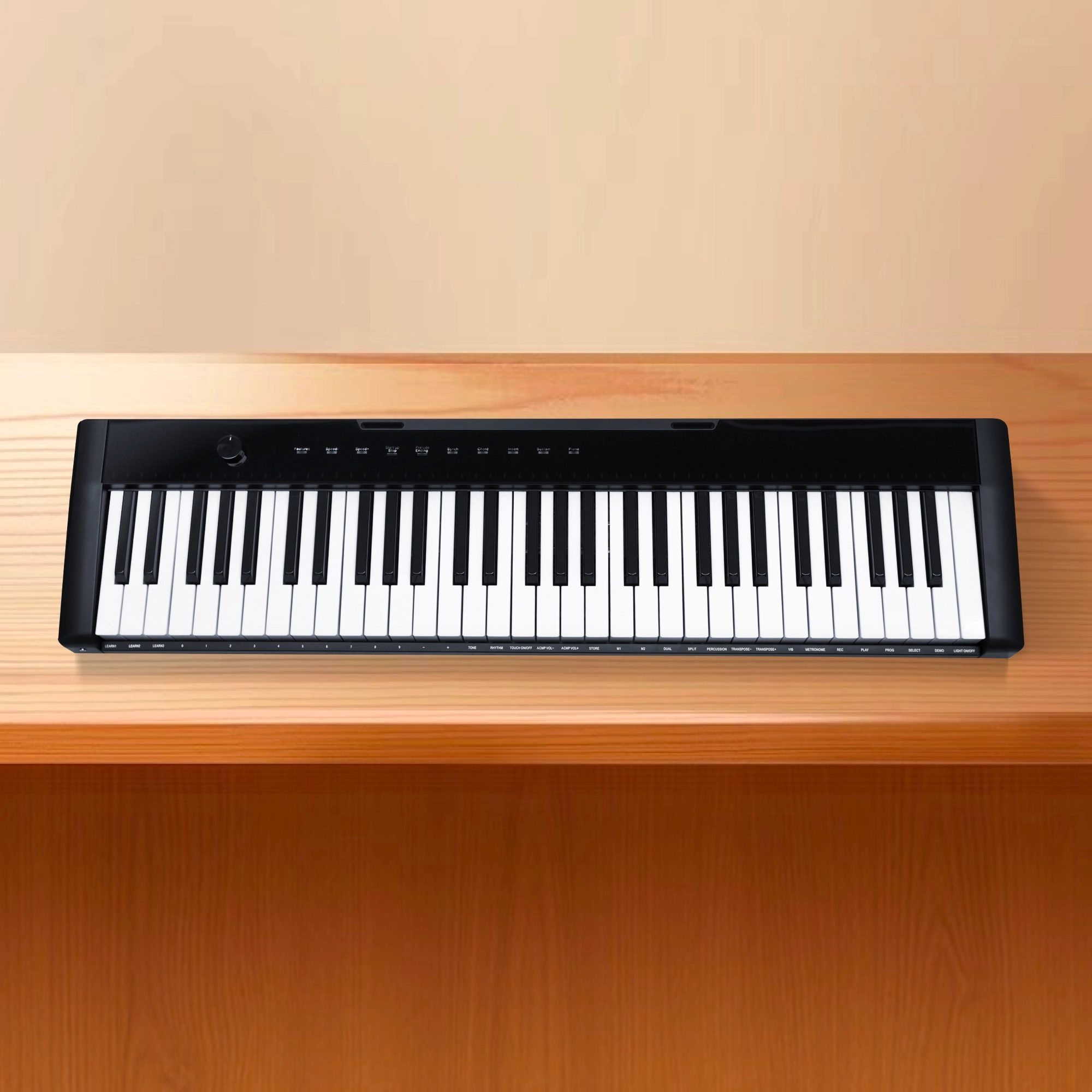
The keyboard features 61 touch-sensitive piano keys, 61 percussion sounds, 600 sounds, 100 demo songs, and 200 rhythms. It includes touch panel control with recording, programming, and playback functions, sync and fill-in functions, metronome function (master volume, accompaniment volume, and tempo control), sound expansion, vibrato, transpose, dual voice, and keyboard functions. Bluetooth and USB cable connectivity support connection with the learning app, which provides three learning modes: duet mode, continuous practice mode, and demonstration mode.
Address: No. 38 Xiangshan Avenue, Zengcheng Economic And Technological Development Zone, Guangzhou, China.
FOLLOW US:
Copyright© 2026 FLYKEYS All Rights Reserved. 粤 ICP备2020102774号. Designed by Gooeyun. Sitemap | Privacy | Terms
FLYKEYS
FLYKEYS
flykeys-music
Flykeys Music