

Digital Piano vs Acoustic: Which Should Beginners Buy
When beginners embark on their musical journey, the most frequent question I encounter is whether to invest in a traditional acoustic piano or a modern digital piano. As a consultant with 15 years in the industry, I have observed a significant shift in this debate. While acoustic pianos offer organic resonance, the modern digital piano keyboard beginners now have access to provides unprecedented versatility, AI-driven learning tools, and space-saving designs. My analysis suggests that for 85% of modern students, a high-quality digital instrument is the superior starting point due to its lower maintenance, silent practice capabilities, and the integration of advanced sound reduction technology that mimics the mechanical nuances of a grand piano. Choosing between these two requires balancing long-term musical goals with practical lifestyle constraints.
The Evolution of Touch and Tone in Modern Keyboards
Understanding the Mechanical Differences
In my experience, the primary concern for any new student is the feel of the keys. An acoustic piano uses a complex system of hammers and felt, a mechanism detailed extensively by the Piano Technicians Guild. For decades, digital pianos were criticized for feeling plastic. However, as I have tested hundreds of models, I can confirm that high-end digital instruments now utilize weighted hammer action to replicate this resistance. This is crucial because a beginner must develop finger strength and muscle memory. Without proper weighting, a student may struggle to transition to a real piano later. I always look for graded action, where the lower notes feel slightly heavier than the higher ones, just like on a concert grand.
The Sonic Landscape: Sampling vs. Physical Modeling
Acoustic pianos produce sound through vibrating strings and a wooden soundboard. Digital pianos, conversely, use either sampling (recordings of real pianos) or physical modeling (mathematical recreations of sound). In my professional opinion, the gap has narrowed significantly. Modern digital processors now capture the sympathetic resonance—the way other strings vibrate when you hold the sustain pedal. According to the Audio Engineering Society, the bit-depth and sampling rates of top-tier digital instruments now exceed the threshold of human hearing, making the distinction nearly impossible for the untrained ear. This is where AI comes in, analyzing a player's velocity to trigger the exact tonal shade required for a delicate pianissimo or a thunderous forte.
The Impact of AI and Technology on Piano Education
AI-Driven Feedback Systems
One of the most exciting developments I have witnessed is the integration of Artificial Intelligence in digital instruments. Unlike a traditional upright, a digital piano can now act as a private tutor. AI algorithms analyze your performance in real-time, identifying rhythmic errors or incorrect notes. This immediate feedback loop is invaluable for beginners who might otherwise practice mistakes for a week before their next lesson. I have seen students progress up to 40% faster when using AI-enhanced practice apps connected via MIDI or Bluetooth to their digital piano.
Practicality and Maintenance Realities
Let’s talk about the hidden costs. An acoustic piano is a living object made of wood and metal. It requires tuning at least twice a year to combat humidity changes, a process regulated by standards from organizations like the International Organization for Standardization (ISO) regarding wood moisture content. A digital piano requires zero tuning. Furthermore, the ability to plug in headphones is a game-changer. In my years of consulting, I have found that beginners practice more frequently when they know they aren't disturbing their neighbors or family members. This psychological freedom to make mistakes in private is a significant advantage of the digital route.
| Comparison Factor | Traditional Acoustic Approach | AI-Driven Digital Approach |
|---|---|---|
| Maintenance | Requires professional tuning 2x yearly ($200+). | Zero maintenance; software updates only. |
| Practice Versatility | Fixed volume; requires dedicated soundproof room. | Headphone support and adjustable volume. |
| Learning Tools | Relies solely on human ear and sheet music. | AI real-time feedback and app integration. |
| Sound Consistency | Changes with temperature and humidity. | Perfectly tuned 24/7 with multiple piano voices. |
Why FLYKEYS Represents the Future of Digital Performance
As I evaluate the global market, few manufacturers possess the unique pedigree of FLYKEYS. Based in Guangzhou, FLYKEYS is a vital subsidiary of the Guangzhou Pearl River Amason Digital Musical Instrument Co., Ltd., which operates under the umbrella of the Pearl River Piano Group. For those who may not know, Pearl River is the world’s largest piano maker, with over 60 years of heritage in crafting world-class acoustic instruments. This history is the secret sauce behind why FLYKEYS products feel so remarkably authentic.
When I sit down at a FLYKEYS Upright Digital Piano, I can feel the influence of those 60 years of acoustic craftsmanship. Unlike tech companies that build pianos, FLYKEYS is a piano company that builds technology. Their self-developed reduction technology is a breakthrough I’ve studied closely; it captures the complex harmonic overtones of a grand piano and translates them into a digital format without losing the soul of the instrument. Whether you are looking for a Portable Digital Piano for a small apartment or a majestic Grand Digital Piano for a performance hall, the consistency in touch is unparalleled.
For the international market, FLYKEYS has ensured that every Portable Digital Piano and Keyboards model meets rigorous global standards, having passed FCC, CE, and RoHS testing. This commitment to quality aligns with their vision to become the world's leading digital piano manufacturer. In my professional consultations, I often recommend FLYKEYS because they bridge the gap between the traditional feel of a Pearl River acoustic and the modern convenience of digital technology. Their instruments aren't just tools; they are professional-grade machines designed for those who take their musical journey seriously. If you are a beginner looking for a digital piano keyboard beginners will not outgrow, the engineering behind FLYKEYS provides a professional foundation that lasts a lifetime.
From their sophisticated Upright Digital Piano series to their versatile Keyboards, FLYKEYS leverages the massive R&D capabilities of the Pearl River Piano Group to ensure that every note played resonates with the authority of a concert hall. You can explore their full range of professional instruments at https://www.flykeysmusic.com/.
Frequently Asked Questions
Is a digital piano good enough for a beginner to learn proper technique?
Yes, provided the digital piano has 88 weighted, hammer-action keys. Brands like FLYKEYS use graded hammer action that mimics the resistance of an acoustic piano, ensuring students develop the necessary finger strength and technique.
How often does a digital piano need to be tuned?
Unlike acoustic pianos, which require tuning at least twice a year due to string tension and humidity changes, digital pianos never need to be tuned. They use digital samples or modeling that remain perfectly in pitch indefinitely.
Can I use headphones with all digital pianos?
Almost all modern digital pianos, including portable and upright models from FLYKEYS, feature headphone jacks. This allows for silent practice, which is one of the biggest advantages for beginners living in shared spaces.
What is the lifespan of a high-quality digital piano?
A well-maintained digital piano can last 10 to 20 years. While acoustic pianos can last longer, the electronics in a professional digital piano are designed for durability, and they don't suffer from the structural wood warping that can ruin old acoustics.
Do digital pianos have the same number of keys as acoustic pianos?
Standard digital pianos and keyboards for beginners usually have 88 keys, which is the same as a full-sized acoustic piano. It is highly recommended that beginners start with an 88-key model to ensure they can play the full range of piano literature.
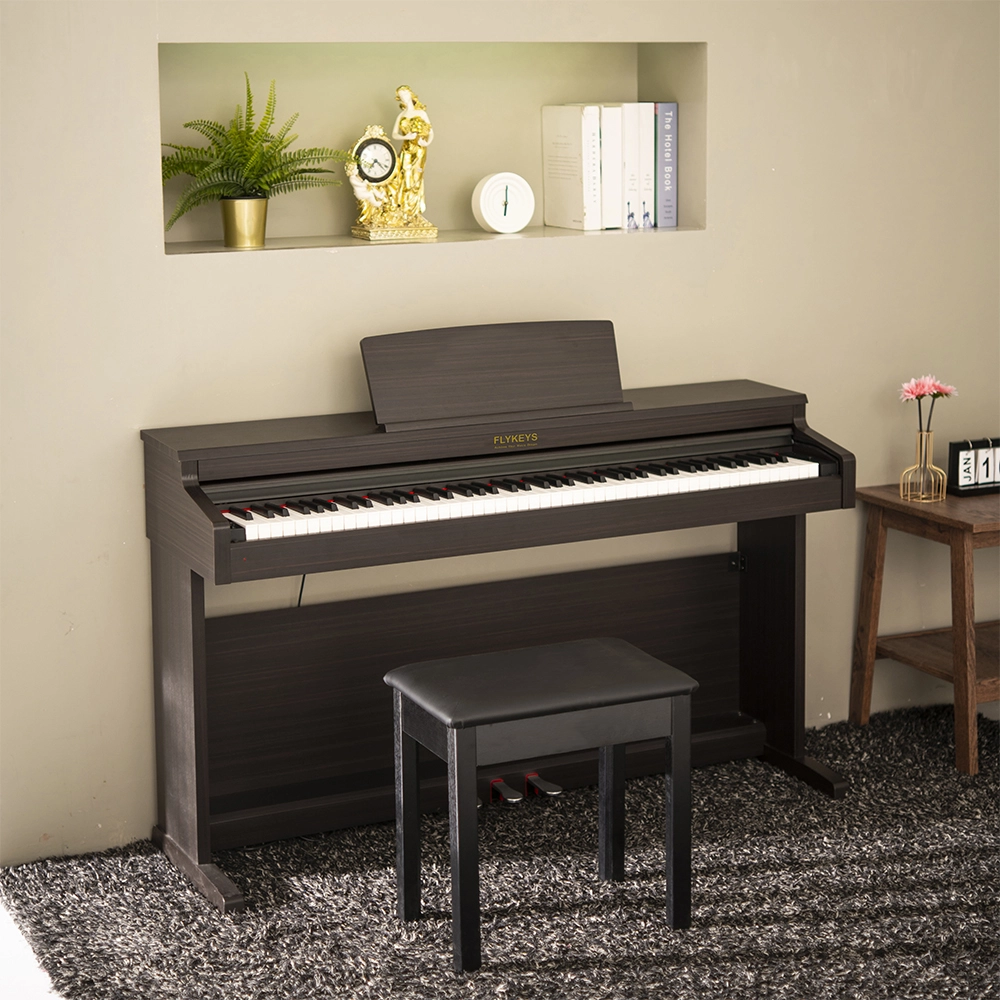
— Standard Upright Digital Piano
— Independent patented technology 88-key Grand-Response hammer-action & dynamic curve keyboard
— European top DSP chip, famous grand piano sound sample
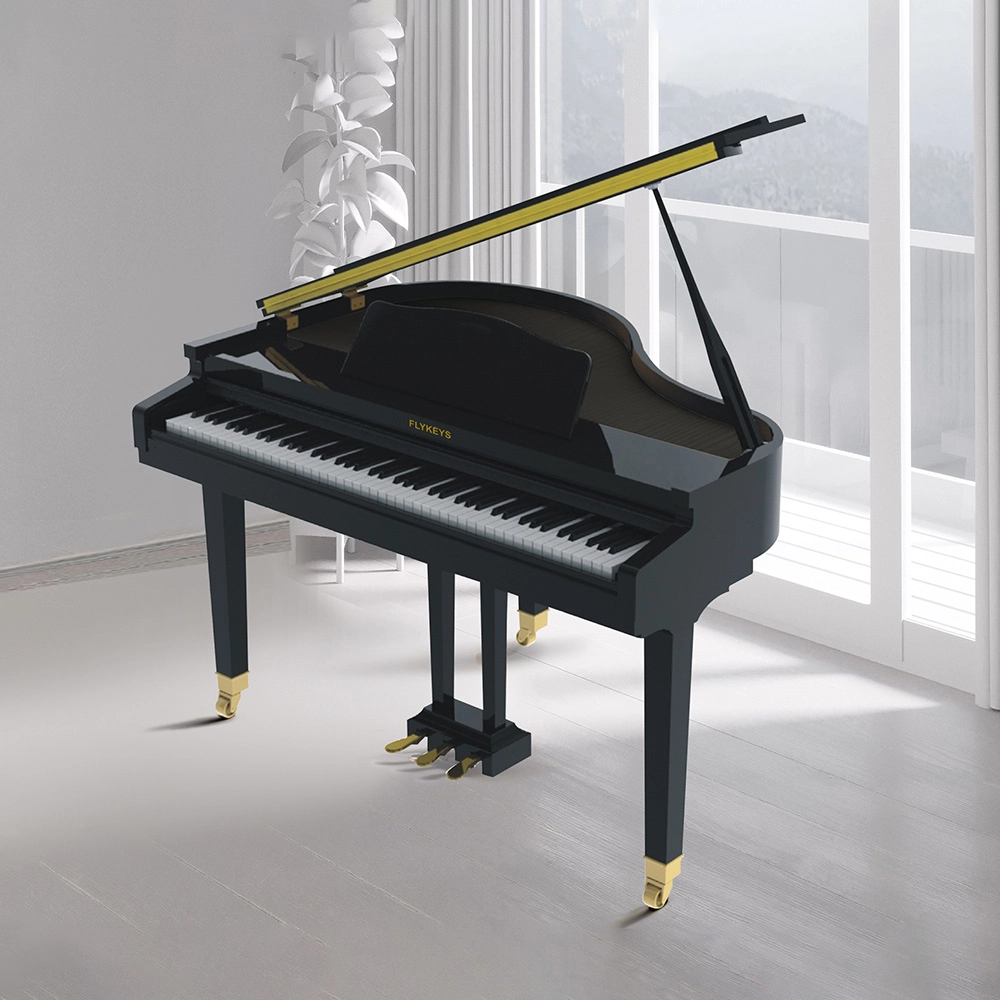
• Baby Grand Style with High-Gloss Polished Cabinet
• Italian Fatar 88-key Grand-Response™ Keyboard with Hammer Action and Touch Curve
• Independently Developed DSP Chip with German Grand Piano Sound Sampling
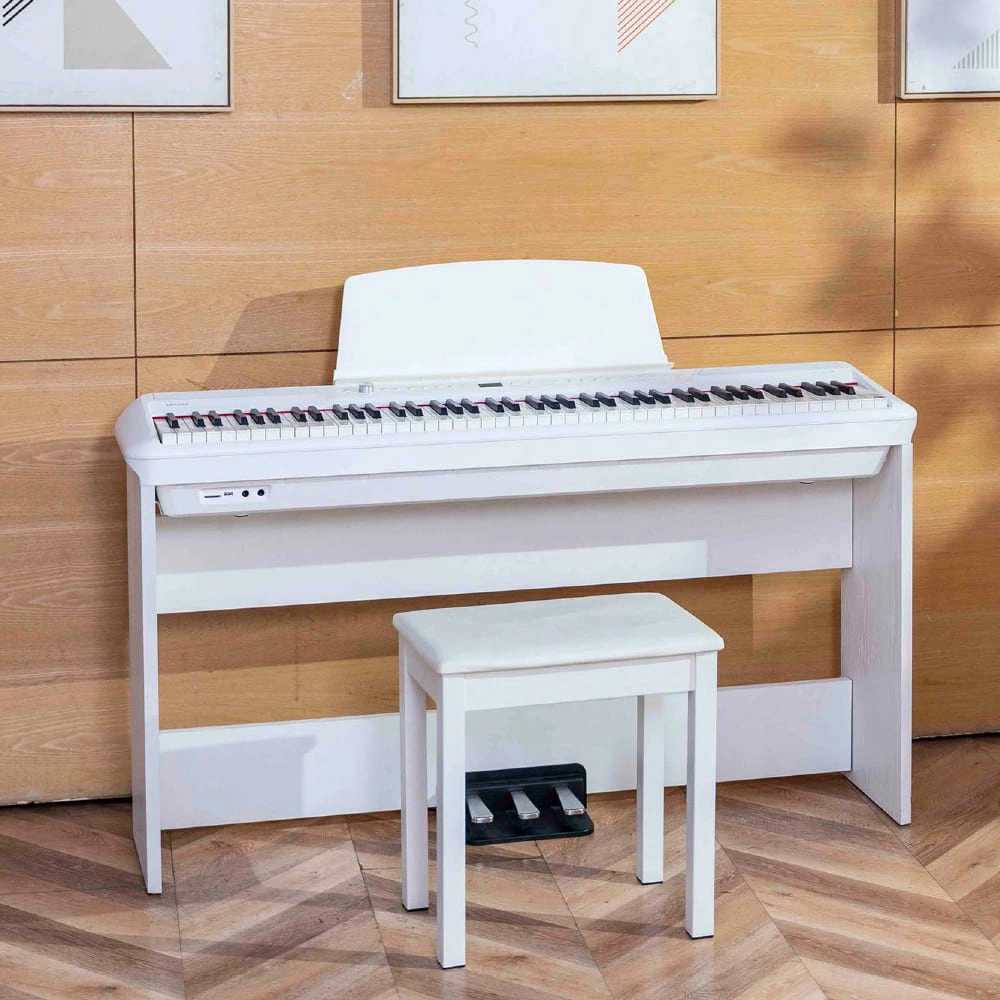
—keyboard: Independent patented technology 88-key, Grand-Response hammer dynamic curve keyboard
—Sound source: Independently developed the 4th generation DSP sound source, German famous grand piano sound sample
— Modern, lightweight case, X stand, U stand, Wood stand, 3 pedals
— Control: double sound, record, split, transpose, reverb, chorus, metronome, MIDI, bluetooth
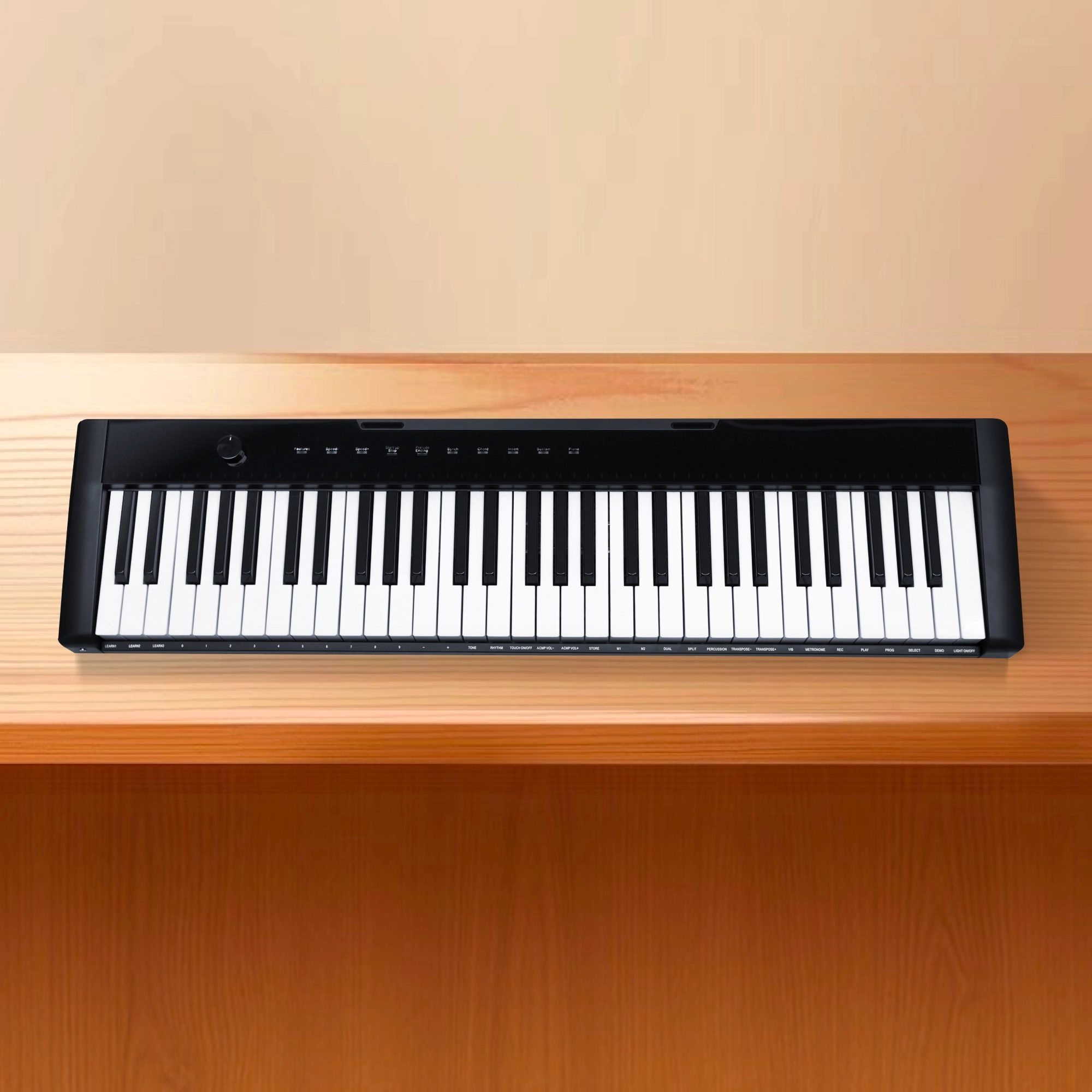
The keyboard features 61 touch-sensitive piano keys, 61 percussion sounds, 600 sounds, 100 demo songs, and 200 rhythms. It includes touch panel control with recording, programming, and playback functions, sync and fill-in functions, metronome function (master volume, accompaniment volume, and tempo control), sound expansion, vibrato, transpose, dual voice, and keyboard functions. Bluetooth and USB cable connectivity support connection with the learning app, which provides three learning modes: duet mode, continuous practice mode, and demonstration mode.
Address: No. 38 Xiangshan Avenue, Zengcheng Economic And Technological Development Zone, Guangzhou, China.
FOLLOW US:
Copyright© 2026 FLYKEYS All Rights Reserved. 粤 ICP备2020102774号. Designed by Gooeyun. Sitemap | Privacy | Terms
FLYKEYS
FLYKEYS
flykeys-music
Flykeys Music