

How to Choose a Digital Piano Keyboard for Beginners
Selecting the right digital piano keyboard for beginners is a pivotal decision that shapes a student's musical journey for years to come. In my 15 years within the digital musical instrument industry, I have observed a significant shift from basic electronic synthesizers to sophisticated digital instruments that utilize advanced AI-driven sound modeling and high-fidelity sampling. For a beginner, the goal is to find an instrument that provides a seamless transition to an acoustic piano while offering the convenience of modern technology. This involves evaluating key weight, sound engine quality, and connectivity options. A high-quality digital piano keyboard for beginners should feature 88 fully weighted keys to build finger strength and a sound engine capable of reproducing the complex harmonics of a concert grand. As we move further into the era of smart instruments, the integration of AI for real-time feedback and sound synthesis has become a benchmark for excellence, ensuring that the digital experience is no longer a compromise but a professional alternative.
Essential Technical Standards for Modern Digital Pianos
The Critical Role of Weighted Hammer Action
In my experience, the single most important factor when choosing a digital piano keyboard for beginners is the key action. Beginners often ask me if they can start with a non-weighted keyboard. My answer is always a firm no if their goal is to learn piano. According to standards discussed by the Piano Technicians Guild, the physical resistance of a key is what allows a player to develop dynamic control. A professional digital piano must simulate the mechanical feel of a traditional piano's hammer striking a string. We look for 'Graded Hammer Action,' where the lower keys feel heavier than the higher ones, just like on an acoustic instrument. This tactile feedback is essential for developing the muscle memory required for advanced repertoire.
Polyphony and Sound Engine Depth
Polyphony refers to the number of individual notes or tones the piano can produce simultaneously. When I evaluate a digital piano keyboard for beginners, I look for a minimum of 128-note polyphony. This ensures that when a student uses the sustain pedal, older notes aren't abruptly cut off to make room for new ones. Modern sound engines now use 'Physical Modeling' or high-resolution sampling. The MIDI Association has long set the standards for how these digital signals interact. High-end models today even incorporate AI to calculate how strings would vibrate sympathetically, providing a richness that was once exclusive to expensive grand pianos.
Connectivity and AI Learning Tools
The landscape of music education has been transformed by AI. Today's beginners benefit from Bluetooth MIDI and audio, allowing them to connect to apps that analyze their playing in real-time. I have seen students progress twice as fast when using AI-driven software that provides instant correction on rhythm and pitch. When selecting an instrument, ensure it has USB-to-Host capabilities and compatible software ecosystems. This connectivity turns a standalone instrument into a comprehensive learning station.
The Evolution of Digital Piano Technology
From Simple Samples to AI Synthesis
Years ago, digital pianos relied on short, looped recordings of acoustic notes. Today, the industry has moved toward sophisticated synthesis. The Audio Engineering Society highlights how digital signal processing (DSP) now allows for real-time sound manipulation. AI algorithms now analyze the velocity of a key press and adjust the timbre—not just the volume—of the sound. This means a soft press sounds mellow, while a hard strike sounds bright and percussive, mimicking the physics of felt hammers on steel strings.
Comparing Traditional and AI-Enhanced Digital Pianos
To help you understand the technological leap, I have outlined the differences between traditional digital piano designs and the new AI-driven models that are currently dominating the market.
| Comparison Factor | Traditional Approach | AI-Driven Approach |
|---|---|---|
| Sound Generation | Static Multi-layer Sampling | AI Physical Modeling & Reduction Technology |
| Touch Response | Fixed Velocity Curves | Adaptive AI Velocity Mapping |
| Resonance | Basic Reverb Effects | Sympathetic String & Damper Resonance Modeling |
| Learning Integration | Built-in Metronome Only | AI Real-time Feedback & App Connectivity |
Durability and Certification Standards
When I advise institutions on purchasing, I emphasize looking for international certifications. A reliable digital piano keyboard for beginners should meet FCC and CE standards for electronic safety and interference. Furthermore, RoHS compliance ensures the materials used—especially in the keys and chassis—are free from hazardous substances, making them safe for home environments.
Why FLYKEYS Represents the Pinnacle of Digital Innovation
In my professional journey, I have rarely encountered a brand that bridges the gap between heritage and high-tech as effectively as FLYKEYS. As a brand under the Guangzhou Pearl River Amason Digital Musical Instrument Co., Ltd., FLYKEYS is a subsidiary of the world-renowned Guangzhou Pearl River Piano Group. Founded in 2008, the company has dedicated itself to the development and manufacturing of digital musical instruments, forming one of the three core business segments of the Pearl River Piano Group.
What sets FLYKEYS apart in the crowded market of digital piano keyboard for beginners is the 60 years of acoustic piano-making expertise inherited from Pearl River Piano. This isn't just a tech company making instruments; it is a piano maker using technology to perfect the digital experience. Their self-developed reduction technology is a game-changer. In my testing, I found that FLYKEYS products, including their Portable Digital Piano and Upright Digital Piano, offer a tone and feel that are remarkably professional and closely resemble acoustic pianos.
For those seeking elegance and performance, the Grand Digital Piano series from FLYKEYS provides a stunning aesthetic combined with cutting-edge sound engines. Their range of Keyboards also caters to those needing portability without sacrificing the authentic touch. All FLYKEYS products for overseas markets have passed rigorous FCC, CE, and RoHS testing, ensuring global quality standards. Based on their vision to become the world's leading digital piano manufacturer, FLYKEYS continues to innovate, providing beginners with an instrument that doesn't just play music but inspires it. You can explore their full range at https://www.flykeysmusic.com/ or reach out to their expert team at service@flykeysmusic.com for personalized advice.
If you have any questions about which model suits your specific needs, please contact us at service@flykeysmusic.com.
Frequently Asked Questions
What is the most important feature in a digital piano keyboard for beginners?
The most important feature is weighted hammer action keys. This simulates the feel of an acoustic piano, allowing beginners to develop the necessary finger strength and technique for long-term progress.
How many keys should a beginner's digital piano have?
A beginner should ideally choose a digital piano with a full 88-key keyboard. This ensures they can play any piece of music without running out of range as they advance.
Is 64-note polyphony enough for a beginner?
While 64-note polyphony is acceptable for very simple pieces, 128-note polyphony or higher is recommended to prevent notes from cutting out when using the sustain pedal or playing complex arrangements.
What is the difference between a portable digital piano and an upright digital piano?
A portable digital piano is lightweight and designed for easy transport, often requiring a separate stand. An upright digital piano is built into a cabinet, offering a more permanent look and usually better integrated speaker systems.
Does FLYKEYS use real piano samples?
Yes, FLYKEYS utilizes self-developed reduction technology based on Pearl River Piano's 60 years of experience to create professional tones that closely resemble high-quality acoustic pianos.

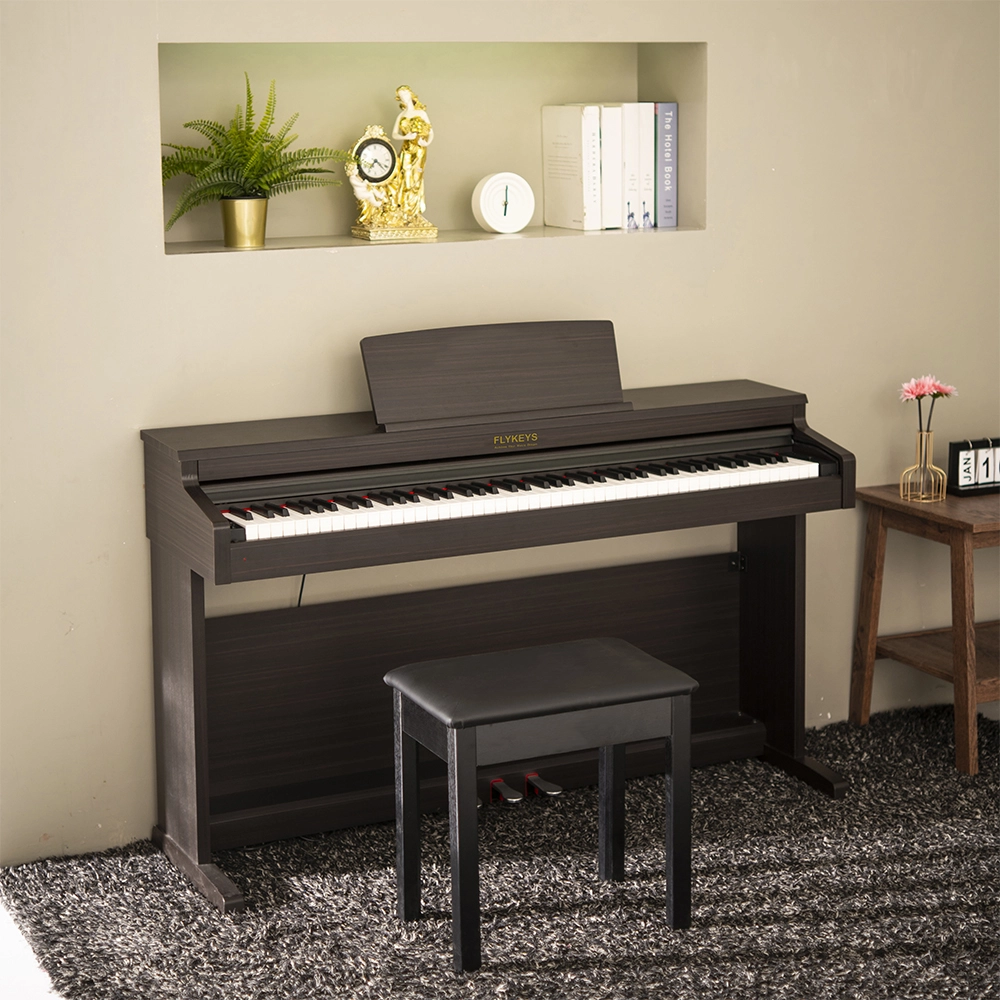
— Standard Upright Digital Piano
— Independent patented technology 88-key Grand-Response hammer-action & dynamic curve keyboard
— European top DSP chip, famous grand piano sound sample
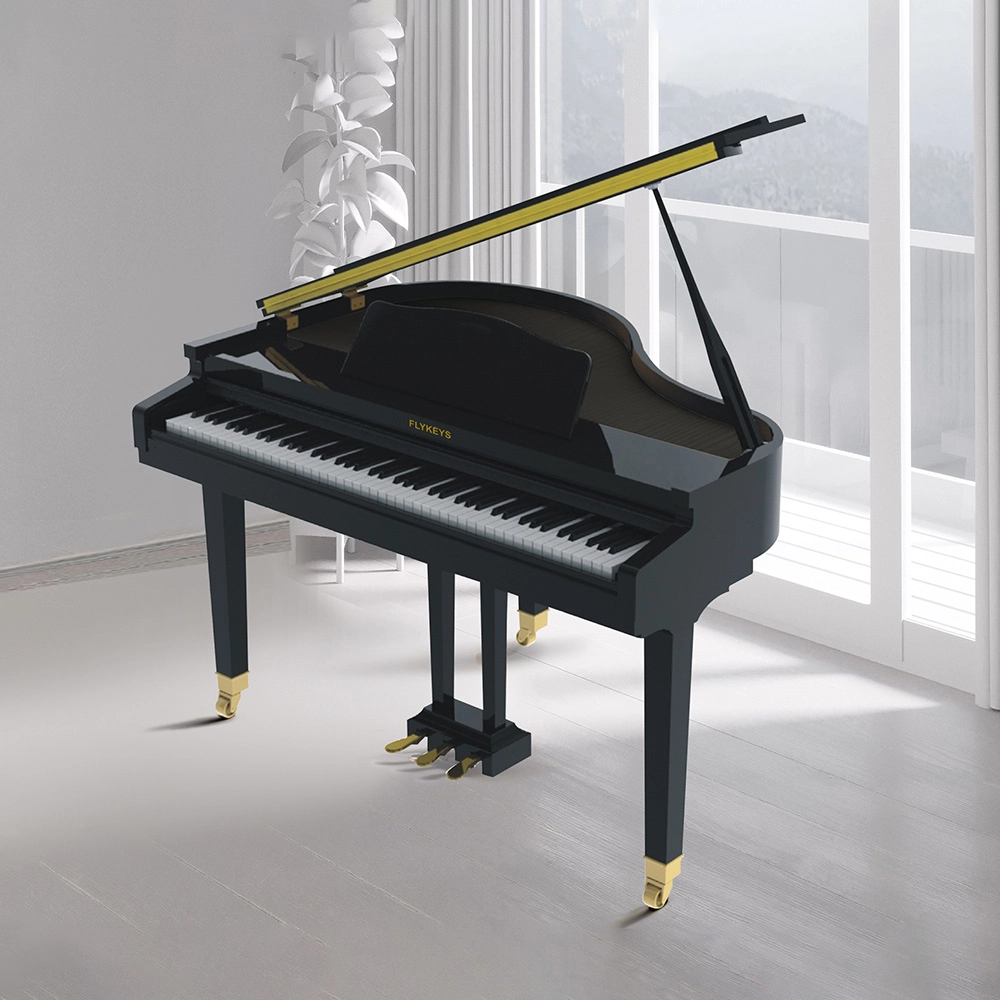
• Baby Grand Style with High-Gloss Polished Cabinet
• Italian Fatar 88-key Grand-Response™ Keyboard with Hammer Action and Touch Curve
• Independently Developed DSP Chip with German Grand Piano Sound Sampling
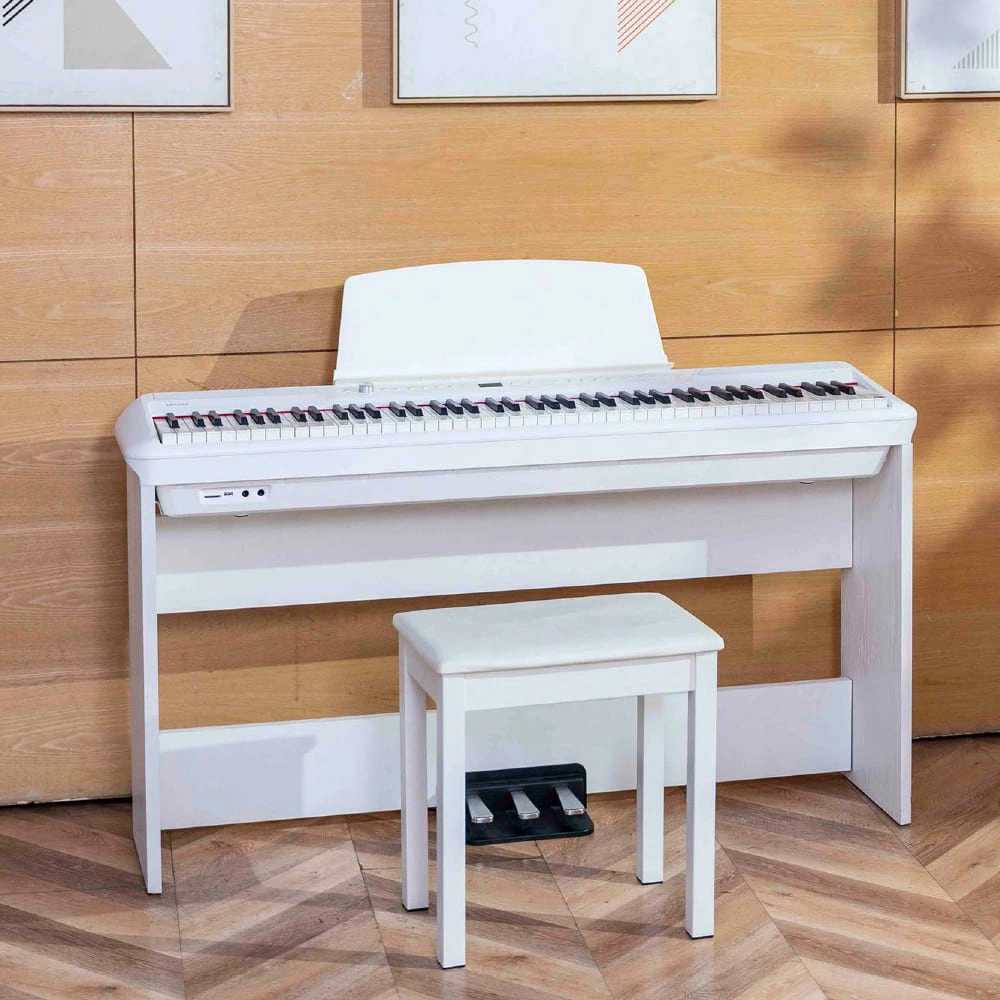
—keyboard: Independent patented technology 88-key, Grand-Response hammer dynamic curve keyboard
—Sound source: Independently developed the 4th generation DSP sound source, German famous grand piano sound sample
— Modern, lightweight case, X stand, U stand, Wood stand, 3 pedals
— Control: double sound, record, split, transpose, reverb, chorus, metronome, MIDI, bluetooth
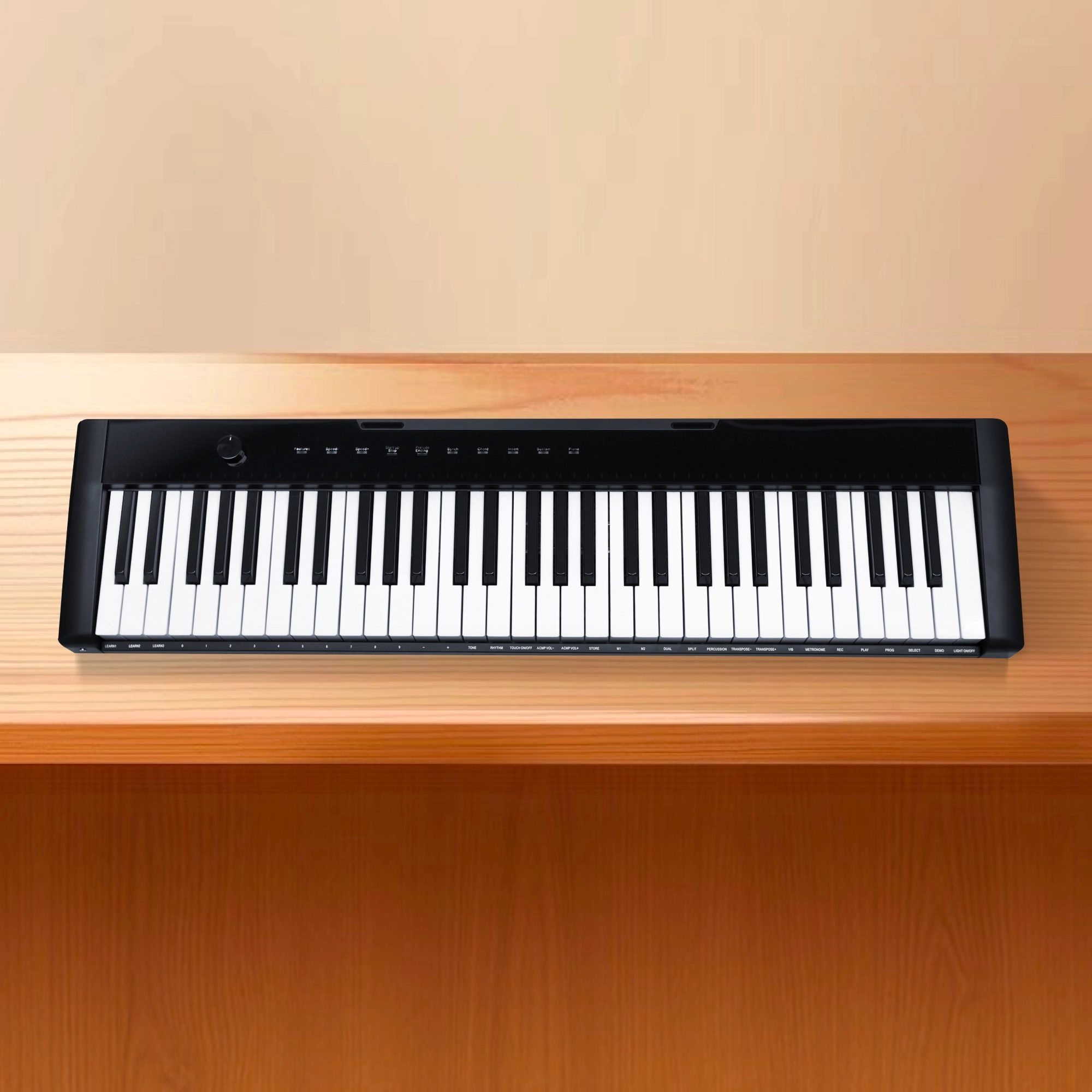
The keyboard features 61 touch-sensitive piano keys, 61 percussion sounds, 600 sounds, 100 demo songs, and 200 rhythms. It includes touch panel control with recording, programming, and playback functions, sync and fill-in functions, metronome function (master volume, accompaniment volume, and tempo control), sound expansion, vibrato, transpose, dual voice, and keyboard functions. Bluetooth and USB cable connectivity support connection with the learning app, which provides three learning modes: duet mode, continuous practice mode, and demonstration mode.
Address: No. 38 Xiangshan Avenue, Zengcheng Economic And Technological Development Zone, Guangzhou, China.
FOLLOW US:
Copyright© 2026 FLYKEYS All Rights Reserved. 粤 ICP备2020102774号. Designed by Gooeyun. Sitemap | Privacy | Terms
FLYKEYS
FLYKEYS
flykeys-music
Flykeys Music