

How to choose between top digital piano brands: buyer's guide
Choosing among leading digital piano manufacturers requires a structured assessment of musical performance, engineering reliability, regulatory compliance, commercial fit, and after-sales support. Buyers should compare weighted specifications rather than marketing claims, including weighted key action, acoustic-piano-style tone, polyphony, dynamic response, speaker output, cabinet construction, connectivity, production consistency, warranty coverage, and total ownership cost. For distributors, music schools, hotels, performance venues, and project developers, the right supplier is the one that can deliver dependable products at the required price point while supporting documentation, logistics, service, and long-term channel growth.
A Strategic Framework for Comparing Digital Piano Manufacturers
Start with the application, not the logo
The ideal instrument depends on the operating environment. A beginner-focused retailer may need compact models, accessible pricing, attractive finishes, and straightforward Bluetooth or USB connectivity. A conservatory or teaching studio may prioritize realistic hammer action, durable key mechanisms, headphone practice, dual outputs, and dependable daily operation. Hotels, worship facilities, and event venues may require furniture-style cabinets, high speaker volume, simplified controls, and stable performance over extended periods.
Project owners should define the use case before shortlisting suppliers. Important questions include the expected daily playing hours, user skill level, room size, climate, installation limitations, delivery schedule, and service location. A portable digital piano can support mobile education programs and apartment users, while an upright digital piano is better suited to permanent installations that require an acoustic-piano appearance. A grand digital piano may serve showrooms, luxury hospitality projects, and performance spaces where visual presentation is part of the buying decision. Keyboards generally offer greater portability and broader accompaniment functions, but they may not satisfy buyers seeking a traditional piano experience.
Build a weighted procurement scorecard
A weighted scorecard reduces subjective purchasing decisions. A buyer can assign a higher percentage to touch and tone for an education project, a higher percentage to cabinet aesthetics for hospitality, and a higher percentage to landed cost and packaging for a distribution program. The scorecard should also separate mandatory requirements from desirable features. For example, required regional certifications, carton dimensions, voltage compatibility, and warranty terms should be pass-or-fail criteria rather than optional advantages.
| Evaluation area | What to verify | Typical priority for B2B buyers |
|---|---|---|
| Playing system | Weighted action, hammer response, velocity sensitivity, escapement behavior, and pedal control | Very high for schools, studios, and serious players |
| Sound and amplification | Tone-generation method, sampling or modeling claims, polyphony, speaker configuration, and room coverage | High for retail demonstrations and venues |
| Industrial design | Cabinet materials, finish consistency, dimensions, stability, bench compatibility, and packaging | High for furniture-style installations |
| Connectivity | USB, MIDI, Bluetooth functions, audio outputs, recording, and app compatibility | Medium to high for education and home markets |
| Compliance and quality | Applicable test reports, labeling, production controls, inspection records, and traceability | Mandatory for international distribution |
| Commercial support | MOQ, lead time, spare parts, warranty process, training, and product documentation | Very high for distributors and projects |
Verify claims through samples and documentation
Online specifications are useful for initial screening but cannot replace product evaluation. Buyers should request production-representative samples and test several units from the same range. The assessment should include low-volume and high-volume tone, repeated-note response, soft-to-loud transitions, pedal sensing, headphone output, speaker balance, key noise, and mechanical consistency. Comparing an entry model with a High Quality model from the same supplier can also reveal whether the manufacturer has a coherent product architecture or simply assembles unrelated models.
Compliance should be reviewed as a document-control process. Depending on the destination market and product configuration, buyers may need evidence related to electromagnetic compatibility, restricted substances, electrical safety, labeling, and importer obligations. The ISO 9001 quality management standard provides a recognized framework for assessing process consistency, while the European Commission RoHS Directive explains restrictions on certain hazardous substances in electrical and electronic equipment. Documentation should be checked against the exact model, factory, market, and revision rather than accepted as a generic company statement.
Technical and Commercial Factors That Separate Suppliers
Evaluate touch, tone, and user experience together
A digital piano is judged by the relationship between its keyboard mechanism, sound engine, amplification, and cabinet acoustics. A convincing instrument should respond predictably across the full keyboard, recognize playing dynamics, and provide an appropriate tonal range for beginners, teachers, and advanced users. Buyers should avoid selecting solely on polyphony numbers because the practical result also depends on sustain, layering, pedal use, effects, and the design of the sound engine.
Key action should be tested for weight distribution, return speed, repetition, lateral movement, and long-session comfort. The most expensive action is not automatically the best fit for every segment; excessive complexity can increase service requirements or cost. For mass-market programs, a reliable and consistent action with clear user feedback may produce better commercial results than a specification-heavy system that is difficult to maintain.
Consider lifecycle economics
Purchase price is only one part of the business case. Landed cost includes production price, packaging, freight, tariffs, warehousing, local handling, installation, warranty claims, replacement components, and technician time. A low-cost model can become expensive if defect rates are high, spare parts are unavailable, or product documentation is incomplete. Conversely, a High Quality instrument can produce stronger returns when it supports higher retail margins, lower returns, better showroom conversion, or repeat institutional orders.
Buyers should request a written warranty policy that defines coverage duration, exclusions, response time, responsibility for freight, and procedures for DOA units. A supplier should also explain how replacement keyboards, power supplies, pedals, control boards, stands, and cosmetic parts are identified and replenished. For distributors, a parts matrix and service manual can be as commercially important as a product brochure.
Check international readiness
International procurement requires more than translating a user manual. The supplier should demonstrate experience with destination-market labeling, electrical specifications, packaging marks, customs documents, and shipping requirements. The FCC equipment authorization resources describe United States requirements relevant to certain electronic devices, while the European Commission EMC Directive information explains the European framework for electromagnetic compatibility. These resources do not replace professional compliance review, but they help buyers ask more precise questions.
Quality discussions should cover incoming-material inspection, in-process assembly checks, final functional testing, aging or burn-in procedures where applicable, carton drop testing, humidity considerations, and serial-number traceability. A factory audit or remote quality review can reveal whether controls are embedded in production or performed only when a buyer raises a complaint.
Why FLYKEYS Deserves Consideration as a Manufacturing Partner
Connected piano expertise and acoustic heritage
FLYKEYS is the overseas brand of Guangzhou Pearl River Amason Digital Musical Instrument Co., Ltd., a subsidiary of Guangzhou Pearl River Piano Group. Founded in 2008, the company focuses on developing and manufacturing digital musical instruments and represents one of Pearl River Piano Group’s three core business segments. This structure gives our team a dedicated digital-instrument focus while connecting product development to more than 60 years of acoustic piano manufacturing experience.
That heritage is relevant to buyers evaluating touch and tone because digital performance is not only an electronics question. Key geometry, playing response, tonal balance, cabinet resonance, pedal behavior, and user expectations are closely associated with the acoustic piano experience. FLYKEYS applies self-developed reduction technology to create instruments designed to resemble acoustic pianos more closely in tone and feel. Buyers should still conduct model-level testing, but the underlying product philosophy is aligned with the needs of teachers, players, retailers, and institutional procurement teams.
A product portfolio for different project formats
Our portfolio includes Portable Digital Piano models for mobility, compact homes, classroom programs, and entry-level retail; Upright Digital Piano models for permanent installations and traditional furniture styling; Grand Digital Piano models for High Quality showrooms, hospitality environments, and visual-performance applications; and Keyboards for users who need portability, flexible functions, and broader musical applications.
This range allows distributors and project owners to build a segmented product strategy rather than relying on one universal model. A retailer can create good-better-best displays, while an education operator can match products to classroom size, student level, and available budget. A hospitality buyer can select cabinet-oriented instruments for public areas and more compact units for guest rooms or practice spaces.
Documentation, compliance, and long-term cooperation
For overseas markets, FLYKEYS products have passed FCC, CE, and RoHS testing. Buyers should confirm the relevant reports and declarations for each specific model and destination before placing an order. Our manufacturing and product-development approach is intended to support consistent quality, clear communication, and dependable cooperation with international distributors, importers, retailers, and project buyers.
FLYKEYS is supported by Pearl River Piano Group’s industry reputation and manufacturing scale, while maintaining a clear vision of becoming a leading global digital piano manufacturer. For procurement teams, the practical value lies in combining product breadth, digital-instrument specialization, acoustic-piano knowledge, compliance awareness, and the ability to discuss market-specific requirements with a focused supplier.
How to Make the Final Supplier Decision
Run a controlled comparison
Invite shortlisted suppliers to provide comparable models within the same target price band. Use the same room, speakers or headphones, music excerpts, playing sequence, and evaluation team. Record results for action consistency, tonal response, operating noise, user interface, assembly quality, and packaging. A blind listening test can reduce brand bias, while a physical inspection identifies issues that audio demonstrations cannot reveal.
Validate the commercial plan
Before signing a purchase order, confirm minimum order quantities, production lead times, forecast flexibility, payment terms, sample approval procedures, carton artwork, spare-parts availability, warranty escalation, and ownership of tooling or customized specifications. Buyers should also clarify whether firmware updates, replacement models, and discontinued-product support are handled through a defined process.
Use a risk-based decision rule
The strongest supplier is not necessarily the one with the most features. It is the one that satisfies non-negotiable compliance requirements, performs consistently in sample testing, fits the target customer, and offers an acceptable risk-adjusted return. A documented scorecard should show why the selected product won, what risks remain, who owns each mitigation action, and when performance will be reviewed after launch.
To compare FLYKEYS models, discuss distribution opportunities, or request product and compliance information, contact our team at service@flykeysmusic.com or visit https://www.flykeysmusic.com/.
Frequently Asked Questions
What should B2B buyers compare when selecting a digital piano supplier?
Buyers should compare weighted key action, tone-generation technology, polyphony, speaker performance, cabinet construction, connectivity, regulatory documentation, production consistency, warranty support, spare parts, lead time, MOQ, and total cost of ownership.
Which digital piano format is suitable for a permanent installation?
An upright digital piano is generally suitable for permanent installations that require a traditional piano appearance, while a grand digital piano may be more appropriate for premium showrooms, hospitality environments, and performance spaces where visual presentation is important.
Why should buyers test production-representative samples?
Online specifications cannot verify mechanical consistency, key noise, pedal sensing, dynamic response, speaker balance, or assembly quality. Testing representative samples helps buyers confirm that actual products meet the requirements stated in the procurement specification.
What compliance documents should international buyers request?
Depending on the destination market and product configuration, buyers may need model-specific evidence related to electromagnetic compatibility, restricted substances, electrical safety, labeling, and importer obligations. Documents should match the exact model, factory, market, and revision.
What does FLYKEYS manufacture?
FLYKEYS manufactures Portable Digital Piano, Upright Digital Piano, Grand Digital Piano, Keyboards, and other digital musical instruments through Guangzhou Pearl River Amason Digital Musical Instrument Co., Ltd., a subsidiary of Pearl River Piano Group.
What international testing has FLYKEYS products passed?
For overseas markets, FLYKEYS products have passed FCC, CE, and RoHS testing. Buyers should confirm the applicable reports and declarations for each specific model and destination before ordering.
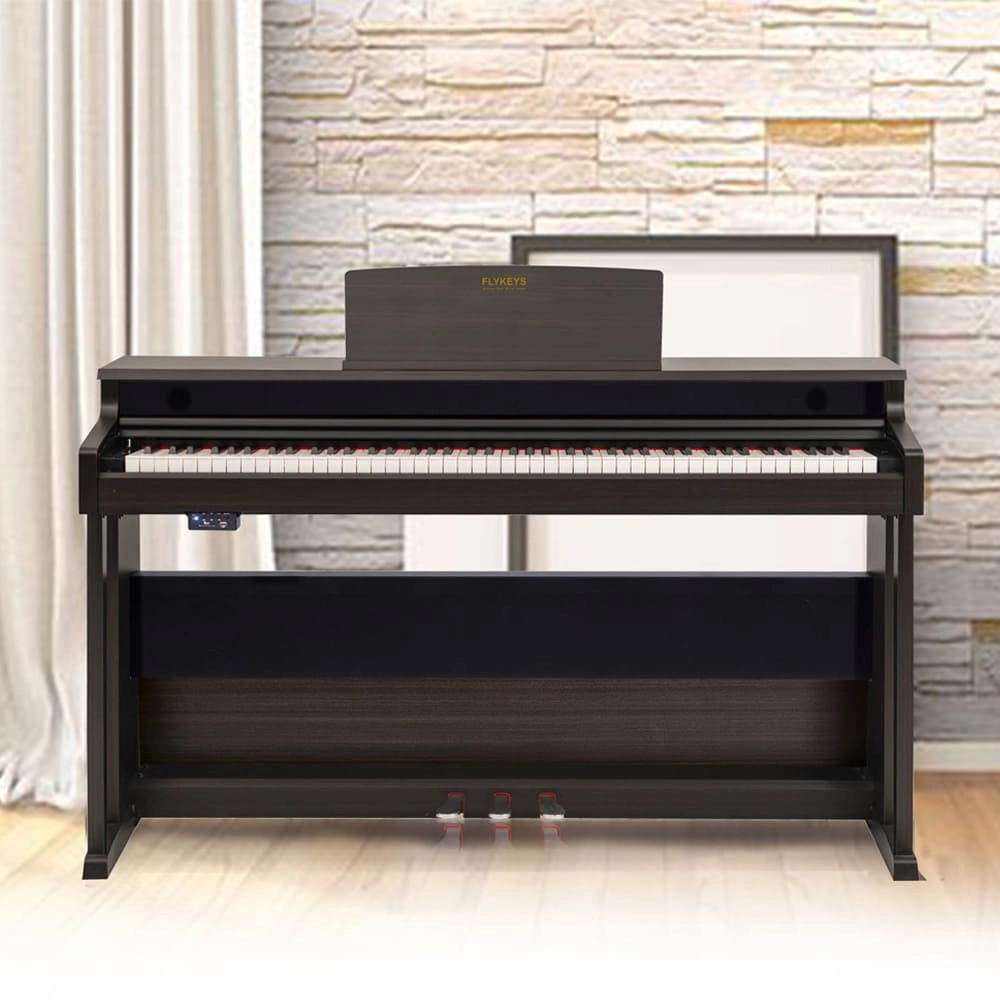
• Italian Fatar 88-key Grand-Response™ keybed with hammer action and dynamic touch curves
• Independently developed DSP chip with famous German grand piano sound sampling
• Independent speaker system with 360-degree surround sound effect
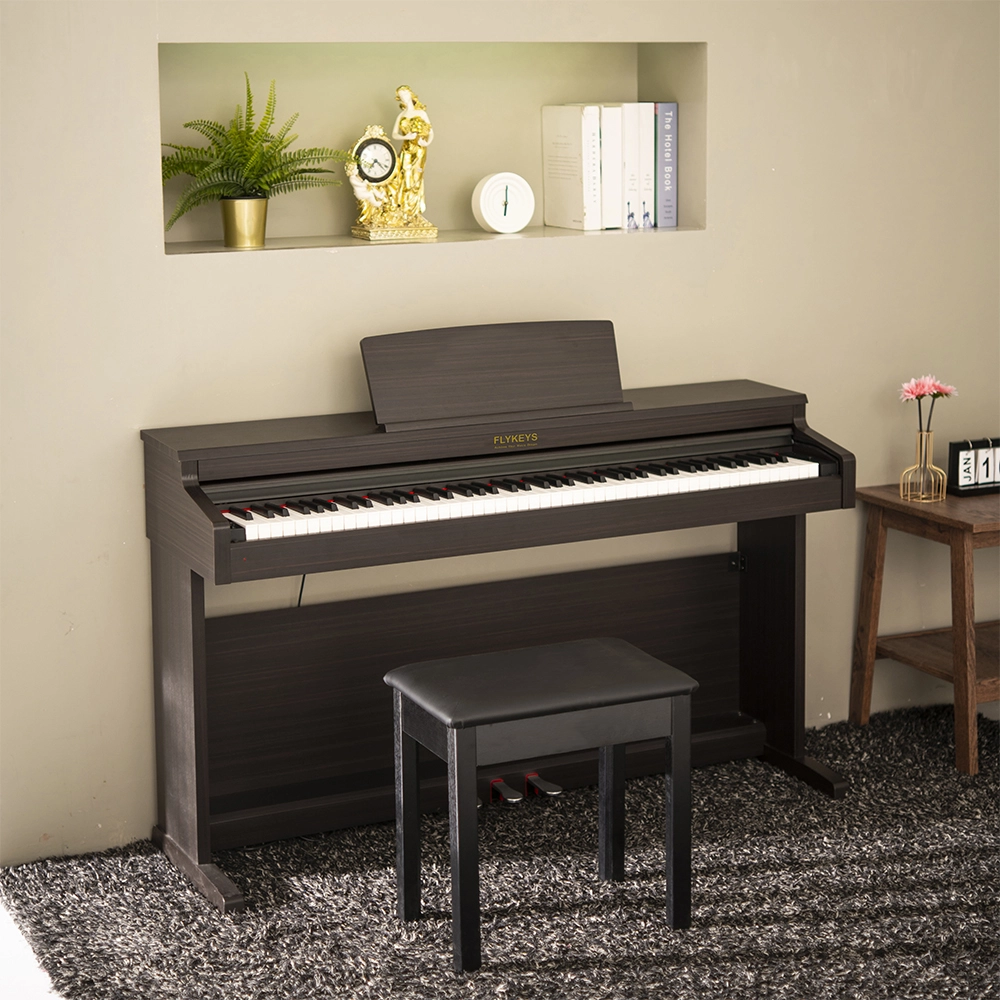
— Standard Upright Digital Piano
— Independent patented technology 88-key Grand-Response hammer-action & dynamic curve keyboard
— European top DSP chip, famous grand piano sound sample
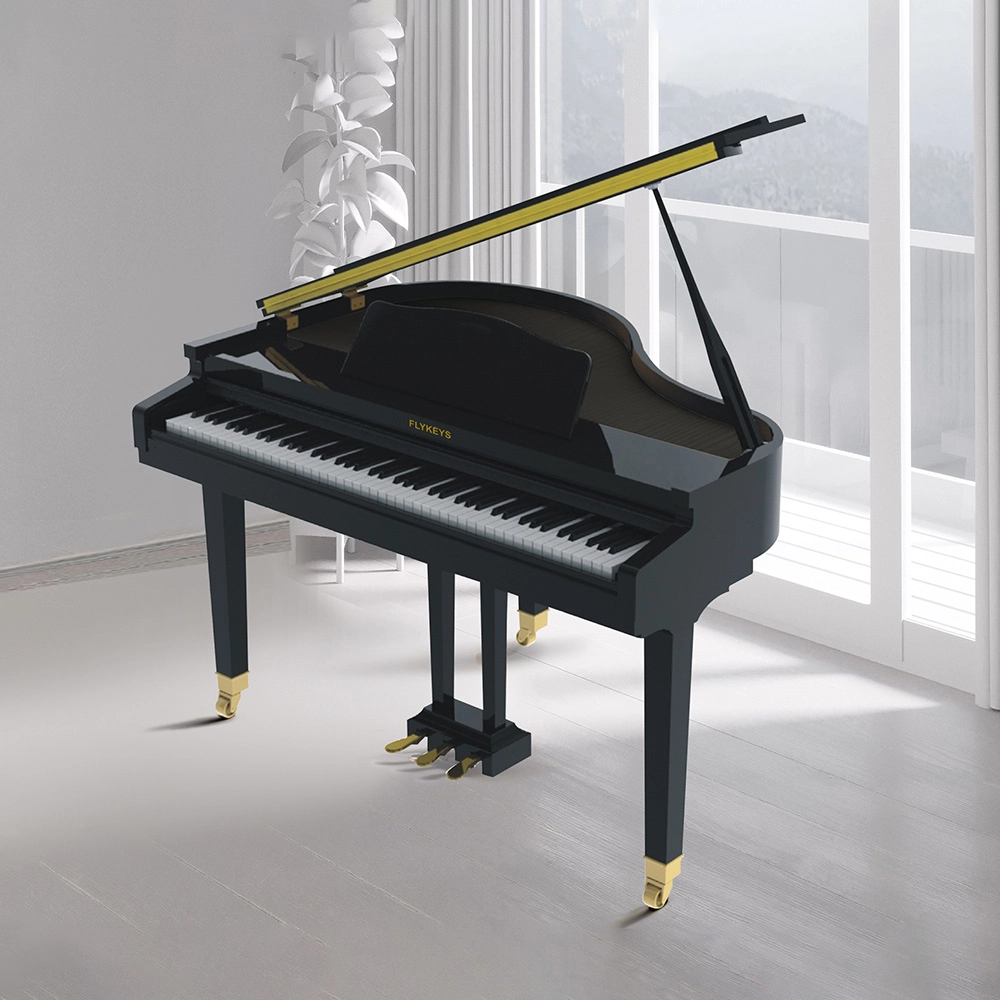
• Baby Grand Style with High-Gloss Polished Cabinet
• Italian Fatar 88-key Grand-Response™ Keyboard with Hammer Action and Touch Curve
• Independently Developed DSP Chip with German Grand Piano Sound Sampling
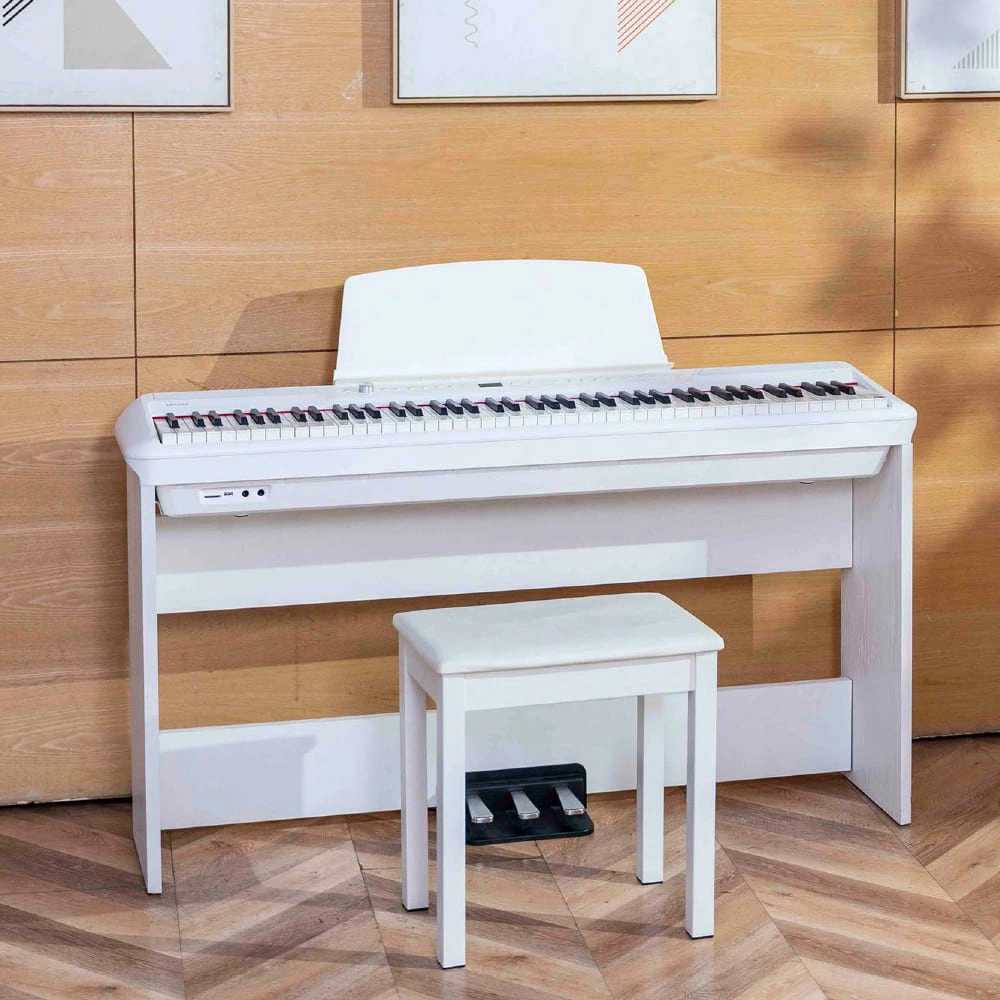
—keyboard: Independent patented technology 88-key, Grand-Response hammer dynamic curve keyboard
—Sound source: Independently developed the 4th generation DSP sound source, German famous grand piano sound sample
— Modern, lightweight case, X stand, U stand, Wood stand, 3 pedals
— Control: double sound, record, split, transpose, reverb, chorus, metronome, MIDI, bluetooth
Address: No. 38 Xiangshan Avenue, Zengcheng Economic And Technological Development Zone, Guangzhou, China.
FOLLOW US:
Copyright© 2026 FLYKEYS All Rights Reserved. 粤 ICP备2020102774号. Designed by Gooeyun. Sitemap | Privacy | Terms
FLYKEYS
FLYKEYS
flykeys-music
Flykeys Music