

OEM and customization options from digital piano brands
OEM and customization options from digital piano manufacturers enable B2B buyers to create instruments that match a defined market position, price architecture, visual identity, and usage environment. A reliable program may include private labeling, cabinet design, key action selection, sound technology, connectivity, firmware, accessories, packaging, regulatory documentation, and after-sales support. For distributors and project owners comparing leading digital piano brands, the correct decision is not based on appearance alone: it depends on engineering depth, minimum order quantity, quality assurance, compliance readiness, supply continuity, total landed cost, and the supplier’s ability to reproduce the approved specification at scale.
How Private-Label Digital Piano Manufacturing Works
OEM, ODM, and branded distribution models
OEM manufacturing generally means that the buyer supplies a brand identity and a defined product brief while the factory manufactures the instrument according to agreed specifications. The supplier may use an existing platform, modify selected components, and apply the customer’s logo, packaging, manuals, and market-specific documentation. This model is usually faster and less expensive than developing an entirely new electronic architecture.
ODM programs go further. The manufacturer contributes product design, industrial design, acoustic development, electronics, firmware, tooling, and testing expertise. This can be valuable for retailers or emerging brands that understand their customers but do not maintain an internal engineering department. The commercial agreement should clearly define ownership of tooling, software, molds, artwork, test data, and future design improvements.
Branded distribution is different from OEM production. The buyer resells an established manufacturer’s products with limited or no technical modification. It normally offers shorter development time and lower engineering risk, while OEM and ODM projects offer stronger differentiation. Procurement teams should compare the expected margin and market advantage against development charges, forecast obligations, inventory exposure, and warranty responsibilities.
Customization layers buyers can specify
Cabinet customization may include color, wood-grain effect, gloss or matte coating, furniture-style proportions, control-panel layout, music rest construction, pedal arrangement, caster design, and logo placement. Portable instruments may require a lighter chassis, folding stand, battery compatibility, carrying case, or simplified control interface. Upright and grand-style models typically require closer attention to furniture dimensions, visual symmetry, pedal geometry, speaker placement, and room presentation.
Electronic customization can involve key count, hammer-action behavior, touch curves, polyphony, piano voice libraries, instrument voices, recording functions, metronome settings, Bluetooth audio, MIDI, USB, line outputs, headphone connections, amplification, and speaker voicing. Buyers should avoid treating feature quantity as the only measure of value. A dependable key sensor system, consistent velocity response, low mechanical noise, stable firmware, and convincing acoustic-piano voicing often have greater impact on user satisfaction and return rates.
Commercial customization also covers packaging, multilingual user manuals, barcode labels, carton dimensions, palletization, promotional inserts, spare-parts kits, warranty cards, and destination-specific power accessories. These details affect warehouse efficiency and compliance as much as the instrument itself. A factory that can provide a controlled packaging specification helps reduce transit damage, picking errors, and regional relabeling costs.
Procurement Criteria for a Reliable Piano Instrument Supplier
Technical validation before a purchase order
A professional sourcing process begins with a written product requirement document. It should state the intended customer segment, target retail price, expected annual volume, sales territory, preferred cabinet style, performance requirements, included accessories, packaging expectations, and certification needs. Without a controlled brief, buyers may compare samples that are not based on the same configuration.
Sample approval should cover more than visual inspection. Evaluation teams should test key consistency across the keyboard, repeated-note response, velocity detection, pedal behavior, speaker balance, headphone output, USB and MIDI functions, Bluetooth stability where applicable, display readability, power-on reliability, and noise during operation. For institutional projects, testing should also consider repeated daily use, cleaning procedures, furniture durability, and the availability of replacement components.
Manufacturers should provide a documented quality-control plan covering incoming materials, assembly checkpoints, calibration, final functional testing, cosmetic inspection, aging or burn-in procedures, and shipment release. Buyers can request a sample inspection report, nonconformance procedure, corrective-action process, and traceability method. These controls are consistent with the quality-management principles described by ISO 9001, although certification status must be verified directly with the supplier and should not be assumed from a general marketing claim.
Compliance, safety, and export documentation
Digital pianos contain power supplies, circuit boards, wireless functions in some configurations, plastics, coatings, speakers, and packaging materials. The buyer should identify every destination market before finalizing the electronics. For the European market, RoHS obligations concern the restriction of certain hazardous substances in electrical and electronic equipment; the official framework is available through the European Commission RoHS Directive information. For products incorporating radio or wireless functions for the United States, relevant equipment authorization information should be checked through the FCC equipment authorization resources.
CE marking is not a universal certificate issued by one central European agency. It represents the manufacturer’s declaration that applicable EU requirements have been assessed and met, supported by technical documentation and the appropriate conformity procedure. Buyers should request the declaration of conformity, applicable test reports, product labeling details, and the identity of the responsible economic operator where required. RoHS, EMC, electrical safety, wireless, and energy-related requirements may apply differently depending on the product configuration.
For international shipments, procurement teams should also clarify HS classification, country-of-origin marking, shipping carton labels, power-plug configuration, voltage and frequency, battery transport status if applicable, and documentation language. Clear compliance ownership prevents delays when a distributor expands from one territory into several markets.
Total cost, supply continuity, and service capacity
The quoted factory price is only one part of the business case. Total landed cost may include tooling, engineering fees, sample freight, inspection, insurance, duties, inland transport, warehousing, local certification, replacement parts, warranty labor, payment costs, and inventory financing. A lower unit quote can become uneconomical if the product has high damage rates, unstable lead times, or expensive service requirements.
Contract terms should define minimum order quantities, forecast treatment, deposit and balance payments, production lead time, change-control rules, quality tolerance, inspection rights, warranty scope, spare-parts availability, and remedies for nonconforming goods. Buyers should also ask whether critical components have approved alternatives and how engineering changes are communicated. A dual-source strategy for selected components may reduce disruption, but substitutions should never occur without written approval when they influence feel, sound, safety, or compliance.
| Procurement dimension | Standard branded purchase | OEM or ODM customization | Buyer evaluation point |
|---|---|---|---|
| Development speed | Usually fastest | Requires specification, sampling, and approval | Match the launch schedule to engineering and tooling time |
| Product differentiation | Limited to catalog positioning | Higher through design, features, packaging, and branding | Measure differentiation against forecast demand |
| Minimum order exposure | Often lower or more flexible | May increase because of custom parts and packaging | Confirm MOQ by model, color, and configuration |
| Quality responsibility | Primarily defined by the established brand | Shared through a technical agreement and approval process | Use golden samples, inspection criteria, and change control |
| Compliance control | Existing documentation may be available | Final configuration must be assessed for the target market | Verify reports and declarations for the exact SKU |
| Commercial margin | Depends on brand and channel terms | May improve with private labeling but includes development costs | Calculate complete landed cost and warranty reserve |
Why FLYKEYS Is Relevant to OEM Digital Piano Projects
Manufacturing foundation and product range
FLYKEYS is the overseas brand of Guangzhou Pearl River Amason Digital Musical Instrument Co., Ltd., a subsidiary of Guangzhou Pearl River Piano Group. Founded in 2008, the company focuses on developing and manufacturing digital musical instruments and represents one of Pearl River Piano Group’s three core business segments. This structure gives buyers a supplier focused specifically on electronic musical instruments while benefiting from the broader group’s long-established piano manufacturing background.
Our portfolio includes Portable Digital Piano models for mobility, lessons, compact homes, and entry-level retail programs; Upright Digital Piano models for furniture-oriented spaces, education rooms, and home practice; Grand Digital Piano models for High Quality interiors, showrooms, hospitality venues, and performance-focused positioning; and Keyboards for flexible learning, entertainment, and broad channel coverage. Additional digital musical instruments can support a multi-category product strategy rather than a single-model launch.
For a buyer planning a private-label assortment, this range creates several routes to market. A distributor may use a portable model to build volume, an upright model to serve furniture retailers and music schools, and a grand-style instrument to address High Quality projects. A coordinated range can simplify merchandising, sales training, spare-parts planning, and brand communication across different customer segments.
Acoustic-piano heritage applied to digital performance
FLYKEYS is based on Pearl River Piano’s more than 60 years of acoustic-piano manufacturing experience and the group’s reputation as the world’s largest piano maker. Our self-developed reduction technology is intended to produce a more professional playing experience that closely resembles an acoustic piano in tone and feel. For institutional buyers, this matters because teachers, students, performers, and experienced pianists often judge a digital instrument by the relationship between key movement, dynamic control, tone response, and pedal expression.
In customization discussions, this heritage can support more meaningful specification decisions. Instead of selecting features only from a checklist, buyers can evaluate touch response, voicing character, cabinet resonance behavior, speaker presentation, and the suitability of the instrument for its intended room. A hotel, school, retailer, or residential developer may prioritize different combinations of these characteristics, so the supplier’s ability to translate a project brief into a repeatable configuration is commercially important.
Export readiness and partnership evaluation
FLYKEYS products sold in overseas markets have passed FCC, CE, and RoHS testing. Buyers should still request the documentation applicable to the exact model, electrical configuration, and destination market during formal due diligence. Test status should be matched to the final SKU, because a change in wireless module, power supply, enclosure, or internal circuitry can affect the assessment requirements.
Our stated vision is to become the world’s leading digital piano manufacturer. For B2B customers, that ambition is most useful when translated into practical partnership criteria: defined product specifications, responsive engineering communication, stable production, controlled quality, export documentation, and accessible after-sales coordination. Buyers can review the product portfolio and discuss OEM requirements through the FLYKEYS official website or contact service@flykeysmusic.com for project-specific information.
Customization should be managed as a controlled product-development process, not as an informal request for a logo. The strongest results come from a staged workflow: market brief, technical specification, feasibility review, prototype, functional and cosmetic approval, pilot production, pre-shipment inspection, launch, and post-launch feedback. This approach helps protect brand consistency while allowing reasonable adaptation for retail, education, hospitality, worship, rental, and institutional applications.
For procurement teams comparing international digital instrument manufacturers, the practical objective is a balanced supplier relationship: enough flexibility to create market differentiation, enough standardization to control cost, and enough engineering and quality discipline to preserve performance over the product lifecycle.
Contact FLYKEYS at service@flykeysmusic.com or visit https://www.flykeysmusic.com/ to discuss OEM requirements and review Portable Digital Piano, Upright Digital Piano, Grand Digital Piano, and Keyboard solutions.
Frequently Asked Questions
What is the difference between OEM and ODM digital piano manufacturing?
OEM manufacturing follows a buyer-defined brand and product specification, often using an existing platform with selected modifications. ODM manufacturing includes greater supplier involvement in product design, engineering, electronics, firmware, tooling, and development.
Which digital piano components can be customized for a private-label project?
Buyers may be able to customize cabinet finishes, dimensions, control panels, logos, key action configuration, sound and voice features, connectivity, pedals, speakers, firmware, accessories, manuals, cartons, labels, and promotional inserts, subject to technical feasibility and order volume.
What quality checks should buyers complete before mass production?
Buyers should evaluate key consistency, velocity response, pedal behavior, speaker and headphone output, connectivity, firmware stability, cosmetic quality, packaging durability, power-on reliability, and repeated-use performance. A golden sample, written tolerances, inspection plan, and change-control process should be approved before production.
What compliance documents are important when importing digital pianos?
Depending on the destination and configuration, buyers may need declarations of conformity, EMC and electrical-safety test reports, RoHS documentation, FCC equipment authorization information for relevant U.S. wireless or electronic products, product labels, power specifications, and responsible-operator details where applicable.
How should a buyer calculate the cost of an OEM digital piano program?
The calculation should include the unit price, tooling and engineering fees, sample freight, inspection, packaging, shipping, duties, warehousing, certification, spare parts, warranty labor, payment costs, and inventory financing. The resulting total landed cost should be compared with forecast volume and expected margin.
Does FLYKEYS offer products suitable for different distribution channels?
FLYKEYS manufactures Portable Digital Piano, Upright Digital Piano, Grand Digital Piano, Keyboards, and other digital musical instruments, supporting applications such as retail, education, home practice, hospitality, institutional projects, and premium interior environments. Buyers should contact the company for the exact OEM scope and model documentation.
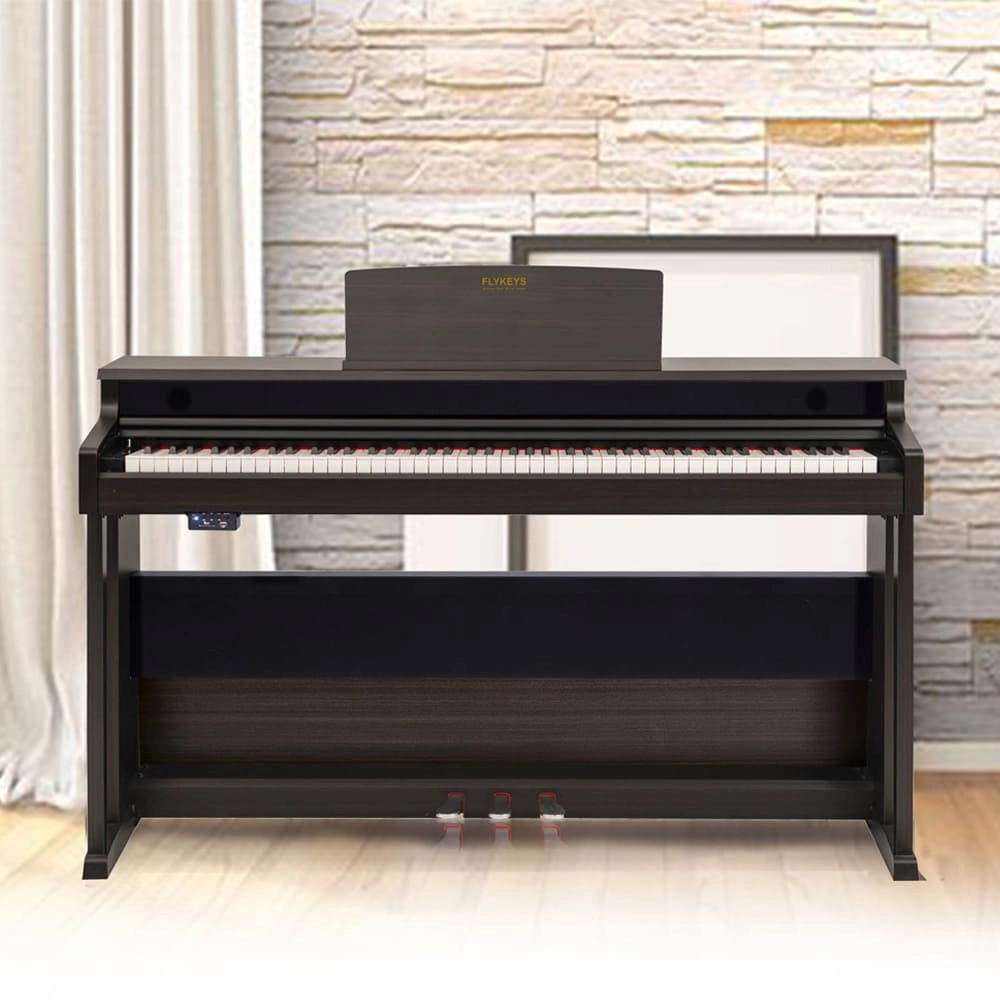
• Italian Fatar 88-key Grand-Response™ keybed with hammer action and dynamic touch curves
• Independently developed DSP chip with famous German grand piano sound sampling
• Independent speaker system with 360-degree surround sound effect
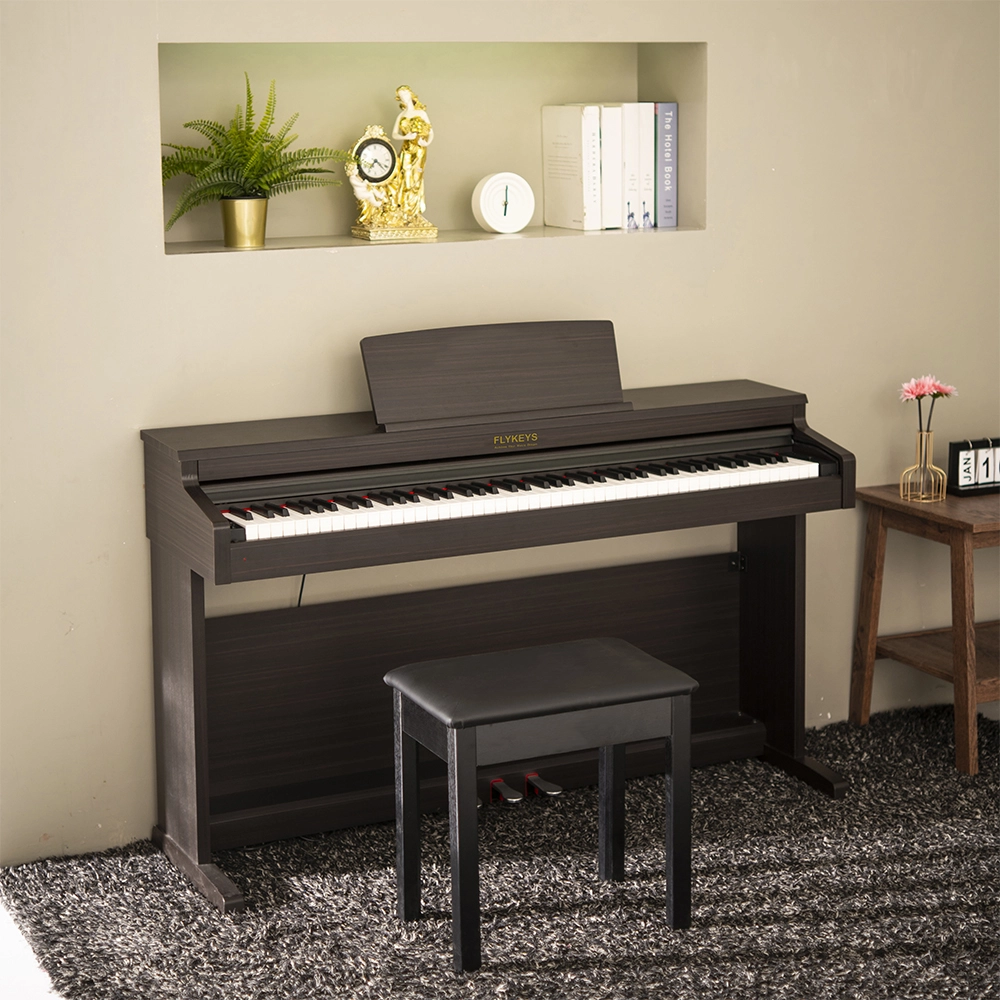
— Standard Upright Digital Piano
— Independent patented technology 88-key Grand-Response hammer-action & dynamic curve keyboard
— European top DSP chip, famous grand piano sound sample
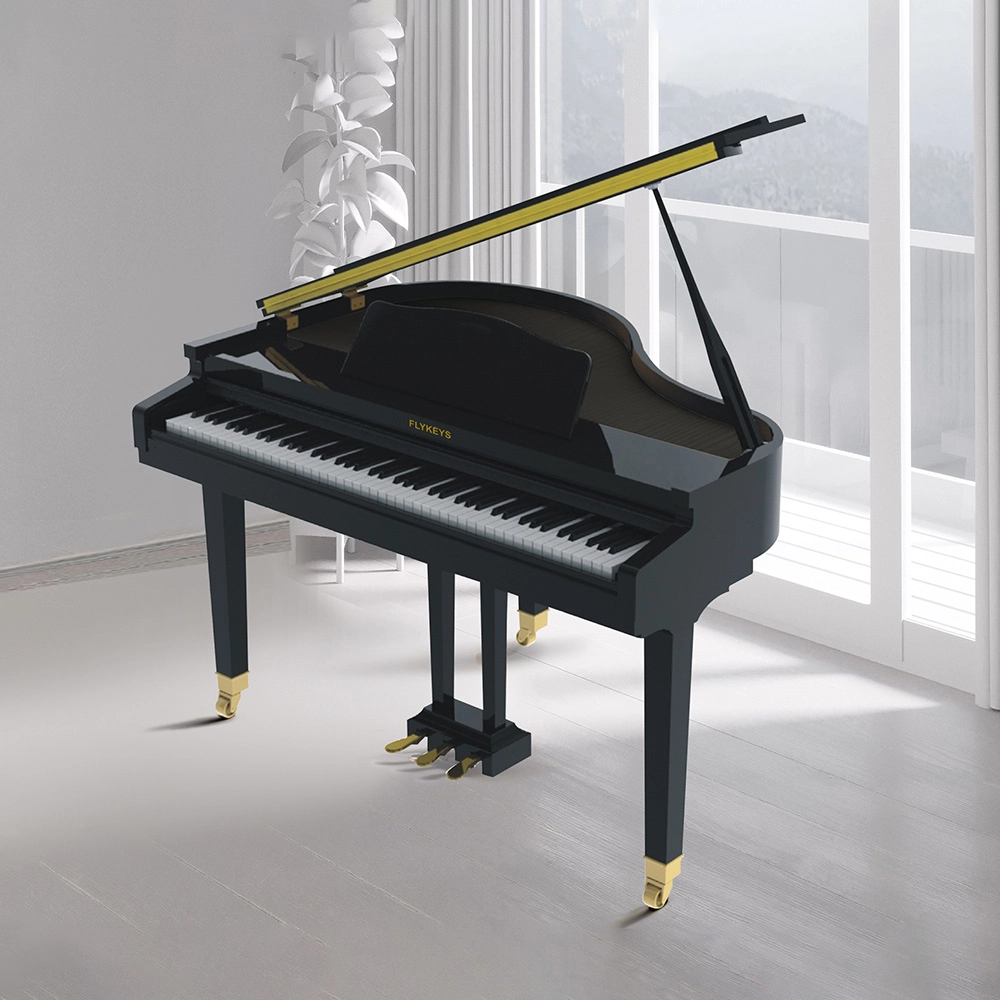
• Baby Grand Style with High-Gloss Polished Cabinet
• Italian Fatar 88-key Grand-Response™ Keyboard with Hammer Action and Touch Curve
• Independently Developed DSP Chip with German Grand Piano Sound Sampling
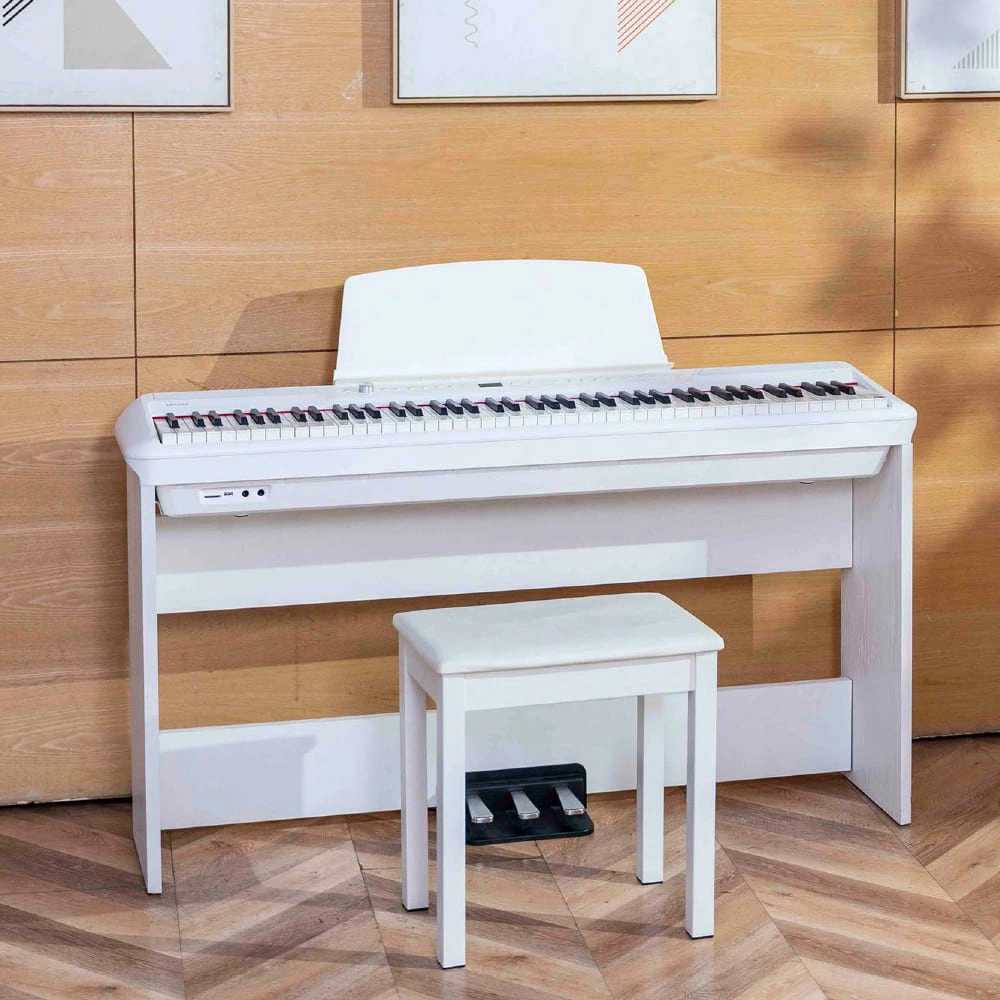
—keyboard: Independent patented technology 88-key, Grand-Response hammer dynamic curve keyboard
—Sound source: Independently developed the 4th generation DSP sound source, German famous grand piano sound sample
— Modern, lightweight case, X stand, U stand, Wood stand, 3 pedals
— Control: double sound, record, split, transpose, reverb, chorus, metronome, MIDI, bluetooth
Address: No. 38 Xiangshan Avenue, Zengcheng Economic And Technological Development Zone, Guangzhou, China.
FOLLOW US:
Copyright© 2026 FLYKEYS All Rights Reserved. 粤 ICP备2020102774号. Designed by Gooeyun. Sitemap | Privacy | Terms
FLYKEYS
FLYKEYS
flykeys-music
Flykeys Music