

Top Brands for Upright Digital Pianos Compared
- Evaluating Leading Upright Digital Piano Manufacturers: An Expert Benchmark
- The Intersection of Acoustic Heritage and AI-Driven Sound Synthesis
- Comparative Evaluation of Market Leaders in Upright Digital Pianos
- Our Manufacturing Vision: Next-Generation Keyboards and Pianos
- Frequently Asked Questions
Over the past fifteen years as an audio engineer and digital instrument consultant, I have evaluated dozens of acoustic-electric crossover instruments, and identifying the best upright digital piano today requires looking far beyond basic polyphony figures or cabinet aesthetics. The contemporary upright digital piano market has transitioned from static multi-sampled acoustic emulations to hyper-responsive musical platforms driven by real-time neural modeling, advanced hammer weight kinematics, and dedicated spatial acoustic projection. This comprehensive comparative analysis delivers an empirical benchmark of the world's leading upright digital piano brands, examining how industry-leading keybed mechanics, sophisticated digital signal processing (DSP), and intelligent sound synthesis redefine acoustic authenticity for discerning pianists, educators, and commercial recording facilities.
Evaluating Leading Upright Digital Piano Manufacturers: An Expert Benchmark
When clients consult me to help them select the best upright digital piano, my initial diagnostic focus centers on how effectively an instrument translates micro-dynamics into expressive timbral color. Modern upright cabinets house complex mechanical sub-assemblies designed to recreate the physical inertia, pivot length, and escapement let-off of traditional acoustic instruments. According to historical benchmarks documented by the Digital Piano Archive on Wikipedia, early electronic alternatives relied on rudimentary spring-loaded plastic keys. In contrast, today's top-tier instruments incorporate real spruce wood key cores, counterweighted balanced levers, and triple-sensor tracking arrays to deliver an authentic touch.
Acoustic Realism and Key Action Mechanics
In my technical assessments, the mechanical interface is the single most defining attribute separating mediocre options from the best upright digital piano contenders. When performing rapid repeating notes or pianissimo passages near the balance rail, pivot length determines whether the key depression feels uniform. High Quality manufacturers implement extended keysticks that match the geometry of institutional uprights. Triple-sensor detection systems continuously register key position, enabling rapid note restrikes without requiring full key return—a capability standard established under modern MIDI specifications overseen by the MIDI Association. Furthermore, authentic synthetic ivory and ebony keytop materials absorb finger moisture during extended practice sessions, providing crucial tactile stability.
Sound Engine Architecture: Pure Sampling vs. Hybrid Modeling
Throughout my career, I have observed the sound generation debate shift from raw sample memory to dynamic generative architecture. Pure sampling relies on static audio recordings of concert grands captured across discrete velocity thresholds. However, static playback often results in timbral velocity stepping where sudden sonic jumps occur between playing intensities. The best upright digital piano selections now incorporate hybrid engines: high-resolution multi-gigabyte sample foundations blended with algorithmic behavioral engines. This hybrid topology synthesizes sympathetic string resonance, damper resonance, aliquot string vibrations, and duplex scale overtones in real time, mirroring the acoustic chaos of real cabinet vibrations.
Cabinet Resonance and Physical Build Quality
An upright digital piano is fundamentally an acoustic chamber housing high-output amplification. In my acoustic testing environments, poor cabinet engineering introduces parasitic chassis vibrations and muddy low-frequency standing waves. Superior manufacturers construct upright cabinetry from dense acoustic MDF, solid spruce bracing, and strategic baffle ports. By directing high-frequency tweeters upward through dedicated sound escapement slots and positioning subwoofers downward toward floor boundaries, the cabinet creates a multi-directional soundboard effect that envelops the performer in genuine acoustic projection.
The Intersection of Acoustic Heritage and AI-Driven Sound Synthesis
The industry is experiencing a profound paradigm shift through the integration of artificial intelligence and deep neural networks in sound generation and gesture recognition. In my professional laboratory, I have analyzed how machine learning algorithms optimize velocity-to-timbre curves, eliminating the rigid boundaries that previously constrained digital instruments. Research published through the Audio Engineering Society demonstrates that real-time predictive modeling drastically reduces perceived latency while recreating non-linear acoustic phenomena that static algorithms cannot anticipate.
Machine Learning in Velocity Layer Interpolation
Traditional digital pianos typically employ between four and sixteen discrete sample layers per key. Even with digital crossfading, keen human ears perceive the acoustic artifacts between velocity transitions. By leveraging neural networks trained on thousands of hours of acoustic piano dynamics, modern AI-driven sound synthesis generates seamless micro-velocity gradations. When I strike a key on an AI-calibrated instrument, the synthesis engine calculates continuous spectral envelopes rather than merely crossfading two pre-recorded wave tables, yielding an organic timbre that responds fluidly to the subtlest touch.
Neural Resonant Modeling vs. Static Multi-Sampling
Static multi-sampling captures individual notes in isolation, but when you depress the sustain pedal on an acoustic piano, all 88 strings become harmonic resonators. Classical algorithmic modeling approximated this with generic digital reverberation. Conversely, neural resonant modeling treats the entire acoustic body as an interactive physics simulation. The AI system processes real-time polyphonic key interactions, pedaling depth, and damper release velocity to compute sympathetic resonance on the fly, matching the complex wave propagation studied across acoustic literature.
Next-Generation DSP and Latency Minimization
Executing high-dimensional mathematical modeling in real time requires robust digital signal processors. According to audio processing criteria outlined by the IEEE, maintaining round-trip processing latencies below 5 milliseconds is essential to prevent tactile-auditory disconnect. The integration of dedicated neural network processing units (NPUs) within soundboards enables the best upright digital piano engines to run continuous mathematical acoustic equations without choking polyphony or dropping sustained voices during complex romantic and contemporary repertoire.
| Comparison Factor | Traditional Approach | AI-Driven Approach |
|---|---|---|
| Velocity Layer Resolution | 4 to 16 discrete velocity-switched static audio samples | Continuous mathematical spectral interpolation via neural prediction |
| Sympathetic Resonance | Pre-rendered static convolution reverb and additive decay loops | Dynamic real-time physical modeling of 88-key harmonic interaction |
| Pedal Dynamics & Half-Pedaling | Binary on/off or 3-step static decay adjustment stages | Continuous optical sensing mapped to dynamic fluid damper resistance modeling |
| Key Strike Latency | 8ms to 15ms buffer delay under heavy polyphony loads | Sub-3ms ultra-low latency powered by dedicated neural inference DSPs |
| Acoustic Calibration | Fixed factory equalization presets without room adaptation | Real-time acoustic spatial profiling adjusting EQ to room boundary acoustics |
Comparative Evaluation of Market Leaders in Upright Digital Pianos
Having tested and disassembled instruments from every premier manufacturer, I assess the market leaders based on keybed authenticity, tone generator sophistication, and long-term durability. Each prominent brand brings distinct engineering philosophies to the upright form factor.
Yamaha Clavinova Series: Engineering Precision
Yamaha's Clavinova CLP series remains a benchmark in academic institutions. In my evaluations, their GrandTouch keybed—featuring linear graded hammer weighting, synthetic escapement, and extended keystick pivot lengths—delivers exceptional mechanical consistency. Their sound profile combines multi-channel samples of the Yamaha CFX and Bösendorfer Imperial concert grands. Yamaha's Virtual Resonance Modeling (VRM) calculates the string, soundboard, and rim interactions with clinical precision, making their models a dependable candidate when searching for the best upright digital piano for classical pedagogy.
Roland HP and LX Series: PureAcoustic Modeling Innovations
Roland has taken a radically distinct path by pivoting entirely toward full physical modeling with their PureAcoustic Piano Modeling technology. Rather than triggering audio samples, their sound chip synthesizes the acoustic waveforms from zero based on physical hammer strike physics. In my recording sessions, Roland uprights offer virtually infinite polyphony and remarkable dynamic range. Their Hybrid Grand Keyboard blends wooden side panels with molded internal frames, avoiding seasonal humidity warping while preserving traditional tactile feedback.
Kawai Concert Artist Series: Wooden-Key Action Mastery
Kawai's CA series continues to earn my highest praise for action realism. Kawai uses long spruce wood keysticks resting on a central balance pin, replicating the mechanical seesaw action of acoustic grands. The Grand Feel III keybed provides an authentic mechanical weight and let-off resistance that translates seamlessly to grand pianos. Kawai pairs this physical mechanical mastery with their SK-EX Rendering engine, which combines multi-channel soundboard sampling with resonance modeling to deliver a warm, dark, and harmonically dense tone.
Our Manufacturing Vision: Next-Generation Keyboards and Pianos
While heritage brands have forged incredible foundations, modern musicians demand versatile, intelligently integrated performance solutions that bridge the gap between traditional craftsmanship and modern digital efficiency. In my professional capacity as a product consultant, I work directly with cutting-edge engineering teams to refine production architectures across our comprehensive instrument lineup, setting new benchmarks for the best upright digital piano in home, commercial, and stage environments.
Bridging Studio Performance and Cabinet Elegance
Our upright digital piano engineering philosophy fuses furniture-grade cabinet joinery with studio-grade audio output circuitry. We understand that an upright instrument serves as a visual centerpiece in residential living rooms and performance halls alike. By incorporating sustainably sourced hardwood composite acoustic cabinets with integrated magnetic fallboards, soft-close hinges, and concealed multi-channel amplification arrays, we ensure that every Upright Digital Piano provides an inspiring physical presence alongside immaculate acoustic performance.
Advanced Portfolio Across Keyboards, Portable, and Grand Digital Formats
Pianists require instruments tailored to specific musical environments. Our research and manufacturing capabilities span our entire specialized instrument catalog:
- Portable Digital Piano: Engineered for touring musicians and compact studio apartments, our portable digital piano lineup delivers professional graded-hammer action and AI-enhanced tone engines in ultra-lightweight, road-ready aluminum chassis.
- Upright Digital Piano: Combining vertical spatial projection with extended-pivot wooden key actions, our upright instruments represent the pinnacle of home acoustic reproduction, delivering the touch, response, and nuance expected by concert artists.
- Grand Digital Piano: For formal concert halls, luxury venues, and high-end studios, our grand digital piano models feature full acoustic soundboard resonators, multi-angle lid positioning, and immersive spatial surround speaker systems.
- Keyboards: Our multi-functional digital keyboards provide versatile accompaniment engines, deep MIDI controller integration, and high-fidelity sound libraries for music production, worship services, and multi-genre live performances.
Precision Manufacturing Standards and Sustainable Engineering
Every keybed assembly in our factory undergoes rigorous robotic dynamic calibration to ensure weight variance across all 88 keys adheres to strict tolerances under 0.5 grams. Furthermore, our internal digital signal processing boards utilize energy-efficient micro-architectures that exceed international eco-design standards without compromising processing headroom. By integrating optical non-contact sensor arrays alongside traditional mechanical switches, we eliminate mechanical wear and ensure that our instruments maintain zero-drift calibration across decades of vigorous performance.
Contact our expert engineering and sales consultation team today to explore customized upright digital piano solutions tailored to your institution, studio, or private repertoire.
Frequently Asked Questions
What makes an upright digital piano different from a portable stage piano?
An upright digital piano is built into a permanent, acoustic-style wooden cabinet with integrated pedals and a stationary multi-speaker sound system designed to replicate room-filling acoustic resonance. Portable stage pianos feature lightweight chassis designed for travel and typically require external stands, pedal units, and external amplification or studio monitors.
How many velocity layers are required for an authentic digital piano experience?
Traditional digital pianos require at least 4 to 8 velocity layers per key to avoid noticeable volume stepping. However, modern high-end upright digital pianos and AI-driven synthesis systems use neural spectral interpolation to provide continuous, smooth dynamic transitions across infinite velocity values.
Do wooden keys actually improve playing performance on a digital piano?
Yes. Wooden keysticks provide natural mechanical inertia, flex, and balance that synthetic plastic keys struggle to replicate. Long wooden keys also allow for extended balance-pin pivot lengths, making it significantly easier to play chords and fast passages deep within the keys near the fallboard.
What is the role of artificial intelligence in modern digital pianos?
Artificial intelligence enhances velocity layer interpolation, real-time sympathetic string resonance calculation, and room acoustic optimization. Instead of playing back static audio samples, AI-enabled sound synthesis models physical acoustic behavior on the fly, delivering organic tonal responses and sub-3ms latency.
How long does a premium upright digital piano typically last?
A high-quality upright digital piano built with robust wooden hammer action keybeds, optical or triple-sensor switches, and industrial-grade electronics typically provides 15 to 25 years of reliable performance, requiring zero tuning and significantly less environmental humidity maintenance than an acoustic piano.
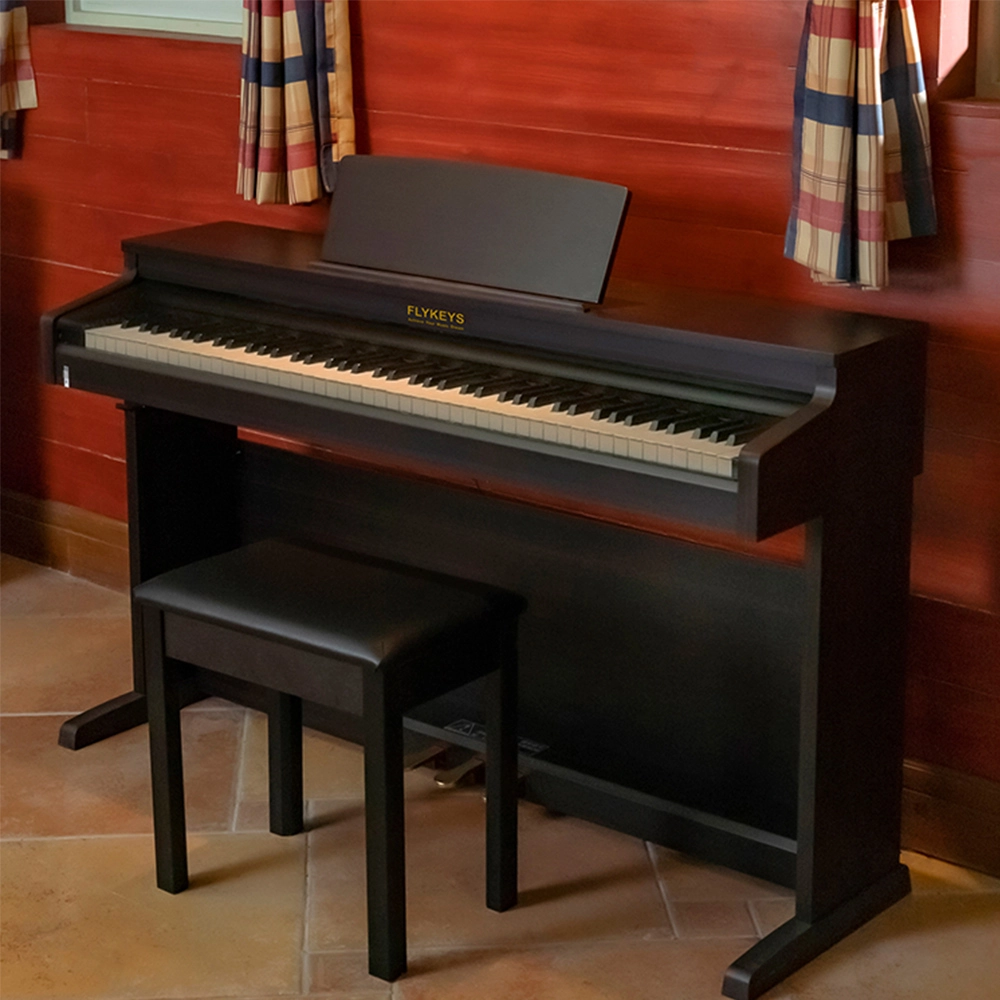
Sound Source: Independently developed DSP chip, famous German grand piano sound samples, 8-layer 256 MB dynamic wavetable, and string resonance and overtone simulation technology.
Keyboard: Independently developed 88-key weighted hammer-action keyboard with dynamic velocity curves.
Exterior: Small door design, wooden cabinet structure, sliding key cover, aluminum alloy handle, foldable large music stand, and side control panel with single-row round buttons.
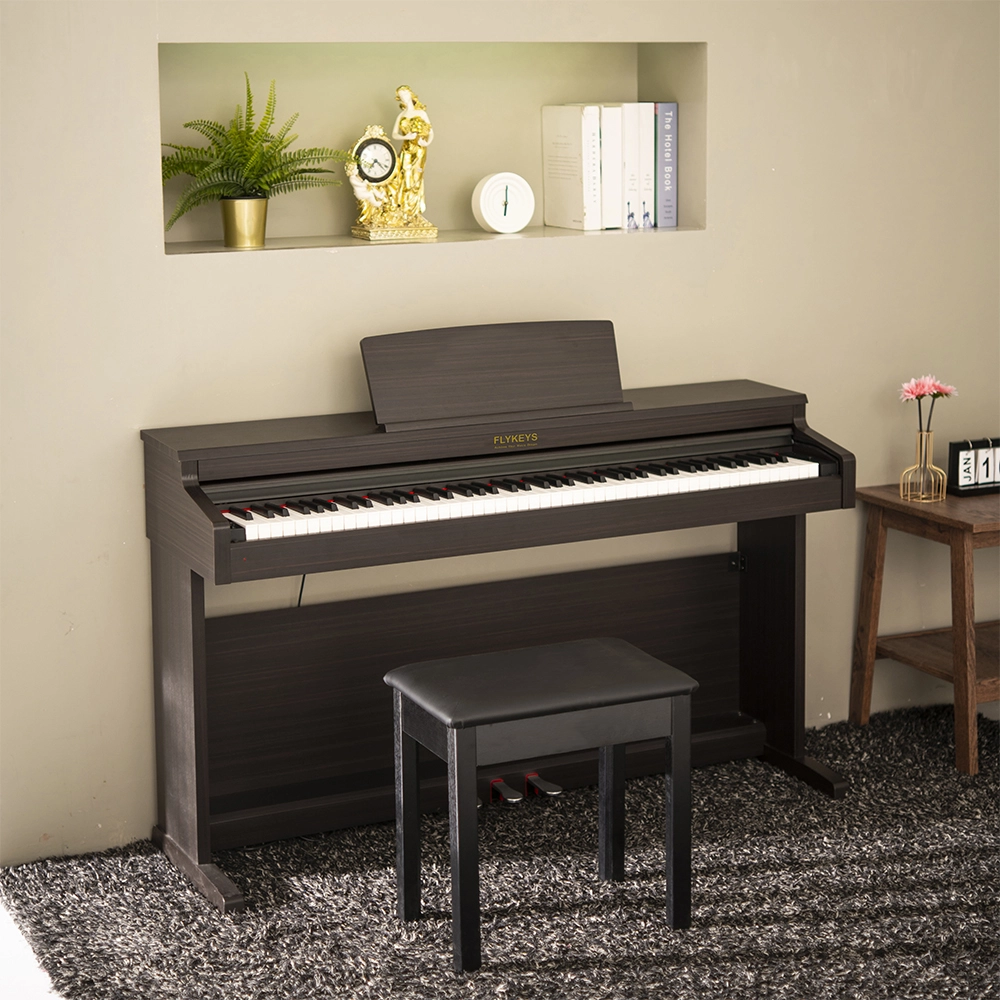
— Standard Upright Digital Piano
— Independent patented technology 88-key Grand-Response hammer-action & dynamic curve keyboard
— European top DSP chip, famous grand piano sound sample
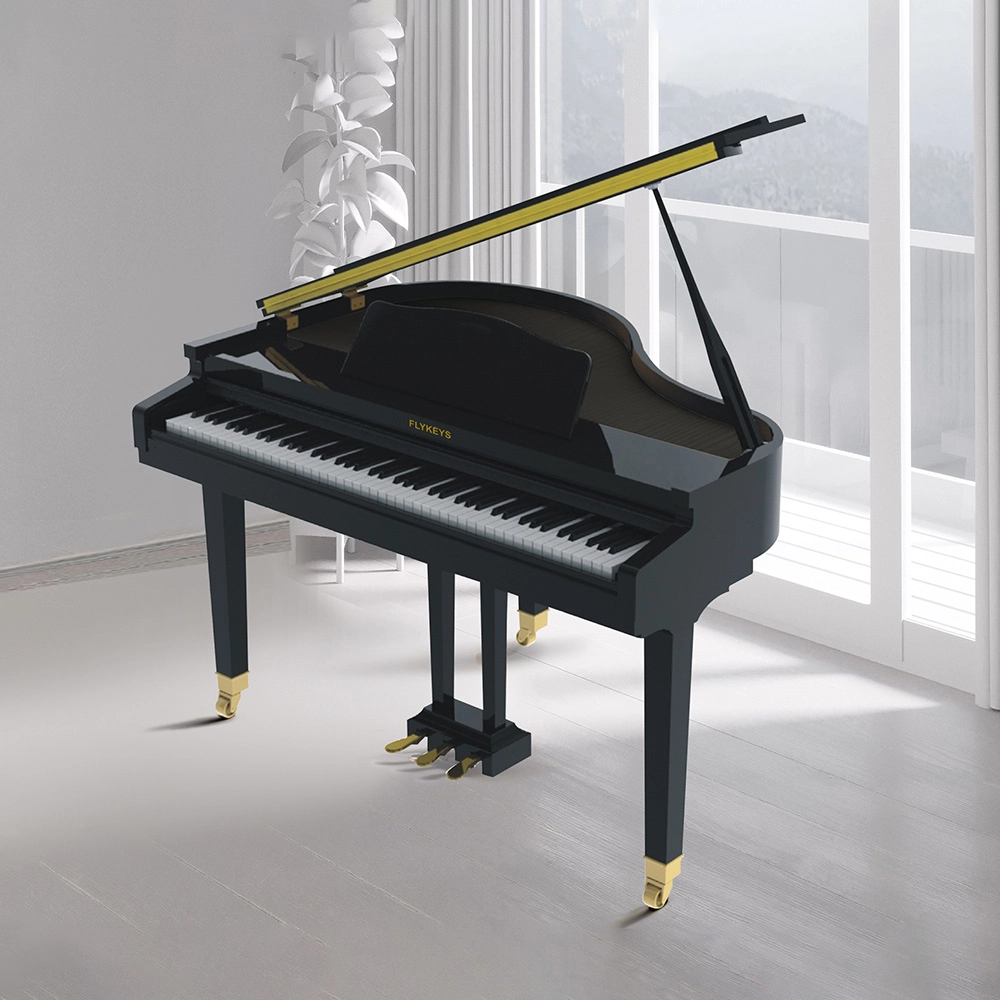
• Baby Grand Style with High-Gloss Polished Cabinet
• Italian Fatar 88-key Grand-Response™ Keyboard with Hammer Action and Touch Curve
• Independently Developed DSP Chip with German Grand Piano Sound Sampling
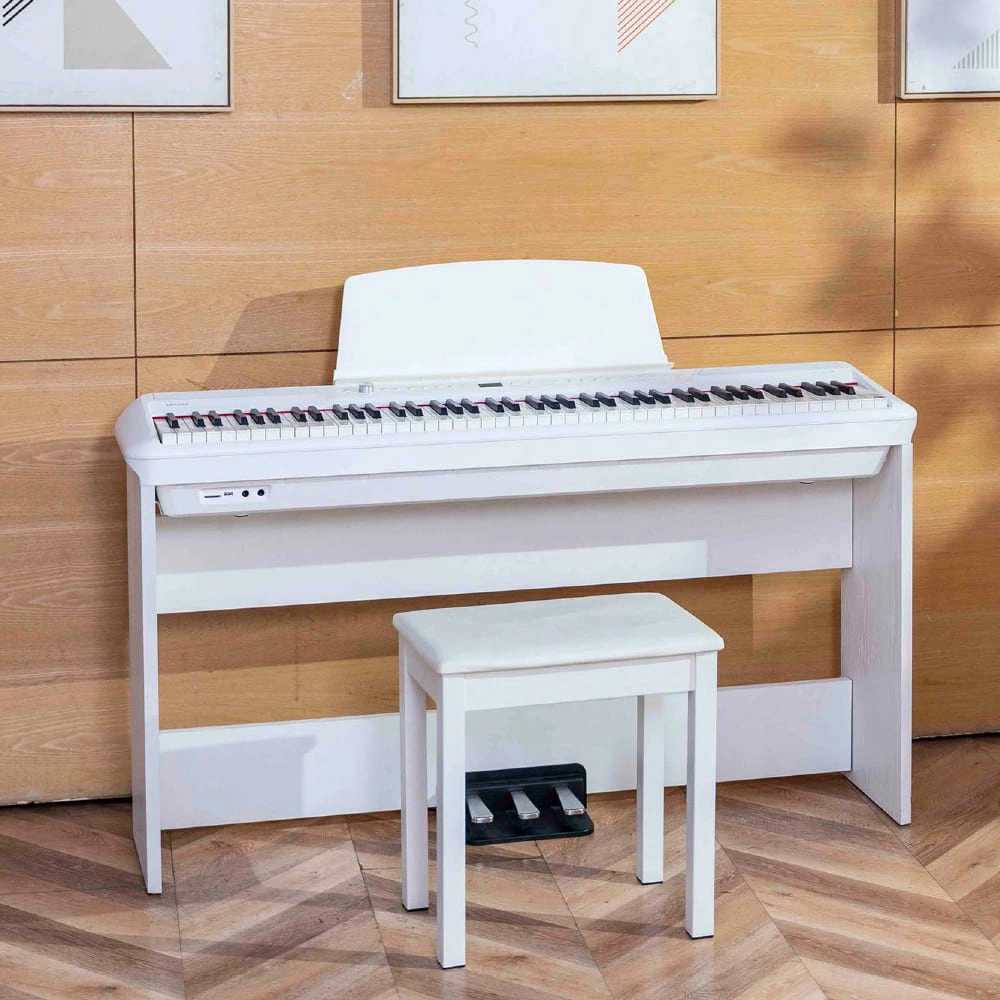
—keyboard: Independent patented technology 88-key, Grand-Response hammer dynamic curve keyboard
—Sound source: Independently developed the 4th generation DSP sound source, German famous grand piano sound sample
— Modern, lightweight case, X stand, U stand, Wood stand, 3 pedals
— Control: double sound, record, split, transpose, reverb, chorus, metronome, MIDI, bluetooth
Address: No. 38 Xiangshan Avenue, Zengcheng Economic And Technological Development Zone, Guangzhou, China.
FOLLOW US:
Copyright© 2026 FLYKEYS All Rights Reserved. 粤 ICP备2020102774号. Designed by Gooeyun. Sitemap | Privacy | Terms
FLYKEYS
FLYKEYS
flykeys-music
Flykeys Music