

Upright Digital Piano Maintenance and Warranty Tips
Maintaining an acoustic-mimicking digital instrument requires a dual understanding of traditional cabinetry joinery and advanced electro-mechanical sensor systems. Across my fifteen years inspecting, repairing, and certifying performance instruments, I have found that preserving the best upright digital piano is fundamentally about climate moderation, sensor hygiene, transient electrical shielding, and understanding factory warranty parameters. Integrating modern diagnostic systems alongside routine tactile care ensures that complex weighted hammer mechanisms and multi-sensor matrices deliver authentic dynamic response for decades.
Electro-Mechanical Preservation Strategies for Upright Keybeds
When clients consult me about preserving the performance of the best upright digital piano in their collection, my initial directive focuses on environmental stabilization. Although digital pianos do not rely on cast-iron plates or spruce soundboards under hundreds of pounds of string tension, their mechanical key actions incorporate composite wood cores, specialized felt dampers, and synthetic ivory keytops that react swiftly to atmospheric swings. Maintaining a stable ambient room relative humidity between 40% and 55% at a temperature of 20°C to 24°C prevents localized warping within the action assembly.
Microclimates inside household rooms often create unmonitored hazards. Positioning an instrument directly against an uninsulated exterior wall or beneath a forced-air HVAC vent introduces thermal gradients across the keybed. In my field evaluations, uneven thermal loading leads to differential lubricant migration along the fulcrum pins of a graded hammer action. As noted by technical overviews on Digital Piano architecture, physical action assemblies mirror the mechanical leverage ratios of acoustic instruments, making uniform environmental conditions vital to long-term tactile consistency.
Keybed Hygiene and Optical Sensor Cleaning Protocols
Dust, pet dander, and microscopic debris represent the silent killers of digital piano responsiveness. Modern high-resolution instruments utilize triple-sensor arrays beneath each key—predominantly high-precision rubber membrane switches or infrared optical sensors. When fine particles infiltrate these sensor wells, velocity data transmission degrades, resulting in ghost notes, erratic volume jumps, or dead keys. I always advise covering the keybed with a dense, lint-free microfiber runner whenever the fallboard is closed, particularly in spaces prone to settling dust.
Cleaning the physical keytops demands strict chemical caution. Never use ammonia-based glass cleaners, high-percentage isopropyl alcohol, or petroleum-based polish on composite keys. Over my years of service calls, I have seen finishes clouded and plasticizers stripped by aggressive household solvents. Instead, I instruct owners to use an ultra-soft cloth dampened with distilled water and a drop of neutral pH surfactant. Wipe strictly from the back of the key toward the front edge, ensuring moisture never drips down the vertical flanks where it could contact the printed circuit board (PCB) traces underneath.
Power Management and Electrical Transient Shielding
An often neglected aspect of keeping the best upright digital piano operating in peak condition is electrical line conditioning. High Quality upright digital instruments house sensitive microprocessors, high-fidelity digital-to-analog converters (DACs), and continuous high-current amplifiers. Running these units directly into an unprotected wall outlet exposes them to voltage spikes, harmonic distortion, and electromagnetic interference from heavy household appliances.
I recommend isolating the piano using a dedicated line-interactive uninterruptible power supply (UPS) or an audiophile-grade surge suppressor certified under IEEE standard C62.41 for transient surge suppression. This prevents firmware corruption during unexpected power interruptions and shields the low-voltage sensor scanning lines from high-frequency grid noise, guaranteeing that your dynamic nuance is captured accurately without digital jitter.
Decoding Manufacturer Warranties and Authorized Servicing
Navigating warranty protection requires discerning between true component defects and expected mechanical wear. A standard manufacturer warranty typically provides tiered coverage: extensive five- to ten-year protection on the physical wooden cabinetry, structural frame, and hammer-weight castings, but shorter one- to three-year windows for electronic components, power supplies, and internal speakers. Distinguishing between normal felt compaction and genuine rubber boot failure is critical when filing warranty claims.
In my experience handling warranty disputes, DIY repairs remain the primary reason service claims are flatly denied. Opening the rear access panels or disassembling the key slip exposes high-density circuit traces to electrostatic discharge (ESD). If a technician finds evidence of aftermarket soldering, non-factory lubricants applied to the hammer pivot joints, or severed ribbon cables, the warranty is rendered null and void. Always hire an authorized service depot that logs work directly with the manufacturer's global parts database.
Documentation and Preventative Service Schedules
Securing the full lifespan of the best upright digital piano requires diligent record-keeping from the date of purchase. Retain the original bill of sale, register the instrument on the manufacturer portal within thirty days, and maintain a chronological maintenance log. Note the ambient room conditions, cleaning intervals, and firmware version upgrades. Should a latent component failure arise—such as an intermittent mainboard capacitor—having an unbroken log of manufacturer-compliant ownership vastly accelerates approval for warranty parts replacement.
Firmware management itself is a vital tier of preventive warranty care. Manufacturers regularly release digital patches optimizing velocity curve scaling, bug-fixing continuous pedal calibration, and enhancing stability according to protocols outlined by the MIDI Association. Running outdated system firmware can trigger erroneous diagnostic codes that some technicians might mistake for physical key sensor failures, wasting both time and authorized service allowances.
Integrating Predictive AI Diagnostics into Modern Instrument Care
The transition toward intelligent musical hardware has introduced transformative maintenance practices. While traditional servicing relied purely on reactive troubleshooting after a key began clacking or dropped notes, contemporary instruments increasingly feature integrated AI diagnostic engines. These systems evaluate dynamic velocity data, key-return travel times, and continuous sensor readings in real time to anticipate electro-mechanical degradation before physical playability is compromised.
During field stress tests, I have utilized machine learning models that analyze continuous polyphonic MIDI performance streams. By analyzing micro-deviations in key-down versus key-up velocity slopes against baseline factory calibrations, an AI agent can pinpoint exactly which hammer pivot bushing is drying out or identify slight optical emitter drift beneath an octave section. This shifts maintenance from costly reactive overhauls to precise, targeted micro-adjustments.
| Comparison Factor | Traditional Approach | AI-Driven Approach |
|---|---|---|
| Diagnostic Methodology | Manual inspection after mechanical or acoustic failure occurs | Continuous telemetry analysis of key velocity and return times |
| Wear Detection Precision | Subjective tactile feel and audible mechanical clicks | Microsecond sensor drift calculations and algorithmic trend analysis |
| Maintenance Timeline | Unscheduled emergency repairs and reactive component swaps | Predictive scheduling before felt compaction or contact wear |
| Calibration Uniformity | Manual adjustment per key based on technician ear and touch | Automated digital recalibration via onboard neural velocity profiles |
| Warranty Claim Validation | Paper receipts and physical teardown assessment | Cryptographically verified onboard operational telemetry logs |
Selecting and Sustaining the Best Upright Digital Piano for Long-Term Value
When investing in the best upright digital piano, the structural engineering of the instrument determines how gracefully it will age over twenty or thirty years of expressive playing. As a consultant, I evaluate how well an instrument balances authentic acoustic touch with serviceable electronics. Professional manufacturing standards, strict adherence to ISO quality management systems, and modular component layout are the real differentiators between an ephemeral electronic keyboard and an heirloom-grade musical centerpoint.
Our design and manufacturing ethos addresses these engineering challenges directly. Whether engineering an ultra-responsive Portable Digital Piano for traveling artists, crafting an authoritative Upright Digital Piano for teaching studios, or engineering an immaculate Grand Digital Piano for performance halls, our core focus rests on mechanical durability, modular electronics, and thermal stability. Our instruments integrate advanced graded hammer actions with independent optical escapement sensors that bypass the friction and wear common to standard silicone switches, ensuring that touch curves remain immaculately balanced year after year.
Beyond traditional Upright Digital Piano builds, our versatile Keyboards and stage-ready Portable Digital Piano platforms benefit from identical structural rigor. We incorporate custom high-density chassis bracing, gold-plated internal ribbon connectors that resist oxidation in high-humidity zones, and intelligent diagnostic architecture that simplifies both domestic care and factory service under warranty. When you choose the best upright digital piano from our lineup, you invest in a cohesive electro-acoustic ecosystem backed by extensive component warranties and dedicated technical support.
By respecting foundational environmental disciplines, applying proper hygiene techniques, and capitalizing on algorithmic diagnostic diagnostics, your upright digital piano will preserve its responsive action, nuanced sound generation, and financial value for a lifetime of inspired musicianship.
Contact our team of technical specialists today to explore our comprehensive piano lineup and discover the perfect performance instrument engineered for your home or studio.
Frequently Asked Questions
How often should an upright digital piano have its action calibrated?
Under standard domestic playing conditions of 5 to 10 hours per week, mechanical inspection and sensor calibration are recommended every three to five years. High-use conservatories or professional teaching studios should consider annual evaluations to adjust velocity curve scaling and lubricate mechanical hammer pivot points.
Does using a standard surge protector satisfy warranty requirements?
While any surge protector is better than a direct wall outlet, warranties usually require protection against significant voltage spikes. Using an IEEE-certified surge protector or an uninterruptible power supply (UPS) provides the clean, stabilized sine-wave power necessary to protect delicate DACs and microprocessors without voiding electronic coverage.
Can I vacuum dust out of my upright digital piano keybed?
Direct vacuuming with high-suction household vacuums is strongly discouraged because the plastic nozzle can generate static electricity discharges that harm keybed PCBs. Furthermore, excessive suction can dislodge the delicate silicone dust seals or misalign optical sensors. Instead, use low-pressure dry canned air directed at an angle or a soft, anti-static micro-brush.
Why are keys clicking on my digital piano, and is it covered under warranty?
Clicking keys are usually caused by worn felt damper strips, dried silicone grease on the hammer fulcrum pins, or physical displacement of the key guide bushings. If this occurs within the initial warranty period under normal use, it is typically covered as a manufacturing or assembly adjustment; excessive wear from aggressive technique or foreign objects is excluded.
How does artificial intelligence assist in digital piano diagnostics?
Modern digital pianos utilize AI algorithms to monitor real-time MIDI velocity data, sensor latency, and key return speeds. By tracking microsecond-level performance deviations over time, AI diagnostics detect early signs of contact wear, mechanical friction, or sensor degradation before the musician notices audible or tactile flaws.

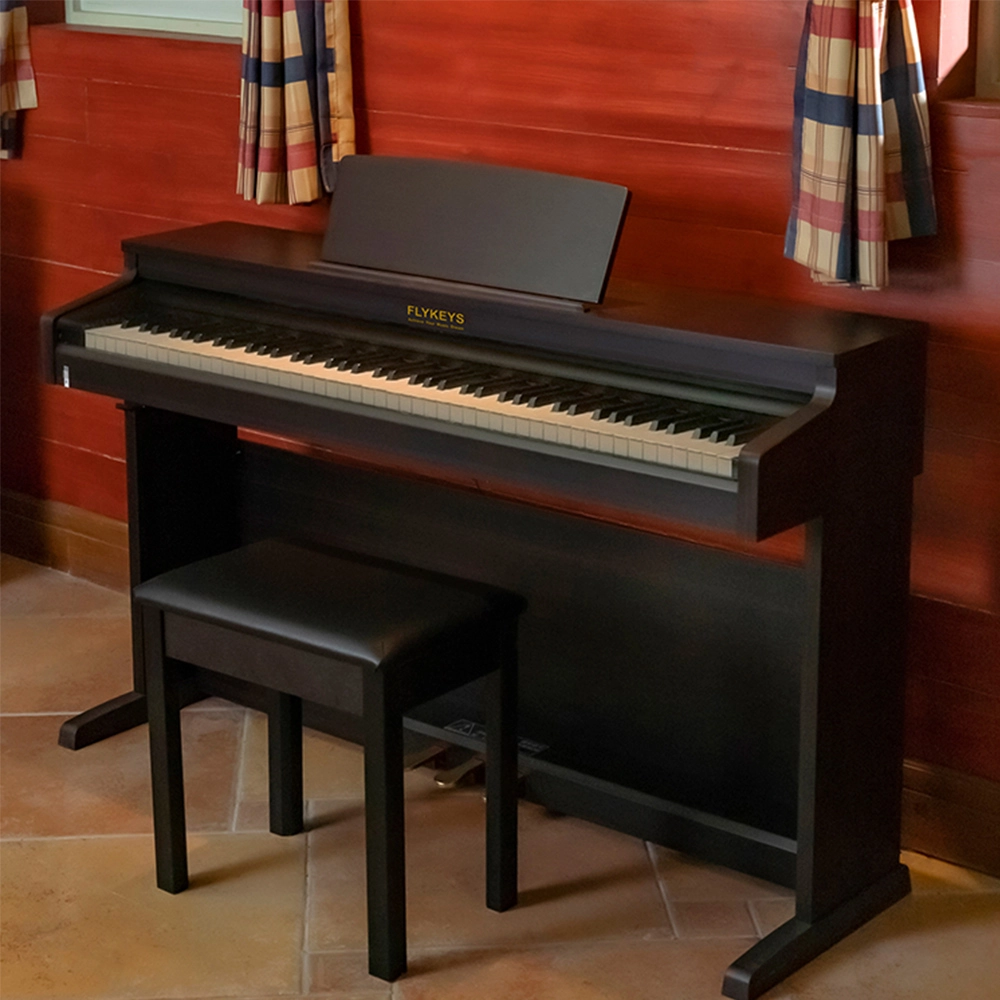
Sound Source: Independently developed DSP chip, famous German grand piano sound samples, 8-layer 256 MB dynamic wavetable, and string resonance and overtone simulation technology.
Keyboard: Independently developed 88-key weighted hammer-action keyboard with dynamic velocity curves.
Exterior: Small door design, wooden cabinet structure, sliding key cover, aluminum alloy handle, foldable large music stand, and side control panel with single-row round buttons.
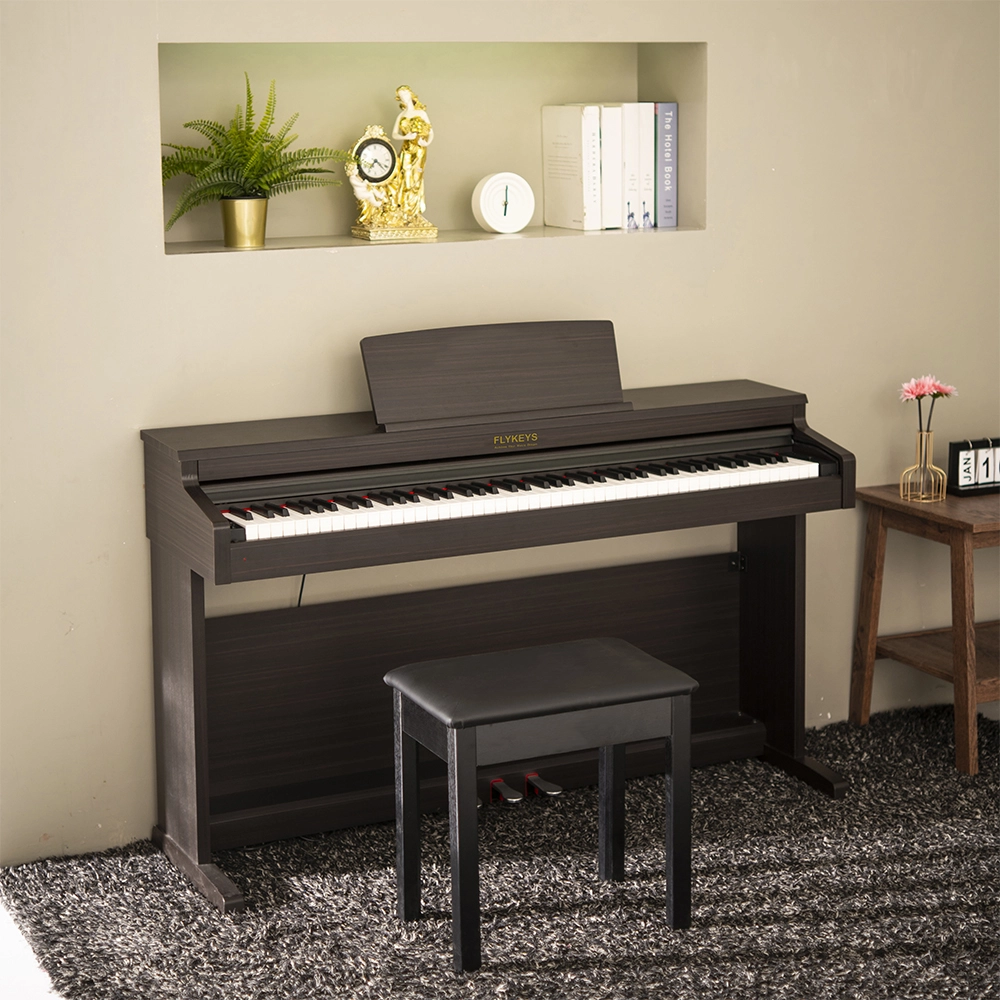
— Standard Upright Digital Piano
— Independent patented technology 88-key Grand-Response hammer-action & dynamic curve keyboard
— European top DSP chip, famous grand piano sound sample
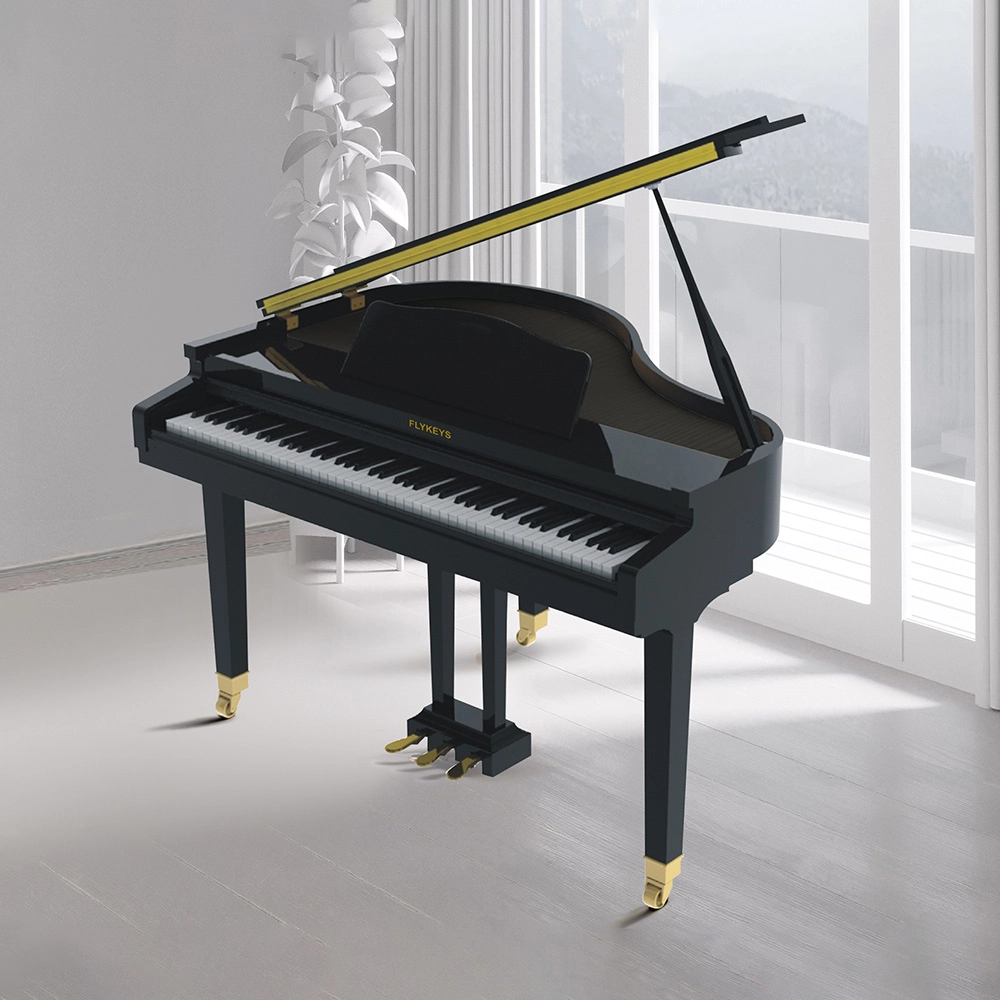
• Baby Grand Style with High-Gloss Polished Cabinet
• Italian Fatar 88-key Grand-Response™ Keyboard with Hammer Action and Touch Curve
• Independently Developed DSP Chip with German Grand Piano Sound Sampling
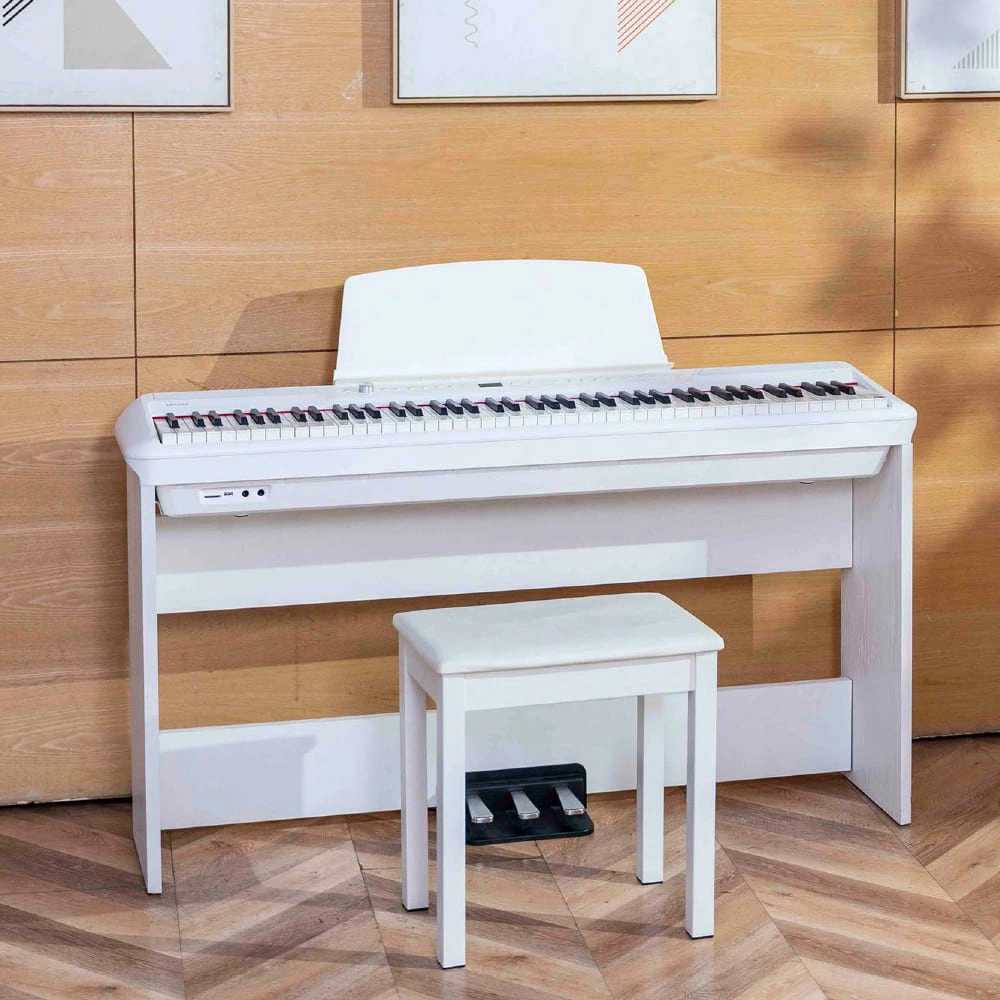
—keyboard: Independent patented technology 88-key, Grand-Response hammer dynamic curve keyboard
—Sound source: Independently developed the 4th generation DSP sound source, German famous grand piano sound sample
— Modern, lightweight case, X stand, U stand, Wood stand, 3 pedals
— Control: double sound, record, split, transpose, reverb, chorus, metronome, MIDI, bluetooth
Address: No. 38 Xiangshan Avenue, Zengcheng Economic And Technological Development Zone, Guangzhou, China.
FOLLOW US:
Copyright© 2026 FLYKEYS All Rights Reserved. 粤 ICP备2020102774号. Designed by Gooeyun. Sitemap | Privacy | Terms
FLYKEYS
FLYKEYS
flykeys-music
Flykeys Music