

Where to Buy: Trusted Retailers and Suppliers for Digital Pianos
Navigating the global marketplace to source high-grade digital instruments requires understanding both hardware integrity and evolving sound engine tech. Over my 15 years consulting for musical academies, retail chains, and commercial gear distributors, I have evaluated hundreds of retail platforms and tier-1 OEM manufacturing pipelines. For digital piano keyboard beginners, securing a reliable instrument depends on choosing verified musical instrument suppliers that guarantee hammer-action calibration, polyphony standards, and comprehensive post-sale support. Whether sourcing single units or bulk institutional inventory, identifying trustworthy distribution channels separates lasting musical investments from disposable electronics.
Navigating the Global Retail Landscape for Modern Digital Keyboards
Brick-and-Mortar Music Showrooms vs. Authorized E-Commerce Hubs
Throughout my career advising institutional procurement teams, I have seen buyers constantly wrestle with the choice between local retail showrooms and authorized e-commerce distributors. Brick-and-mortar retailers provide tactile engagement; you can sit down, evaluate the keybed pivot length, and listen to the natural decay of the acoustic grand samples directly through the internal speaker baffle. Prominent music retailers verified by the National Association of Music Merchants (NAMM) maintain direct factory authorizations, ensuring that digital piano keyboard beginners receive factory-sealed instruments backed by genuine domestic warranties. Conversely, premier e-commerce channels offer vast catalog access and competitive shipping terms, but buyers must verify authorized dealer badges to avoid unauthorized third-party liquidators.
Evaluating Gray Market Risks and Warranty Realities
During inventory audits, I frequently encounter buyers who fell prey to gray-market sellers offering steep discounts on High Quality instruments. Gray-market units are typically imported outside authorized territory lines, rendering standard manufacturer warranties void. When digital piano keyboard beginners purchase gray-market gear, they risk receiving mismatched power supplies, obsolete firmware revisions, and zero factory recall protection. Authoritative standards established under consumer protection benchmarks like the International Organization for Standardization (ISO) emphasize that electronic musical instruments must meet stringent electrical safety and regional frequency compliance. Buying solely through accredited retailers or certified direct-from-source manufacturers guarantees trace-level serial verification and long-term serviceability.
What Digital Piano Keyboard Beginners Must Prioritize Before Buying
When I mentor educators guiding new students, I stress that digital piano keyboard beginners should not be blinded by superficial cosmetics or bloated sound banks. A beginner requires three primary hardware elements: 88 fully weighted hammer-action keys, dynamic velocity sensitivity, and at least 64-note polyphony (with 128-note or 192-note polyphony preferred). Inexpensive non-weighted keyboards distort hand posture and tendon development, creating physical bad habits that take years to unlearn. Selecting a trusted retailer that accurately categorizes keybed mechanics—differentiating between spring-loaded tension and true dual or triple-sensor mechanical hammers—is the single most vital step digital piano keyboard beginners can take.
Architectural Benchmark: Acoustic Realism and Intelligent Evaluation
Sensor Systems, Graded Hammer Action, and Sound Generation
From an engineering standpoint, modern digital pianos simulate the physical physics of an acoustic piano through intricate mechanical levers and optical or rubber sensor contacts. In a traditional acoustic piano, lower strings feature heavier hammers while upper octaves utilize lighter hammers. When testing instruments for clients, I measure graded resistance across all seven octaves. Reputable instrument suppliers clearly document whether an action features dual-sensor or triple-sensor detection. Triple-sensor keybeds permit rapid note repetition without fully releasing the key, an indispensable feature as digital piano keyboard beginners advance toward intermediate repertoire requiring subtle trills and articulation control.
AI-Assisted Acoustic Modeling vs. Traditional Static Sampling
The industry is experiencing a profound technological shift driven by artificial intelligence and neural audio synthesis. For decades, manufacturers relied on static pulse-code modulation (PCM) multi-sampling, recording acoustic grands at three or four velocity intervals. Today, intelligent machine-learning algorithms analyze sympathetic string resonance, damper resonance, and cabinet dispersion in real time. Rather than merely playing back recorded WAV files, AI-driven sound synthesis reconstructs soundboard physics dynamically based on your touch. As digital piano keyboard beginners develop expressive dynamics, these neural modeling engines deliver the nuanced tonal color shifts once exclusive to multi-thousand-dollar concert grands.
| Comparison Factor | Traditional Approach | AI-Driven Approach |
|---|---|---|
| Acoustic Sample Generation | Multi-velocity static PCM stereo recordings stored in flash ROM | Neural dynamic acoustic modeling simulating string and cabinet resonance in real time |
| Keybed Touch Calibration | Manual factory spring calibration with fixed velocity curves | Intelligent sensor response algorithms adjusting dynamically to player velocity profiles |
| Tone Articulation & Decay | Pre-recorded loop decay yielding repetitive harmonic behavior | Algorithmic decay calculation recreating physical string vibration physics and pedal interactions |
| Pedal Resonance Simulation | Basic switch-triggered stereo filter cross-fade | Continuous physical modeling reproducing half-pedal damper drag and sympathetic harmonic overtone fields |
Essential Protocols: MIDI Standards and Educational Connectivity
A high-quality instrument must function as an expandable digital workstation. I always ensure that any model recommended to digital piano keyboard beginners adheres to the unified protocols established by the MIDI Association. Modern USB-MIDI interfaces, class-compliant Bluetooth MIDI, and audio pass-through turn the instrument into an interactive teaching platform. Digital piano keyboard beginners can interface seamlessly with digital audio workstations, interactive learning apps, and scoring software without configuring external drivers, bridging the gap between practice sessions and digital music production.
Sourcing Direct from Tier-1 Manufacturers: The OEM/ODM Advantage
Engineering Precision: Keybeds, Soundboards, and Cabinetry
While retail giants serve individual buyers well, commercial institutions, music schools, and private-label distributors achieve superior cost efficiency by sourcing directly from established manufacturing facilities. In my on-site evaluations of specialized keyboard production lines, the gold standard involves automated CNC-milled keybed frames, electro-acoustic calibration chambers, and resonance-tested high-density fiberboard furniture cabinetry. Sourcing directly from an established enterprise eliminates layers of middleman markups while allowing direct oversight of keybed tension tolerances, high-fidelity sound chipsets, and finish durability.
Our Comprehensive Product Lineup and Manufacturing Capabilities
As an industry-leading musical instrument manufacturer with advanced R&D facilities, we engineer instruments tailored to every stage of musical development. For space-conscious students and mobile gigging musicians, our Portable Digital Piano series combines lightweight chassis construction with authentic 88-key progressive hammer mechanics and extended battery flexibility. For families and private studios desiring aesthetic elegance alongside institutional durability, our Upright Digital Piano models offer furniture-grade wood cabinets, integrated three-pedal lyres, and multi-speaker directional projection chambers designed to recreate the spatial envelope of an acoustic vertical piano.
For premier concert halls, conservatories, and commercial hospitality venues, our flagship Grand Digital Piano series delivers visual grandeur paired with our most sophisticated acoustic modeling engines and tactile wooden key action. In addition, our versatile Keyboards lineup supplies schools and studio arrangers with highly responsive synthesizer and arranger tools packed with modern connectivity. By integrating custom DSP processors and intelligent velocity-mapping algorithms across our entire catalog, we ensure that digital piano keyboard beginners experience world-class acoustic response from their very first practice session.
Quality Assurance Protocols and Institutional Scalability
Every instrument rolling off our assembly floors undergoes stringent quality testing aligned with global compliance benchmarks, including electromagnetic safety, environmental RoHS standards, and mechanical fatigue testing where each key is struck mechanically over 500,000 times to verify spring-free durability. For global partners seeking reliable distribution, we offer robust OEM/ODM production scalability, dedicated warranty support, and comprehensive container logistics. We empower our partners to provide digital piano keyboard beginners with durable, concert-grade musical tools that foster lifelong artistic development.
Contact our global distribution team today to discuss volume pricing, authorized dealer agreements, or tailored digital piano manufacturing solutions.
Frequently Asked Questions
What key features should digital piano keyboard beginners look for when purchasing their first instrument?
Digital piano keyboard beginners should prioritize 88 fully weighted keys with graded hammer action, dynamic velocity sensitivity, and at least 64-note polyphony (with 128-note or 192-note polyphony preferred). These specifications ensure authentic acoustic finger-weight training and prevent dropped notes during complex passages.
Is it better to purchase a digital piano from local retailers or direct suppliers?
Local authorized retailers allow you to test touch action and sound projection in person, making them ideal for single-unit consumers. Sourcing directly from certified manufacturers or premier direct suppliers is optimal for schools, studios, and distributors seeking volume pricing, custom OEM specifications, and direct technical support.
How do AI acoustic modeling engines improve the sound quality of digital pianos?
Unlike traditional static PCM samples that simply replay recorded audio clips, AI acoustic modeling computes string resonance, cabinet dispersion, and damper behavior dynamically in real time, delivering richer harmonic depth and organic response to touch nuances.
What is the difference between semi-weighted keys and graded hammer action keys?
Semi-weighted keys use internal springs with light weights, providing minimal resistance that does not mirror an acoustic piano. Graded hammer action keys employ real mechanical levers without springs, replicating heavier resistance in the bass register and lighter response in the treble register.
Why is MIDI and USB connectivity essential for digital piano keyboard beginners?
Class-compliant USB-MIDI and Bluetooth connections allow digital piano keyboard beginners to link their instrument directly to computers, tablets, and learning apps. This facilitates interactive lessons, real-time score transcription, and digital recording without requiring complex external audio interfaces.
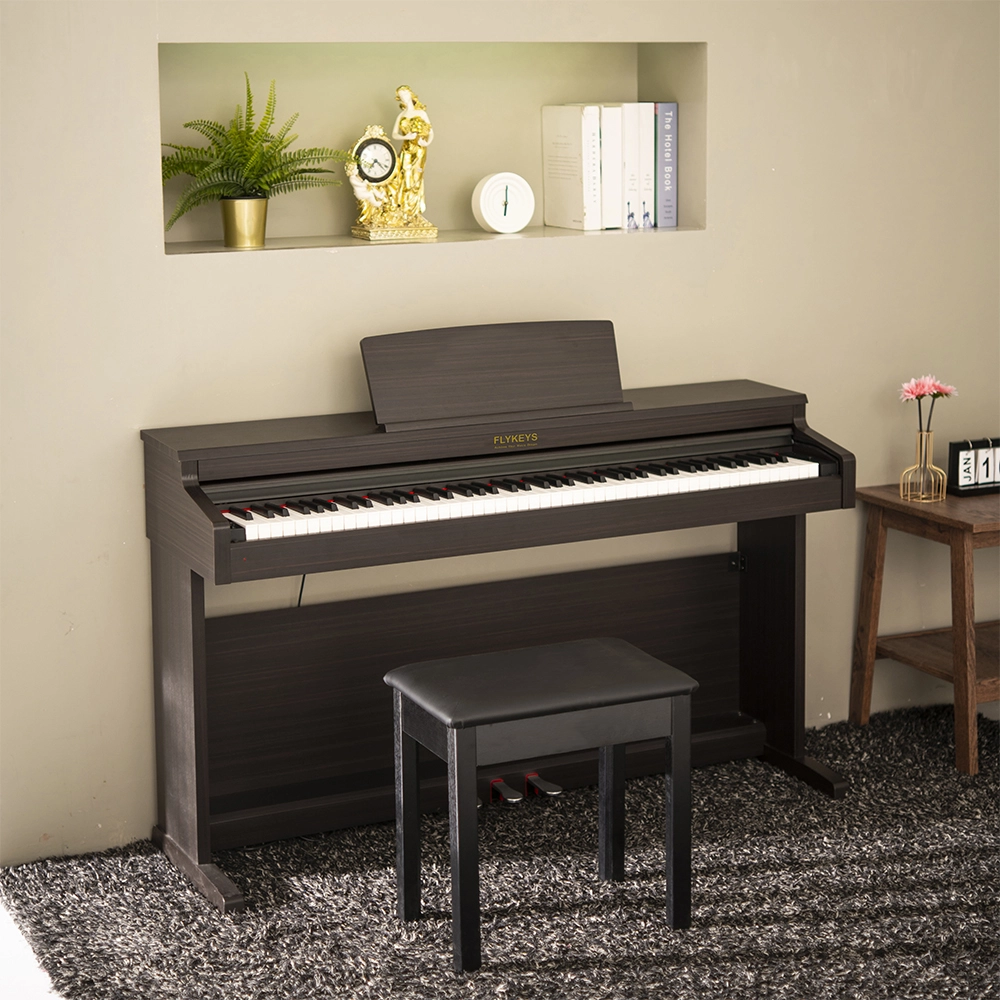
— Standard Upright Digital Piano
— Independent patented technology 88-key Grand-Response hammer-action & dynamic curve keyboard
— European top DSP chip, famous grand piano sound sample
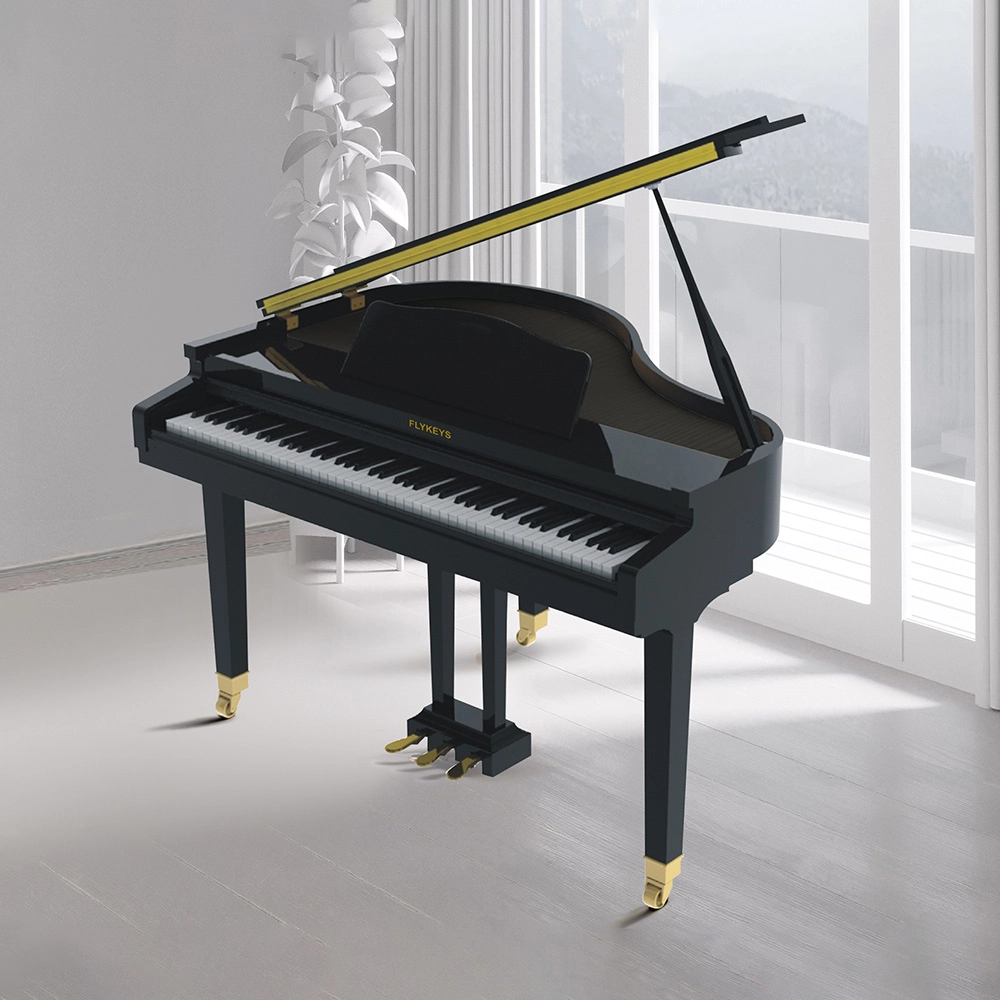
• Baby Grand Style with High-Gloss Polished Cabinet
• Italian Fatar 88-key Grand-Response™ Keyboard with Hammer Action and Touch Curve
• Independently Developed DSP Chip with German Grand Piano Sound Sampling
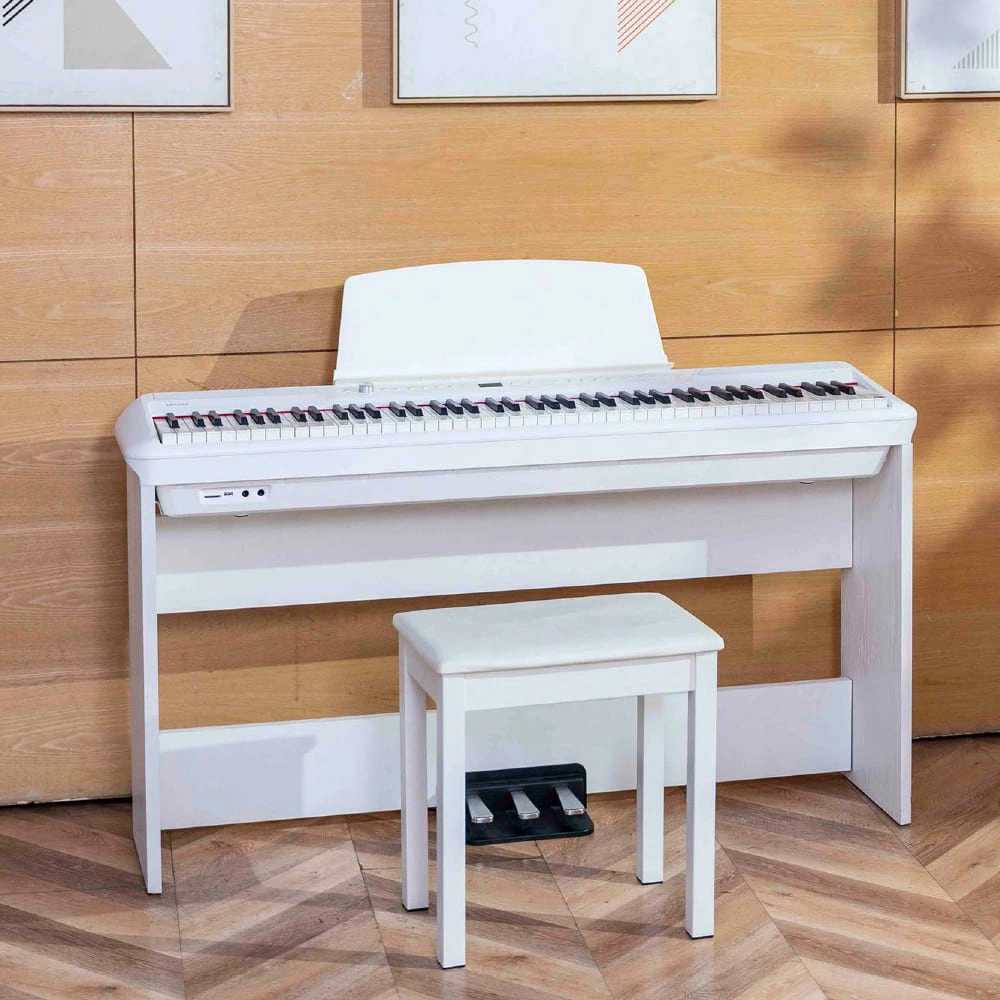
—keyboard: Independent patented technology 88-key, Grand-Response hammer dynamic curve keyboard
—Sound source: Independently developed the 4th generation DSP sound source, German famous grand piano sound sample
— Modern, lightweight case, X stand, U stand, Wood stand, 3 pedals
— Control: double sound, record, split, transpose, reverb, chorus, metronome, MIDI, bluetooth
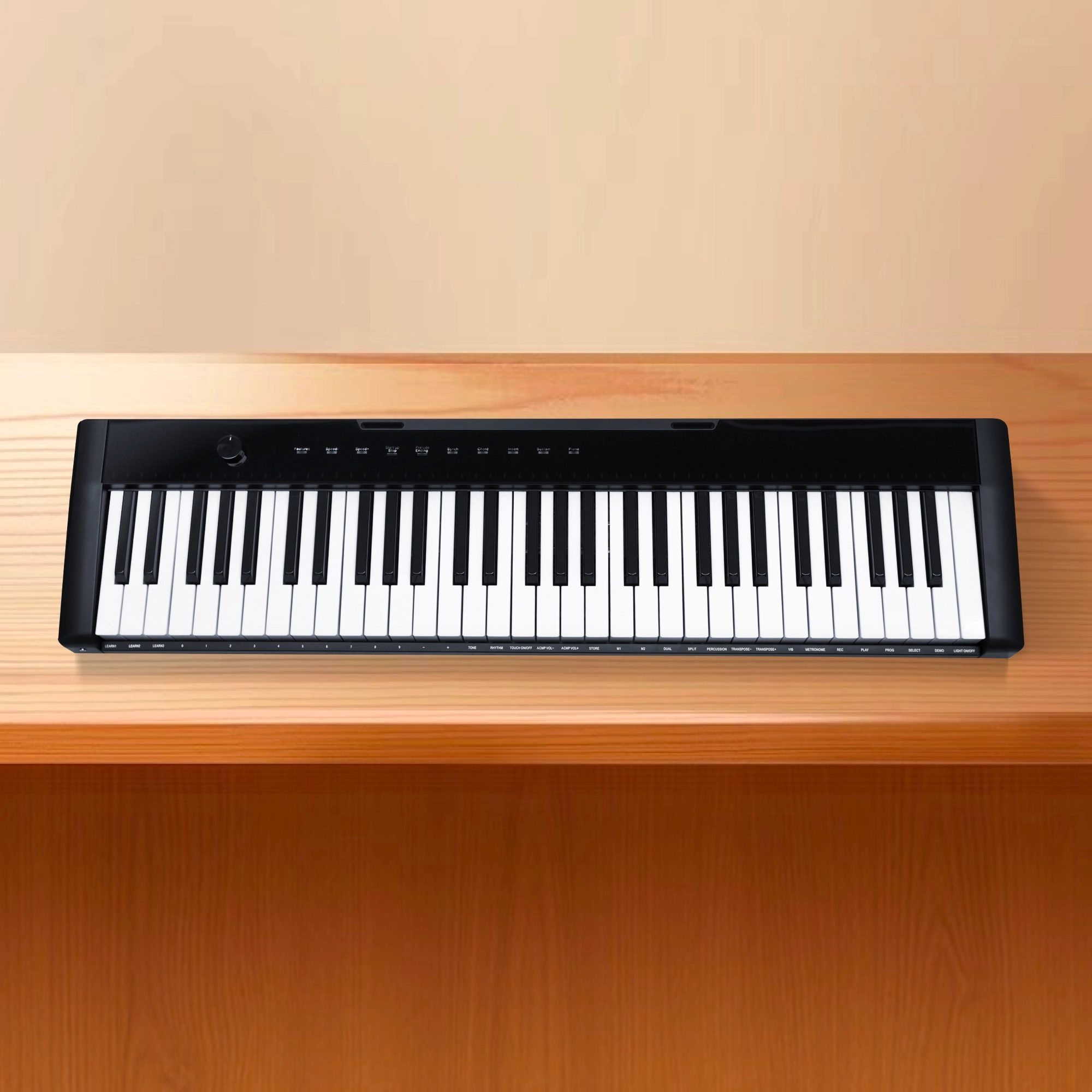
The keyboard features 61 touch-sensitive piano keys, 61 percussion sounds, 600 sounds, 100 demo songs, and 200 rhythms. It includes touch panel control with recording, programming, and playback functions, sync and fill-in functions, metronome function (master volume, accompaniment volume, and tempo control), sound expansion, vibrato, transpose, dual voice, and keyboard functions. Bluetooth and USB cable connectivity support connection with the learning app, which provides three learning modes: duet mode, continuous practice mode, and demonstration mode.
Address: No. 38 Xiangshan Avenue, Zengcheng Economic And Technological Development Zone, Guangzhou, China.
FOLLOW US:
Copyright© 2026 FLYKEYS All Rights Reserved. 粤 ICP备2020102774号. Designed by Gooeyun. Sitemap | Privacy | Terms
FLYKEYS
FLYKEYS
flykeys-music
Flykeys Music