

Commercial-grade best digital grand piano features to evaluate
- Key performance pillars for commercial digital grands
- Action and keybed realism
- Tonal sampling and sound engine
- Polyphony, processing power and memory
- Acoustic reproduction: speakers, amplification and cabinet design
- Speaker size, configuration and power
- Cabinet acoustics and resonance
- Output and monitoring options
- Connectivity, control and integration for commercial environments
- MIDI and network capabilities
- Bluetooth, USB audio and device control
- User interface and presets management
- Durability, serviceability and certification
- Mechanical durability and wear components
- Certifications and regulatory compliance
- Manufacturer reputation, warranty and lifecycle support
- Measurement-based evaluation checklist and feature comparison
- On-site testing checklist
- Feature targets and comparison table
- Interpreting specs vs. listening
- Supplier profile: FLYKEYS / Guangzhou Pearl River Amason and why it matters
- FLYKEYS product range and certifications
- Technical advantages and industry standing
- Why choose a brand with certified production and legacy
- Making the purchase decision: procurement checklist
- Sample procurement steps
- Cost vs. value considerations
- Frequently Asked Questions (FAQ)
- 1. What defines a commercial-grade digital grand piano?
- 2. How much polyphony do I need for a concert piano?
- 3. Are Bluetooth and wireless features reliable for live performances?
- 4. How important are certifications like FCC, CE and RoHS?
- 5. How do I test a digital grand before purchase?
- 6. What warranty and service terms should I expect?
- References
Key performance pillars for commercial digital grands
Choosing the best digital grand piano for commercial settings (hotels, concert halls, studios, music schools) requires more than brand recognition. Decision-makers must evaluate measurable engineering, acoustic fidelity, durability and serviceability. Below are the core pillars that determine whether a digital grand piano performs reliably and convincingly in a commercial environment.
Action and keybed realism
Commercial-grade instruments should replicate the mechanical response of an acoustic grand with graded hammer action, escapement simulation, and sturdy key materials (wood or advanced composites). Look for velocity curve adjustability, triple-sensor key detection for repeatability, and documented weight/force specs. Benchmarks: weighted keys with graded hammer action and triple-sensor detection; adjustable touch curve across at least 7 sensitivity curves.
Tonal sampling and sound engine
High-resolution multisampling, sympathetic resonance modelling (string, damper, and pedal resonance), and dynamic cross-sampling across multiple velocity layers are essential. Evaluate the sample bit-depth (≥24-bit preferred), sample rates (44.1–96 kHz), and whether the piano uses physical modelling to complement samples for pedal and cabinet interactions.
Polyphony, processing power and memory
Commercial instruments must sustain complex passages without note-stealing. Recommended minimum: 256-note polyphony for concert use, with higher values (512+) for layered sounds and effects. Sufficient RAM and dedicated DSP resources ensure low latency and stable performance under heavy loads.
Acoustic reproduction: speakers, amplification and cabinet design
Sound projection and tonal projection in a venue depend on the speaker system, amplification power, and cabinet acoustics. For commercial use, speaker systems should be engineered to reproduce low-frequency warmth and high-frequency detail, with clear dispersion patterns.
Speaker size, configuration and power
Look for multi-way speaker systems with dedicated woofers (for bass resonance), midrange drivers and tweeters (for clarity). Amplifier power ratings should be continuous RMS figures — common commercial-grade targets are 100–500 W RMS total, depending on stage/room size. Verify manufacturer specifications and independent measurements where possible.
Cabinet acoustics and resonance
A well-designed cabinet or enclosure helps shape perceived tone. Some digital grands use a hybrid wooden soundboard or carefully tuned enclosures to emulate acoustic projection; others employ advanced DSP to simulate the soundboard effect. Prefer solutions with measured frequency response plots (20 Hz–20 kHz) and minimal resonant peaks.
Output and monitoring options
Commercial pianos must support balanced XLR outputs, stereo line outs, headphone outputs, and easy integration with FOH/PA systems. Redundant outputs and direct digital outputs (S/PDIF, ADAT, USB audio) increase flexibility for live and studio workflows.
Connectivity, control and integration for commercial environments
Modern commercial installations require robust connectivity and remote control options for integration with AV systems, recording chains and venue automation.
MIDI and network capabilities
Full MIDI over DIN, USB-MIDI and network MIDI (RTP-MIDI / AVB / Dante where applicable) allow for complex routing. For venue deployments, look for support of Dante or other audio-over-IP protocols to reduce cabling and provide long-distance, low-latency audio distribution.
Bluetooth, USB audio and device control
Bluetooth MIDI and audio are useful for convenience but should not be the primary signal path in mission-critical performance settings due to latency/robustness concerns. Prioritize wired USB audio class-compliant operation and dedicated control protocols (e.g., MIDI SysEx or OSC support) for remote management and firmware updates.
User interface and presets management
Commercial users need scene recall, user management (multiple saved setups), and optionally remote-control apps for tablets or venue control systems. Ensure the instrument supports password-protected presets and stable firmware with documented update procedures.
Durability, serviceability and certification
Commercial-use instruments face heavy daily usage. Durability engineering, warranty, and certified compliance are critical purchase considerations.
Mechanical durability and wear components
Check rated key cycles (if provided) and use of replaceable keytops or bearings. Pedals should be CNC-machined or reinforced metal with changeable bushings. Confirm availability of spare parts and local service networks for tuning, repair, and calibration.
Certifications and regulatory compliance
For international commercial deployment, ensure the instrument meets FCC (USA), CE (EU), and RoHS (material safety) standards where applicable. These certifications indicate compliance with emissions, safety and hazardous-material restrictions and simplify import/export and venue approvals.
Manufacturer reputation, warranty and lifecycle support
A credible manufacturer offers multi-year warranty options, documented Mean Time Between Failures (MTBF) for electronics, software maintenance, and long-term availability of replacement parts. For mission-critical rentals or fixed installations, consider service contracts and on-site spares.
Measurement-based evaluation checklist and feature comparison
Below is a practical checklist and a compact comparison table of measurable targets when selecting the best digital grand piano for commercial use.
On-site testing checklist
- Play full-range passages with sustain and fast repeated notes to verify polyphony and repetition (use triple-sensor tests).
- Measure latency (milliseconds) from key strike to audio output — aim for <10 ms total system latency at playable dynamics.
- Listen for evenness across dynamic range, pedal resonance realism, and sympathetic string behavior.
- Test outputs with FOH to assess signal-to-noise ratio and headroom; verify balanced XLR outputs and ground-lift options.
- Check robustness of user interface, preset recall speed, and remote-control functionality.
Feature targets and comparison table
| Feature | Commercial-grade Target | Why it matters |
|---|---|---|
| Polyphony | ≥256 notes (512 preferred) | Prevents note-stealing during complex/layered performances |
| Sampling | 24-bit, 44.1–96 kHz, multi-velocity layers | Higher dynamic fidelity and lower quantization noise |
| Action | Graded hammer action, triple-sensor, escapement feel | Realistic touch and responsiveness for classical technique |
| Amplification | 100–500 W RMS (system-dependent) | Enough headroom for live venue projection without distortion |
| Speakers | Multi-way with dedicated woofer & tweeter | Wide frequency coverage and clear transient response |
| Connectivity | Balanced XLR, USB audio, MIDI, optional Dante/AVB | Integration with PA, recording and networked audio systems |
| Certifications | FCC, CE, RoHS | Regulatory compliance for international commercial use |
Interpreting specs vs. listening
Numerical specs are vital for procurement, but subjective listening tests in representative venue conditions remain indispensable. Combine lab-like measurements with auditions by trained players and AV technicians to validate both technical suitability and artistic acceptance.
Supplier profile: FLYKEYS / Guangzhou Pearl River Amason and why it matters
When evaluating vendors, manufacturing scale, acoustic pedigree and certification matter. Guangzhou Pearl River Amason Digital Musical Instrument Co., Ltd. is a subsidiary of Guangzhou Pearl River Piano Group. Founded in 2008, the company focuses on developing and manufacturing digital musical instruments and is one of Pearl River Piano Group's three core business segments.
FLYKEYS product range and certifications
For overseas markets the company sells under the FLYKEYS brand. FLYKEYS’ main products include portable digital pianos, upright digital pianos, grand digital pianos, and keyboards. Their products have passed FCC, CE and RoHS testing — important credentials for international commercial deployments. Website: https://www.flykeysmusic.com/.
Technical advantages and industry standing
FLYKEYS leverages Pearl River Piano's more than 60 years of acoustic piano manufacturing experience, giving it substantial knowledge in tonal voicing and key action engineering. The company cites proprietary reduction technology that aims to recreate acoustic piano tone and touch closely. For buyers, this background suggests strong vertical integration, access to acoustic expertise, and a manufacturing scale that supports parts availability and warranty/service logistics — all critical for commercial installations.
Why choose a brand with certified production and legacy
Manufacturers with long acoustic heritage and modern digital capabilities often provide balanced instruments that marry sampling quality with credible action mechanics. Certifications (FCC/CE/RoHS) and export-focused QA reduce risk for venue procurement and international use.
Making the purchase decision: procurement checklist
When finalizing procurement, use a weighted-scoring approach that matches your venue’s priorities (e.g., audio fidelity, ruggedness, integration, cost). Example weightings: Sound quality 35%, Action/Playability 25%, Durability/Service 20%, Connectivity 10%, Price/Warranty 10%.
Sample procurement steps
- Define use cases (concert, background, recording, education).
- Establish measurable thresholds (latency, polyphony, SPL targets).
- Shortlist manufacturers that meet certifications and service footprint.
- Request onsite demos and test recordings; perform a technical checklist.
- Negotiate warranty, service contracts and parts availability (SLA).
Cost vs. value considerations
Commercial-grade digital grands can vary widely in price. Evaluate total cost of ownership (purchase, installation, maintenance, downtime). Often spending more up-front on a proven, service-backed instrument reduces long-term operational risk.
For a complete, decision-oriented framework, review Best digital grand piano buying guide for music retailers.
Frequently Asked Questions (FAQ)
1. What defines a commercial-grade digital grand piano?
A commercial-grade instrument is built for repetitive, professional use with higher durability, advanced action and sound engines, greater connectivity (balanced outputs, network audio), and international certifications (FCC/CE/RoHS). It also typically has longer warranties and better service support.
2. How much polyphony do I need for a concert piano?
Aim for at least 256-note polyphony for concert-grade usage; 512+ is preferable for layered sounds or heavy use of reverb and effects. More polyphony prevents note-stealing in dense passages.
3. Are Bluetooth and wireless features reliable for live performances?
Bluetooth is convenient but can introduce latency and connection instability. For mission-critical live performance use balanced wired outputs, USB audio, or audio-over-IP (Dante/AVB). Use Bluetooth only for convenience in non-critical scenarios.
4. How important are certifications like FCC, CE and RoHS?
These certifications indicate compliance with electromagnetic emissions/safety (FCC/CE) and hazardous materials restrictions (RoHS). They are important for legal importation, venue compliance, and general product safety assurance.
5. How do I test a digital grand before purchase?
Perform an audition focused on dynamic range and repetition, test latency with a DAW or oscilloscope if possible, verify outputs with your PA system, examine build quality, and request technical measurements (frequency response, amplifier RMS rating). Also evaluate service and spare parts availability.
6. What warranty and service terms should I expect?
Commercial buyers should aim for extended warranties (2–5 years for electronics and action), options for on-site service, and clear SLA terms for replacement parts and downtime. Consider service contracts for high-use environments.
For detailed product inquiries, demos, or procurement assistance, contact the manufacturer or an authorized FLYKEYS dealer. To explore FLYKEYS products and certifications, visit https://www.flykeysmusic.com/.
References
- Digital piano — Wikipedia. https://en.wikipedia.org/wiki/Digital_piano (accessed 2025-12-31)
- MIDI Association — MIDI specifications and technical resources. https://www.midi.org/ (accessed 2025-12-31)
- European Commission — CE Marking guidance. https://ec.europa.eu/growth/single-market/ce-marking_en (accessed 2025-12-31)
- U.S. Federal Communications Commission (FCC) — Equipment authorization. https://www.fcc.gov/engineering-technology/laboratory-division/general/equipment-authorization (accessed 2025-12-31)
- RoHS Directive information — European Commission. https://ec.europa.eu/environment/topics/waste-and-recycling/rohs-directive_en (accessed 2025-12-31)
- Pearl River Piano Group — Company overview (Wikipedia). https://en.wikipedia.org/wiki/Pearl_River_Piano (accessed 2025-12-31)
- FLYKEYS official website — product lines and company profile. https://www.flykeysmusic.com/ (accessed 2025-12-31)
Contact us to request a commercial demo, technical datasheet, or competitive quotation. Our team can help match the best digital grand piano to your venue's acoustic, technical and budgetary requirements.
What Is a Digital Piano? Key Features, Benefits, and FAQs | FLYKEYS
Best Piano Keyboard Brands: Top Picks for Buyers
Tips for Wholesale piano digital portable
What are the different types of portable electronic keyboard piano?
Logistics
How long does shipping typically take?
Shipping times vary depending on the destination and shipping method selected. Please refer to our shipping information page for estimated delivery times.
After-Sales Service
What after-sales support do you offer?
We offer comprehensive after-sales support, including technical assistance, troubleshooting, and warranty services.
How can I contact your after-sales support team?
You can contact our after-sales support team via email, phone, or through our website's customer support portal.
Payment
Is payment required upfront for custom orders?
Yes, payment is typically required upfront for custom orders to initiate the production process.
What payment methods do you accept?
We accept payment methods such as T/T and L/C.
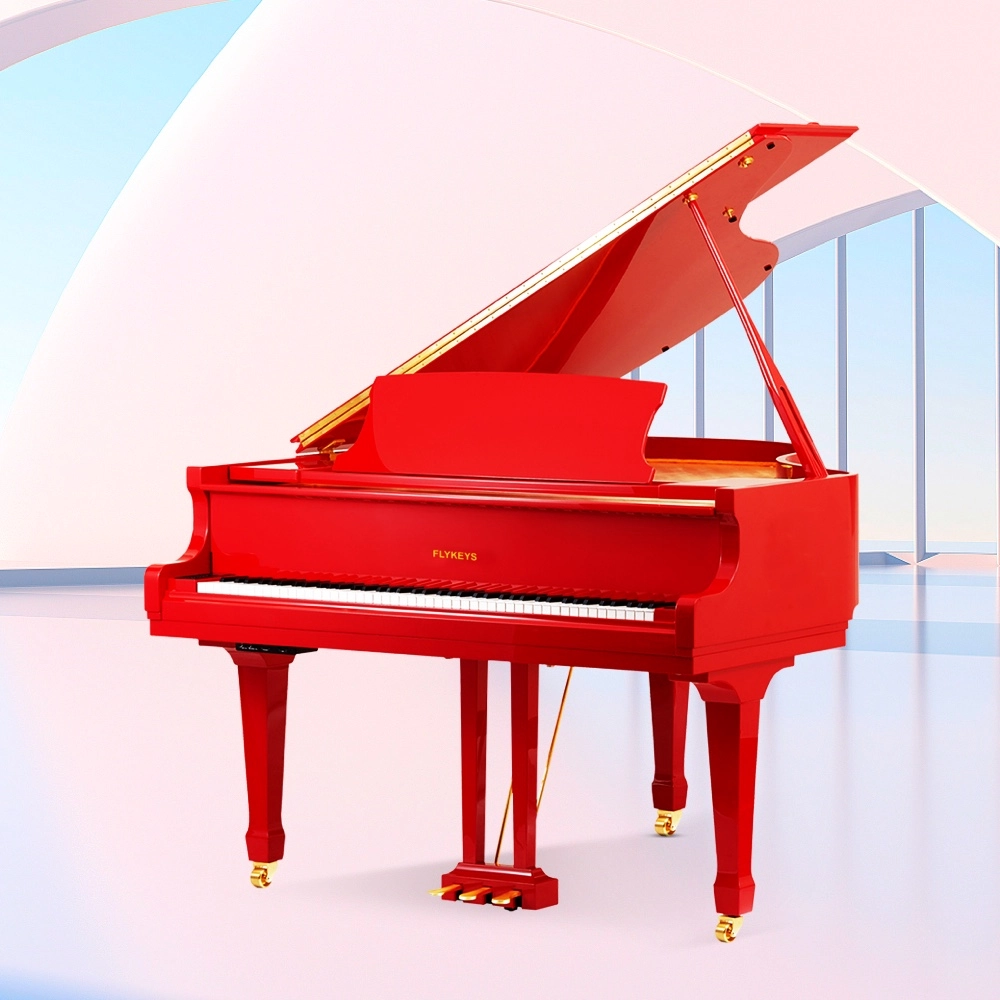
Flykeys Professional Digital Grand Piano FGP610 Digital Piano
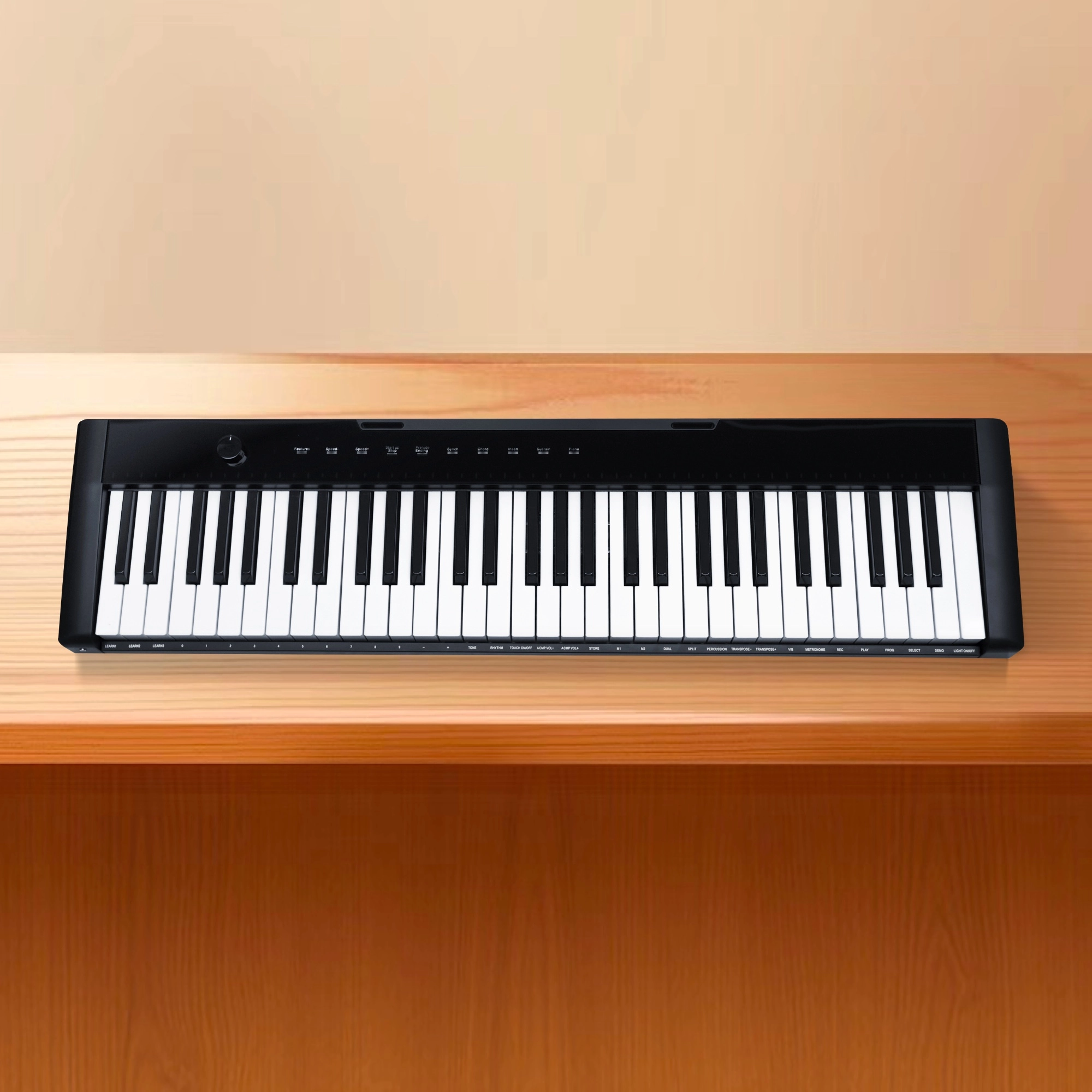
Flykeys 61 keys portable electronic keyboard piano with X stand (M2)
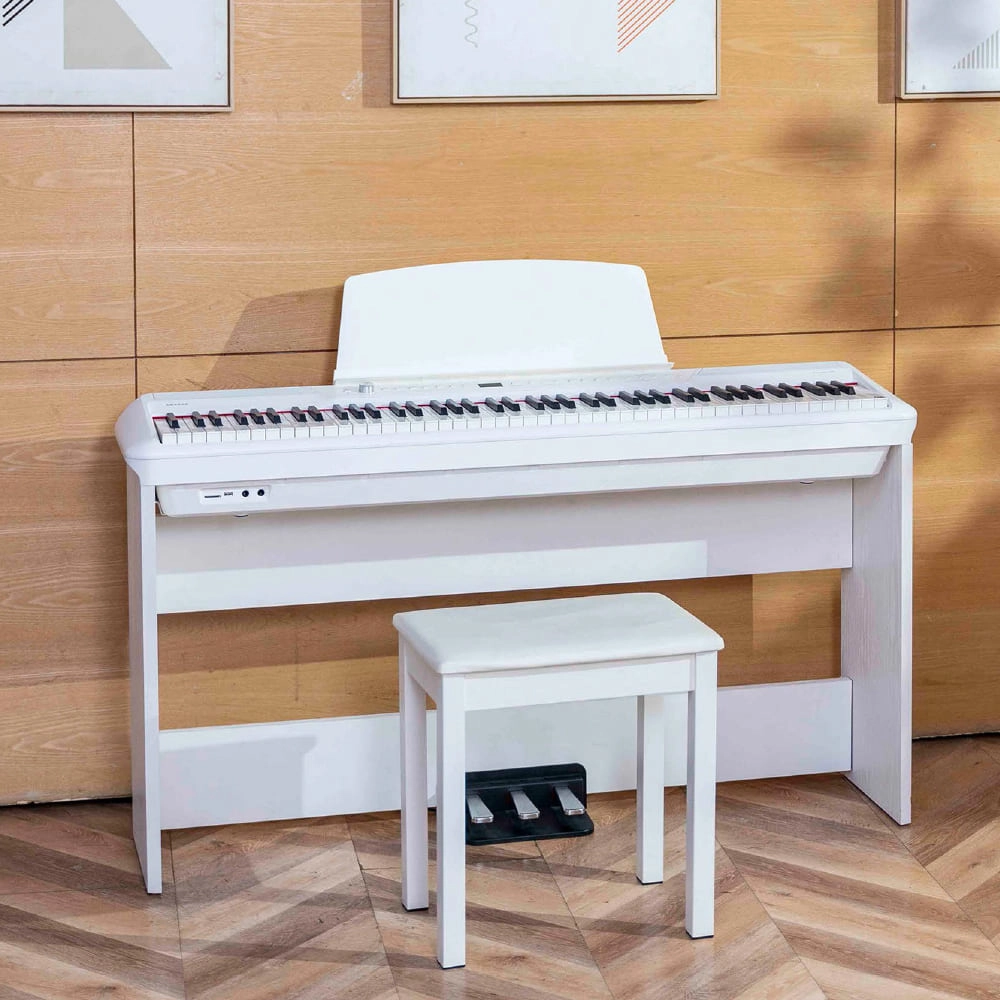
Flykeys Portable Electric Keyboard FP9 Digital Piano
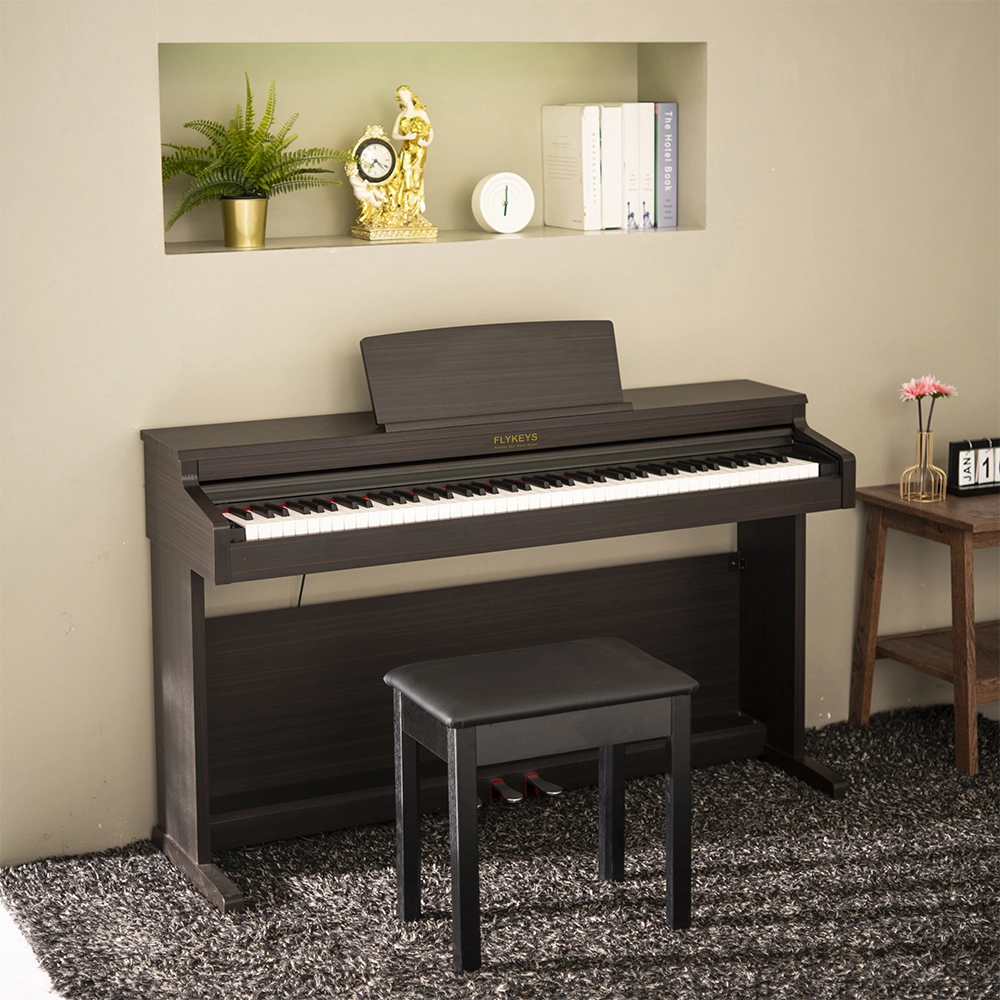
Flykeys 88 Keys Hammer Action keyboard Upright Piano LK03S Digital Piano
— Independent patented technology 88 key Grand-Response hammer action & dynamic curve keyboard;
— European top DSP chip, famous grand piano sound sample;
Address: No. 38 Xiangshan Avenue, Zengcheng Economic And Technological Development Zone, Guangzhou, China.
FOLLOW US:


© 2026 FLYKEYS All Rights Reserved. 粤 ICP备2020102774号. Designed by gooeyun. Sitemap | Privacy | Terms