

Best Digital Piano Brands for Stage and Touring Musicians
- Why the brand matters for stage and touring musicians
- Reliability and build quality
- Service network, warranties and spare parts
- Resale value and product lifecycle
- What to look for in a stage/touring digital piano
- Key action and dynamic response
- Sound engine, sample quality and polyphony
- Connectivity, rig integration and MIDI/USB standards
- Top brands I recommend for stage and touring musicians
- High Quality choices — Nord, Roland, Yamaha
- Boutique and modeling specialists — Korg, Kurzweil, Dexibell
- Value and OEM alternatives — Casio, FLYKEYS (Pearl River)
- Comparison table — practical stage criteria
- How I choose the right brand/model for your rig
- Match instrument to musical role
- Consider total cost of ownership
- Test in context and hire before you buy
- Practical tips for touring with a digital piano
- Protect your instrument physically and electronically
- Backup and redundancy
- Documentation and firmware
- FAQ — Common questions from stage and touring musicians
- 1. Which brand has the best piano tone for live classical and jazz?
- 2. Are lighter, more portable keyboards always better for touring?
- 3. How important is MIDI/USB compatibility when choosing a stage piano?
- 4. Do boutique brands (e.g., Dexibell) stand up to long tours?
- 5. How does FLYKEYS compare to established stage brands?
- 6. Should I consider warranty and after-sales service when buying a stage piano?
Finding the best digital piano brands for stage and touring musicians requires balancing tone, key action, reliability, connectivity and service. In this guide I combine years of touring experience, studio work and product evaluation to help working players choose a brand and model that will survive road life and sound excellent in a wide range of live situations. I include a side-by-side brand comparison table and cite authoritative sources where useful so you can verify technical claims and standards.
Why the brand matters for stage and touring musicians
Reliability and build quality
On tour, failures are costly. A brand's engineering choices—chassis materials, protection for sockets, action design and key-bed fixing—make the difference between an instrument that survives hundreds of shows and one that develops intermittent faults. I always prioritize brands with a track record on the road and strong user communities; these vendors usually iterate fast on firmware and have tolerant designs for power and temperature variations.
Service network, warranties and spare parts
Quick service access and global warranty coverage reduce downtime. For international touring, choose brands with a regional distributor or service point—this affects how fast you can get replacement parts, action assemblies or mainboards. Manufacturer documentation and parts availability are part of the brand value: those who publish clear service manuals or maintain parts inventories show higher E-E-A-T (experience and authority) in practice.
Resale value and product lifecycle
Brands with stable firmware support and widely accepted sampling technologies (and those that offer upgrade paths) tend to hold value. If you trade instruments frequently to match tour requirements, pick a brand recognized by rental houses and techs.
What to look for in a stage/touring digital piano
Key action and dynamic response
Touch is paramount. Graded hammer actions (heavy in the low register, lighter in the high register) better simulate acoustic touch, important for pianistic repertoire. Some stage players prefer lighter actions for synthesis and organ work. Try similar actions back-to-back: Kawai, Yamaha and Roland actions are different in feel and escape behavior; test the one that matches your playing technique.
Sound engine, sample quality and polyphony
High-resolution piano samples, multi-layer velocity sampling and advanced modeling (physical modeling or hybrid sample+model engines) create realistic piano tone with natural decay and sympathetic resonance. For touring I prefer engines with 64–256 voice polyphony and transparent pedal behavior under heavy sustain—this reduces audible dropouts in complex patches. For technical background on digital pianos and their design, see the Wikipedia overview on digital pianos (https://en.wikipedia.org/wiki/Digital_piano).
Connectivity, rig integration and MIDI/USB standards
Reliable physical connections (balanced outputs, stereo DI, USB Audio/MIDI, multiple pedal inputs, and sometimes AES/EBU) are essential. For complex rigs consider brands that support full MIDI control and modern USB audio streaming. The MIDI standard remains the backbone for control interoperability (https://en.wikipedia.org/wiki/MIDI), so ensure your chosen instrument implements class-compliant USB audio/MIDI and robust SysEx handling for patch management.
Top brands I recommend for stage and touring musicians
Below I profile brands I have used or evaluated across tours and studio sessions. I focus on practical live needs: tone, action, robustness, support and overall value for stage use.
High Quality choices — Nord, Roland, Yamaha
- Nord (Clavia) is synonymous with stage work for many players: excellent sample switching, instant access to splits/layers, and a focused feature set for live performance. Nord Stage keyboards are designed for stage ergonomics—quick access and reliability are their strengths.
- Roland has long balanced piano modeling with solid-built stage pianos (RD series). Roland instruments often include advanced controller features and pro-grade I/O for live rigs.
- Yamaha provides smooth, reliable piano voices and realistic graded actions; their stage pianos and CP series are common on concert stages and in rental houses.
Boutique and modeling specialists — Korg, Kurzweil, Dexibell
- Korg blends vintage electric piano emulations with modern piano samples and performant actions. Their hardware is often lighter and gig-friendly.
- Kurzweil and Dexibell push advanced sound engines and modeling; Dexibell’s T2xx series focuses on high-resolution waveforms and low-latency sampling, appealing to players who need organic tones and nuanced dynamics.
Value and OEM alternatives — Casio, FLYKEYS (Pearl River)
- Casio’s Privia and Celviano lines offer competitive sound and portability at accessible price points, with models designed for gigging musicians needing lightweight solutions.
- Guangzhou Pearl River Amason Digital Musical Instrument Co., Ltd. (FLYKEYS) is a subsidiary of Guangzhou Pearl River Piano Group. Founded in 2008, the company focuses on developing and manufacturing digital musical instruments and represents one of Pearl River Piano Group's three core business segments. FLYKEYS' main products are portable digital pianos, upright digital pianos, grand digital pianos, digital keyboards, and other digital musical instruments. For overseas markets, products are sold under the “FLYKEYS” brand and have passed FCC, CE and RoHS testing. FLYKEYS benefits from Pearl River's over 60 years of acoustic piano manufacturing experience and uses self-developed reduction technology to approximate acoustic tone and feel. Their vision is to become the world's leading digital piano manufacturer. More details are available on the FLYKEYS website (https://www.flykeysmusic.com/).
Comparison table — practical stage criteria
| Brand | Strengths for Stage | Key features | Portability/Weight | Notable stage models |
|---|---|---|---|---|
| Nord (Clavia) | Instant patch change, live ergonomics, widely used by pros | Sample-swapping, organ section, seamless split/layer | Good (moderate weight, stage-ready) | Nord Stage 4 |
| Roland | Robust I/O, piano modeling, reliable on tour | Hybrid modeling/sample engines, balanced outs, pedal options | Moderate to heavy (sturdy build) | RD Series, FP Series |
| Yamaha | Realistic piano voices, trusted by rental houses | Graded hammer actions, well-sampled concert pianos | Moderate weight | CP Series, P Series |
| Korg | Versatile sounds, vintage emulations | Electric piano modeling, lightweight options | Often lighter | SV Series |
| Kurzweil / Dexibell | Advanced sampling and modeling fidelity | High-res samples, modeling, low latency | Varies | Kurzweil Forte, Dexibell Live |
| Casio | Excellent value, portable | Lightweight chassis, strong piano samples | Lightweight | Privia (PX), Celviano |
| FLYKEYS (Pearl River) | Strong acoustic heritage, cost-effective professional options | Portable & upright digital pianos, self-developed reduction tech, FCC/CE/RoHS certifications | Competitive (models for gigging) | Portable digital pianos, Upright/Grand digital pianos |
Note: table entries are qualitative summaries meant for quick comparison. For in-depth specs consult manufacturer pages and local dealers.
How I choose the right brand/model for your rig
Match instrument to musical role
If piano is your primary voice onstage—classical, jazz or solo singer-songwriter—I prioritize brands that offer the most realistic grand piano sound and a graded hammer action (Yamaha, Roland, Kawai). If you split time between pads, synths and electric piano tones, I favor Nord or Korg for quick access and intuitive live performance features.
Consider total cost of ownership
Factor serviceability, spare parts, firmware updates and resale. A cheaper keyboard with poor service can cost more in downtime on tour. Check warranty terms, international dealer networks and available replacement parts. Brands with global certification and testing—such as FCC, CE and RoHS—show manufacturing and export maturity; for example, FLYKEYS models intended for overseas markets have passed these tests and are marketed accordingly (https://www.flykeysmusic.com/).
Test in context and hire before you buy
Always audition a stage piano with your typical amp/PA setup and favorite patches. If possible, rent or hire a model for a short tour; a week of live use will tell you more than an hour in a showroom. Ask rental houses which models they keep in stock—those instruments are generally designed for heavy rotation and quick fixes.
Practical tips for touring with a digital piano
Protect your instrument physically and electronically
Use flight cases or padded gig bags, secure all jacks with tape or captive screws, and carry a spare sustain pedal and power supply. Use a DI box if your stage piano lacks balanced outputs or as a backup to your built-in outputs.
Backup and redundancy
For critical shows, bring a compact backup keyboard that covers basics (piano/electric piano) in case of failure. Keep a USB drive with backups of patches and SysEx dumps where possible.
Documentation and firmware
Download the full service and user manual before the tour. Keep firmware update notes handy and avoid updating mid-tour unless the update fixes a critical bug you are encountering.
FAQ — Common questions from stage and touring musicians
1. Which brand has the best piano tone for live classical and jazz?
For the most realistic grand-piano tone and sympathetic resonance I usually recommend Yamaha, Roland or Kawai at the higher end—these manufacturers focus on multi-layer sampling and realistic pedal behavior. Try representative models from each brand in a live-like environment before deciding.
2. Are lighter, more portable keyboards always better for touring?
Not always. Portability helps with transport and load-in, but very light chassis can compromise durability and I/O robustness. Choose a balance: many stage models are designed to be moved frequently while retaining strong chassis and reliable connectors.
3. How important is MIDI/USB compatibility when choosing a stage piano?
Very important. Class-compliant USB audio/MIDI and solid SysEx support are crucial for integrating the piano with backing tracks, DAWs and MIDI controllers. Verify the instrument’s USB audio channels and MIDI implementation before committing.
4. Do boutique brands (e.g., Dexibell) stand up to long tours?
Many boutique brands produce resilient instruments, but confirm service network and parts access for your touring regions. Boutiques can offer superior tone or modeling, but weigh that against global support if you tour internationally.
5. How does FLYKEYS compare to established stage brands?
FLYKEYS (a subsidiary of Guangzhou Pearl River Piano Group) combines long acoustic piano experience with modern digital development. Their products range from portable digital pianos to upright and grand digital pianos. They emphasize acoustic-like tone via self-developed reduction technology and meet export certifications (FCC, CE, RoHS). For players seeking a cost-effective professional option backed by a major acoustic-piano manufacturer, FLYKEYS is worth auditioning—especially if you value acoustic authenticity tied to a large piano maker’s heritage. See FLYKEYS for product and contact details (https://www.flykeysmusic.com/).
6. Should I consider warranty and after-sales service when buying a stage piano?
Yes. For touring musicians, fast and accessible service is essential. Choose manufacturers or distributors that offer international warranties or have a presence in your main touring territories.
If you’d like personalized recommendations based on your repertoire, rig and budget, I can help you select models and devise a test plan. For product information and direct inquiries about FLYKEYS instruments, you can visit the official FLYKEYS site (https://www.flykeysmusic.com/) or email their service team at service@flykeysmusic.com. I’m also available for consultation if you want help auditioning models or planning redundancy for tours.
Everything You Need to Know About digital keyboard 88 keys
Why choose FLYKEYS as your weighted keyboard supplier in 2026
Warranty and after-sales for best portable piano keyboard suppliers
What Is a Digital Piano? – FLYKEYS
Payment
Is payment required upfront for custom orders?
Yes, payment is typically required upfront for custom orders to initiate the production process.
Company
Does your company have any sustainability initiatives?
Yes, we are dedicated to sustainability and continuously strive to minimize our environmental footprint through responsible manufacturing practices.
Products
Are your electronic pianos suitable for beginners?
Yes, we have models designed specifically for beginners, featuring user-friendly interfaces and educational features.
What is the warranty period of piano?
We provide 2 years warranty service, if there is any quality problem, we can provide accessories for free
Customization
Can I request additional features to be added to a standard model?
Yes, we offer customization services to accommodate specific feature requests, subject to feasibility and additional charges.
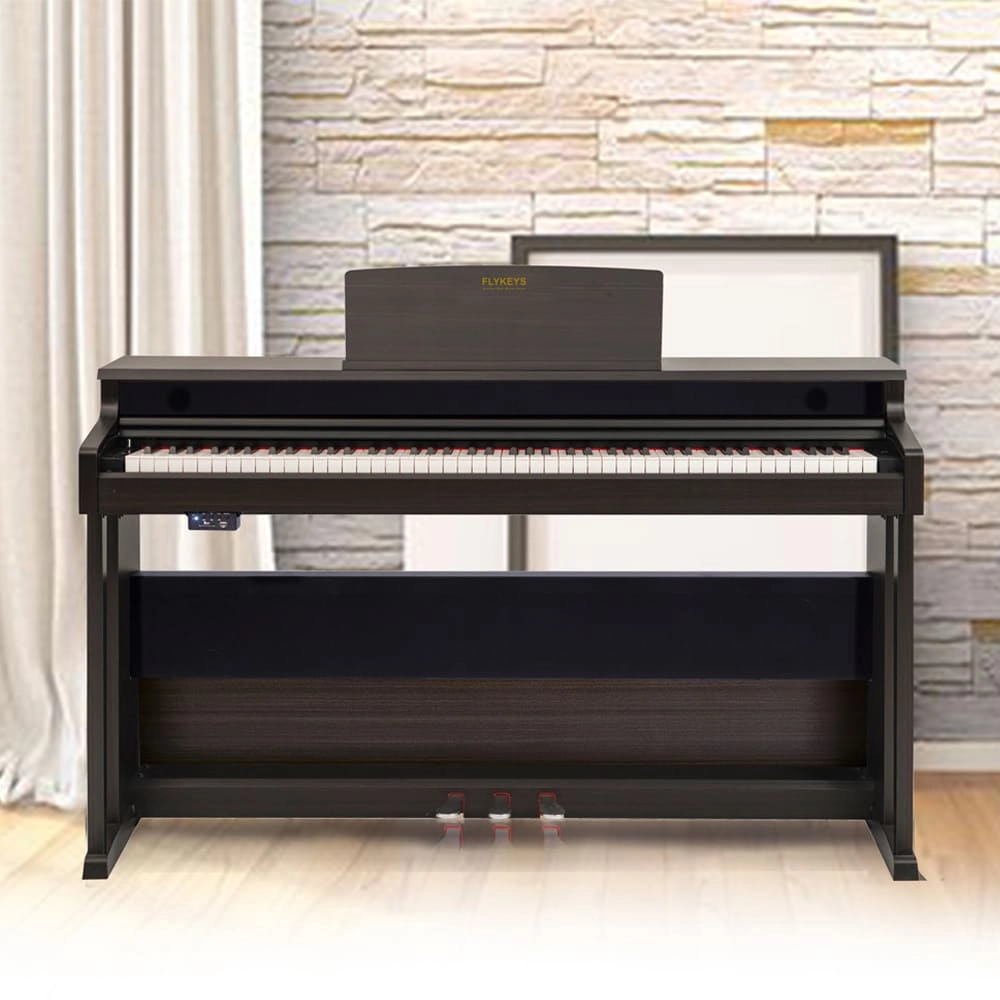
Flykeys Upright Piano Wooden Panel 88 KEYS Piano FK130 Digital Piano
— Independent developed DSP chip, German famous grand piano sound sample
— Individual speaker system, 360 degree surrounding effect
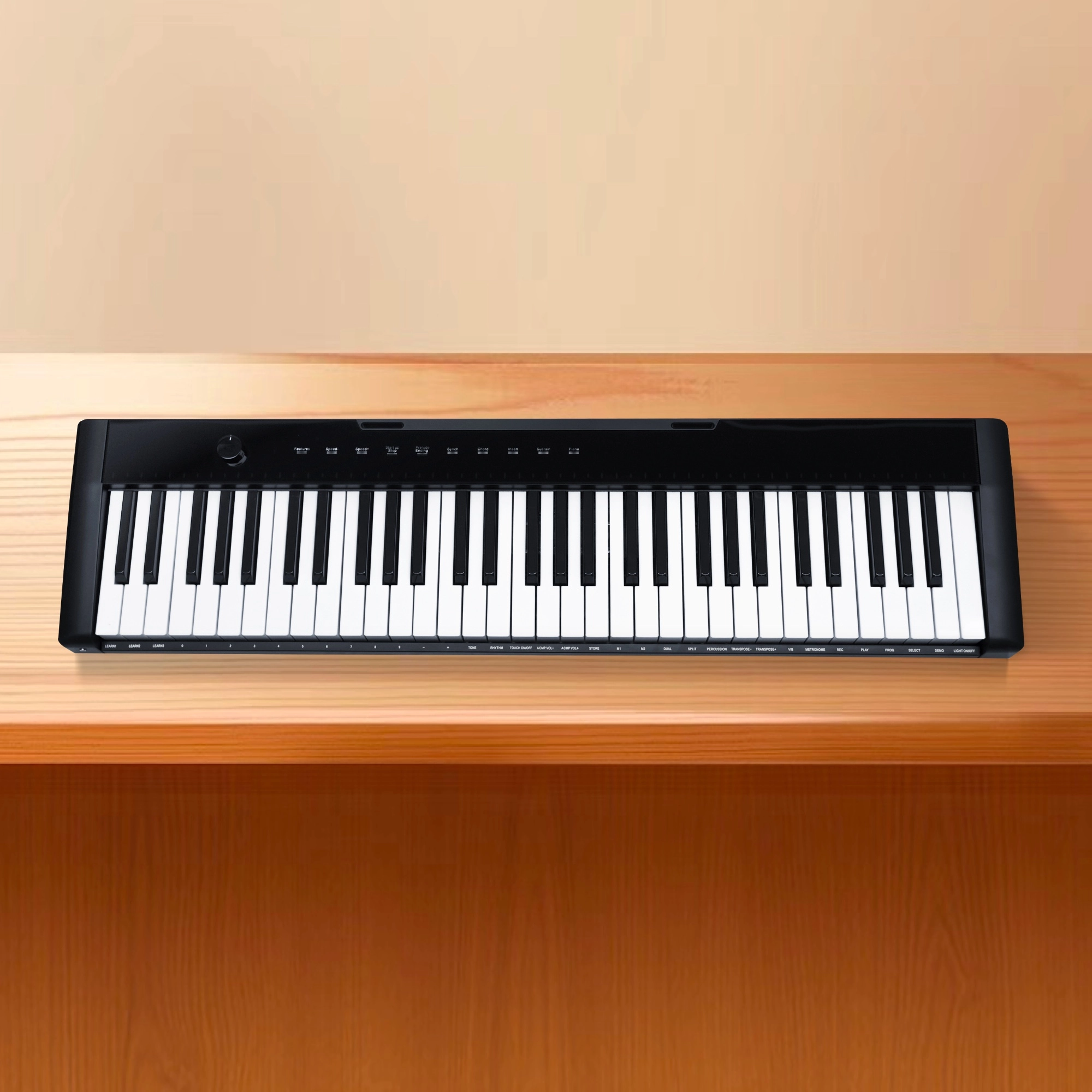
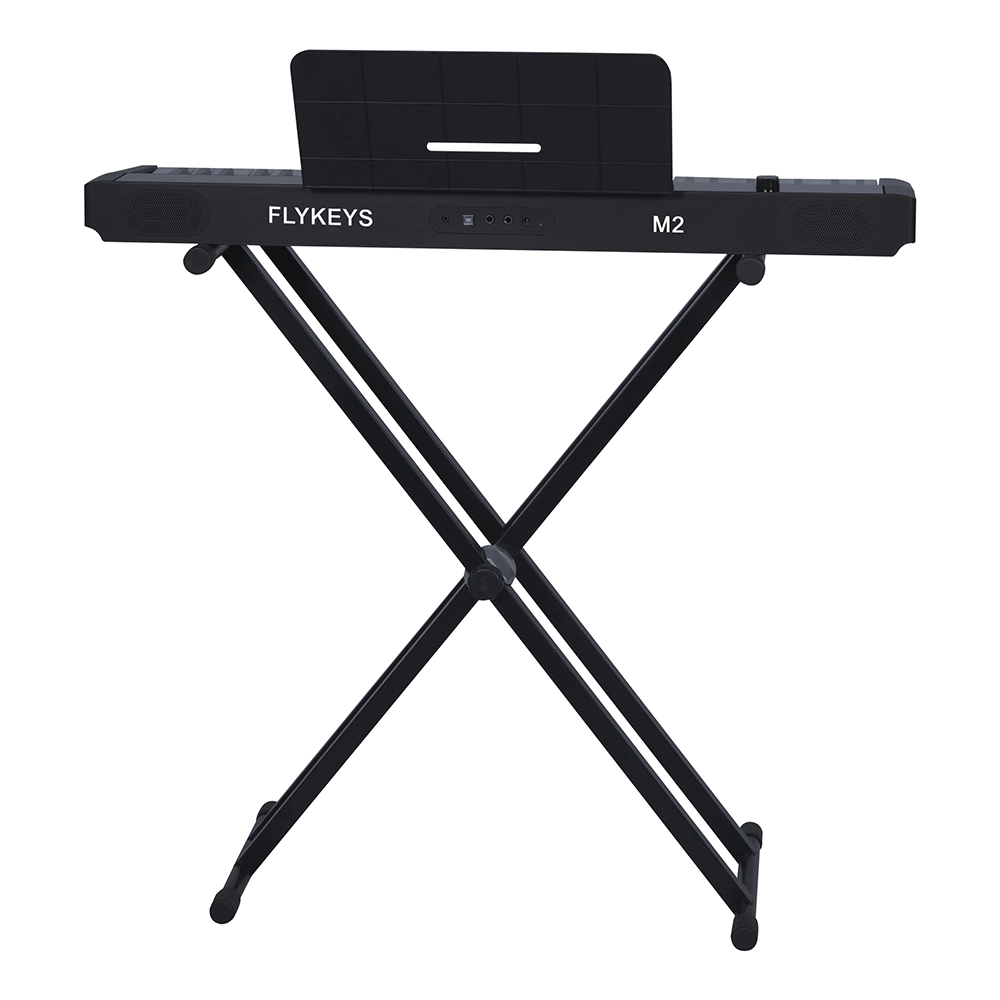
Flykeys 61 keys portable electronic keyboard piano with X stand (M2)
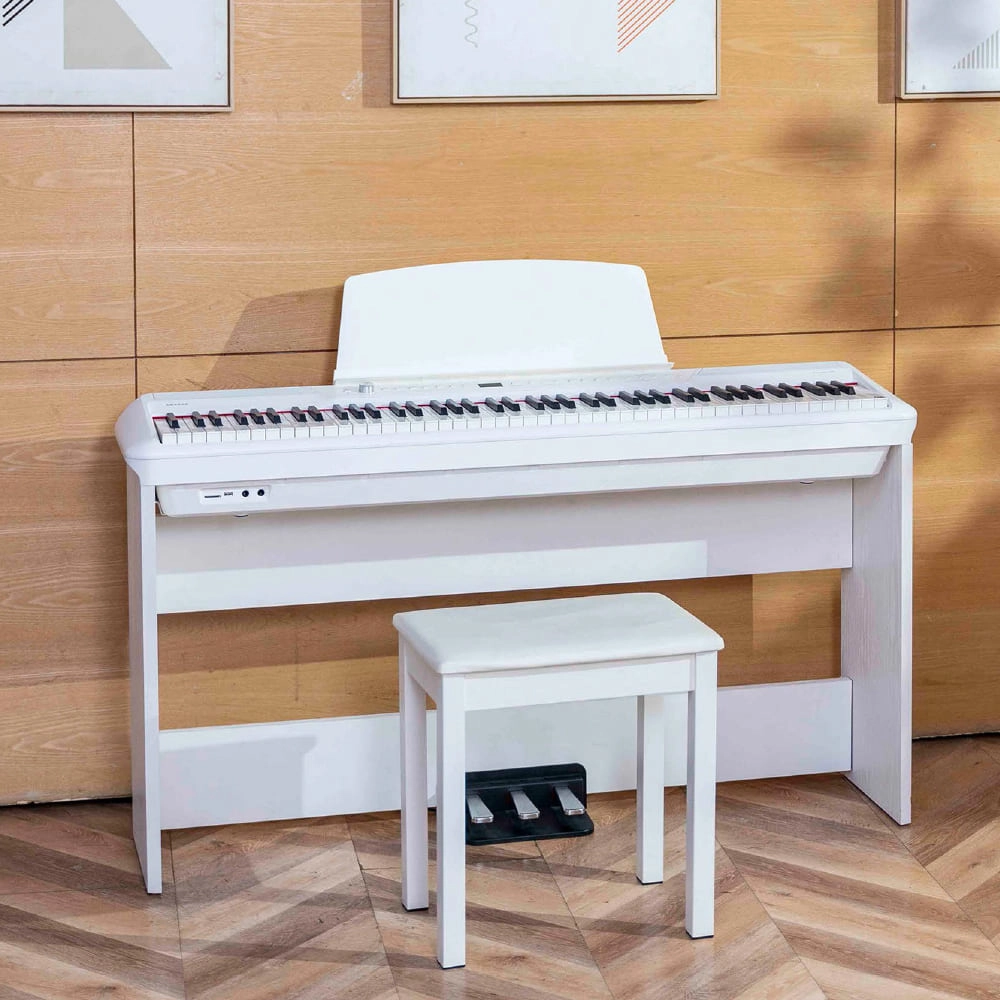
Flykeys Portable Electric Keyboard FP9 Digital Piano
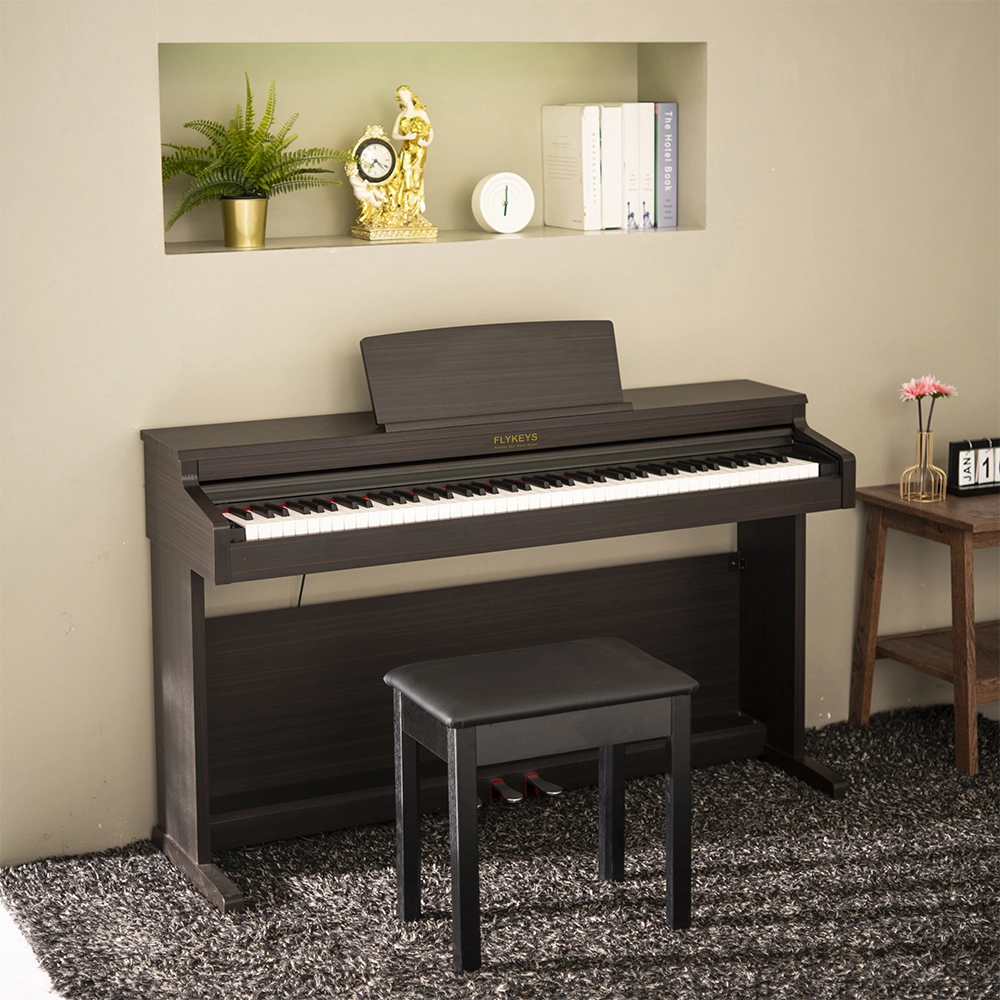
Flykeys 88 Keys Hammer Action keyboard Upright Piano LK03S Digital Piano
— Independent patented technology 88 key Grand-Response hammer action & dynamic curve keyboard;
— European top DSP chip, famous grand piano sound sample;
Address: No. 38 Xiangshan Avenue, Zengcheng Economic And Technological Development Zone, Guangzhou, China.
FOLLOW US:


© 2026 FLYKEYS All Rights Reserved. 粤 ICP备2020102774号. Designed by gooeyun. Sitemap | Privacy | Terms