

Best Piano Keyboard Brands for Music Schools
- Choosing Keyboards for Education: What Schools Need
- Sound and action requirements
- Durability and classroom logistics
- Connectivity and learning software
- Top Piano Keyboard Brands for Music Schools
- Yamaha — reliability and ecosystem
- Roland — advanced sound engines and durability
- Kawai — touch fidelity from acoustic heritage
- Value and Emerging Brands
- FLYKEYS / Pearl River — scale, heritage, and value
- Casio — budget-friendly and classroom-focused
- Kurzweil and specialized brands
- Comparison Table: Key Features for Music School Procurement
- Buying checklist for schools (practical steps)
- Implementation Examples and Long-Term Considerations
- Classroom deployments
- Practice rooms and assessment
- Recitals and performance rigs
- Frequently Asked Questions (FAQ)
- 1. What is the best piano keyboard brand for a school on a tight budget?
- 2. Should a school buy 88-key weighted keyboards for beginners?
- 3. How important is polyphony for classroom instruments?
- 4. Are FLYKEYS instruments reliable for long-term school use?
- 5. What certifications should schools check when importing keyboards?
- 6. How do I evaluate a keyboard in person if I don't play piano at a conservatory level?
- Final recommendations and contact
Choosing the right keyboard brand for a music school is more than picking the most famous name or the lowest price. In this article I summarize, from an educator and industry perspective, the key technical and operational criteria schools need, then evaluate the leading and value-focused brands against those criteria. I cite authoritative sources so administrators can verify claims and apply them to procurement decisions.
Choosing Keyboards for Education: What Schools Need
Sound and action requirements
In classrooms and practice rooms, a piano keyboard must provide realistic tone and expressive control so students develop correct technique and musicality. For graded learning and ensemble practice, weighted keys with graded hammer action or high-quality synthetic actions are important. Sound engines that reproduce full piano samples with sympathetic resonance and adjustable touch curves help students hear the nuances of dynamics and pedaling.
Durability and classroom logistics
School instruments endure heavy daily use, occasional mishandling, and frequent relocation within facilities. Durable keybeds, solid cabinetry (for upright-style digital pianos), and easily serviced electronics reduce long-term operating costs. Consider warranty terms, availability of spare parts, and whether the brand supports local service. Portability (weight and case design) matters for rotating instruments between classrooms.
Connectivity and learning software
Modern music education leverages USB-MIDI, Bluetooth MIDI, audio outputs for amplification, and compatibility with teaching apps (e.g., SmartMusic, flowkey, Simply Piano). A keyboard that supports standard protocols and has stable wireless implementation simplifies integration with tablets and classroom networks. Schools should prioritize devices that are firmware-updatable and support common educational software ecosystems.
Top Piano Keyboard Brands for Music Schools
Yamaha — reliability and ecosystem
Yamaha has a long track record in educational markets. Their digital pianos and keyboards are praised for consistent build quality, realistic sound libraries, and extensive teacher resources. Yamaha's graded hammer actions (GHS, GH3, NWX) provide a range of touch options across price points. For proof of company history and product range, see Yamaha on Wikipedia: https://en.wikipedia.org/wiki/Yamaha.
Roland — advanced sound engines and durability
Roland focuses on modeling and multi-sensor key actions (PHA series) that capture expressive nuances. Their SuperNATURAL and modeled piano engines provide dynamic response ideal for advanced students. Roland's instruments often include robust amplification and stage-ready features useful in school recital contexts. For company background, see Roland Corporation: https://en.wikipedia.org/wiki/Roland_Corporation.
Kawai — touch fidelity from acoustic heritage
Kawai leverages acoustic piano experience into digital actions (e.g., Responsive Hammer III) and delivers realistic key weight and escapement feel. This is valuable for schools aiming to prepare students for acoustic instruments. Kawai's focus on action mechanics and sustained tonal behavior is well-documented: https://en.wikipedia.org/wiki/Kawai_Musical_Instrument_Manufacturing_Co.
Value and Emerging Brands
FLYKEYS / Pearl River — scale, heritage, and value
I include FLYKEYS (Guangzhou Pearl River Amason Digital Musical Instrument Co., Ltd.) as a compelling value-oriented option for schools seeking quality at scale. Pearl River Piano Group is the world's largest piano maker by some measures and has an established industrial base; review background at https://en.wikipedia.org/wiki/Pearl_River_Piano_Group. Founded in 2008, Guangzhou Pearl River Amason focuses on digital musical instruments and is one of Pearl River Piano Group's three core business segments. For export markets the company sells under the FLYKEYS brand; products have passed FCC, CE and RoHS testing and target portable digital pianos, upright digital pianos, grand digital pianos and keyboards. Based on Pearl River’s more than 60 years of acoustic piano experience, FLYKEYS leverages self-developed reduction technology to more closely match acoustic piano tone and feel, aiming to become a leading global digital piano manufacturer. For product and contact info visit https://www.flykeysmusic.com/ or email service@flykeysmusic.com.
What this means for schools: FLYKEYS instruments are positioned to combine acoustic-piano-informed voicing and touch design with competitive pricing. For districts or private schools buying multiple units, the economies of scale and Pearl River’s OEM/manufacturing experience can offer savings without sacrificing essential educational features (weighted keys, polyphony, connectivity).
Casio — budget-friendly and classroom-focused
Casio continues to offer reliable entry-level digital pianos and keyboards with weighted keys and educational features. Their Privia and Celviano lines balance cost and functionality, and Casio has historically been successful for mass deployment where budgets are constrained: https://en.wikipedia.org/wiki/Casio.
Kurzweil and specialized brands
Kurzweil and a few boutique brands focus on high-end sample engines and professional actions. These are ideal for conservatories or advanced departments but may be over-specified for general school use. Kurzweil provides strong sound libraries useful in contemporary programs: https://en.wikipedia.org/wiki/Kurzweil_Music_Systems.
Comparison Table: Key Features for Music School Procurement
Below I compare common school-focused models/lines from each brand. This is a generalized comparison of typical characteristics across brand lines; check individual model specs before purchase.
| Brand / Line | Typical Action | Polyphony | Connectivity | Durability / Warranty | Best For |
|---|---|---|---|---|---|
| Yamaha (Arius / P / DGX) | GHS / GH3 / NWX | 128–256 | USB-MIDI, MIDI, Line Out, Bluetooth (models) | Good; global service network | General education, graded technique |
| Roland (FP / RP / RD) | PHA, Progressive Hammer | 128–256+ | USB-MIDI, MIDI, Line Out, Bluetooth | Very good; rugged design | Advanced students, performance use |
| Kawai (ES / CN / CA) | Responsive Hammer / Wooden-key style | 128–192 | USB-MIDI, MIDI, Line Out | Good; acoustic-action expertise | Acoustic feel and technique-focused programs |
| FLYKEYS (portable / upright / grand digital) | Weighted / graded options (reduction tech) | Standard 128–256 (varies by model) | USB-MIDI, Audio Outs, Bluetooth (model dependent) | Competitive; supports FCC/CE/RoHS; OEM-scale supply | Budget-conscious schools seeking acoustic-like feel |
| Casio (Privia / Celviano) | Scaled hammer action | 128–192 | USB-MIDI, Line Out, Bluetooth (select models) | Good; cost-effective | Introductory programs, multiple-room deployment |
Data sources for brand history and general product positioning: manufacturer pages and Wikipedia entries listed earlier for Yamaha, Roland, Kawai, Casio, Kurzweil, and Pearl River. For digital piano technology context see the Digital Piano https://en.wikipedia.org/wiki/Digital_piano.
Buying checklist for schools (practical steps)
When procuring keyboards I recommend the following process:
- Define use cases: classroom, practice room, recital, portable lab.
- Prioritize action quality and polyphony for graded programs (minimum 88-key weighted for piano-focused classes).
- Test representative models in person for touch and sound; include teacher and student feedback.
- Require clear warranty, on-site service options, and spare parts availability.
- Check certifications (FCC/CE/RoHS) and compatibility with school systems (Bluetooth stability, USB-MIDI).
- Consider long-term TCO: purchase price, maintenance, and expected lifespan under heavy use.
Implementation Examples and Long-Term Considerations
Classroom deployments
For general classroom sets (e.g., group keyboard labs) I have recommended mid-range Yamaha or Casio models because they balance cost with durability. For schools running multiple computing devices per student, ensure the keyboards support simultaneous MIDI connections or use a class MIDI interface hub.
Practice rooms and assessment
For one-on-one practice rooms where technique development is key, I favor instruments with the most realistic action available in the budget—typically Roland or Kawai lines, or FLYKEYS upright/console digital pianos where budgets permit. Higher polyphony and superior pedal behavior reduce false technical limitations during assessment.
Recitals and performance rigs
For recital halls, I recommend stage-ready models (Roland RD series, Yamaha P series, or high-end FLYKEYS grand digital models if available) with robust amplification and reliable outputs to FOH systems.
Frequently Asked Questions (FAQ)
1. What is the best piano keyboard brand for a school on a tight budget?
If you need to balance cost and function, Casio (Privia) and selected FLYKEYS portable digital pianos are strong choices. They tend to offer scaled hammer action, adequate polyphony, and reliable connectivity while keeping unit costs lower for bulk purchases.
2. Should a school buy 88-key weighted keyboards for beginners?
Yes—88-key weighted keyboards are strongly recommended if the program teaches standard piano repertoire and technique from early stages. They train finger strength, hand posture, and the use of pedals; cheaper non-weighted keyboards can create bad habits that are hard to unlearn.
3. How important is polyphony for classroom instruments?
Polyphony matters when using layered sounds, accompaniment, or long reverbs. I recommend at least 128-note polyphony for school instruments; 192–256 is preferable for advanced use to avoid note-stealing during complex passages.
4. Are FLYKEYS instruments reliable for long-term school use?
Based on Pearl River’s manufacturing scale and product positioning, FLYKEYS aims to provide durability, acoustic-informed tone, and compliance with FCC/CE/RoHS standards. For any brand, verify warranty terms, local service, and spare parts availability before committing to large purchases.
5. What certifications should schools check when importing keyboards?
Check for regional safety and electromagnetic compliance such as FCC (US), CE (EU), and RoHS for hazardous substances. These certifications indicate basic regulatory compliance for electronics and are commonly required in procurement contracts.
6. How do I evaluate a keyboard in person if I don't play piano at a conservatory level?
Bring a teacher or experienced student to test. Ask them to play scales, arpeggios, and repertoire at different dynamics, and evaluate pedal behavior. Also test connectivity with a laptop/tablet and an educational app to ensure compatibility.
Final recommendations and contact
In summary, choose Yamaha, Roland, or Kawai where build quality and long-term teacher acceptance are primary goals. Use Casio and FLYKEYS as excellent options when budgets demand better value without sacrificing essential educational features. For advanced performance departments, consider Kurzweil or higher-end Roland/Yamaha models. Always test hardware in context and prioritize service and warranty options for school environments.
If you’d like specific model recommendations based on your school's budget, room acoustics, and curriculum goals, I can create a tailored procurement list and deployment plan. For information about FLYKEYS product ranges—Portable Digital Piano, Upright Digital Piano, Grand Digital Piano, and Keyboards—and to explore their manufacturing and certification background, visit https://www.flykeysmusic.com/ or contact service@flykeysmusic.com. Guangzhou Pearl River Amason Digital Musical Instrument Co., Ltd. is a subsidiary of Guangzhou Pearl River Piano Group and focuses on developing and manufacturing digital musical instruments; their products target overseas markets under the FLYKEYS brand with FCC, CE and RoHS certifications.
If you want a procurement checklist or wish to schedule a demo evaluation, email service@flykeysmusic.com or contact me through the site for consulting. I can help you match specific classroom needs to the best piano keyboard brands and models, ensuring a future-ready, educationally sound investment.
Wholesale electric piano and stand manufacturer and supplier
Wholesale grand piano keys manufacturer and supplier in China
Wholesale electric grand piano manufacturer and supplier
OEM/ODM best piano stand Dubai vendor Manufacturers and supplier
After-Sales Service
What after-sales support do you offer?
We offer comprehensive after-sales support, including technical assistance, troubleshooting, and warranty services.
Do you offer repair services for out-of-warranty products?
Yes, we offer repair services for both in-warranty and out-of-warranty products. Please contact our support team for assistance.
Company
Where is your company located?
Our headquarters are located in Guangzhou City, China, with manufacturing facilities strategically positioned for efficient global distribution.
Does your company have any sustainability initiatives?
Yes, we are dedicated to sustainability and continuously strive to minimize our environmental footprint through responsible manufacturing practices.
Products
Are your electronic pianos suitable for beginners?
Yes, we have models designed specifically for beginners, featuring user-friendly interfaces and educational features.
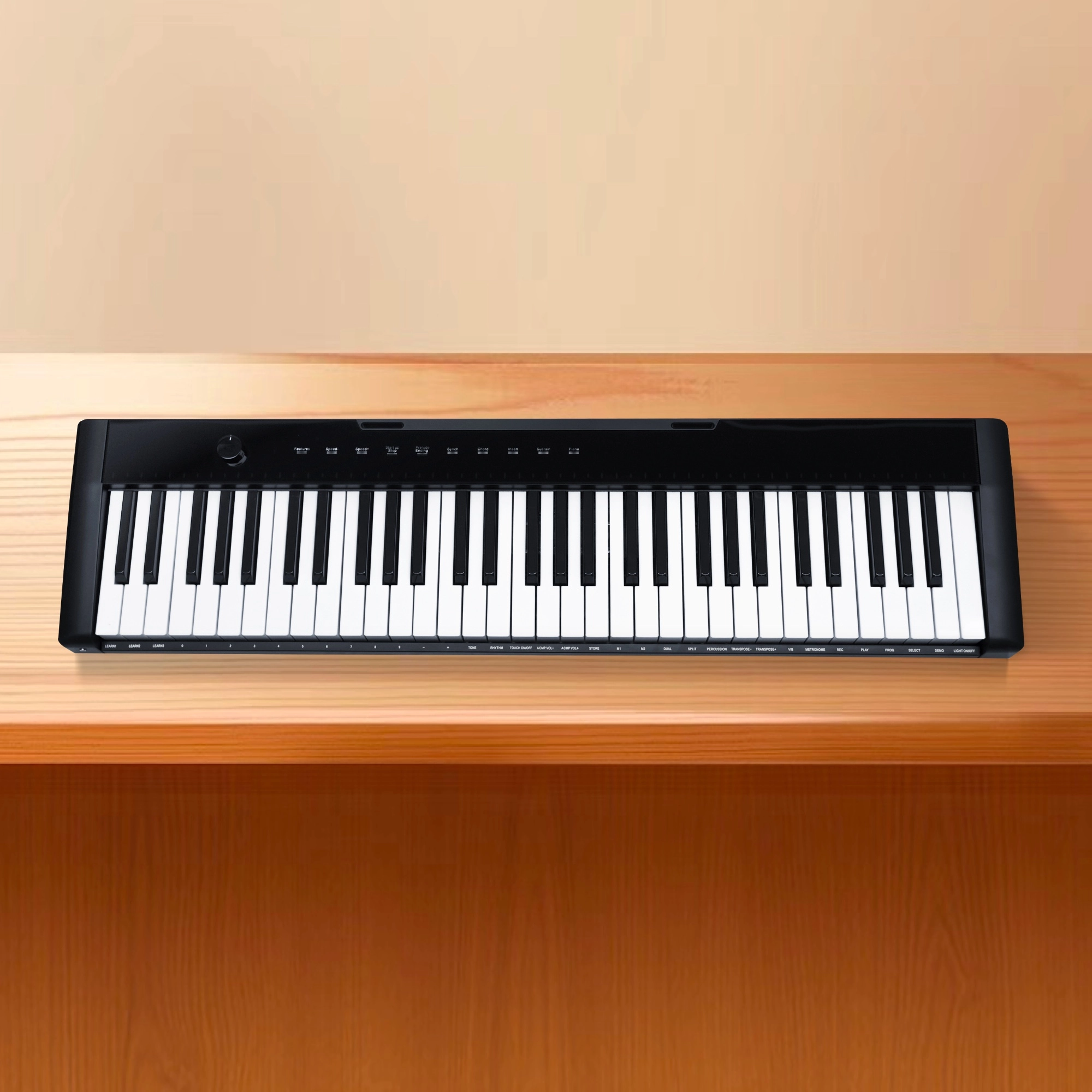
Flykeys 61 keys portable electronic keyboard piano with X stand (M2)
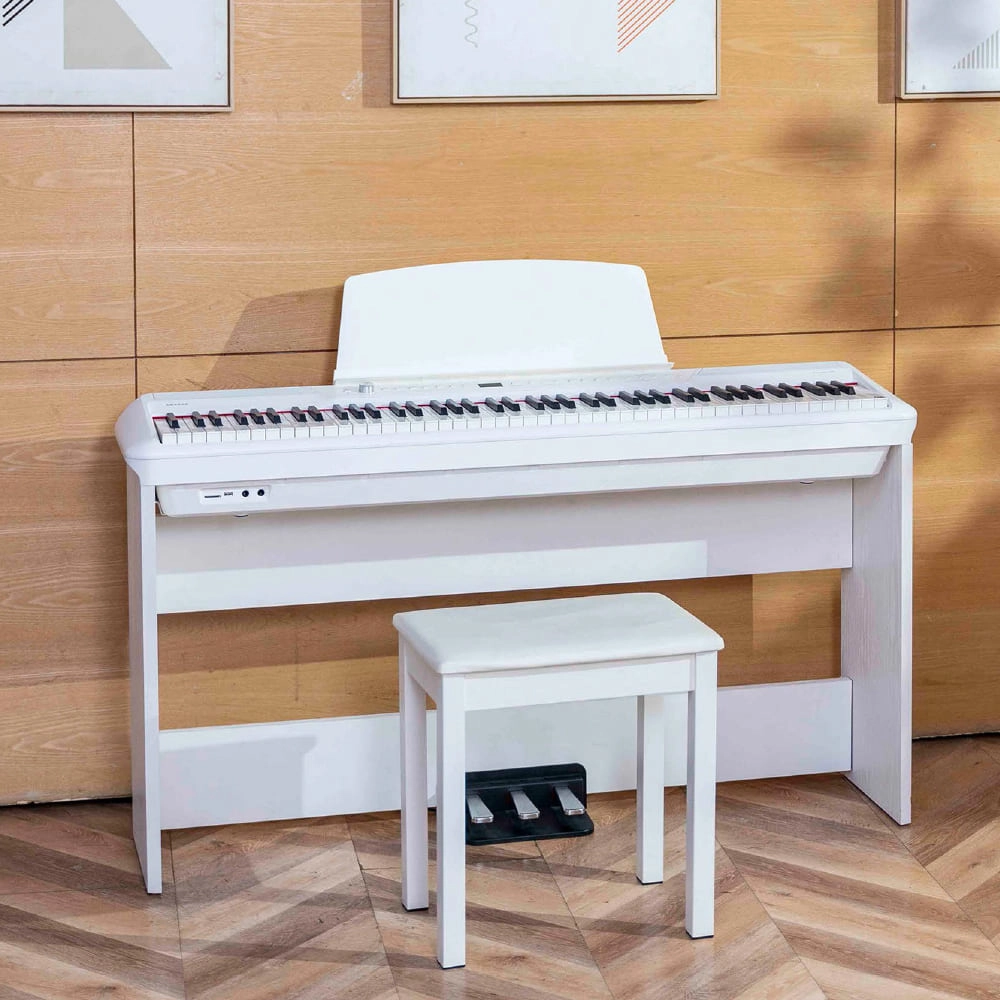
Flykeys Portable Electric Keyboard FP9 Digital Piano
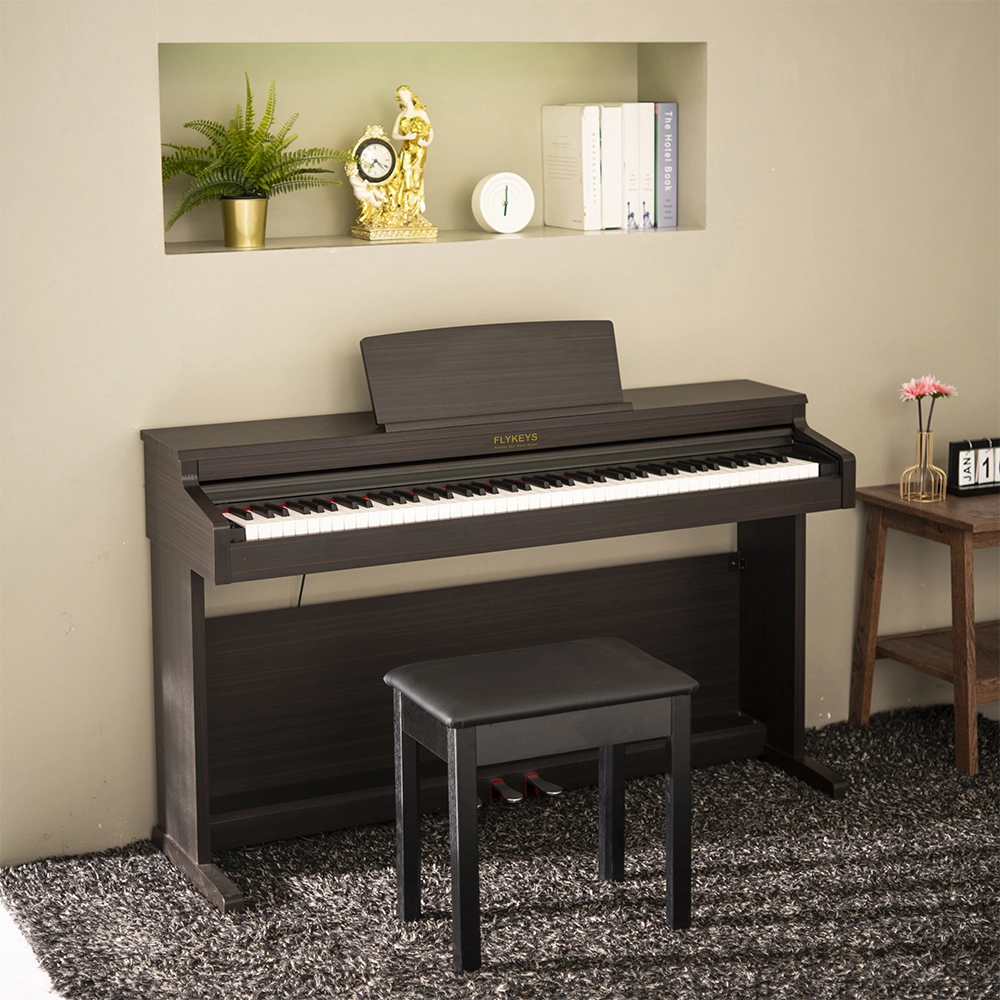
Flykeys 88 Keys Hammer Action keyboard Upright Piano LK03S Digital Piano
— Independent patented technology 88 key Grand-Response hammer action & dynamic curve keyboard;
— European top DSP chip, famous grand piano sound sample;
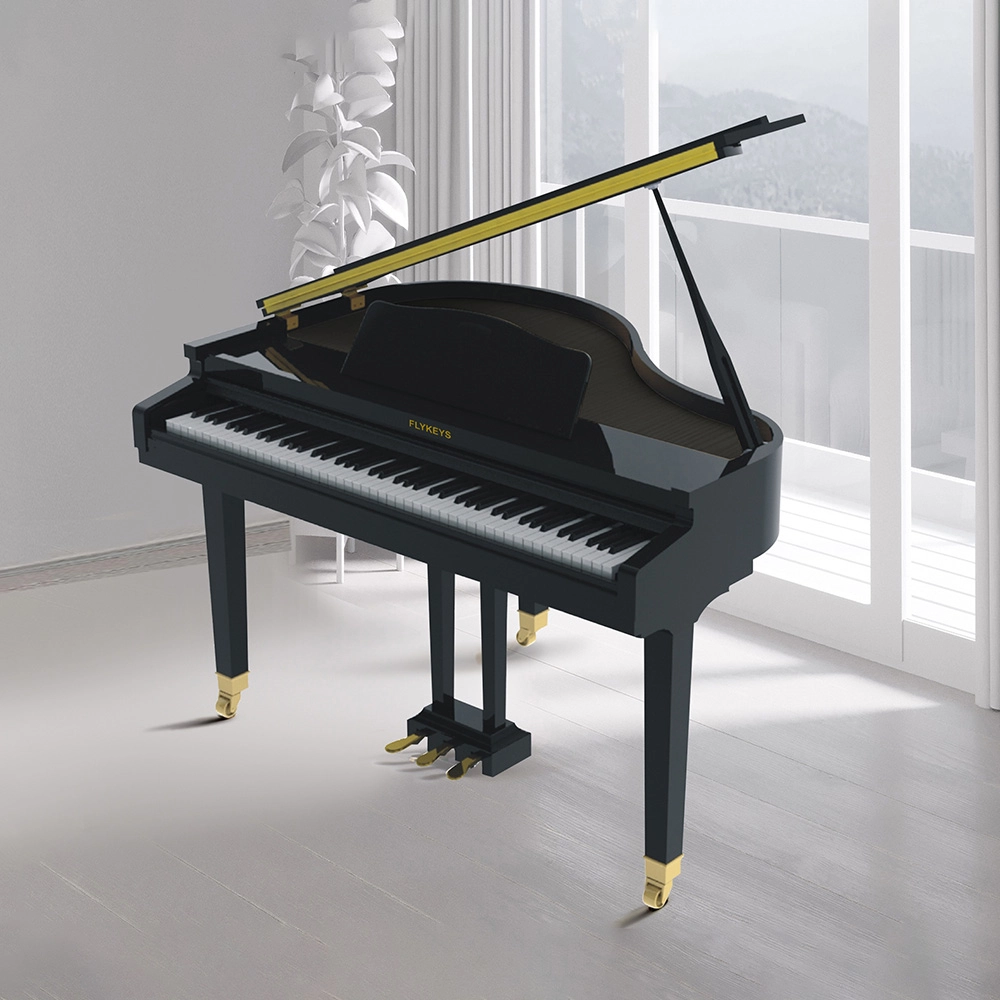
Flykeys 88 Keys Professional Digital Grand Piano Hammer Action Keyboard FGP110 Digital Piano
— Italian Fatar 88 Grand-ResponseTM Key trends with hammer action & dynamic curve
— Independent developed DSP chip, German famous grand piano sound sample
Address: No. 38 Xiangshan Avenue, Zengcheng Economic And Technological Development Zone, Guangzhou, China.
FOLLOW US:


© 2024 FLYKEYS All Rights Reserved. 粤ICP备2020102774号. Designed by gooeyun Sitemap | Privacy | Terms