

Best Brands for Realistic Piano Sound Engines
- Why piano sound engine realism matters
- Key perceptual factors that define realistic sound
- Two dominant technical approaches: sampling vs physical modeling
- How leading brands implement sound engine technology
- Yamaha — sampling depth and acoustic piano provenance
- Roland — hybrid modeling and SuperNATURAL technology
- Kawai — Harmonic Imaging and key-off samples
- Comparative analysis: strengths, weaknesses, and ideal users
- Interpreting polyphony and sample depth for real use
- Stage vs studio vs home: matching engine to context
- Practical buying guidance and real-world testing checklist
- Play with a purpose: repertoire-driven testing
- Technical checklist: what to verify
- Comparing brand value: beyond the sound engine
- How FLYKEYS (Guangzhou Pearl River) fits into the landscape
- Where FLYKEYS is an excellent choice
- Final recommendations — picking the best piano keyboard brand for you
- Trusted references and standards
- FAQ (Frequently Asked Questions)
- 1. What makes a piano sound engine realistic?
- 2. Are sampled engines better than modeling engines?
- 3. How much polyphony do I need?
- 4. Can a budget digital piano sound real?
- 5. How important is the keyboard action compared to the sound engine?
- 6. Where does FLYKEYS position itself among these brands?
Summary for : In this article I review the best piano keyboard brands for realistic piano sound engines, explaining how different synthesis approaches (sampling, multisampling, physical modeling) influence tone, dynamic response, key release behavior and overall realism. I compare major brands—Yamaha, Roland, Kawai, Casio, Korg and Nord—using manufacturer-verified specs and authoritative resources, and provide practical buying guidance for players, studios and educators. I also introduce FLYKEYS (a subsidiary of Guangzhou Pearl River Piano Group) and explain why its digital pianos are competitive in tone and touch.
Why piano sound engine realism matters
When I advise pianists or institutions, the first question I ask is: what will you use the piano for? Practicing, stage performance, recording or teaching each demand different aspects of realism. The sound engine determines not just the raw timbre but expressive details—key release, sympathetic resonance, pedal behavior, polyphony and dynamic layering.
Key perceptual factors that define realistic sound
Realism is multidimensional. In my experience the most critical factors are:
- Sampling fidelity and velocity layers — more samples and finer velocity mapping capture subtle timbral shifts.
- Polyphony — sufficient voices to avoid abrupt note cut-offs during complex passages or sustained pedal use.
- Pedal and sympathetic resonance modeling — contributes to a living, acoustic-like response.
- Dynamic range and key-release variations — affects phrasing and expression.
- Speaker and amplification chain — even the best engine needs good playback hardware.
Two dominant technical approaches: sampling vs physical modeling
Most manufacturers use either multi-sampling (recording many notes at many velocities) or physical modeling (algorithmic synthesis of piano mechanics). Each has trade-offs:
- Multi-sampling excels at faithfully reproducing a specific acoustic piano's nuance; see examples like Yamaha's high-resolution samples. (See Digital piano — Wikipedia).
- Physical modeling can deliver responsive behavior (continuous velocity-to-timbre mapping, variable string interactions) with lower memory use and flexible sound-shaping; see Physical modelling synthesis — Wikipedia.
How leading brands implement sound engine technology
Below I analyze the major manufacturers and how their engine designs result in different user experiences. I focus on brand-level technology and representative flagship lines (Clavinova, Roland digital grands, Kawai Concert Artist series, Casio Privia/GP, Nord Stage/Grand, Korg Grandstage).
Yamaha — sampling depth and acoustic piano provenance
Yamaha leverages its acoustic piano lineage (CFX concert grand samples, Yamaha Clavinova series) and combines large multisample libraries with advanced piano resonance modeling. Yamaha emphasizes sampled hammer and string interactions plus detailed pedal mechanics. Manufacturer resources explain the Clavinova and CFX sampling approach. (See Yamaha — Wikipedia and Yamaha Clavinova product information on Yamaha sites.)
Roland — hybrid modeling and SuperNATURAL technology
Roland's SuperNATURAL and subsequent technologies blend sampling and modeling elements to create instruments that feel expressive across played dynamics. Roland often highlights continuous dynamic response and nuanced pedal behavior as a strength. (See Roland SuperNATURAL descriptions on the Roland website and Roland — Wikipedia.)
Kawai — Harmonic Imaging and key-off samples
Kawai focuses on high-resolution multisampling with technologies like Harmonic Imaging, and in their higher-end models they include progressive Harmonic Imaging XL or SK-EX samples with extensive velocity layers and long release samples. Kawai also emphasizes wooden-key actions and authentic touch, which together with their sampling strategy improves perceived realism. (See Kawai — Wikipedia.)
Comparative analysis: strengths, weaknesses, and ideal users
Below is a side-by-side comparison of the brands and their characteristic sound engine approaches. The figures for sample layering and polyphony are representative of flagship models available from official manufacturer specifications (links provided).
| Brand | Sound engine type | Flagship tech / model | Typical polyphony / sample depth (flagship) | Best for |
|---|---|---|---|---|
| Yamaha | Multi-sampling + resonance modeling | Clavinova (CFX samples) | 256+ voices / many velocity layers (manufacturer-dependent) | Classical pianists, studios, institutions |
| Roland | Hybrid sampling + physical modeling (SuperNATURAL) | RD series, V-Piano (modeling) | 128–256+ voices / modeling reduces memory constraints | Stage performers, versatile players |
| Kawai | High-resolution multisampling (Harmonic Imaging) | CA / MP / Concert Artist series | 256+ voices / many velocity layers | Players who value touch + authentic sampled tone |
| Casio | Multi-dimensional AiR sampling | Privia / Celviano / GP models | 128–256 voices / AiR multi-layering | Budget-conscious buyers wanting high value |
| Korg | High-quality sampling + effects | Grandstage / Kronos (multisample engines) | 128–200+ voices | Sound designers and stage players |
| Nord (Clavia) | High-quality sample banks, user loading | Nord Piano / Stage | Variable (sample-based; engine optimized for performance) | Gigging musicians who need instant access & layering |
Sources: Manufacturer product pages and technical whitepapers. For background on sampling vs modeling see Sampling (music) — Wikipedia and Physical modelling synthesis — Wikipedia.
Interpreting polyphony and sample depth for real use
High polyphony (e.g., 256 voices) matters when you use multiple layers, heavy sustain pedal and backing tracks. However, engine architecture (how voices are managed) and release sample length can be equally important. I advise testing instruments with your repertoire—dense Chopin textures stress polyphony differently than pop ballads.
Stage vs studio vs home: matching engine to context
For stage performers, robustness, instant sound shaping, and consistent behavior under different amplification chains matter—brands like Roland and Nord are popular. For studio work, sampling fidelity and controllable resonance modeling (Yamaha, Kawai) can be preferable. For home practice, cost-to-performance ratio (Casio, mid-range Yamaha/Kawai/FLYKEYS) often wins.
Practical buying guidance and real-world testing checklist
When comparing the best piano keyboard brands, rely on a consistent listening and playing protocol. Here is the checklist I use with students, institutions and retailers.
Play with a purpose: repertoire-driven testing
Bring representative repertoire: a slow, sustained romantic piece, a fast-barred Bach passage, and a contemporary pop/rock comping section. Test with and without sustain pedal to evaluate string resonance and release behavior.
Technical checklist: what to verify
- Polyphony under heavy pedaling — does the instrument drop voices?
- Velocity to timbre response — can you get a singing pianissimo and a full fortissimo?
- Pedal behavior — half-pedaling support? Continuous damper response?
- Sympathetic resonance and key-off samples — does the sound decay naturally?
- Speaker system — does internal amplification obscure the engine quality?
Comparing brand value: beyond the sound engine
Touch (action), build quality, connectivity (MIDI, Bluetooth, audio outputs), and after-sales service are crucial. For many buyers, the best piano keyboard brands are those that balance a convincing sound engine with a satisfying action and reliable support network.
How FLYKEYS (Guangzhou Pearl River) fits into the landscape
Guangzhou Pearl River Amason Digital Musical Instrument Co., Ltd. is a subsidiary of Guangzhou Pearl River Piano Group. Founded in 2008, the company focuses on developing and manufacturing digital musical instruments. This is one of Pearl River Piano Group's three core business segments.
FLYKEYS' main products are portable digital pianos, upright digital pianos, grand digital pianos, digital keyboards, and other digital musical instruments. For overseas markets, we sell products under the “FLYKEYS” brand, which have passed FCC, CE and RoHS testing (see EU CE information at EU CE marking — European Commission and FCC guidance at FCC consumer information — FCC).
FLYKEYS is based on Pearl River Piano's over 60 years of experience in making acoustic pianos and its reputation as the world's largest piano maker. Thanks to our self-developed reduction technology, our products are more professional and closely resemble acoustic pianos in terms of their tone and feel. Our vision is to become the world's leading digital piano manufacturer.
In product terms, FLYKEYS emphasizes the integration of acoustic piano-making know-how into digital sound engines and key actions. The company offers:
- Portable Digital Piano
- Upright Digital Piano
- Grand Digital Piano
- Keyboards
Competitive differentiators I observe from the manufacturer's materials and product demos are:
- Acoustic pedigree — access to Pearl River's acoustic piano designs and voicing expertise (see Pearl River background on Pearl River Piano — Wikipedia).
- Cost-performance positioning — targeting buyers seeking acoustic-like tone at accessible price points.
- Regulatory compliance for export markets — FCC, CE, RoHS tested, facilitating global sales.
- Self-developed reduction technology aimed at bridging sampled tone and touch authenticity.
For more information, product details and after-sales support, visit the FLYKEYS website: https://www.flykeysmusic.com/. For inquiries: service@flykeysmusic.com.
Where FLYKEYS is an excellent choice
If you prioritize an instrument backed by a major acoustic maker's heritage, want competitive pricing, and need CE/FCC-compliant units for overseas deployment, FLYKEYS models merit a hands-on audition. Their portable and upright lines are especially attractive for schools, practice studios and value-oriented home pianists.
Final recommendations — picking the best piano keyboard brand for you
My practical advice:
- If you are a classical pianist seeking the most authentic sampled concert grand tone: prioritize Yamaha or Kawai flagship models and verify recorded sample depth and pedal sympathetics.
- If you perform live and need flexibility and responsiveness: Roland and Nord are top choices for stage use; Roland’s modeling hybrid engines perform well under variable amplification conditions.
- If you want excellent value for home practice or institutions on a budget: Casio and mid-range FLYKEYS models provide strong sample engines with good connectivity and compliance for export.
- If you need a balance of touch and tone with acoustic-action emphasis: Kawai and FLYKEYS (leveraging Pearl River expertise) are worth testing.
ly, the best piano keyboard brands for realistic sound engines depend on your priorities: sampled authenticity, continuous expressive control, stage readiness, or price-performance. The only reliable final test is a side-by-side play test with your repertoire, on the speaker system or amplification you will use.
Trusted references and standards
For technical background I recommend these resources: Digital piano — Wikipedia, Sampling (music) — Wikipedia, and Physical modelling synthesis — Wikipedia. For regulatory context: EU CE marking — European Commission and FCC consumer information — FCC.
FAQ (Frequently Asked Questions)
1. What makes a piano sound engine realistic?
Realism comes from a combination of high-resolution sampling (many velocity layers and long release samples), accurate modeling of resonance and pedal behavior, sufficient polyphony, and a responsive action. The playback chain (speakers/amplifiers) also significantly affects perceived realism.
2. Are sampled engines better than modeling engines?
Neither is categorically better; both have strengths. Sampling captures a specific acoustic piano's nuance, while modeling offers continuous dynamic response and lower memory needs. Some modern engines use hybrid approaches to get the best of both.
3. How much polyphony do I need?
For solo practice, 128–192 voices are often sufficient. For heavy pedaling, layered sounds, or studio use, 256+ voices provide extra headroom. Real needs vary by repertoire and whether you layer sounds.
4. Can a budget digital piano sound real?
Yes—many mid-tier instruments now include advanced sampling and decent key actions. The best approach is to audition instruments with your repertoire and, if possible, test them through the speakers or headphones you intend to use.
5. How important is the keyboard action compared to the sound engine?
Both are essential. A convincing sound engine can be undermined by a poor action, and a great action needs a quality engine to reward a player’s nuance. For expressive playing, match a high-quality engine with a satisfying graded hammer action.
6. Where does FLYKEYS position itself among these brands?
FLYKEYS leverages Pearl River’s 60+ years of acoustic piano expertise to deliver digital pianos that balance tone authenticity and competitive pricing. Their products undergo FCC, CE and RoHS testing for global markets and emphasize acoustic-derived voicing plus self-developed reduction technology for improved tone and feel.
If you want personalized advice, model comparisons, or to trial instruments, contact us to schedule a demo or request product specs. Visit FLYKEYS: https://www.flykeysmusic.com/ or email service@flykeysmusic.com. Explore portable digital pianos, upright digital pianos, grand digital pianos and keyboards—all engineered to combine acoustic heritage with modern digital sound engines.
Everything You Need to Know About digital 88 key piano
Digital Grand Piano vs Acoustic Grand Piano: Which to Choose?
Wholesale for sale grand piano manufacturer and supplier
Wholesale best grand piano brands manufacturer and supplier
Products
What products do you have?
We offer a diverse range of products, including digital portable piano, digital upright piano, digital grand piano, electronic drum set, piano silent system, audio equipment, interactive whiteboard, advertising machines, Smart TV, Touch Screen,etc.
Company
Where is your company located?
Our headquarters are located in Guangzhou City, China, with manufacturing facilities strategically positioned for efficient global distribution.
Payment
Is payment required upfront for custom orders?
Yes, payment is typically required upfront for custom orders to initiate the production process.
Customization
Can I customize the finish of my electronic piano?
Yes, we offer customization options for finishes, allowing you to choose from a variety of colors and textures.
Logistics
Do you ship internationally?
Yes, we offer international shipping to most countries worldwide.
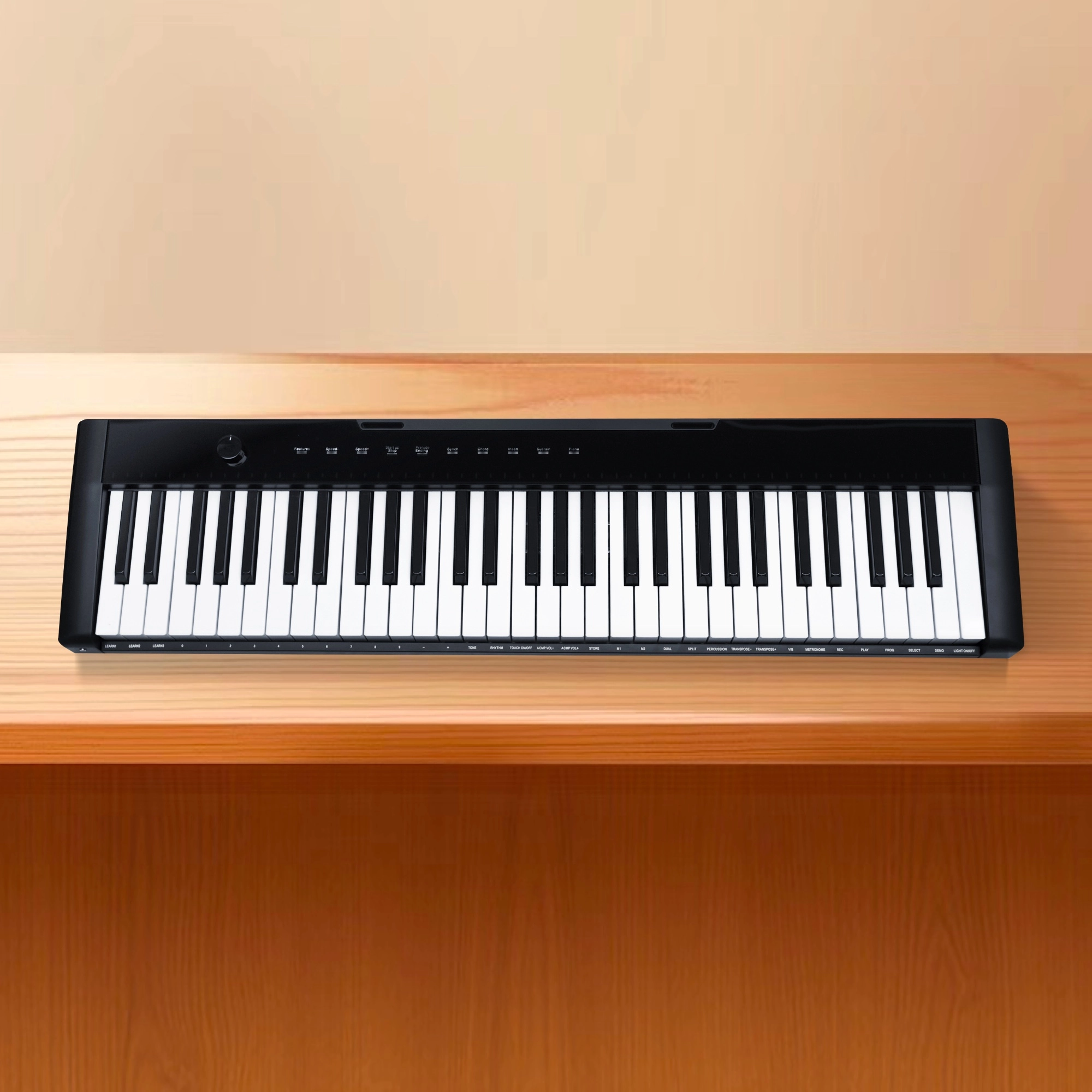
Flykeys 61 keys portable electronic keyboard piano with X stand (M2)
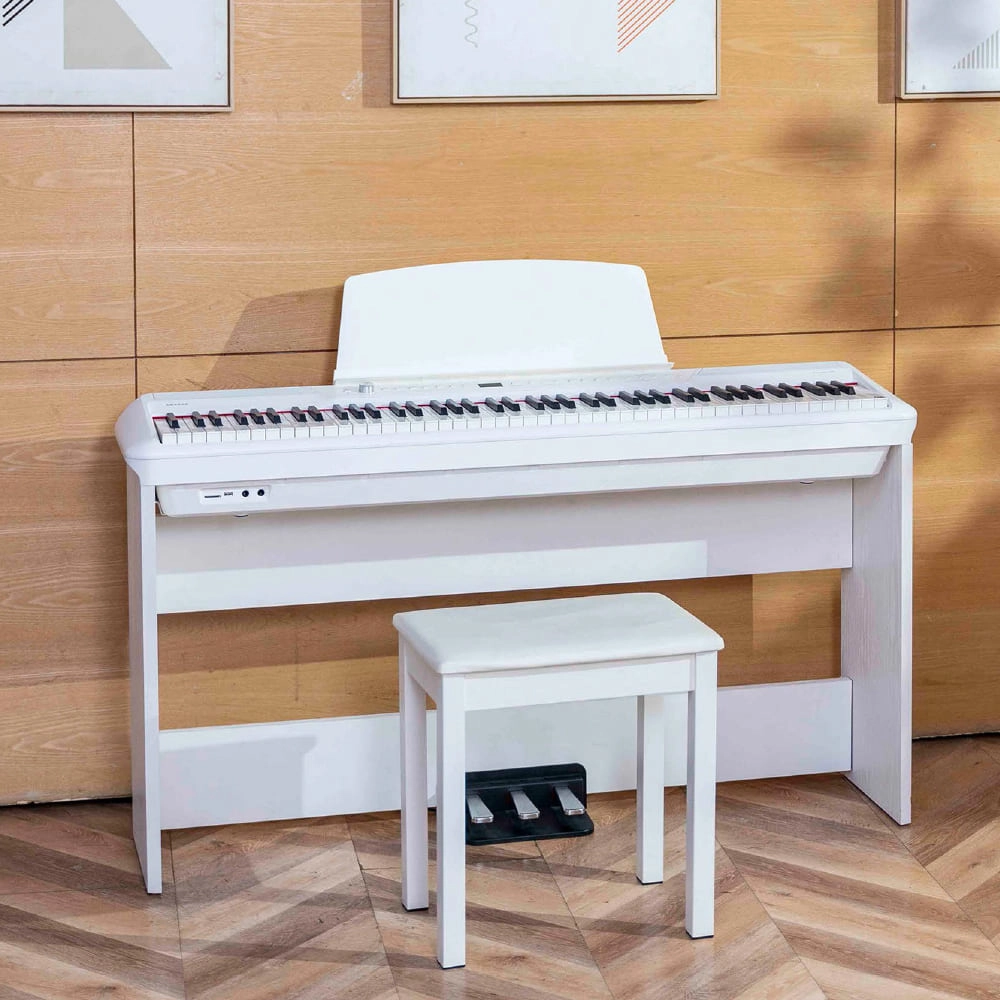
Flykeys Portable Electric Keyboard FP9 Digital Piano
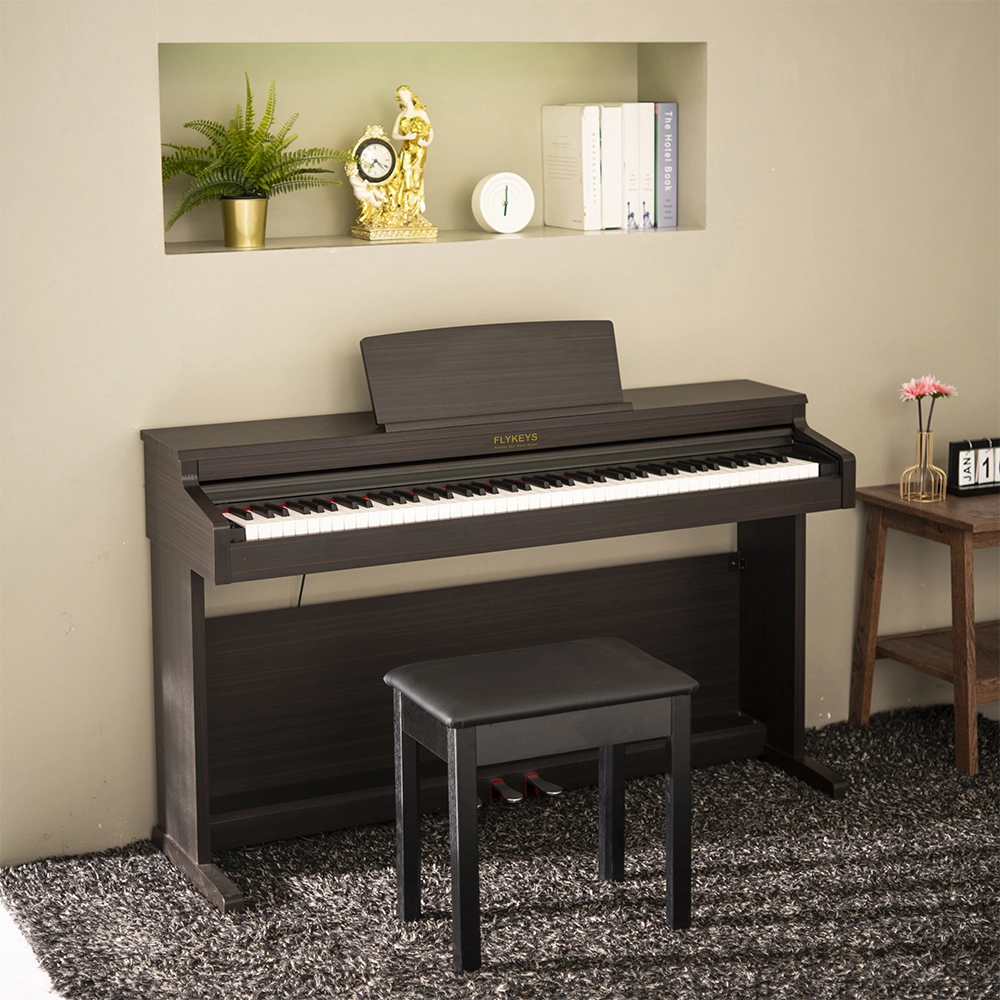
Flykeys 88 Keys Hammer Action keyboard Upright Piano LK03S Digital Piano
— Independent patented technology 88 key Grand-Response hammer action & dynamic curve keyboard;
— European top DSP chip, famous grand piano sound sample;
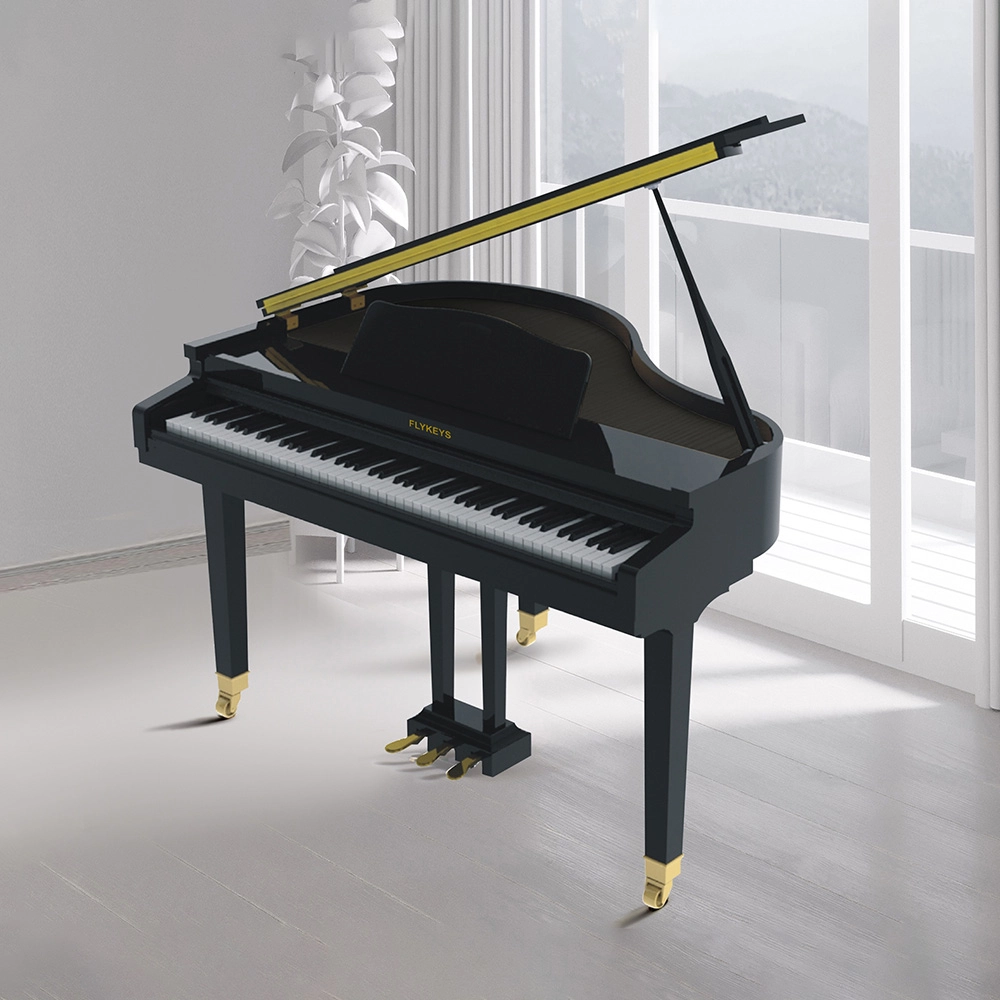
Flykeys 88 Keys Professional Digital Grand Piano Hammer Action Keyboard FGP110 Digital Piano
— Italian Fatar 88 Grand-ResponseTM Key trends with hammer action & dynamic curve
— Independent developed DSP chip, German famous grand piano sound sample
Address: No. 38 Xiangshan Avenue, Zengcheng Economic And Technological Development Zone, Guangzhou, China.
FOLLOW US:


© 2024 FLYKEYS All Rights Reserved. 粤ICP备2020102774号. Designed by gooeyun Sitemap | Privacy | Terms