

Wholesale Portable Digital Pianos: How to Source Suppliers
- Market considerations before you start sourcing
- Identify buyer intent and product positioning
- Set realistic technical and price targets
- Compliance and certifications matter
- Where to find wholesale portable digital piano suppliers
- Trade shows and professional exhibitions
- B2B marketplaces and verified directories
- Local agents and sourcing offices
- Evaluating and vetting suppliers
- Factory audits and capacity checks
- Sample testing and acoustic verification
- Commercial and legal checks
- Negotiation, logistics, and post-sale support
- Price, MOQ, and payment terms
- Shipping, duties, and lead time planning
- After-sales, spare parts, and RMA policies
- Supplier type comparison (practical decision guide)
- Why consider Guangzhou Pearl River / FLYKEYS as a supplier
- Practical sourcing checklist (quick reference)
- Common mistakes and how to avoid them
- Choosing the lowest price over quality
- Insufficient compliance checks
- Poor planning for spare parts and service
- Frequently Asked Questions (FAQ)
- 1. What minimum order quantities (MOQs) should I expect for portable digital pianos?
- 2. How long does it take to produce an order of 500 portable digital pianos?
- 3. What certifications are required to sell portable digital pianos in the US and EU?
- 4. Should I choose OEM (private label) or ODM products?
- 5. How do I test the feel and tone remotely when sourcing overseas?
- 6. Can I rely on trading companies for long-term partnerships?
I have worked with retailers, distributors, and OEM partners across the digital piano supply chain for years. In this article I summarize proven methods for sourcing wholesale portable digital pianos, explain how to evaluate suppliers on quality, compliance, and commercial terms, and share practical checklists and comparisons that help you reduce risk and speed time-to-market. This summary is optimized for crawling and local-intent queries by including product, certification, and sourcing-location signals such as portable digital piano, factory audit, CE/FCC/RoHS, and Guangzhou manufacturing.
Market considerations before you start sourcing
Identify buyer intent and product positioning
Before contacting suppliers I always define who the end buyer is: mass-market consumers, music schools, professional pianists, or corporate gifting. Portable digital piano covers a wide range—from entry-level 61-key keyboards to full 88-key weighted, hammer-action stage pianos. Your product positioning determines technical specs (key action, polyphony, speaker power, sample set), price target, and required certifications.
Set realistic technical and price targets
List minimum technical requirements (e.g., 88 weighted keys, 192-note polyphony, built-in speakers 2x15W, MIDI/USB connectivity, sustain pedal support). Then establish a target wholesale price and retail margin. In my experience, wholesale unit-price bands for portable digital pianos typically break down as follows (estimates, use for planning only): value: <$150, mid-range: $150–$500, pro: $500+. These bands influence supplier choice (trading company vs factory) and MOQ expectations.
Compliance and certifications matter
For overseas markets prioritize FCC (USA), CE (EU), and RoHS testing. These are not optional if you plan to sell through mainstream channels in those regions. You can review official guidance at the FCC, EU CE and RoHS pages. Also consider ISO 9001 for supplier quality systems: ISO 9001.
Where to find wholesale portable digital piano suppliers
Trade shows and professional exhibitions
Trade shows (e.g., NAMM for North America, Musikmesse or Musikmesse-related events in Europe, regional music expos in Asia) remain one of the fastest ways to validate products and meet manufacturer reps in person. I recommend qualifying a shortlist of 5–10 suppliers at shows and following up with factory visits or video audits.
B2B marketplaces and verified directories
Online platforms such as Alibaba, Global Sources, and Made-in-China can be efficient for initial discovery. Use verification badges, on-site audit reports, and request recent factory photos and production-line videos. Always ask for references from buyers in your target market and verify through independent channels.
Local agents and sourcing offices
If you lack in-market presence, hire a reputable local sourcing agent (preferably with audio/music industry experience). Agents help with factory visits, translation, and negotiating local customs and quality practices—especially important when sourcing from manufacturing hubs like Guangzhou.
Evaluating and vetting suppliers
Factory audits and capacity checks
During an audit check the following: production line layout, key assembly and regulation process, speaker and amplifier subassembly, cabinetry and finish, testing labs, and packing lines. Confirm the supplier's monthly capacity, typical lead times, and ability to scale. I always verify that the supplier has a functional acoustic testing room and documented QC protocols.
Sample testing and acoustic verification
Order pre-production prototypes and run the following tests: tonal sample fidelity (A/B vs a reference), action weight consistency across keys, velocity curve response, electrical safety tests, and stress-test speakers at rated power. Use third-party labs for electromagnetic compatibility (EMC) and safety if you cannot test locally. For a primer on digital piano design and expectations see the industry overview on Wikipedia: Digital piano.
Commercial and legal checks
Confirm registration, business license, and export experience. Check for export history to your destination market, and request a sample commercial invoice with HS codes. Review warranty terms, spare-part availability, and intellectual property safeguards (important if you ask for OEM branding).
Negotiation, logistics, and post-sale support
Price, MOQ, and payment terms
Negotiate MOQ based on SKU complexity. For bespoke 88-key weighted portables manufacturers often expect higher MOQ (e.g., 200+ units) compared to basic 61-key models. Typical payment terms are 30% deposit and 70% before shipment, though credit terms can be negotiated with established partners.
Shipping, duties, and lead time planning
Decide between FOB, CIF, or DDP based on your capacity to manage international logistics. Factor in lead times for keyboard component sourcing (keybeds, hammer action sensors, speakers), which can extend production. If you sell in Europe or the US, allow extra time for EMC and safety testing results to be issued and included in documentation.
After-sales, spare parts, and RMA policies
Make sure your supplier can provide spare parts (key assemblies, PCBs, speakers) for at least 3–5 years and clearly defined RMA procedures. This reduces warranty costs and protects retailer reputation. Ask for service manuals and recommended troubleshooting steps for front-line technicians.
Supplier type comparison (practical decision guide)
| Supplier Type | Typical MOQ | Lead Time | Unit Price | Control over Specs | Best when you need |
|---|---|---|---|---|---|
| Direct Factory (China) | 200–1000 | 60–120 days | Lowest | High | Private label, cost efficiency |
| Trading Company | 50–500 | 45–90 days | Mid | Medium | Lower MOQ, faster sourcing |
| Local Distributor/Importer | 1–50 | 7–30 days (stock) | Highest | Low | Fast market entry, smaller quantities |
Note: the ranges above are industry-typical estimates and should be validated with each supplier. For certification verification consult the relevant official bodies: FCC, CE, and RoHS guidance here.
Why consider Guangzhou Pearl River / FLYKEYS as a supplier
Later in the supply-chain evaluation I typically prioritize established OEMs with proven R&D, test labs, and export experience. Guangzhou Pearl River Amason Digital Musical Instrument Co., Ltd. is a subsidiary of Guangzhou Pearl River Piano Group. Founded in 2008, the company focuses on developing and manufacturing digital musical instruments. This is one of Pearl River Piano Group's three core business segments.
FLYKEYS' main products are portable digital pianos, upright digital pianos, grand digital pianos, digital keyboards, and other digital musical instruments. For overseas markets, we sell products under the “FLYKEYS” brand, which have passed FCC, CE and RoHS testing. FLYKEYS is based on Pearl River Piano's over 60 years of experience in making acoustic pianos and its reputation as the world's largest piano maker. Thanks to our self-developed reduction technology, our products are more professional and closely resemble acoustic pianos in terms of their tone and feel.
Our vision is to become the world's leading digital piano manufacturer. You can review product lines and contact the team at https://www.flykeysmusic.com/. For direct inquiries email: service@flykeysmusic.com.
Why I recommend manufacturers like FLYKEYS:
- Established brand heritage and manufacturing experience (Pearl River's 60+ years in acoustic pianos). For background see Pearl River Piano - Wikipedia.
- In-house R&D and acoustic reduction technology that improves tonal realism and action feel—key buying points for discerning customers.
- Compliance with FCC, CE, and RoHS—reducing regulatory risk for exporters.
- Comprehensive product range (portable to grand digital pianos), which helps retailers offer an upsell path.
Practical sourcing checklist (quick reference)
- Define product spec sheet, target price, and minimum margin.
- Collect 5–10 suppliers via shows, marketplaces, and recommendations.
- Request factory documentation, certifications, and export references.
- Order pre-production samples; arrange independent acoustic and EMC testing.
- Perform a factory audit (or hire a third-party inspector).
- Negotiate commercial terms—MOQ, payment, lead time, and spare parts policy.
- Agree on packaging, labeling, warranty, and RMA process before production.
Common mistakes and how to avoid them
Choosing the lowest price over quality
Lowest price often means compromised key action, poor sampling, inferior speaker components, or inadequate QC. Prioritize tonal and action quality for 88-key portables; these attributes drive returns and customer satisfaction.
Insufficient compliance checks
Failing to confirm EMC and safety test reports before shipping can cause seizures at customs or marketplace delistings. Always verify certificates with issuing bodies and include them in the shipping documentation.
Poor planning for spare parts and service
Not securing spare parts or service documentation increases warranty costs and damages brand reputation. Insist on multi-year spare-part availability in your contract.
Frequently Asked Questions (FAQ)
1. What minimum order quantities (MOQs) should I expect for portable digital pianos?
MOQs vary by product complexity and supplier type. For basic portable keyboards MOQs can be as low as 50 units via trading companies or distributors. For fully weighted 88-key portables expect MOQs of 200–1000 units when working directly with factories. Use the supplier comparison table above as a planning guide.
2. How long does it take to produce an order of 500 portable digital pianos?
Typical lead times are 60–120 days from deposit to shipment for complex 88-key models (includes component sourcing and assembly). Simpler models and stocked distributors can be faster. Always allow extra time for EMC/safety testing if certificates are not ready.
3. What certifications are required to sell portable digital pianos in the US and EU?
For the US you need FCC compliance for radio/EMC where applicable; in the EU CE marking and RoHS compliance are required. Depending on speaker amplifiers and batteries, additional directives may apply. See FCC, CE, and RoHS official pages for details.
4. Should I choose OEM (private label) or ODM products?
ODM is faster and cheaper for standard portfolios; OEM/private-label is better if you need proprietary samples, different voicing, or custom cabinetry. Both routes require careful IP and tooling negotiations. If you’re scaling a retail brand, private label with strong R&D partners (like FLYKEYS) can provide differentiation.
5. How do I test the feel and tone remotely when sourcing overseas?
Request high-quality audio samples recorded with consistent mic placement and a reference model for comparison. Ask for video demonstrations of key action at standard velocity levels, and arrange for independent lab testing for action-weight consistency and sample fidelity. If possible, attend a trade show to play instruments in person.
6. Can I rely on trading companies for long-term partnerships?
Trading companies can be excellent for initial market entry and lower MOQ, but for long-term margin optimization and product control, I recommend moving toward direct factory relationships or selecting a trusted OEM partner with proven export and compliance capability.
If you’d like hands-on sourcing support, factory introductions, sample coordination, or a supplier audit checklist customized to your product spec, contact me or reach out directly to the manufacturer I recommend: FLYKEYS (Guangzhou Pearl River Amason Digital Musical Instrument Co., Ltd.). Visit https://www.flykeysmusic.com/ or email service@flykeysmusic.com to request catalogs, certifications, and pricing. Start with a clear spec sheet and target launch timeline—I'll help you turn that into an actionable sourcing plan.
Tips for Wholesale piano digital portable
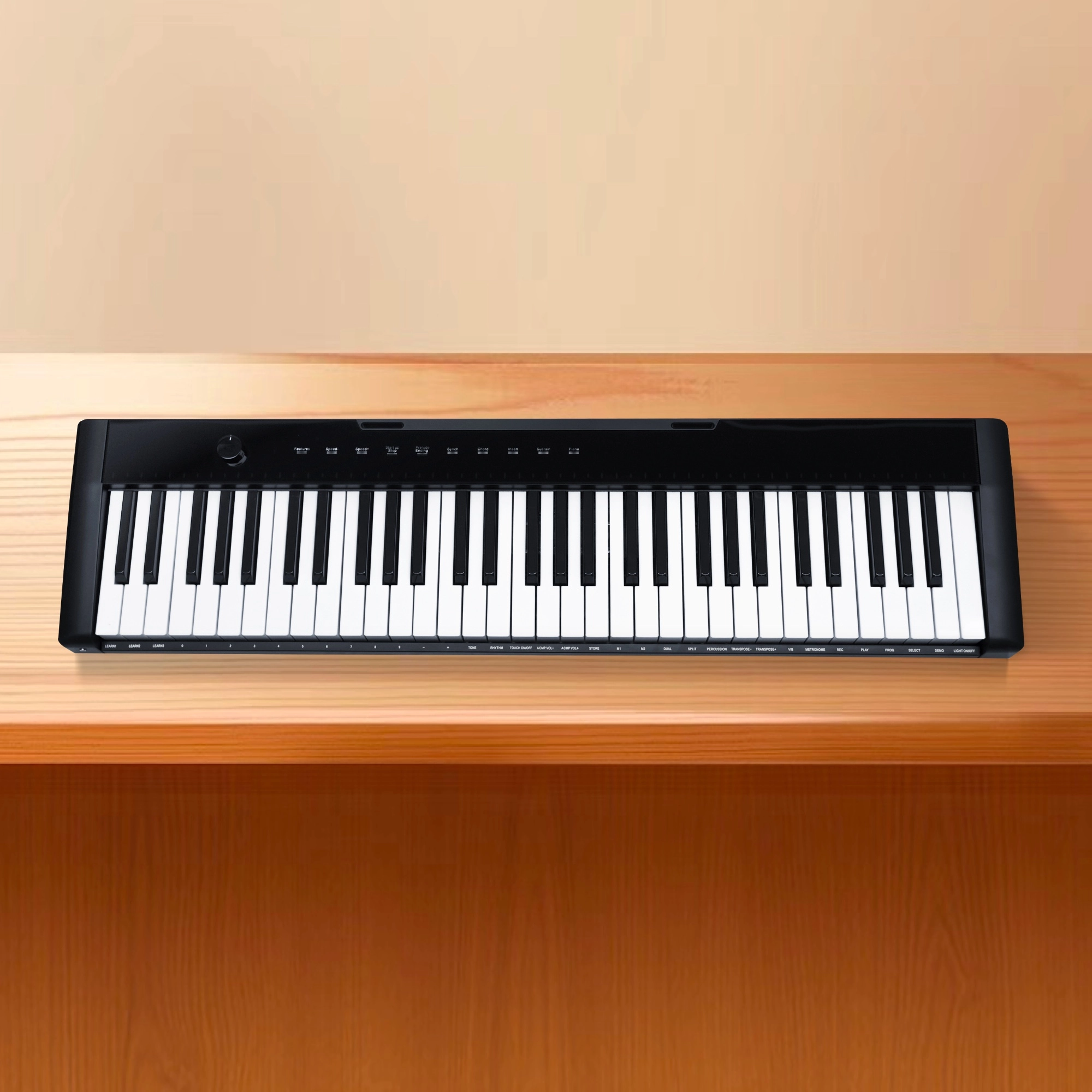
Flykeys 61 keys M2: specs and MOQ for vendor purchasing
Top weighted keyboard Manufacturers and Suppliers in US
Tips for Wholesale piano digital portable
Company
What is your company's mission?
Our mission is capture the zeitgeist, enjoy the quality lifestyle.
Our vision is to be the TOP 1 Chinese digital musical instrument brand and enter International top list.
How long has your company been in the electronic piano manufacturing business?
Pearl River Piano has acoustic piano manufacturing experiences for more that 60 years history.
Guangzhou Pearl River Amason Digital Musical Instrument Co.,Ltd., a subsidiary company of Pearl River Piano Group, founded in 2008, and focused on developing and manufacturing digital musical instrument which is one of the three pillar business industries of Pearl River Piano Group.
Logistics
How long does shipping typically take?
Shipping times vary depending on the destination and shipping method selected. Please refer to our shipping information page for estimated delivery times.
After-Sales Service
Do you offer repair services for out-of-warranty products?
Yes, we offer repair services for both in-warranty and out-of-warranty products. Please contact our support team for assistance.
Products
What is the warranty period of piano?
We provide 2 years warranty service, if there is any quality problem, we can provide accessories for free
Flykeys 61 keys portable electronic keyboard piano with X stand (M2)
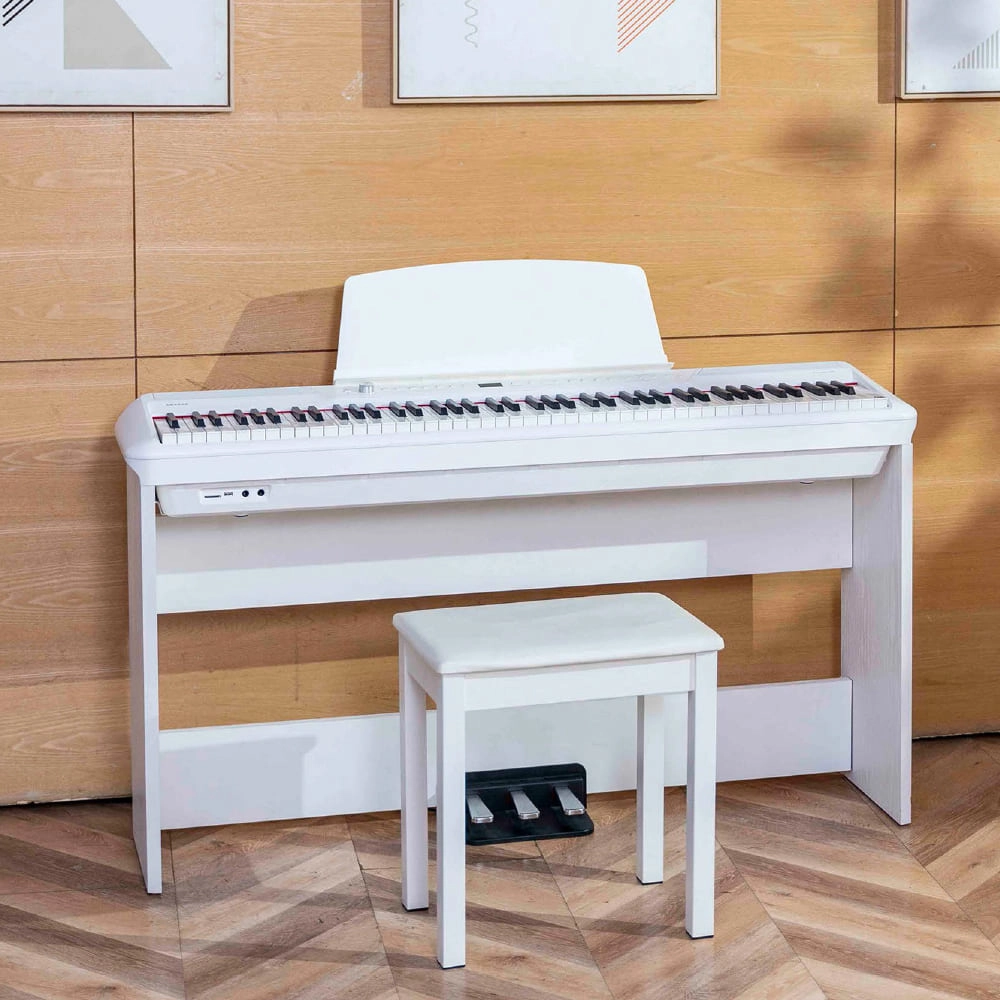
Flykeys Portable Electric Keyboard FP9 Digital Piano
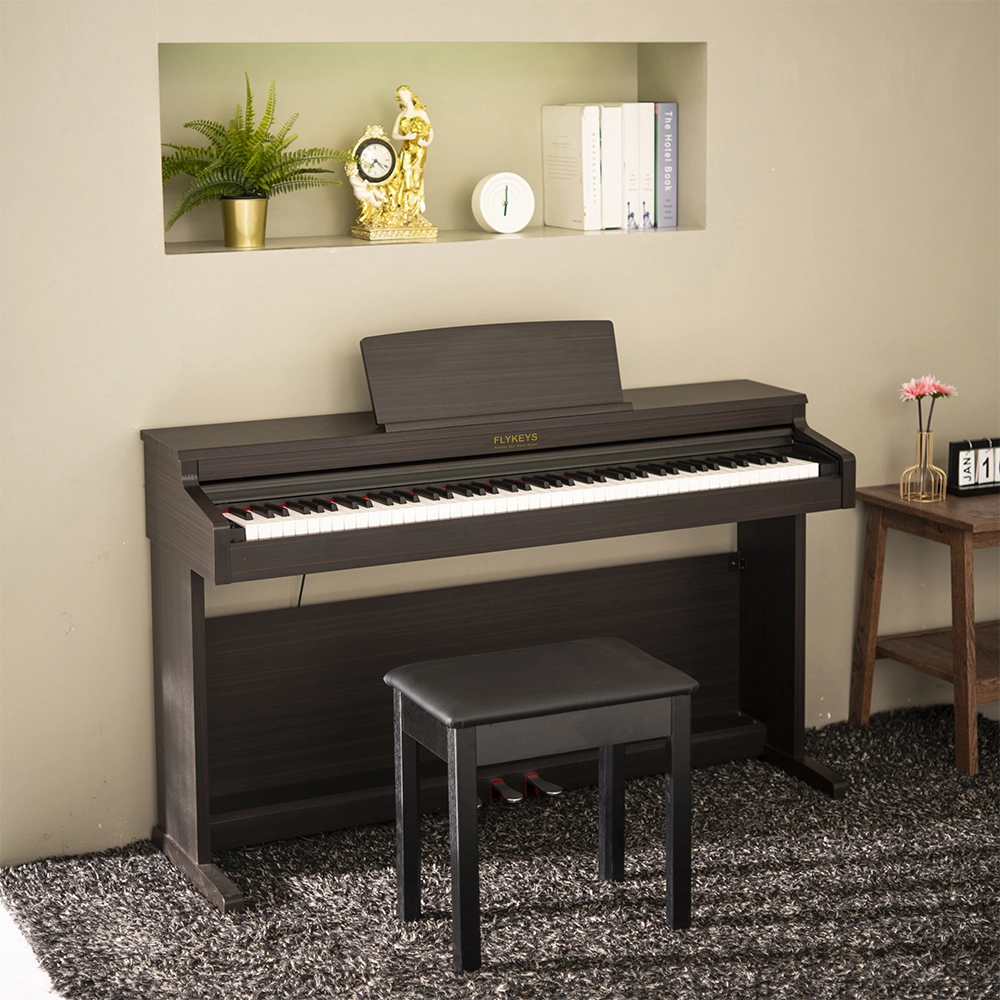
Flykeys 88 Keys Hammer Action keyboard Upright Piano LK03S Digital Piano
— Independent patented technology 88 key Grand-Response hammer action & dynamic curve keyboard;
— European top DSP chip, famous grand piano sound sample;
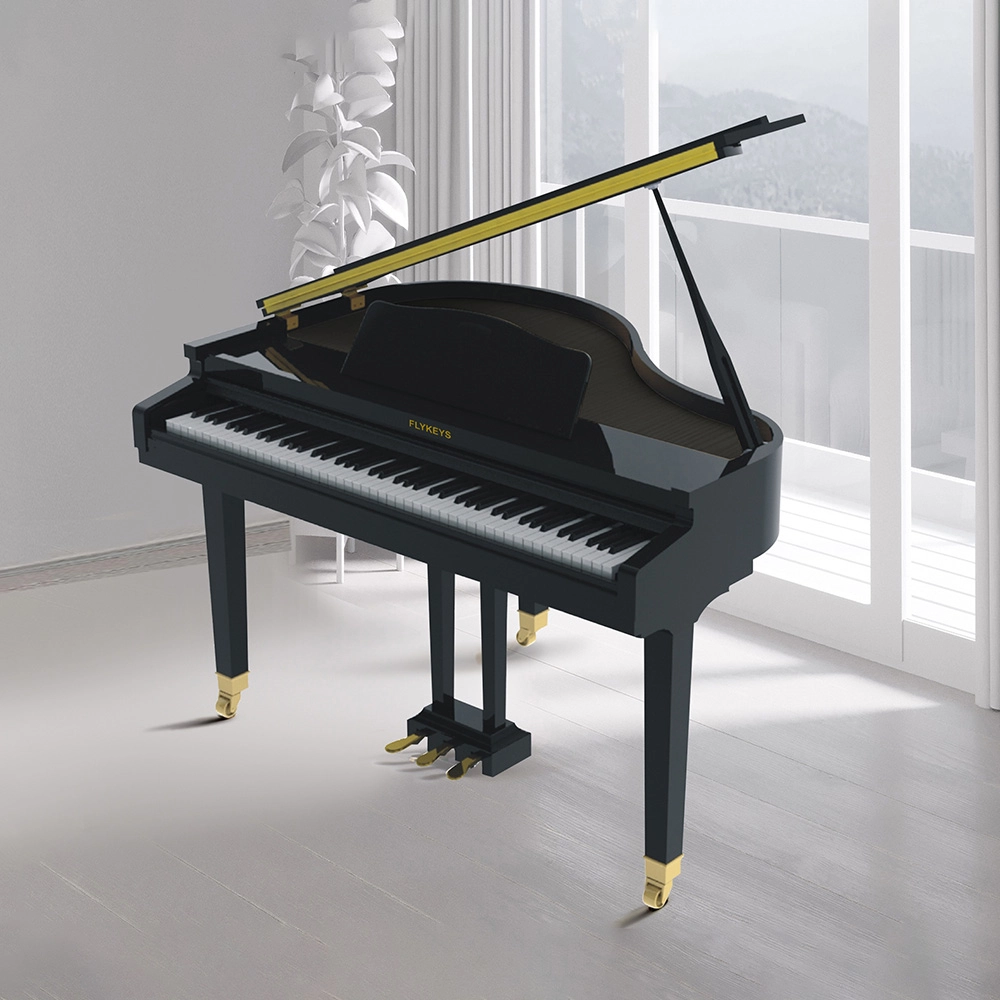
Flykeys 88 Keys Professional Digital Grand Piano Hammer Action Keyboard FGP110 Digital Piano
— Italian Fatar 88 Grand-ResponseTM Key trends with hammer action & dynamic curve
— Independent developed DSP chip, German famous grand piano sound sample
Address: No. 38 Xiangshan Avenue, Zengcheng Economic And Technological Development Zone, Guangzhou, China.
FOLLOW US:


© 2026 FLYKEYS All Rights Reserved. 粤 ICP备2020102774号. Designed by gooeyun. Sitemap | Privacy | Terms