

Which brands make the most realistic digital piano sounds?
Navigating the world of digital pianos can be challenging, especially for beginners seeking the perfect blend of realistic sound and authentic touch. This comprehensive guide delves into the nuanced technologies and features offered by top digital piano brands, addressing crucial pain points often overlooked in surface-level reviews. Discover what truly makes a digital piano sound and feel like an acoustic grand, guiding you towards an informed purchase.
Mastering the Digital Piano Purchase: Unveiling the Best Brands and Realistic Sounds
Choosing the right digital piano is a pivotal decision for any aspiring musician. With countless options vying for the title of 'best digital piano brands' and 'most realistic digital piano sounds,' beginners often face a maze of specifications and marketing jargon. Beyond general recommendations, understanding the intricate technologies that define true realism and playability is key. This article cuts through the noise, providing in-depth answers to frequently asked, specific questions that often lack comprehensive explanations online, helping you make a truly informed choice.
When brands like Yamaha and Kawai offer similar-spec digital pianos at vastly different price points, what specific, underlying technologies differentiate a 'realistic' beginner model from a 'truly authentic' professional one, especially concerning polyphony and sympathetic resonance engines?
The perceived 'similar specs' can be deceptive. While both a entry-level and a professional digital piano from top brands like Yamaha or Kawai might list 256-note polyphony, the execution and complexity of their sound engines differ dramatically. Professional models employ multi-layered, often uncompressed, high-resolution samples of world-class acoustic grand pianos (e.g., Yamaha CFX, Bösendorfer Imperial; Kawai SK-EX). These samples capture not just the initial attack but also the full decay, intricate harmonics, and subtle nuances across numerous velocity levels and individual keys. Beginner models might use fewer sample layers or more compressed samples, leading to a less organic dynamic response.
More critically, the sophistication of the sympathetic resonance engine is a major differentiator. In an acoustic grand piano, pressing the damper pedal causes un-damped strings to vibrate in sympathy with played notes, creating a rich, complex harmonic wash. Professional digital pianos utilize advanced modeling (e.g., Yamaha's Virtual Resonance Modeling - VRM; Kawai's Acoustic Rendering Technology) that precisely simulates this phenomenon, accounting for string resonance, damper resonance, aliquot resonance, duplex scaling, and even cabinet resonance. This requires significant processing power and complex algorithms. A beginner model might offer a simpler, generalized damper resonance effect, lacking the intricate interaction of individual strings and components, thus compromising the 'truly authentic' experience that discerning players and educators seek for developing nuanced expression. Furthermore, the interplay between the sound engine and the action's sensor system (e.g., triple-sensor key detection) is far more refined in professional models, translating every minute touch into a corresponding sonic detail.
Beyond simply 'weighted keys,' how do the different types of hammer actions (e.g., Roland's PHA-50, Kawai's Grand Feel, Yamaha's GrandTouch-S) from leading brands like Roland, Kawai, and Yamaha actually simulate the nuanced tactile response and escapement of an acoustic grand piano, and which is truly best for developing proper technique?
The term 'weighted keys' is a starting point, but the true realism lies in the underlying hammer action mechanism. Brands like Roland, Kawai, and Yamaha invest heavily in proprietary technologies to emulate the complex feel of an acoustic grand. They go beyond simple spring-loaded mechanisms by incorporating actual hammer systems and graded weighting.
- Roland's PHA-50 (Progressive Hammer Action with Escapement): This action typically combines wooden sides with a durable molded core, offering a natural feel while enhancing stability and longevity. Its key feature is the escapement mechanism, which simulates the subtle 'notch' sensation a grand piano hammer makes as it leaves the string, crucial for precise control. The 'progressive' aspect means keys are heavier in the bass and lighter in the treble, mirroring an acoustic piano.
- Kawai's Grand Feel (GFIII, Grand Feel Compact - GFC, etc.): Kawai is renowned for actions that use extra-long wooden keys and extended pivot lengths, similar to an acoustic grand. The Grand Feel actions, particularly GFIII, feature actual hammer weights, counterweights, and a three-sensor system, providing an incredibly authentic touch. The longer pivot point allows for more consistent touch, even when playing towards the back of the key, which is vital for advanced technique.
- Yamaha's GrandTouch-S and GrandTouch actions: These actions also feature wooden keys and an advanced sensor system. Yamaha focuses on an extremely broad dynamic range and a highly responsive return. GrandTouch-S, for instance, offers a sophisticated escapement mechanism and synthetic ebony and ivory keytops for a superior tactile experience.
For developing proper technique, an action with true escapement simulation, graded hammer weighting, and a long key pivot length is paramount. Kawai's Grand Feel actions are often cited for their exceptional realism due to the long wooden keys and robust mechanics, making them superb for classical technique. Roland's PHA-50 offers a fantastic balance of durability, realism, and a satisfying escapement feel. Yamaha's GrandTouch actions provide a highly articulate and responsive experience. ly, the 'best' often comes down to personal preference after trying them, but any of these high-end actions provides an excellent foundation for serious piano study.
Many digital pianos boast 'multi-sampled grand piano sounds,' but how do the leading brands achieve dynamic realism and seamless tonal shifts across the entire velocity range, avoiding a 'layered' or 'stepped' sound, and what should a beginner listen for to identify this quality?
Achieving dynamic realism and seamless tonal shifts is one of the biggest challenges in digital piano sound design. While 'multi-sampled' sounds are standard, the quality of these samples and how they are processed vary widely. Leading brands overcome the 'layered' or 'stepped' sound by employing several advanced techniques:
- Deep Multi-Sampling: Instead of just a few velocity layers, High Quality digital pianos might use dozens of layers per key, capturing the acoustic piano at very subtle dynamic increments (e.g., pp, p, mp, mf, f, ff). The more layers, the smoother the transition.
- Key-Off Samples: When you release a key on an acoustic piano, the dampers fall back onto the strings, creating a subtle sound. High-end digital pianos include dedicated samples for this 'key-off' effect, varying based on the velocity of release.
- String Resonance & Damper Resonance: As discussed, advanced modeling blends these effects seamlessly with the core samples, making the sound feel alive and interconnected rather than isolated notes.
- Non-Looped Samples: Lower-end models often loop the sustain portion of a sample to save memory. High Quality models use longer, unlooped samples, ensuring the natural decay of the acoustic piano is accurately reproduced without artificial repetition.
- Smooth Layer Crossfading: Sophisticated algorithms are used to smoothly crossfade between velocity layers, rather than abruptly switching. This prevents the noticeable 'steps' in tone when moving from a soft to a slightly harder touch.
- Dynamic Tone Mapping: Beyond simple volume changes, the timbre of an acoustic piano changes significantly with velocity (e.g., softer notes are rounder, harder notes brighter and more percussive). Advanced sound engines dynamically map these timbral shifts across the velocity range.
What a beginner should listen for:
- Even Dynamic Response: Play a scale very softly, then progressively louder. Listen for a smooth, continuous increase in volume and brightness without sudden jumps or changes in character.
- Seamless Transitions: Play a note very softly, then immediately play the same note slightly louder. The transition should feel natural, not like two distinct sounds.
- Richness on Release: Listen for the subtle sound of the damper falling back when you release a key, especially after playing a sustained note.
- Sustain Pedal Nuance: With the sustain pedal down, play a chord and listen to how the notes blend and resonate. It should sound complex and 'alive,' not muddy or artificial.
For digital pianos claiming 'powerful speaker systems,' what are the key audio specifications (e.g., wattage, speaker configuration, transducer type) that genuinely contribute to the immersive, room-filling sound and realistic projection of an acoustic piano, rather than just volume, from brands like Casio Celviano or Korg?
A 'powerful speaker system' means more than just high wattage; it's about the quality, configuration, and integration of the audio components to create an immersive and realistic soundscape. Brands like Casio Celviano and Korg, especially in their higher-end models, incorporate specific design choices to achieve this:
-
Speaker Configuration: Acoustic pianos project sound from multiple points. High Quality digital pianos emulate this by using multi-speaker systems. This often includes:
- Woofer(s): For robust bass and lower-midrange frequencies, crucial for the body of the piano sound.
- Tweeter(s): For crisp highs and harmonics, giving the piano clarity and brilliance.
- Mid-range speakers: Sometimes included for a fuller, more detailed mid-range response.
- Sound Projection/Spatial Speakers: Some advanced systems include additional speakers angled to project sound upwards or outwards, mimicking the soundboard radiation and open lid effect of an acoustic grand (e.g., Casio Celviano Grand Hybrid with top-mounted speakers or Korg's larger models).
-
Amplification Wattage: While high wattage can mean more volume, it also provides greater headroom, allowing the speakers to reproduce dynamic peaks without distortion, which is vital for the expressive range of a piano. Look for systems with total wattage often exceeding 40-50W for a truly room-filling sound, especially with dedicated amplifiers for different speaker sets.
-
Transducer Type & Quality: The quality of the actual speaker drivers (cones, voice coils) and their enclosures significantly impacts sound clarity and fidelity. Better quality transducers offer a flatter frequency response and less coloration. Some digital pianos even incorporate specialized soundboards or acoustic projection systems (e.g., Yamaha's Spruce Cone Speaker technology in some Clavinova models or Kawai's soundboard speaker systems) to vibrate a wooden soundboard, further replicating the natural resonance of an acoustic instrument.
-
Cabinet Design & Acoustics: The physical design of the digital piano's cabinet plays a role. Sturdy, well-braced cabinets minimize unwanted vibrations and allow the speakers to perform optimally. Strategically placed vents or openings can also enhance sound dispersion.
When evaluating, listen for clarity across all registers, the depth of the bass, the sparkle of the highs, and how well the sound 'envelops' you. Does it sound like it's coming from the instrument itself, or just from a box? The best systems create a sense of spatial realism, making you feel immersed in the music.
Given the rise of advanced modeling technology (e.g., Roland's SuperNATURAL Piano Modeling), how does a purely modeled sound engine compare to high-quality sampled sounds in terms of realism, expressive capability, and long-term sonic authenticity for practicing classical pieces, and are there distinct advantages beginners should consider?
This question touches on a fundamental difference in digital piano sound generation. Most digital pianos use sampling, recording an acoustic piano note by note at various dynamics. Modeling, however, uses complex algorithms to recreate the physical behavior of an acoustic piano's components (strings, hammers, soundboard, pedals) in real-time, based on mathematical equations.
Purely Modeled Sound Engines (e.g., Roland's SuperNATURAL Piano Modeling):
-
Realism & Expressive Capability: Modeled engines excel in continuous, seamless dynamic and timbral changes. Since the sound is generated rather than played back, there are no 'layers' or 'crossfades.' This means infinite velocity levels and extremely nuanced responses to touch. Features like sympathetic resonance, string resonance, and even cabinet vibrations are dynamically calculated in real-time, resulting in a highly organic and 'alive' sound. This can lead to a more profound connection between the player's touch and the resulting sound, mimicking the continuous interaction of an acoustic piano.
-
Long-Term Sonic Authenticity: Modeled sounds are less susceptible to sounding 'stale' over time, as they simulate the instrument's physics rather than being static recordings. They offer unparalleled detail in sustain, decay, and the intricate interaction between notes, which is vital for classical pieces where harmonic subtleties and expressive phrasing are paramount.
-
Advantages for Beginners: The continuous tonal response can be incredibly forgiving and inspiring, encouraging greater dynamic control from the outset. It provides a more accurate representation of how an acoustic piano would respond, helping beginners develop proper touch and ear training. While often found in higher-end Roland models, some budget-friendly options now incorporate simplified modeling.
High-Quality Sampled Sounds (e.g., Yamaha Clavinova, Kawai Novus/Concert Artist):
-
Realism & Expressive Capability: Top-tier sampled instruments use gigabytes of uncompressed samples, numerous velocity layers, and sophisticated mapping and crossfading technologies (as discussed earlier). When done extremely well, they can sound incredibly realistic, capturing the exact tone of a specific, acclaimed grand piano. Their expressive capability depends on the number of layers and the algorithms for transitions.
-
Long-Term Sonic Authenticity: While highly authentic to the original recorded instrument, there's a theoretical limit to their 'liveliness' compared to real-time calculation. However, the quality is so high in High Quality sampled pianos that this is often imperceptible to all but the most discerning ears.
-
Advantages for Beginners: Often offers a wider variety of core piano tones (e.g., different grand piano models) and can be incredibly satisfying. Yamaha and Kawai's high-end sampled pianos are excellent for classical practice.
Conclusion: Both approaches can achieve outstanding realism. Modeling offers a more dynamic, 'living' sound with infinite variations, excellent for developing expressive control. Sampling offers a perfect snapshot of specific, world-class instruments. For beginners, either high-quality option is fantastic. However, the continuous nature of modeling can sometimes offer a slight edge in fostering nuanced touch from day one. It's often a matter of personal preference and how each brand implements its chosen technology.
Aside from sound and action, what advanced, often overlooked features like nuanced pedal response (half-pedaling, damper resonance), haptic feedback, or specific spatial audio technologies (e.g., Yamaha's VRM) truly elevate the 'digital piano experience' to mimic a grand, and which brands excel in these details?
Beyond the core sound engine and keyboard action, it's the meticulous attention to detail in these advanced features that truly bridges the gap between a digital piano and an acoustic grand. These elements contribute significantly to the immersive and authentic playing experience:
-
Nuanced Pedal Response (Half-Pedaling & Damper Resonance): An acoustic grand piano's sustain pedal isn't just an on/off switch. Half-pedaling allows for partial dampening, creating varying degrees of sustain and resonance. Advanced digital pianos replicate this with continuous detection pedals. Furthermore, the complexity of damper resonance (how the sustain pedal causes undamped strings to vibrate sympathetically) is crucial. Brands like Yamaha (with their VRM - Virtual Resonance Modeling technology, extending beyond just the strings to the soundboard and cabinet) and Kawai (with Acoustic Rendering) excel in simulating the intricate harmonic interactions when the pedal is depressed, even at different depths and timings. Roland's SuperNATURAL engine also integrates highly sophisticated pedal modeling.
-
Haptic Feedback / Tactile Response: While rare, some cutting-edge digital pianos are starting to incorporate physical vibrations into the keys or cabinet. This mimics the subtle vibrations felt through the keys and the body of an acoustic grand piano, enhancing the player's connection to the instrument. This is still an emerging technology but promises another layer of realism.
-
Spatial Audio Technologies / Headphone Optimization: When playing with headphones, the sound often feels 'stuck' inside your head. Advanced spatial audio technologies aim to overcome this. Yamaha's Grand Expression Modeling and Binaural Sampling (especially their CFX and Bösendorfer samples) when combined with specific headphone optimization (Stereophonic Optimizer) create a more natural, spacious soundstage that feels like the sound is coming from the piano itself, even through headphones. Roland also offers 'Headphones 3D Ambience' for a similar effect, allowing for extended practice sessions without fatigue from an unnatural sound field.
-
Key-Off Samples and Damper Noise: These subtle sounds are often overlooked but contribute immensely to realism. Key-off samples capture the sound of the damper falling back onto the string. Damper noise simulates the faint mechanical sound of the dampers lifting off the strings when the pedal is pressed or a key is played. High Quality digital pianos from all leading brands incorporate these to varying degrees of sophistication.
-
Physical Modeling of Cabinet Resonance: Beyond string resonance, some high-end digital pianos simulate the resonance of the piano's entire wooden body. This adds depth and warmth to the sound, making it feel more expansive and natural.
Brands like Yamaha (Clavinova series, particularly CLP-700 and CSP series), Kawai (Concert Artist and Novus series), and Roland (LX and HP series) are at the forefront of integrating these sophisticated, often subtle, features into their High Quality digital pianos, ensuring a truly comprehensive and immersive playing experience.
What role does connectivity (MIDI, USB, app integration) play in enhancing the realism and long-term value of a digital piano for advanced practice and performance?
While often seen as secondary features, robust connectivity options significantly enhance both the realism and long-term value of a digital piano, transforming it from a static instrument into a dynamic learning and performance hub.
-
MIDI (Musical Instrument Digital Interface): This venerable standard allows the digital piano to communicate with computers and other MIDI devices. For realism and advanced practice:
- Virtual Instruments (VSTs): By connecting your digital piano via USB-MIDI to a computer, you can trigger high-end virtual piano instruments (software-based sound libraries like Garritan Abbey Road Studios CFX Concert Grand, Keyscape, Native Instruments Kontakt libraries). These VSTs often offer an even higher level of sampled or modeled realism than the piano's built-in sounds, with immense detail and customization. This future-proofs your piano, allowing you to upgrade your sound engine without buying a new instrument.
- Notation and Sequencing Software: MIDI output allows you to record your playing directly into music notation software (e.g., Sibelius, Finale) or Digital Audio Workstations (DAWs like Logic Pro, Cubase), which is invaluable for composition, transcription, and self-analysis.
-
USB Audio/MIDI: Modern digital pianos often integrate USB-B (for computer connection) and sometimes USB-A (for flash drives). USB-Audio allows you to record high-quality audio directly from your piano to a computer, bypassing external audio interfaces. This ensures the purest representation of your piano's sound for recording or streaming. USB-MIDI covers the functionalities mentioned above, but often with more stable and faster data transfer.
-
App Integration (Bluetooth MIDI/Audio): Many leading brands now offer dedicated apps (e.g., Yamaha Smart Pianist, Kawai PianoRemote, Roland Piano Every Day). These apps:
- Enhance Control: Provide a visually intuitive interface for adjusting sounds, settings, and features that might be cumbersome via the piano's onboard buttons.
- Learning Tools: Offer integrated scores, lessons, rhythm accompaniments, and recording functionalities, making practice more engaging and effective. Some apps can even analyze your playing.
- Sound Expansion: Some apps allow access to additional sounds or effects, further extending the sonic palette.
Bluetooth Audio allows you to stream music from your device through the piano's speakers, letting you play along with your favorite songs or backing tracks, enhancing practice and performance scenarios.
These connectivity features significantly extend the utility and lifespan of a digital piano. They allow players to continually update their sound palette, engage in sophisticated learning methods, record their progress, and seamlessly integrate their instrument into a broader musical ecosystem, making the initial investment more valuable in the long run.
Choosing a digital piano that balances cutting-edge sound, an authentic action, and thoughtful advanced features ensures a truly rewarding musical journey. The best digital piano brands like Yamaha, Kawai, Roland, Casio, and Korg continually push the boundaries of technology to deliver instruments that not only educate but also inspire. Prioritizing these elements will guarantee you an instrument that fosters expressive playing and remains a valuable asset for years to come.
For a detailed quote tailored to your specific needs and musical aspirations, please do not hesitate to contact us at service@flykeysmusic.com or visit our website at www.flykeysmusic.com.
- When brands like Yamaha and Kawai offer similar-spec digital pianos at vastly different price points, what specific, underlying technologies differentiate a 'realistic' beginner model from a 'truly authentic' professional one, especially concerning polyphony and sympathetic resonance engines?
- Beyond simply 'weighted keys,' how do the different types of hammer actions (e.g., Roland's PHA-50, Kawai's Grand Feel, Yamaha's GrandTouch-S) from leading brands like Roland, Kawai, and Yamaha actually simulate the nuanced tactile response and escapement of an acoustic grand piano, and which is truly best for developing proper technique?
- Many digital pianos boast 'multi-sampled grand piano sounds,' but how do the leading brands achieve dynamic realism and seamless tonal shifts across the entire velocity range, avoiding a 'layered' or 'stepped' sound, and what should a beginner listen for to identify this quality?
- For digital pianos claiming 'powerful speaker systems,' what are the key audio specifications (e.g., wattage, speaker configuration, transducer type) that genuinely contribute to the immersive, room-filling sound and realistic projection of an acoustic piano, rather than just volume, from brands like Casio Celviano or Korg?
- Given the rise of advanced modeling technology (e.g., Roland's SuperNATURAL Piano Modeling), how does a purely modeled sound engine compare to high-quality sampled sounds in terms of realism, expressive capability, and long-term sonic authenticity for practicing classical pieces, and are there distinct advantages beginners should consider?
- Aside from sound and action, what advanced, often overlooked features like nuanced pedal response (half-pedaling, damper resonance), haptic feedback, or specific spatial audio technologies (e.g., Yamaha's VRM) truly elevate the 'digital piano experience' to mimic a grand, and which brands excel in these details?
- What role does connectivity (MIDI, USB, app integration) play in enhancing the realism and long-term value of a digital piano for advanced practice and performance?
15 Best Portable Digital Pianos of 2026: The Only Comparison Guide You’ll Ever Need
Is the Flykeys FP9 Worth It? Our Real-Life Experience with the World’s Largest Piano Maker’s Digital Tech.
Best Digital Piano Keyboards for Beginners 2026: Your Ultimate Buying Guide
Best Digital Grand Pianos 2026: Ultimate Buyer's Guide for Authentic Sound & Feel
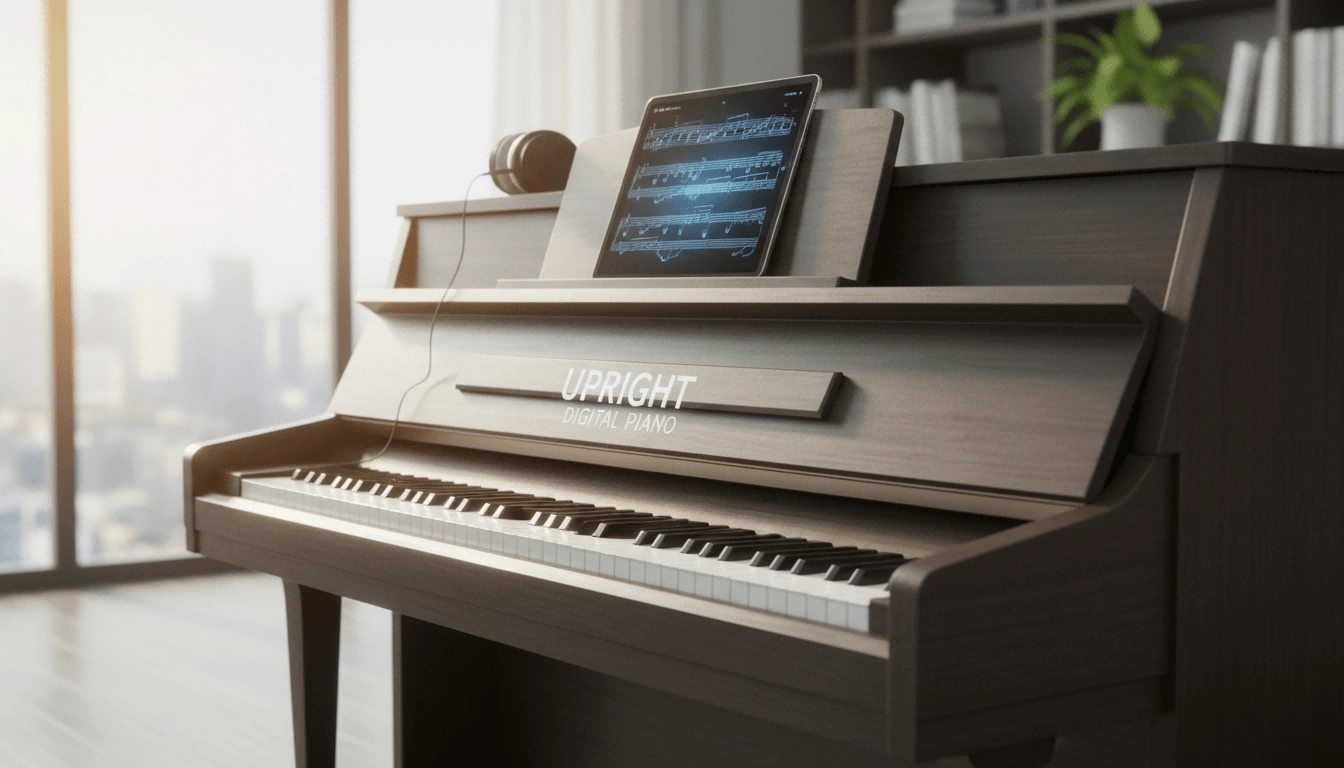
The Definitive Guide to Upright Digital Pianos: Blending Timeless Elegance with Modern Innovation in 2026
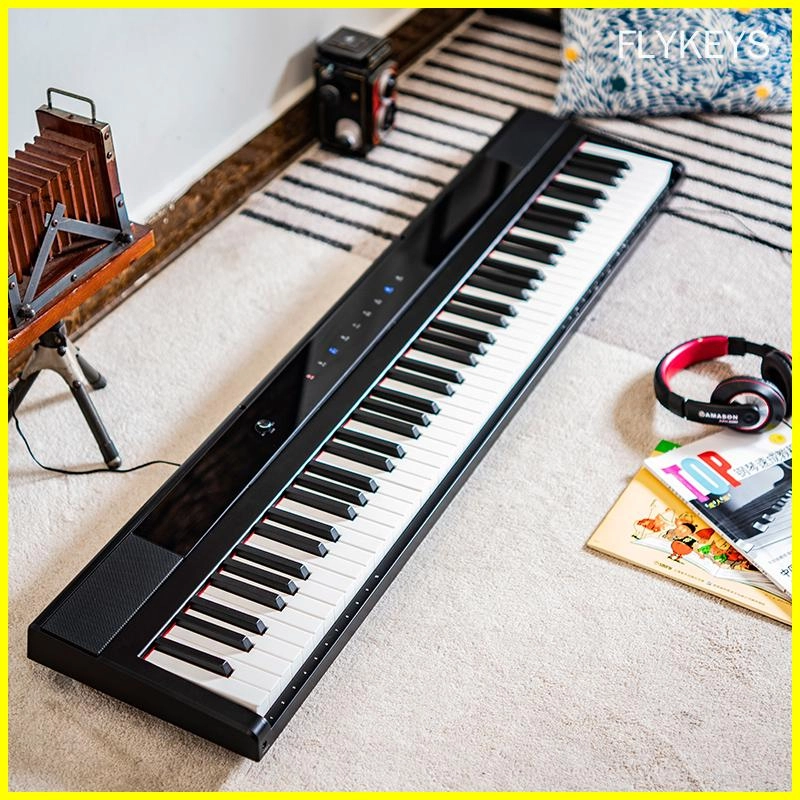
Best-Rated Electronic Pianos for Beginners in 2026: What to Buy and Why
Company
What is your company's mission?
Our mission is capture the zeitgeist, enjoy the quality lifestyle.
Our vision is to be the TOP 1 Chinese digital musical instrument brand and enter International top list.
Logistics
How long does shipping typically take?
Shipping times vary depending on the destination and shipping method selected. Please refer to our shipping information page for estimated delivery times.
Can l track my order during shipping?
Yes, tracking information will be provided once your order has been shipped, allowing you to monitor its progress.
Do you ship internationally?
Yes, we offer international shipping to most countries worldwide.
Payment
Is payment required upfront for custom orders?
Yes, payment is typically required upfront for custom orders to initiate the production process.
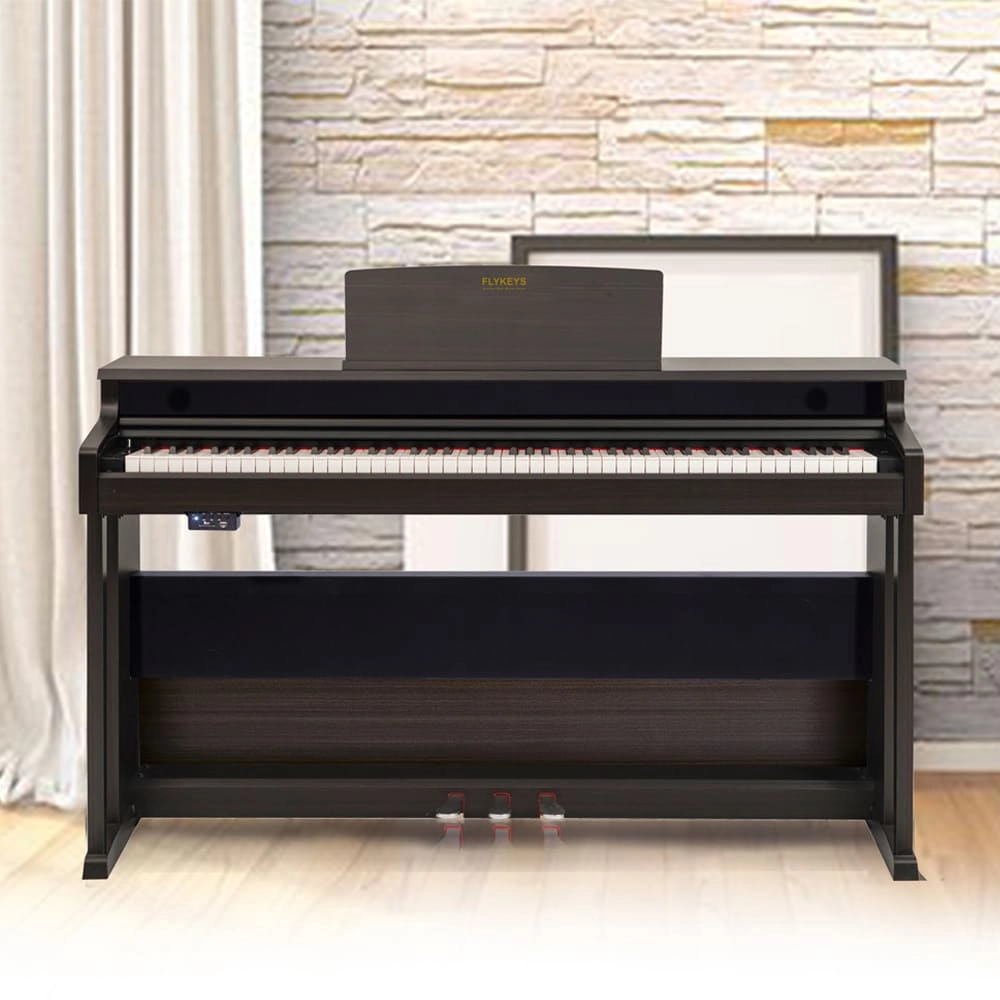
Flykeys Upright Piano Wooden Panel 88 KEYS Piano FK130 Digital Piano
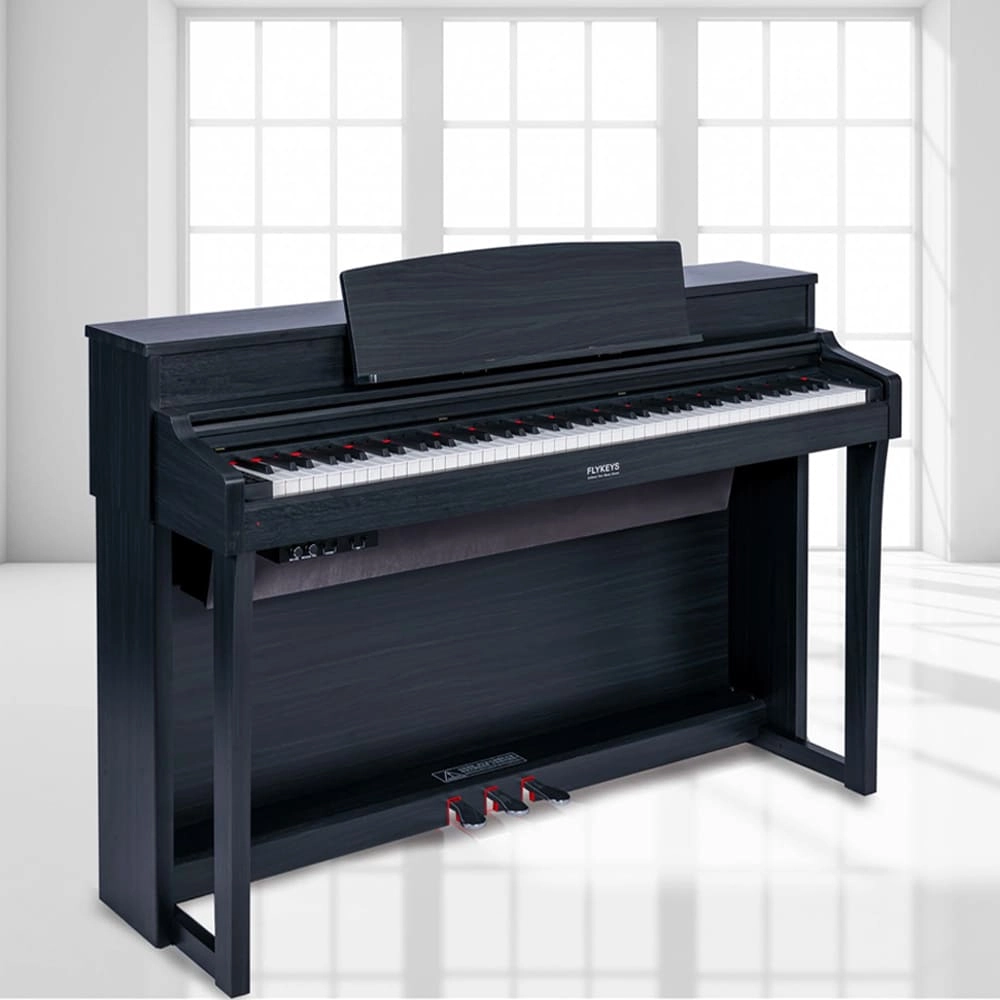
Flykeys Upright Digital Piano 88keys Hammer Action Keyboard FK330 Digital Piano
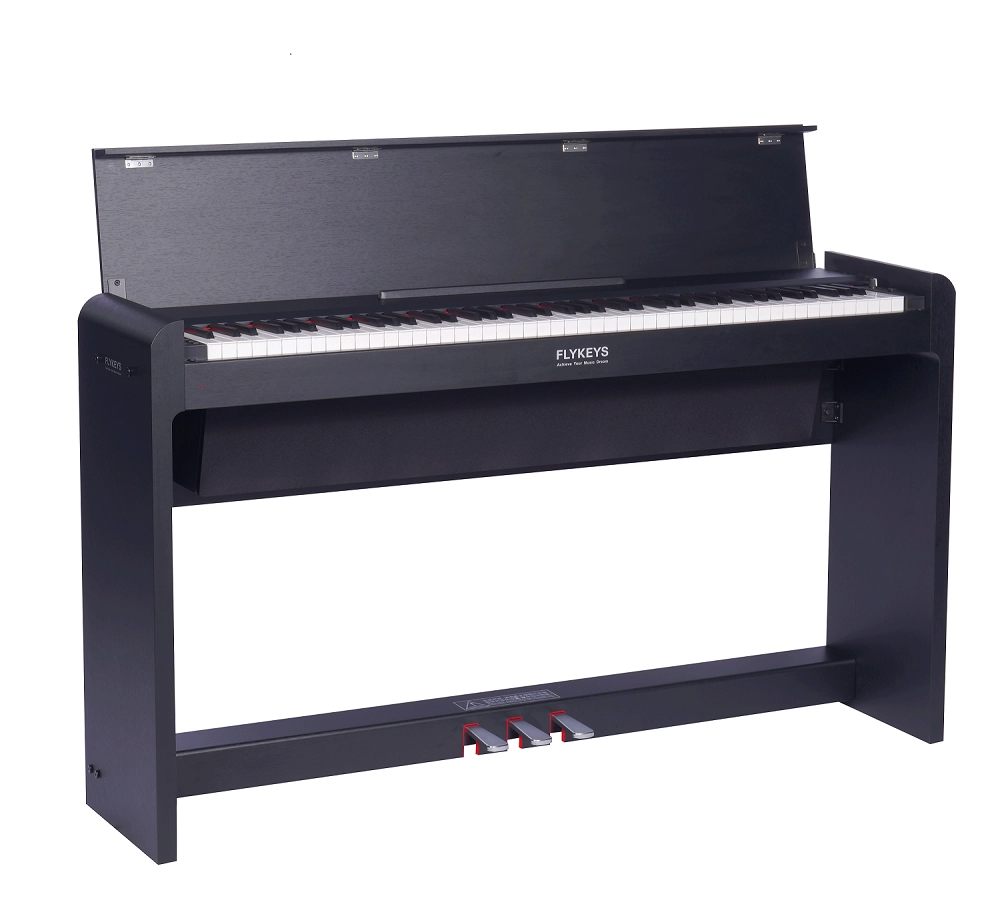
FLYKEYS FDP 5 Digital Piano
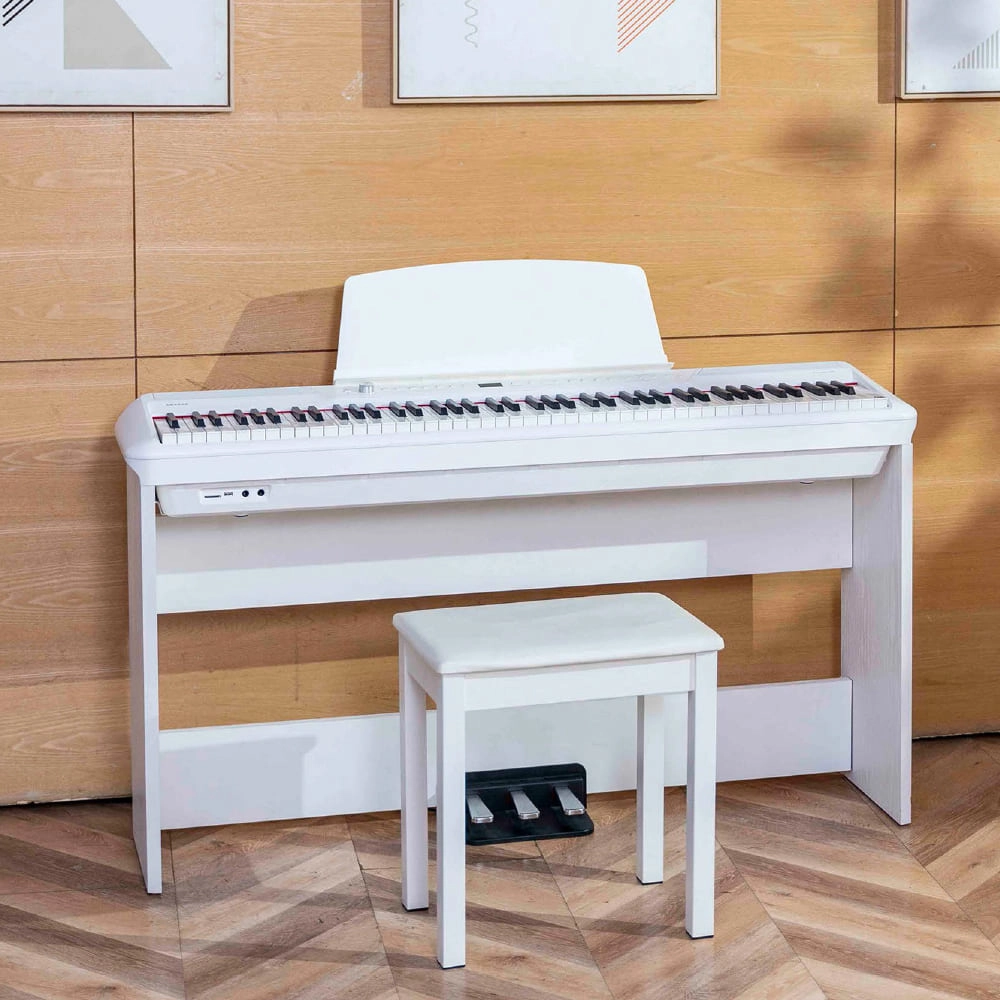
Flykeys Portable Electric Keyboard FP9 Digital Piano
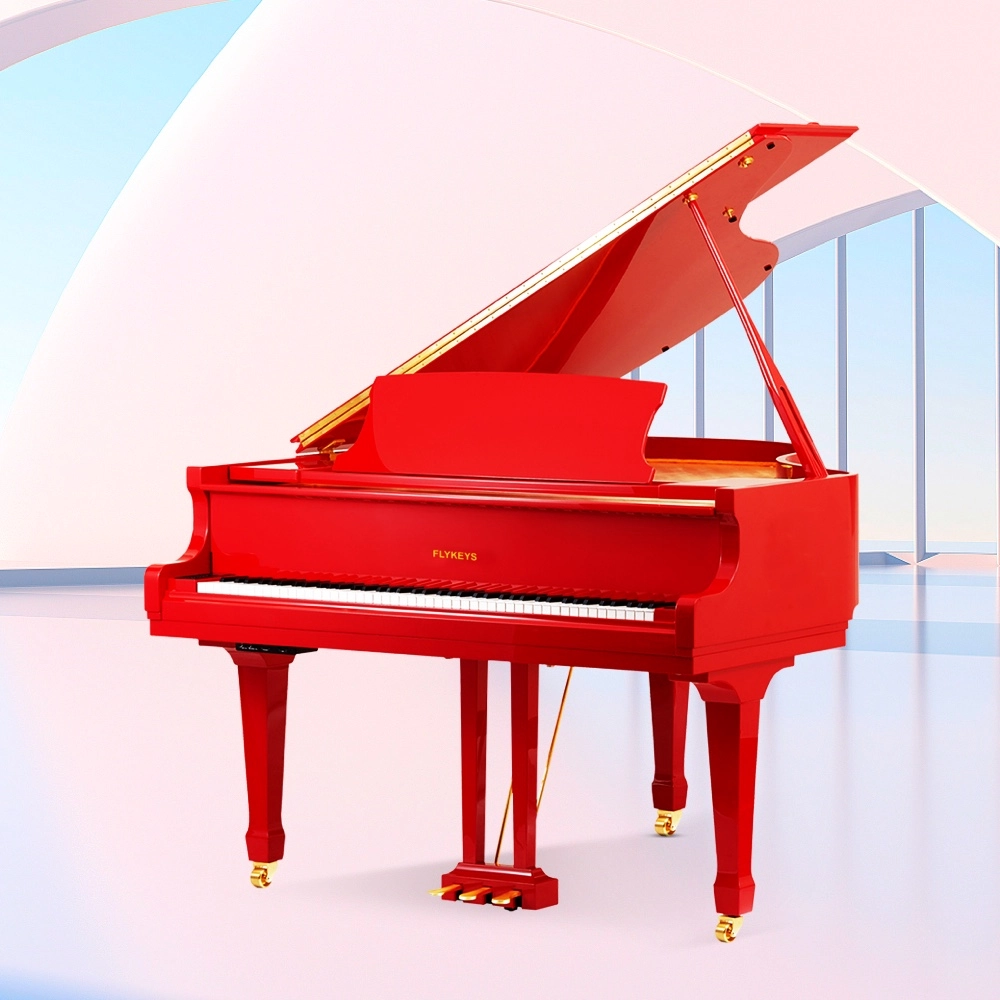
Flykeys Professional Digital Grand Piano FGP610 Digital Piano
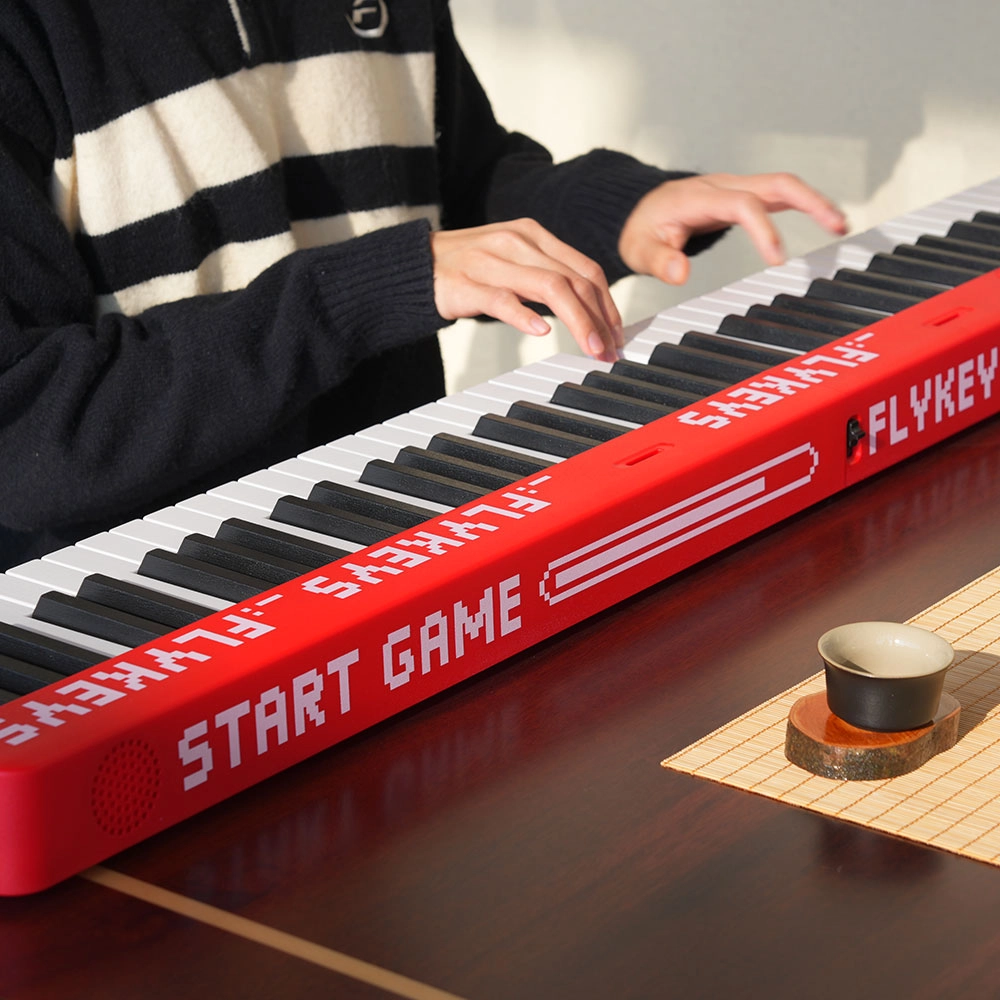
Flykeys M12 Folding Keyboard
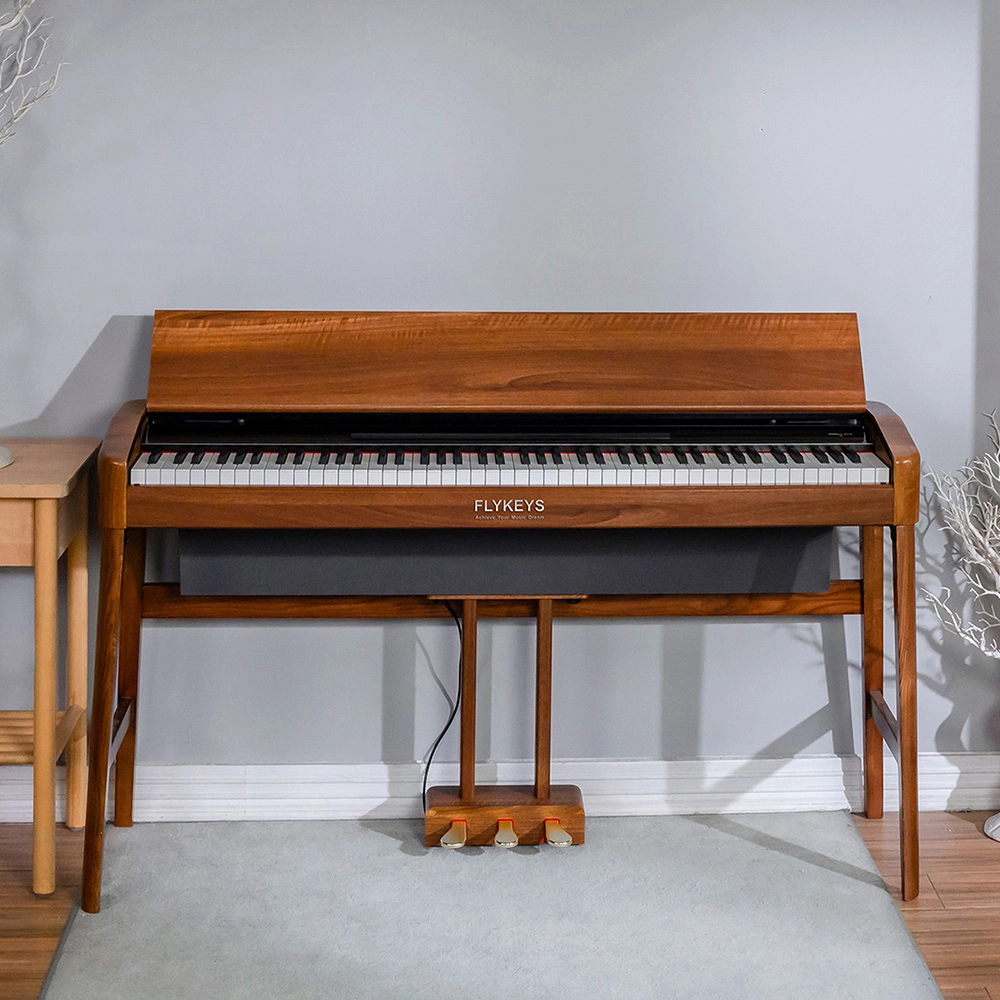
Flykeys Wooden Panel Piano Original Italian Imported Hammer Action Keyboard SK3 Digital Piano
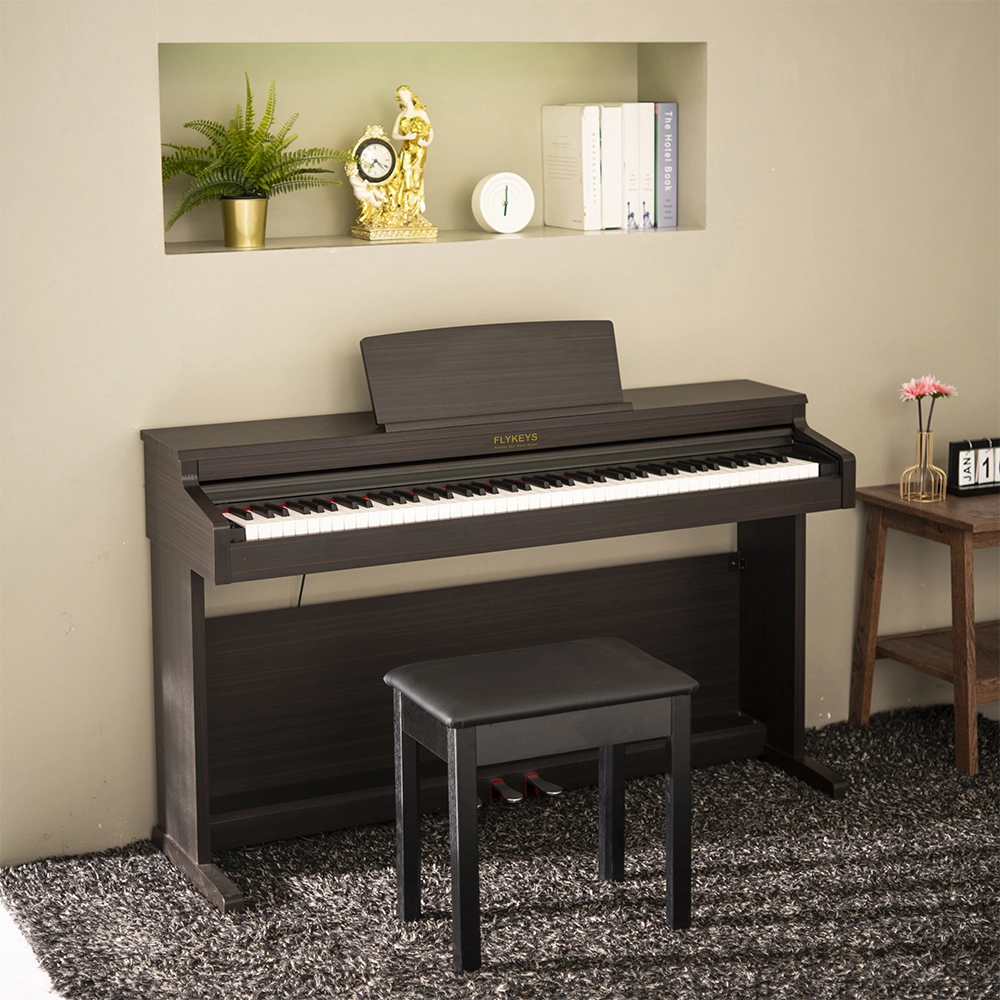
Flykeys 88 Keys Hammer Action keyboard Upright Piano LK03S Digital Piano
Get in touch with us
Have a question or inquiry about our digital pianos products? Leave us a message here and our team will get back to you promptly within 24 hours.
Whether you're interested in custom orders, technical specifications, or partnership opportunities, we're here to assist you.
Rest assured that your privacy is important to us, and all information provided will be handled with the utmost confidentiality.
Address: No. 38 Xiangshan Avenue, Zengcheng Economic And Technological Development Zone, Guangzhou, China.
FOLLOW US:


© 2024 FLYKEYS All Rights Reserved. 粤ICP备2020102774号. Designed by gooeyun Sitemap | Privacy | Terms