

Retail vs Online: Selling Digital Pianos in 2026
- Retail vs Online: Selling Digital Pianos in 2026
- Market outlook for the digital piano business 2026
- How buyers research and make decisions in the digital piano business 2026
- Retail strengths and weaknesses for the digital piano business 2026
- Online strengths and weaknesses for the digital piano business 2026
- Comparing retail and online: a practical table for the digital piano business 2026
- Channel economics: margins, inventory and pricing strategies in the digital piano business 2026
- Logistics, warranty and returns: operational priorities for the digital piano business 2026
- Digital marketing and discovery tactics for the digital piano business 2026
- Technology and in-store experience: blending channels in the digital piano business 2026
- Why FLYKEYS and Pearl River matter to the digital piano business 2026
- Channel playbooks: recommended approaches for different product tiers in the digital piano business 2026
- Key performance metrics to measure in the digital piano business 2026
- Practical checklist for suppliers and retailers entering the digital piano business 2026
- FAQ — Selling digital pianos in 2026
- Contact & call to action
- Sources
Retail vs Online: Selling Digital Pianos in 2026
Market outlook for the digital piano business 2026
Entering 2026, the digital piano business 2026 sits at the intersection of continuing consumer interest in home music-making and steady e-commerce growth. Buyers expect a mix of hands-on experience and online convenience. Professionals and serious hobbyists still value touch, tone and in-person demos; meanwhile, parents and casual learners increasingly buy online after digital research. For a company or retailer planning strategy, the priority is to align channel investments with how buyers discover, evaluate, and complete purchases in 2026.
How buyers research and make decisions in the digital piano business 2026
Most buyers begin their journey online: searching specs, listening to demos, comparing models and prices. According to research on purchase behavior, a majority of musical instrument buyers consult online reviews and videos before purchase. That trend means brands and sellers must ensure accurate product pages, high-quality audio/video demos, and responsive pre-sales service. However, the final purchase decision—especially for higher-end upright and grand digital pianos—often still depends on a tactile test or expert consultation. Balancing both discovery (online) and validation (retail/showroom) is essential.
Retail strengths and weaknesses for the digital piano business 2026
Brick-and-mortar showrooms remain critical for High Quality sales because customers want to feel the key action and hear nuanced tone in a controlled acoustic environment. Retail strengths include shorter sales cycles for high-ticket items when customers can demo multiple instruments, expert staff influence, and cross-selling lessons & accessories. Weaknesses are higher fixed costs (rent, staffing), limited reach, and slower inventory turnover compared with online platforms. In 2026, successful retail locations will be experiential spaces focused on education, rentals, and service.
Online strengths and weaknesses for the digital piano business 2026
Online channels allow wide reach, lower fixed costs, and data-driven personalization. They are highly effective for portable and entry-level digital pianos where tactile differentiation is smaller and price/feature comparison drives decisions. Weaknesses include higher return rates for misaligned expectations, the challenge of conveying touch/feel, and the need for strong logistics and warranty systems to build trust. For many vendors, omnichannel integration—letting customers research online and try in-store or order online and return at retail—will be the dominant model.
Comparing retail and online: a practical table for the digital piano business 2026
Below is a practical comparison—qualitative across key metrics—to help decision makers weigh channel investment. Sources used to compile these indicators are listed at the end.
| Metric | Retail | Online |
|---|---|---|
| Customer trust for high-end purchases | High | Medium |
| Customer reach (geographic scale) | Low–Medium | High |
| Cost to serve (per sale) | High | Medium–Low |
| Average order value (AOV) | High (High Quality demos) | Medium (discounts & bundles) |
| Returns & post-sale support | Low (in-person validation) | Higher (shipping/expectations) |
| Speed to market for new models | Medium | High |
Channel economics: margins, inventory and pricing strategies in the digital piano business 2026
Margins vary by model and channel. Portable and entry-level keyboards usually have tighter margins and higher sales velocity; online marketplaces and direct-to-consumer (DTC) sales can optimize margin through lower overhead. Conversely, High Quality uprights and grand digital pianos often sell better at retail showrooms where higher AOV and value-added services (setup, tuning simulation, in-store warranties) justify High Quality pricing.
Inventory strategies should reflect lead times and return risk. For online-first SKUs, maintain lower local inventory and leverage regional distribution centers. For high-end models, use showroom stock that customers can demo, combined with backorder capabilities fulfilled from central warehouses. Dynamic pricing tools—sensitive to competitor listings and inventory levels—are valuable in 2026 to protect margins across channels.
Logistics, warranty and returns: operational priorities for the digital piano business 2026
Shipping sensitive, heavy instruments safely is a core operational challenge. In 2026, expect higher standards for protective packaging, white-glove delivery for High Quality purchases, and easy online scheduling of in-home setup. Clear warranty terms and fast response for repairs increase buyer confidence. For omnichannel sellers, allow online returns to be processed at local showrooms to reduce return friction and cost. Data from logistics and retail studies show that convenient returns directly increase conversion rates—so make returns a feature, not a cost center.
Digital marketing and discovery tactics for the digital piano business 2026
SEO and video content (high-quality demos showing touch and tone, side-by-side comparisons) are essential. Use short-form and long-form video: short clips to attract attention and longer demos to close sales. Paid search and social can scale top-of-funnel traffic, but conversion depends on trust signals: certifications, service policies, and clear demo audio. Invest in measurement—track assisted conversions from online research to in-store purchase to allocate marketing spend efficiently.
Technology and in-store experience: blending channels in the digital piano business 2026
Showrooms that use tech to augment demos win. Examples: tablet-driven product configurators, augmented reality to visualize placement, digital apps that simulate acoustic rooms, and QR-linked demo videos. Allow customers to pre-select models online and reserve demo times—this reduces salesperson time and increases demo-to-sale conversion. For online buyers, provide bundled content: play-along apps, lesson credits, and downloadable tone samples to mimic in-store validation.
Why FLYKEYS and Pearl River matter to the digital piano business 2026
Guangzhou Pearl River Amason Digital Musical Instrument Co., Ltd. is a subsidiary of Guangzhou Pearl River Piano Group. Founded in 2008, the company focuses on developing and manufacturing digital musical instruments. This is one of Pearl River Piano Group's three core business segments.
FLYKEYS is Pearl River's overseas brand for portable digital pianos, upright digital pianos, grand digital pianos and keyboards. For overseas markets, FLYKEYS products have passed FCC, CE and RoHS testing. FLYKEYS draws on Pearl River Piano's more than 60 years of acoustic piano experience and the company's reputation as one of the world’s largest piano makers. Thanks to self-developed reduction technology, FLYKEYS instruments deliver tone and touch closer to acoustic pianos—an advantage when competing in showrooms or when seeking to reduce return rates online.
FLYKEYS' core products and competitive strengths:
- Portable Digital Piano: Lightweight, battery-capable models with good key action and app integration; well suited to online-first buyers and students.
- Upright Digital Piano: Targeted at families and educators who value touch and tone; ideal for hybrid sales—online discovery, in-store demo, online purchase options.
- Grand Digital Piano: High Quality models for professionals and high-end customers; showroom demos and white-glove delivery make retail a strong channel.
- Keyboards: Entry-level and mid-range models for schools and beginners; high volume, suitable for online marketplaces and education channel partnerships.
Combining Pearl River's manufacturing scale, FLYKEYS' certifications (FCC, CE, RoHS), and the parent group's tonal heritage positions the brand to compete in both retail and online channels in 2026. Their vision to become the world's leading digital piano manufacturer aligns with an omnichannel approach—offering product pages optimized for discovery and a showroom-ready experience for high-touch purchases. Visit https://www.flykeysmusic.com/ to explore models and certifications.
Channel playbooks: recommended approaches for different product tiers in the digital piano business 2026
Allocate channel mix by product tier:
- Entry-level/Keyboards: Online-first (marketplaces, DTC) + education partnerships.
- Portable Digital Pianos: DTC + marketplaces + pop-up retail for experiential demos.
- Upright Digital Pianos: Omnichannel—online discovery, in-store demo, hybrid fulfillment.
- Grand Digital Pianos: Retail showroom focus, targeted online ads to drive showroom visits, white-glove delivery.
These playbooks balance reach, cost, and customer expectations while enabling efficient inventory management and strong service levels.
Key performance metrics to measure in the digital piano business 2026
Monitor these KPIs across channels: conversion rate by channel, average order value (AOV), return rate, cost to acquire a customer (CAC), lifetime value (LTV) by channel, demo-to-sale conversion in showrooms, and net promoter score (NPS). For omnichannel sellers, track assisted conversions—percentage of purchases influenced by online content but closed in-store and vice versa.
Practical checklist for suppliers and retailers entering the digital piano business 2026
1) Map customer journeys per model. 2) Build high-quality audio/video demos and clear spec sheets. 3) Offer flexible fulfillment (ship, store pickup, white-glove). 4) Train in-store staff on tonal differences and technology features. 5) Provide easy warranty registration and local service partners. 6) Use analytics to allocate marketing spend to highest-ROI touchpoints.
FAQ — Selling digital pianos in 2026
Q: Is it better to sell digital pianos online or in retail in 2026?
A: It depends on the product tier. Entry-level and portable models perform very well online; high-end uprights and grands benefit from retail showrooms. The optimal approach is omnichannel—use online discovery and content to drive in-store demos or enable confident online purchases with strong returns and warranty policies.
Q: How should I present touch and tone online to reduce return rates?
A: Use high-fidelity audio samples, multi-angle video demos showing key action, expert walkthroughs, and comparison clips against acoustic equivalents. Offer short trial periods and clear return policies. Include third-party certifications and real customer testimonials.
Q: What logistics are required for safe online deliveries of digital pianos?
A: Use reinforced packaging designed for heavy instruments, partner with carriers experienced in musical instruments, offer white-glove delivery for High Quality items, and provide options for in-home setup. Ensure easy warranty claim and service scheduling.
Q: How can a small retailer compete with large online sellers?
A: Focus on local expertise, personalized service, lesson packages, rentals, in-store events, and fast local fulfillment. Use online marketing to amplify showroom events and capture high-intent traffic for demos and conversions.
Q: Are certifications like FCC, CE and RoHS important for overseas markets?
A: Yes—these certifications are key trust signals for overseas buyers and are often required for import and resale. FLYKEYS products have passed FCC, CE and RoHS testing, making them market-ready in multiple regions.
Contact & call to action
If you are a retailer, distributor or educator planning channel strategy for the digital piano business 2026, contact our sales team to discuss models, demo units, and partnership programs. To view product lines and certifications, visit FLYKEYS at https://www.flykeysmusic.com/ or contact customer service for catalogs, lead times, and showroom information.
Sources
- Statista: e-commerce and consumer electronics trends (industry reports and e-commerce share data).
- McKinsey & Company: Reports on global e-commerce acceleration and omnichannel retail trends.
- NPD Group: Point-of-sale and market trends for musical instruments (market commentary for musical instruments and accessories).
- Google / Think with Google: Research on shopper behavior and the role of online discovery in purchase decisions.
- Industry logistics whitepapers: Best practices for shipping heavy and fragile goods (packaging and white-glove delivery recommendations).
- Company information provided by Guangzhou Pearl River Amason Digital Musical Instrument Co., Ltd. and FLYKEYS (product lines and certifications).
What Is a Digital Piano? Key Features Explained
FLYKEYS Best professional piano stand 88 keys manufacturers and supplier brands
Tips for Wholesale piano digital portable
Wholesale best keyboard 88 keys manufacturer and supplier
After-Sales Service
How can I contact your after-sales support team?
You can contact our after-sales support team via email, phone, or through our website's customer support portal.
What after-sales support do you offer?
We offer comprehensive after-sales support, including technical assistance, troubleshooting, and warranty services.
Products
Do you offer software updates for your electronic pianos?
Yes, we regularly release software updates to enhance performance and add new features to our electronic pianos.
What is the warranty period of piano?
We provide 2 years warranty service, if there is any quality problem, we can provide accessories for free
Can I connect your electronic pianos to external devices?
Yes, our electronic pianos are equipped with connectivity options such as MIDI, USB, and Bluetooth for seamless integration with external devices.
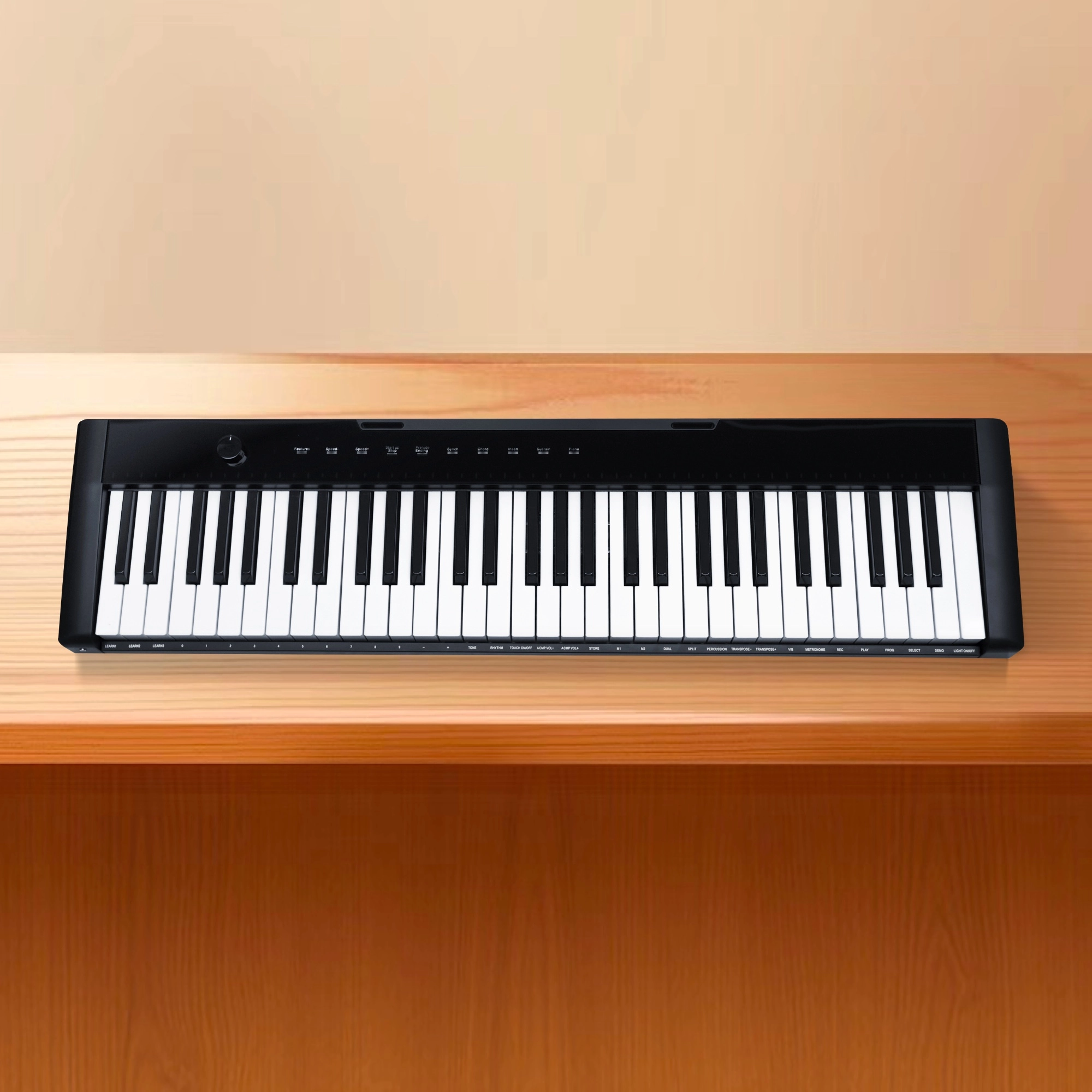
Flykeys 61 keys portable electronic keyboard piano with X stand (M2)
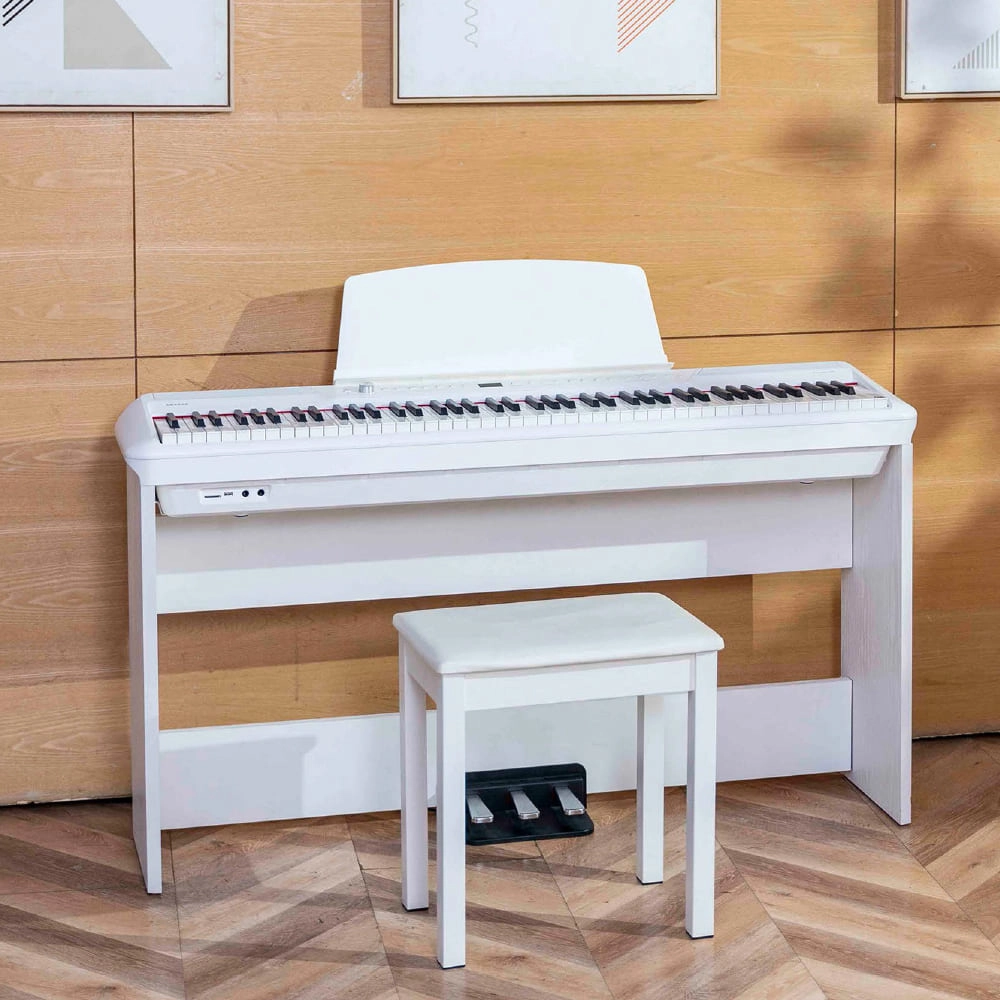
Flykeys Portable Electric Keyboard FP9 Digital Piano
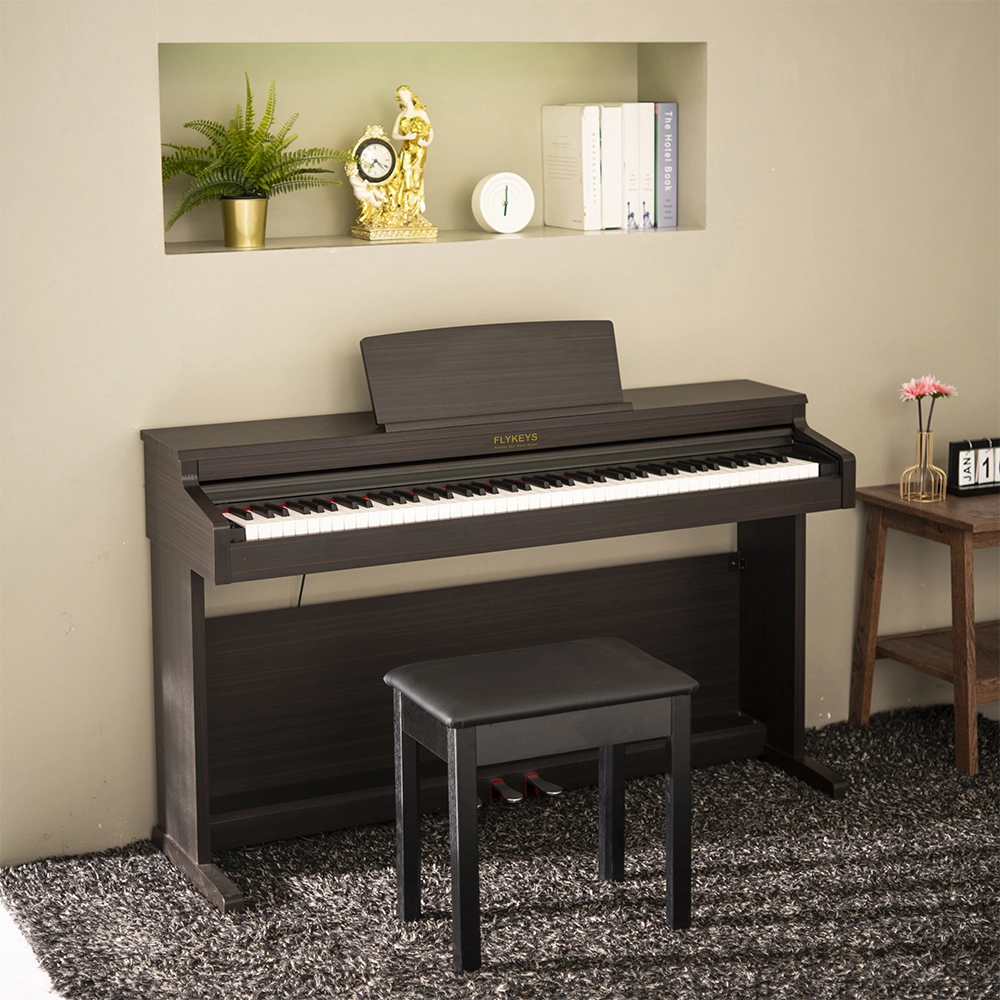
Flykeys 88 Keys Hammer Action keyboard Upright Piano LK03S Digital Piano
— Independent patented technology 88 key Grand-Response hammer action & dynamic curve keyboard;
— European top DSP chip, famous grand piano sound sample;
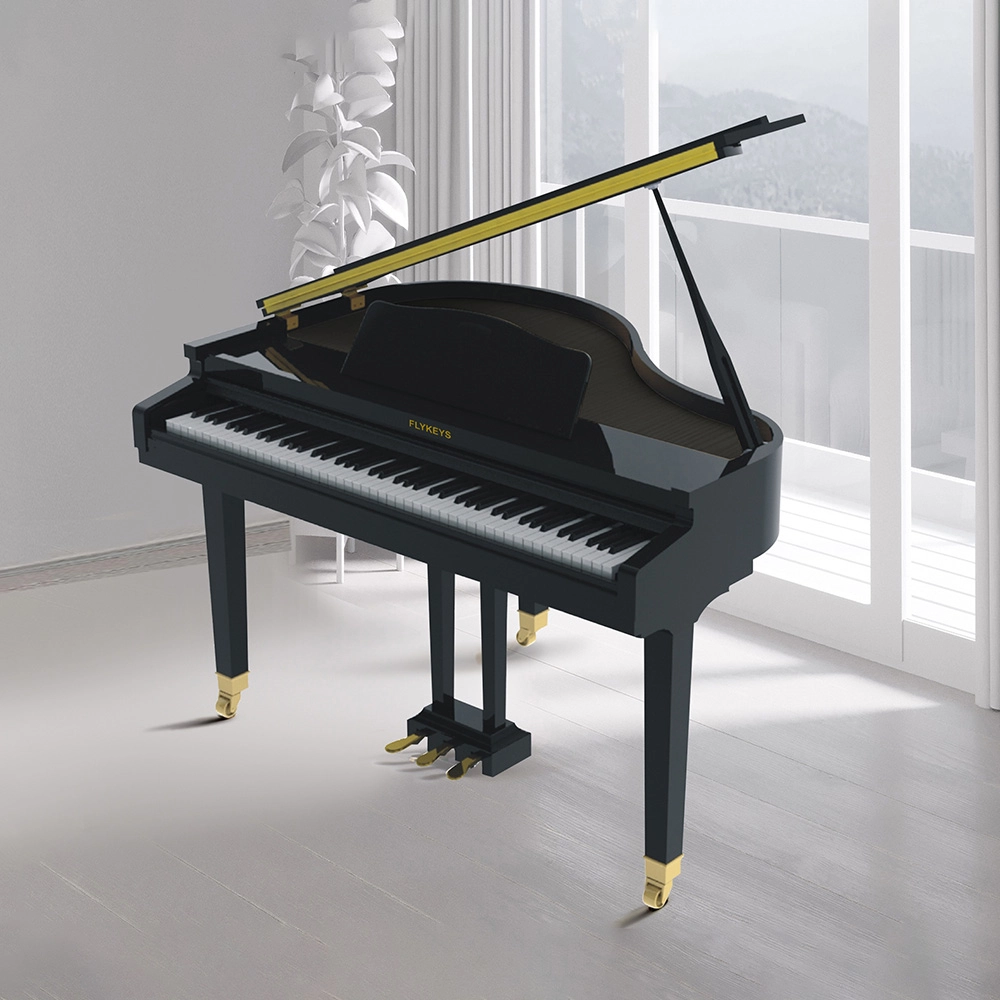
Flykeys 88 Keys Professional Digital Grand Piano Hammer Action Keyboard FGP110 Digital Piano
— Italian Fatar 88 Grand-ResponseTM Key trends with hammer action & dynamic curve
— Independent developed DSP chip, German famous grand piano sound sample
Address: No. 38 Xiangshan Avenue, Zengcheng Economic And Technological Development Zone, Guangzhou, China.
FOLLOW US:


© 2024 FLYKEYS All Rights Reserved. 粤ICP备2020102774号. Designed by gooeyun Sitemap | Privacy | Terms