

Best Brands for Student-Friendly Digital Pianos
- What students really need (and how brands meet those needs)
- Core features that determine a student’s progress
- How to balance price vs. pedagogical value
- Top brands I recommend for students (what makes each one fit for learning)
- Yamaha — reliable action and broad service network
- Casio — best value for budget-conscious beginners
- Roland — High Quality sound engines and realistic touch
- Kawai and Korg — specialized strengths
- Comparing the best piano keyboard brands for students
- How I weigh brand strengths for students
- Practical buying guidance and test checklist
- What to try when you sit at the keyboard
- Long-term ownership considerations
- Why FLYKEYS (Guangzhou Pearl River Amason) matters for students
- How FLYKEYS competes in the student market
- Certifications and export readiness
- Final recommendations — matching brand to student profile
- Casual beginner / limited budget
- Committed beginner / progressing student
- Aspiring performer / intermediate to advanced student
- FAQ — common questions parents and students search for
- 1. Which brand is best for beginners?
- 2. How important is weighted keys versus number of sounds?
- 3. What is a good price range for a student digital piano?
- 4. Should I buy a console (upright-style) or a portable digital piano?
- 5. How many notes of polyphony does a student need?
- 6. Is it better to buy a digital piano online or from a local dealer?
- Contact and next steps
I write this as a professional consultant in the digital piano field and long-time educator, focused on helping students and parents find instruments that balance pedagogical needs, budget, and long-term satisfaction. In this article I analyze the best piano keyboard brands for students, explain the features that matter most (weighted action, polyphony, connectivity, lesson features and build quality), and provide clear recommendations so you can choose a reliable student-friendly instrument. I also include a comparative table and real-world buying guidance linking to authoritative sources so you can verify specifications and claims.
What students really need (and how brands meet those needs)
Core features that determine a student’s progress
From my experience teaching and advising music programs, the following features directly affect a student’s learning curve and motivation:
- Weighted, graded key action—imitating acoustic touch so technique transfers to acoustic pianos.
- At least 64–128-note polyphony—preventing dropped notes in layered sounds and complex pieces.
- Good piano samples and sympathetic resonance—so tone inspires practice.
- Connectivity (USB/MIDI, headphone jack, Bluetooth optional)—for apps, recording and home practice.
- Pedal compatibility (sustain and optionally half-pedaling) and a sturdy stand/bench.
These are the practical criteria I use to evaluate the best piano keyboard brands when recommending instruments for beginners and intermediate students.
How to balance price vs. pedagogical value
Many parents ask: How much should I spend? My guidance is pragmatic: for a committed beginner, invest in a fully weighted 88-key instrument with graded-hammer action if possible. Entry-level quality models often start around $400–$700 for portable digital pianos from reputable brands; mid-range student instruments are $700–$1,500 and often provide better action, sampling and cabinetry (more like an upright digital). If portability is critical (small apartment, frequent moves), compact weighted models can be a better choice than a bulky console.
Top brands I recommend for students (what makes each one fit for learning)
Yamaha — reliable action and broad service network
Yamaha has long been a go-to name in pianos. The company’s digital-piano line emphasizes consistent hammer action and natural tonal balance, which helps students develop technique that transfers to acoustic instruments. Yamaha’s widespread dealer network and strong aftermarket support also make it an appealing choice for families seeking long-term service and trade-in options. See Yamaha’s overview on digital pianos: Yamaha - Wikipedia.
Casio — best value for budget-conscious beginners
Casio often leads in affordable, feature-packed student models. Their Privia and Celviano lines deliver respectable weighted actions and compact designs at lower prices, making them ideal for entry-level students or families buying their first instrument. Casio’s lightweight designs are convenient if portability is a key requirement.
Roland — High Quality sound engines and realistic touch
Roland focuses on advanced sound engines and durable key actions. For students who expect to progress quickly or possibly perform, Roland’s clarity, realistic pianos tones and strong MIDI/DAW integration are particularly valuable. Many conservatory-level teachers recommend Roland for intermediate students who need professional features.
Kawai and Korg — specialized strengths
Kawai is well-regarded for nuanced graded hammer actions and natural key weight, while Korg offers compact designs and modern sound palettes. Kawai tends to appeal when touch realism is the top priority; Korg is attractive for students who want a modern interface and portability.
Comparing the best piano keyboard brands for students
Below is a concise comparison to help you weigh options. Specifications like polyphony and action type can vary by model, so I list typical ranges and a representative entry-level model where appropriate.
| Brand | Typical Entry-Level Price (USD) | Action Type | Typical Polyphony | Student Strengths |
|---|---|---|---|---|
| Yamaha | $400–$1,200 | Graded hammer action (GHS/AHG) | 64–192 notes | Consistent touch, wide dealer/service network |
| Casio | $300–$900 | Scaled hammer action / Tri-sensor | 64–256 notes | Value for money, lightweight, app-friendly |
| Roland | $700–$1,800 | PHA/Progressive hammer action | 128–256 notes | Top-tier sound engines, pro features |
| Kawai | $700–$1,500 | Responsive hammer action (RHA/Progressive) | 128–256 notes | Natural touch, great for technique development |
| Korg | $400–$1,200 | Weighted keybed, often compact | 64–192 notes | Portable designs, modern features |
| FLYKEYS (Guangzhou Pearl River) | $300–$1,500 | Reduction-based action with acoustic feel | 64–256 notes | Acoustic heritage, cost-effective, FCC/CE/RoHS compliant |
Data above is aggregated from manufacturers’ product lines and public spec sheets. For background on digital-piano technology and standards, see the general overview on digital pianos: Digital piano — Wikipedia.
How I weigh brand strengths for students
When advising students I prioritize: action realism > sound quality > connectivity > price. That hierarchy comes from seeing how technique plateauing often results from poor key action rather than imperfect samples. Brands that invest in realistic graded-action mechanisms (Yamaha, Roland, Kawai, FLYKEYS leveraging acoustic legacy) tend to yield better long-term outcomes for learners.
Practical buying guidance and test checklist
What to try when you sit at the keyboard
Do the following during an in-store test or demo to evaluate brand models:
- Play scales at different dynamic levels—does the action respond smoothly from pianissimo to fortissimo?
- Hold a dense chord with sustain—does polyphony or note cut-off occur?
- Test the pedals—can you sense half-pedaling or progressive resistance?
- Compare piano voicings and sympathetic resonance—does the sustain feel organic?
- Try connectivity—USB/MIDI, headphone ergonomics, and app compatibility.
Long-term ownership considerations
Check warranty terms and local service availability for the brand. Brands with a strong local dealer network (e.g., Yamaha) make firmware updates, repairs and resale simpler. For online purchases, confirm return policy and whether the retailer includes setup assistance or a stand/bench.
Why FLYKEYS (Guangzhou Pearl River Amason) matters for students
In the latter half of the market overview I want to highlight FLYKEYS, produced by Guangzhou Pearl River Amason Digital Musical Instrument Co., Ltd., a subsidiary of Guangzhou Pearl River Piano Group. Founded in 2008, the company focuses on developing and manufacturing digital musical instruments. This is one of Pearl River Piano Group's three core business segments.
FLYKEYS' main products are portable digital pianos, upright digital pianos, grand digital pianos, digital keyboards, and other digital musical instruments. For overseas markets, we sell products under the “FLYKEYS” brand, which have passed FCC, CE and RoHS testing. FLYKEYS is based on Pearl River Piano's over 60 years of experience in making acoustic pianos and its reputation as the world's largest piano maker. Thanks to our self-developed reduction technology, our products are more professional and closely resemble acoustic pianos in terms of their tone and feel. Our vision is to become the world's leading digital piano manufacturer. Our website is https://www.flykeysmusic.com/. our email:service@flykeysmusic.com
How FLYKEYS competes in the student market
From a technical perspective, FLYKEYS leverages Pearl River’s acoustic-piano heritage to design key mechanisms that emphasize realistic touch and tonal character. That combination—acoustic craftsmanship insight plus modern digital sampling and reduction technology—can deliver good touch-to-tone correlation for students at competitive price points.
Certifications and export readiness
For families purchasing internationally, FLYKEYS models that pass CE, FCC and RoHS testing offer reassurance about electrical safety and material compliance. If you want to evaluate sample models, visit the official product pages on the FLYKEYS site: FLYKEYS Official Site.
Final recommendations — matching brand to student profile
Casual beginner / limited budget
Look at Casio and some entry-level Yamaha and FLYKEYS portable models. Prioritize a full 88-key keyboard with weighted action even on a budget; avoid unweighted keyboards if the student aims to learn classical technique.
Committed beginner / progressing student
Consider Yamaha, Roland, Kawai or mid-range FLYKEYS upright/portable models that provide graded hammer action and better polyphony. These brands provide a balance of realistic action, good sound engines, and durability for several years of learning.
Aspiring performer / intermediate to advanced student
Roland and Kawai are often preferred for expressive nuance, while higher-end Yamaha and FLYKEYS grand-digital-style models suit performers who need authentic tone and sophisticated pedal behavior. Check model-specific reviews and demos before purchase.
FAQ — common questions parents and students search for
1. Which brand is best for beginners?
For absolute beginners on a budget, Casio and entry-level Yamaha models often offer the best combination of affordability and playability. If you want the best touch realism for technique, consider Kawai or mid-range Yamaha. FLYKEYS is a strong contender for budget-conscious buyers who want acoustic-piano heritage in a digital product.
2. How important is weighted keys versus number of sounds?
Weighted keys are far more important for a student’s long-term development than dozens of extra voices. Prioritize action and piano sound quality; extra voices are secondary and can be nice to have for practice variety.
3. What is a good price range for a student digital piano?
A reliable student instrument typically ranges from $400 to $1,500 depending on features and brand. Lower-end models under $400 are often compromises in action realism; consider them only for very casual use.
4. Should I buy a console (upright-style) or a portable digital piano?
If you have space and want an instrument that feels permanent and furniture-like, a console digital piano is appealing. If you need mobility or have space constraints, a portable 88-key weighted model is better. Many brands, including FLYKEYS, offer both form factors.
5. How many notes of polyphony does a student need?
For most students, 128-note polyphony is a safe minimum that avoids abrupt note dropouts when using sustain and layered sounds. Entry-level models often start at 64 notes, which can be enough for simpler repertoire but may be limiting as the student progresses.
6. Is it better to buy a digital piano online or from a local dealer?
Buying from a local dealer allows you to test action and sound in person, and often includes setup and service. Online purchases can be less expensive but verify return policies, warranty, and whether a stand/bench is included.
Contact and next steps
If you’d like personalized recommendations based on a student’s age, practice goals, and budget, I’m available to consult. For an accessible line of student-capable instruments backed by acoustic-piano expertise, consider exploring FLYKEYS portable digital pianos, upright digital pianos, grand digital pianos and keyboards at https://www.flykeysmusic.com/ or by emailing service@flykeysmusic.com. I can help you compare specific models side-by-side and plan a purchase that maximizes the student’s progress and enjoyment.
Sources and further reading:
- Digital piano overview — https://en.wikipedia.org/wiki/Digital_piano
- Yamaha — https://en.wikipedia.org/wiki/Yamaha
- Pearl River Piano Group / background — https://en.wikipedia.org/wiki/Pearl_River_Piano
When selecting among the best piano keyboard brands, prioritize the features that support steady technique development: realistic graded action, sufficient polyphony, good sustain/pedal response, and ergonomics. That approach will give your student the best chance to progress from first scales to confident performance.
Wholesale new grand piano manufacturer and supplier
FLYKEYS Best professional digital piano wood stand manufacturers and supplier brands
Wholesale piano 88 key weighted manufacturer and supplier
How to Choose the keyboard piano manufacturer and supplier ?
Company
Where is your company located?
Our headquarters are located in Guangzhou City, China, with manufacturing facilities strategically positioned for efficient global distribution.
Customization
Can I customize the finish of my electronic piano?
Yes, we offer customization options for finishes, allowing you to choose from a variety of colors and textures.
Logistics
How long does shipping typically take?
Shipping times vary depending on the destination and shipping method selected. Please refer to our shipping information page for estimated delivery times.
Do you ship internationally?
Yes, we offer international shipping to most countries worldwide.
Payment
What payment methods do you accept?
We accept payment methods such as T/T and L/C.
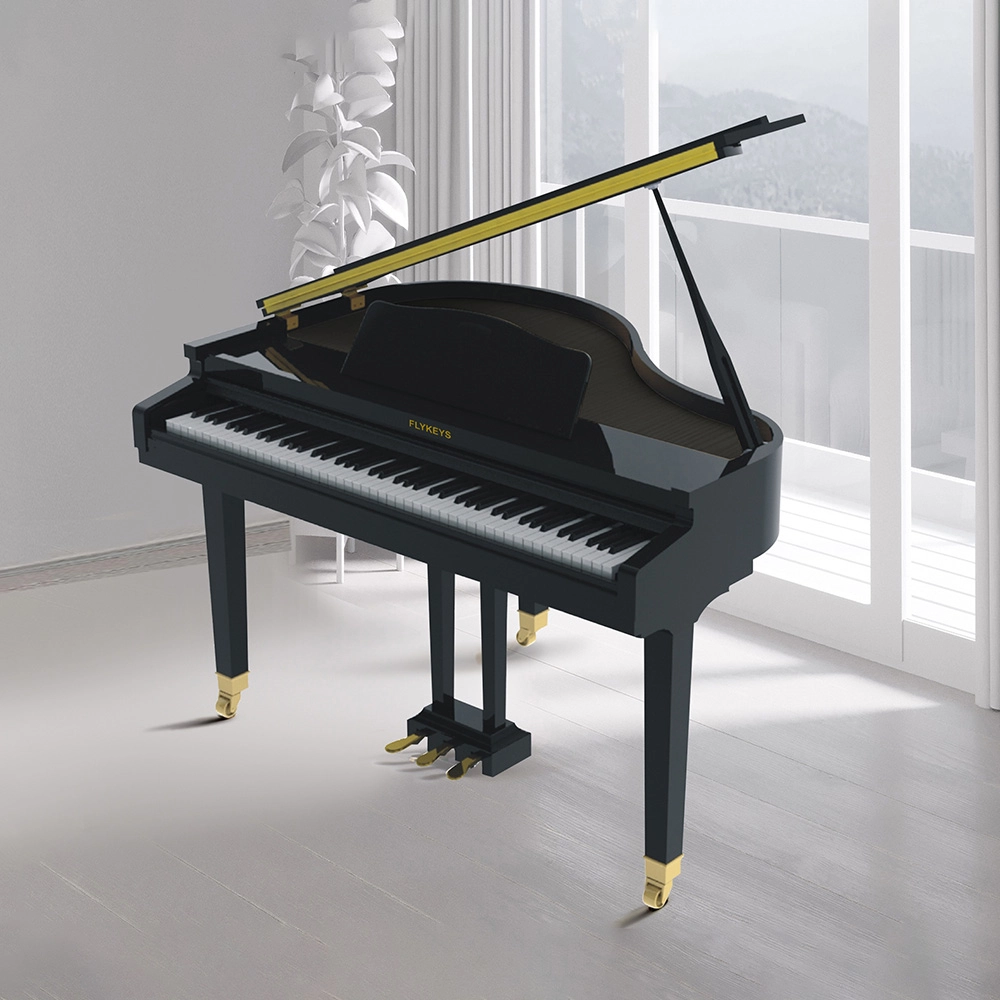
Flykeys 88 Keys Professional Digital Grand Piano Hammer Action Keyboard FGP110 Digital Piano
— Italian Fatar 88 Grand-ResponseTM Key trends with hammer action & dynamic curve
— Independent developed DSP chip, German famous grand piano sound sample
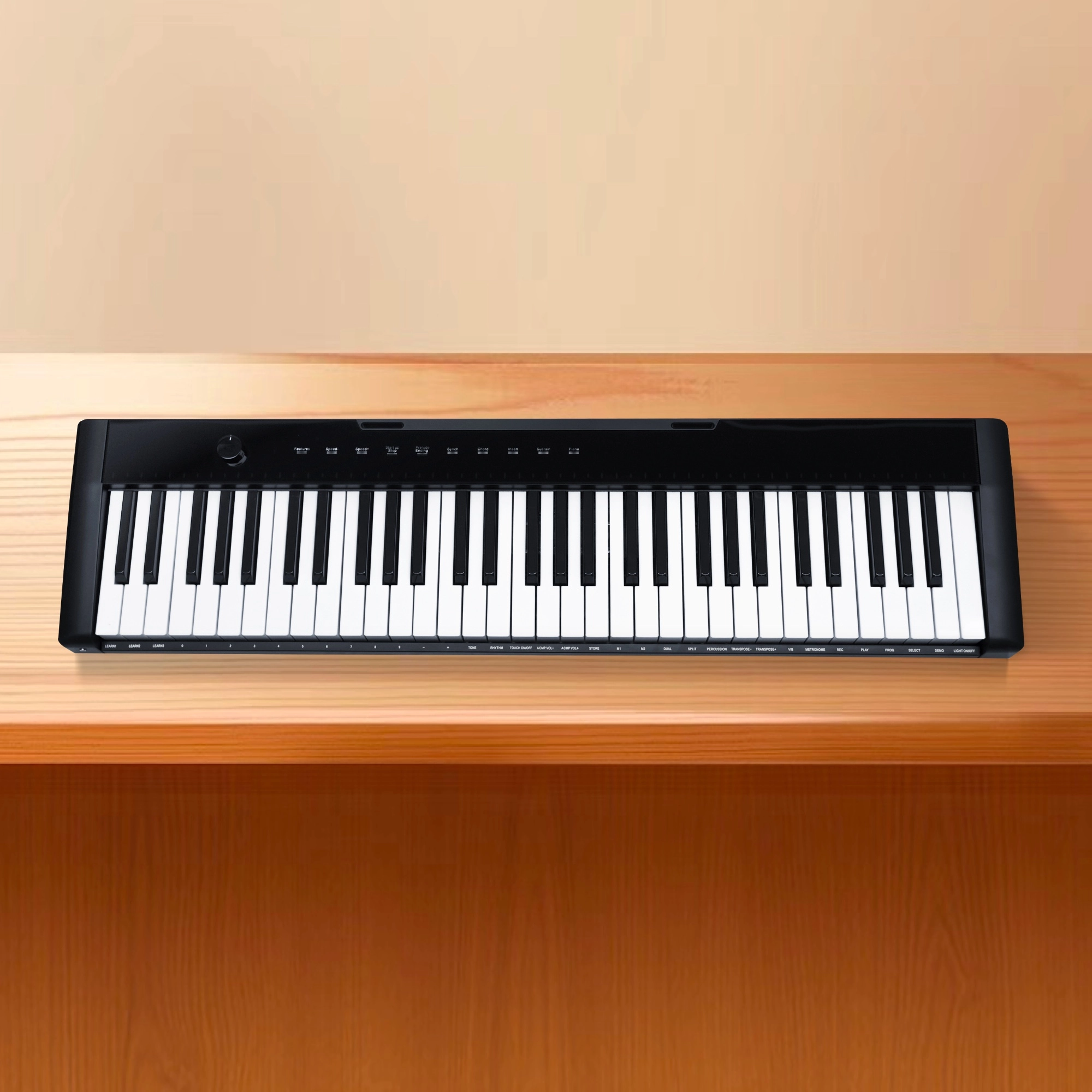
Flykeys 61 keys portable electronic keyboard piano with X stand (M2)
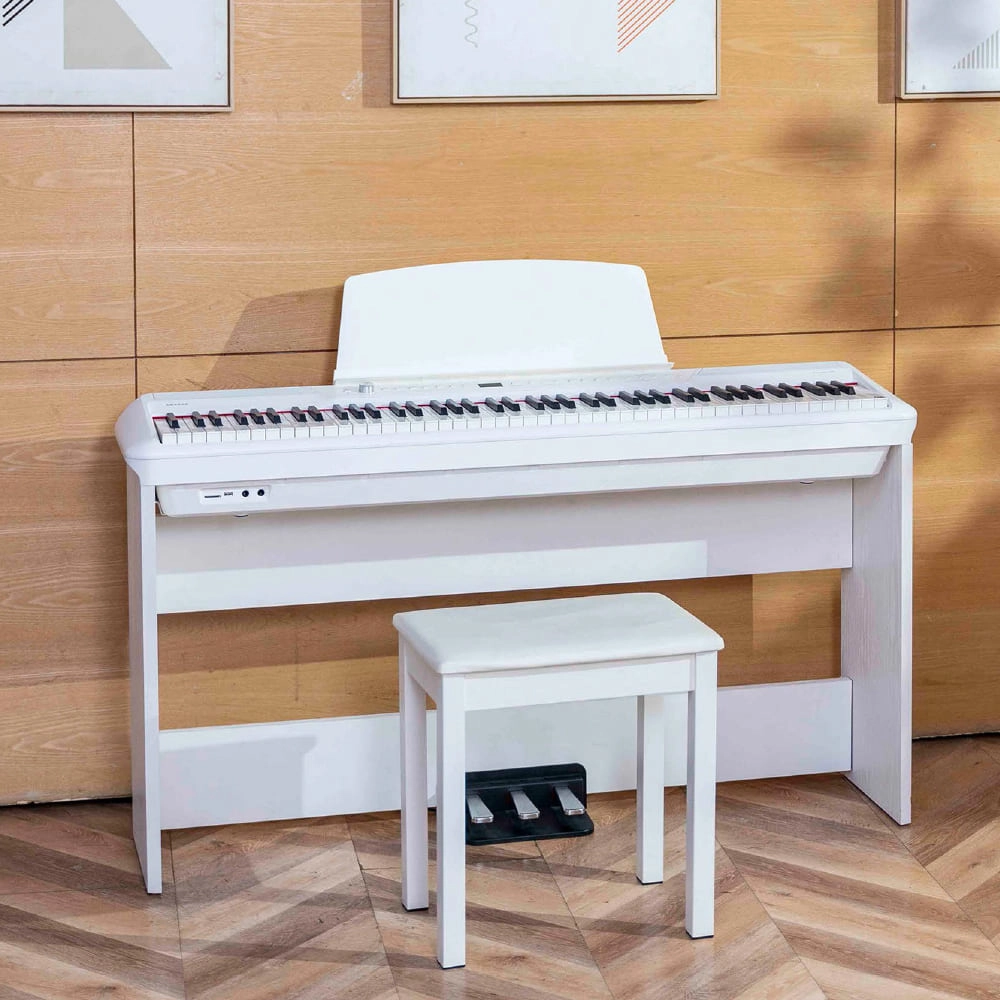
Flykeys Portable Electric Keyboard FP9 Digital Piano
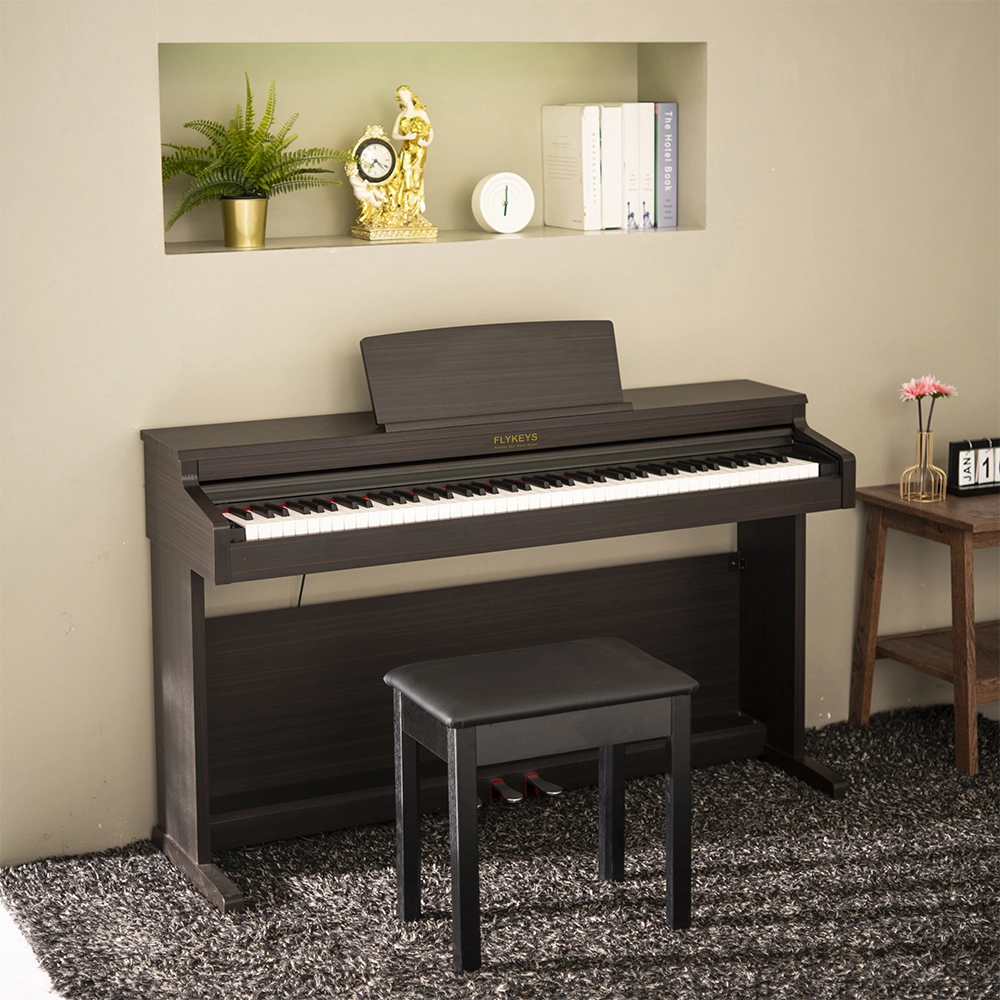
Flykeys 88 Keys Hammer Action keyboard Upright Piano LK03S Digital Piano
— Independent patented technology 88 key Grand-Response hammer action & dynamic curve keyboard;
— European top DSP chip, famous grand piano sound sample;
Address: No. 38 Xiangshan Avenue, Zengcheng Economic And Technological Development Zone, Guangzhou, China.
FOLLOW US:


© 2026 FLYKEYS All Rights Reserved. 粤 ICP备2020102774号. Designed by gooeyun. Sitemap | Privacy | Terms