Which Digital Piano Feels Most Like a Real Piano? (2026 Expert Review & Comparison)

2026-04-24

This guide compares five digital pianos across key action, sound engine, pedal response, and price — with hands-on testing notes for each model. Whether you're a beginner deciding on a first instrument or an advanced player looking for a serious acoustic substitute, the recommendations below are organized by what matters most to you.

  1.  
wood digital piano

Quick Answer: Which Digital Piano Is Closest to a Real Piano?

Based on hands-on testing across key action, sound realism, and pedal response, the overall leaders are the Kawai CA Series and Yamaha Clavinova CLP Series. But "closest to real" means different things depending on what you prioritize:

  • Most realistic touch & key feel → Kawai CA-79 (Grand Feel III wooden keys) or Kawai CA-99 for professional use
  • Most realistic sound & tonal depth → Yamaha CLP-745 (CFX + Bösendorfer dual sampling)
  • Best for fast technical playing → Roland HP-704 (PHA-50 hybrid action, fastest key return in this group)
  • Best hybrid experience under $2,000 → Casio GP-310 (wooden keys, grand hybrid action at mid-range price)
  • Best for beginners building technique → Yamaha P-125 or Casio PX-S1100 (graded hammer action without overpaying before commitment is confirmed)
  • Best for teaching environments & institutions → Flykeys FDP-7 (consistent velocity response, upright cabinet, dual headphone monitoring)

Keep reading for our full breakdown of what separates these models — and what most buyers get wrong when choosing a digital piano that feels like the real thing.

Real-World Testing: How These Pianos Actually Feel to Play

Spec sheets tell you what a digital piano has. Playing one for an hour tells you whether it actually works.

We ran the same set of pieces across all five models in a studio setting — Chopin's Nocturne Op.9 No.2 for touch sensitivity and dynamic control, a Czerny exercise for repetition speed, and a Ravel chord progression to test sustain resonance under the damper pedal.

  • The Kawai CA-79 stood out during slow, expressive playing. The key pivot feels physically different from the others — there's a weight shift mid-stroke that you notice immediately if you've spent time on a grand piano. Repeated notes at speed also held up cleanly without the slight mushiness that cheaper weighted actions develop under pressure.
  • The Yamaha CLP-745 was the strongest overall for dynamic range. Playing from pp to ff felt genuinely gradual rather than stepped, and the VRM resonance meant sustained chords had a tail that changed depending on how much pedal you used — something that sounds minor until you play without it.
  • The Roland HP-704 impressed most during faster repertoire. Key return was noticeably quicker than the Kawai, which matters for trills and fast repeated-note passages. The trade-off is that slower, more expressive playing feels slightly less nuanced than the Kawai.
  • The Casio GP-510 punches above its price. Dynamic response is genuinely good, though the key resistance in the upper register feels fractionally lighter than the Kawai and Yamaha — something you only notice if you're switching between instruments regularly.
  • The Flykeys FDP-7 delivered the most consistent velocity response across the full keyboard, with no weak spots across registers. Where it distinguishes itself is consistency — velocity response is even across all 88 keys with no weak spots, and the action holds up without fatigue across extended sessions. For teaching environments where instrument reliability matters as much as expressive nuance, that consistency is the point.

No digital piano fully replaces the mechanical experience of an acoustic. But at this level, the gap is small enough that most players stop noticing it within a week of regular use.

Model Key Action Sound Engine Price Range Standout Strength Main Limitation Best For
Kawai CA-79 Grand Feel III (wood) SK-EX Rendering $2,500–$3,500 Key action realism Heavier feel over long sessions Classical players · Conservatory training
Yamaha CLP-745 GrandTouch-S (wood + synthetic ivory) CFX + Bösendorfer $2,800–$4,000 Tonal realism + VRM Action lighter than acoustic grand Home practice · Expressive playing
Roland HP-704 PHA-50 (hybrid wood-plastic) SuperNATURAL $2,500–$3,500 Key return speed + consistency Less nuanced slow expressive feel Technical players · Fast repertoire
Casio GP-510 Natural Grand Hammer (Austrian spruce) AiR Grand $3,000+ Bechstein wood key construction Upper register slightly lighter Acoustic grand background players
Flykeys FDP-7 88-key dynamic curve weighted Pearl River DSP Mid-range Velocity consistency · Teaching features Not suited for stage or portable use Teaching studios · Institutional use

Key Factors That Define “Closeness” to an Acoustic Piano

1. Keyboard Action and Touch Response

The most important factor is how the keys feel under your fingers. Acoustic pianos use hammers and strings, which naturally provide resistance and weight variation. High-quality digital pianos replicate this with graded hammer action—keys in the bass feel heavier, while treble keys feel lighter.

Some advanced models even use wooden keys or hybrid wooden-plastic designs, offering better stability and more natural weight. Key return speed and friction are equally important, especially for fast passages or repeated notes. For example, Yamaha’s GH3X or Kawai’s Grand Feel III actions closely mimic the nuanced response of a grand piano.

2. Sound Reproduction: Sampling vs. Modeling

The realism of a digital piano’s sound depends on how it is generated.

  • Sampling uses recordings of acoustic pianos, often across multiple velocity layers. More layers mean smoother transitions between soft and loud playing.
  • Modeling recreates the physical behavior of strings, hammers, and resonance digitally. The advantage is infinite variation and more natural dynamics, but it requires advanced processing.
  • Many modern instruments combine both approaches, using high-quality samples with resonance modeling and DSP effects for depth and realism.

3. Pedals and Resonance Effects

True piano performance relies heavily on pedal control. A good digital piano should feature:

  • Three pedals (sustain, soft, sostenuto)
  • Half-pedaling support, allowing nuanced control instead of on/off switching
  • String and damper resonance, recreating how vibrations spread when the damper is lifted

Advanced technologies like Yamaha’s VRM (Virtual Resonance Modeling) or Roland’s SuperNATURAL modeling bring these details to life.

4. Speaker System and Cabinet Design

Beyond the keys and sound engine, the amplification system matters. Premium models often include multi-speaker setups, upward-firing tweeters, and resonance boards to mimic the way a piano projects sound in a room. Some digital pianos even allow external amplification for performance settings.

  • When looking for a digital piano that comes closest to a real piano, there are a few key features to consider: keyboard input (touch response), sound reproduction (the sampling method), and feel (the effects of the pedal and resonance).


List of Leading Digital Pianos That Feel Closest to Acoustic


1. Kawai CA-79

  • Keyboard Action: Grand Feel III wooden-key action across all 88 keys — white keys in wood with Ivory Touch surface, black keys with Ebony Touch. Triple-sensor detection and let-off simulation replicate the escapement feel of a grand piano hammer mechanism. Key return speed is among the fastest in this class, which shows most clearly during slow, controlled passages where the pivot weight shift is physically distinct from synthetic actions.
  • Sound Quality: SK-EX Rendering engine with multi-channel sampling of the Shigeru Kawai EX concert grand. Resonance modeling covers sympathetic string vibration across the full 88-key range, not just under the sustain pedal — a detail that becomes audible when holding chords while playing melodic lines above them.
  • Pedals and Features: Grand Feel Pedal System with continuous half-pedaling support. 6-speaker output with 360° diffuser panels. Bluetooth MIDI and Audio, 5" LCD touchscreen, USB playback and recording.
  • Best for: Classical players · Conservatory-level technique development · Players who prioritize key pivot feel over everything else.

2. Yamaha Clavinova CLP-745

  • Keyboard Action: GrandTouch-S action with wooden white keys, synthetic ivory and ebony key surfaces, and escapement simulation. Key length is elongated compared to earlier CLP models, which improves the leverage feel during louder dynamics. Action weight sits slightly lighter than the Kawai CA-79, which some players prefer for extended practice sessions.
  • Sound Quality: Binaural sampling of both the Yamaha CFX and Bösendorfer Imperial concert grands — two instruments with distinctly different tonal characters. The CFX leans brighter and more projecting; the Bösendorfer warmer and darker. VRM calculates resonance across all 88 strings simultaneously in real time — the decay tail on sustained chords changes depending on how far the damper pedal is depressed, rather than switching on/off at a fixed threshold.
  • Pedals and Features: VRM active on all three pedals with half-pedaling support. Multi-speaker system with upward-firing drivers. Bluetooth Audio, USB audio recording direct to WAV, 50 classical pieces and 303 lesson songs built in.
  • Best for: Home practice · Expressive and dynamic playing · Sound-sensitive pianists who spend time playing through headphones.

3. Roland HP-704

  • Keyboard Action: PHA-50 hybrid wood-plastic action, the same mechanism used in Roland's higher-end LX series. The stabilizing pin design reduces lateral key wobble — a detail more noticeable on older or cheaper weighted actions than on direct competitors at this price. Key return is faster than the Kawai CA-79, which benefits rapid repeated-note passages and modern styles. The trade-off is that slow expressive playing feels marginally less nuanced in terms of pivot weight variation.
  • Sound Quality: SuperNATURAL Piano Modeling generates sound algorithmically rather than purely from samples, allowing dynamic variation that doesn't step between velocity layers. Some players find this more expressive in fast playing; others find the tonal character slightly less warm than Yamaha's sampled approach. Piano Designer app allows fine-tuning of 12 acoustic parameters including string resonance, lid position, and hammer hardness.
  • Pedals and Features: Progressive Damper Action pedal with half-pedaling. 4-speaker system. Bluetooth MIDI and Audio, 10-year in-home warranty — the longest in this comparison.
  • Best for: Fast technical repertoire · Modern and jazz styles · Players who want the most configurable sound engine.

4. Casio Celviano GP-510

  • Keyboard Action: Natural Grand Hammer Action developed in collaboration with C. Bechstein, using full-length Austrian spruce keys — the same wood species used in Bechstein's own concert grand manufacturing. Each key follows the same vertical hammer path and pivot geometry as an acoustic grand, rather than the modified pivot designs used in most digital piano actions. Key resistance in the upper register sits fractionally lighter than the Kawai and Yamaha, which is most noticeable when switching between instruments side by side rather than during standalone playing.
  • Sound Quality: AiR Grand Sound Source provides three separately modeled grand pianos — the Berlin Grand (developed with C. Bechstein), the Hamburg Grand, and the Vienna Grand — each with distinct tonal character. Resonance parameters — including aliquot resonance and mechanical noise simulations not found on competing models — are individually adjustable rather than bundled into a single on/off switch.
  • Pedals and Features: Full three-pedal system with enhanced soft pedal dynamic range. String and damper resonance modeling. USB audio, headphone output, built-in 60 songs.
  • Best for: Players with acoustic grand background · Those who want Bechstein-influenced key construction · Value-focused buyers at the premium tier.

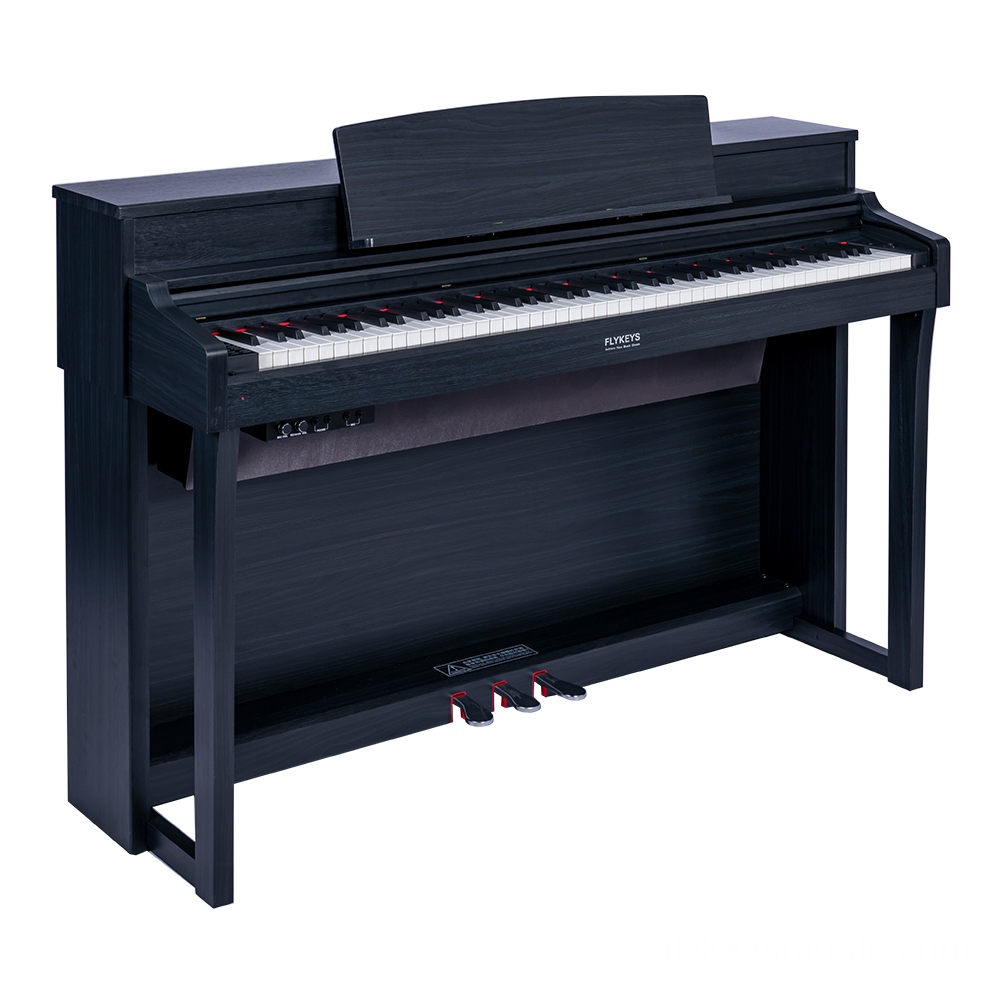
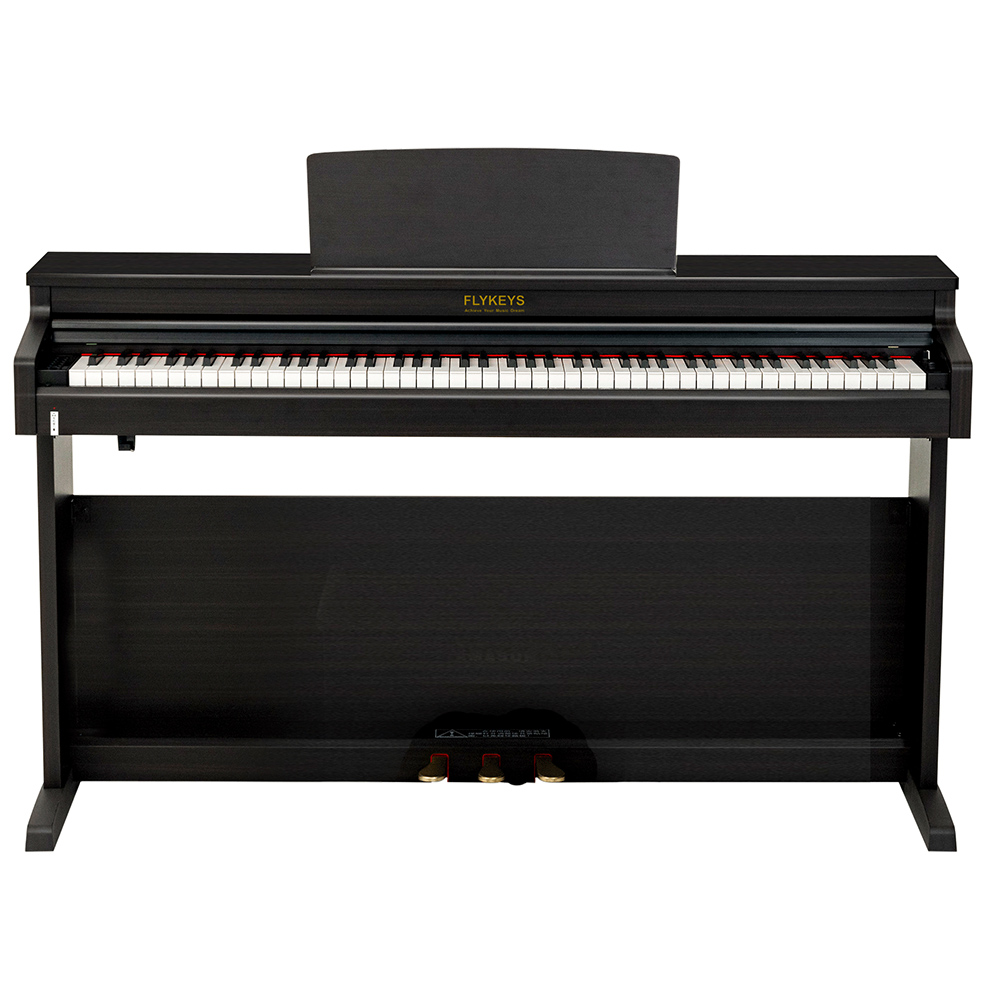
5. FLYKEYS FDP-7

  • Keyboard Action: Independently developed 88-key dynamic curve hammer action with 5 selectable touch curves and graded weighting across the register. The ivory-textured key surface reduces finger slip during extended sessions. Action depth and rebound sit closer to mid-range console pianos than to the Kawai CA or Roland HP tier — the difference is most apparent during fast repeated-note passages, where the Kawai's Grand Feel III has a more defined escapement feel.
  • Sound Quality: European Spectral Composite DSP chip with samples from a Kayserburg 9-foot concert grand — Pearl River Piano Group's flagship acoustic instrument. The 5-layer dynamic wave table produces distinct tonal character across velocity levels, and String overtone resonance simulation is built into the DSP engine rather than added as a post-processing effect — the distinction shows in how the decay responds differently across registers. 256-note stereo polyphony handles dense chord work without voice dropout.
  • Pedals and Features: Full three-pedal support, Bluetooth MIDI and Audio, USB recording, Italian 4-speaker system (25W×2 + 5W×2) in a wooden upright cabinet. Dual headphone jacks allow simultaneous monitoring — practical for teaching. OLED display. Available in Black, Oak, and White.
  • Limitation worth noting: At 54kg in a fixed upright cabinet, the FDP-7 is a permanent installation rather than a portable instrument. Players who need stage or transport flexibility should look at the Roland HP or Kawai ES lines instead.
  • Best for: Music schools and teaching studios · Long practice sessions · Institutions sourcing multiple instruments.

View FLYKEYS FDP-7 full specifications →

FLYKEYS FDP 7 Professional Upright Digital Piano


For a more detailed breakdown of where digital and acoustic instruments diverge — including touch response, sound generation, and long-term maintenance costs — see our full comparison: Digital Piano vs Acoustic Piano.


Buying Considerations

  • Budget: Under $1,200, expect entry-level graded action — adequate for beginners but limiting for intermediate development. The $1,200–$2,500 range is where consistent graded hammer action becomes standard across most reputable brands. Above $2,500 is where wooden keys, advanced resonance modeling, and multi-speaker cabinet designs begin to appear reliably. Above $3,500, the differences between models narrow and personal preference on touch character matters more than specs.
  • Purpose: For daily home practice, prioritize key action and sound quality over portability. For stage performance, weight and connectivity matter more than cabinet design. For teaching, dual headphone outputs and touch sensitivity consistency across the full keyboard are the most practical features to check. For recording, USB audio output quality and MIDI compatibility with your DAW are the deciding factors.
  • Connectivity: Most models in this comparison include Bluetooth MIDI, USB MIDI, and dual headphone jacks as standard. Differences emerge in Bluetooth Audio stability, USB audio recording quality, and whether the instrument supports direct WAV capture without a computer — the Yamaha CLP-745 and Flykeys FDP-7 both do.
  • Portability: Console designs (Kawai CA, Yamaha CLP, Flykeys FDP) are permanent installations weighing 40–80kg. Stage piano formats (Kawai ES, Yamaha P-Series) sacrifice cabinet resonance and speaker quality for transport flexibility. If you need both, they serve different roles and it's worth owning one of each rather than compromising on either.
  • Warranty and after-sales support: Roland's 10-year in-home warranty is the longest in this comparison. Kawai and Yamaha offer 3–5 years depending on region. For institutional buyers, confirm parts availability and local service coverage before committing to a brand.

If you're still working through the decision, our Digital Piano Buyer's Guide covers budget tiers, feature priorities, and what to actually test when you visit a showroom.


Expert Tips for Choosing the Right Model

  • Test in person with a piece you already know well. Generic showroom playing tells you little. Bring a passage that requires soft dynamics, one that requires fast repetition, and one that uses sustained pedaling — these three expose the most meaningful differences between instruments.
  • Listen through quality headphones before deciding on speaker sound. Onboard speakers vary significantly by room placement and cabinet design. Headphone listening isolates the sound engine itself, which is the component that stays constant regardless of where the piano sits in your home.
  • Test half-pedaling deliberately. Press the sustain pedal halfway down and hold a chord. On instruments with true half-pedaling support, the decay changes continuously. On instruments without it, the sound either fully sustains or fully cuts — a significant limitation for intermediate and advanced repertoire.
  • Check key consistency across the full register, not just the middle octaves. Play the same passage in the bass, middle, and upper registers and compare how the keys feel. Lower-quality actions often feel uneven at the extremes — either too light in the treble or inconsistent in key return in the bass.

Conclusion

In 2026, no single digital piano fully replaces an acoustic instrument — but the gap has narrowed to the point where most players stop noticing it within a week of regular use.

For touch realism, Kawai leads. For sound realism, Yamaha leads. For technical consistency and key speed, Roland leads. For hybrid acoustic construction at a competitive price, Casio leads. For institutional reliability and teaching environments, Flykeys holds its own against much more expensive alternatives.

The best digital piano is not the one with the highest specs — it's the one that matches how you actually play, where you play it, and how seriously you'll use it.


Found What You're Looking For?

If you've narrowed it down to a model, the next step is playing it in person — no spec comparison replaces 20 minutes with the actual instrument. If that's not possible, most manufacturers offer return windows long enough to properly evaluate a piano at home.

For questions about specific models, compatibility with practice apps, or customized solutions for schools and institutions, get in touch with our team — we're happy to help you match the right instrument to your situation.


FAQ About Digital Pianos That Feel Like Acoustic

Q1: Can a digital piano completely replace an acoustic piano?

Not entirely, though high-end models come closer than most players expect. The mechanical complexity of an acoustic piano — individual hammer weight, string vibration, and the way sound projects physically into a room — remains difficult to fully replicate digitally. Where digital pianos fall short most noticeably is in the subtle tactile variation between keys and the natural decay of sustained notes in a real acoustic environment.

That said, for the majority of practice situations, a quality digital piano with graded hammer action is a fully adequate substitute. Many conservatory-trained pianists use digital instruments for daily home practice precisely because of the volume control, zero maintenance, and consistent action feel.


Q2: Which brand offers the most authentic key action?

Kawai and Yamaha are most frequently cited for key action authenticity. Kawai's wooden key actions (Grand Feel III in the CA series) replicate the pivot mechanics of a grand piano key more closely than most competitors. Yamaha's GH3X action, used across the Clavinova CLP series, is equally well-regarded and adds synthetic ivory and ebony textures that improve grip during long sessions.

Roland's PHA-50 hybrid wood-plastic action is the strongest third option, particularly praised for its escapement simulation — the slight resistance felt when pressing a key slowly, which mirrors the hammer mechanism in a concert grand. At the $2,500+ price tier, all three brands are genuinely close, and personal preference from testing in person matters more than spec comparisons.


Q3: Are digital pianos good for beginners?

Yes, and in several ways they are better suited to beginners than acoustic pianos. Volume control and headphone practice remove the social barrier of playing in shared living spaces. Built-in metronomes, demo songs, and app connectivity via Bluetooth MIDI support structured self-learning. Lower maintenance cost means no tuning fees.

The one caveat: beginners should still prioritize a model with weighted, graded hammer action rather than a basic unweighted keyboard. Developing finger strength and touch sensitivity on unweighted keys creates habits that are difficult to correct later when transitioning to an acoustic instrument or a more serious digital piano.


Q4: How long does a digital piano last?

With normal use and basic care, most quality digital pianos last 10–20 years. The components most likely to degrade over time are the key contacts (which can develop uneven sensitivity), the speaker drivers, and firmware support from the manufacturer. Physical keys on well-built instruments rarely wear out under typical home use conditions.

The practical lifespan also depends on how the instrument is stored. Humidity fluctuations damage internal electronics and key mechanisms over time — a stable indoor environment extends longevity significantly. Unlike acoustic pianos, digital instruments require no tuning and are not affected by temperature changes to the same degree.


Q5: Do I need three pedals as a beginner?

A single sustain pedal covers everything a beginner needs for the first one to two years of study. The soft pedal (una corda) and sostenuto pedal become relevant once a player begins working on intermediate and advanced repertoire, particularly pieces from the Romantic period where precise pedaling is compositionally integral.

If budget allows, purchasing a model with a full three-pedal unit from the start is worth considering — not because you will use all three immediately, but because upgrading pedal hardware later is often more expensive and awkward than including it in the original purchase. For players with a clear long-term commitment to the instrument, three pedals is the more practical choice.


Q6: Which digital piano is most realistic for classical pianists specifically?

Classical repertoire makes unique demands on a digital piano — wide dynamic range, rapid repeated notes (especially in Chopin or Liszt), and nuanced pedal technique that goes well beyond simple sustain on/off. For classical playing, the two most important factors are key action authenticity and pedal half-pedaling precision.

The Kawai CA-79 is the most consistently recommended choice among classical pianists. As covered in Q2, the Grand Feel III action comes closest to grand piano pivot mechanics at this price — and for classical repertoire specifically, that difference becomes most audible in slow, controlled passages where key depth and rebound define the quality of a phrase rather than just its speed.

The Yamaha CLP-745 follows closely, with its GH3X action and VRM resonance modeling that rewards the kind of careful listening classical practice demands. Both models support continuous half-pedaling, which is essential for Romantic-era repertoire where gradual damper control defines the sound.

For advanced players preparing for conservatory auditions or maintaining technique between acoustic piano sessions, either of these instruments is a defensible practice tool. Entry-level models with semi-weighted or ungraded keys are not recommended for serious classical study.


Q7: Can a keyboard feel exactly like a piano?

Not exactly — but the best models come close enough that most players adapt within a few sessions.

The fundamental difference is mechanical: an acoustic piano key moves a physical hammer that strikes a string, creating natural resistance, inertia, and rebound that vary slightly on every single key. Even the best digital piano simulates this through weighted mechanisms and sensors rather than replicating it directly.

That said, instruments like the Kawai CA Series (wooden keys with Grand Feel action) and Roland HP Series (PHA-50 hybrid action with escapement) have reduced the perceptible gap to the point where professional pianists regularly use them for home practice and recording. The areas where differences remain most noticeable are: the feeling of the key returning after a fast trill, the slight resistance variation between individual keys on an aged acoustic, and the tactile feedback from the key surface itself.

For players transitioning from acoustic to digital, graded hammer action is non-negotiable. For players who have only used digital pianos, the adjustment to a quality weighted action is typically positive and fast.


Q8: How does a Yamaha digital piano compare to Roland for acoustic realism?

This is one of the most common questions among serious buyers, and the honest answer is: they prioritize different things.

Yamaha focuses on sound authenticity. The Clavinova CLP series samples the CFX and Bösendorfer Imperial — two of the most recorded concert grands in the world — and pairs them with VRM resonance modeling. The result is a tonally rich, warm sound that many pianists find closer to sitting inside a real piano. The key action (GH3X) is excellent, though it uses synthetic materials rather than wood at most price points.

Roland focuses on feel and dynamic response. The PHA-50 hybrid wood-plastic action in the HP series is widely praised for its consistent key weight and realistic escapement simulation. Roland's SuperNATURAL modeling engine generates sound algorithmically rather than purely from samples, which some players find more dynamically expressive but others find slightly less "warm" than Yamaha's sampled approach.

In practice: if you primarily play by ear and sound quality drives your decision, Yamaha tends to win. If you care more about how the keys feel under your fingers during fast or technically demanding passages, Roland is the stronger choice. Most professional pianists who have used both agree the gap has narrowed significantly at the $2,500+ price tier.


Q9: What is the most realistic-sounding digital piano under $2,000?

At this price point, three models stand out for sound realism specifically:

The Casio GP-310 ($1,800–$2,000) is the most technically impressive option under $2,000, featuring a genuine grand piano hybrid action with wooden keys — a specification normally found only on instruments costing $3,000 or more. Its AiR Grand sound source delivers convincing grand piano tone across the full dynamic range.

The Kawai ES-920 ($1,400–$1,600) offers Harmonic Imaging XL sound technology with 88-key individual sampling and a Responsive Hammer Compact III action. It is a stage piano form factor rather than a console, which suits players who also perform live.

The Yamaha P-515 ($1,300–$1,500) uses the same CFX and Bösendorfer samples found in the Clavinova series, housed in a more portable body. Sound quality is notably above its price class; the key action (GH3X) is the same used in much more expensive console models.

For buyers specifically focused on acoustic realism rather than features or portability, the Casio GP-310 offers the most acoustic-piano-like experience available below $2,000.


Q10: Are wooden keys significantly better than plastic keys?

The difference is real but context-dependent. Wooden keys add natural weight and a slight flex under the finger that plastic keys can't fully replicate — the effect is most noticeable during slow, expressive playing where you're paying attention to how the key feels at the bottom of its travel. Kawai's Grand Feel action and Roland's PHA-50 hybrid both use wood precisely because the material changes how force transfers from your finger through the mechanism.

That said, advanced hybrid plastic actions have closed the gap considerably. For players coming from a keyboard background rather than an acoustic piano, the difference may be less immediately apparent than reviews suggest. Whether wooden keys justify the price premium depends on how much time you've spent on a real grand — the more you have, the more you'll notice the difference.

Tags
best digital piano brands 2026
digital grand piano reviews
digital paino
digital paino
buy digital grand piano online
best upright digital piano for home use
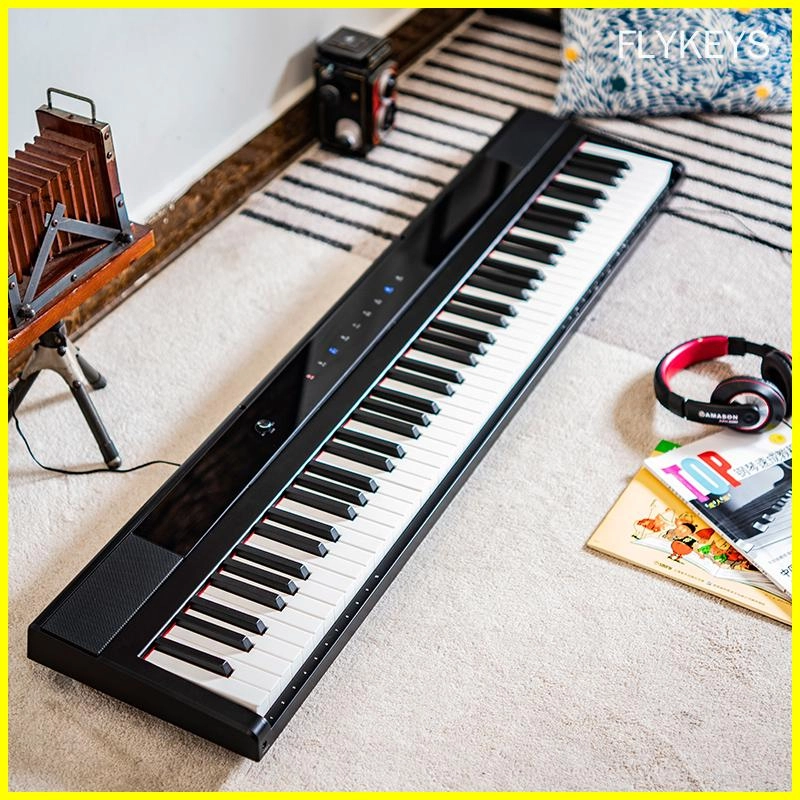
best portable digital pianos
Recommended for you
FLYKEYS FDP 7 Professional Upright Digital Piano

Best Professional Upright Digital Piano 2026 – FLYKEYS FDP 7 Features

Best Professional Upright Digital Piano 2026 – FLYKEYS FDP 7 Features
best digital piano weighted keys

Best 88-Key Digital Pianos for Professionals and Advanced Players: Top Brands, Key Features and Buying Tips (2026)

Best 88-Key Digital Pianos for Professionals and Advanced Players: Top Brands, Key Features and Buying Tips (2026)
best digital piano

Best 88-Key Weighted Keyboard 2025: Top Picks for Intermediate Players, Advanced Pianists and Professionals

Best 88-Key Weighted Keyboard 2025: Top Picks for Intermediate Players, Advanced Pianists and Professionals
bestdigitaljpg

15 Best Portable Digital Pianos of 2026: The Only Comparison Guide You’ll Ever Need
15 Best Portable Digital Pianos of 2026: The Only Comparison Guide You’ll Ever Need
portable pianos

Is the Flykeys FP9 Worth It? Our Real-Life Experience with the World’s Largest Piano Maker’s Digital Tech.
Is the Flykeys FP9 Worth It? Our Real-Life Experience with the World’s Largest Piano Maker’s Digital Tech.
digital piano keyboard beginners!

Best Digital Piano Keyboards for Beginners 2026: Your Ultimate Buying Guide
Best Digital Piano Keyboards for Beginners 2026: Your Ultimate Buying Guide
Prdoucts Categories
You may also like
top digital piano

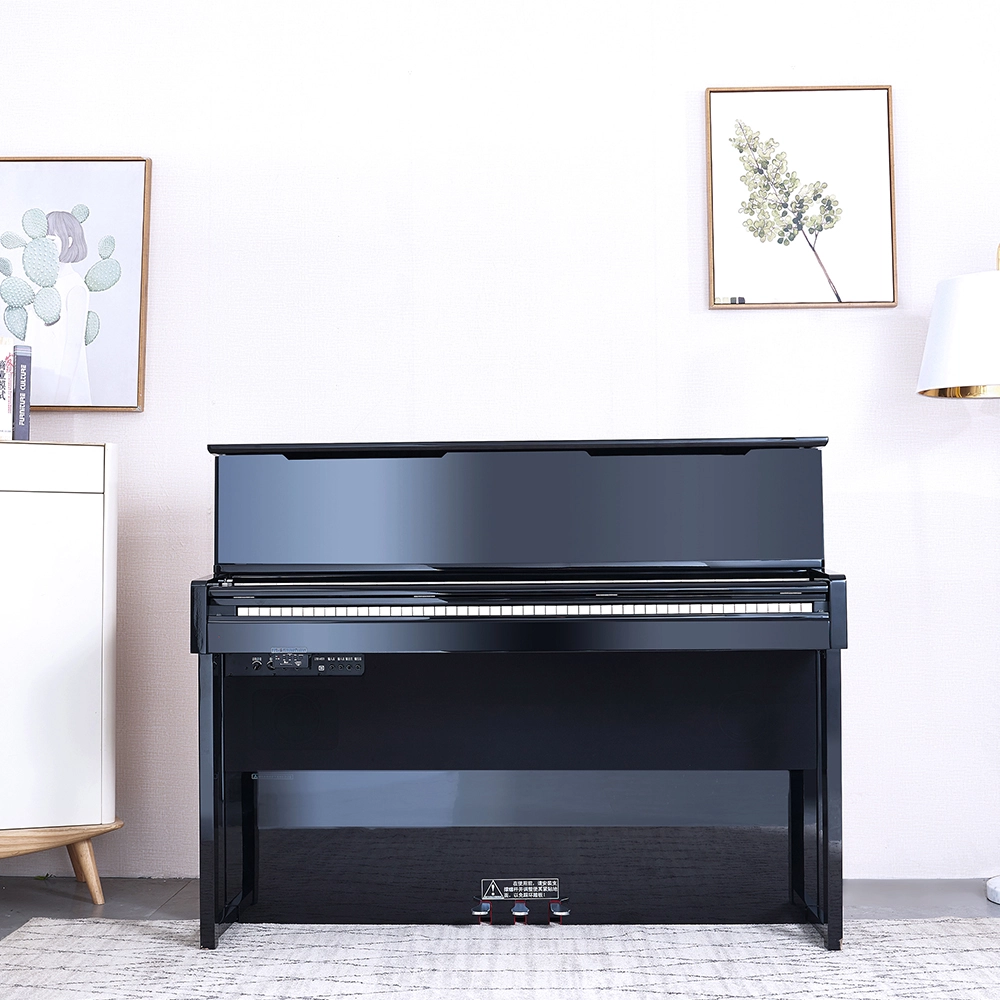
Flykeys Upright Digital Piano FDP 3

Introducing the Flykeys Upright Digital Piano FDP 3 by FLYKEYS, where innovation meets elegance. This sophisticated upright digital piano delivers authentic sound, advanced features, and a sleek design, perfect for any setting. 

Independent development 88 keys dynamic curve hammer action weighted keyboard
European Spectral Composite techniques DSP chip. German famous Grand Piano sound sampling, string overtones resonance simulation sound technology.

Flykeys Upright Digital Piano FDP 3
grand piano

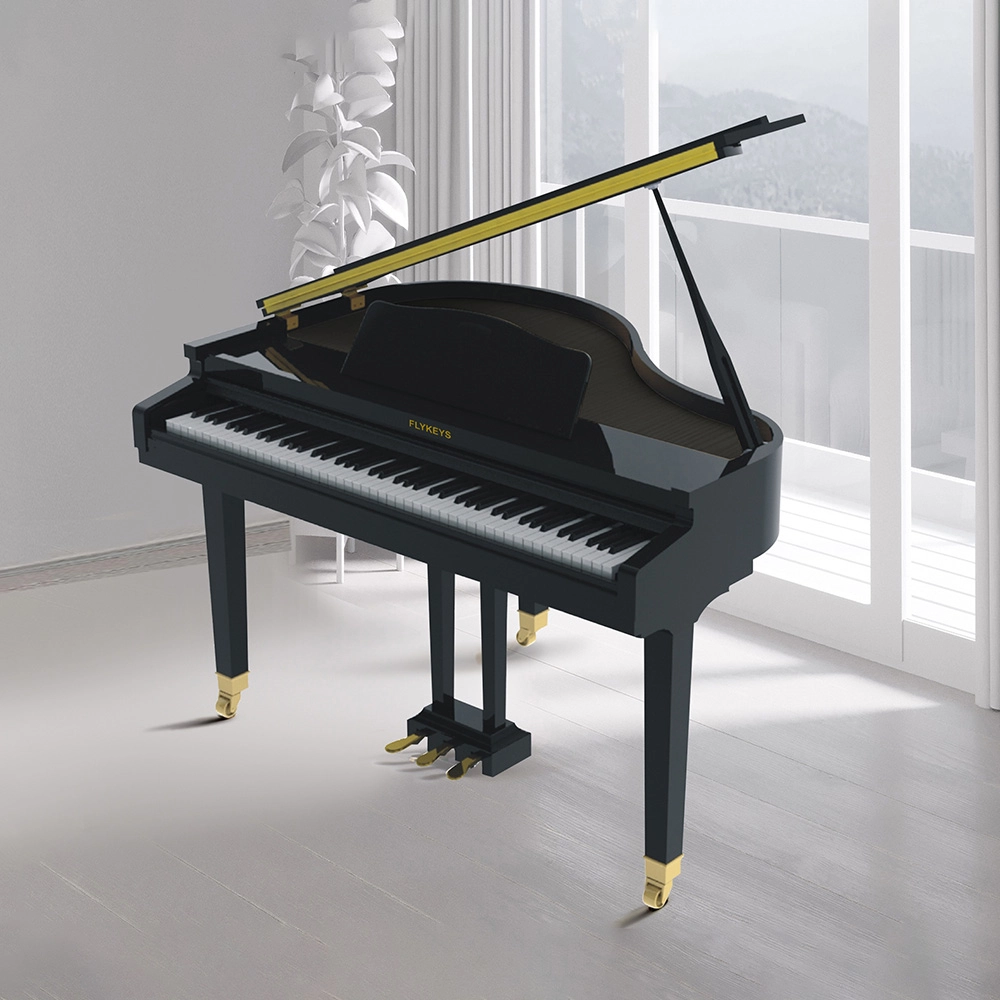
Flykeys 88 Keys Professional Digital Grand Piano Hammer Action Keyboard FGP110 Digital Piano

— Baby Grand style, Polished cabinet
— Italian Fatar 88 Grand-ResponseTM Key trends with hammer action & dynamic curve
— Independent developed DSP chip, German famous grand piano sound sample
Flykeys 88 Keys Professional Digital Grand Piano Hammer Action Keyboard FGP110 Digital Piano
22

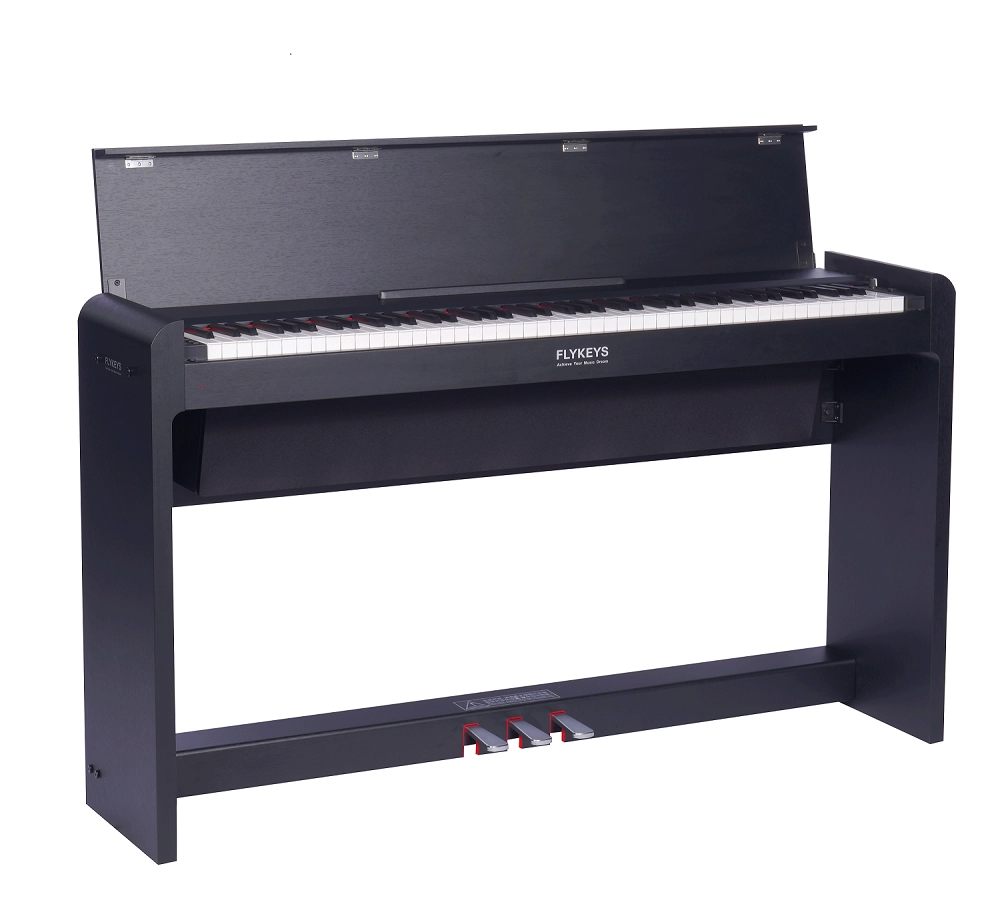
FLYKEYS FDP 5 Digital Piano

FEATURES:
FLYKEYS FDP 5 Digital Piano, simple style design with flip-top keyboard coverwood cabinet with individual speaker. The side control panel includes tworows of button and an LED display screen. independent development 88 keysdynamic curve hammer action weighted keyboard.
 SOUND:
FLYKEYS FDP 5 Digital Piano, featuring a European Spectral Composite techniques DSP chip. lt includes sound sampling from Pearl River Kayserburg 9 feet Grand Piano, with 5 layers dynamic wave and string overtonesresonance simulation sound technology.

FLYKEYS FDP 5 Digital Piano
fp6

Flykeys 88 Keys Portable Piano With Wooden Stand FP6 Digital Piano

Independent development 88 keys dynamic curve hammer action weighted keyboard
European Spectral Composite techniques DSP chip. German famous Grand Piano sound sampling, string overtones resonance simulation sound technology
Modern, lightweight case,X stand, Ustand, Wood stand, 3pedal Optional
Control: double sound, record, split, transpose, reverb, chorus, metronome, MIDI, bluetooth

Flykeys 88 Keys Portable Piano With Wooden Stand FP6 Digital Piano
best brand digital piano

Flykeys Upright Electric Piano Built-In Speakers Music Instrument FD05 Digital Piano

---Sound source: Independently developed DSP chip, German famous grand piano sound sample, 8-layer 256M dynamic table wave,String overtones resonance simulation sound technology
---Keyboard: Independent development 88 keys dynamic curve hammer action weighted keyboard
---Exterior: With small door, wooden shell structure, sliding key cover, aluminum alloy handle, folding large spectrum frame, single row round button key side control panel

Flykeys Upright Electric Piano Built-In Speakers Music Instrument FD05 Digital Piano
FDP 7  OAKWOOD

FLYKEYS FDP 7 Professional Upright Digital Piano | 88-Key Hammer Action | Concert Grade Performance

FLYKEYS FDP 7 is a brand-new upright digital piano from Pearl River Piano Group. Equipped with European Spectral Composite DSP sound source and sampled from Kayserburg 9ft concert grand piano, ideal for home practice, teaching and performance.


Key Features

European Spectral Composite DSP chip, 9ft grand piano sampling, 5-layer dynamic wave table, string overtone resonance simulation for rich, natural tone.


88-Independently developed 88-key dynamic curve weighted keyboard with 5 touch curves for authentic acoustic piano feel.


256-No sound dropout in fast passages, smooth complex chords for professional performance.


31 high-quality tones, 15 rhythms, 60 demo songs covering classical, pop, jazz and more.


Bluetooth MIDI + Bluetooth Audio, USB MIDI, USB audio recording. Compatible with phones, tablets and computers for recording, arranging and smart practice.


Italian 4-speaker system (25W mid-bass ×2 + 5W tweeter ×2), 3-pedal function, dual headphone jacks for silent practice.


Wooden cabinet, 3-position adjustable top cover, sliding key cover, aluminum handle, large music stand, stylish home-friendly design.


FLYKEYS FDP 7 Professional Upright Digital Piano | 88-Key Hammer Action | Concert Grade Performance
best digital piano for advanced players

Flykeys Professional Digital Upright Piano 88 Keys Wooden Keyboard FK830 Digital Piano
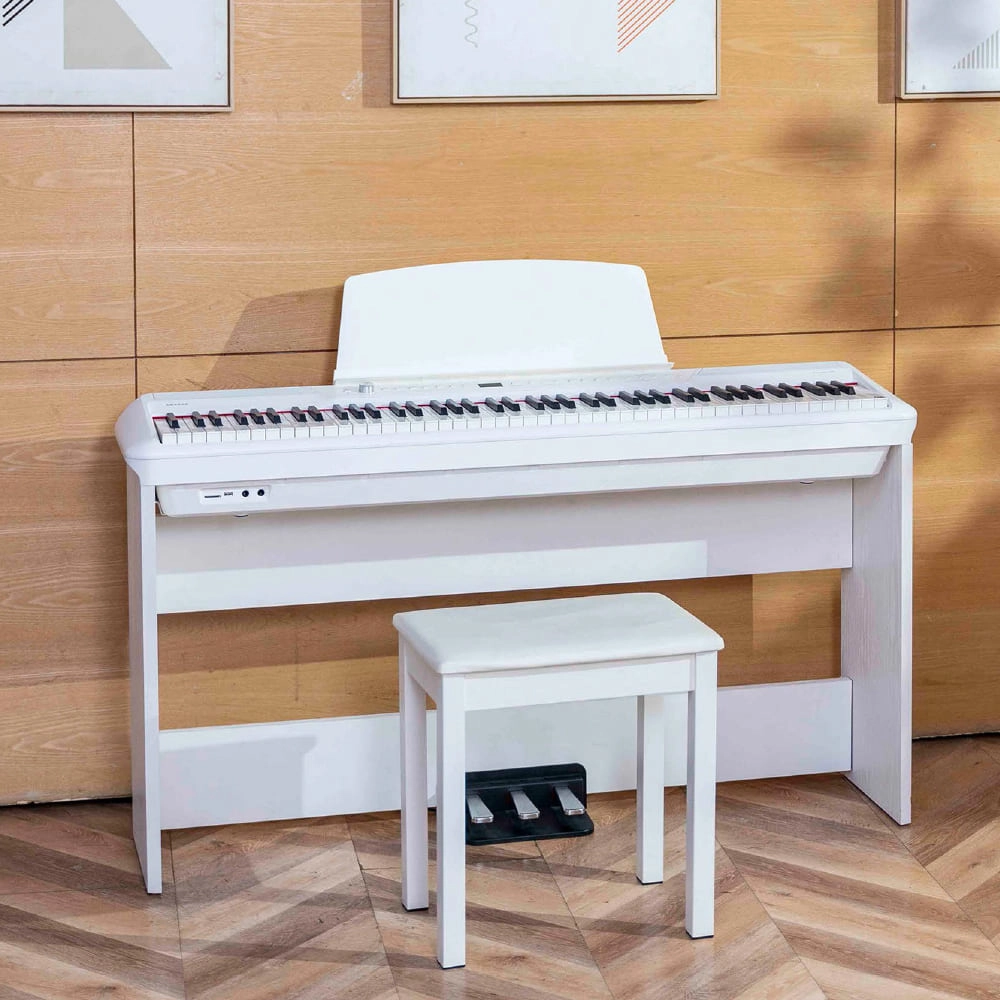
Experience superior sound with the Flykeys Professional Digital Upright Piano FK830. This 88-key wooden keyboard combines classic elegance with modern technology, perfect for musicians seeking a high-quality digital upright piano. Enhance your music with FLYKEYS' precision craftsmanship and rich tones.
Flykeys Professional Digital Upright Piano 88 Keys Wooden Keyboard FK830 Digital Piano
Folding Keyboard 1

Flykeys M12 Folding Keyboard

Introducing the Flykeys M12 Folding Keyboard by FLYKEYS—your ultimate portable typing solution. This sleek, compact, folding keyboard ensures seamless connectivity and efficient performance on the go. Enhance your productivity with this lightweight design, perfect for travel and compact workspaces. Experience convenience with the Flykeys M12 Folding Keyboard today!

Flykeys M12 Folding Keyboard

Get in touch with us

Have a question or inquiry about our digital pianos products? Leave us a message here and our team will get back to you promptly within 24 hours.

Whether you're interested in custom orders, technical specifications, or partnership opportunities, we're here to assist you.

Name must not exceed 100 characters.
Invalid email format or length exceeds 100 characters. Please re-enter.
Please enter a valid phone number!
Company Name must not exceed 100 characters.
Content must not exceed 3000 characters.

Rest assured that your privacy is important to us, and all information provided will be handled with the utmost confidentiality.

Contact customer service

Get a Free Quote

Hi,
If this product meets your expectations, please leave me a message to get the best quote and product information.

×
First Name must not exceed 100 characters.
Last Name must not exceed 100 characters.
Invalid email format or length exceeds 100 characters. Please re-enter.
Please enter a valid phone number!
Product of interest must not exceed 100 characters.
Company Name must not exceed 150 characters.
Message must not exceed 3000 characters.

Have a specific project?

Hi,
If this product meets your expectations, please leave me a message to get the best quote and product information.

×
Name must not exceed 100 characters.
Invalid email format or length exceeds 100 characters. Please re-enter.
Please enter a valid phone number!
Company Name must not exceed 100 characters.
Content must not exceed 3000 characters.

Send My Customization Request

Hi,
Whether you're a seasoned performer, an aspiring musician, or a music enthusiast, our instruments are designed to meet the demands of every skill level and musical style.

×
First Name must not exceed 100 characters.
Last Name must not exceed 100 characters.
Invalid email format or length exceeds 100 characters. Please re-enter.
Please enter a valid phone number!
Product of interest must not exceed 100 characters.
Company Name must not exceed 150 characters.
Message must not exceed 3000 characters.