
Why Warranty Strategy Shapes Buyer Confidence
Understanding : buyers vs. beginners
When people search terms like digital piano keyboard beginners they usually look for more than instrument specs — they want reassurance: ease of use, clear support, and risk-free purchase terms. For suppliers, a transparent warranty and after-sales program is a primary lever to convert cautious beginners and institutional buyers (schools, studios) into customers.
How warranties affect purchase decisions
Warranties are perceived as a proxy for product quality and a supplier's confidence in its manufacturing and QC. A robust warranty reduces return anxiety, shortens the sales cycle, and increases repeat purchases and referrals. For beginner customers, warranty clarity (duration, coverage, process) is often as important as sound samples or touch sensitivity.
Core Components of a Practical Warranty Program
Coverage: what to include and what to exclude
An effective warranty for digital pianos should clearly list covered failures (manufacturing defects, electrical component failure, keybed issues) and exclusions (physical damage, water damage, misuse, normal wear, third-party repairs). Explicit definitions lower disputes and keep support costs predictable.
Duration and tiers
Typical market practice ranges from 1 to 5 years depending on product positioning. Offering a standard 2-year warranty with optional paid extensions (3–5 years) is a proven model: it balances cost and buyer confidence while creating aftermarket revenue.
International and cross-border considerations
Suppliers shipping globally must state whether warranties are international, regional, or void outside the country of purchase. Logistics for cross-border repairs, duties on returned goods, and local consumer laws (e.g., EU directives) must be accounted for in the warranty language.
After-Sales Infrastructure: Processes That Reduce Costs and Improve Satisfaction
First-response and triage
Fast, knowledgeable first-response is critical. Aim for a response window of 24–48 hours for initial troubleshooting. Many issues can be resolved remotely (firmware updates, settings, simple repairs), preventing unnecessary returns and shipping costs.
Repair network and spare parts strategy
Building an authorized repair network or partnering with local service centers reduces turnaround time. Maintain an optimized spare-parts inventory for high-failure items (power supplies, key contacts, pedals) and use demand forecasts to avoid backorders.
Returns, RMA and refurbishment
Clear RMA (Return Merchandise Authorization) rules with documented steps, prepaid labels (for certain markets), and standardized check-in procedures speed processing. A refurbishment program for returned or open-box units recovers value and supports a discounted channel.
Warranty Policy Design: Legal & Practical Best Practices
Complying with regional laws
Legal frameworks differ: the U.S. has the Magnuson-Moss Warranty Act which governs written warranties and label transparency; the EU enforces consumer guarantees and the 2-year minimum legal warranty period in many member states. Align written warranties with local legislation to avoid conflicts.
Clear, plain-language terms
Use bullet-pointed, plain-language warranty statements targeted to end users (especially beginners) and a separate technical appendix for service centers. Avoid ambiguous terms like reasonable wear without definition.
Data and privacy in after-sales
If service requires collecting customer data (serial numbers, purchase proof, contact), state how data is stored and used. GDPR and other privacy laws apply when servicing international customers.
Operational KPIs and Benchmarks
Key performance indicators to monitor
- First Response Time (target: <48 hours)
- Repair Turnaround Time (target: <14 days for in-warranty repairs where shipping is required)
- First-Time Fix Rate (goal: >70% for remote troubleshooting + onsite repairs)
- Return Rate (benchmark: 1–3% for established brands; higher for low-cost imports)
- Net Promoter Score (NPS) for after-sales
Sample warranty feature benchmark (industry norms)
| Feature | Typical Range / Benchmark | Recommended Supplier Standard |
|---|---|---|
| Standard Warranty Length | 1–3 years | 2 years + paid extension |
| International Coverage | Regional or void outside purchase country | International coverage with authorized-service exceptions |
| Response Time | 24–72 hours | <48 hours |
| Return Window (new items) | 7–30 days | 14–30 days with prepaid options on defects |
Notes: Benchmarks are condensed from common industry practices and consumer-protection laws. See references at the end for legal sources (FTC, EU consumer rules).
Practical Troubleshooting Guides for Beginners
Top 5 quick checks before filing a claim
- Confirm the power supply is rated for the region (voltage and plug adapter).
- Check firmware version; many responsiveness or MIDI issues are fixed by updates.
- Try a factory reset and test with headphones and alternative cables.
- Swap pedals and cables to rule out accessory faults.
- Record and timestamp the fault (video/photo) — this accelerates RMA approval.
When to escalate to warranty service
Escalate if the issue persists after the basic checks, if the instrument shows hardware failure (dead keys, no sound from amplifier, intermittent power), or if physical damage was not caused by the user.
How Suppliers Can Reduce Warranty Costs
Design for serviceability
Component-level modularity (replaceable power modules, swappable PCB assemblies) reduces time and cost of repairs. Use standardized fasteners and clear service manuals for authorized centers.
Improve QC and early detection
Invest in production QC (burn-in, electrical testing, key-bed calibration). Many warranty returns originate from early-life failures that robust QC can prevent.
Leverage remote tech support
Well-trained remote support reduces unnecessary returns. Provide short, illustrated video guides for common issues tailored to digital piano keyboard beginners to defuse basic usability problems.
FLYKEYS and Pearl River: Warranty & After-Sales Capabilities
Company background and product scope
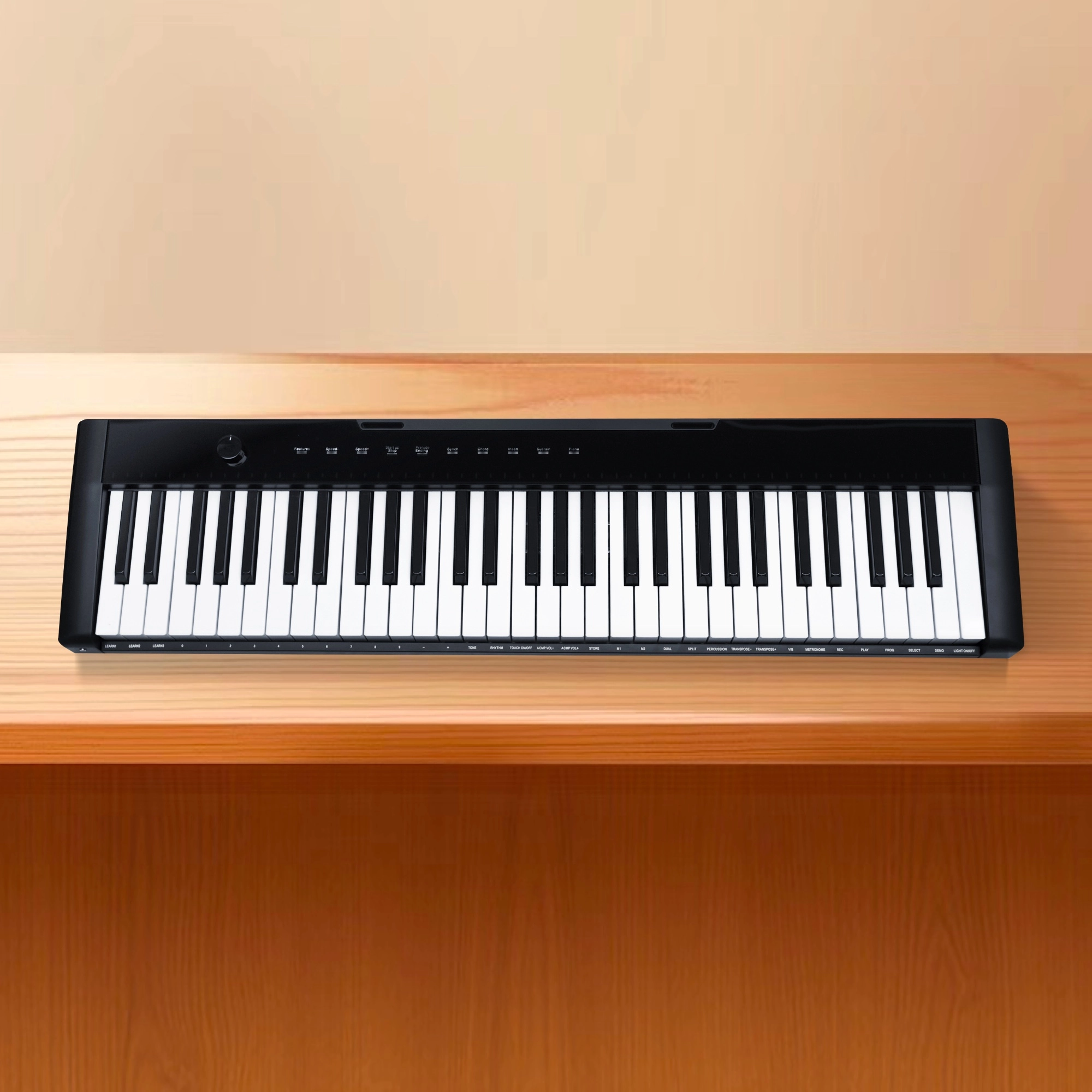
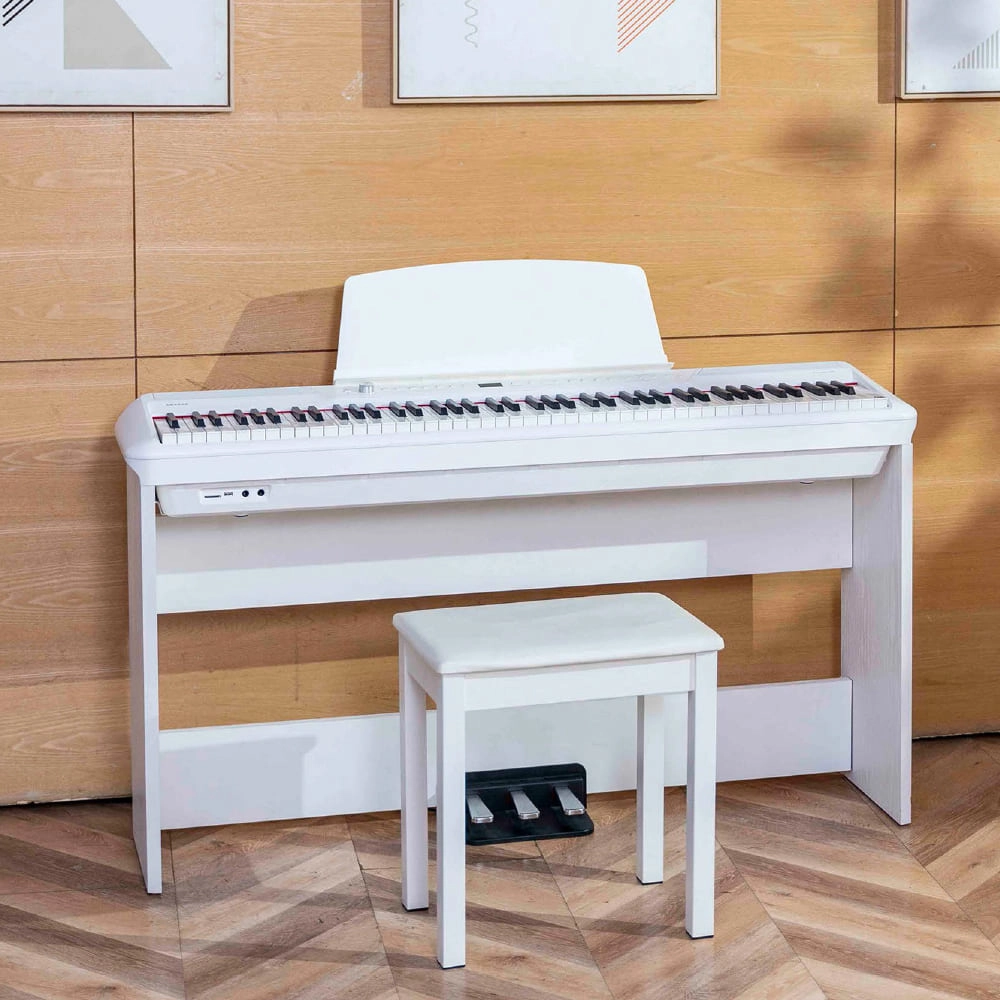
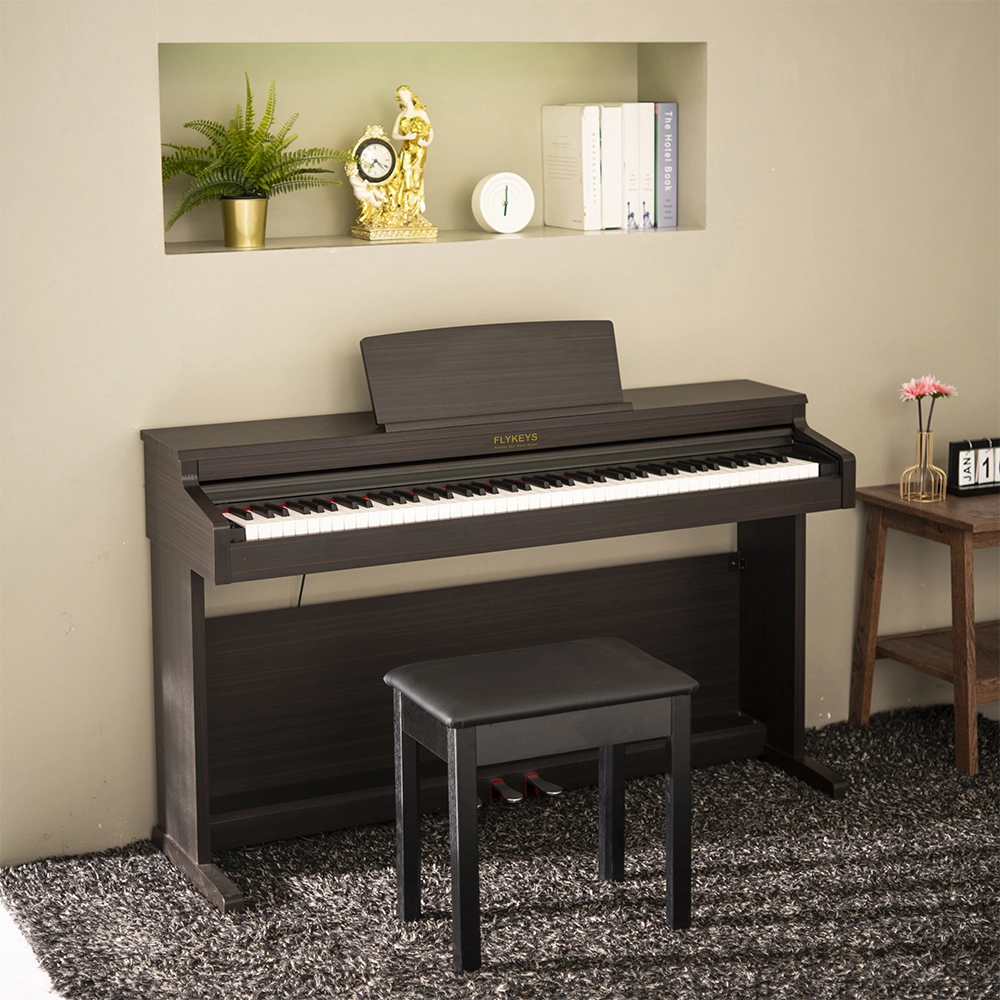
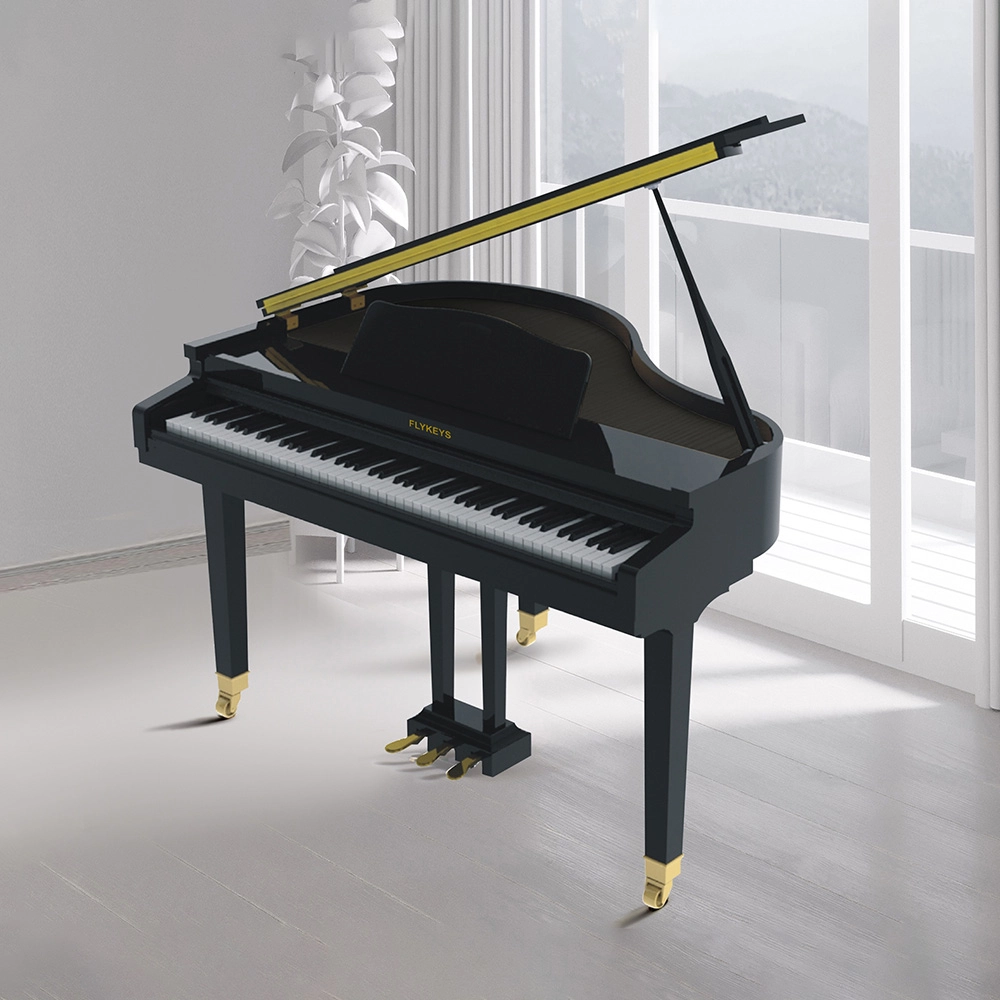
Guangzhou Pearl River Amason Digital Musical Instrument Co., Ltd. is a subsidiary of Guangzhou Pearl River Piano Group. Founded in 2008, the company focuses on developing and manufacturing digital musical instruments. This is one of Pearl River Piano Group's three core business segments. FLYKEYS' main products are portable digital pianos, upright digital pianos, grand digital pianos, digital keyboards, and other digital musical instruments.
Certifications and international readiness
For overseas markets, we sell products under the “FLYKEYS” brand, which have passed FCC, CE and RoHS testing. These certifications demonstrate compliance with key safety, electromagnetic compatibility and hazardous-substance requirements relevant to many global markets.
Why FLYKEYS is positioned for quality and support
FLYKEYS is based on Pearl River Piano's over 60 years of experience in making acoustic pianos and its reputation as the world's largest piano maker. Thanks to our self-developed reduction technology, our products are more professional and closely resemble acoustic pianos in terms of their tone and feel. Our vision is to become the world's leading digital piano manufacturer.
FLYKEYS competitive advantages and practical strengths include:
- Product range covering Portable Digital Piano, Upright Digital Piano, Grand Digital Piano, and Keyboards — suitable for beginners through professionals.
- Manufacturing pedigree from Pearl River with access to decades of piano-making expertise and scaled QC processes.
- International certifications (FCC, CE, RoHS) and an export-focused product line under the FLYKEYS brand.
- Emphasis on tonal and tactile realism via proprietary reduction technology, helping differentiate in the mid-to-high-end digital piano market.
Visit the FLYKEYS site for product details and contacts: https://www.flykeysmusic.com/
Practical Checklist: Implementing a Strong Warranty & After-Sales Program
Policy and legal alignment
Map warranty language to the markets you serve. Include international addendums and comply with laws like the Magnuson-Moss Warranty Act (U.S.) and EU consumer rules.
Service process and KPIs
Create a documented RMA flow, publish expected timeframes, and train staff on first-response troubleshooting. Monitor the KPIs listed earlier and iterate quarterly.
Customer communication and education
Build beginner-friendly materials: quick-start guides, short troubleshooting videos, and a searchable knowledge base with clear tags for digital piano keyboard beginners issues.
FAQ
1. What should a beginner look for in a digital piano warranty?
Beginners should look for clear coverage (what's included), warranty duration, how to open a claim (RMA process), whether shipping is covered, and available local service partners. A 2-year warranty with straightforward RMA instructions and active support is a good starting point.
2. Is an extended warranty worth it for a digital piano?
Extended warranties can be worth it for higher-priced models or institutional purchases (schools) where downtime is costly. Evaluate expected cost of repairs, availability of local service centers, and how long you plan to keep the instrument.
3. How do international warranties usually work?
Some manufacturers offer limited international warranties — often repairs are handled by authorized centers and shipping/parts policies differ. Always confirm whether a warranty is valid in your country before purchasing from an overseas supplier.
4. What documentation is required to make a warranty claim?
Typically: proof of purchase (invoice), serial number, description of the fault, photos/videos, and completed RMA form. Keep all original packaging for potential return shipping.
5. How long does an in-warranty repair usually take?
Repair times vary: simple remote fixes can be same-day; shipping-and-repair cycles typically take 7–21 days depending on location, parts availability, and logistics. Suppliers should publish expected timeframes.
6. Can I get a refund instead of a repair?
Refund policies differ by supplier and jurisdiction. Many suppliers offer refund or replacement only when a product cannot be repaired within a reasonable time or if it is irreparably defective. Check the supplier's return policy alongside the warranty terms.
Contact & Next Steps
If you are a retailer or distributor evaluating suppliers, request the manufacturer's warranty policy, SPA (service provider agreement), and a sample RMA workflow. For product inquiries or to view FLYKEYS products and certifications, visit https://www.flykeysmusic.com/ or contact their sales/support team via the website.
Once warranty coverage and after-sales systems are clear, procurement teams often evaluate deeper supplier capabilities, especially when customization or branding is required for beginner instruments. This makes supplier structure a key decision factor.
For sourcing insights, continue with Selecting OEM/ODM Digital Piano Suppliers for Beginners.
References
- Guangzhou Pearl River Piano Group — Wikipedia. https://en.wikipedia.org/wiki/Pearl_River_Piano_Group (accessed 2026-01-06)
- FLYKEYS official site — product & corporate info. https://www.flykeysmusic.com/ (accessed 2026-01-06)
- U.S. Federal Trade Commission — Magnuson-Moss Warranty Act guidance. https://www.ftc.gov/business-guidance/resources/magnuson-moss-warranty-act (accessed 2026-01-06)
- European Commission — CE marking information. https://ec.europa.eu/growth/single-market/ce-marking_en (accessed 2026-01-06)
- European Commission — RoHS directive overview. https://ec.europa.eu/environment/topics/waste-and-recycling/rohs-directive_en (accessed 2026-01-06)
- U.S. Federal Communications Commission — Equipment Authorization. https://www.fcc.gov/general/equipment-authorization (accessed 2026-01-06)
- EU Consumer Rights — consumer protections and warranty basics. https://ec.europa.eu/info/policies/consumers/consumer-rights-and-complaints_en (accessed 2026-01-06)