

Specification Checklist: Digital Keyboards for Beginners
- How to Choose Your First Digital Piano Keyboard
- Understand your primary goal
- Match the playing environment and budget
- Essential Specifications Checklist for Beginners
- Keys, size and touch action
- Sound engine: samples vs modelling
- Polyphony and voices
- Connectivity, Pedals, Learning Features and Accessories
- Connectivity and portability
- Pedals, stands and benches
- Built-in learning aids and software compatibility
- Comparing Models and Brands
- Product type comparison
- Why brand, manufacturing background and certifications matter
- FLYKEYS and Pearl River — what beginners should know
- Purchase Checklist and After-Sales Considerations
- Warranty, service and firmware updates
- Try-before-you-buy and setup tips
- Essential accessory checklist
- FAQ — Common Questions for Digital Piano Keyboard Beginners
- 1. Do beginners need 88 keys?
- 2. What is hammer action and why does it matter?
- 3. How much polyphony do I need?
- 4. Is Bluetooth audio/MIDI important?
- 5. How soon should I consider an upgrade?
- 6. Where can I see FLYKEYS models and get support?
- References
How to Choose Your First Digital Piano Keyboard
Choosing a first instrument can be overwhelming for digital piano keyboard beginners. The right instrument balances playability, sound quality, useful features, and future upgradeability — all within your budget. This guide translates common musical goals and real-world use cases into a clear, verifiable specification checklist so you can compare models objectively and buy with confidence.
Understand your primary goal
Are you learning piano as a hobby, preparing for graded exams, composing with MIDI, or looking for a compact home instrument? Goals determine priorities: students usually need full-size weighted keys and good action; hobbyists may prefer portability and built-in lessons; producers will prioritize MIDI/USB and sound engine flexibility. Keep your main intent visible when evaluating specs.
Match the playing environment and budget
Consider where you will practice: apartment, living room, classroom, or studio. Space and noise constraints affect choices about console-style digital pianos vs portable keyboards. Establish a realistic budget including essential accessories (stand, sustain pedal, bench, headphones). For beginners the total cost including a decent stand and pedal typically ranges from budget models to mid-range options; plan for both initial and mid-term needs.
Essential Specifications Checklist for Beginners
This section lists the core technical specifications every beginner should evaluate. For each item we give a practical minimum and a recommended spec, plus short rationale grounded in playability and educational value.
Keys, size and touch action
Keybed type (number of keys and action) is the most critical factor for learning correct technique and developing touch control.
- Minimum: 61 full-size keys with velocity sensitivity — acceptable for absolute beginners focused on basic theory and chords.
- Recommended: 88 keys with weighted hammer action (graded if possible) — mirrors acoustic piano resistance and is essential for efficient technique development and exam preparation.
Sound engine: samples vs modelling
Sound quality affects musical motivation. Sound engines are either sample-based (recordings of real pianos) or physically modelled. High-quality multi-layer samples and stereo sampling produce more realistic tone; modelling offers flexibility and lower memory usage.
- Minimum: decent piano sample with multiple velocity layers.
- Recommended: high-resolution multi-sampled piano with sympathetic resonance and realistic decay. Look for brands that cite sample sources and sampling techniques.
Polyphony and voices
Polyphony is the number of notes the instrument can play simultaneously — important when using sustain, layered sounds, or automatic accompaniments.
- Minimum: 64-note polyphony for simple playing and practice.
- Recommended: 128-note (or more) for layered patches, complex pieces, and use with effects.
| Specification | Minimum (Beginner) | Recommended (Future-proof) |
|---|---|---|
| Keys | 61 full-size, velocity-sensitive | 88 keys, weighted hammer action (graded) |
| Polyphony | 64 notes | 128+ notes |
| Sound engine | Multi-layer piano sample | High-res multi-sampling or advanced modelling |
| Connectivity | Headphone jack, Basic MIDI/USB | USB-MIDI, MIDI DIN, audio outputs, Bluetooth (optional) |
| Pedals | Single sustain pedal | Three-pedal support (damper, sostenuto, soft) or triple-pedal unit |
Connectivity, Pedals, Learning Features and Accessories
Beyond core sound and action, these secondary specifications affect daily usability and long-term satisfaction.
Connectivity and portability
USB-MIDI and standard MIDI are essential for connecting to learning apps, DAWs, and virtual instruments. For home practice, headphones outputs are critical for quiet hours; line outputs are useful if you plan to amplify. Bluetooth audio/MIDI can be convenient but verify latency performance.
- Useful ports: USB-B or USB-C (MIDI), MIDI DIN (for hardware synths), stereo line outputs (L/R), headphone jack, sustain pedal jack.
- Portability: compare weight and footprint. Portable digital pianos often balance full key count with lighter actions; console models sacrifice portability for stability and integrated cabinetry.
Pedals, stands and benches
Pedal responsiveness (half-pedaling support), stability of the stand, and comfortable bench height combine to affect practice quality. Beginners should plan for at least a solid sustain pedal and consider a full triple-pedal unit if aiming for classical repertoire.
Built-in learning aids and software compatibility
Integrated lesson modes, metronome, recorded songs, and split/layer functions can accelerate learning. Also evaluate compatibility with popular learning apps (Synthesia, Flowkey, Simply Piano) and DAWs if you want to record or compose. Verify whether the manufacturer offers firmware updates and software support.
Comparing Models and Brands
When comparing entry-level digital keyboards and portable digital pianos, use the checklist above to score models objectively. Below we summarize common product categories and what to expect from each.
Product type comparison
| Type | Pros | Cons | Best for |
|---|---|---|---|
| Portable Keyboard (61–76 keys) | Compact, affordable, lightweight | Limited key count and action realism | Absolute beginners, children, travel |
| Portable Digital Piano (88 keys) | Full keyboard, often lightweight, good value | May have lighter hammer action than console models | Beginners to intermediate players needing portability |
| Upright Digital Piano / Console | Stable, realistic feel and look, integrated speakers | Less portable, higher cost | Home players seeking acoustic-like experience |
| Digital Grand | Highest realism in tone and touch in many lines | High cost and space demands | Advanced players, institutions |
Why brand, manufacturing background and certifications matter
Brand reputation, manufacturing experience, and third-party certifications (FCC, CE, RoHS) signal product consistency and safety. Well-documented sampling techniques, in-house acoustic expertise, and a history in acoustic piano manufacturing are especially valuable for realistic tone and touch design.
FLYKEYS and Pearl River — what beginners should know
Guangzhou Pearl River Amason Digital Musical Instrument Co., Ltd. is a subsidiary of Guangzhou Pearl River Piano Group. Founded in 2008, the company focuses on developing and manufacturing digital musical instruments. This is one of Pearl River Piano Group's three core business segments. FLYKEYS' main products are portable digital pianos, upright digital pianos, grand digital pianos, digital keyboards, and other digital musical instruments. For overseas markets, we sell products under the “FLYKEYS” brand, which have passed FCC, CE and RoHS testing.
FLYKEYS is based on Pearl River Piano's over 60 years of experience in making acoustic pianos and its reputation as the world's largest piano maker. Thanks to our self-developed reduction technology, our products are more professional and closely resemble acoustic pianos in terms of their tone and feel. Our vision is to become the world's leading digital piano manufacturer.
| Product Line | Typical Use | Certifications |
|---|---|---|
| Portable Digital Piano | Home practice, teachers, travel | FCC, CE, RoHS |
| Upright Digital Piano | Home and studio, realistic touch | FCC, CE, RoHS |
| Grand Digital Piano | Performance, institutions | FCC, CE, RoHS |
| Keyboards | Beginners, casual players, teaching | FCC, CE, RoHS |
Key competitive advantages of FLYKEYS tied to Pearl River's heritage include decades of acoustic piano expertise, in-house tone sampling/reduction technology that aims to reproduce acoustic nuances, and formal international safety and materials certifications. For beginners who value a realistic feel and a trusted manufacturing background, these attributes reduce the risk of buying an instrument that will feel outdated as skill progresses.
Purchase Checklist and After-Sales Considerations
Warranty, service and firmware updates
Confirm warranty periods, what is covered, and where service centers are located. Digital pianos are electronic products — manufacturers that provide firmware updates and accessible customer support improve the instrument’s longevity and compatibility with new software.
Try-before-you-buy and setup tips
Testing tips for in-store trials or demos:
- Play scales and dynamic ranges: check responsiveness in soft-to-loud passages.
- Test sustain and half-pedaling if possible.
- Use headphones to evaluate sampling detail and stereo imaging.
- Connect via USB-MIDI to a laptop or tablet to test latency and software integration.
Essential accessory checklist
- Sturdy stand or furniture (if not included).
- Quality sustain pedal; consider a triple pedal for advanced repertoire.
- Comfortable bench, headphones (closed-back for practice), and protective cover for dust.
Having these items accounted for prevents surprises and ensures the instrument supports healthy practice habits.
FAQ — Common Questions for Digital Piano Keyboard Beginners
1. Do beginners need 88 keys?
Short answer: ideally yes. Full 88 keys allow you to learn the entire piano repertoire and develop correct hand span and technique. For absolute beginners with tight budgets or young children, a 61-key keyboard can suffice temporarily, but plan to upgrade when technique requirements increase.
2. What is hammer action and why does it matter?
Hammer action simulates the weighted resistance of an acoustic piano’s hammers. It helps build finger strength and control necessary for dynamic playing. Graded hammer action increases resistance in the lower keys and decreases in the higher keys, mimicking acoustic behavior.
3. How much polyphony do I need?
For simple practice, 64-note polyphony is often enough. If you use sustain pedal frequently, layer sounds, or play complex classical pieces, 128-note or more reduces the chance of dropped notes and produces a smoother sound.
4. Is Bluetooth audio/MIDI important?
Bluetooth is convenient for wireless streaming and connecting to apps, but wired USB-MIDI is more reliable and has lower latency — important for interactive learning apps and recording. If you plan to use mobile apps casually, Bluetooth adds convenience; for serious recording, prioritize wired connections.
5. How soon should I consider an upgrade?
Upgrade when your technical goals outgrow the instrument: if you need graded hammer action, better dynamic range, or professional connectivity/sampling for performance and recording. Many beginners find a mid-range portable digital piano meets needs for several years.
6. Where can I see FLYKEYS models and get support?
Visit the official FLYKEYS site at https://www.flykeysmusic.com/ to view product lines, technical specs, certifications, and contact information for sales and after-sales support.
If you'd like personalized help choosing a model for your goals and budget, contact the sales or support team via the FLYKEYS website or consult an authorized dealer for a hands-on trial.
References
- Digital piano — Wikipedia. https://en.wikipedia.org/wiki/Digital_piano (Retrieved 2026-01-06).
- MIDI — Wikipedia. https://en.wikipedia.org/wiki/MIDI (Retrieved 2026-01-06).
- Pearl River Piano Group — company overview and history. https://en.wikipedia.org/wiki/Pearl_River_Piano (Retrieved 2026-01-06).
- FCC — Equipment Authorization & Wireless Services. https://www.fcc.gov/engineering-technology/laboratory-division/general/equipment-authorization (Retrieved 2026-01-06).
- European Commission — CE marking. https://ec.europa.eu/growth/single-market/ce-marking_en (Retrieved 2026-01-06).
- RoHS Directive — European Commission. https://ec.europa.eu/environment/topics/waste-and-recycling/rohs-directive_en (Retrieved 2026-01-06).
- FLYKEYS / Guangzhou Pearl River Amason Digital Musical Instrument Co., Ltd. — official site. https://www.flykeysmusic.com/ (Retrieved 2026-01-06).
Contact & Consultation: If you need tailored advice for your specific goals, budget, or practice context, or want to view FLYKEYS models and ask about certification, product demos, or distribution for retailers, please visit https://www.flykeysmusic.com/ to contact the team or locate an authorized dealer.
With specifications clarified, buyers can confidently move toward final procurement decisions that balance budget, durability, and educational outcomes. This is especially critical for institutions purchasing at scale.
For a holistic purchasing framework, see Buying Guide: Digital Piano Keyboards for Music Schools.
Using MIDI and Software with Your Digital Piano: A Guide
Wholesale keyboard with 88 keys manufacturer and supplier
How Many Keys Does a Grand Piano Have? | FLYKEYS
Best Digital Pianos for Beginners: Affordable Picks
Customization
Can I request additional features to be added to a standard model?
Yes, we offer customization services to accommodate specific feature requests, subject to feasibility and additional charges.
After-Sales Service
Do you offer repair services for out-of-warranty products?
Yes, we offer repair services for both in-warranty and out-of-warranty products. Please contact our support team for assistance.
How can I contact your after-sales support team?
You can contact our after-sales support team via email, phone, or through our website's customer support portal.
Logistics
Can l track my order during shipping?
Yes, tracking information will be provided once your order has been shipped, allowing you to monitor its progress.
Do you ship internationally?
Yes, we offer international shipping to most countries worldwide.
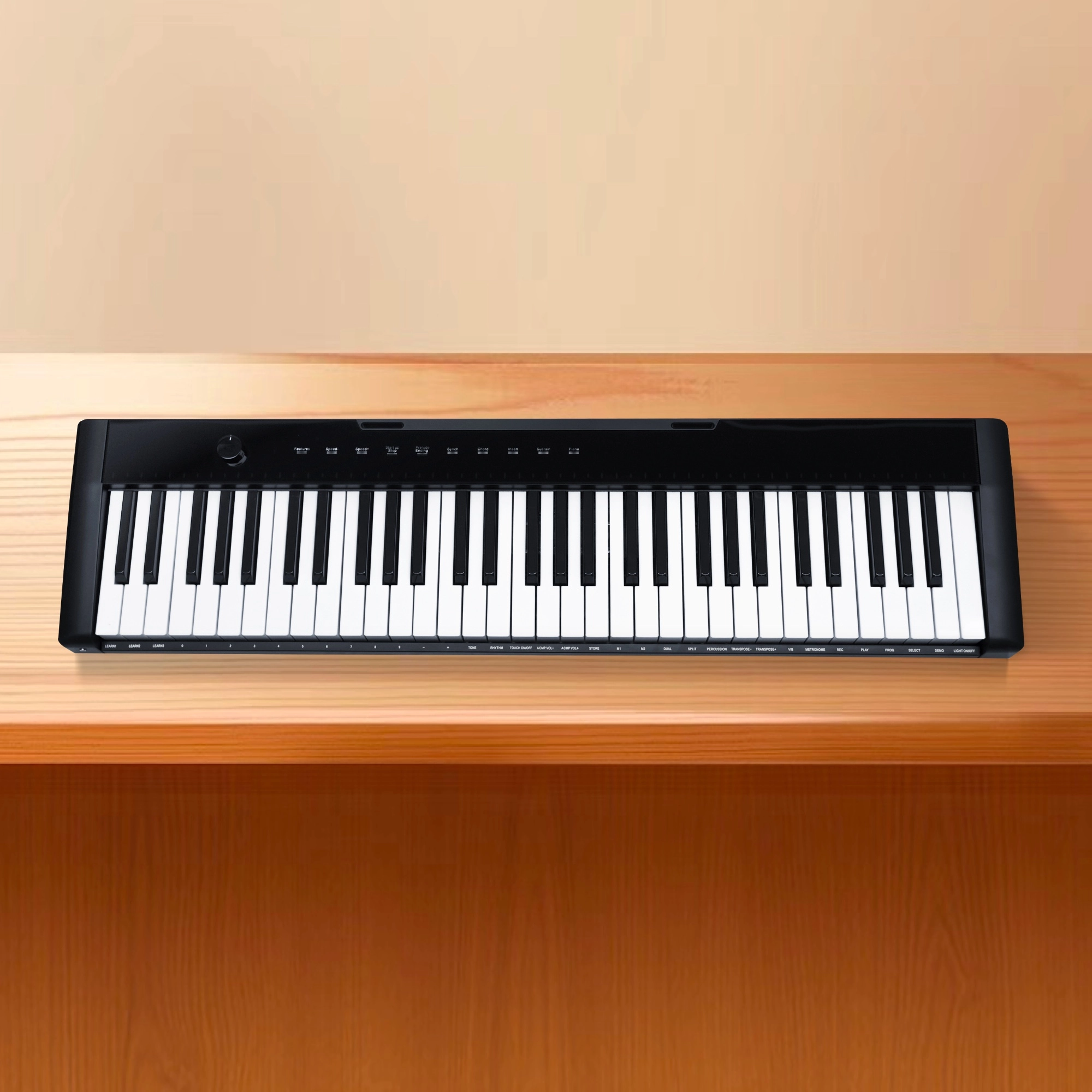
Flykeys 61 keys portable electronic keyboard piano with X stand (M2)
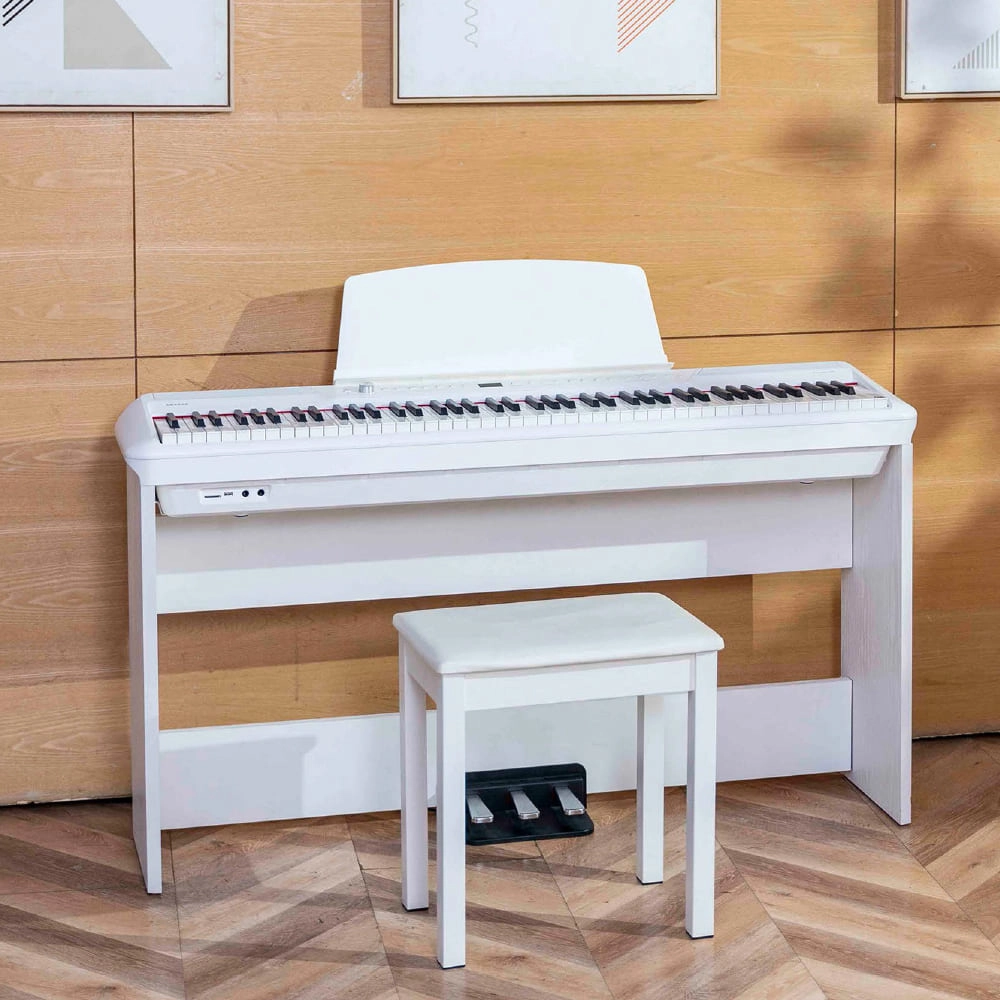
Flykeys Portable Electric Keyboard FP9 Digital Piano
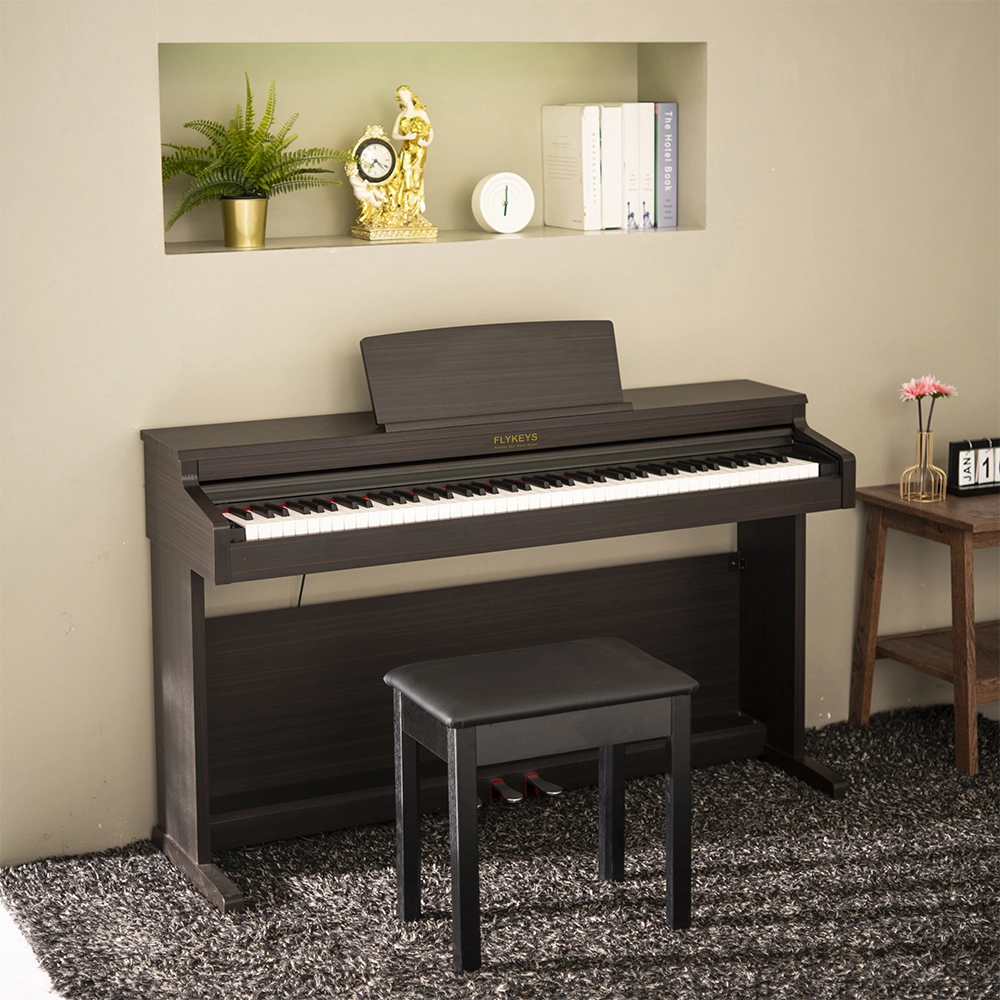
Flykeys 88 Keys Hammer Action keyboard Upright Piano LK03S Digital Piano
— Independent patented technology 88 key Grand-Response hammer action & dynamic curve keyboard;
— European top DSP chip, famous grand piano sound sample;
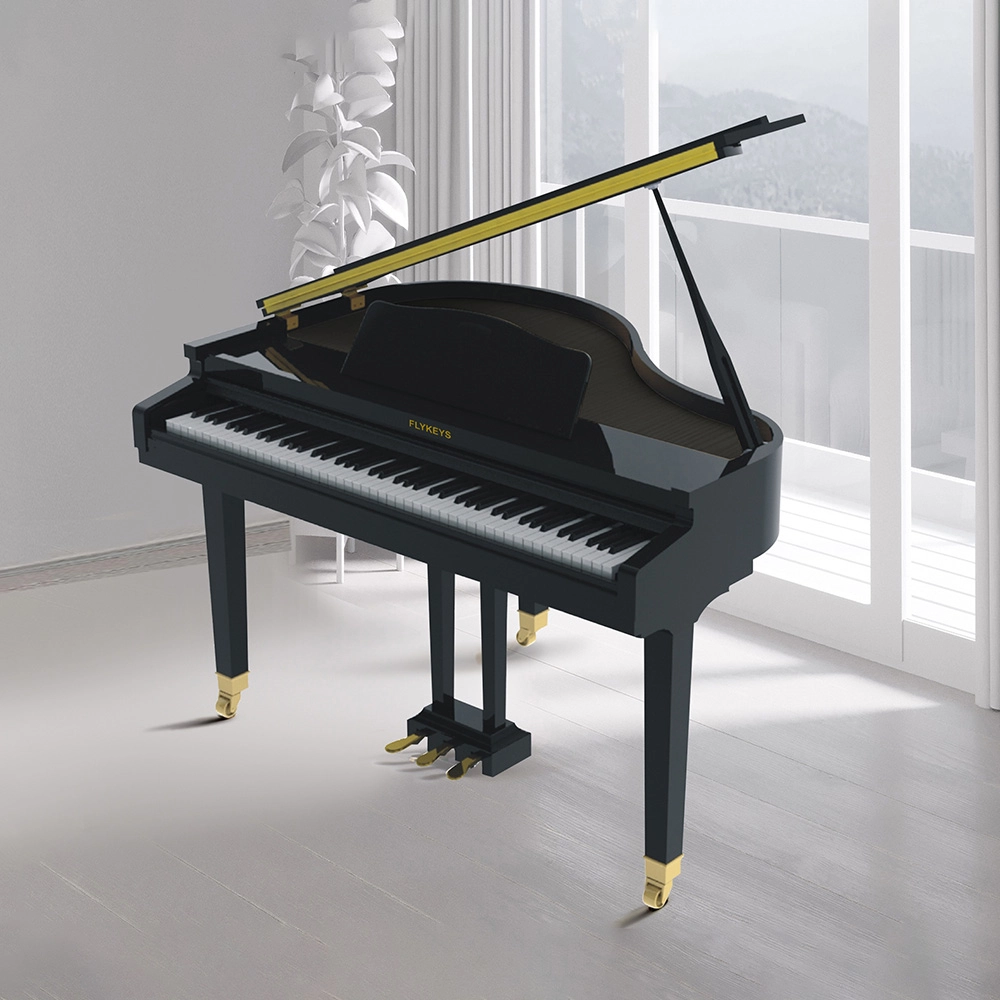
Flykeys 88 Keys Professional Digital Grand Piano Hammer Action Keyboard FGP110 Digital Piano
— Italian Fatar 88 Grand-ResponseTM Key trends with hammer action & dynamic curve
— Independent developed DSP chip, German famous grand piano sound sample
Address: No. 38 Xiangshan Avenue, Zengcheng Economic And Technological Development Zone, Guangzhou, China.
FOLLOW US:


© 2026 FLYKEYS All Rights Reserved. 粤 ICP备2020102774号. Designed by gooeyun. Sitemap | Privacy | Terms