

Integrating Digital Pianos into Institutional Classrooms
- Why digital piano technology matters in modern classrooms
- Benefits for beginners and institutional goals
- Pedagogical flexibility and accessibility
- Cost, space and maintenance advantages
- Choosing the right digital piano keyboard for beginners in institutions
- Key technical features to prioritize
- Sizing and form factors: portable, upright, grand, keyboard
- Budgeting, procurement and lifecycle planning
- Implementing digital pianos into classroom workflow and curriculum
- Classroom layout, acoustics and ergonomics
- Teaching methods, assessment and resources for beginners
- Integrating with LMS, apps and assistive tech
- Maintenance, support, ROI measurement and vendor selection
- Maintenance plans, warranties and teacher training
- Measuring learning outcomes and return on investment (ROI)
- Vendor selection criteria and competitive differentiation
- FLYKEYS (Guangzhou Pearl River Amason) — supplier profile and advantages
- Practical implementation checklist and case-use scenarios
- Rollout checklist for IT and music departments
- Two brief institutional scenarios
- Comparison: Acoustic vs Digital pianos for beginners (institutional view)
- Frequently Asked Questions (FAQ)
- 1. Are digital pianos bad for learning on — do they harm technique?
- 2. What minimum features should an institution require for beginner keyboards?
- 3. How do we budget for instruments and ongoing costs?
- 4. Can digital pianos be integrated with common music education apps?
- 5. What certifications should we require for imported instruments?
- 6. How do we decide between portable and upright models?
- Contact & next steps
- References
Why digital piano technology matters in modern classrooms
Benefits for beginners and institutional goals
Digital piano keyboard beginners benefit from immediate, repeatable sound, volume control, headphone practice, and built-in learning aids. For institutions, these technical advantages translate into better classroom management, inclusive learning (students with hearing sensitivities or different learning paces), and standardized instrument behavior across rooms — important when curriculum and assessment require consistency.
Pedagogical flexibility and accessibility
Digital instruments enable a range of teaching approaches: from traditional tutor-led lessons to flipped-classroom video exercises and adaptive software-based instruction. Features such as split/silent modes, transposition, and metronome/recording utilities make it easier to scaffold lessons for absolute beginners, mixed-ability classes, and ensemble work.
Cost, space and maintenance advantages
Compared with acoustic pianos, digital pianos reduce ongoing tuning costs, require less space for equivalent functionality (especially portable models), and often provide longer service life in high-use institutional settings. This reduces total cost of ownership (TCO) for schools and community centers.
Choosing the right digital piano keyboard for beginners in institutions
Key technical features to prioritize
When selecting instruments for large-scale institutional use, prioritize these features:
- Touch/Action: Weighted hammer-action keys that simulate acoustic touch help build proper technique for beginners.
- Polyphony: 64–192 notes helps when using layered sounds or accompaniment tracks.
- Connectivity: MIDI/USB for classroom software, Bluetooth audio/MIDI for tablets/phones, and multiple headphone outputs for group practice.
- Sound engine: High-quality piano samples and speaker amplification appropriate for room size.
For digital piano keyboard beginners, a realistic key response and reliable connectivity are essential for both pedagogy and long-term skill transfer to acoustic instruments.
Sizing and form factors: portable, upright, grand, keyboard
Institutional choices fall into four practical categories. Choose based on use case, room size, transport needs, and budget:
| Type | Key Action | Typical Use | Space & Mobility | Average Price Range (indicative) |
|---|---|---|---|---|
| Portable Digital Piano | Weighted/hybrid action | Classrooms, traveling teachers, multipurpose rooms | High mobility | $400–$1,500 |
| Upright Digital Piano | Full-weighted/graded hammer | Fixed classrooms, practice rooms | Moderate footprint, fixed | $700–$3,000 |
| Grand Digital Piano | High Quality action, escapement simulation | Concert teaching, performance labs | Large, fixed | $2,000–$8,000+ |
| Digital Keyboard (61–76 keys) | Synth-action or semi-weighted | Early childhood, general music, theory labs | Very portable | $100–$500 |
Budgeting, procurement and lifecycle planning
Institutions must model total cost of ownership, including warranties, service, peripherals (stands, benches, headphones), and replacement cycles. Consider leasing, bulk discounts, and vendor-managed maintenance contracts. For beginners, a mid-range upright or high-quality portable model often provides the best balance between educational value and cost.
Implementing digital pianos into classroom workflow and curriculum
Classroom layout, acoustics and ergonomics
Optimize room layout by ensuring sightlines between teacher and student, access to power and network ports for each instrument, and adequate acoustic treatment to reduce echo and noise. Ergonomics matters for beginners: adjustable benches, appropriate keyboard height, and correct bench distance prevent early technical faults like poor posture.
Teaching methods, assessment and resources for beginners
Digital piano keyboard beginners benefit from blended learning: use teacher demonstrations, guided practice with built-in lesson modes, and software-assisted assessment (MIDI recording, scoring apps). Clear learning outcomes (scales, simple repertoire, sight-reading basics) should map to measurable assessments to track progress across cohorts.
Integrating with LMS, apps and assistive tech
Connectivity to learning management systems (LMS) and music education apps enables assignment distribution, automated practice tracking, and remote review. Ensure instruments support MIDI/USB class compliance and relevant educational software (e.g., SmartMusic, Flowkey, Simply Piano) to scale instruction efficiently.
Maintenance, support, ROI measurement and vendor selection
Maintenance plans, warranties and teacher training
Buy-in from teachers is critical. Negotiate vendor-provided teacher training, warranties covering electronics and action parts, and preventive maintenance schedules. For a fleet of instruments, consider a spare-parts inventory and a single-point service contract to minimize downtime.
Measuring learning outcomes and return on investment (ROI)
Define KPIs such as student retention in music programs, assessment score improvements, number of practice hours logged, and utilization rates of instruments. A short table below shows example KPIs and measurement methods:
| KPI | How to Measure | Target (Example) |
|---|---|---|
| Student Progress | Pre/post assessments, teacher rubrics, software logs | 20% improvement in sight-reading scores after 12 weeks |
| Practice Time | MIDI/app logs, headphone station usage | Average 3 hours/week per beginner |
| Instrument Utilization | Room booking, device connection metrics | 75% scheduled utilization during term |
Vendor selection criteria and competitive differentiation
Select vendors with proven institutional experience, reliable supply chain, third-party certifications (FCC/CE/RoHS for overseas markets), and demonstrable post-sale support. Prioritize suppliers who can offer training, volume pricing, and customization (e.g., locking panels for exam settings).
FLYKEYS (Guangzhou Pearl River Amason) — supplier profile and advantages
Guangzhou Pearl River Amason Digital Musical Instrument Co., Ltd. is a subsidiary of Guangzhou Pearl River Piano Group. Founded in 2008, the company focuses on developing and manufacturing digital musical instruments and is one of Pearl River Piano Group's three core business segments. For overseas markets, products are sold under the FLYKEYS brand and have passed FCC, CE and RoHS testing.
FLYKEYS' main products include Portable Digital Pianos, Upright Digital Pianos, Grand Digital Pianos, digital keyboards, and other digital musical instruments. FLYKEYS builds on Pearl River Piano's more than 60 years of acoustic piano expertise — a reputation that contributes to realistic tone and touch. The company highlights its self-developed reduction technology that aims to make digital tone and feel closely resemble acoustic pianos.
Why consider FLYKEYS for institutional procurement?
- Heritage manufacturing: Over 60 years of acoustic piano experience through Pearl River provides a strong foundation in tone and action design.
- Product range: From portable models for multipurpose classrooms to grand digital pianos for performance labs, covering institutional needs.
- Certifications: Compliance with FCC, CE and RoHS for overseas markets supports regulatory procurement requirements.
- Technical competence: Proprietary technologies that seek to replicate acoustic characteristics, beneficial for transferring beginner skills to acoustic pianos.
- Service potential: As part of an established piano group, access to manufacturing and parts networks can be advantageous for fleet maintenance.
Visit FLYKEYS: https://www.flykeysmusic.com/
Practical implementation checklist and case-use scenarios
Rollout checklist for IT and music departments
- Define pedagogical goals for beginner cohorts and map to required instrument features.
- Audit classroom spaces for power, network, and acoustic treatment.
- Choose form factors (portable vs upright) based on mobility and room stability needs.
- Negotiate warranties, teacher training, and spare parts with vendor.
- Set KPIs and select software for practice tracking and assessment.
Two brief institutional scenarios
Scenario A — Public Middle School: Needs 12 instruments for mixed-use rooms. Recommendation: mid-range upright digital pianos with multiple headphone outputs and LAN/MIDI connectivity; vendor-led teacher training; 3-year on-site warranty.
Scenario B — Conservatory Prep Program: Needs high-resolution action for performance-level touch. Recommendation: grand digital pianos or High Quality uprights with escapement simulation, high polyphony, and multi-channel monitoring for juries; invest in service contract and match teacher expectations for acoustic feel.
Comparison: Acoustic vs Digital pianos for beginners (institutional view)
| Factor | Acoustic Piano | Digital Piano |
|---|---|---|
| Initial cost | High | Moderate to low |
| Maintenance (tuning) | Frequent, skilled tech needed | Minimal (software/parts) |
| Volume control | None | Headphones/level control |
| Consistency across rooms | Variable | High (same samples/settings) |
| Pedagogical software integration | Limited | Extensive (MIDI/USB/Bluetooth) |
Frequently Asked Questions (FAQ)
1. Are digital pianos bad for learning on — do they harm technique?
No. High-quality digital pianos with graded hammer action provide a tactile response comparable to acoustic instruments. For digital piano keyboard beginners, consistent action and appropriate touch-weight are important to develop correct technique that transfers to acoustic pianos.
2. What minimum features should an institution require for beginner keyboards?
At minimum: 88 weighted keys (or 76 for space-limited settings), graded hammer action, at least 64-note polyphony, MIDI/USB connectivity, headphone outputs, and a reliable sound engine. These features enable pedagogical flexibility and future-proof classroom tech integration.
3. How do we budget for instruments and ongoing costs?
Budget for the instrument purchase, stands/benches/headphones, warranties/service contracts, teacher training, and a small spare-parts inventory. Estimate a 5–10 year lifecycle for digital pianos with scheduled preventive care; include replacement/upgrade windows in multi-year budgets.
4. Can digital pianos be integrated with common music education apps?
Yes — most modern digital pianos support MIDI/USB class-compliant connections and Bluetooth MIDI/audio, allowing integration with apps such as SmartMusic, Flowkey, Simply Piano and institution-grade LMS platforms. Verify compatibility before procurement.
5. What certifications should we require for imported instruments?
For overseas procurement, request FCC (US), CE (EU) and RoHS compliance (electrical safety and hazardous materials). Certifications reduce regulatory risk and often simplify customs and procurement approval processes.
6. How do we decide between portable and upright models?
Choose portable models when mobility and multipurpose room use are priorities; choose uprights when stability, slightly higher touch realism, and a fixed classroom setup are required. Review teacher preferences and curriculum needs when making the decision.
Contact & next steps
If your institution is planning a rollout or pilot for beginner programs, get a consultation to map pedagogical requirements to specific models and pricing. For product information, certifications, and institutional procurement, explore FLYKEYS' offerings at https://www.flykeysmusic.com/ or contact their sales team through the website for catalogs, institutional quotes, and service packages.
Successfully integrating digital pianos into institutional classrooms requires more than proper placement and curriculum alignment—it also depends on long-term reliability and supplier support. To understand how service quality impacts classroom continuity, review Warranty and After-Sales for Digital Piano Suppliers.
References
- Digital piano — Wikipedia. https://en.wikipedia.org/wiki/Digital_piano (accessed 2026-01-06).
- Pearl River Piano Group — Wikipedia. https://en.wikipedia.org/wiki/Pearl_River_Piano (accessed 2026-01-06).
- Grand View Research, Digital Piano Market Size, Share & Trends Analysis Report. https://www.grandviewresearch.com/industry-analysis/digital-piano-market (accessed 2026-01-06).
- National Association for Music Education (NAfME), Why Music Education? https://nafme.org/why-music-education/ (accessed 2026-01-06).
- NAMM Foundation — benefits of music education. https://www.nammfoundation.org/ (accessed 2026-01-06).
- European Commission — CE marking information. https://ec.europa.eu/growth/single-market/ce-marking/ (accessed 2026-01-06).
- European Commission — RoHS directive. https://ec.europa.eu/environment/waste/rohs_eee/ (accessed 2026-01-06).
- Federal Communications Commission (FCC) — https://www.fcc.gov/ (accessed 2026-01-06).
- FLYKEYS official site — https://www.flykeysmusic.com/ (accessed 2026-01-06).
Wholesale grand piano keyboard manufacturer and supplier
Best Portable Keyboard Brands for Gigging Musicians
How to Choose Right best portable keyboard piano manufacturer and supplier ?
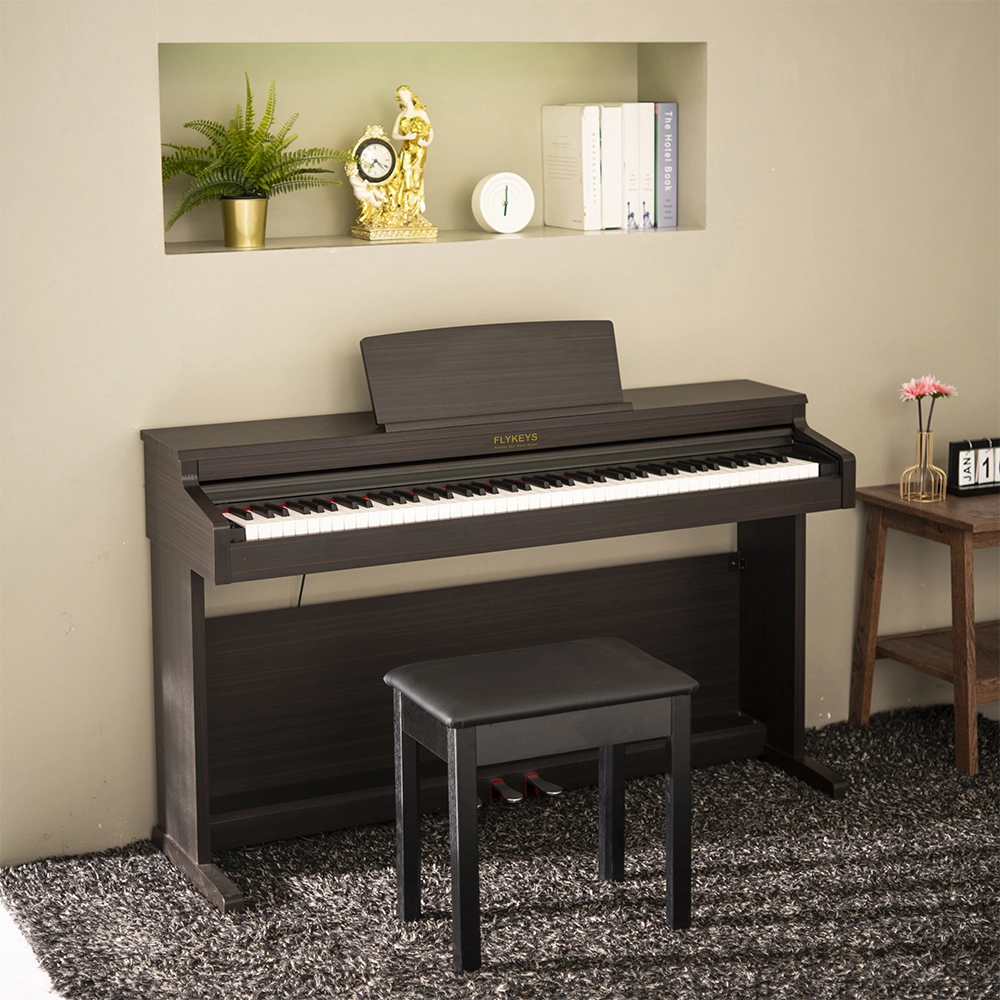
Flykeys 88 Keys Hammer Action Upright Piano LK03S: Full Review
Company
Does your company have any sustainability initiatives?
Yes, we are dedicated to sustainability and continuously strive to minimize our environmental footprint through responsible manufacturing practices.
What is your company's mission?
Our mission is capture the zeitgeist, enjoy the quality lifestyle.
Our vision is to be the TOP 1 Chinese digital musical instrument brand and enter International top list.
Logistics
Can l track my order during shipping?
Yes, tracking information will be provided once your order has been shipped, allowing you to monitor its progress.
Payment
Is payment required upfront for custom orders?
Yes, payment is typically required upfront for custom orders to initiate the production process.
Products
Can I connect your electronic pianos to external devices?
Yes, our electronic pianos are equipped with connectivity options such as MIDI, USB, and Bluetooth for seamless integration with external devices.
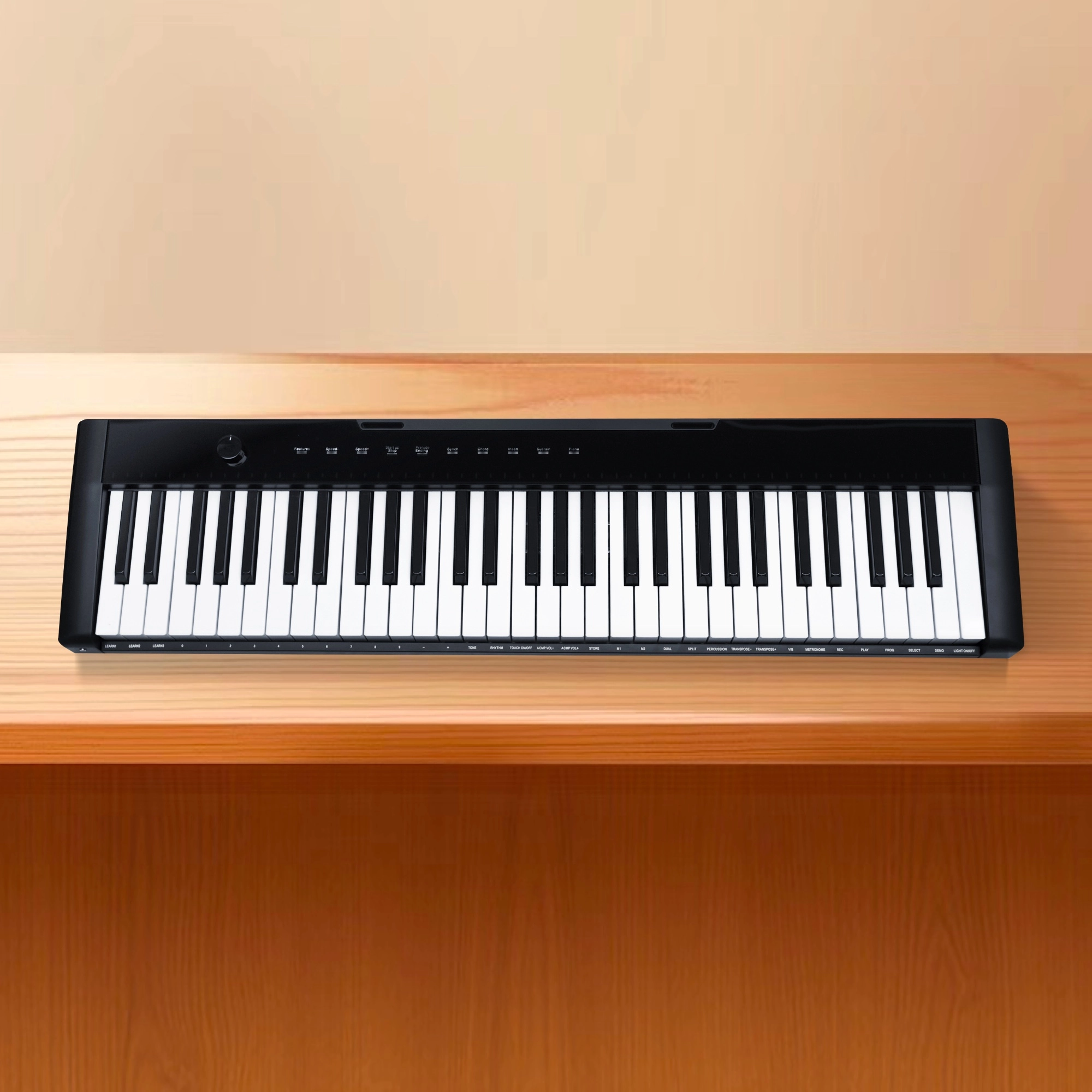
Flykeys 61 keys portable electronic keyboard piano with X stand (M2)
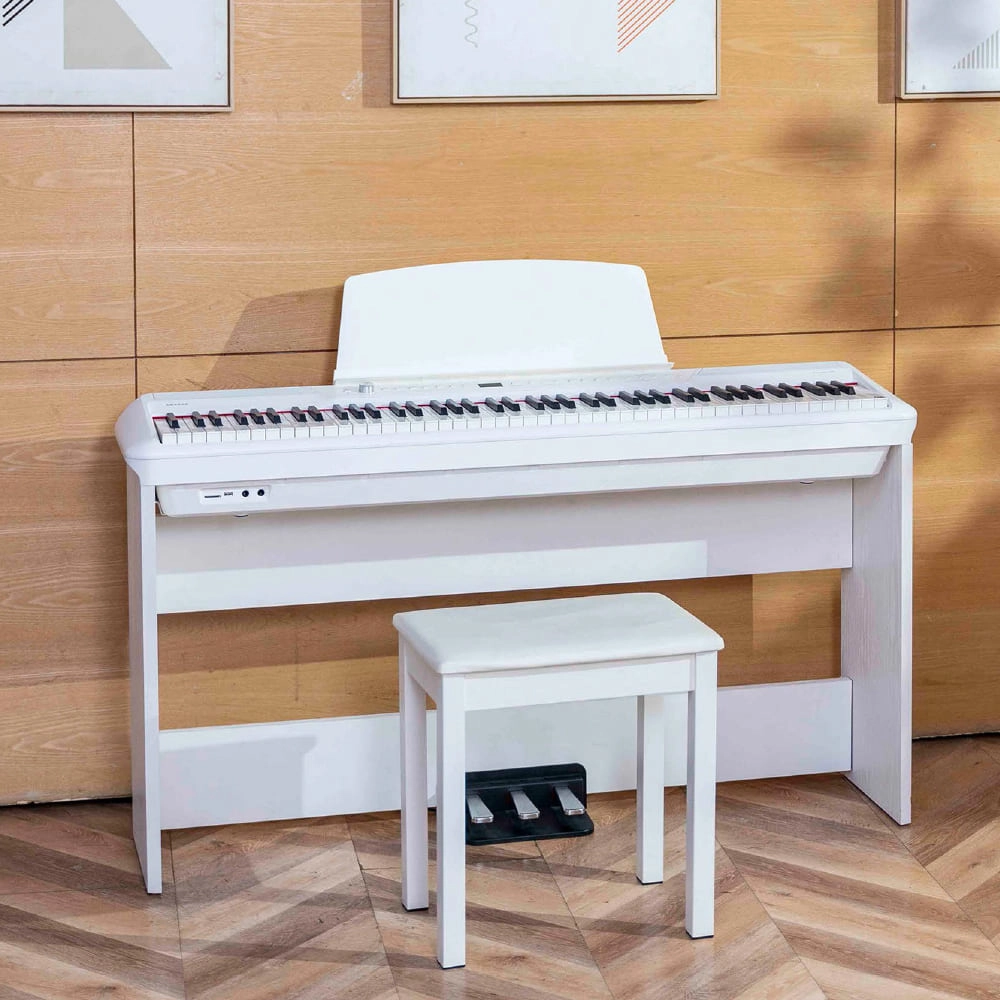
Flykeys Portable Electric Keyboard FP9 Digital Piano
Flykeys 88 Keys Hammer Action keyboard Upright Piano LK03S Digital Piano
— Independent patented technology 88 key Grand-Response hammer action & dynamic curve keyboard;
— European top DSP chip, famous grand piano sound sample;
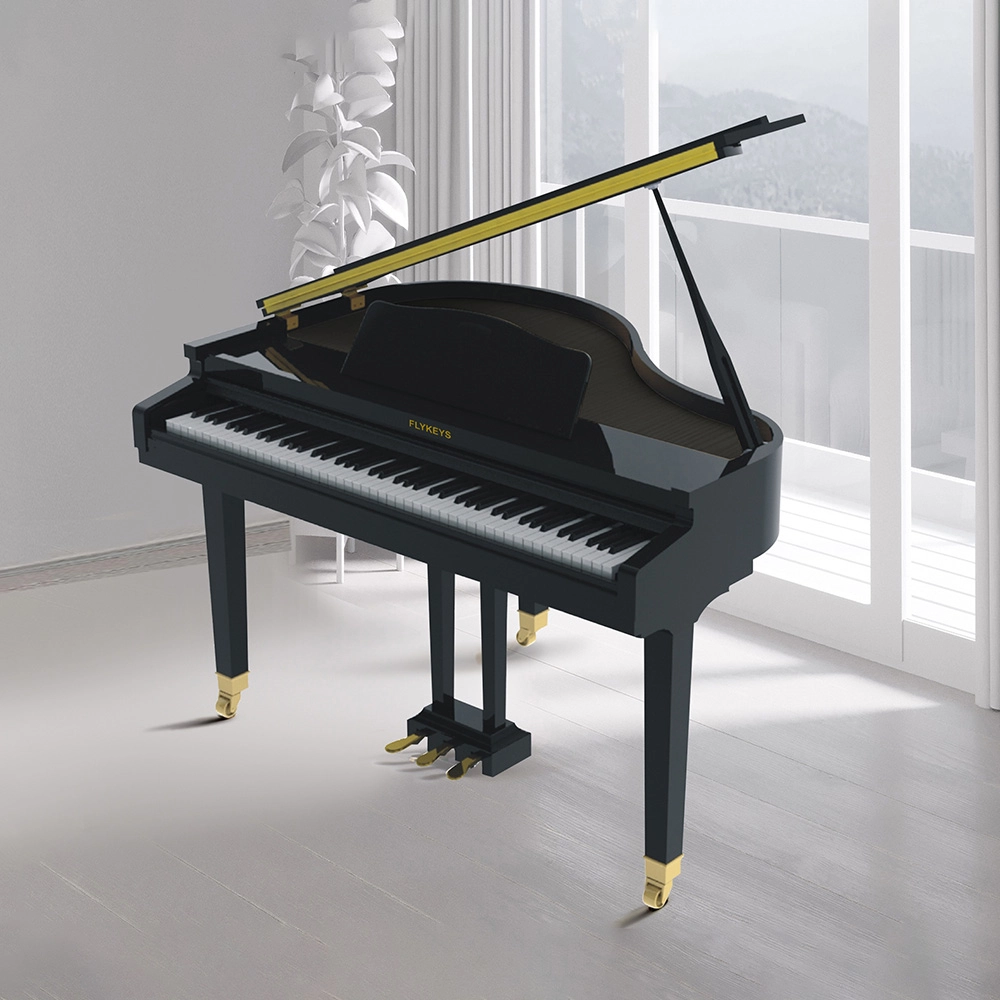
Flykeys 88 Keys Professional Digital Grand Piano Hammer Action Keyboard FGP110 Digital Piano
— Italian Fatar 88 Grand-ResponseTM Key trends with hammer action & dynamic curve
— Independent developed DSP chip, German famous grand piano sound sample
Address: No. 38 Xiangshan Avenue, Zengcheng Economic And Technological Development Zone, Guangzhou, China.
FOLLOW US:


© 2026 FLYKEYS All Rights Reserved. 粤 ICP备2020102774号. Designed by gooeyun. Sitemap | Privacy | Terms